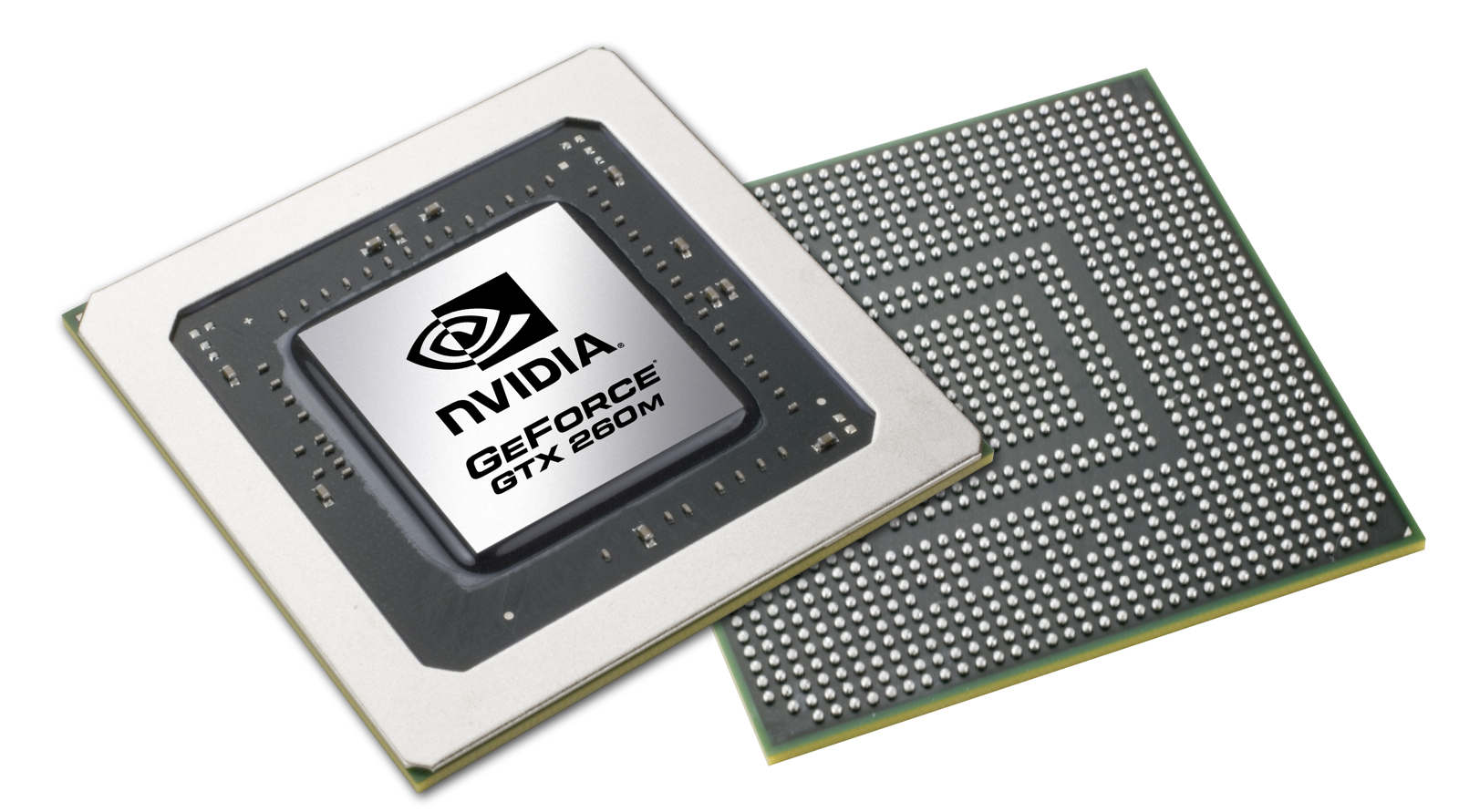

NVIDIA GeForce GTX 260M

The NVidia GeForce GTX 260M is a high-end graphics card of the 200M series based on the G92b core. Therefore, the 55nm chip is essentially a 9800M GTX with slightly higher clock rates (550/1375/950 vs. 500/1250/800). As a result, the 260M is more similar to the desktop 9800GT than the GTX 260.
As with all native DirectX 10 cards, the GeForce GTX 260M renders 3D images using "Unified Shaders". Dedicated pixel shaders and vertex shaders have been replaced with 112 stream processors in the 260M, which now take over most of the graphics workload. The shader units themselves are also clocked higher (1375 MHz) than the core chip.
In general, the performance of the GTX 260M is somewhat higher than the 9800M GTX due to the higher clock speed. For current DirectX 10 games such as Crysis, World in Conflict, Bioshock or Age of Conan, the 260M is sufficient for gameplay under medium to high detail settings. Meanwhile, older games should be able to run fluently under high resolutions and full details. VRAM can be up to 1024 MB GDDR3 at 950MHz in MXM 3.0 or 800MHz in MXM 2.0.
The GeForce GTX 260M integrates the PureVideo HD video decoder. The GPU is thus able to assist the CPU in the decoding of H.264-, VC-1-, MPEG2- and WMV9 videos.
HybridPower is a Windows Vista-only technology that allows users to switch between the integrated and dedicated graphics core for power-saving purposes. In the future, Nvidia intends to evolve the software for automatic switching depending on the active application (now known as Optimus). GeForceBoost is not supported with the GTX 260M as there would be no performance gain from combining with the integrated GPU.
The high current consumption of up to 75 Watts (of the entire MXM board) means that the GTX 260M can typically only be found in larger notebooks with loud and powerful cooling systems.
Compared with Desktop graphics cards, the GTX 260M is most similar to the GeForce 9800 GT.
| Manufacturer | NVIDIA | ||||||||||||||||||
| GeForce GTX 200M Series |
| ||||||||||||||||||
| Codename | N10E-GT | ||||||||||||||||||
| Architecture | G9x | ||||||||||||||||||
| Pipelines | 112 - unified | ||||||||||||||||||
| Core Speed * | 550 MHz | ||||||||||||||||||
| Shader Speed * | 1375 MHz | ||||||||||||||||||
| Memory Speed * | 950 MHz | ||||||||||||||||||
| Memory Bus Width | 256 Bit | ||||||||||||||||||
| Memory Type | GDDR3 | ||||||||||||||||||
| Max. Amount of Memory | 1024 MB | ||||||||||||||||||
| Shared Memory | no | ||||||||||||||||||
| DirectX | DirectX 10, Shader 4.0 | ||||||||||||||||||
| Power Consumption | 75 Watt | ||||||||||||||||||
| Transistors | 754 Million | ||||||||||||||||||
| technology | 55 nm | ||||||||||||||||||
| Features | HybridPower, PureVideo HD, CUDA, PhysX ready | ||||||||||||||||||
| Notebook Size | large | ||||||||||||||||||
| Date of Announcement | 02.03.2009 | ||||||||||||||||||
| Information | MXM 3 | ||||||||||||||||||
| Link to Manufacturer Page | http://www.nvidia.com/object/product_gef... |
Benchmarks


Game Benchmarks
The following benchmarks stem from our benchmarks of review laptops. The performance depends on the used graphics memory, clock rate, processor, system settings, drivers, and operating systems. So the results don't have to be representative for all laptops with this GPU. For detailled information on the benchmark results, click on the fps number.
StarCraft 2
2010For more games that might be playable and a list of all games and graphics cards visit our Gaming List
Gaming Performance
The following gaming tests were conduced with a GTX 260M with 1GB GDDR3 and a Core 2 Duo P8600 CPU.
Crysis Warhead: 1024x768, Enthusiast: 26.7 fps -> playable
World in Conflict: 1680x1050, Very High: 22.0 fps -> no shooter, therefore playable
Far Cry 2: 1680x1050, Very High, 2xAA: 42 fps -> fluently playable
Call of Duty 5: 1680x1050, 2xAA: 49 fps -> fluently playable
Call of Duty 4: 1680x1050, 4xAA: 65 fps -> fluently playable
Left 4 Dead: 1680x105, high, 4xAA: 60 fps -> fluently playable
Notebook reviews with NVIDIA GeForce GTX 260M graphics card
Alienware M15x: Intel Core i7 720QM, 15.6", 4.3 kg
Review » Review Alienware M15x Gaming-Notebook
Asus G60J: Intel Core i7 720QM, 16.0", 3.4 kg
Review » Review Asus G60J Gaming-Notebook
Asus G60VX: Intel Core 2 Duo T9400, 16.0", 3.4 kg
Review » Review Asus G60VX Gaming Notebook
Asus G71GX: Intel Core 2 Duo T9550, 17.0", 4.2 kg
Review » Review Asus G71GX Gaming-Notebook
Asus G72GX: Intel Core 2 Quad Q9000, 17.3", 4.1 kg
Review » Review Asus G72GX Gaming Notebook
Schenker XMG5: Intel Core 2 Quad Q9100, 15.4", 3.4 kg
Review » Review mySN XMG5 (Clevo M860TU) Notebook
Alienware M15x: Intel Core i7 720QM, 15.6", 4.3 kg
External Review » Alienware M15x
Asus G51J: Intel Core i7 720QM, 15.6", 3.3 kg
External Review » Asus G51J
Asus G51J-1B: Intel Core i7 720QM, 15.6", 3.4 kg
External Review » Asus G51J-1B
Asus G51J-3D: Intel Core i7 720QM, 15.6", 3.4 kg
External Review » Asus G51J-3D
Asus G51J-A1: Intel Core i7 720QM, 15.6", 3.3 kg
External Review » Asus G51J-A1
Asus G51J-IX097V: Intel Core i7 720QM, 15.6", 3.5 kg
External Review » Asus G51J-IX097V
Asus G51JX-IX044V: Intel Core i7 720QM, 15.6", 3.3 kg
External Review » Asus G51JX-IX044V
Asus G51VX: Intel Core 2 Quad Q9000, 15.6", 3.3 kg
External Review » Asus G51VX
Asus G60J: Intel Core i7 720QM, 16.0", 3.4 kg
External Review » Asus G60J
Asus G60VX: Intel Core 2 Duo T9400, 16.0", 3.4 kg
External Review » Asus G60VX
Asus G71GX: Intel Core 2 Duo T9550, 17.0", 4.2 kg
External Review » Asus G71GX
Asus G72GX: Intel Core 2 Quad Q9000, 17.3", 4.1 kg
External Review » Asus G72GX
Asus G72GX-TY013V: Intel Core 2 Duo P8700, 17.3", 4 kg
External Review » Asus G72GX-TY013V
Gateway P-7908u: Intel Core 2 Duo P8700, 17", 4.2 kg
External Review » Gateway P-7908u
Ibuypower Battalion 101 M865TU: Intel Core 2 Duo P8700, 15.0", 3.2 kg
External Review » Ibuypower Battalion 101 M865TU
MALIBAL Lotus: Intel Core i7 920XM, 15.4", 3.4 kg
External Review » Malibal Lotus
Pioneer Dreambook M86: Intel Core 2 Duo T9600, 15.4", 3.2 kg
External Review » Pioneer Dreambook M86
Sager NP8662: Intel Core 2 Duo P8600, 15.4", 3.3 kg
External Review » Sager NP8662


9 benchmarks and specifications