




NVIDIA GeForce GTS 260M
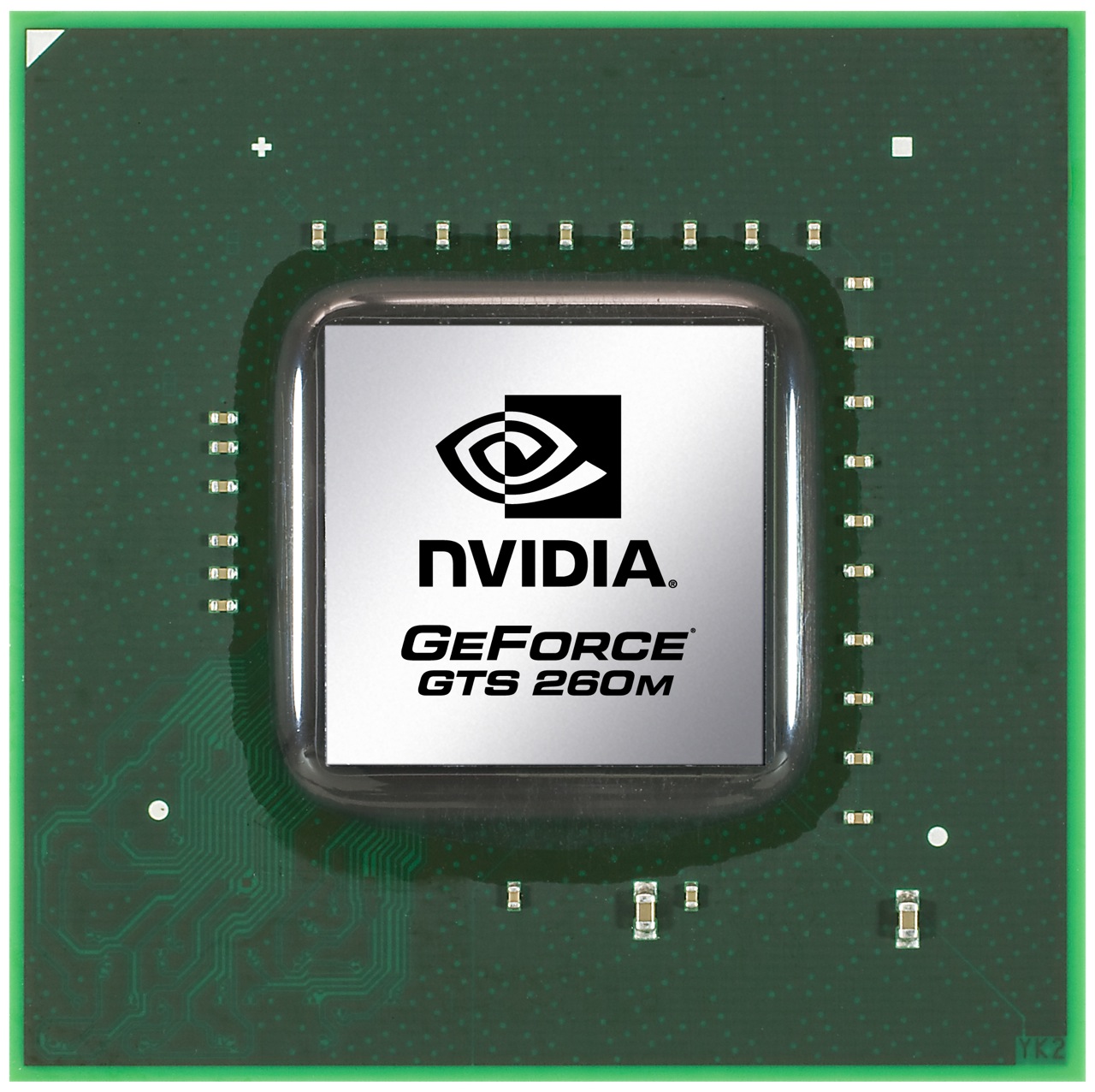
The Nividia GeForce GTS 260M is a DirectX 10.1 graphics adapter for notebooks based on the 40nm GT215 core. It features 96 shader cores as the 9800M GT, but the memory bus is only 128 bit wide. To compensate, the certain models of the GTS 260M support faster GDDR5 VRAM. Essentially, the GTS 260M is a higher clocked GeForce GTS 250M, but with a much higher power consumption (TDP) of 38 Watt.
The core of the GTS 260M is a GT215 based on the related desktop architecture (GTX 200 series). Compared to previous generations, Nvidia has improved the micro-architecture for further power-saving and performance increases. Therefore, the performance per shader unit of the GeForce card should be at least slightly better than older cards.
As with the GeForce 9800M GT, the GeForce GTS 260M features 96 stream processors that perform the graphics workload previously done by dedicated pixel- and vertex-shaders. The unified shaders of Nvidia are 1-dimensional vs. 5-dimensional shaders from AMD GPUs. As a result, graphics card between Nvidia and AMD Radeon cannot be directly compared by pure core count.
The GeForce GPU also supports CUDA, DirectX Compute, OpenCL and PhysX for tasks other than rendering images. For example, demanding processes like video encoding, physics calculations or mathematical tasks can be done noticeably faster with GPU stream processors compared to certain CPUs.
The mobile Nvidia graphics card has a built in video decoder called PureVideo HD with Video Processor 4 (VP4). Thus, the GPU supports the full decoding of H.264, VC-1, and now also MPEG-4 ASP (e.g. DivX or XviD). MPEG-1 is still not supported, but the decoding of this codec is quite trivial on a CPU.
In conjunction with the integrated Nvidia graphics (e.g. 9400M), the GTS 260M supports Hybrid-SLI (HybridPower and GeForceBoost). HybridPower is a Windows Vista-only technique for choosing between the integrated and dedicated graphics core for power-saving purposes. The technology was eventually superseded by Optimus, which allows for automatic graphics switching through drivers. GeForceBoost is not supported by the GTS 260M because the SLI combination with the integrated GPU would provide no significant performance gains.
The performance of the relatively powerful GeForce GTS 260M should be slightly above the GTS 250M because of the higher clock speed. Demanding DirectX 10 games, such as Crysis, should run fluently in medium to high details. Older or less demanding games should run fluently in both high detail settings and resolutions.
Depending on the the used type of graphics memory (GDDR5 or GDDR3), the performance may differ between models and makes of the GTS 260M.
The power consumption of the Nvidia GPU is about 38 Watt TDP, which is significantly higher than the GTS 250M with only a 27 Watt TDP maximum. According to Nvidia, however, GPUs from the 200M series demand only half of the power when in Idle mode compared to the previous generation of Nvidia cards.
As far as we know, the GTS 260M was never utilized in a laptop, although the GPU was later refreshed and renamed to the Nvidia GeForce GTS 360M with a slightly higher core clock speeds.
GeForce GTS 200M Series
| |||||||
| Codename | N10E-GS | ||||||
| Architecture | GT2xx | ||||||
| Pipelines | 96 - unified | ||||||
| Core Speed | 550 MHz | ||||||
| Shader Speed | 1375 MHz | ||||||
| Memory Speed | 1800 MHz | ||||||
| Memory Bus Width | 128 Bit | ||||||
| Memory Type | GDDR3, GDDR5 | ||||||
| Max. Amount of Memory | 1024 MB | ||||||
| Shared Memory | no | ||||||
| API | DirectX 10.1, Shader 4.1 | ||||||
| Power Consumption | 38 Watt | ||||||
| Transistor Count | 727 Million | ||||||
| Man. Technology | 40 nm | ||||||
| Features | DirectX Compute Support (Windows 7), CUDA, OpenCL, HybridPower, PhysX, SLI, Powermizer 8.0, MXM 3.0 Type-B | ||||||
| Notebook Size | large | ||||||
| Date of Announcement | 15.06.2009 | ||||||
| Information | 396 Gigaflops | ||||||
| Link to Manufacturer Page | www.nvidia.com | ||||||

Benchmarks
 - Average benchmark values
* Smaller numbers mean a higher performance
For more games that might be playable and a list of all games and graphics cards visit our Gaming List

- $818.99HP Victus 15.6" Full HD 144Hz Gaming Laptop, Intel Core i5-12450H, NVIDIA GeForce RTX 3050,16GB RAM, 512GB PCIe SSD, Wi-Fi 6, Backlit Keyboard,Windows 11 Pro, Performance Blue
- $1,049.99GIGABYTE Gaming A16 - AMD Ryzen 7 260 GeForce RTX 5060 16" Laptop
- $1,649.00ASUS ROG Strix G16 Gaming Laptop, 165Hz Display, NVIDIA® GeForce RTX™ 4060, Intel Core i7-13650HX, 16GB DDR5, 1TB PCIe Gen4 SSD, Wi-Fi 6E, Windows 11, G614JV-AS74
- $831.49ASUS ROG Strix G Gaming Laptop, 15.6” 120Hz IPS Type Full HD, NVIDIA GeForce GTX 1660 Ti, Intel Core i5-9300H, 8GB DDR4, 512GB PCIe NVMe SSD, RGB KB, Windows 10, GL531GU-WB53
- $4,599.99ASUS ROG Strix G18 (2025) Gaming Laptop, 18" 2.5K 240Hz 16:10 Display Laptop, NVIDIA GeForce RTX 5080, Intel Core Ultra 9 275HX, 64GB DDR5 RAM, 2TB M.2 PCIe SSD, WiFi 7, Win11 Pro - Eclipse Gray
No reviews found.
 Add as a preferred source on Google


