NVIDIA GeForce 9700M GTS

The Nvidia GeForce 9700M GTS is a graphics adapter for laptops and based on the G94 core (like the 9800M GTS) and features 48 shader processors (in difference to the 9700M GT which is based on the G96 with 32 shaders).
Because of the additional shaders, the 9700M GTS is faster than the GT (altough the slower core clock). Therefore, DirectX 10 games of 2008 should all be playable in medium to high details. Crysis for instance, ran with 30 fps in medium details and 1024x768. Therefore, it should be fluently playable with low-medium detail settings. Less demanding games should run in high detail settings.
As all cards with DirectX 10 capabilities, the GeForce 9700M GTS renders the 3D images using "Unified Shaders". There don't exist any more dedicated pixel- and vertex shaders but 48 so called stream processors make the graphic work (which has been done by pixel and vertex shaders in former days). Furthermore, the shader units are higher clocked than the chip.
An advantage of the GeForce 9000 series is the integrated PureVideo HD video processor. It is able to help with the decoding of H.264-, VC-1-, MPEG2- and WMV9 video material in HD quality and eases the CPU.
In conjunction with the Nvidia 9100M G integrated graphics, the 9700M GTS supports Hybrid-SLI (only HybridPower). HybridPower is a technique to choose between the integrated and dedicated graphics core, if performance or battery runtime is needed. This works only in Windows Vista. Up to now the user has to use a tool to switch between the GPUs. Later Nvidia wants to switch automatically in the drivers. GeForceBoost is not supported with this card, as there would be no performance gain to combine the integrated GPU with the 9700M GTS.
Currently there is no desktop graphics adapter that is technically compareable with the 9700M GTS. Performance-wise the card should lie somewhere between the desktop 9500 and 9600 series.
GeForce 9700M Series
| |||||||
| Codename | NB9E-GS | ||||||
| Architecture | G9x | ||||||
| Pipelines | 48 - unified | ||||||
| Core Speed | 530 MHz | ||||||
| Shader Speed | 1325 MHz | ||||||
| Memory Speed | 800 MHz | ||||||
| Memory Bus Width | 256 Bit | ||||||
| Memory Type | GDDR3 | ||||||
| Max. Amount of Memory | 512 MB | ||||||
| Shared Memory | no | ||||||
| API | DirectX 10, Shader 4.0 | ||||||
| Power Consumption | 60 Watt | ||||||
| Transistor Count | 504 Million | ||||||
| Man. Technology | 65 nm | ||||||
| Features | PureVideo HD, HybridPower, CUDA, PhysX ready | ||||||
| Notebook Size | large | ||||||
| Date of Announcement | 15.07.2008 | ||||||
| Information | MXM 3 | ||||||
| Link to Manufacturer Page | www.nvidia.com | ||||||
Benchmarks
3DM Vant. Perf. total +
* Smaller numbers mean a higher performance
Game Benchmarks
The following benchmarks stem from our benchmarks of review laptops. The performance depends on the used graphics memory, clock rate, processor, system settings, drivers, and operating systems. So the results don't have to be representative for all laptops with this GPU. For detailed information on the benchmark results, click on the fps number.
| low | med. | high | ultra | QHD | 4K | |
|---|---|---|---|---|---|---|
| Crysis - GPU Benchmark | 73.9 | 30.88 | 18.73 | |||
| Crysis - CPU Benchmark | 74.3 | 30.22 | 17.82 | |||
| World in Conflict - Benchmark | 46 | 27 | ||||
| Doom 3 | 124.4 | 126.4 | 124.8 | 122 | ||
| low | med. | high | ultra | QHD | 4K | < 30 fps < 60 fps < 120 fps ≥ 120 fps | 2 1 | 3 1 | 3 1 | 1 | | |
For more games that might be playable and a list of all games and graphics cards visit our Gaming List
Gaming Performance
These benchmarks were conducted with high end notebooks (quad-core desktop CPU). Therefore, the performance with slower laptops may decrease.
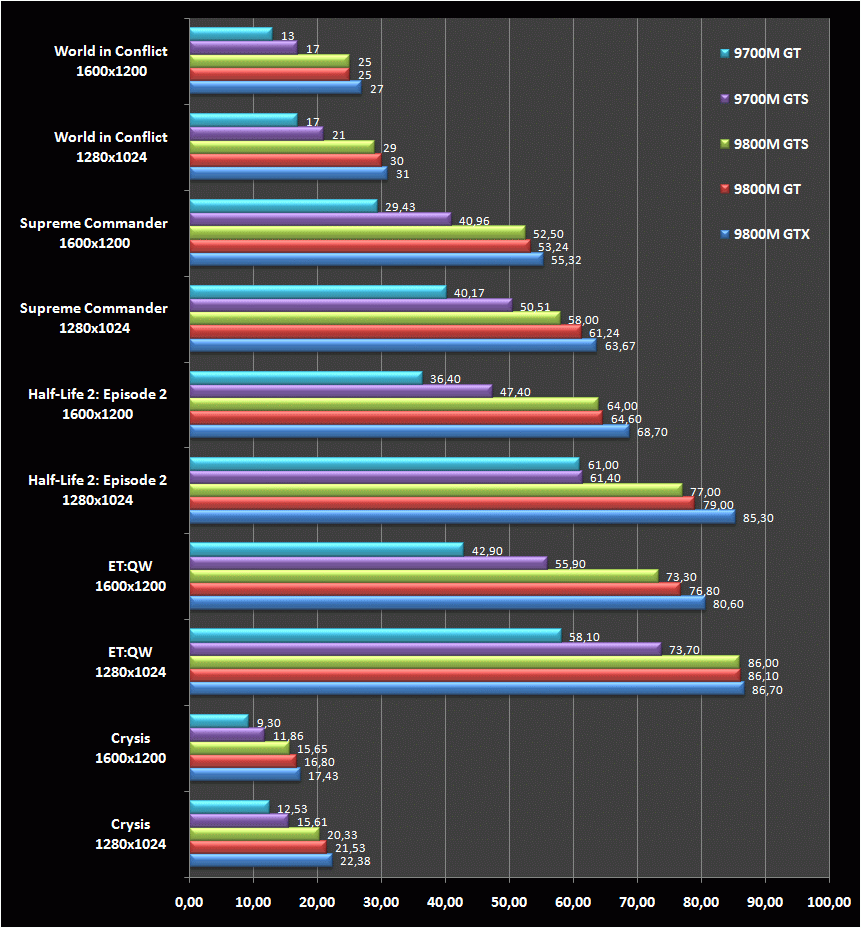
Crysis: 1280x1024, very high: 20 fps -> not playable (in medium-high playable)
Enemy Territory: Quake Wars: 1600x1200: 73 fps -> fluently playable
Half Life 2 - Episode 2: 1600x1200: 64 fps -> fluently playable
Supreme Commander: 1600x1200: 52 fps -> fluently playable
World in Conflict: 1280x1024: 29 fps -> playable
Notebook reviews with NVIDIA GeForce 9700M GTS graphics card
Toshiba Qosmio X300-148: Intel Core 2 Duo T9550, 17.00", 4.3 kg
External Review » Toshiba Qosmio X300-148
Toshiba Qosmio X300-11S: Intel Core 2 Duo P8600, 17.00", 4.3 kg
External Review » Toshiba Qosmio X300-11s
Toshiba Qosmio X305-Q701: Intel Core 2 Duo P7350, 17.00", 4.5 kg
External Review » Toshiba Qosmio X305-Q701