




NVIDIA GeForce 9700M GT
The Nvidia GeForce 9700M GT is a DirectX 10 graphics card for notebooks and successor to the 8700M GT. Technically, the 9700M GT is a higher clocked version of the 9600M GT. It is produced in 65nm (allows higher clock rates with the same current consumption) and features a new PureVideo HD video processor (VP3) and HybridPower support.
In conjunction with the Nvidia 9100M G integrated graphics, the 9700M GT supports Hybrid-SLI (only HybridPower). HybridPower is a technique to choose between the integrated and dedicated graphics core, if performance or battery runtime is needed. This works only in Windows Vista. Up to now the user has to use a tool to switch between the GPUs. Later Nvidia wants to switch automatically in the drivers. GeForceBoost is not supported with this card, as there would be no performance gain.
As the 9600M GT and 8700M GT, the 9700M GT features 32 stream processors that do the graphic work of the vertex- and pixel-shaders (which are higher clocked than the core with 1550 MHz).
The performance of the 9700M GT is clearly above the 9600M GT because of the high clock speed (highest current clockspeed of the 9000M series). Still demanding DirectX 10 games, like Crysis wont run fluently with high details and high resolutions.
Compared to desktop graphics cards, the 9700M GT is similar to the GeForce 9500GT (which also descends from the G96 core).
GeForce 9700M Series
| |||||||
| Codename | NB9E-GE | ||||||
| Architecture | G9x | ||||||
| Pipelines | 32 - unified | ||||||
| Core Speed | 625 MHz | ||||||
| Shader Speed | 1550 MHz | ||||||
| Memory Speed | 800 MHz | ||||||
| Memory Bus Width | 128 Bit | ||||||
| Memory Type | GDDR2, GDDR3 | ||||||
| Max. Amount of Memory | 512 MB | ||||||
| Shared Memory | no | ||||||
| API | DirectX 10, Shader 4.0 | ||||||
| Power Consumption | 45 Watt | ||||||
| Transistor Count | 314 Million | ||||||
| Man. Technology | 65 nm | ||||||
| Features | PCI-E 2.0, PureVideo HD Technologie (VP3), Hybrid SLI mit HybridPower (with nVidia 9100 chipset), CUDA, PhysX ready | ||||||
| Notebook Size | medium sized | ||||||
| Date of Announcement | 03.06.2008 | ||||||
| Information | MXM 3 | ||||||
| Link to Manufacturer Page | www.nvidia.com | ||||||

Benchmarks
3DM Vant. Perf. total +
 - Average benchmark values
* Smaller numbers mean a higher performance
For more games that might be playable and a list of all games and graphics cards visit our Gaming List

- $1,235.00Acer Nitro V Gaming Laptop | Intel Core 7 Processor 240H | NVIDIA GeForce RTX 5050 Laptop GPU | 16" WUXGA IPS 180Hz Display | 16GB DDR5 | 1TB Gen 4 SSD | Wi-Fi 6 | Backlit KB | ANV16-72-73EW
- $2,768.88msi Vector 16 HX AI 16” 240Hz QHD+ Gaming Laptop: Intel Core Ultra 9-275HX, NVIDIA Geforce RTX 5080, 32GB DDR5, 2TB NVMe SSD, Thunderbolt 5, Wi-Fi 7, Win 11 Pro: Cosmo Gray A2XWIG-058US
- $799.99HP Victus 15.6" Full HD 144Hz Gaming Laptop, Intel Core i5-12450H, NVIDIA GeForce RTX 3050,16GB RAM, 512GB PCIe SSD, Wi-Fi 6, Backlit Keyboard,Windows 11 Pro, Performance Blue
- $2,199.99msi Vector 16 HX AI 16" 240Hz QHD+ Gaming Laptop, AMD Ryzen 9 8940HX, NVIDIA Geforce RTX 5070Ti 12GB GDDR7, 32GB DDR5 RAM, 1TB SSD, Thunderbolt 4, Wi-Fi 7, RGB Backlit, Win 11, w/1TB Portable HDD
- $101.26msi Gaming GeForce GT 1030 4GB DDR4 64-bit HDCP Support DirectX 12 DP/HDMI Single Fan OC Graphics Card (GT 1030 4GD4 LP OC)
Gaming Performance
These benchmarks were conducted with high end notebooks (quad-core desktop CPU). Therefore, the performance with slower laptops may decrease.
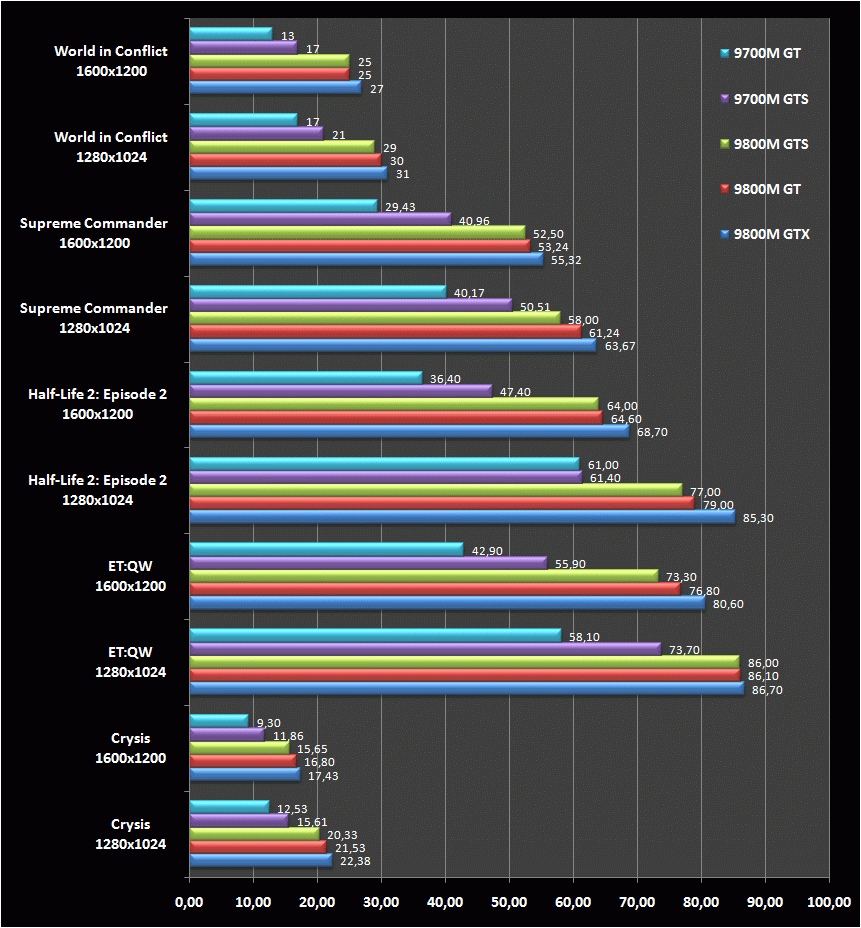
Crysis: 1280x1024, very high: 20 fps -> not playable (in medium-high playable)
Enemy Territory: Quake Wars: 1600x1200: 73 fps -> fluently playable
Half Life 2 - Episode 2: 1600x1200: 64 fps -> fluently playable
Supreme Commander: 1600x1200: 52 fps -> fluently playable
World in Conflict: 1280x1024: 29 fps -> playable
Notebook reviews with NVIDIA GeForce 9700M GT graphics card
Asus G71V: Intel Core 2 Duo T9400, 17.00", 3.9 kg
External Review » Asus G71V
Asus G50V: Intel Core 2 Duo P8600, 15.40", 2.8 kg
External Review » ASUS G50V
Acer Aspire 8930G: Intel Core 2 Duo P8400, 18.40", 4.1 kg
External Review » Acer Aspire 8930G
 Add as a preferred source on Google


