




Apple M1 vs AMD Ryzen 5 5600X vs AMD Ryzen 9 5900X
Apple M1
► remove from comparison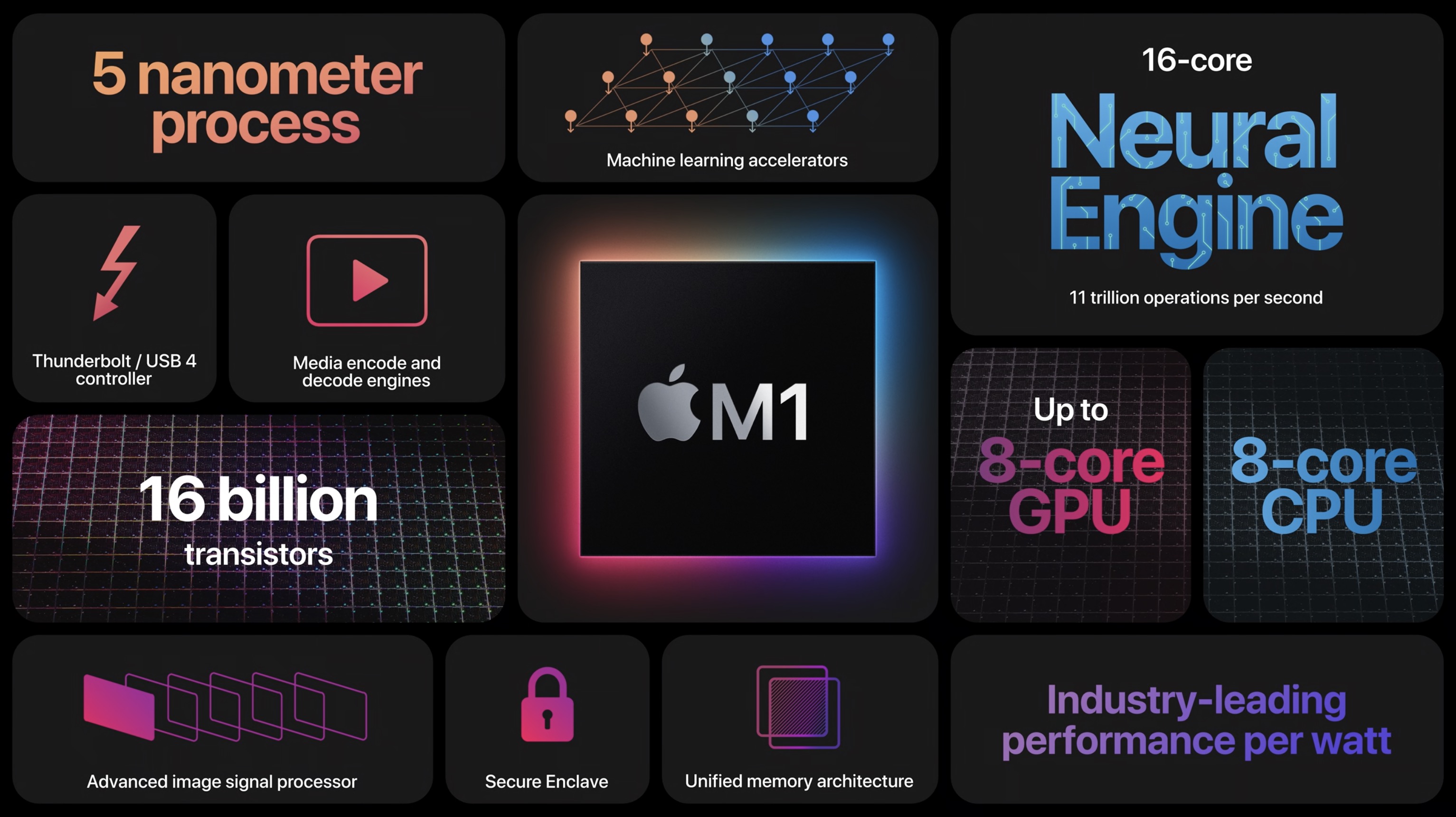
The Apple M1 is a System on a Chip (SoC) from Apple that is found in the late 2020 MacBook Air, MacBook Pro 13, and Mac Mini. It offers 8 cores divided in four performance cores and four power-efficiency cores. The big cores offer 192 KB instruction cache, 128 KB data cache, and 12 MB shared L2 cache. According to Apple the performance of these cores should be better than anything on the market (in late 2020). The four efficiency cores are a lot smaller and offer only 128 KB instruction cache, 64 KB data cache, and 4 MB shared cache. The efficiency cores (E cluster) clock with 600 - 2064 MHz, the performance cores (P cluster) with 600 - 3204 MHz.
The M1 is available in two TDP variants, a passive cooled 10 Watt variant for the MacBook Air and an active cooled faster variant for the MacBook Pro 13 and Mac Mini. Those should offer a better-sustained performance according to Apple.
The integrated graphics card in the M1 offers 8 cores (7 cores in the entry MacBook Air) and a peak performance of 2.6 teraflops. Apple claims that it is faster than any other iGPU at the time of announcement.
Furthermore, the SoC integrates a fast 16 core neural engine with a peak performance of 11 TOPS (for AI hardware acceleration), a secure enclave (e.g., for encryption), a unified memory architecture, Thunderbolt / USB 4 controller, an ISP, and media de- and encoders.
The Apple M1 includes 16 billion transistors (up from the 10 billion of the A12Z Bionic and therefore double the amount of a Tiger Lake-U chip like the i7-1185G7) and is manufactured in 5nm at TSMC.
AMD Ryzen 5 5600X
► remove from comparison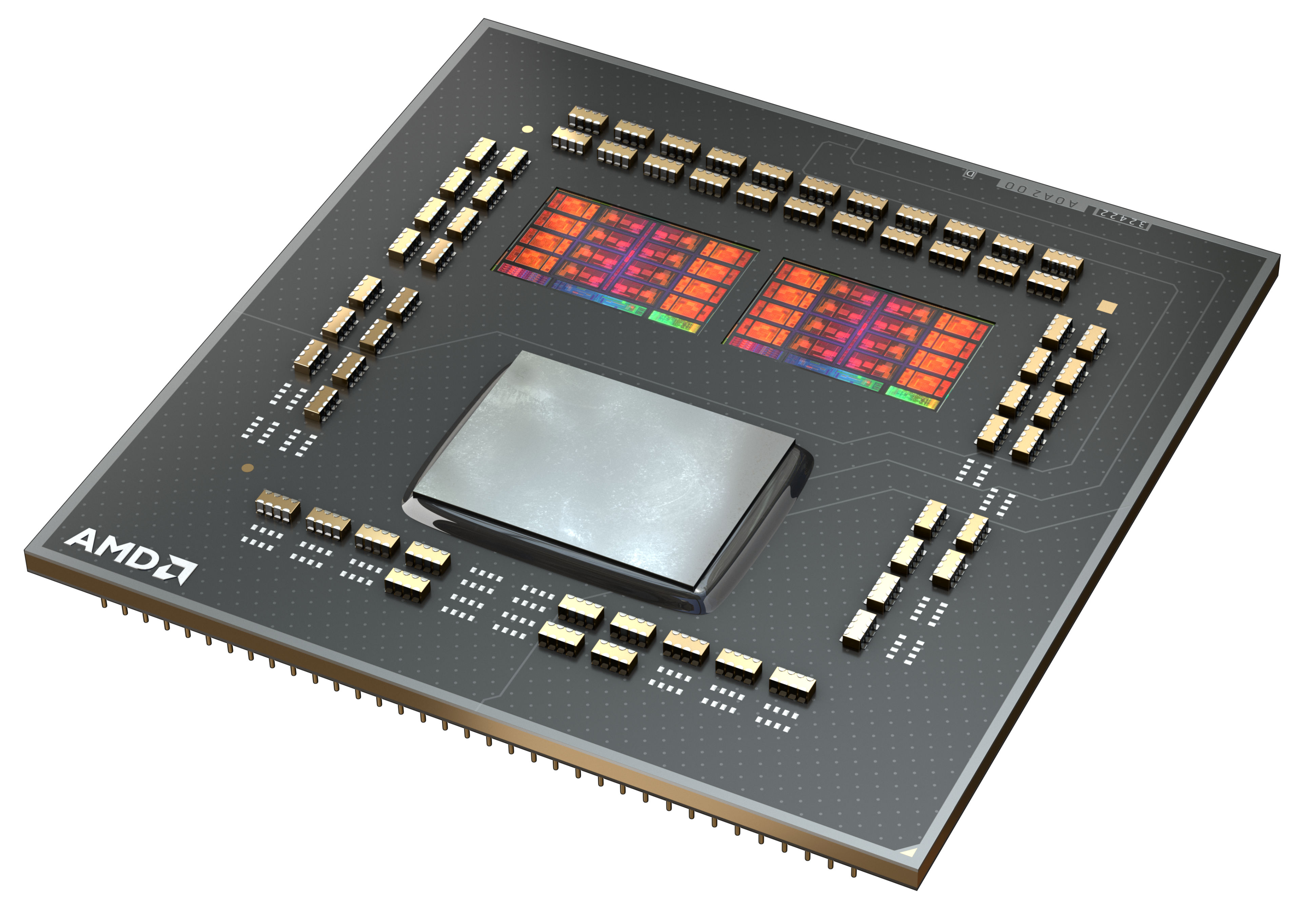
The AMD Ryzen 5 5600X is a desktop processor with 6 SMT-enabled (12 threads) and based on the Zen 3 architecture. Launched in November 2020, it is the fastest 6-core Ryzen desktop processor. With a TDP of 65 watts, the Ryzen 5 5600X is the least energy-hungry model in the Zen 3 family to date.
The Ryzen 5 5600X is clocked at 3.7 GHz base clock and can be clocked up to 4.6 GHz with Precision Boost 2.
Performance
The average 5600X in our database is in the same league as the Ryzen 9 4900H and the Ryzen 7 6800HS, as far as multi-thread benchmark scores are concerned. While this isn't the fastest CPU money can buy, it still rips through most workloads with ease, as of mid 2022. Find out more in our full review.
Power consumption
This Ryzen 5 series chip has a default TDP (also known as the long-term power limit) of 65 W to be in line with most desktop processors.
The R5 5600X is built with TSMC's 7 nm process for average, as of early 2023, energy efficiency.
AMD Ryzen 9 5900X
► remove from comparison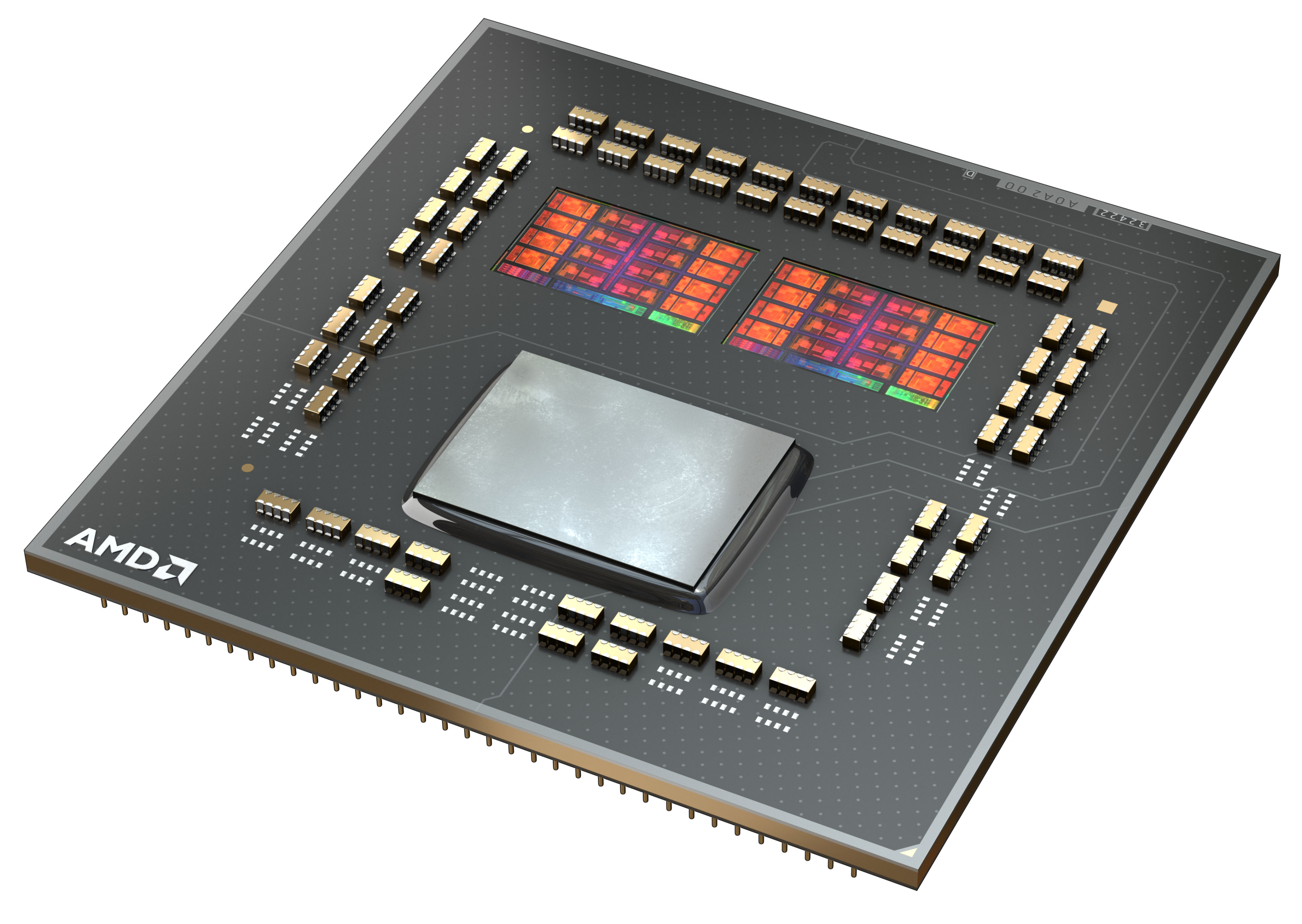
The AMD Ryzen 9 5900X is a high-end 12-core, hyperthreaded (SMT) Vermeer series desktop processor that can process 24 threads simultaneously. Introduced on October 8, 2020, the Ryzen 9 5900X is the fastest 12-core processor and is specified at 105 watts TDP. The top model, the AMD Ryzen 9 5950X, offers even more power and at the same time offers another 4 cores and 8 threads.
The Ryzen 9 5900X clocks with 3.7 GHz base clock and reaches up to 4.8 GHz on one core in turbo mode. However, when all 12 cores are loaded, up to 4.5 GHz is still possible.
The performance of the AMD Ryzen 9 5900X is consistently excellent in all applications and significantly better than the AMD Ryzen 9 3900X. AMD has been able to significantly improve its single thread performance in particular and even beats the Intel Core i9-10900K in this discipline. The multi-thread performance could also be improved. In an in-house duel, the AMD Ryzen 9 5900X can even take on an AMD Threadripper 2950X.
The internal structure of the processor has not changed fundamentally at first glance. The CCX structure has changed a bit compared to Zen2, because now a CCX consists of up to 8 CPU cores. So each individual core can access the complete L3 cache (32 MByte). Furthermore the CCX modules are connected to each other via the same I/O die, which we already know from Zen2. According to AMD, the Infinity-Fabric should now reach clock rates of up to 2 GHz, which in turn allows a RAM clock of 4.000 MHz without performance loss.
For the manufacturing processes, AMD also relies on TSCM for the Vermeer processors for the 7nm production of the CPU cores, although the I/O die is still supplied in 12nm by Globalfoundries.
In games, the AMD Ryzen 9 5900X is convincing thanks to the significantly improved IPC. With the AMD Ryzen 9 5900X, streaming can be done simultaneously with gaming. But if you only want to play games, you are well advised to take a closer look at the AMD Ryzen 7 5800X or the AMD Ryzen 5 5600X.
| Model | Apple M1 | AMD Ryzen 5 5600X | AMD Ryzen 9 5900X | ||||||||||||||||||||||||||||||||||||||||
| Series | Apple M1 | AMD Vermeer (Ryzen 5000) | AMD Vermeer (Ryzen 5000) | ||||||||||||||||||||||||||||||||||||||||
| Series: Vermeer (Ryzen 5000) Vermeer (Zen3) |
|
|
| ||||||||||||||||||||||||||||||||||||||||
| Clock | 2064 - 3220 MHz | 3700 - 4600 MHz | 3700 - 4800 MHz | ||||||||||||||||||||||||||||||||||||||||
| L1 Cache | 2 MB | 384 KB | 768 KB | ||||||||||||||||||||||||||||||||||||||||
| L2 Cache | 16 MB | 3 MB | 6 MB | ||||||||||||||||||||||||||||||||||||||||
| L3 Cache | 8 MB | 32 MB | 64 MB | ||||||||||||||||||||||||||||||||||||||||
| Cores / Threads | 8 / 8 | 6 / 12 | 12 / 24 | ||||||||||||||||||||||||||||||||||||||||
| Transistors | 16000 Million | ||||||||||||||||||||||||||||||||||||||||||
| Technology | 5 nm | 7 nm | 7 nm | ||||||||||||||||||||||||||||||||||||||||
| Features | ARMv8 Instruction Set | DDR4-3200 RAM, PCIe 4, MMX (+), SSE, SSE2, SSE3, SSSE3, SSE4.1, SSE4.2, SSE4A, AES, AVX, AVX2, FMA3, SHA | MMX(+), SSE, SSE2, SSE3, SSSE3, SSE4.1, SSE4.2, SSE4A, x86-64, AMD-V, AES, AVX, AVX2, FMA3, SHA, Precision Boost 2 | ||||||||||||||||||||||||||||||||||||||||
| iGPU | Apple M1 8-Core GPU | ||||||||||||||||||||||||||||||||||||||||||
| Chip AI | 11 TOPS INT8 | ||||||||||||||||||||||||||||||||||||||||||
| Architecture | ARM | x86 | x86 | ||||||||||||||||||||||||||||||||||||||||
| Announced | |||||||||||||||||||||||||||||||||||||||||||
| Codename | Vermeer (Zen 3) | Vermeer (Zen3) | |||||||||||||||||||||||||||||||||||||||||
| TDP | 65 Watt | 105 Watt | |||||||||||||||||||||||||||||||||||||||||
| max. Temp. | 95 °C | ||||||||||||||||||||||||||||||||||||||||||
| Socket | AM4 | AM4 (1331) | |||||||||||||||||||||||||||||||||||||||||
| $299 U.S. | $549 U.S. | ||||||||||||||||||||||||||||||||||||||||||
| Manufacturer | www.amd.com | ||||||||||||||||||||||||||||||||||||||||||
| Die Size | 2x 80.7 + 125 (I/O) mm2 |
Benchmarks

Average Benchmarks Apple M1 → 100% n=17
Average Benchmarks AMD Ryzen 5 5600X → 135% n=17
Average Benchmarks AMD Ryzen 9 5900X → 166% n=17
 - Average benchmark values for this graphics card
* Smaller numbers mean a higher performance
1 This benchmark is not used for the average calculation


 Add as a preferred