



HiSilicon Kirin 9050 Pro
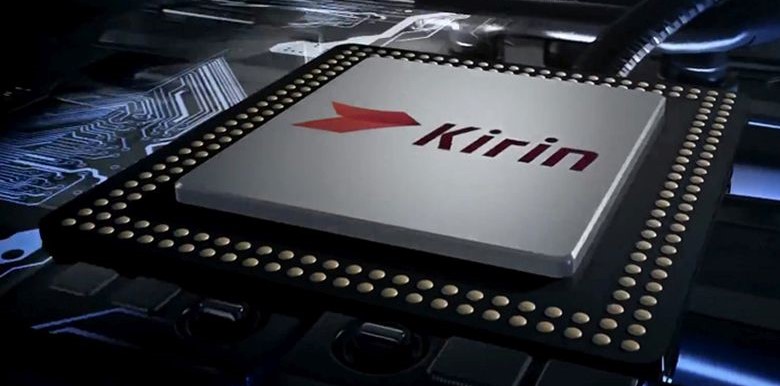
The HiSilicon Kirin 9050 Pro is an ARM-based SoC from 2026 with 9 cores and 16 threads in 4 clusters. It is the first chip to use a new type of vertical die stacking, which Huawei calls LogicFolding. Here, two chips are stacked on top of each other and connected directly via signal paths. This allows HiSilicon to significantly increase transistor density and shorten signal paths. LogicFolding distributes selected circuit areas across vertically connected layers. Hybrid bonding shortens the connections between these areas. This is Huawei's first commercial application of LogicFolding, not the world's first processor with stacked dies.
It integrates one large core clocked at 3.1 GHz with 2 MB of L2 cache. Two smaller performance cores run at up to 2.7 GHz. The prime core and the two P-cores share 8 MB of L3 cache. Four cores running at up to 2.2 GHz handle efficiency tasks and have access to another 8 MB of L3 cache. Finally, there are two small ultra-low-power cores running at up to 1.75 GHz with 2 MB of L2 cache.
Thanks to architectural changes within the cores and higher clock speeds, the Kirin 9050 Pro can pull significantly ahead of the Kirin 9030 Pro (predecessor) . Compared to Apple and Qualcomm, however, it still falls short of current flagship SoCs. In initial Geekbench benchmarks, the Kirin 9050 Pro is therefore closer to the level of a Mediatek Dimensity 9500.
It offers a significantly faster NPU than its predecessor, with peak performance of 70 TOPS. The integrated memory controller (4x 24-bit) supports LPDDR6 at 10667 MHz.
The new Maleoon 955 iGPU still offers 6 CUs, but apparently has more ALUs per CU, making it significantly faster than the old Maleoon 935.
The compute dies are manufactured by SMIC on the N+3 node (5 nm), while the SRAM is manufactured on the N+2 node (7nm).
| Clock Rate | 1750 - 3100 MHz |
| Level 2 Cache | 20 MiB |
| Level 3 Cache | 12 MiB |
| Number of Cores / Threads | 9 / 16 1 x 3.1 GHz 2 x 2.7 GHz 4 x 2.2 GHz 2 x 1.8 GHz |
| Manufacturing Technology | 5 nm |
| NPU / AI | 70 TOPS INT8 |
| 64 Bit | 64 Bit support |
| Architecture | ARM |
| Announcement Date | 10/04/2026 |
Benchmarks

 - Average benchmark values
* Smaller numbers mean a higher performance

- Check price at AmazonSearch Amazon for HiSilicon Kirin 9050 Pro
No reviews found for this CPU (yet).
 Add as a preferred source on Google


