




AMD Ryzen AI 400 Performance Analysis: Gorgon Point debuts with only minor improvements

AMD announced the new Ryzen AI 400 mobile APUs codenamed Gorgon Point at this year's CES. However, this is only a relatively minor update compared to last year's Strix Point generation.
The familiar Zen 5 architecture is still used for the processor cores, while the iGPUs continue to use RDNA 3.5 compute units (CUs). Laptops featuring Ryzen AI 400 mobile APUs are now available on the market.
Ryzen AI 400 "Gorgon Point" at a glance
AMD's new mobile processors are called Ryzen AI 400 and the same models as with last year's Ryzen AI 300 series APUs are once again available this time. Combinations of full Zen 5 cores and weaker Zen 5c cores that have less cache and lower clocks are used.
The maximum CPU frequency has been increased by 100 MHz on some models and faster NPUs (50-60 TOPS) are now generally onboard, which is why all processors meet the requirements for Microsoft's Copilot+ certification.
The speed of the main memory has also been increased and, depending on the model, is now 8,000-8,533 MHz. That being said, manufacturers can also install DDR5-5600 RAM in SO-DIMM modules.

The processors are generally intended for the 28-54 W TDP range but, as was the case last year, expect to see laptop designs this year that can consume significantly more power up to 85 W.
Like the previous generation, the fastest iGPU, the Radeon 890M, is reserved for the two top models, the Ryzen AI 9 HX470 and Ryzen AI 9 HX 475, which only differ in terms of NPU performance (55 TOPS vs. 60 TOPS).
The Ryzen AI 9 465 relies on the Radeon 880M, the Ryzen AI 7 450 on the Radeon 860M and the other three models on the Radeon 840M. There are no changes to the clock rates of the iGPUs.
The test system: Asus Zenbook S16
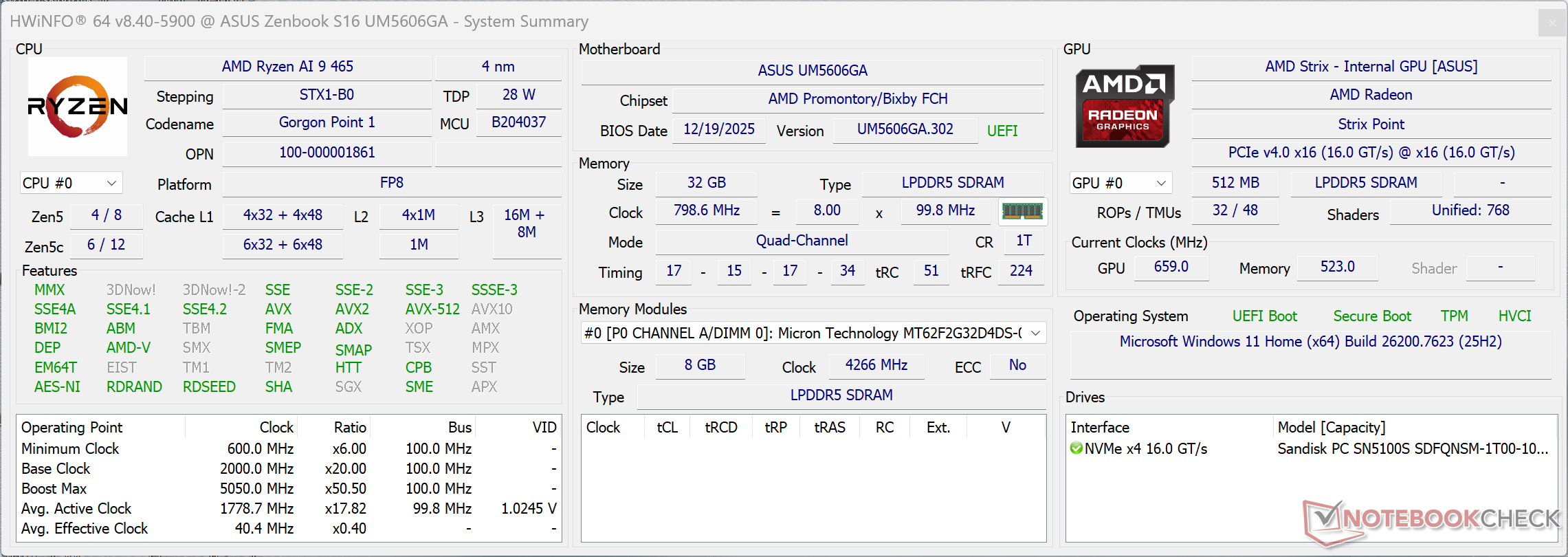
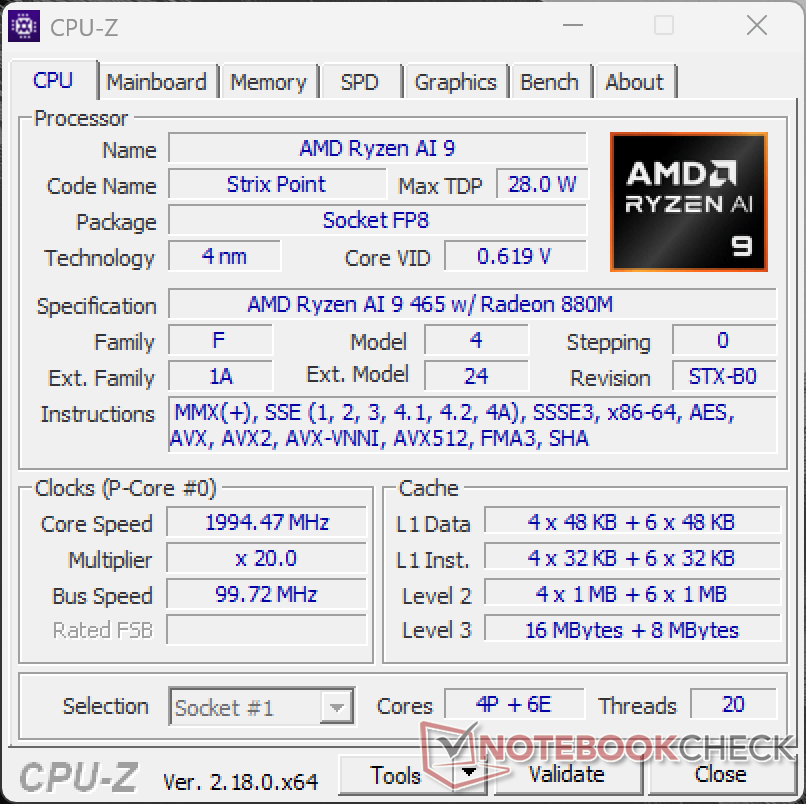
The first device featuring the new Ryzen AI 400 processors to be presented to us is the new Asus Zenbook S16 UM5606GA, which is powered by the AMD Ryzen AI 9 465 along with the familiar Radeon 880M graphics card (Adrenalin driver version 25.20.32.06).
Similar to last year's model, the Zenbook S16 is a very slim 16-inch laptop, which thus has an impact on the CPU power limits. At 45 W/35 W, this is not the fastest implementation, but at least Asus has raised the power limits slightly compared to a maximum of 33 W previously.
While last year's model was equipped with LPDDR5x-7500 RAM, the new Zenbook S16 uses faster LPDDR5x-8533 memory. The full review of the new Asus Zenbook S16 will be published in the coming days.
Test procedure
In order to make a meaningful comparison between the different processors, we look at the power consumption in addition to the pure performance in synthetic benchmarks from which we then determine the efficiency.
The consumption measurements are always carried out on an external display so that we can eliminate the different internal displays as influencing factors. Nevertheless, we measure the overall consumption of the system here and do not just compare the pure TDP values.
Single-core performance and efficiency
Let's start with single-core performance. Since the Ryzen AI 9 465, like its predecessor, the Ryzen AI 9 365, can reach a maximum of 5.0 GHz clocks, there is unsurprisingly no performance advantage here.
This leaves it behind the current Intel chips (Arrow Lake and Lunar Lake).
The Snapdragon CPUs without Turbo are narrowly beaten, but the variants with dual-core Turbo are slightly faster.
Apple's M4 generation (let's not even talk about the M5) is still significantly faster than the Ryzen AI 9 465.
There are improvements in single-core efficiency, which indicates optimizations in the manufacturing process. We see an advantage of around 20% compared to the old Zenbook S16 with the Ryzen AI 9 HX 370 and also slight advantages over the slower Ryzen AI 7 350 APUs.
This puts the new Ryzen AI 9 465 roughly on a par with the current Arrow Lake models from Intel, but the Lunar Lake chips are more efficient.
The ARM competition from Apple and Qualcomm is still significantly more efficient under single-core load.
* ... smaller is better
Multi-core performance and efficiency
The multi-core performance of the new Ryzen 9 465 has also increased somewhat, as the results with 45 W/35 W are on a par with the old Ryzen 9 365 with higher power limits (60 W/54 W).
As expected, the Intel Lunar Lake processors are clearly beaten in the multi-core tests. Arrow Lake chips are sometimes faster but also require significantly more power (short-term power limits of up to 115 W).
The Snapdragon chips are generally slower, but Apple's M4 SoC is a few percent faster. The M5 and M4 Pro SoCs show significant advantages in multi-core.
Multi-core efficiency sees some small gains as well. In addition to the standard power limits, we also carried out the efficiency measurement with fixed power limits of 35 W, 28 W and 20 W.
As expected, efficiency improves with lower power limits, although the difference between 28 and 35 W is only minimal.
At 20 W, however, the efficiency improves noticeably and here the Ryzen AI 9 465 is almost on a par with the M4 SoC.
| Power Consumption / Cinebench 2024 Multi Power Efficiency - external Monitor | |
| Apple M5 10-Core | |
| Apple M4 10-Core | |
| Intel Core Ultra X9 388H | |
| Intel Core Ultra X9 388H | |
| Qualcomm Snapdragon X Elite X1E-84-100 | |
| AMD Ryzen AI 9 465 | |
| Apple M4 Pro 12-Core | |
| Qualcomm Snapdragon X Elite X1E-78-100 | |
| Intel Core Ultra X9 388H | |
| AMD Ryzen AI 9 HX 370 | |
| Intel Core Ultra 9 285H | |
| Qualcomm Snapdragon X Plus X1P-42-100 | |
| AMD Ryzen AI 9 465 | |
| Qualcomm Snapdragon X X1-26-100 | |
| Intel Core Ultra X9 388H | |
| Qualcomm Snapdragon X Elite X1E-80-100 | |
| AMD Ryzen AI 9 465 | |
| AMD Ryzen AI 9 465 | |
| Intel Core Ultra 7 255H | |
| Intel Core Ultra 7 258V | |
| Intel Core Ultra 7 268V | |
| Intel Core Ultra 5 228V | |
| Intel Core Ultra 7 258V | |
| Intel Core Ultra 7 255H | |
| Intel Core Ultra 7 268V | |
| AMD Ryzen AI 9 365 | |
| AMD Ryzen AI 7 350 | |
| AMD Ryzen AI 9 HX 370 | |
| AMD Ryzen AI 7 350 | |
| Power Consumption / Cinebench 2024 Multi Power (external Monitor) | |
| AMD Ryzen AI 9 HX 370 | |
| AMD Ryzen AI 7 350 | |
| AMD Ryzen AI 7 350 | |
| Intel Core Ultra 7 255H | |
| AMD Ryzen AI 9 365 | |
| Intel Core Ultra X9 388H | |
| Apple M4 Pro 12-Core | |
| AMD Ryzen AI 9 465 | |
| AMD Ryzen AI 9 465 | |
| AMD Ryzen AI 9 465 | |
| Qualcomm Snapdragon X Elite X1E-80-100 | |
| Intel Core Ultra X9 388H | |
| Intel Core Ultra 9 285H | |
| Intel Core Ultra 7 255H | |
| Intel Core Ultra 7 268V | |
| AMD Ryzen AI 9 465 | |
| AMD Ryzen AI 9 HX 370 | |
| Intel Core Ultra X9 388H | |
| Apple M5 10-Core | |
| Intel Core Ultra 7 268V | |
| Qualcomm Snapdragon X Elite X1E-78-100 | |
| Intel Core Ultra 7 258V | |
| Qualcomm Snapdragon X Plus X1P-42-100 | |
| Apple M4 10-Core | |
| Qualcomm Snapdragon X Elite X1E-84-100 | |
| Intel Core Ultra 7 258V | |
| Qualcomm Snapdragon X X1-26-100 | |
| AMD Ryzen AI 9 465 | |
| Intel Core Ultra 5 228V | |
| Intel Core Ultra X9 388H | |
* ... smaller is better
CPU performance with different power limits
We also checked the CPU multi-core performance at various power limits, whereby we were able to use a maximum of 35 W as the cooling of the Zenbook S16 was the limiting factor here.
The Ryzen AI 9 HX 370 has an advantage here due to the additional CPU cores, but Gorgon Point remains faster compared to the Intel Arrow Lake processors like the Core Ultra 9 285H or the Core Ultra 7 255H, especially in this TDP range up to 35 W.
Lunar Lake chips are easily beaten here anyway with their low multi-core performance.

| CPU | 20 Watt | 28 W | 35 W | 45 W |
|---|---|---|---|---|
| AMD Ryzen AI 9 465 | 768 points | 842 points | 930 points | |
| AMD Ryzen AI 9 HX370 | 760 points | 927 points | 1022 points | 1107 points |
| AMD Ryzen 7 PRO 350 | 604 points | 739 points | 813 points | |
| Intel Core Ultra 9 285H | 597 points | 778 points | 892 points | 977 points |
| Intel Core Ultra 7 255H | 492 points | 696 points | 834 points | 962 points |
| Intel Core Ultra 7 258V | 512 points | 587 points | ||
| Intel Core Ultra 7 155H | 438 points | 637 points | 752 points | 887 points |
RAM Performance
We used AIDA64 benchmarks to evaluate memory performance. With the faster LPDDR5x-8533 RAM, the new Ryzen AI 9 465 can secure a slight lead over the Ryzen AI 9 HX 370 with LPDDR5x-7500.
However, the Lunar Lake chips from Intel are on a comparable level.
| AIDA64 / Memory Copy | |
| Lenovo ThinkPad X9-15 Aura Edition | |
| Lenovo Yoga Pro 7 14IAH10 | |
| Microsoft Surface Laptop 7 15 Lunar Lake | |
| Asus ZenBook S16 UM5606GA | |
| Asus Zenbook S 16 UM5606-RK333W | |
| Schenker XMG Evo 15 (M25) | |
| Average of class Multimedia (11299 - 157183, n=50, last 2 years) | |
| Lenovo ThinkBook 16 G7+ AMD | |
| Global Average -2 (4514 - 234662, n=2281) | |
| AIDA64 / Memory Read | |
| Asus ZenBook S16 UM5606GA | |
| Asus Zenbook S 16 UM5606-RK333W | |
| Lenovo ThinkBook 16 G7+ AMD | |
| Microsoft Surface Laptop 7 15 Lunar Lake | |
| Lenovo ThinkPad X9-15 Aura Edition | |
| Lenovo Yoga Pro 7 14IAH10 | |
| Schenker XMG Evo 15 (M25) | |
| Average of class Multimedia (11624 - 174586, n=50, last 2 years) | |
| Global Average -2 (4031 - 271066, n=2245) | |
| AIDA64 / Memory Write | |
| Microsoft Surface Laptop 7 15 Lunar Lake | |
| Lenovo ThinkPad X9-15 Aura Edition | |
| Asus ZenBook S16 UM5606GA | |
| Asus Zenbook S 16 UM5606-RK333W | |
| Lenovo ThinkBook 16 G7+ AMD | |
| Average of class Multimedia (11755 - 225987, n=50, last 2 years) | |
| Schenker XMG Evo 15 (M25) | |
| Lenovo Yoga Pro 7 14IAH10 | |
| Global Average -2 (3506 - 242868, n=2249) | |
| AIDA64 / Memory Latency | |
| Average of class Multimedia (84.1 - 535, n=47, last 2 years) | |
| Lenovo ThinkBook 16 G7+ AMD | |
| Lenovo Yoga Pro 7 14IAH10 | |
| Asus Zenbook S 16 UM5606-RK333W | |
| Schenker XMG Evo 15 (M25) | |
| Asus ZenBook S16 UM5606GA | |
| Microsoft Surface Laptop 7 15 Lunar Lake | |
| Lenovo ThinkPad X9-15 Aura Edition | |
| Global Average -2 (6.1 - 536, n=2305) | |
* ... smaller is better
GPU performance
As mentioned earlier, there are no changes to integrated graphics, not even to the maximum clock rate. Only the slightly faster RAM may have a positive effect.
The synthetic benchmarks show a slight advantage in some cases. Nevertheless, the AMD iGPU remains behind the current Intel Arc Graphics 140T and Arc Graphics 140V iGPUs.
We will add further results for gaming performance and efficiency in the coming days.
Conclusion: AMD could lose the connection
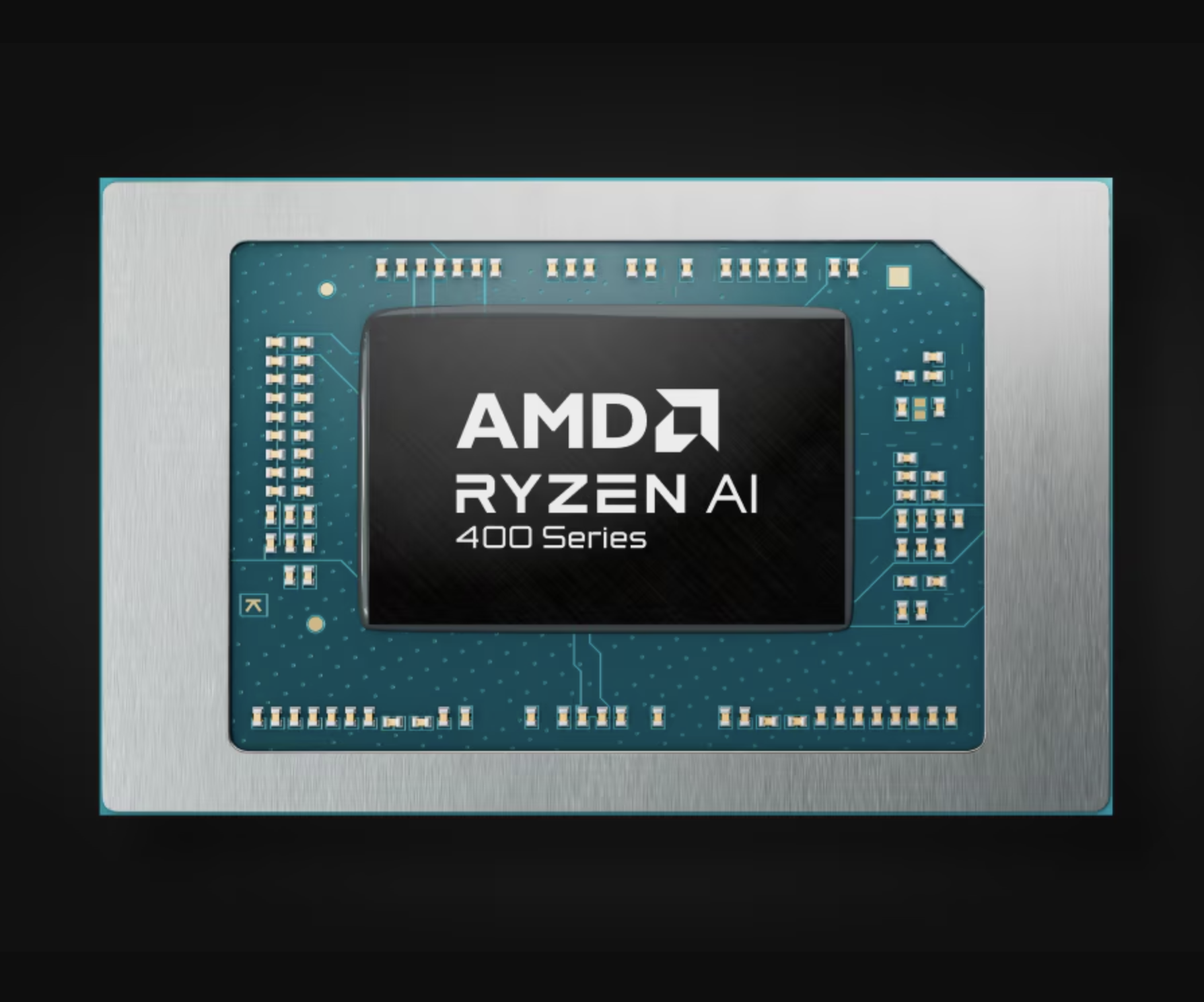
The new Ryzen AI 400 Gorgon Point processors are only a minor update with a slightly higher frequency, and the basic architecture and core composition (number and type of cores) has not changed. This also applies to the integrated Radeon graphics.
We will expand this analysis with further Ryzen AI 400 processors as soon as we have them, but it looks like there will probably be no changes to the overall picture. Essentially, the multi-core performance in the TDP range up to 35 W remains very good and competitive.
However, AMD is likely to lose some ground to the competition, especially in terms of single-core performance and graphics performance. Apple already showed what it is capable of with the M5 SoC in the fall, especially in single-core numbers. The upcoming M5 Pro chips should also follow suit in terms of multi-core and GPU performance.
The new Intel Panther Lake processors are already in the starting blocks and in just a few days we will be able to get a comprehensive picture of the performance and efficiency of the new mobile processors.
Based on preliminary benchmarks we were able to carry out at CES 2026, Panther Lake's GPU performance in particular is likely to increase significantly. Qualcomm will also launch the second generation of its Snapdragon X processors on the market this spring with the promise of significant improvements.
Therefore, while AMD was quite competitive overall in 2025, the tide could shift significantly in favor of Intel in 2026. As already mentioned, we will be able to test the new Panther Lake processors extensively in just a few days, which will allow us to better assess AMD's mini refresh.
 Add as a preferred source on Google


