




Intel Panther Lake Core Ultra X9 388H iGPU gaming performance and wall power draw tested in Cyberpunk 2077 at ultra settings
Intel’s Panther Lake marks the company’s next-generation mobile processor platform, designed to scale from thin-and-light ultrabooks to higher-performance creator and gaming laptops. The architecture is also expected to play a role in future gaming handhelds, with Intel confirming that multiple OEMs are collaborating on what it describes as a broader Panther Lake-based handheld ecosystem.
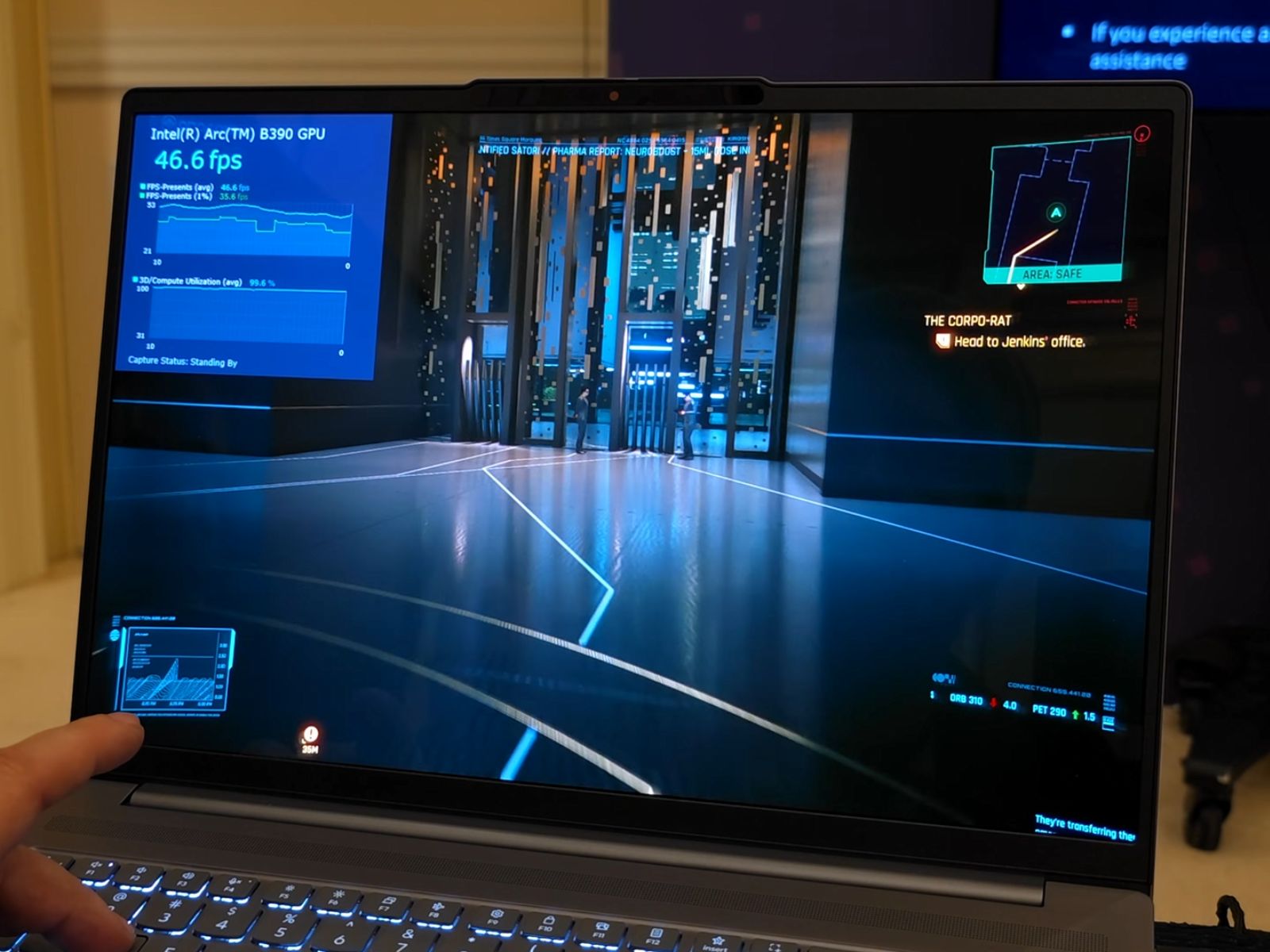
We now have an early look at Panther Lake laptop gaming performance, courtesy of a hands-on video published by ETA Prime. The video showcases Intel’s Panther Lake processors running inside a Lenovo reference laptop provided for testing. The YouTuber adds that the system shown is not a final retail design, but says that the processor configuration demonstrated should be used across multiple future laptops.
The reference system featured the Core Ultra X9 388H, a 16-core, 16-thread processor paired with 64 GB of LPDDR5X memory operating at 9,600 MT/s. Graphics workload were handled by Intel’s Arc B390 iGPU. While CPU-focused benchmarks were not permitted at this stage, ETA Prime says that they were allowed to freely test gaming workloads.
Several AAA PC titles were tested at 1200p resolution using a mix of medium and high presets. Marvel’s Spider-Man 2 was shown running at high settings with XeSS set to Quality and without frame generation enabled, maintaining frame rates above 70 FPS after switching to balanced mode.
ETA Prime also tested Shadow of the Tomb Raider, which averaged 74 FPS at 1200p high settings using the built-in benchmark with no upscaling enabled, and Doom: The Dark Ages, which reportedly averaged around 87 FPS at medium settings and approximately 72 FPS at high settings with XeSS enabled. The video also notes that the large system memory allocation allows the iGPU to dynamically reserve sufficient VRAM, which can be manually adjusted through Intel’s graphics control panel if needed.
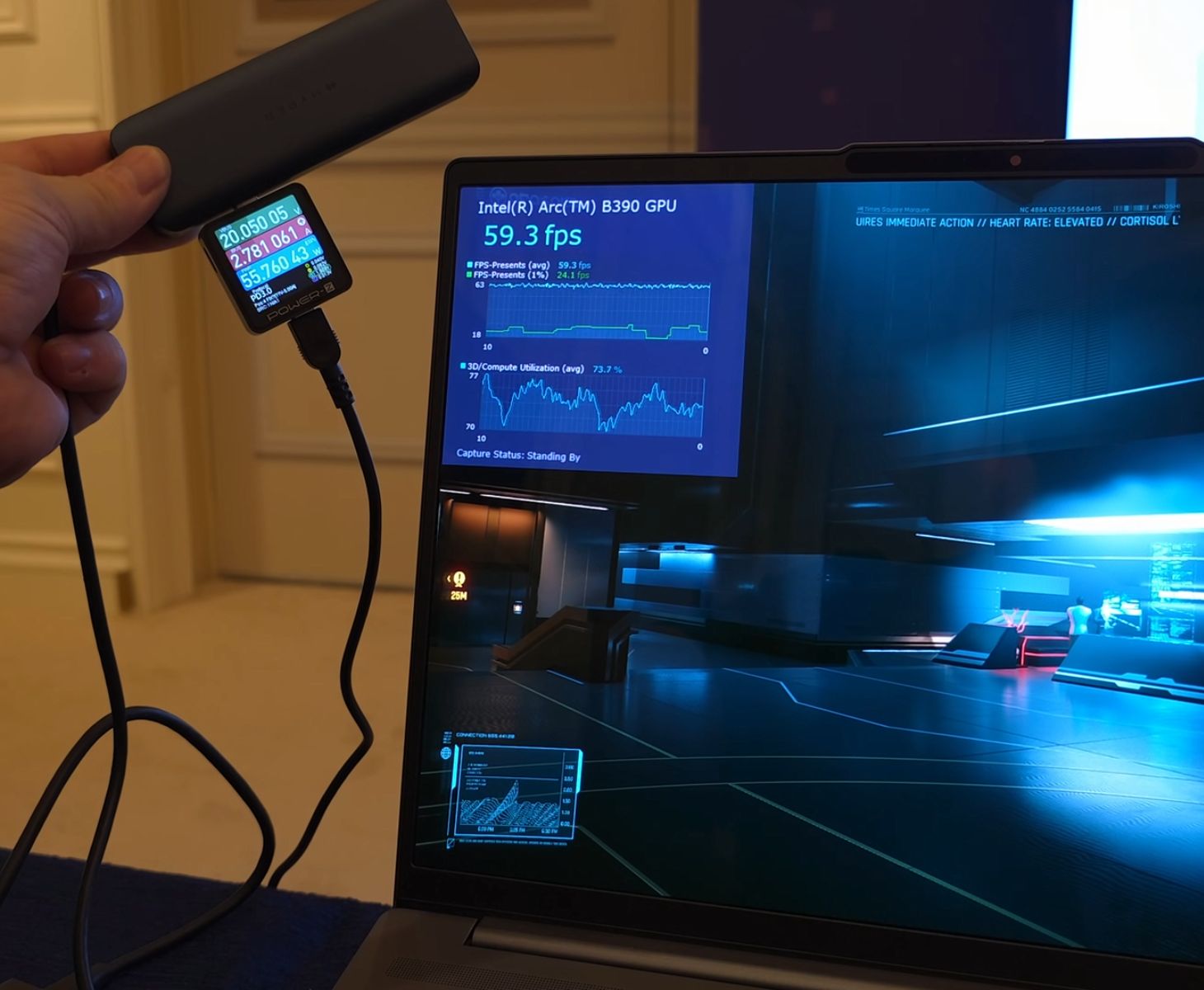
The YouTuber capped the gameplay at 60 FPS while running Cyberpunk 2077 at ultra settings with XeSS Balanced, again without frame generation. This was done to test how much power the CPU was drawing while running the game. Since running HWiNFO was not possible, ETA Prime measured power consumption using a watt meter, which showed that the setup was using around 55.7 W.
You can watch the full test video linked down below.
Source(s)
 Add as a preferred source on Google


