




Intel slams AMD handhelds for using "ancient silicon" in new market push

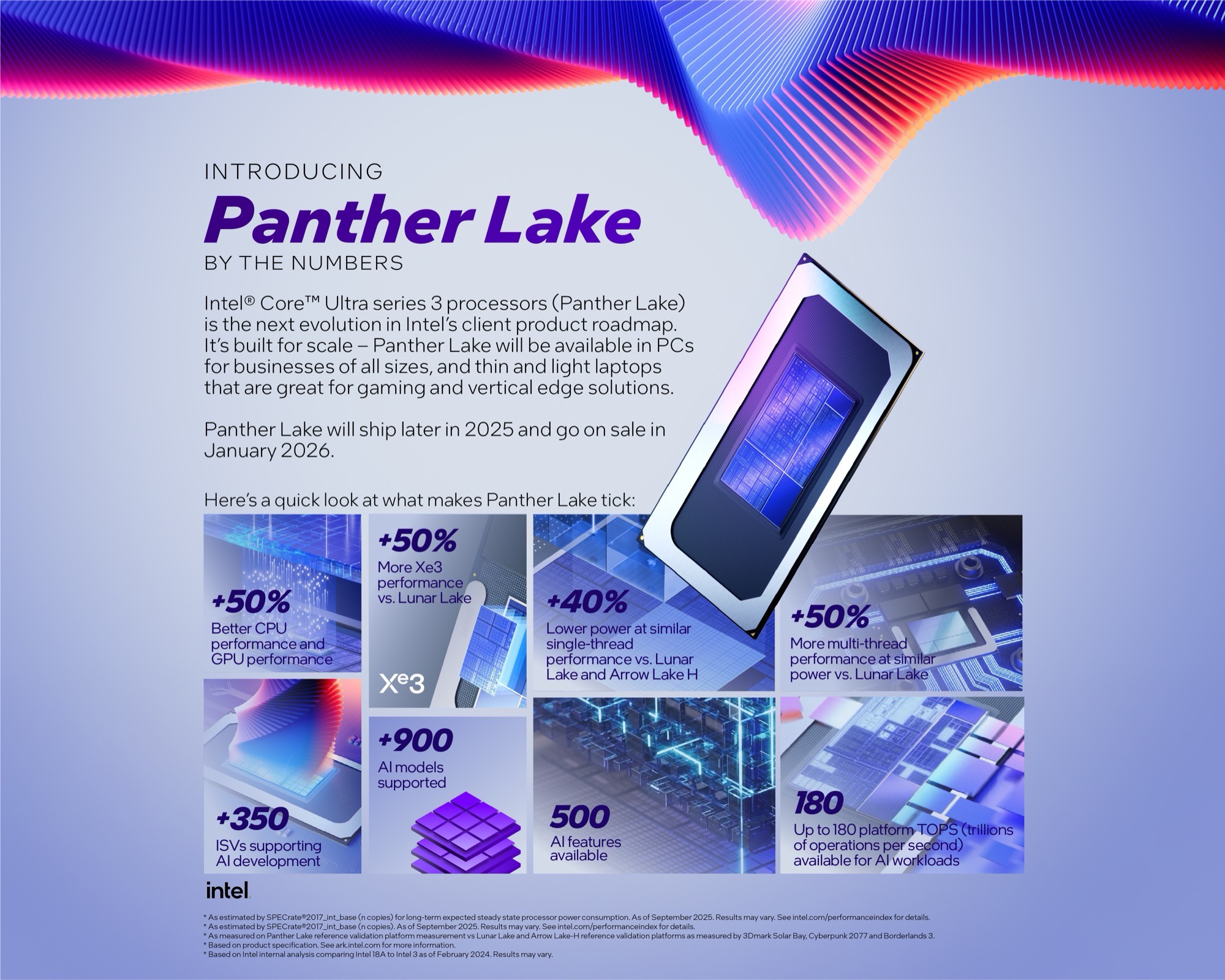
Over the past few days, dozens of new laptops based on Intel Panther Lake chipsets have been unveiled, but processors such as the Intel Core Ultra X7 358H are also interesting for gaming handheld makers. Intel combines four performance cores with twelve efficiency cores in order to deliver strong CPU performance even at low power consumption.
The new Intel Arc B390 iGPU also makes a strong impression in early tests, handling Cyberpunk 2077 at ultra settings, 1200p resolution and XeSS balanced at 60 frames per second with a power draw of 55 watts. Upcoming tests should also show how Panther Lake performs at power limits that are typical for handhelds, so in the range of 10 to 25 watts. In an interview with PCWorld, the Senior Director of Product Management for Intel’s Client Computing division has now basically challenged AMD’s dominance in the handheld market.
Nish Neelalojanan says: "They [AMD] are selling ancient silicon, while we’re selling up-to-date processors specifically designed for this market." This statement likely refers to the fact that the brand-new AMD Ryzen AI 9 HX 475 is essentially a Ryzen AI 9 HX 375 with slightly higher clock speeds, and that the integrated Radeon 890M iGPU is still based on the RDNA 3+ architecture, even though RDNA 4 is already available.
Over the past several years, AMD has been the clear market leader in gaming handhelds. Most mainstream devices, from the Steam Deck to the Asus ROG Xbox Ally X, rely on AMD Ryzen chips. On the other hand, the Nintendo Switch 2 uses an Nvidia chipset. Only a few handhelds, such as the MSI Claw 8 AI+, have been equipped with an Intel processor, but that could soon change with the launch of Panther Lake CPUs.
Source(s)
 Add as a preferred source on Google


