




Verdict
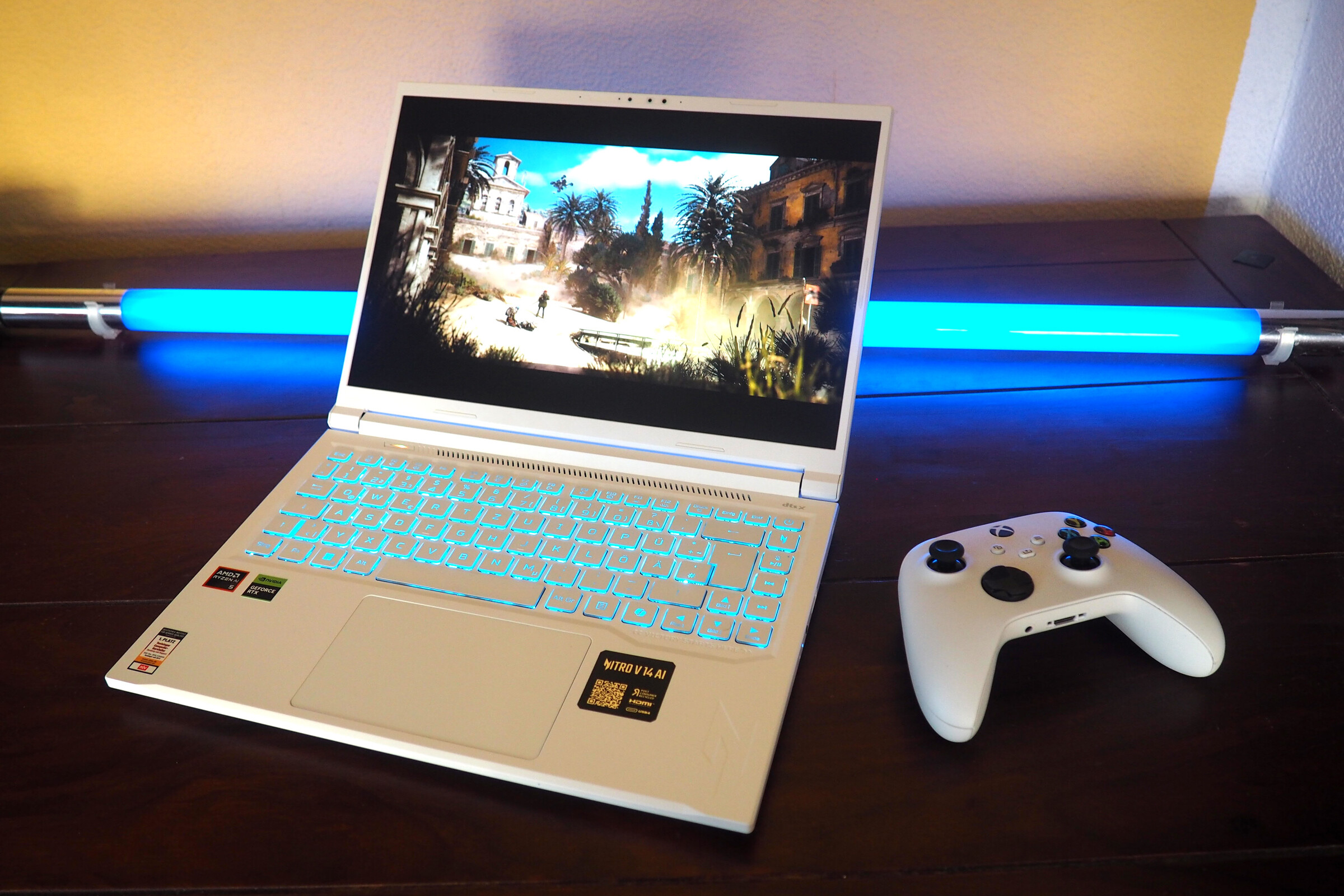
With the Nitro V14 AI, Acer has a particularly compact gaming laptop in its portfolio. The Nitro V14 AI looks fresh thanks to the white chassis and immediately catches the eye, although there is still room for improvement in terms of stability.
The input devices and connections make a good impression, but they aren't necessarily the best in this class.
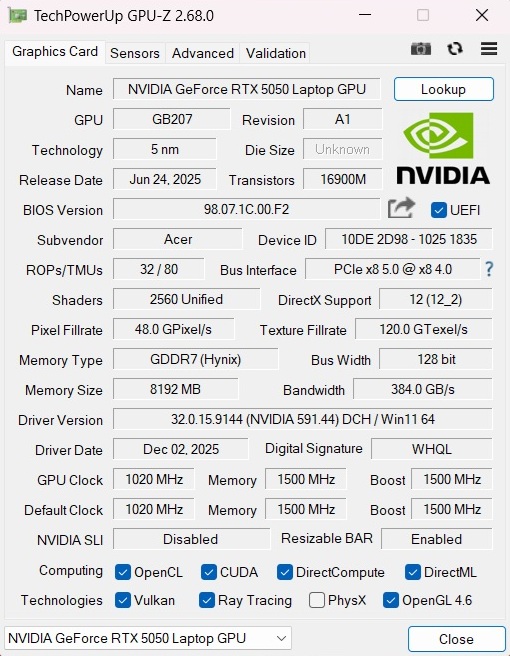
You shouldn't expect top performance from the Nitro V14 AI either. The installed GeForce RTX 5050 graphics card's TGP is limited to 60 W, which is somewhat below its capabilities.
While gaming, and sometimes even in idle, the Nitro V14 AI can still get quite loud, which is why we would like to see a better, more potent cooling system or improved fan control for its successor.
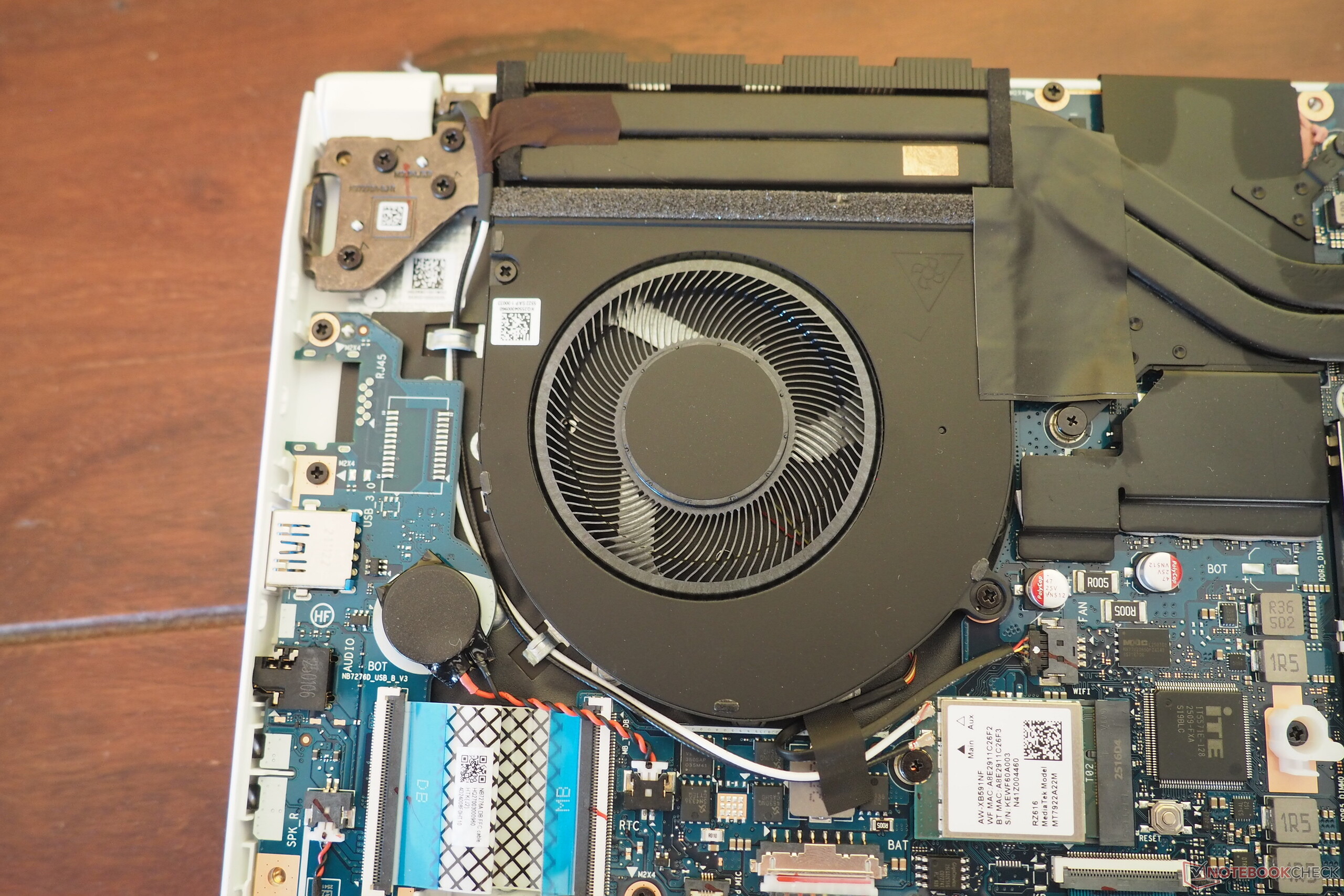
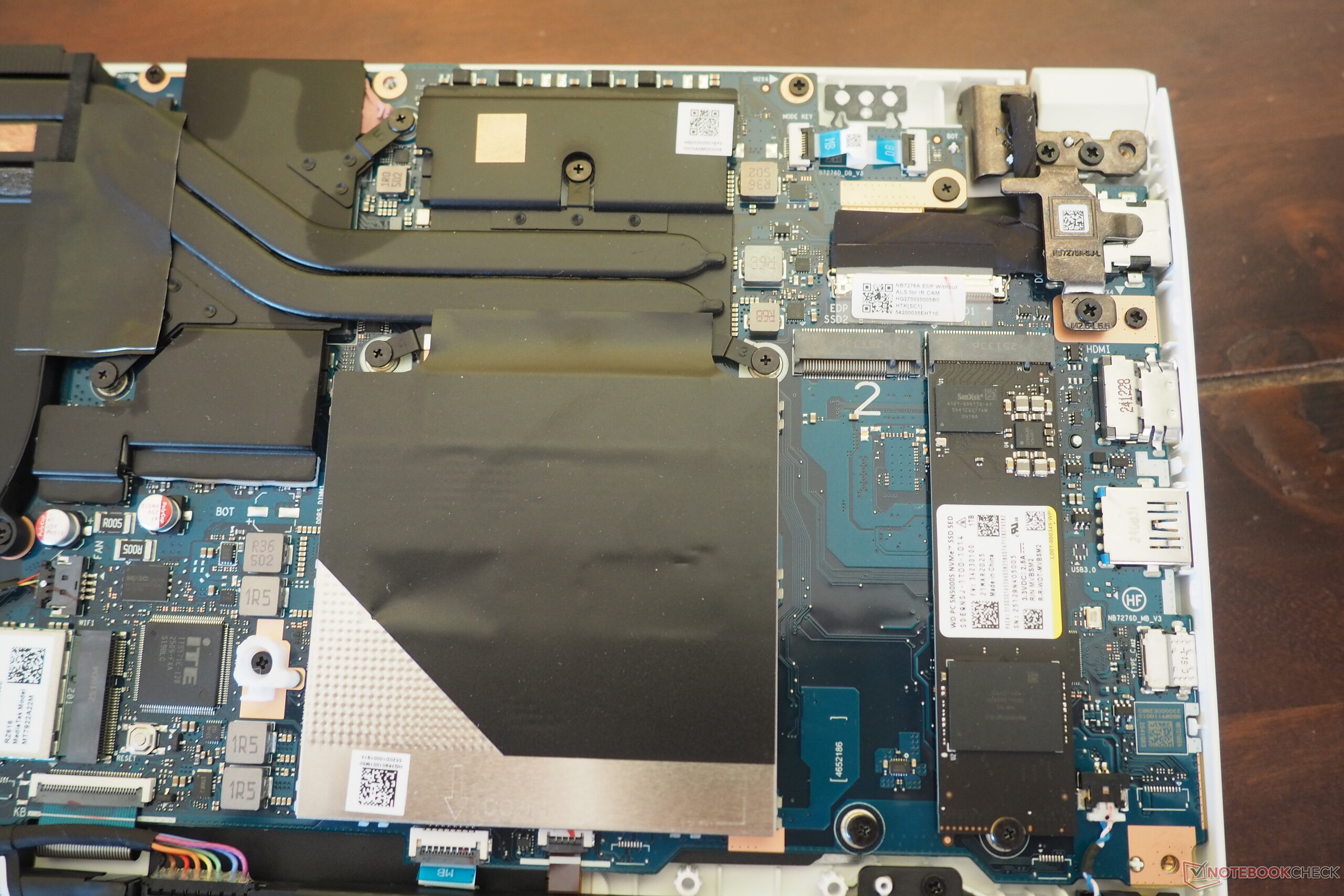
That being said, there are plus points for the expandable or replaceable RAM and SSD, as the Nitro V14 AI has two SO-DIMM banks and two fully-fledged M.2 slots.
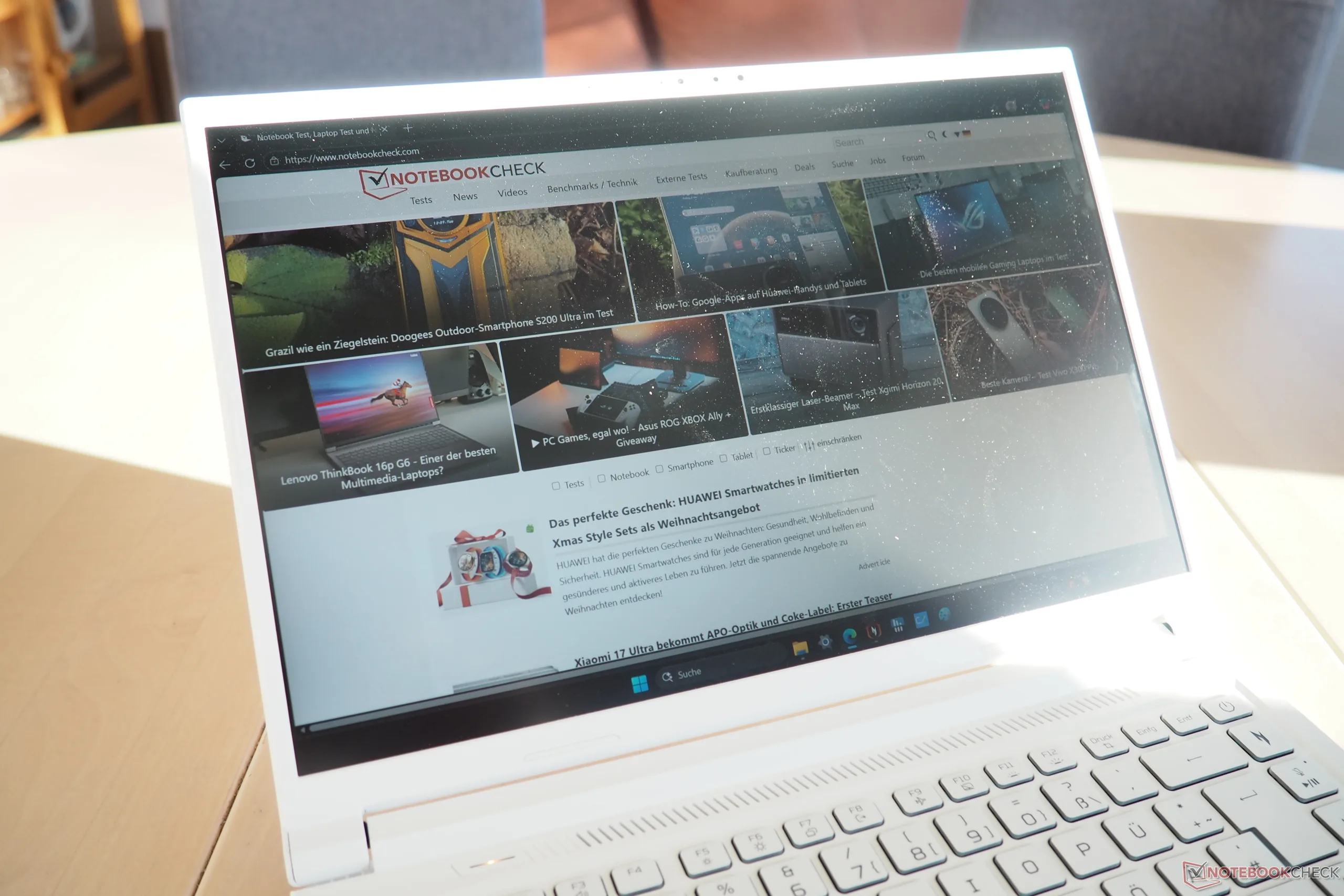
The IPS display is not particularly bright at around 300 cd/m² but should otherwise meet the requirements of most buyers.
The absolute highlight of this 14.5-inch laptop, however, is its generous battery life. The device lasted nearly 13 hours in our Wi-Fi test — an excellent value that is better than almost all competitors.
Pros
Cons
Price and availability
The reviewed Acer Nitro V14 AI ANV14-62-R9LT is available for around €1,150 at various online stores such as notebooksbilliger.de. While this exact configuration is not yet available, a Nitro V16 AI with Ryzen 5 240 and RTX 5050 can be had for $799 on Amazon US.
Speaking of the competition, the Acer Nitro V14 AI's rivals include inexpensive gaming laptops up to 15 inches, which feature an Nvidia GeForce RTX 5050 Laptop or RTX 5060 Laptop such as the HP Victus 15 and the Lenovo LOQ 15.
Additionally, there is a current but more expensive mid-range reference Lenovo Legion 5 in the comparison tables as well as the equally more expensive XMG Core 15.
We have hardly tested 14-inch laptops with an RTX 5000 GPU, with the exception of the Razer Blade 14 and the Asus ROG Zephyrus G14 with the significantly more powerful RTX 5070 and RTX 5070 Ti, respectively.
Specifications
Case
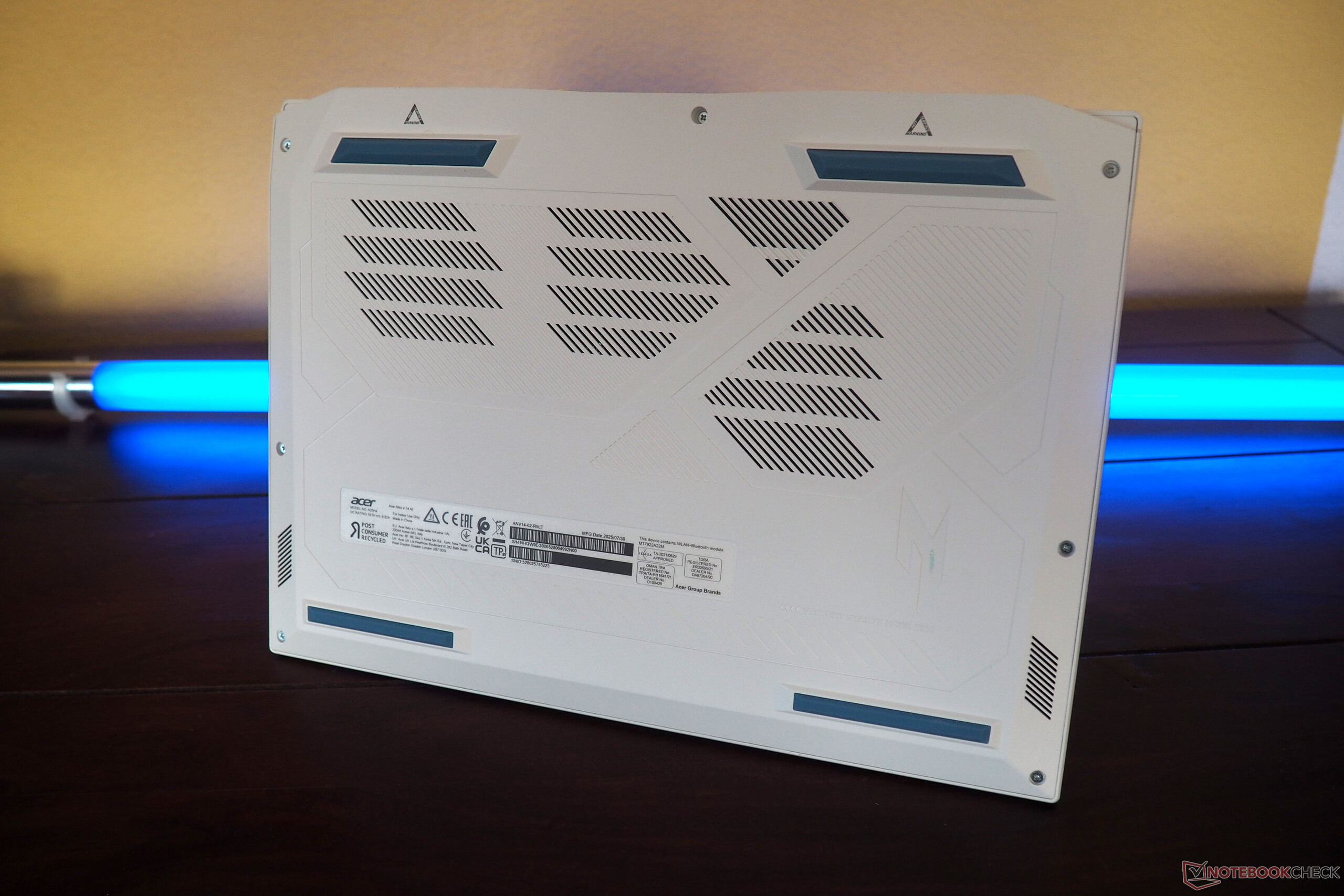
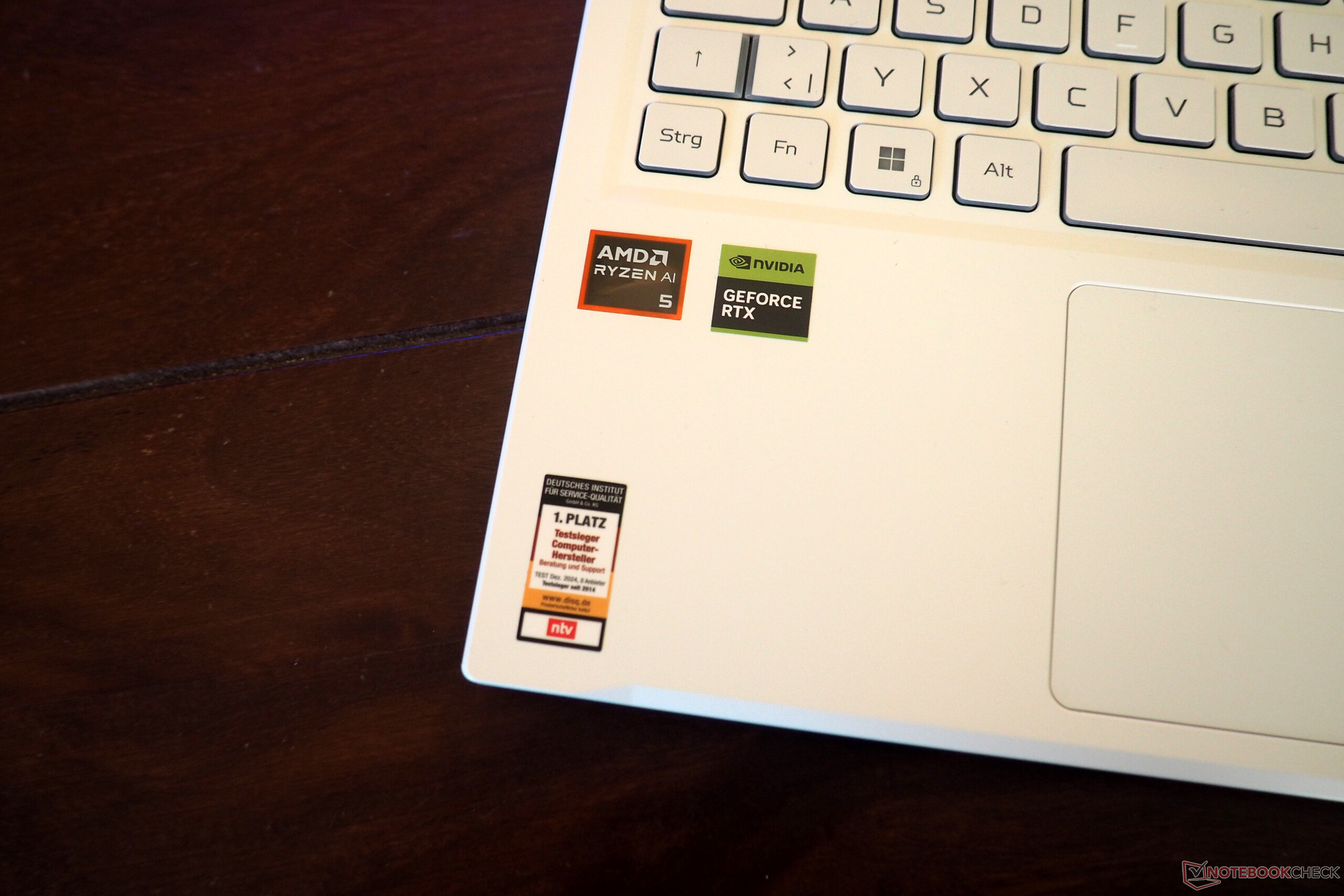
Visually, the chassis cuts a very good figure. We would describe the design as successful, and fingerprints are not really an issue due to the light color.
However, the workmanship could have been more stable. Some surfaces give way noticeably under stronger pressure, especially as Acer relies entirely on plastic.
A 1.7 kg weight is neither low nor very high for a 14.5-inch gaming laptop. By comparison, the more stable and higher quality Blade 14 weighs just about 0.1 kg less. The competition from Razer is also thinner at 16.2 mm vs. 21.9 mm for the Nitro V14 AI.
The Blade 14 also wins in terms of basic dimensions, although this is primarily due to the slightly smaller screen diagonal (14 inches vs 14.5 inches). That being said, compared to typical 15-inch laptops, the Nitro V14 AI still looks compact.


Connectivity
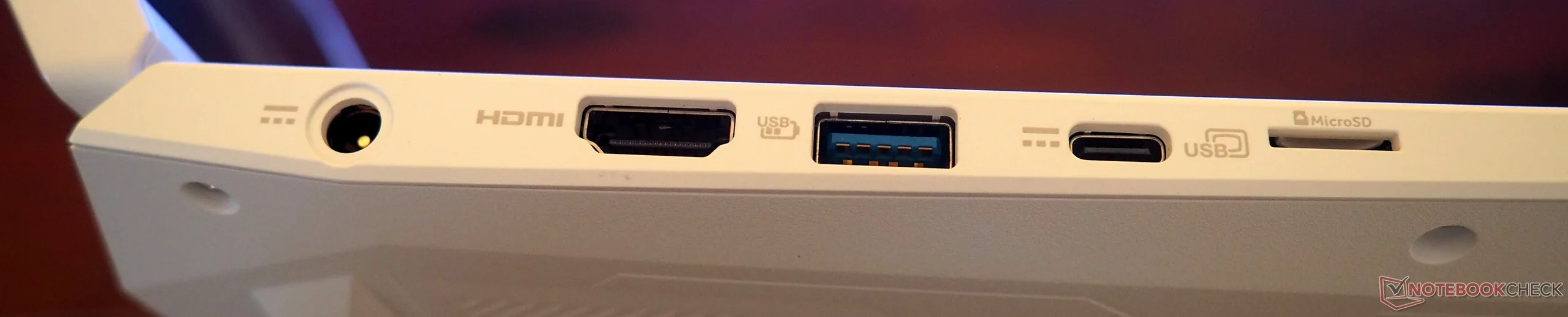
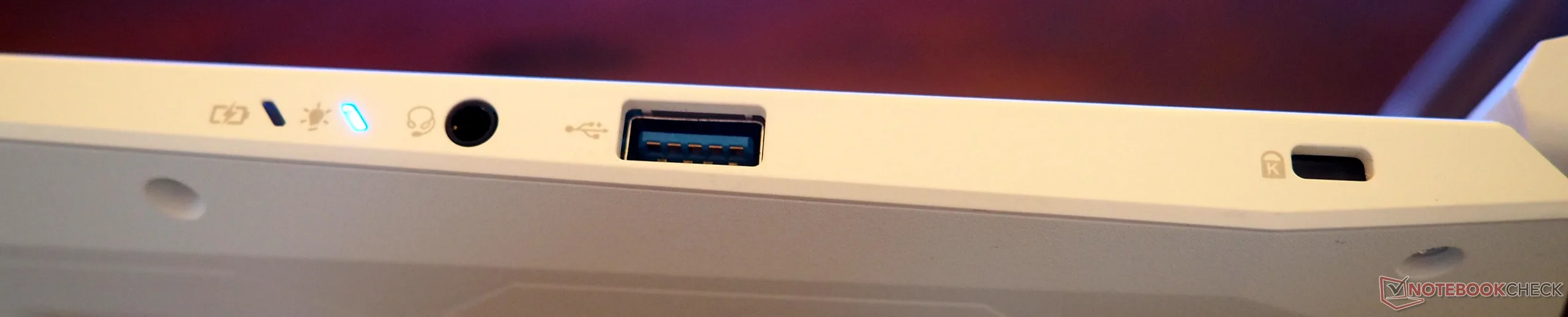
Acer has equipped the Nitro V14 AI with two USB-A ports and a modern USB Type-C port that supports the USB4 standard. There is also an HDMI 2.1 port, a 3.5 mm audio jack, and an opening for Kensington locks.
The card slot is available as a microSD variant. The performance of the card reader is similar to that of the Nitro V16 and only offers USB 2.0-level speeds.
Our test device uses the MediaTek RZ616 Wi-Fi 6E chip, which achieves decent values when transmitting and excellent values when receiving.
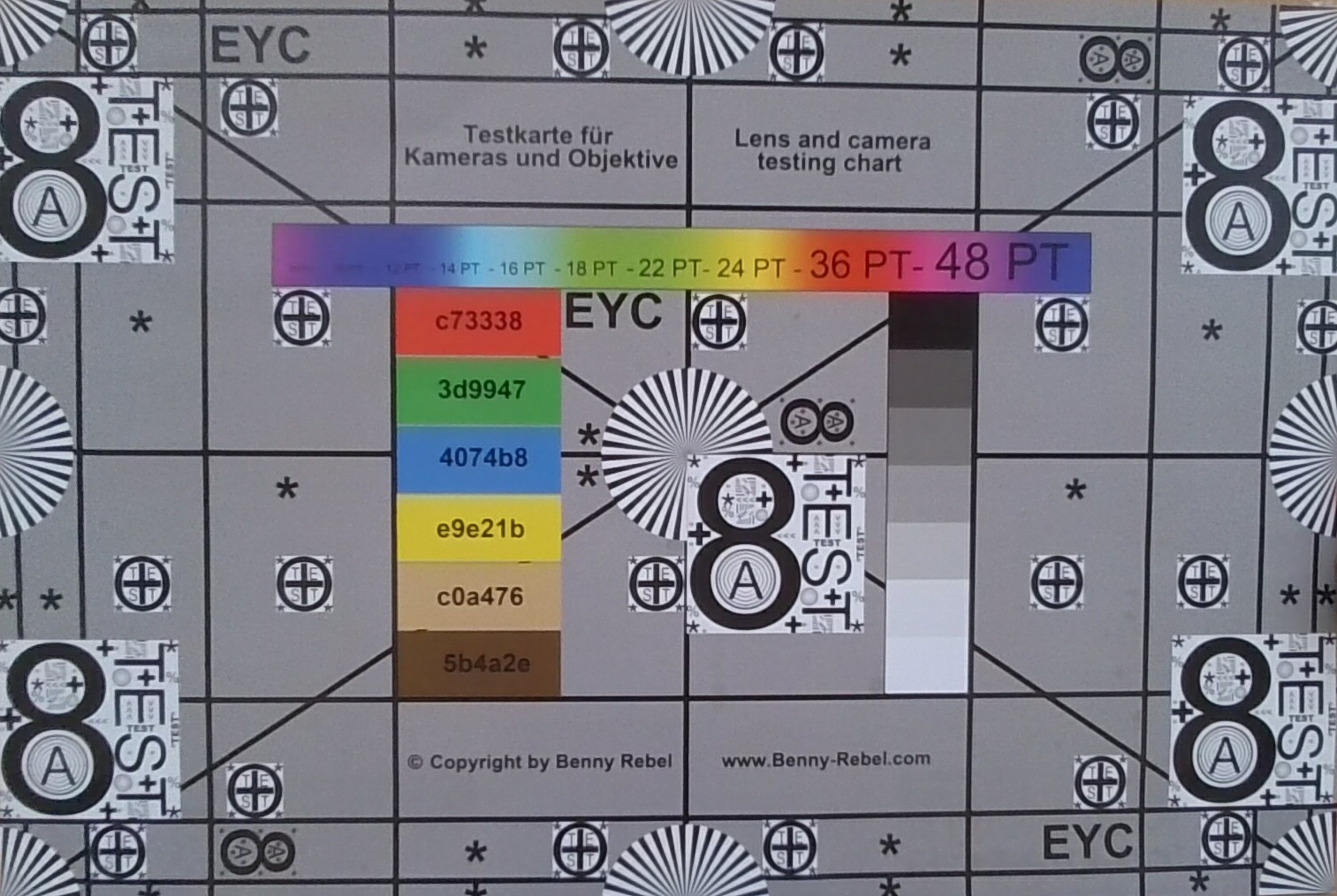
The Nitro V14 AI's Full HD webcam is a tad sharper than that of many competitors, although as usual you shouldn't be expecting miracles in terms of image quality. The same applies to the color accuracy as well.
In order to access the inner workings, seven Phillips screws have to be loosened, and the underside levered out of its anchoring (the latter step is not quite as simple).
SD Card Reader
| SD Card Reader | |
| average JPG Copy Test (av. of 3 runs) | |
| Schenker XMG Core 15 (M25) (AV PRO microSD 128 GB V60) | |
| Razer Blade 14 2025 (Angelbird AV Pro V60) | |
| Average of class Gaming (20.9 - 210, n=54, last 2 years) | |
| Acer Nitro V14 AI ANV14-62-R9LT (AV PRO microSD 128 GB V60) | |
| Acer Nitro V 16 AI ANV16-42-R860 (AV PRO microSD 128 GB V60) | |
| maximum AS SSD Seq Read Test (1GB) | |
| Razer Blade 14 2025 (Angelbird AV Pro V60) | |
| Average of class Gaming (25.5 - 261, n=51, last 2 years) | |
| Acer Nitro V14 AI ANV14-62-R9LT (AV PRO microSD 128 GB V60) | |
| Acer Nitro V 16 AI ANV16-42-R860 (AV PRO microSD 128 GB V60) | |
Communication
Webcam


Maintenance


Input devices
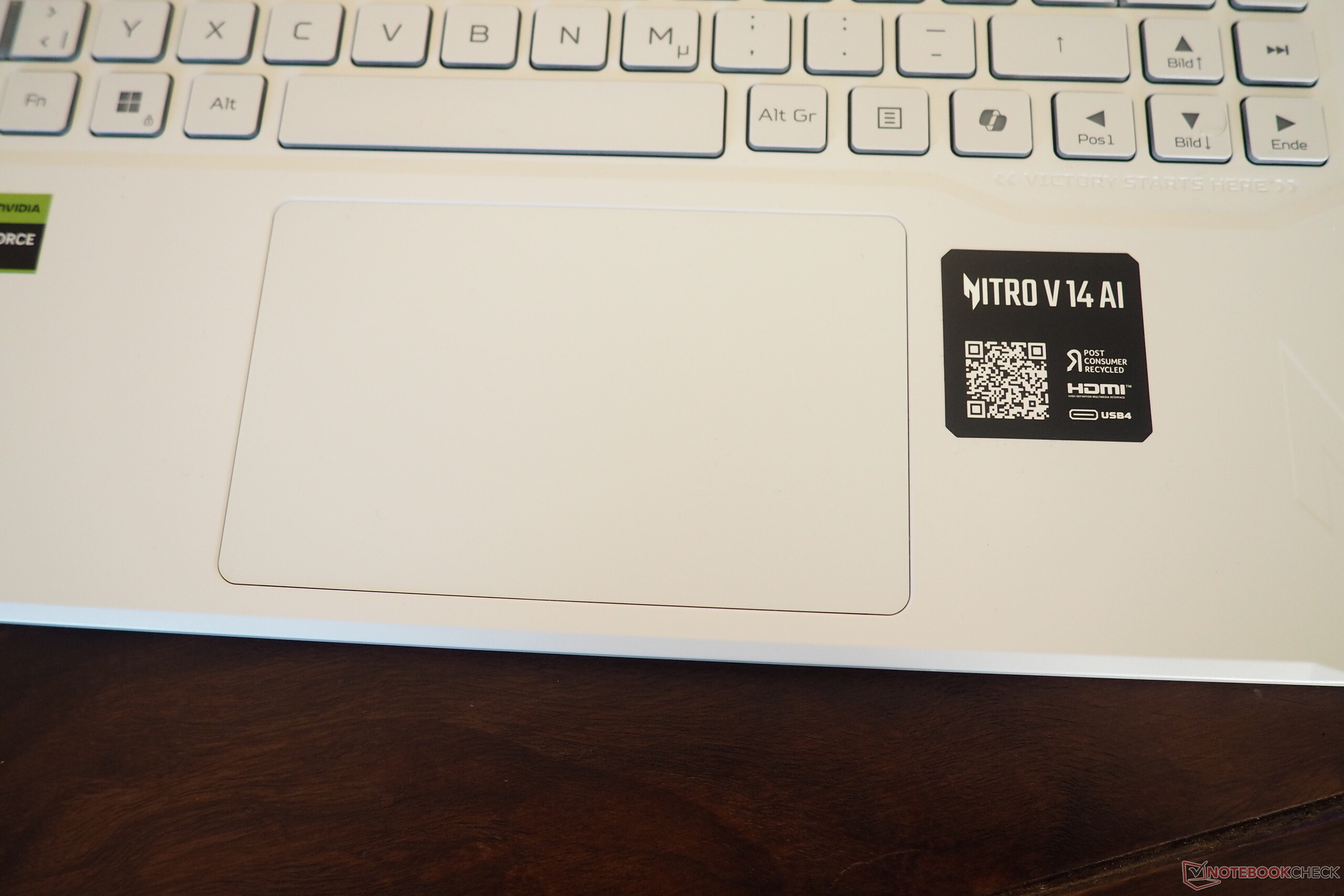
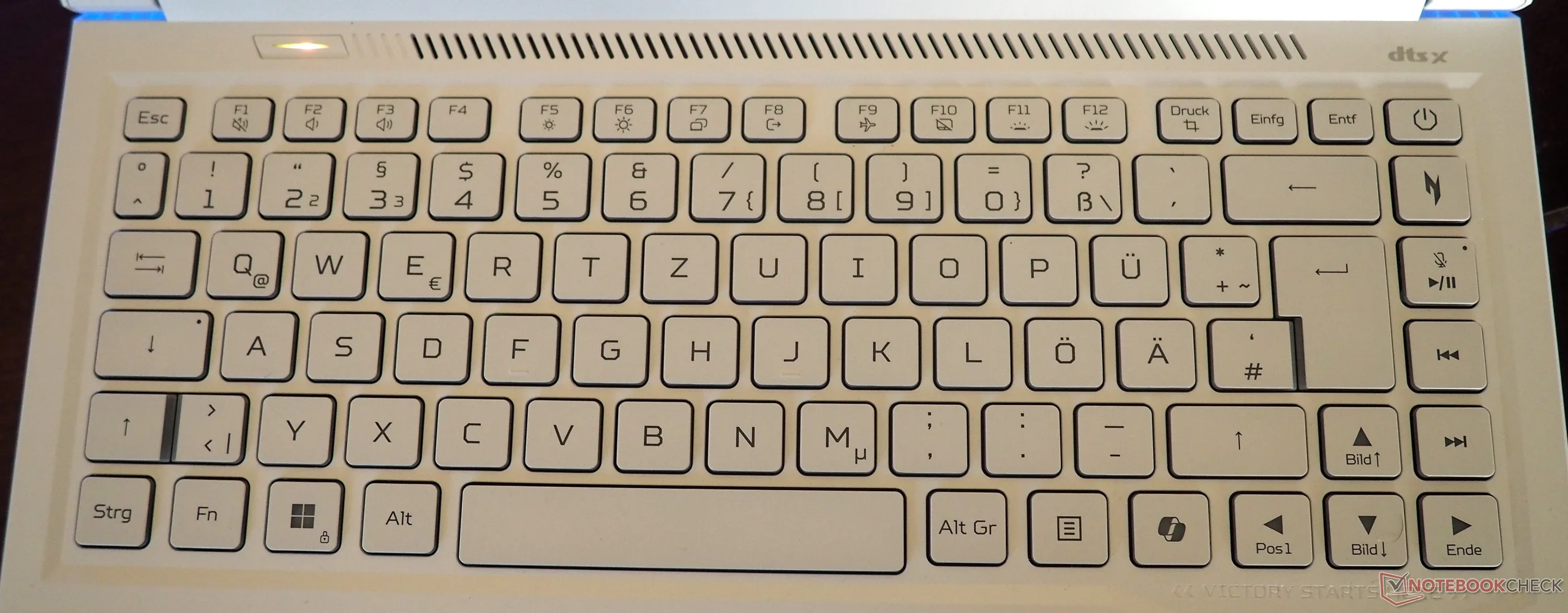
As is often the case, the layout of the keyboard is a matter of taste. There are various special keys on the right edge for multimedia controls and for opening the manufacturer's software.
We find the key size to be appropriate with the exception of the Function row, and the typing feel of the rubber dome switches is passable though not particularly impressive. The touchpad also gets a "usable" rating from us.
The touchpad's 12.6 cm x 7.8 cm surface area is more than respectable by 14-inch standards, although we would have liked a slightly more slippery finish.
Display
Acer has opted for a 16:10 display with a 1920 x 1,200 resolution for this model. The more expensive variants offer up to 2,560 x 1,600 pixels.
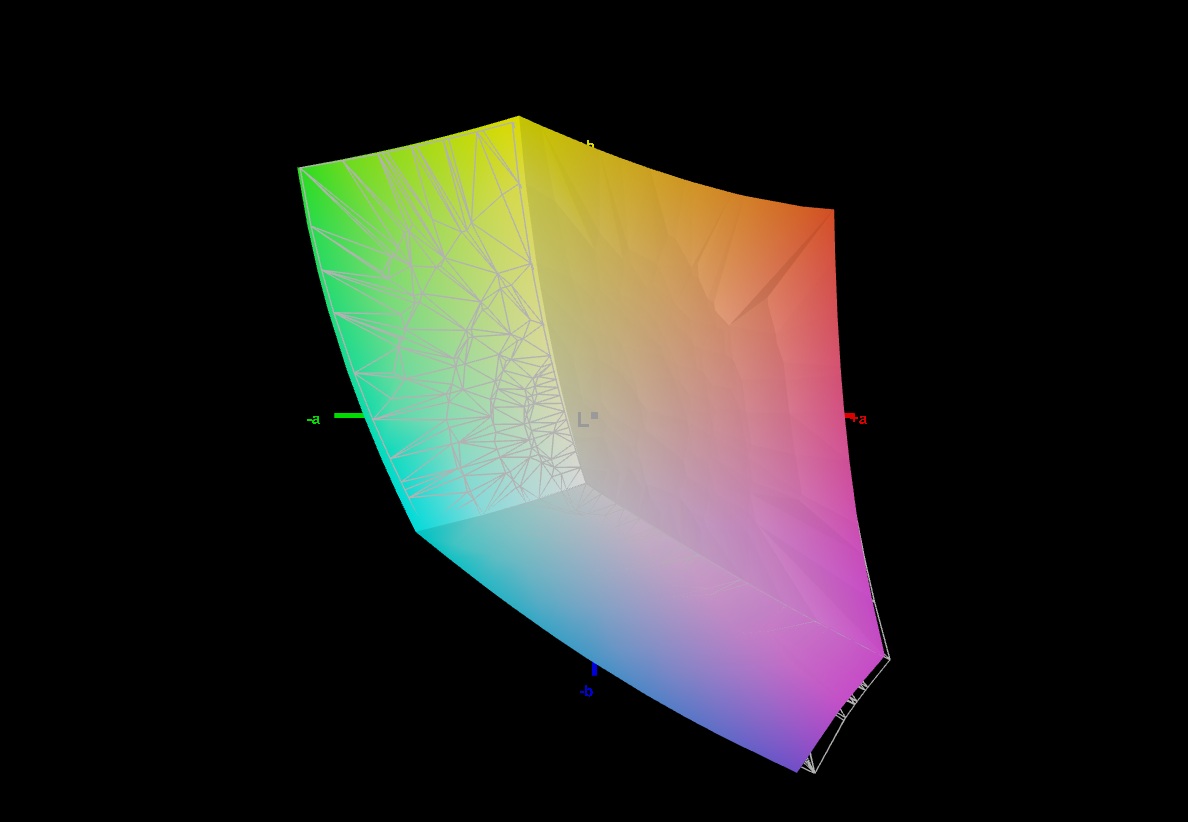
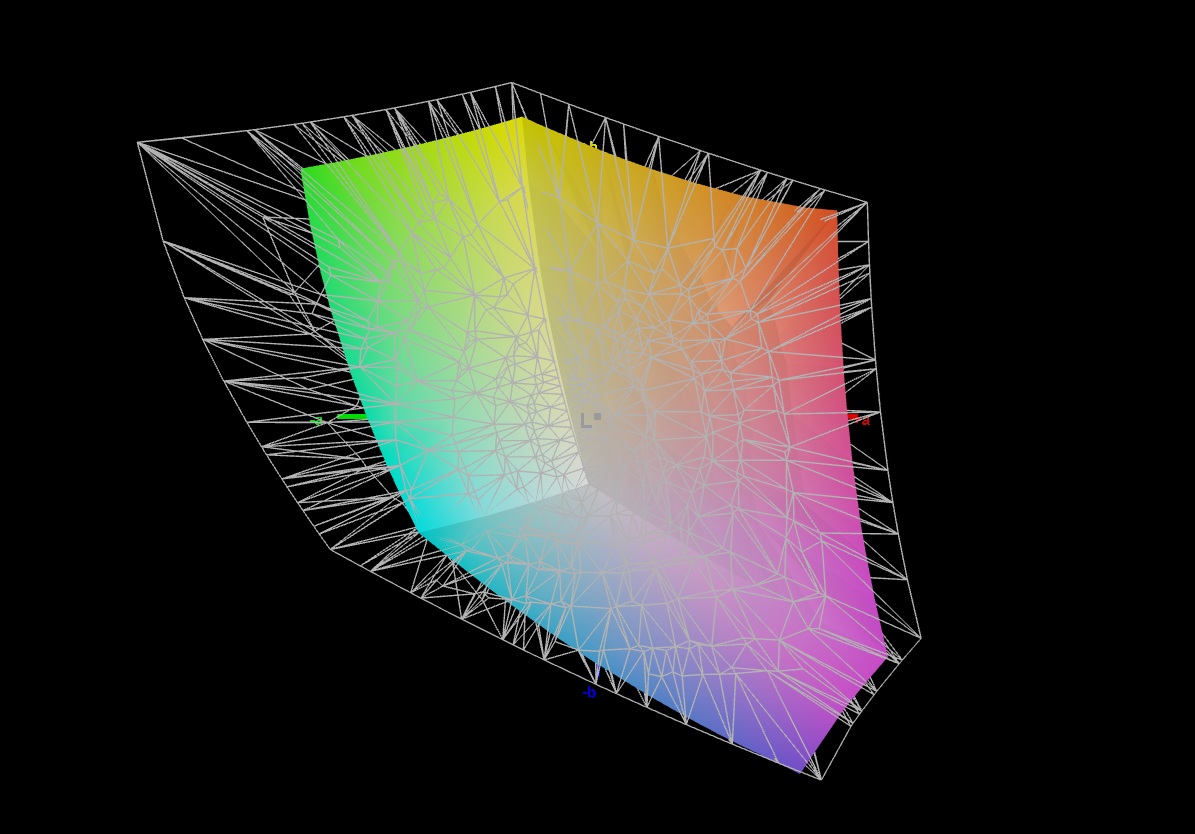
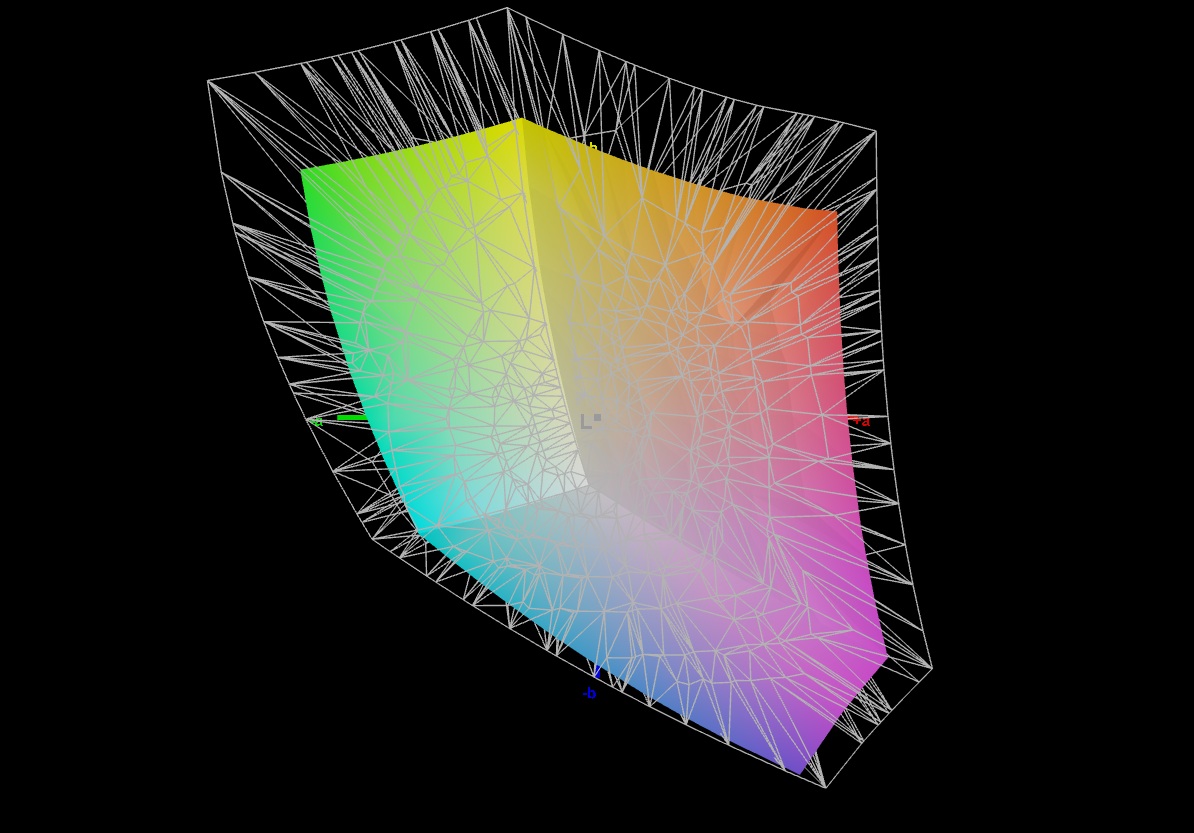
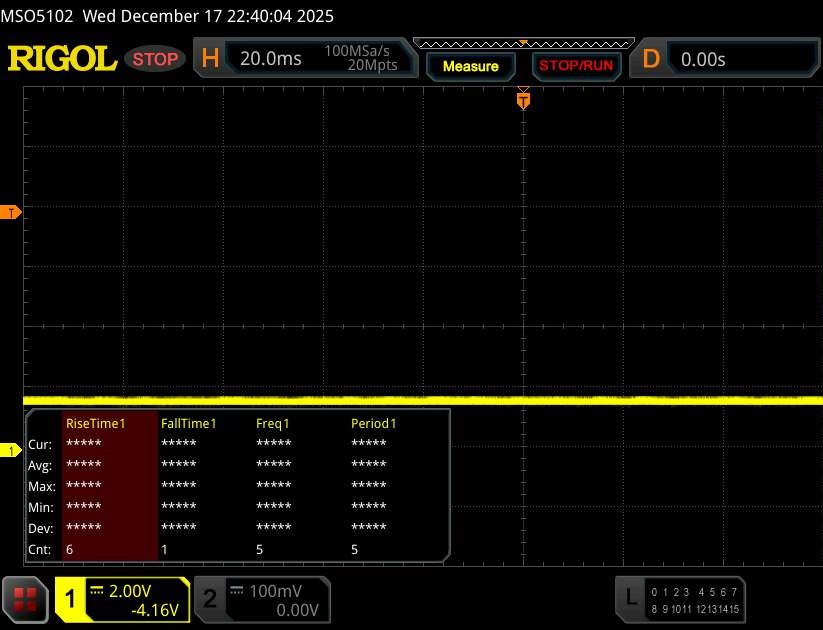
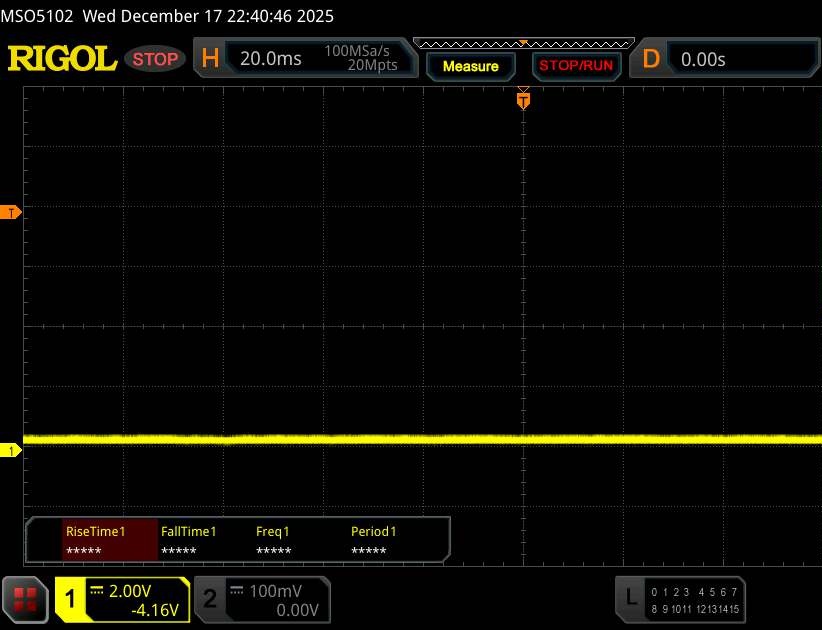
While the luminosity of around 312 cd/m² is just about average, the display covers nearly 100% of the sRGB color space. This is a larger coverage than both the Nitro V16 and Victus 15, for example.
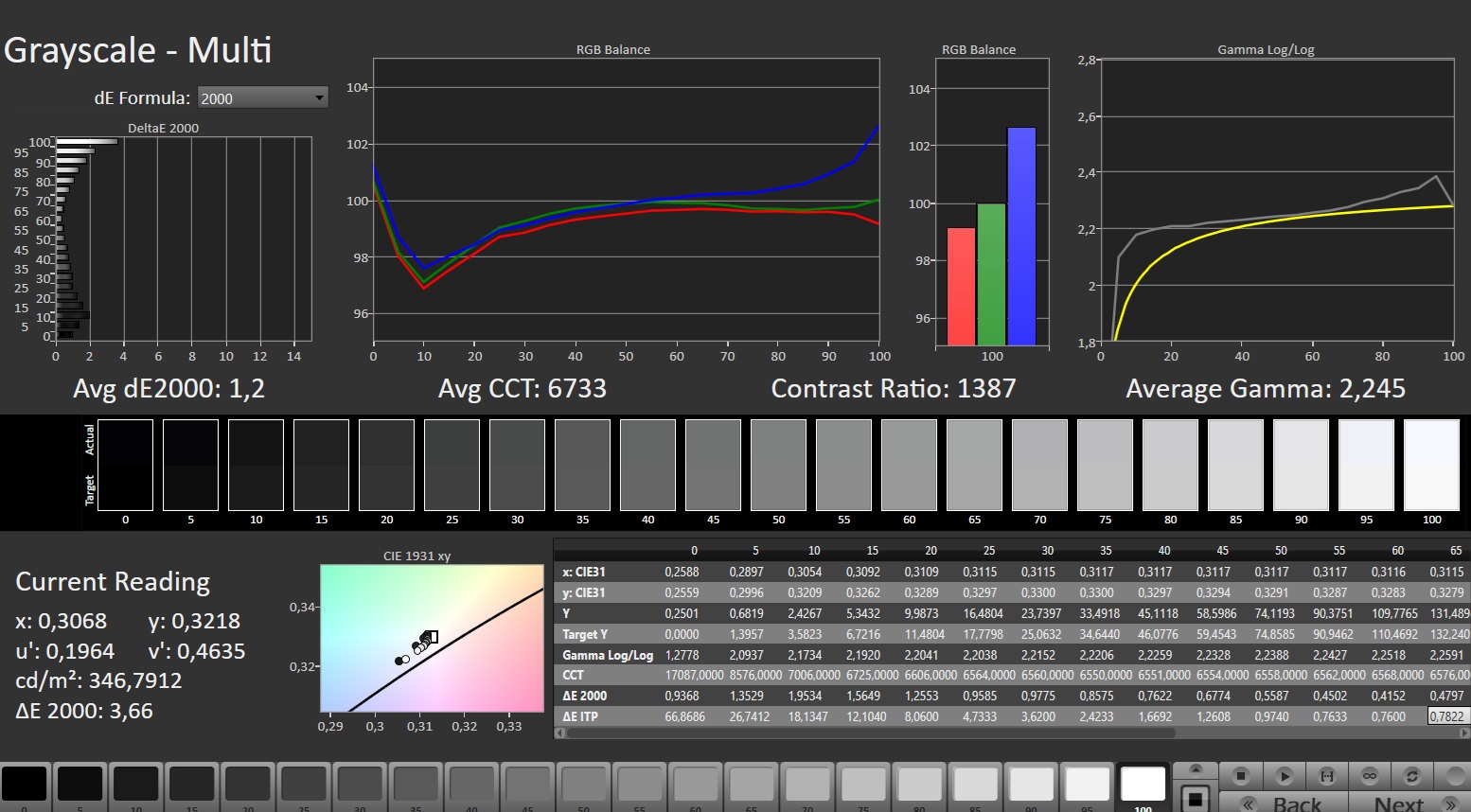
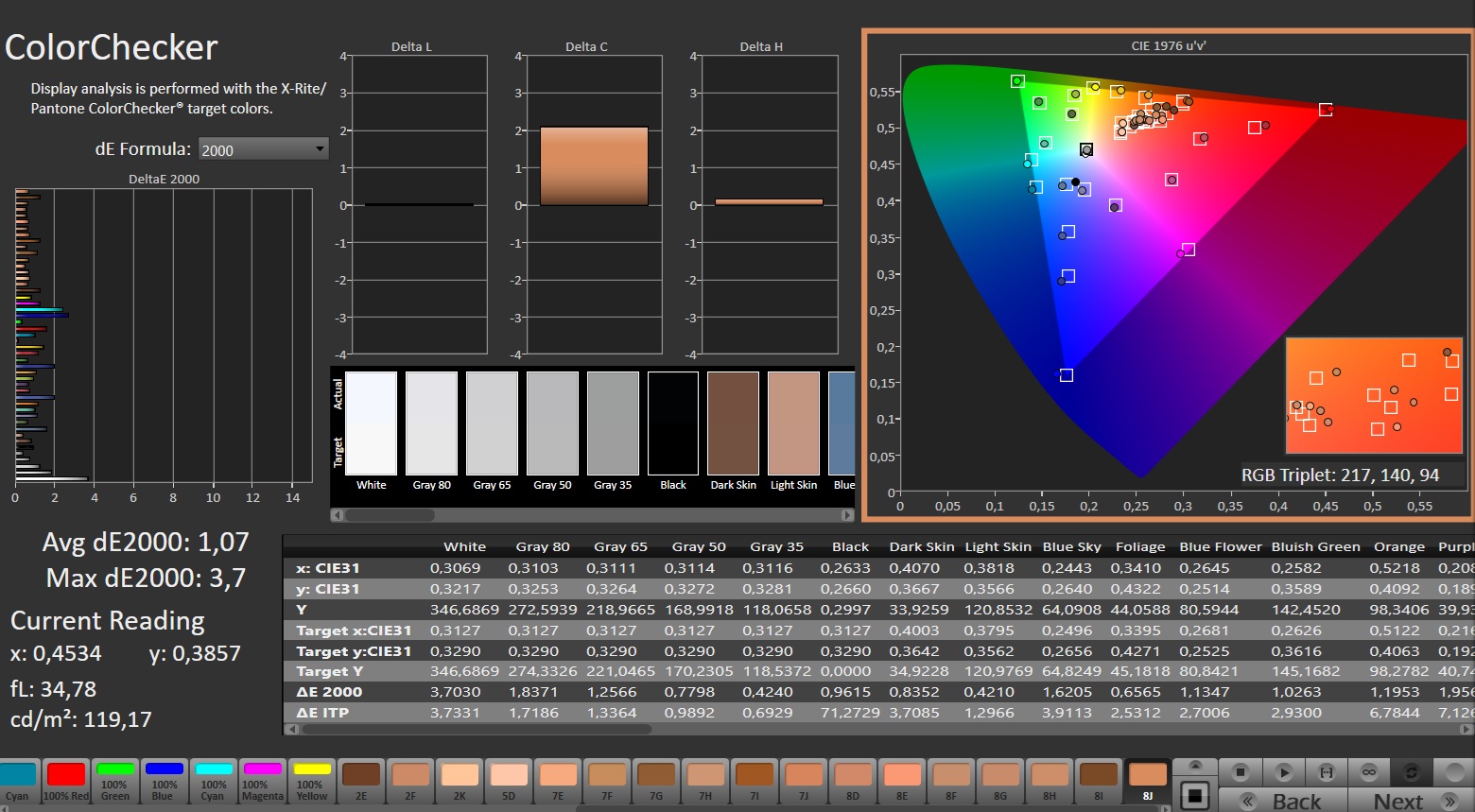
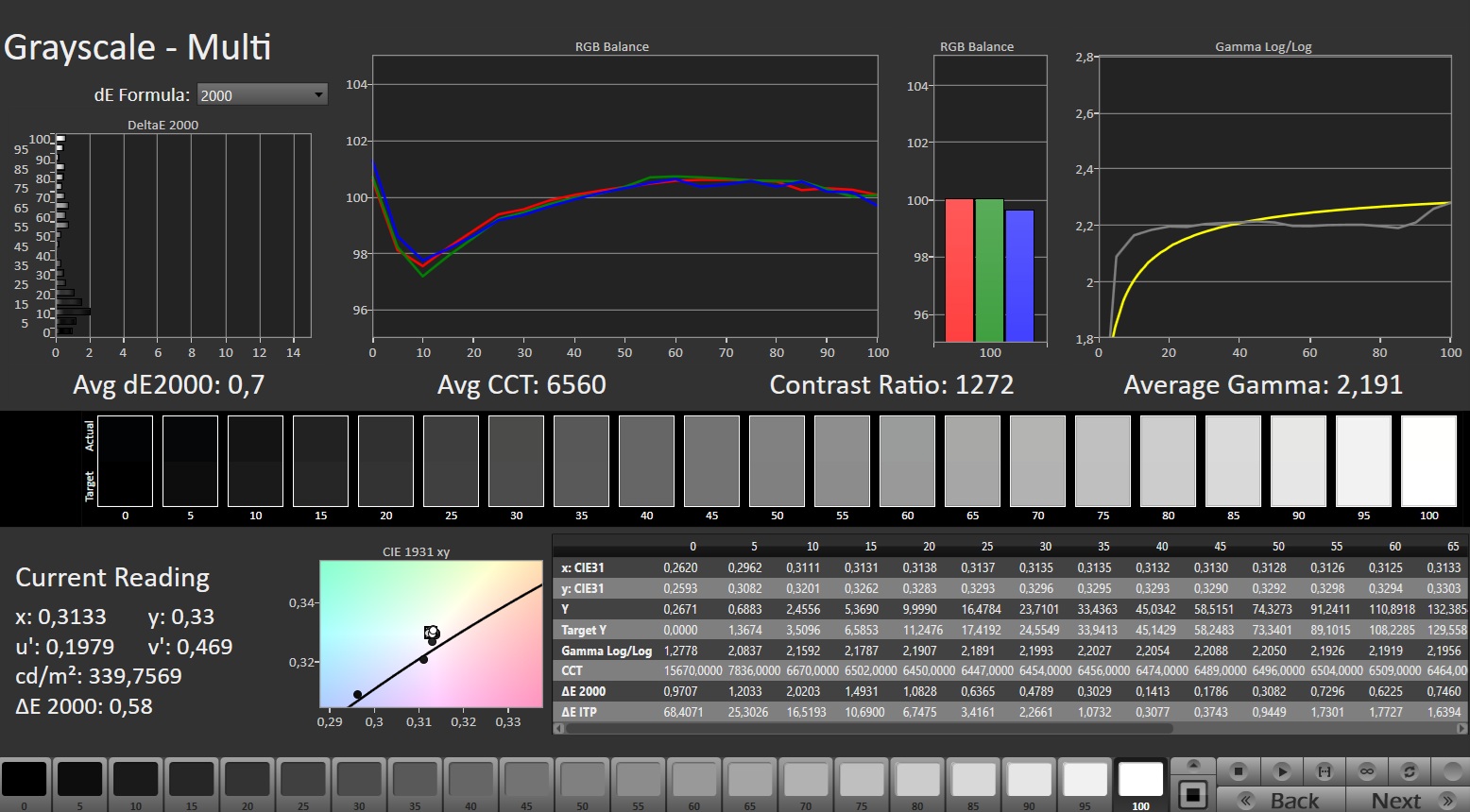
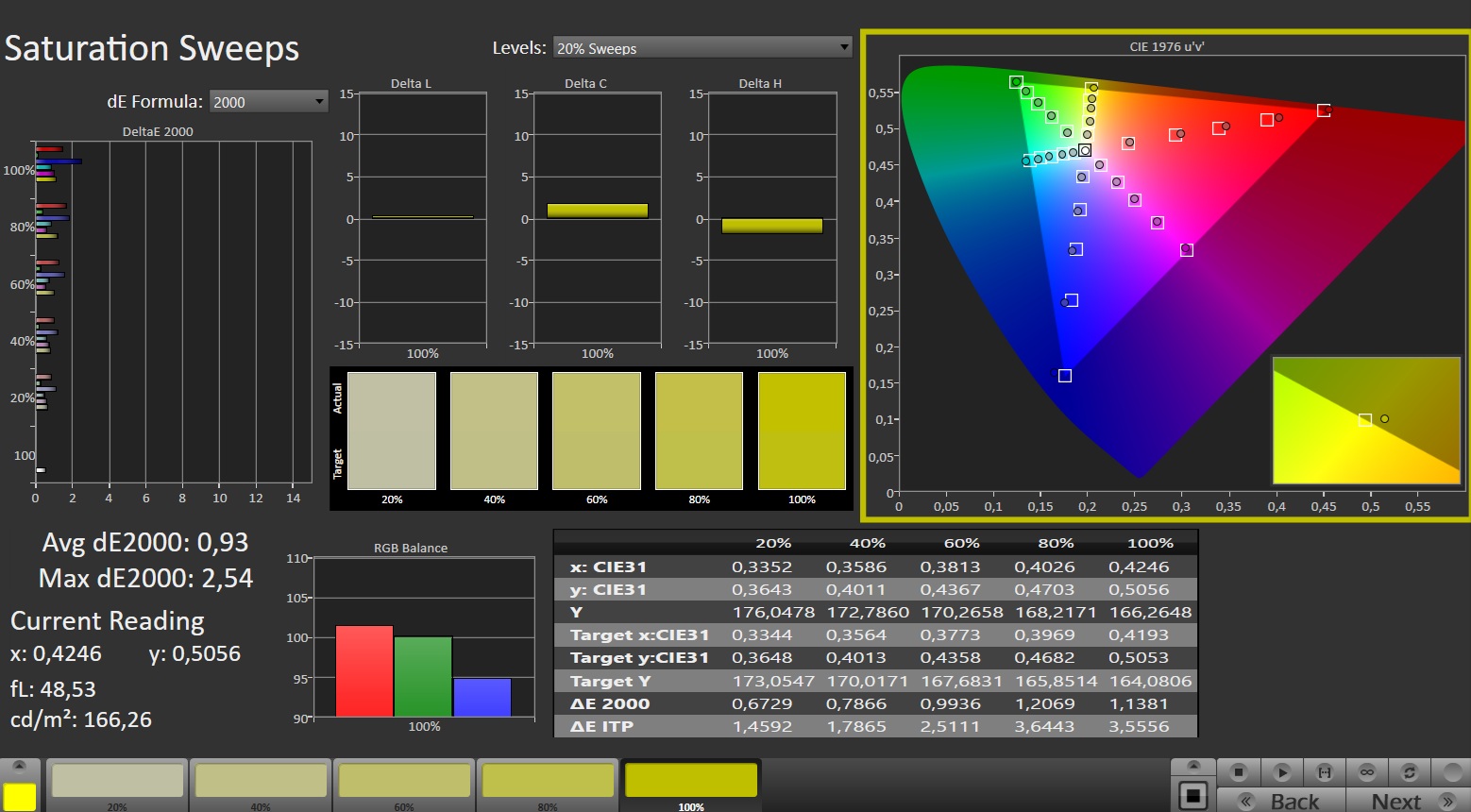
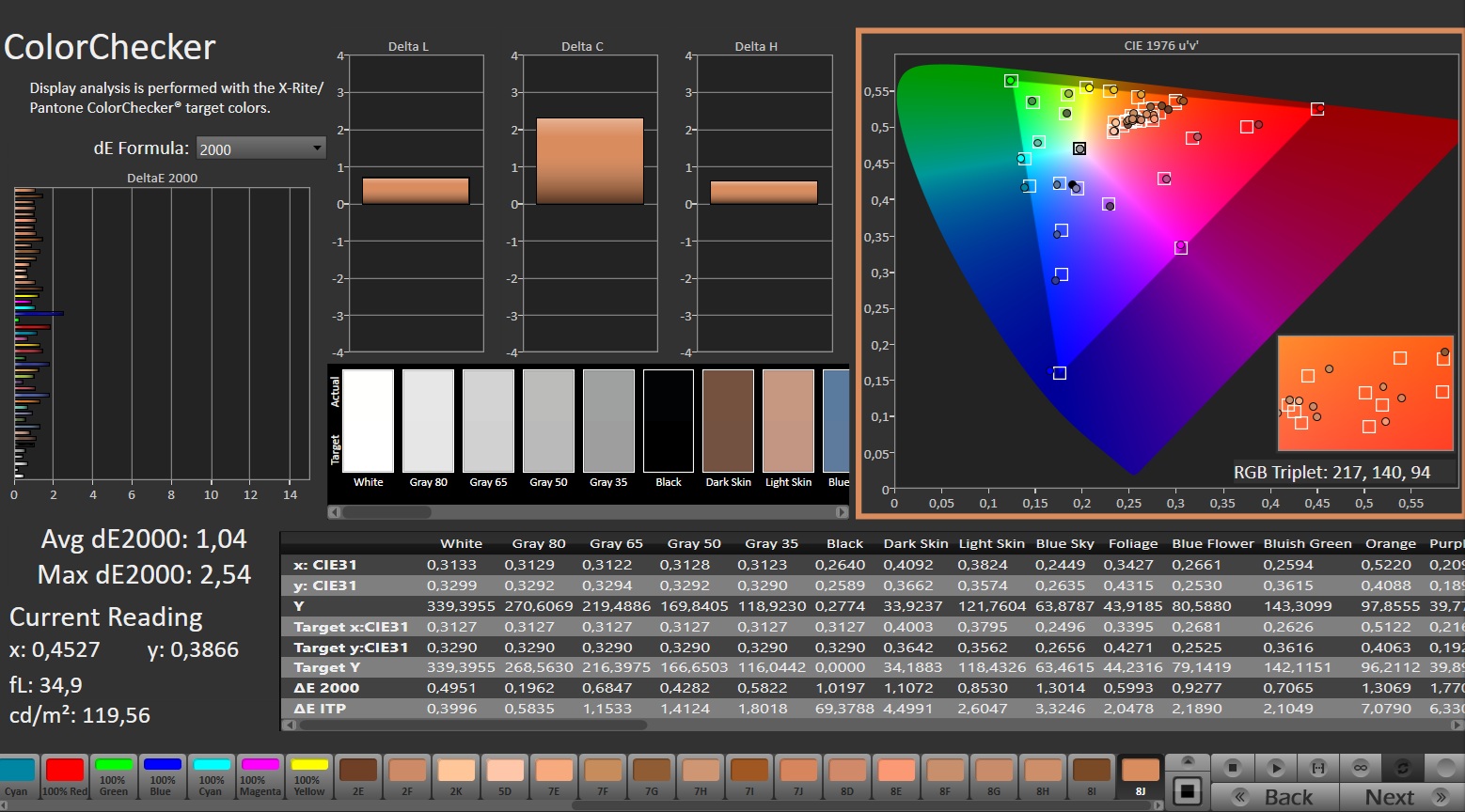
Viewing angles, response times, black levels, and contrast are again unspectacular and meet the expectations of an IPS panel. A positive aspect is that the colors are already well balanced out of the box.
| |||||||||||||||||||||||||
Brightness Distribution: 84 %
Center on Battery: 330 cd/m²
Contrast: 1320:1 (Black: 0.25 cd/m²)
ΔE ColorChecker Calman: 1.07 | ∀{0.5-29.43 Ø4.73}
calibrated: 1.04
ΔE Greyscale Calman: 1.2 | ∀{0.09-98 Ø4.97}
71.2% AdobeRGB 1998 (Argyll 3D)
98.5% sRGB (Argyll 3D)
68.9% Display P3 (Argyll 3D)
Gamma: 2.245
CCT: 6733 K
| Acer Nitro V14 AI ANV14-62-R9LT MNE507QS2-2, IPS, 1920x1200, 14.5", 120 Hz | Acer Nitro V 16 AI ANV16-42-R860 B160UAN08.3 (AUO2CB8), IPS, 1920x1200, 16", 180 Hz | HP Victus 15-fa2160ng CMN1560, IPS, 1920x1080, 15.6", 144 Hz | Lenovo LOQ 15AHP10 CSOT MNF601BA1-4, IPS, 1920x1080, 15.6", 144 Hz | Lenovo Legion 5 15AHP G10 LEN151WQXGA, OLED, 2560x1600, 15.1", 165 Hz | Schenker XMG Core 15 (M25) NE153QDM-NZ2 (BOE0D5F), IPS, 2560x1600, 15.3", 300 Hz | Razer Blade 14 2025 ATNA40CU05-0, OLED, 2880x1800, 14", 120 Hz | |
|---|---|---|---|---|---|---|---|
| Display | -42% | -41% | -1% | 28% | 3% | 24% | |
| Display P3 Coverage (%) | 68.9 | 39.2 -43% | 43 -38% | 67.3 -2% | 99.9 45% | 71.7 4% | 99.5 44% |
| sRGB Coverage (%) | 98.5 | 58.2 -41% | 64.3 -35% | 99.2 1% | 100 2% | 99.9 1% | 100 2% |
| AdobeRGB 1998 Coverage (%) | 71.2 | 40.5 -43% | 34.7 -51% | 69.1 -3% | 98.3 38% | 73.6 3% | 89.2 25% |
| Response Times | 62% | 0% | -12% | 99% | 66% | 98% | |
| Response Time Grey 50% / Grey 80% * (ms) | 30.5 ? | 11.6 ? 62% | 28.6 ? 6% | 33.9 ? -11% | 0.42 ? 99% | 12.4 ? 59% | 0.59 ? 98% |
| Response Time Black / White * (ms) | 18.8 ? | 7.4 ? 61% | 20 ? -6% | 21.2 ? -13% | 0.4 ? 98% | 5 ? 73% | 0.63 ? 97% |
| PWM Frequency (Hz) | 1152 ? | 960 ? | |||||
| PWM Amplitude * (%) | 11 | 26 | |||||
| Screen | -171% | -128% | -6% | 31% | -38% | -20% | |
| Brightness middle (cd/m²) | 330 | 384 16% | 324 -2% | 318 -4% | 492 49% | 545 65% | 361 9% |
| Brightness (cd/m²) | 312 | 372 19% | 303 -3% | 300 -4% | 495 59% | 530 70% | 363 16% |
| Brightness Distribution (%) | 84 | 92 10% | 87 4% | 89 6% | 92 10% | 94 12% | 98 17% |
| Black Level * (cd/m²) | 0.25 | 0.36 -44% | 0.26 -4% | 0.2 20% | 0.54 -116% | ||
| Contrast (:1) | 1320 | 1067 -19% | 1246 -6% | 1590 20% | 1009 -24% | ||
| Colorchecker dE 2000 * | 1.07 | 5.82 -444% | 4.7 -339% | 1.33 -24% | 0.9 16% | 2.29 -114% | 1.7 -59% |
| Colorchecker dE 2000 max. * | 3.7 | 20.34 -450% | 18.19 -392% | 4.42 -19% | 1.8 51% | 5.42 -46% | 3.9 -5% |
| Colorchecker dE 2000 calibrated * | 1.04 | 3.95 -280% | 2.93 -182% | 0.94 10% | 1.05 -1% | ||
| Greyscale dE 2000 * | 1.2 | 5.4 -350% | 3.9 -225% | 1.9 -58% | 1.2 -0% | 3.5 -192% | 2.4 -100% |
| Gamma | 2.245 98% | 2.174 101% | 2.21 100% | 2.187 101% | 2.16 102% | 2.317 95% | 2.14 103% |
| CCT | 6733 97% | 6067 107% | 7541 86% | 6678 97% | 6291 103% | 6957 93% | 6571 99% |
| Total Average (Program / Settings) | -50% /
-110% | -56% /
-91% | -6% /
-6% | 53% /
42% | 10% /
-15% | 34% /
13% |
* ... smaller is better



Display Response Times
| ↔ Response Time Black to White | ||
|---|---|---|
| 18.8 ms ... rise ↗ and fall ↘ combined | ↗ 9.5 ms rise | 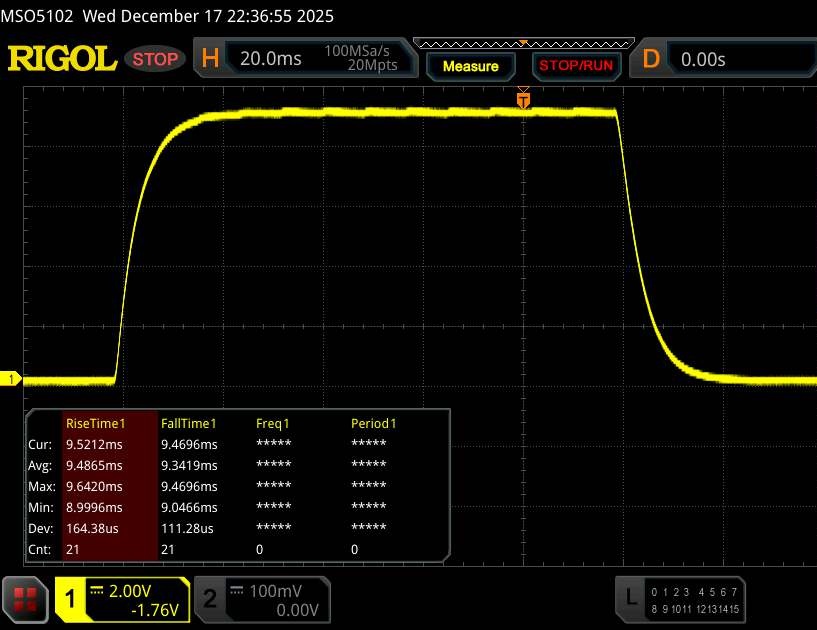 |
| ↘ 9.3 ms fall | ||
| The screen shows good response rates in our tests, but may be too slow for competitive gamers. In comparison, all tested devices range from 0.1 (minimum) to 240 (maximum) ms. » 42 % of all devices are better. This means that the measured response time is similar to the average of all tested devices (19.9 ms). | ||
| ↔ Response Time 50% Grey to 80% Grey | ||
| 30.5 ms ... rise ↗ and fall ↘ combined | ↗ 14.4 ms rise | 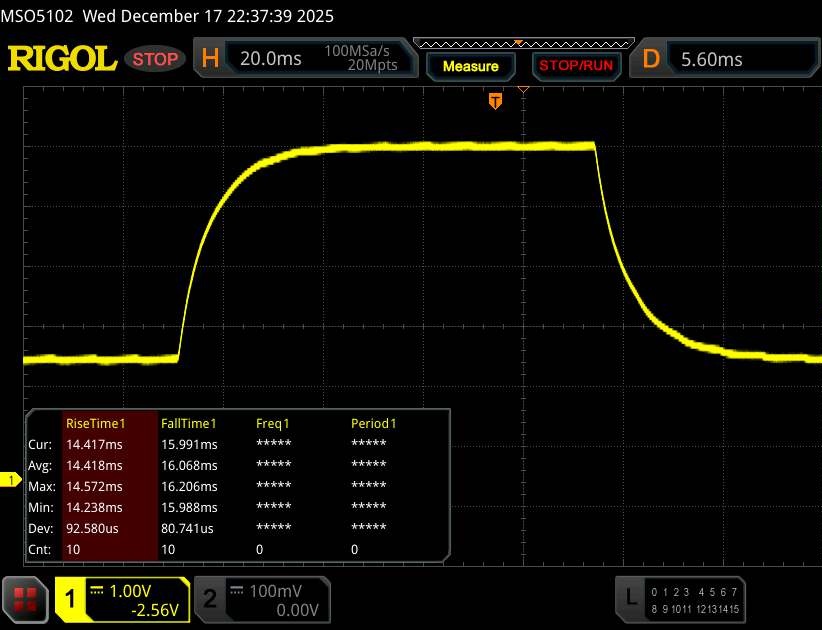 |
| ↘ 16.1 ms fall | ||
| The screen shows slow response rates in our tests and will be unsatisfactory for gamers. In comparison, all tested devices range from 0.165 (minimum) to 636 (maximum) ms. » 41 % of all devices are better. This means that the measured response time is similar to the average of all tested devices (31.1 ms). | ||
Screen Flickering / PWM (Pulse-Width Modulation)
| Screen flickering / PWM not detected | 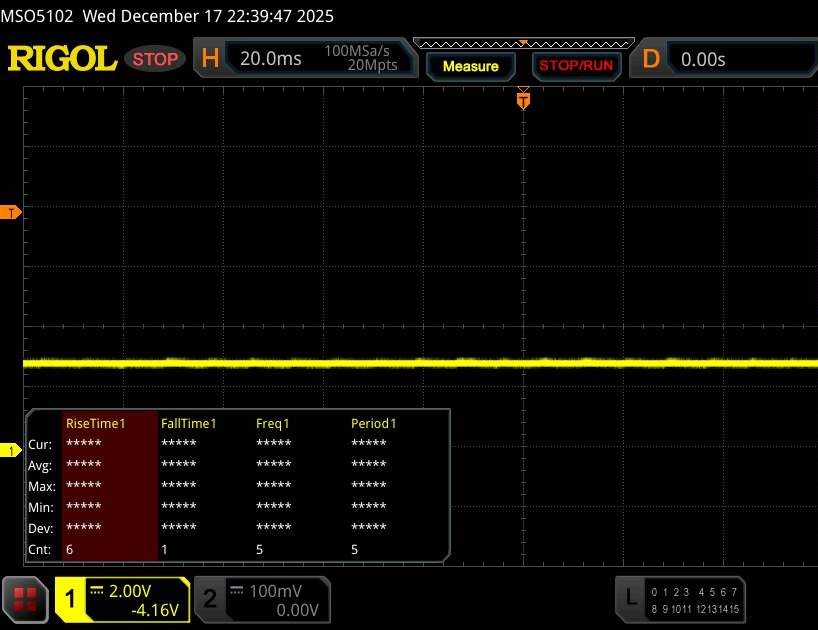 | ||
In comparison: 52 % of all tested devices do not use PWM to dim the display. If PWM was detected, an average of 7794 (minimum: 5 - maximum: 343500) Hz was measured. | |||
Performance
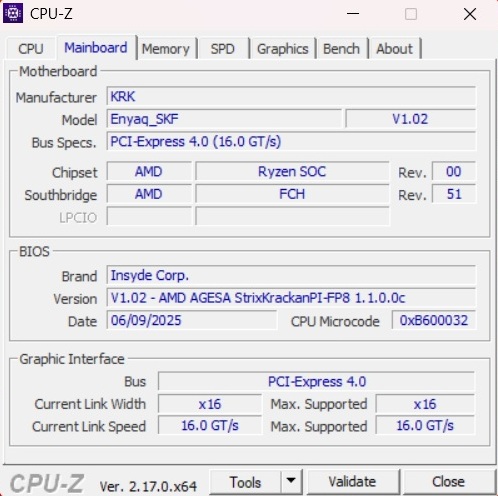
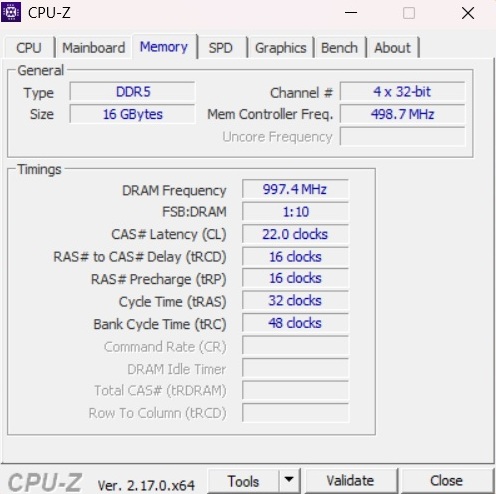
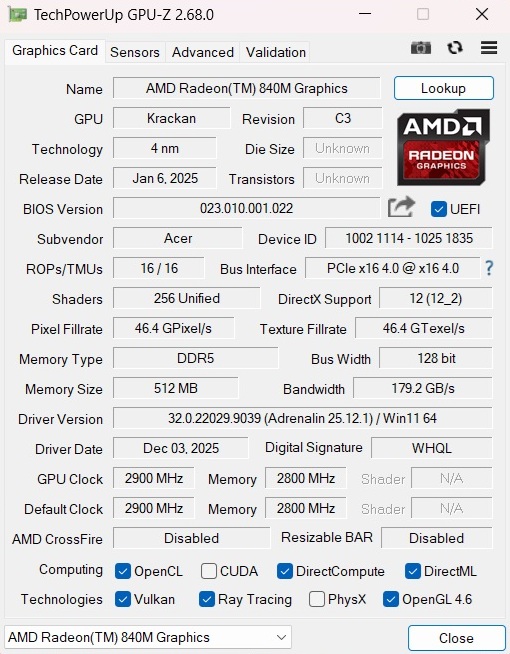
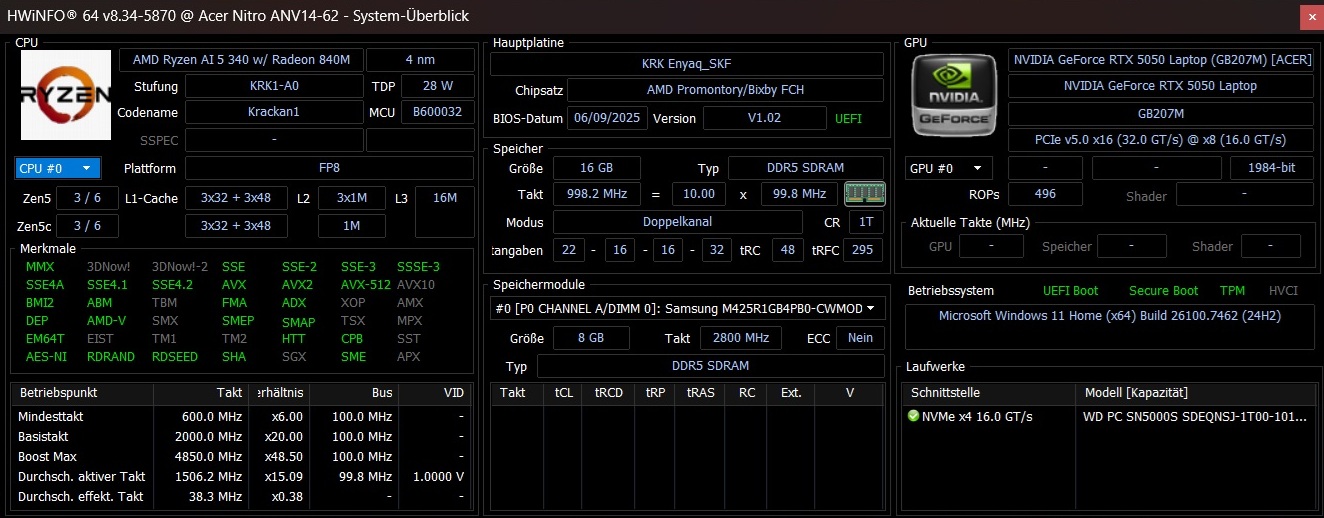
In German online stores, Nitro V14 can be currently found featuring the AMD Ryzen AI 5 340 or Ryzen AI 7 350 along with the Nvidia GeForce RTX 5050 Laptop or RTX 5060 Laptop.
Both configurations comfortably sit in the mid-range segment. Our test device also came equipped with 16 GB DDR5 RAM (2x 8 GB) and a 1 TB SSD onboard.


Test conditions
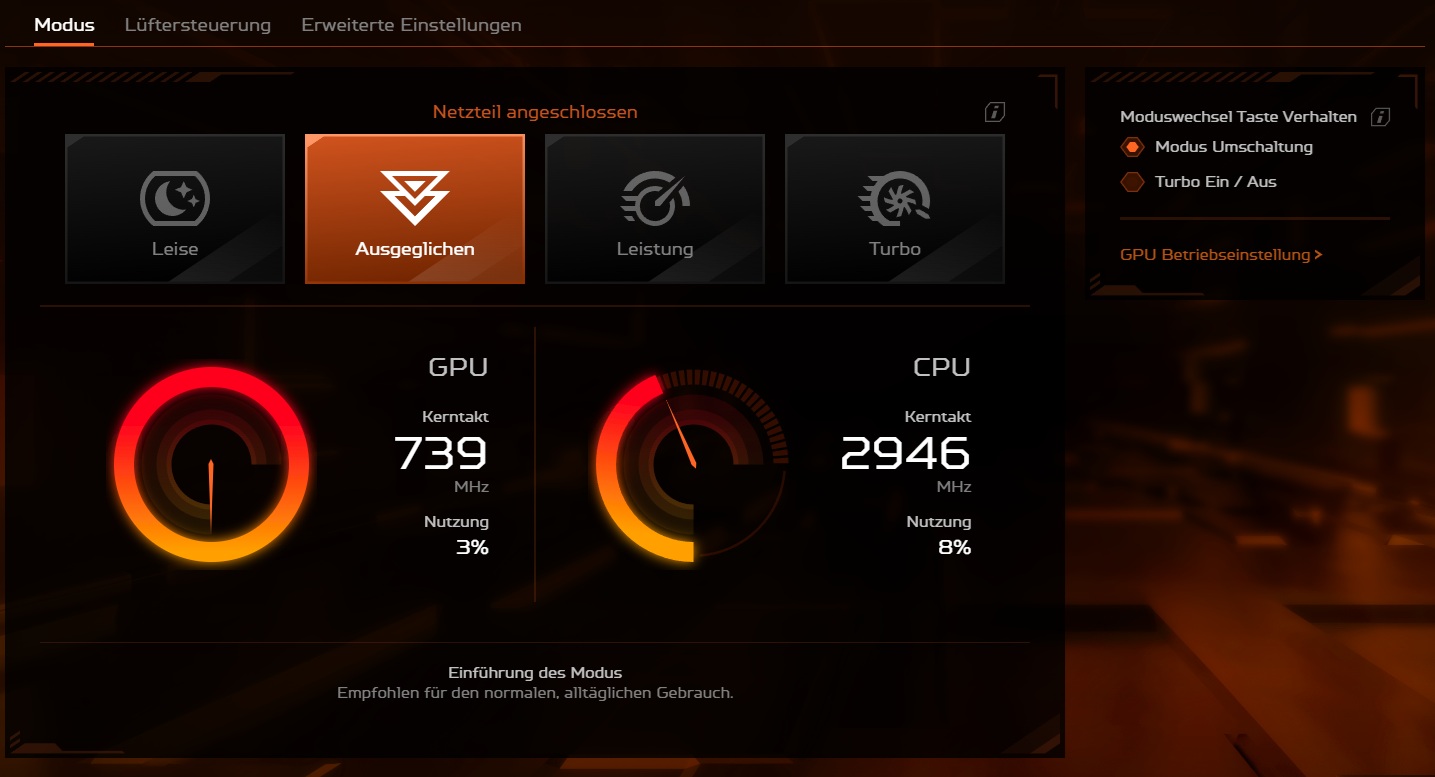
The manufacturer's NitroSense tool offers four predefined profiles, ranging from Quiet to Turbo.
With the exception of the battery test (Balanced profile), all measurements were carried out in the Performance mode.

| Mode | Silent | Balanced | Performance | Turbo |
| Cyberpunk 2077 Noise | 43 dB(A) | 49 dB(A) | 56 dB(A) | 58 dB(A) |
| Cyberpunk 2077 frame rate (FHD/Ultra) | 44.8 fps | 62.2 fps | 64.2 fps | 67.3 fps |
| GPU Power Draw | ~40 W | ~55 W | ~60 W | ~60 W |
| CPU PL1 | 35 W | 45 W | 50 W | 54 W |
| CPU PL2 | 55 W | 60 W | 65 W | 70 W |
| Cinebench R15 Multi Score | 1819 Points | 1943 Points | 1989 Points | 1997 Points |
Processor
The AMD Ryzen AI 5 340 is equipped with six Zen 5 cores, which can process up to 12 threads in parallel via SMT.
In the benchmark run, the performance cannot be distinguished from the old Ryzen 5 240 of the Nitro V16 and is even slightly lower.
However, the Nitro V14 AI's Ryzen AI 5 340 outperforms the Core i5-13420H in the Victus 15.
Cinebench R15 Multi loop test
* ... smaller is better
AIDA64: FP32 Ray-Trace | FPU Julia | CPU SHA3 | CPU Queen | FPU SinJulia | FPU Mandel | CPU AES | CPU ZLib | FP64 Ray-Trace | CPU PhotoWorxx
| Performance rating | |
| Average of class Gaming | |
| Razer Blade 14 2025 | |
| Lenovo Legion 5 15AHP G10 | |
| Schenker XMG Core 15 (M25) | |
| Lenovo LOQ 15AHP10 | |
| Acer Nitro V 16 AI ANV16-42-R860 | |
| Acer Nitro V14 AI ANV14-62-R9LT | |
| Average AMD Ryzen AI 5 340 | |
| HP Victus 15-fa2160ng | |
| AIDA64 / FP32 Ray-Trace | |
| Average of class Gaming (10227 - 85542, n=109, last 2 years) | |
| Razer Blade 14 2025 | |
| Lenovo Legion 5 15AHP G10 | |
| Schenker XMG Core 15 (M25) | |
| Lenovo LOQ 15AHP10 | |
| Acer Nitro V 16 AI ANV16-42-R860 | |
| Acer Nitro V14 AI ANV14-62-R9LT | |
| Average AMD Ryzen AI 5 340 (18609 - 20152, n=2) | |
| HP Victus 15-fa2160ng | |
| AIDA64 / FPU Julia | |
| Average of class Gaming (51376 - 238426, n=109, last 2 years) | |
| Lenovo Legion 5 15AHP G10 | |
| Razer Blade 14 2025 | |
| Schenker XMG Core 15 (M25) | |
| Lenovo LOQ 15AHP10 | |
| Acer Nitro V 16 AI ANV16-42-R860 | |
| Acer Nitro V14 AI ANV14-62-R9LT | |
| Average AMD Ryzen AI 5 340 (71462 - 78994, n=2) | |
| HP Victus 15-fa2160ng | |
| AIDA64 / CPU SHA3 | |
| Average of class Gaming (2180 - 9817, n=109, last 2 years) | |
| Lenovo Legion 5 15AHP G10 | |
| Razer Blade 14 2025 | |
| Lenovo LOQ 15AHP10 | |
| Schenker XMG Core 15 (M25) | |
| Acer Nitro V 16 AI ANV16-42-R860 | |
| Acer Nitro V14 AI ANV14-62-R9LT | |
| Average AMD Ryzen AI 5 340 (3007 - 3167, n=2) | |
| HP Victus 15-fa2160ng | |
| AIDA64 / CPU Queen | |
| Lenovo Legion 5 15AHP G10 | |
| Average of class Gaming (49785 - 173351, n=100, last 2 years) | |
| Lenovo LOQ 15AHP10 | |
| Acer Nitro V 16 AI ANV16-42-R860 | |
| Razer Blade 14 2025 | |
| Schenker XMG Core 15 (M25) | |
| HP Victus 15-fa2160ng | |
| Average AMD Ryzen AI 5 340 (54807 - 55142, n=2) | |
| Acer Nitro V14 AI ANV14-62-R9LT | |
| AIDA64 / FPU SinJulia | |
| Razer Blade 14 2025 | |
| Lenovo Legion 5 15AHP G10 | |
| Lenovo LOQ 15AHP10 | |
| Average of class Gaming (4424 - 33636, n=109, last 2 years) | |
| Schenker XMG Core 15 (M25) | |
| Acer Nitro V 16 AI ANV16-42-R860 | |
| Acer Nitro V14 AI ANV14-62-R9LT | |
| Average AMD Ryzen AI 5 340 (9906 - 9976, n=2) | |
| HP Victus 15-fa2160ng | |
| AIDA64 / FPU Mandel | |
| Average of class Gaming (25115 - 128721, n=109, last 2 years) | |
| Lenovo Legion 5 15AHP G10 | |
| Razer Blade 14 2025 | |
| Schenker XMG Core 15 (M25) | |
| Lenovo LOQ 15AHP10 | |
| Acer Nitro V 16 AI ANV16-42-R860 | |
| Acer Nitro V14 AI ANV14-62-R9LT | |
| Average AMD Ryzen AI 5 340 (38271 - 42354, n=2) | |
| HP Victus 15-fa2160ng | |
| AIDA64 / CPU AES | |
| Average of class Gaming (39258 - 247074, n=109, last 2 years) | |
| Razer Blade 14 2025 | |
| Schenker XMG Core 15 (M25) | |
| Lenovo Legion 5 15AHP G10 | |
| Lenovo LOQ 15AHP10 | |
| Acer Nitro V 16 AI ANV16-42-R860 | |
| Acer Nitro V14 AI ANV14-62-R9LT | |
| Average AMD Ryzen AI 5 340 (59709 - 63356, n=2) | |
| HP Victus 15-fa2160ng | |
| AIDA64 / CPU ZLib | |
| Average of class Gaming (574 - 2531, n=109, last 2 years) | |
| Razer Blade 14 2025 | |
| Schenker XMG Core 15 (M25) | |
| Lenovo Legion 5 15AHP G10 | |
| Lenovo LOQ 15AHP10 | |
| Acer Nitro V 16 AI ANV16-42-R860 | |
| Acer Nitro V14 AI ANV14-62-R9LT | |
| Average AMD Ryzen AI 5 340 (771 - 829, n=2) | |
| HP Victus 15-fa2160ng | |
| AIDA64 / FP64 Ray-Trace | |
| Razer Blade 14 2025 | |
| Average of class Gaming (5509 - 45446, n=109, last 2 years) | |
| Lenovo Legion 5 15AHP G10 | |
| Schenker XMG Core 15 (M25) | |
| Lenovo LOQ 15AHP10 | |
| Acer Nitro V 16 AI ANV16-42-R860 | |
| Acer Nitro V14 AI ANV14-62-R9LT | |
| Average AMD Ryzen AI 5 340 (10029 - 11005, n=2) | |
| HP Victus 15-fa2160ng | |
| AIDA64 / CPU PhotoWorxx | |
| Razer Blade 14 2025 | |
| Schenker XMG Core 15 (M25) | |
| Average of class Gaming (12271 - 89891, n=109, last 2 years) | |
| Lenovo Legion 5 15AHP G10 | |
| Average AMD Ryzen AI 5 340 (35050 - 39747, n=2) | |
| Acer Nitro V14 AI ANV14-62-R9LT | |
| Acer Nitro V 16 AI ANV16-42-R860 | |
| Lenovo LOQ 15AHP10 | |
| HP Victus 15-fa2160ng | |
System performance
Overall system performance falls in the middle of the comparison list, which is appropriate for the price.
PCMark 10: Score | Essentials | Productivity | Digital Content Creation
CrossMark: Overall | Productivity | Creativity | Responsiveness
WebXPRT 3: Overall
WebXPRT 4: Overall
Mozilla Kraken 1.1: Total
| Performance rating | |
| Average of class Gaming | |
| Razer Blade 14 2025 | |
| Lenovo Legion 5 15AHP G10 | |
| Lenovo LOQ 15AHP10 -2! | |
| Schenker XMG Core 15 (M25) -3! | |
| Acer Nitro V14 AI ANV14-62-R9LT | |
| Average AMD Ryzen AI 5 340, NVIDIA GeForce RTX 5050 Laptop | |
| Acer Nitro V 16 AI ANV16-42-R860 | |
| HP Victus 15-fa2160ng | |
| PCMark 10 / Score | |
| Average of class Gaming (5828 - 11574, n=95, last 2 years) | |
| Lenovo Legion 5 15AHP G10 | |
| Razer Blade 14 2025 | |
| Lenovo LOQ 15AHP10 | |
| Acer Nitro V14 AI ANV14-62-R9LT | |
| Average AMD Ryzen AI 5 340, NVIDIA GeForce RTX 5050 Laptop (n=1) | |
| Acer Nitro V 16 AI ANV16-42-R860 | |
| HP Victus 15-fa2160ng | |
| PCMark 10 / Essentials | |
| Lenovo Legion 5 15AHP G10 | |
| Schenker XMG Core 15 (M25) | |
| Average of class Gaming (8810 - 12600, n=99, last 2 years) | |
| Razer Blade 14 2025 | |
| Acer Nitro V14 AI ANV14-62-R9LT | |
| Average AMD Ryzen AI 5 340, NVIDIA GeForce RTX 5050 Laptop (n=1) | |
| Lenovo LOQ 15AHP10 | |
| Acer Nitro V 16 AI ANV16-42-R860 | |
| HP Victus 15-fa2160ng | |
| PCMark 10 / Productivity | |
| Average of class Gaming (6845 - 18766, n=97, last 2 years) | |
| Lenovo Legion 5 15AHP G10 | |
| Razer Blade 14 2025 | |
| Acer Nitro V14 AI ANV14-62-R9LT | |
| Average AMD Ryzen AI 5 340, NVIDIA GeForce RTX 5050 Laptop (n=1) | |
| Lenovo LOQ 15AHP10 | |
| Acer Nitro V 16 AI ANV16-42-R860 | |
| HP Victus 15-fa2160ng | |
| PCMark 10 / Digital Content Creation | |
| Average of class Gaming (7602 - 19657, n=97, last 2 years) | |
| Lenovo Legion 5 15AHP G10 | |
| Razer Blade 14 2025 | |
| Lenovo LOQ 15AHP10 | |
| Acer Nitro V14 AI ANV14-62-R9LT | |
| Average AMD Ryzen AI 5 340, NVIDIA GeForce RTX 5050 Laptop (n=1) | |
| Acer Nitro V 16 AI ANV16-42-R860 | |
| HP Victus 15-fa2160ng | |
| CrossMark / Overall | |
| Average of class Gaming (1366 - 2409, n=97, last 2 years) | |
| Razer Blade 14 2025 | |
| Lenovo Legion 5 15AHP G10 | |
| Lenovo LOQ 15AHP10 | |
| Schenker XMG Core 15 (M25) | |
| Acer Nitro V14 AI ANV14-62-R9LT | |
| Average AMD Ryzen AI 5 340, NVIDIA GeForce RTX 5050 Laptop (n=1) | |
| Acer Nitro V 16 AI ANV16-42-R860 | |
| HP Victus 15-fa2160ng | |
| CrossMark / Productivity | |
| Average of class Gaming (1386 - 2254, n=97, last 2 years) | |
| Razer Blade 14 2025 | |
| Lenovo LOQ 15AHP10 | |
| Lenovo Legion 5 15AHP G10 | |
| Schenker XMG Core 15 (M25) | |
| Acer Nitro V14 AI ANV14-62-R9LT | |
| Average AMD Ryzen AI 5 340, NVIDIA GeForce RTX 5050 Laptop (n=1) | |
| Acer Nitro V 16 AI ANV16-42-R860 | |
| HP Victus 15-fa2160ng | |
| CrossMark / Creativity | |
| Razer Blade 14 2025 | |
| Average of class Gaming (1343 - 2729, n=97, last 2 years) | |
| Lenovo Legion 5 15AHP G10 | |
| Schenker XMG Core 15 (M25) | |
| Acer Nitro V14 AI ANV14-62-R9LT | |
| Average AMD Ryzen AI 5 340, NVIDIA GeForce RTX 5050 Laptop (n=1) | |
| Acer Nitro V 16 AI ANV16-42-R860 | |
| Lenovo LOQ 15AHP10 | |
| HP Victus 15-fa2160ng | |
| CrossMark / Responsiveness | |
| Average of class Gaming (1226 - 2334, n=97, last 2 years) | |
| Razer Blade 14 2025 | |
| Lenovo LOQ 15AHP10 | |
| Lenovo Legion 5 15AHP G10 | |
| Schenker XMG Core 15 (M25) | |
| Acer Nitro V 16 AI ANV16-42-R860 | |
| Acer Nitro V14 AI ANV14-62-R9LT | |
| Average AMD Ryzen AI 5 340, NVIDIA GeForce RTX 5050 Laptop (n=1) | |
| HP Victus 15-fa2160ng | |
| WebXPRT 3 / Overall | |
| Average of class Gaming (242 - 532, n=100, last 2 years) | |
| Lenovo Legion 5 15AHP G10 | |
| Razer Blade 14 2025 | |
| Acer Nitro V 16 AI ANV16-42-R860 | |
| Acer Nitro V14 AI ANV14-62-R9LT | |
| Average AMD Ryzen AI 5 340, NVIDIA GeForce RTX 5050 Laptop (n=1) | |
| Schenker XMG Core 15 (M25) | |
| HP Victus 15-fa2160ng | |
| WebXPRT 4 / Overall | |
| Average of class Gaming (176.4 - 354, n=100, last 2 years) | |
| Razer Blade 14 2025 | |
| Lenovo Legion 5 15AHP G10 | |
| Acer Nitro V 16 AI ANV16-42-R860 | |
| Acer Nitro V14 AI ANV14-62-R9LT | |
| Average AMD Ryzen AI 5 340, NVIDIA GeForce RTX 5050 Laptop (n=1) | |
| HP Victus 15-fa2160ng | |
| Schenker XMG Core 15 (M25) | |
| Mozilla Kraken 1.1 / Total | |
| HP Victus 15-fa2160ng | |
| Acer Nitro V 16 AI ANV16-42-R860 | |
| Lenovo LOQ 15AHP10 | |
| Lenovo Legion 5 15AHP G10 | |
| Average of class Gaming (391 - 590, n=105, last 2 years) | |
| Acer Nitro V14 AI ANV14-62-R9LT | |
| Average AMD Ryzen AI 5 340, NVIDIA GeForce RTX 5050 Laptop (n=1) | |
| Razer Blade 14 2025 | |
| Schenker XMG Core 15 (M25) | |
* ... smaller is better
| PCMark 10 Score | 7100 points | |
Help | ||
| AIDA64 / Memory Copy | |
| Razer Blade 14 2025 | |
| Average AMD Ryzen AI 5 340 (61336 - 86573, n=2) | |
| Schenker XMG Core 15 (M25) | |
| Average of class Gaming (21750 - 129946, n=109, last 2 years) | |
| Lenovo Legion 5 15AHP G10 | |
| Acer Nitro V 16 AI ANV16-42-R860 | |
| Acer Nitro V14 AI ANV14-62-R9LT | |
| Lenovo LOQ 15AHP10 | |
| HP Victus 15-fa2160ng | |
| AIDA64 / Memory Read | |
| Razer Blade 14 2025 | |
| Average of class Gaming (22956 - 118858, n=109, last 2 years) | |
| Average AMD Ryzen AI 5 340 (62186 - 63523, n=2) | |
| Schenker XMG Core 15 (M25) | |
| Acer Nitro V14 AI ANV14-62-R9LT | |
| Acer Nitro V 16 AI ANV16-42-R860 | |
| Lenovo Legion 5 15AHP G10 | |
| HP Victus 15-fa2160ng | |
| Lenovo LOQ 15AHP10 | |
| AIDA64 / Memory Write | |
| Razer Blade 14 2025 | |
| Average AMD Ryzen AI 5 340 (78594 - 107475, n=2) | |
| Lenovo Legion 5 15AHP G10 | |
| Schenker XMG Core 15 (M25) | |
| Acer Nitro V 16 AI ANV16-42-R860 | |
| Acer Nitro V14 AI ANV14-62-R9LT | |
| Average of class Gaming (22297 - 135096, n=109, last 2 years) | |
| Lenovo LOQ 15AHP10 | |
| HP Victus 15-fa2160ng | |
| AIDA64 / Memory Latency | |
| Average of class Gaming (75.3 - 259, n=109, last 2 years) | |
| Razer Blade 14 2025 | |
| HP Victus 15-fa2160ng | |
| Average AMD Ryzen AI 5 340 (95 - 103.8, n=2) | |
| Lenovo LOQ 15AHP10 | |
| Acer Nitro V14 AI ANV14-62-R9LT | |
| Acer Nitro V 16 AI ANV16-42-R860 | |
| Lenovo Legion 5 15AHP G10 | |
| Schenker XMG Core 15 (M25) | |
* ... smaller is better
DPC latency
Although the measured latency is below that of the comparison devices, the LatencyMon tool mentions possible problems with certain applications.

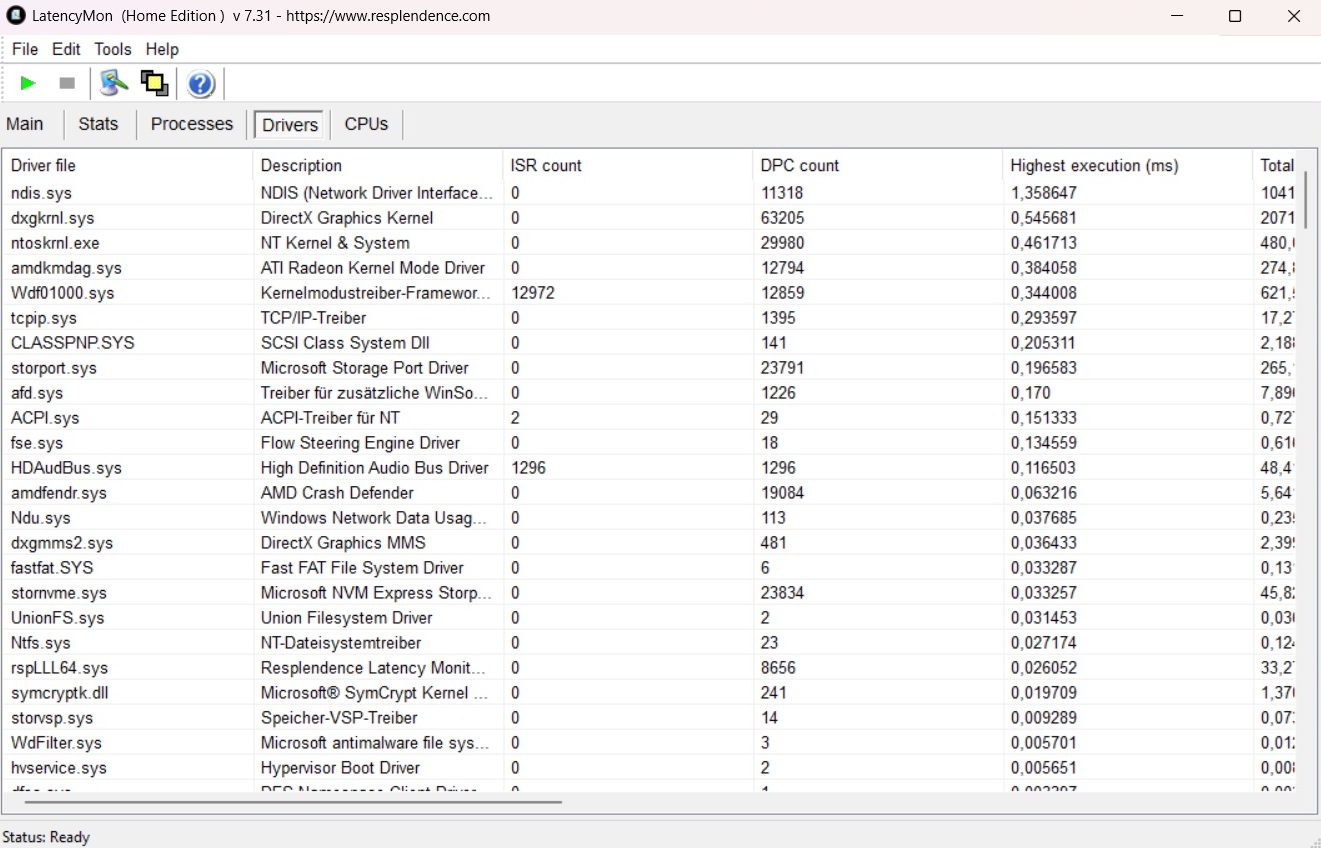
| DPC Latencies / LatencyMon - interrupt to process latency (max), Web, Youtube, Prime95 | |
| Razer Blade 14 2025 | |
| Acer Nitro V 16 AI ANV16-42-R860 | |
| HP Victus 15-fa2160ng | |
| Lenovo Legion 5 15AHP G10 | |
| Lenovo LOQ 15AHP10 | |
| Schenker XMG Core 15 (M25) | |
| Acer Nitro V14 AI ANV14-62-R9LT | |
* ... smaller is better
Storage devices
The 1 TB SSD from Western Digital tends to be one of the weaker NVMe models compared to some of its competitors, especially as it shows certain fluctuations and slight dips during longer periods of use.

* ... smaller is better
Disk throttling: DiskSpd Read Loop, Queue Depth 8
GPU performance
Similar to the CPU, the GPU's full potential cannot be unleashed either. The 3DMark benchmarks show the RTX 5050 Laptop performing at a speed that is slightly below the previously determined average for this graphics card.
The RTX 5050 of the Victus 15 and the Nitro V16 are both about 10% faster.
| 3DMark 11 Performance | 23848 points | |
| 3DMark Ice Storm Standard Score | 185883 points | |
| 3DMark Cloud Gate Standard Score | 46342 points | |
| 3DMark Fire Strike Score | 21405 points | |
| 3DMark Time Spy Score | 8333 points | |
Help | ||
* ... smaller is better
Gaming performance
The Nitro V14 AI surpasses the Victus 15 but falls behind the Nitro V16 in gaming tests. Generally, the RTX 5050 delivers enough power to run most titles at 1080p with high, if not always maximum details.
In extreme cases, such as the extremely poorly optimized Borderlands 4, you should fall back on features such as upscaling and/or frame generation.
With DLSS Quality enabled at 1,920 x 1,080 resolution and the High preset, the frame rate increases from 29 fps to 46 fps. Enabling MFG 4x theoretically boosts the frame rate to even 126 fps, although subjectively the perceived frame rate is not quite as high.
| low | med. | high | ultra | |
|---|---|---|---|---|
| GTA V (2015) | 171.4 | 163.6 | 103.4 | |
| Dota 2 Reborn (2015) | 147.9 | 139.7 | 130.7 | |
| X-Plane 11.11 (2018) | 95.7 | 80.9 | ||
| Baldur's Gate 3 (2023) | 90.4 | 75 | 70 | |
| Cyberpunk 2077 (2023) | 86.4 | 73.5 | 64.2 | |
| Kingdom Come Deliverance 2 (2025) | 71.9 | 58.2 | 41.4 | |
| Monster Hunter Wilds (2025) | 48.8 | 44.4 | 32.8 | |
| Assassin's Creed Shadows (2025) | 51 | 43 | 30 | |
| The Elder Scrolls IV Oblivion Remastered (2025) | 42.6 | 39.9 | 19.8 | |
| Doom: The Dark Ages (2025) | 47.1 | 41.5 | 40.8 | |
| Borderlands 4 (2025) | 35.2 | 28.7 | 17.1 | |
| The Outer Worlds 2 (2025) | 65 | 52.2 | 26.8 | |
| ARC Raiders (2025) | 89.8 | 71.5 | 48.3 | |
| Anno 117: Pax Romana (2025) | 65.4 | 47.9 | 23.9 | |
| Call of Duty Black Ops 7 (2025) | 101 | 75 | 27 |
| The Elder Scrolls IV Oblivion Remastered | |
| 1920x1080 High Preset AA:T | |
| Average of class Gaming (39.9 - 111.8, n=16, last 2 years) | |
| Schenker XMG Core 15 (M25) | |
| Lenovo LOQ 15AHP10 | |
| HP Victus 15-fa2160ng | |
| Average NVIDIA GeForce RTX 5050 Laptop (39.9 - 48.2, n=3) | |
| Acer Nitro V14 AI ANV14-62-R9LT | |
| 1920x1080 Ultra Preset AA:T | |
| Average of class Gaming (19.8 - 61.9, n=17, last 2 years) | |
| Schenker XMG Core 15 (M25) | |
| Lenovo LOQ 15AHP10 | |
| HP Victus 15-fa2160ng | |
| Average NVIDIA GeForce RTX 5050 Laptop (19.8 - 25, n=3) | |
| Acer Nitro V14 AI ANV14-62-R9LT | |
| The Outer Worlds 2 | |
| 1920x1080 High Preset AA:T | |
| Average of class Gaming (51.1 - 94.5, n=11, last 2 years) | |
| Acer Nitro V 16 AI ANV16-42-R860 | |
| Average NVIDIA GeForce RTX 5050 Laptop (51.1 - 60, n=3) | |
| Acer Nitro V14 AI ANV14-62-R9LT | |
| 1920x1080 Very High Preset AA:T | |
| Average of class Gaming (26.4 - 58.4, n=11, last 2 years) | |
| Acer Nitro V 16 AI ANV16-42-R860 | |
| Average NVIDIA GeForce RTX 5050 Laptop (26.4 - 33.2, n=3) | |
| Acer Nitro V14 AI ANV14-62-R9LT | |
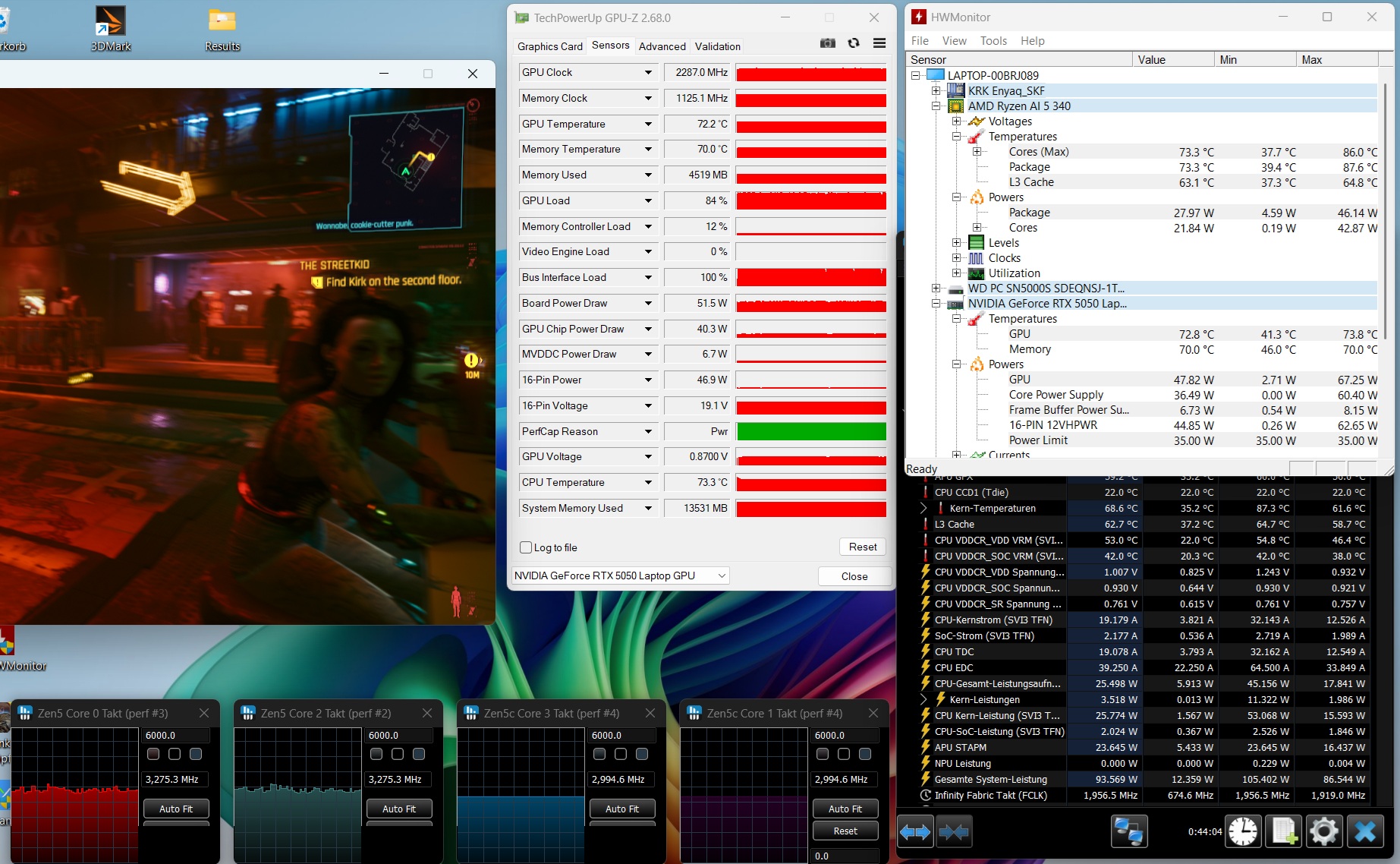
In a long run with Cyberpunk 2077 at 1080p Ultra there were no abnormalities, and the frame rate was fairly stable.
Cyberpunk 2077 1080p Ultra fps chart
Emissions
Noise emissions
Acer still needs to improve the fan control and the cooling system. In the Performance mode, the Nitro V14 AI's fan noise is already noticeable in idle, reaching 28 db(A) to 35 dB(A).
In Cyberpunk 2077, fan noise is clearly audible and disturbingly loud 56 dB(A) without a headset. All competitors remain quieter here (46 to 55 dB(A)).
We would rather recommend the Balanced mode for everyday use, as it hardly impacts performance but generally ensures a significantly lower noise level.
Noise level
| Idle |
| 28 / 32 / 35 dB(A) |
| Load |
| 50 / 57 dB(A) |
 | ||
30 dB silent 40 dB(A) audible 50 dB(A) loud |
||
min:  , med: , med:  , max: , max:  Earthworks M23R, Arta (15 cm distance) environment noise: 26 dB(A) Earthworks M23R, Arta (15 cm distance) environment noise: 26 dB(A) | ||
| Acer Nitro V14 AI ANV14-62-R9LT Ryzen AI 5 340, GeForce RTX 5050 Laptop | Acer Nitro V 16 AI ANV16-42-R860 R5 240, GeForce RTX 5050 Laptop | HP Victus 15-fa2160ng i5-13420H, GeForce RTX 5050 Laptop | Lenovo LOQ 15AHP10 R7 250, GeForce RTX 5060 Laptop | Lenovo Legion 5 15AHP G10 R7 260, GeForce RTX 5060 Laptop | Schenker XMG Core 15 (M25) Ryzen AI 7 350, GeForce RTX 5060 Laptop | Razer Blade 14 2025 Ryzen AI 9 365, GeForce RTX 5070 Laptop | |
|---|---|---|---|---|---|---|---|
| Noise | 11% | 12% | -17% | 15% | 11% | 13% | |
| off / environment * (dB) | 26 | 25 4% | 24 8% | 25 4% | 25.5 2% | 24 8% | 23.7 9% |
| Idle Minimum * (dB) | 28 | 25 11% | 28 -0% | 43 -54% | 25.5 9% | 25 11% | 23.7 15% |
| Idle Average * (dB) | 32 | 30 6% | 29 9% | 45 -41% | 25.5 20% | 27 16% | 23.7 26% |
| Idle Maximum * (dB) | 35 | 33 6% | 30 14% | 48 -37% | 26.9 23% | 29 17% | 27 23% |
| Load Average * (dB) | 50 | 38 24% | 40 20% | 53 -6% | 34.6 31% | 48 4% | 44.9 10% |
| Cyberpunk 2077 ultra * (dB) | 56 | 49 12% | 46 18% | 51 9% | 50.1 11% | 49 12% | 54.6 2% |
| Load Maximum * (dB) | 57 | 50 12% | 48 16% | 53 7% | 50.1 12% | 50 12% | 54.6 4% |
* ... smaller is better
Temperature
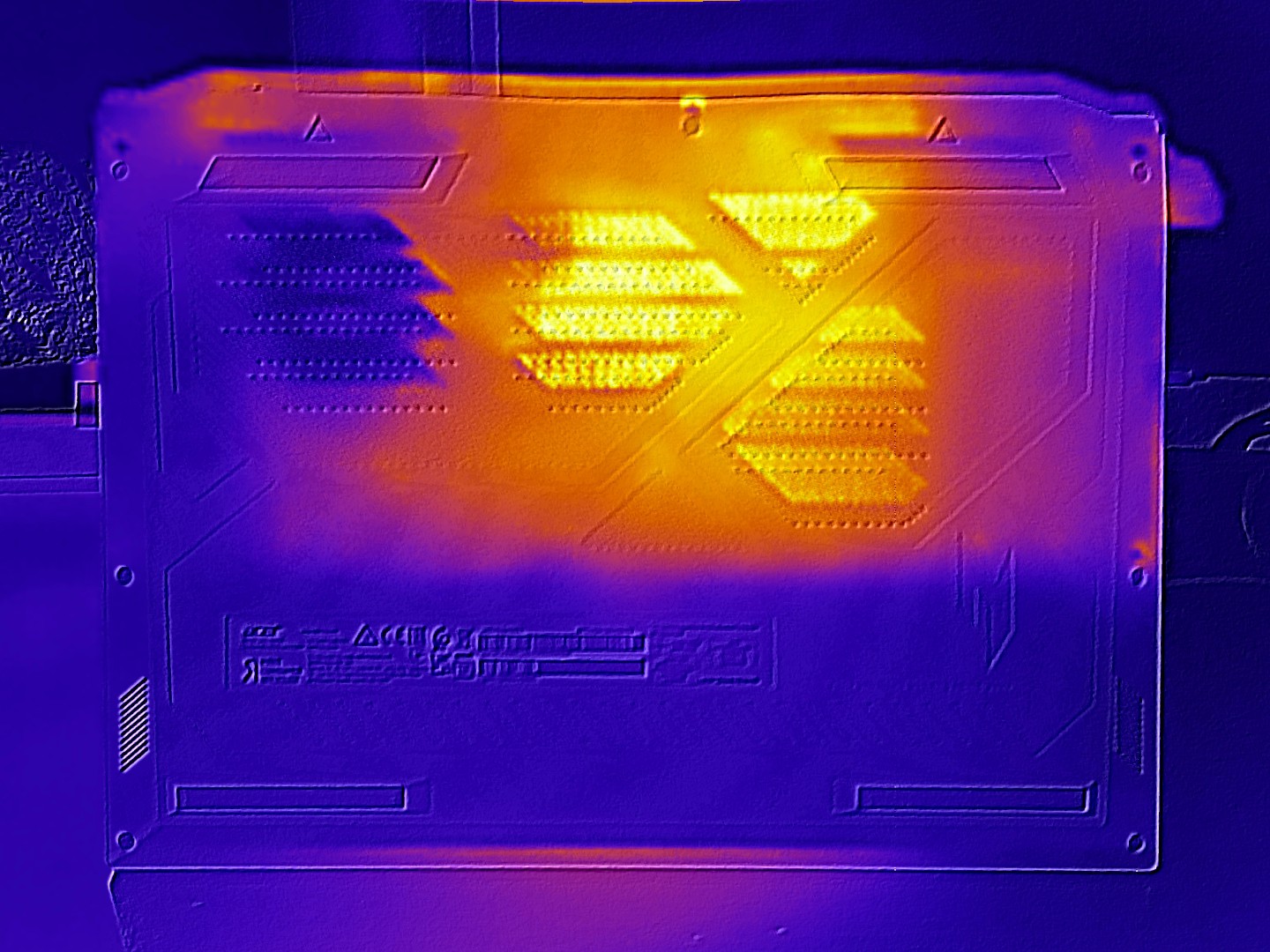
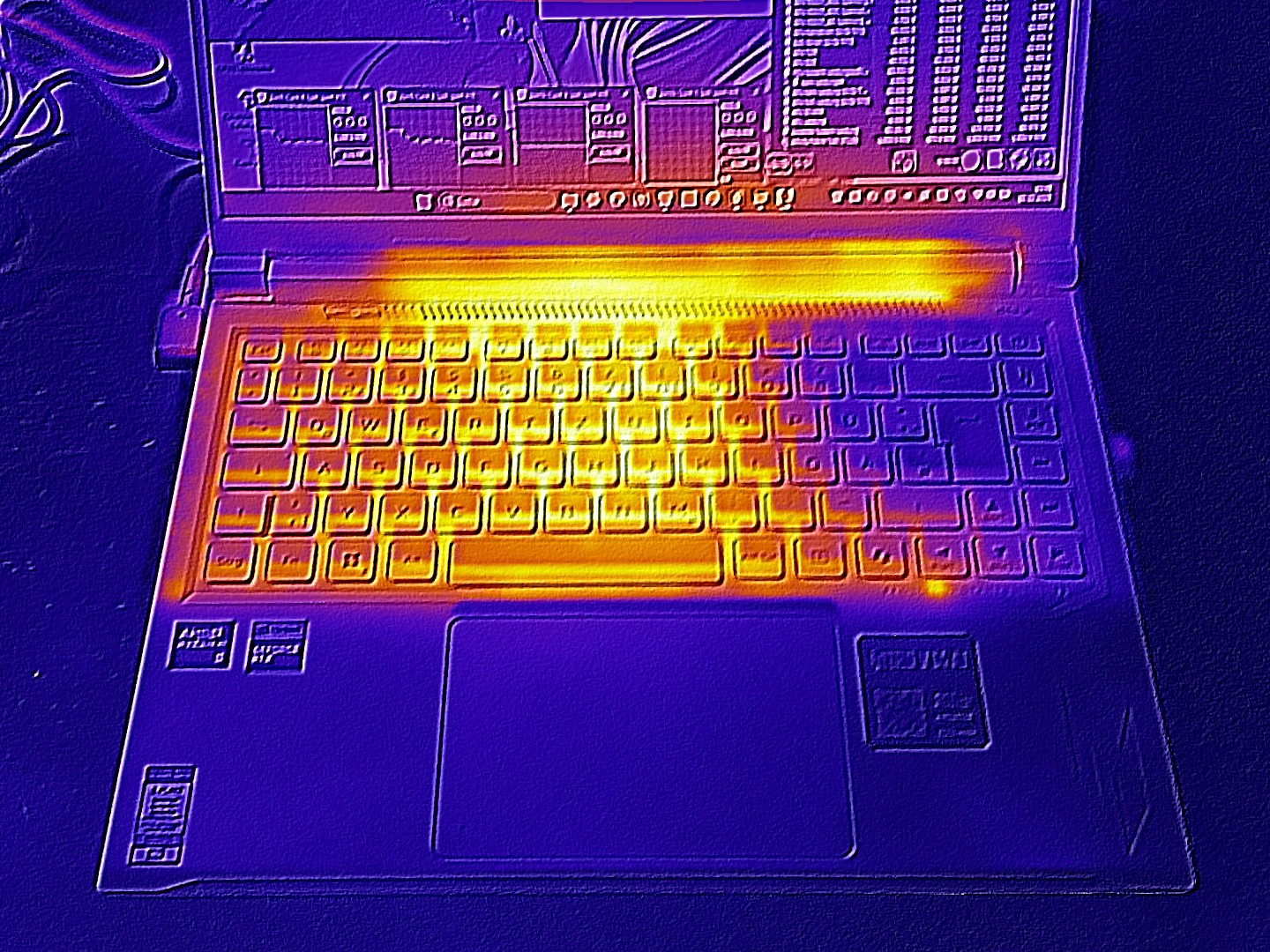
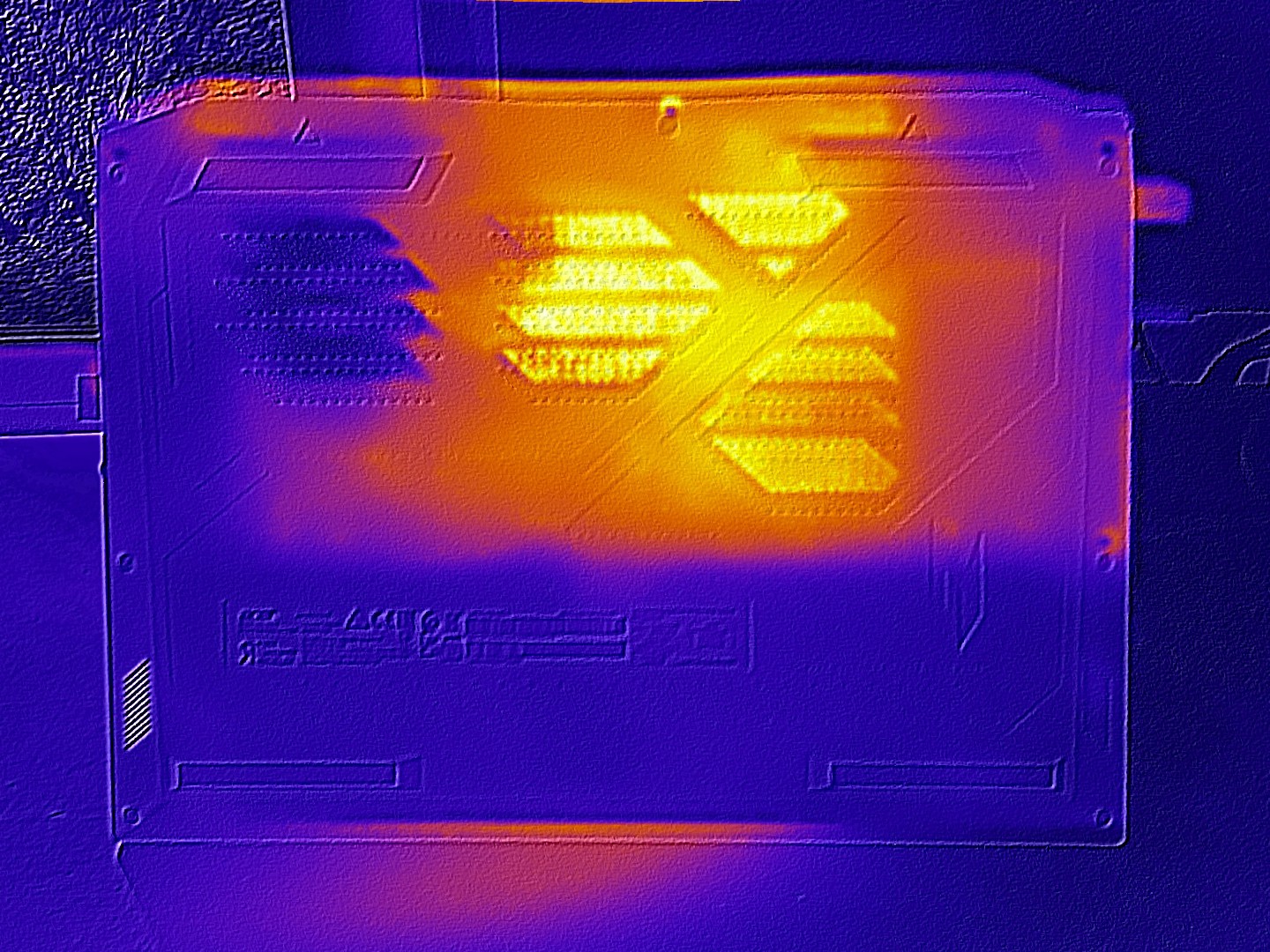
As is the case with many laptops, the bottom of the chassis heats up slightly more than the top.
In the stress test, we were able to measure a maximum of 45 °C at the top and 51 °C at the bottom, which corresponds to quite high values, although some competitors get even hotter (see table below).
In idle, the entire chassis remains cooler than 30 °C, which is commendable.
(±) The maximum temperature on the upper side is 45 °C / 113 F, compared to the average of 40.4 °C / 105 F, ranging from 21.2 to 68.8 °C for the class Gaming.
(-) The bottom heats up to a maximum of 51 °C / 124 F, compared to the average of 43.2 °C / 110 F
(+) In idle usage, the average temperature for the upper side is 24.4 °C / 76 F, compared to the device average of 33.9 °C / 93 F.
(±) 3: The average temperature for the upper side is 35.8 °C / 96 F, compared to the average of 33.9 °C / 93 F for the class Gaming.
(+) The palmrests and touchpad are cooler than skin temperature with a maximum of 24 °C / 75.2 F and are therefore cool to the touch.
(+) The average temperature of the palmrest area of similar devices was 28.8 °C / 83.8 F (+4.8 °C / 8.6 F).
| Acer Nitro V14 AI ANV14-62-R9LT Ryzen AI 5 340, GeForce RTX 5050 Laptop | Acer Nitro V 16 AI ANV16-42-R860 R5 240, GeForce RTX 5050 Laptop | HP Victus 15-fa2160ng i5-13420H, GeForce RTX 5050 Laptop | Lenovo LOQ 15AHP10 R7 250, GeForce RTX 5060 Laptop | Lenovo Legion 5 15AHP G10 R7 260, GeForce RTX 5060 Laptop | Schenker XMG Core 15 (M25) Ryzen AI 7 350, GeForce RTX 5060 Laptop | Razer Blade 14 2025 Ryzen AI 9 365, GeForce RTX 5070 Laptop | |
|---|---|---|---|---|---|---|---|
| Heat | -14% | -6% | -13% | -2% | -11% | -7% | |
| Maximum Upper Side * (°C) | 45 | 45 -0% | 43 4% | 49 -9% | 42.2 6% | 49 -9% | 47 -4% |
| Maximum Bottom * (°C) | 51 | 59 -16% | 43 16% | 58 -14% | 51.7 -1% | 59 -16% | 49.6 3% |
| Idle Upper Side * (°C) | 26 | 29 -12% | 37 -42% | 32 -23% | 28.5 -10% | 28 -8% | 29.8 -15% |
| Idle Bottom * (°C) | 28 | 36 -29% | 28 -0% | 29 -4% | 29.2 -4% | 31 -11% | 30.7 -10% |
* ... smaller is better
Stress test
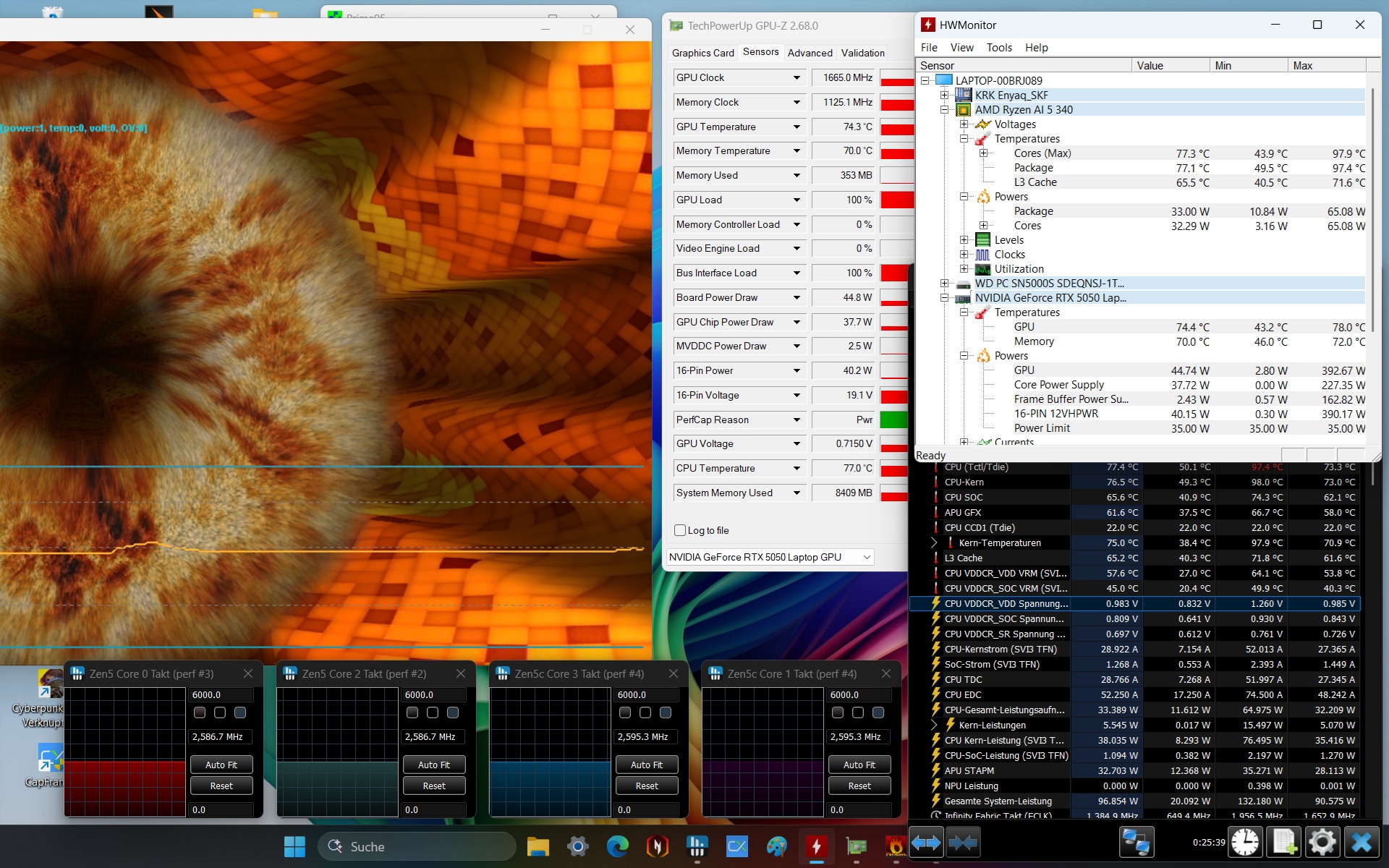
The components do not get too hot under full load. Stressing with FurMark and Prime95 brought the CPU to around 77 °C after a while, while the GPU reached around 74 °C.

Speakers
According to our audio analysis, the Nitro V14 AI's sound quality is surprisingly better than that of the 16-inch Nitro, which mainly struggles with a weaker bass.
Acer Nitro V14 AI ANV14-62-R9LT audio analysis
(±) | speaker loudness is average but good (80 dB)
Bass 100 - 315 Hz
(±) | reduced bass - on average 13.6% lower than median
(±) | linearity of bass is average (12.5% delta to prev. frequency)
Mids 400 - 2000 Hz
(±) | higher mids - on average 5.5% higher than median
(+) | mids are linear (6.7% delta to prev. frequency)
Highs 2 - 16 kHz
(+) | balanced highs - only 1.8% away from median
(+) | highs are linear (5.7% delta to prev. frequency)
Overall 100 - 16.000 Hz
(+) | overall sound is linear (14% difference to median)
Compared to same class
» 23% of all tested devices in this class were better, 7% similar, 70% worse
» The best had a delta of 6%, average was 18%, worst was 132%
Compared to all devices tested
» 16% of all tested devices were better, 4% similar, 80% worse
» The best had a delta of 4%, average was 24%, worst was 134%
Acer Nitro V 16 AI ANV16-42-R860 audio analysis
(±) | speaker loudness is average but good (81 dB)
Bass 100 - 315 Hz
(-) | nearly no bass - on average 21.2% lower than median
(±) | linearity of bass is average (13.6% delta to prev. frequency)
Mids 400 - 2000 Hz
(±) | higher mids - on average 5.2% higher than median
(+) | mids are linear (6.5% delta to prev. frequency)
Highs 2 - 16 kHz
(+) | balanced highs - only 1.5% away from median
(+) | highs are linear (5.6% delta to prev. frequency)
Overall 100 - 16.000 Hz
(±) | linearity of overall sound is average (16.8% difference to median)
Compared to same class
» 44% of all tested devices in this class were better, 11% similar, 46% worse
» The best had a delta of 6%, average was 18%, worst was 132%
Compared to all devices tested
» 29% of all tested devices were better, 8% similar, 63% worse
» The best had a delta of 4%, average was 24%, worst was 134%
Energy management
Energy consumption
The power consumption is pleasingly low in general. The Nitro V14 AI consumes less juice than its counterparts, especially under load.
| Off / Standby | 0.1 / 0.1 Watt |
| Idle | 6.1 / 6.5 / 7.5 Watt |
| Load |
76 / 136 Watt |
   
| |
Key:
min: ,
med: ,
max: Metrahit Energy | |
| Acer Nitro V14 AI ANV14-62-R9LT Ryzen AI 5 340, GeForce RTX 5050 Laptop | Acer Nitro V 16 AI ANV16-42-R860 R5 240, GeForce RTX 5050 Laptop | HP Victus 15-fa2160ng i5-13420H, GeForce RTX 5050 Laptop | Lenovo LOQ 15AHP10 R7 250, GeForce RTX 5060 Laptop | Lenovo Legion 5 15AHP G10 R7 260, GeForce RTX 5060 Laptop | Schenker XMG Core 15 (M25) Ryzen AI 7 350, GeForce RTX 5060 Laptop | Razer Blade 14 2025 Ryzen AI 9 365, GeForce RTX 5070 Laptop | Average of class Gaming | |
|---|---|---|---|---|---|---|---|---|
| Power Consumption | -8% | -37% | -112% | -48% | -69% | -56% | -132% | |
| Idle Minimum * (Watt) | 6.1 | 4.2 31% | 7.9 -30% | 20 -228% | 6.9 -13% | 10.6 -74% | 9.3 -52% | 13.2 ? -116% |
| Idle Average * (Watt) | 6.5 | 6.8 -5% | 9.2 -42% | 20.7 -218% | 10.7 -65% | 12.1 -86% | 11.1 -71% | 18.9 ? -191% |
| Idle Maximum * (Watt) | 7.5 | 9.8 -31% | 13.5 -80% | 22.7 -203% | 11.3 -51% | 15.9 -112% | 11.2 -49% | 24.3 ? -224% |
| Load Average * (Watt) | 76 | 62 18% | 78 -3% | 71 7% | 69.7 8% | 95 -25% | 91.9 -21% | 108 ? -42% |
| Cyberpunk 2077 ultra * (Watt) | 97.9 | 130.3 -33% | 128.4 -31% | 153.1 -56% | 162.6 -66% | 169 -73% | 171.5 -75% | |
| Cyberpunk 2077 ultra external monitor * (Watt) | 94.6 | 129.6 -37% | 126.7 -34% | 151.1 -60% | 165 -74% | 165 -74% | 168.6 -78% | |
| Load Maximum * (Watt) | 136 | 135 1% | 187 -38% | 172 -26% | 233.6 -72% | 192 -41% | 195 -43% | 254 ? -87% |
* ... smaller is better
Power consumption: Cyberpunk 2077 / Stress test
Power consumption: External monitor
Battery life
As mentioned earlier, the Nitro V14 AI's battery life is impressive. The 76 Whr model managed to last for 13 hours while running our web browsing script at a brightness reduced to 150 cd/m².
| Acer Nitro V14 AI ANV14-62-R9LT Ryzen AI 5 340, GeForce RTX 5050 Laptop, 76 Wh | Acer Nitro V 16 AI ANV16-42-R860 R5 240, GeForce RTX 5050 Laptop, 76 Wh | HP Victus 15-fa2160ng i5-13420H, GeForce RTX 5050 Laptop, 70 Wh | Lenovo LOQ 15AHP10 R7 250, GeForce RTX 5060 Laptop, 60 Wh | Lenovo Legion 5 15AHP G10 R7 260, GeForce RTX 5060 Laptop, 80 Wh | Schenker XMG Core 15 (M25) Ryzen AI 7 350, GeForce RTX 5060 Laptop, 99.8 Wh | Razer Blade 14 2025 Ryzen AI 9 365, GeForce RTX 5070 Laptop, 72 Wh | Average of class Gaming | |
|---|---|---|---|---|---|---|---|---|
| Battery runtime | -15% | -67% | -66% | -26% | -24% | -32% | -46% | |
| WiFi v1.3 (h) | 13.1 | 11.2 -15% | 4.3 -67% | 4.5 -66% | 9.7 -26% | 9.9 -24% | 8.9 -32% | 7.02 ? -46% |
| Reader / Idle (h) | 6.9 | 8.71 ? | ||||||
| Load (h) | 1.3 | 1.2 | 1.2 | 1.47 ? | ||||
| H.264 (h) | 11.5 | 10.9 | 8.26 ? | |||||
| Cyberpunk 2077 ultra 150cd (h) | 0.9 |
Notebookcheck's overall impressions of the Acer Nitro V14 AI
The Acer Nitro V14 AI with Ryzen AI 5 340 and GeForce RTX 5050 Laptop turns out to be an enduring 14-inch gaming laptop in the review, whose price-performance ratio is pleasing for the most part. But there is some catching up to do when it comes to fan noise levels.
Acer Nitro V14 AI ANV14-62-R9LT
- 12/23/2025 v8
Florian Glaser
 Total Sustainability Score:
 Potential alternatives in comparison
Image | Model / Review | Price | Weight | Height | Display |
|---|---|---|---|---|---|
1. 77.7%  | Acer Nitro V14 AI ANV14-62-R9LT AMD Ryzen AI 5 340 ⎘ NVIDIA GeForce RTX 5050 Laptop ⎘ 16 GB Memory, 1024 GB SSD | Amazon: 1. $23.99 Alapmk Protective Case for A... List Price: 1150 EUR | 1.7 kg | 21.9 mm | 14.50" 1920x1200 156 PPI IPS |
2. 77.5%  | Acer Nitro V 16 AI ANV16-42-R860 AMD Ryzen 5 240 ⎘ NVIDIA GeForce RTX 5050 Laptop ⎘ 16 GB Memory, 1024 GB SSD | Amazon: 1. $749.00 acer Nitro V 16 AI WUXGA (19... 2. $999.00 Acer Nitro V 16 AI Gaming La... 3. $125.98 Replacement LCD for Acer Nit... List Price: 1100 EUR | 2.4 kg | 24.5 mm | 16.00" 1920x1200 142 PPI IPS |
3. 75.8%  | HP Victus 15-fa2160ng Intel Core i5-13420H ⎘ NVIDIA GeForce RTX 5050 Laptop ⎘ 24 GB Memory, 512 GB SSD | Amazon: List Price: 1000 EUR | 2.4 kg | 23.5 mm | 15.60" 1920x1080 141 PPI IPS |
4. 77.5%  | Lenovo LOQ 15AHP10 AMD Ryzen 7 250 ⎘ NVIDIA GeForce RTX 5060 Laptop ⎘ 16 GB Memory, 1024 GB SSD | Amazon: | 2.4 kg | 24 mm | 15.60" 1920x1080 141 PPI IPS |
5. 87.2%  | Lenovo Legion 5 15AHP G10 AMD Ryzen 7 260 ⎘ NVIDIA GeForce RTX 5060 Laptop ⎘ 32 GB Memory, 1024 GB SSD | Amazon: List Price: 1449€ | 1.9 kg | 21.5 mm | 15.10" 2560x1600 200 PPI OLED |
6. 84.7%  | Schenker XMG Core 15 (M25) AMD Ryzen AI 7 350 ⎘ NVIDIA GeForce RTX 5060 Laptop ⎘ 64 GB Memory, 2048 GB SSD | Amazon: List Price: 1840 EUR | 1.9 kg | 22 mm | 15.30" 2560x1600 197 PPI IPS |
7. 87.2%  | Razer Blade 14 2025 AMD Ryzen AI 9 365 ⎘ NVIDIA GeForce RTX 5070 Laptop ⎘ 32 GB Memory, 1024 GB SSD | Amazon: List Price: 2399€ | 1.6 kg | 16.2 mm | 14.00" 2880x1800 243 PPI OLED |
Transparency
The selection of devices to be reviewed is made by our editorial team. The test sample was provided to the author as a loan by the manufacturer or retailer for the purpose of this review. The lender had no influence on this review, nor did the manufacturer receive a copy of this review before publication. There was no obligation to publish this review. As an independent media company, Notebookcheck is not subjected to the authority of manufacturers, retailers or publishers.
This is how Notebookcheck is testing
Every year, Notebookcheck independently reviews hundreds of laptops and smartphones using standardized procedures to ensure that all results are comparable. We have continuously developed our test methods for around 20 years and set industry standards in the process. In our test labs, high-quality measuring equipment is utilized by experienced technicians and editors. These tests involve a multi-stage validation process. Our complex rating system is based on hundreds of well-founded measurements and benchmarks, which maintains objectivity. Further information on our test methods can be found here.
 Add as a preferred source on Google


