





Almost two years ago Qualcomm launched their first generation of Snapdragon X Elite mobile processor for Windows laptops. It was the first serious attempt to establish ARM processors, which was also heavily supported by Microsoft and also required a special ARM version of Windows. In the following months, we got more and more scaled down processors for lower prices, but there were also compatibility issues, especially with legacy software or drivers. It was not the big breakthrough Qualcomm hoped for, but definitely a solid alternative to the familiar x86 processors from AMD and Intel.
Qualcomm announced the second generation of their Snapdragon X processors in autumn 2025 and these new chips are finally entering the market in April 2026. We got our hands on two of these new processors called Snapdragon X2 Elite and Snapdragon X2 Elite Extreme and tested their performance as well as efficiency. Did Qualcomm manage to close the gap to Apple and how do the new chips perform compared to Intel's latest Panther Lake mobile processors as well as AMD's familiar Zen 5 architecture?
Overview - Snapdragon X2
The new Snapdragon X2 generation starts with the most powerful versions and in addition to the Snapdragon X2 Elite chips, we also get X2 Elite Extreme processors. The nomenclature was already pretty confusing for the first generation and it is not easier now. The following two images show the nomenclature for the processor as well as the graphics adapter and their meaning.
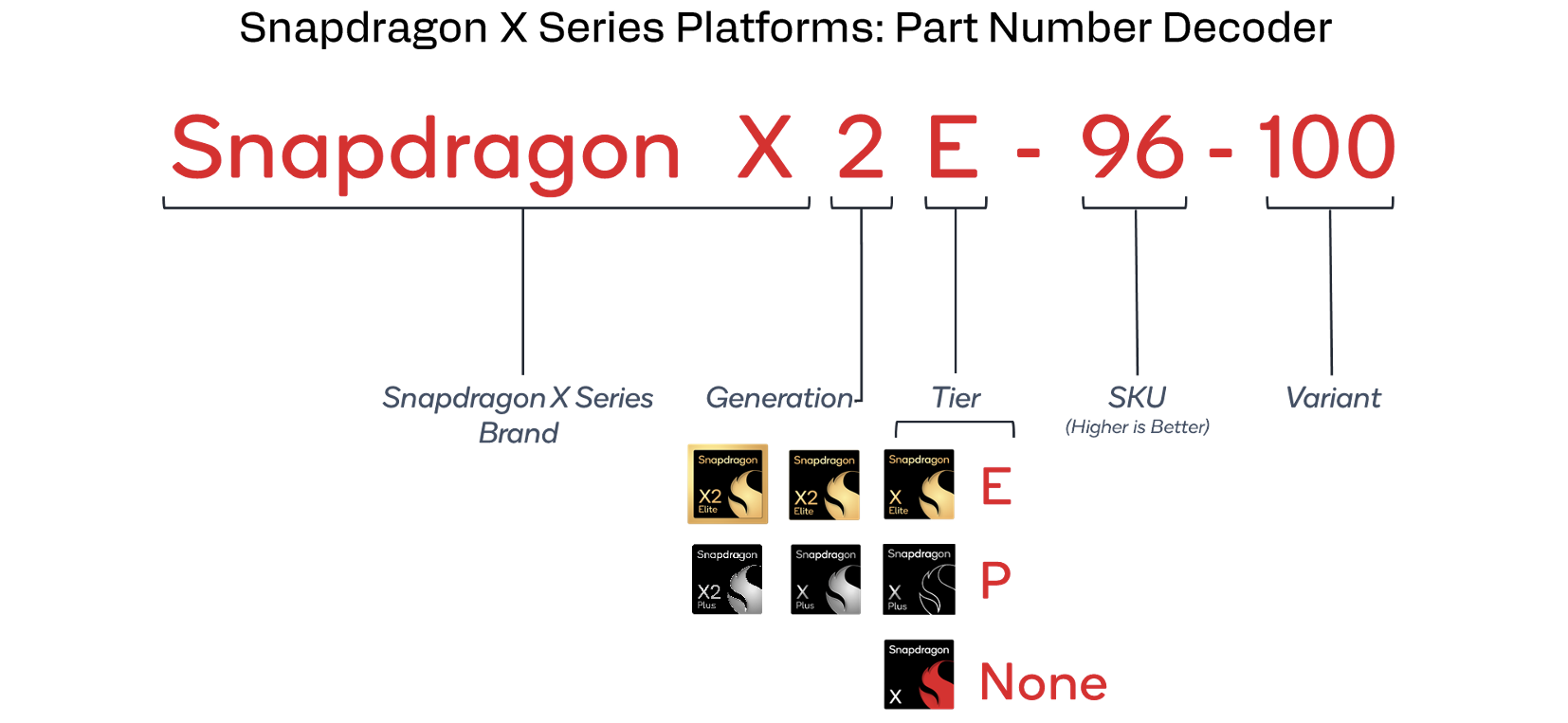
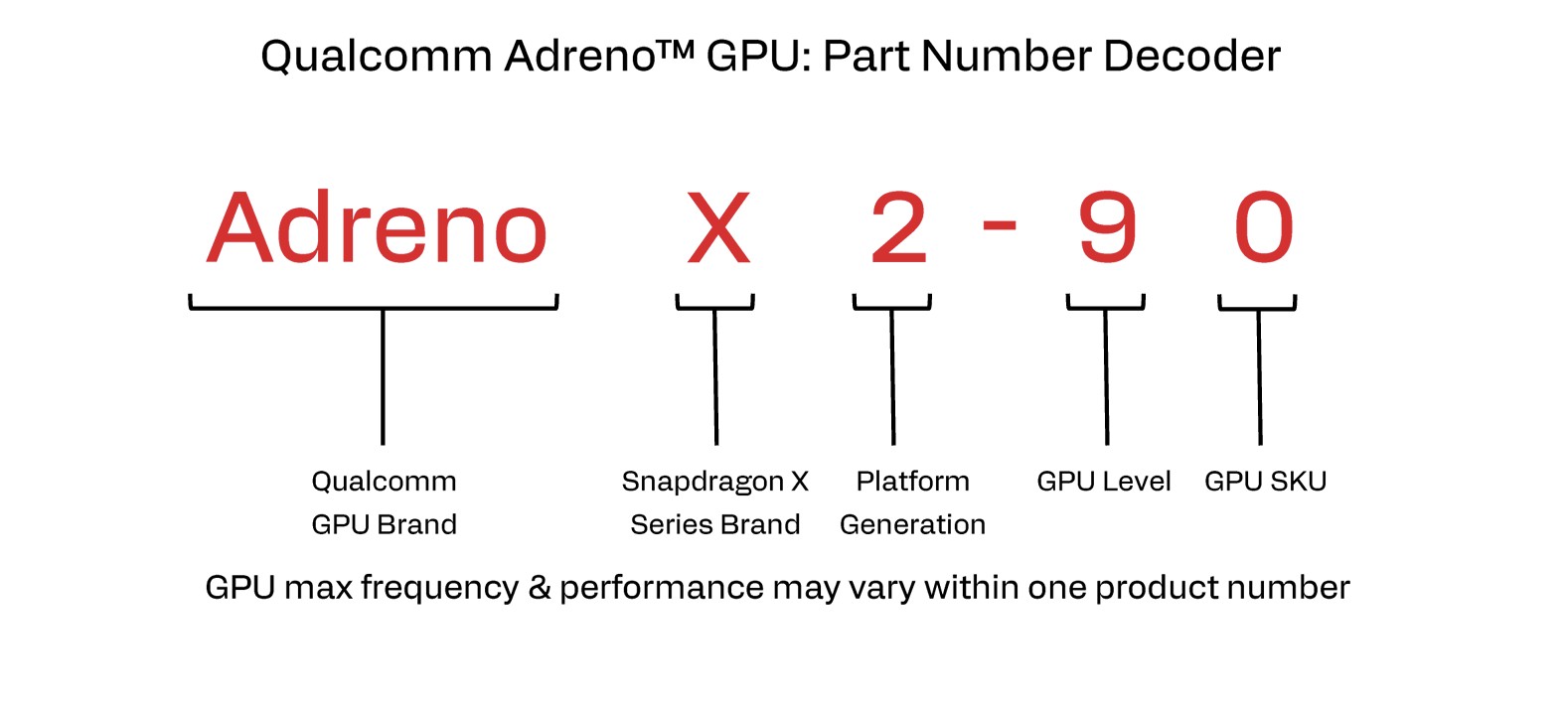
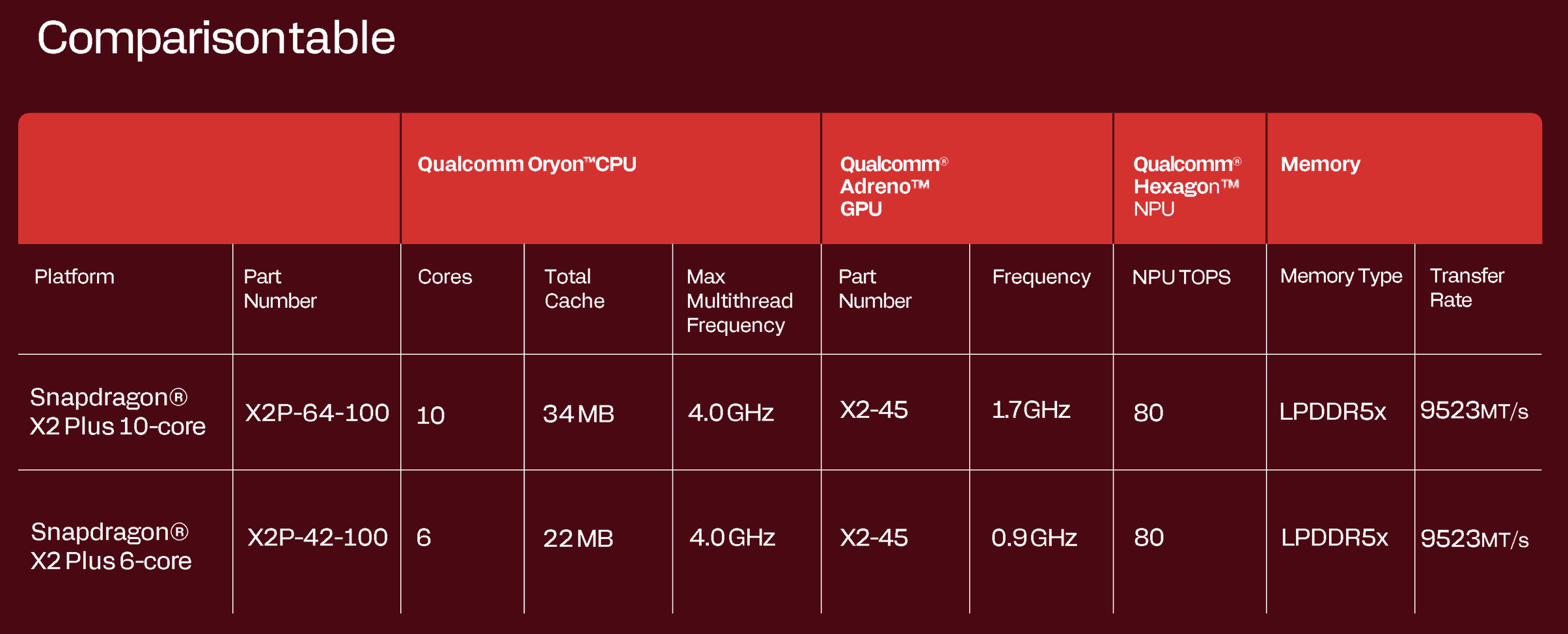
Considering the number of available processors (see table below), this nomenclature can quickly become confusing and it is not ideal for customers. In addition to X2 Elite as well as X2 Elite Extreme models, Qualcomm also launches two X2 Plus models for lower-end devices. As always the performance of the chips will also vary between different devices due to different power limits. In addition, the GPU clocks once again vary depending on the CPU model, so even if the two GPUs share the same name (like Adreno X2-90), the clocks and therefore the performance can vary noticeably.
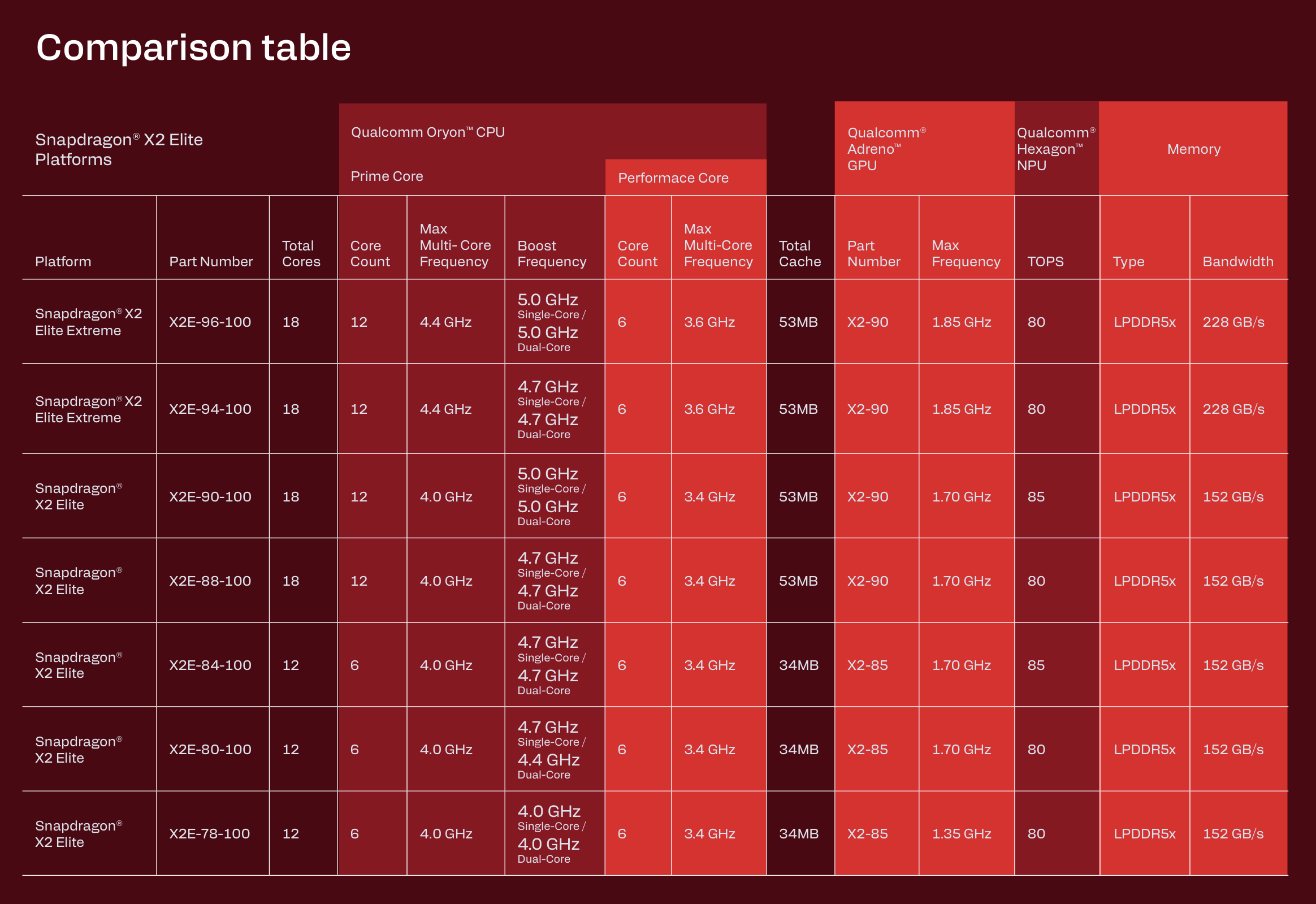
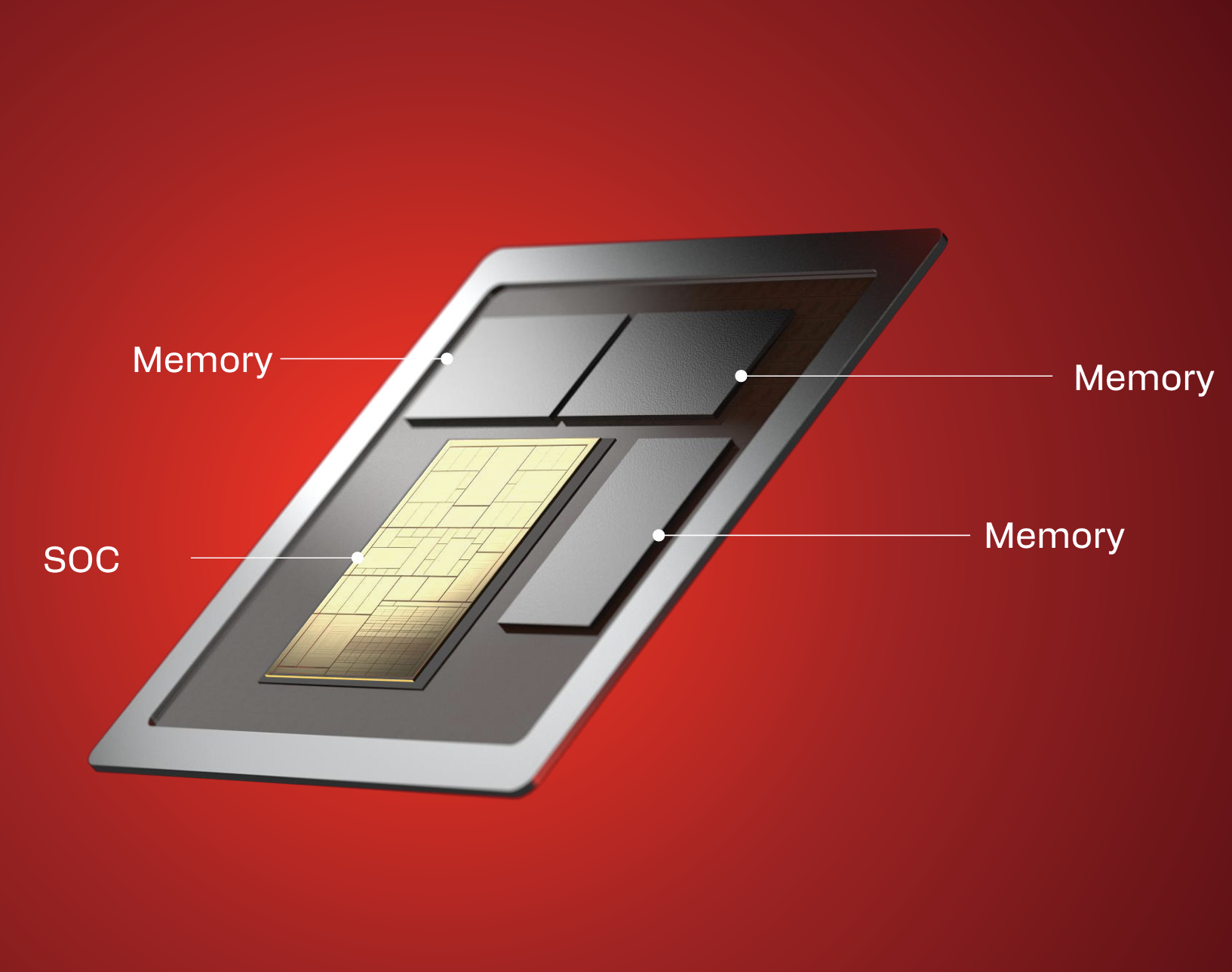
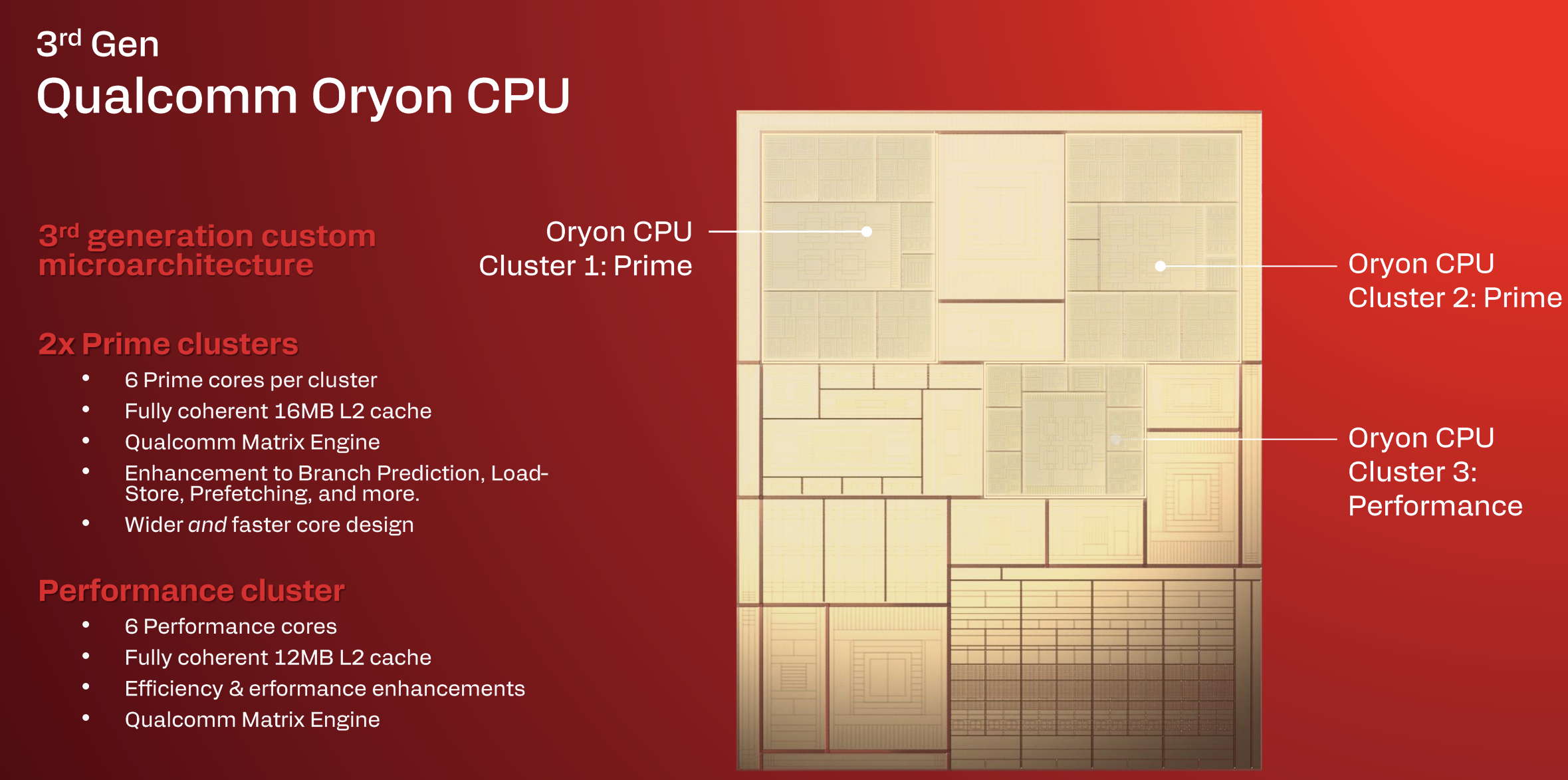
The new 3rd generation Oryon CPU is still manufactured in a 3 nm process at TSMC (N3X), but now uses up to 18 cores divided into two clusters of up to 6 prime cores and 1 cluster of performance cores. While it was not possible to monitor the CPU consumption via third party tools like HWiNFO for the first generation of Snapdragon X chips, the consumption of these new core clusters can now be monitored. There are also additional values like the SoC consumption (equals package power for Intel systems, for example), while the consumption of the core clusters is equivalent to the CPU core consumption we can monitor on Apple's MacBooks. The maximum clock (single- and multi-core) is achieved by the prime cores, while the performance cores only reach a much lower maximum clock.
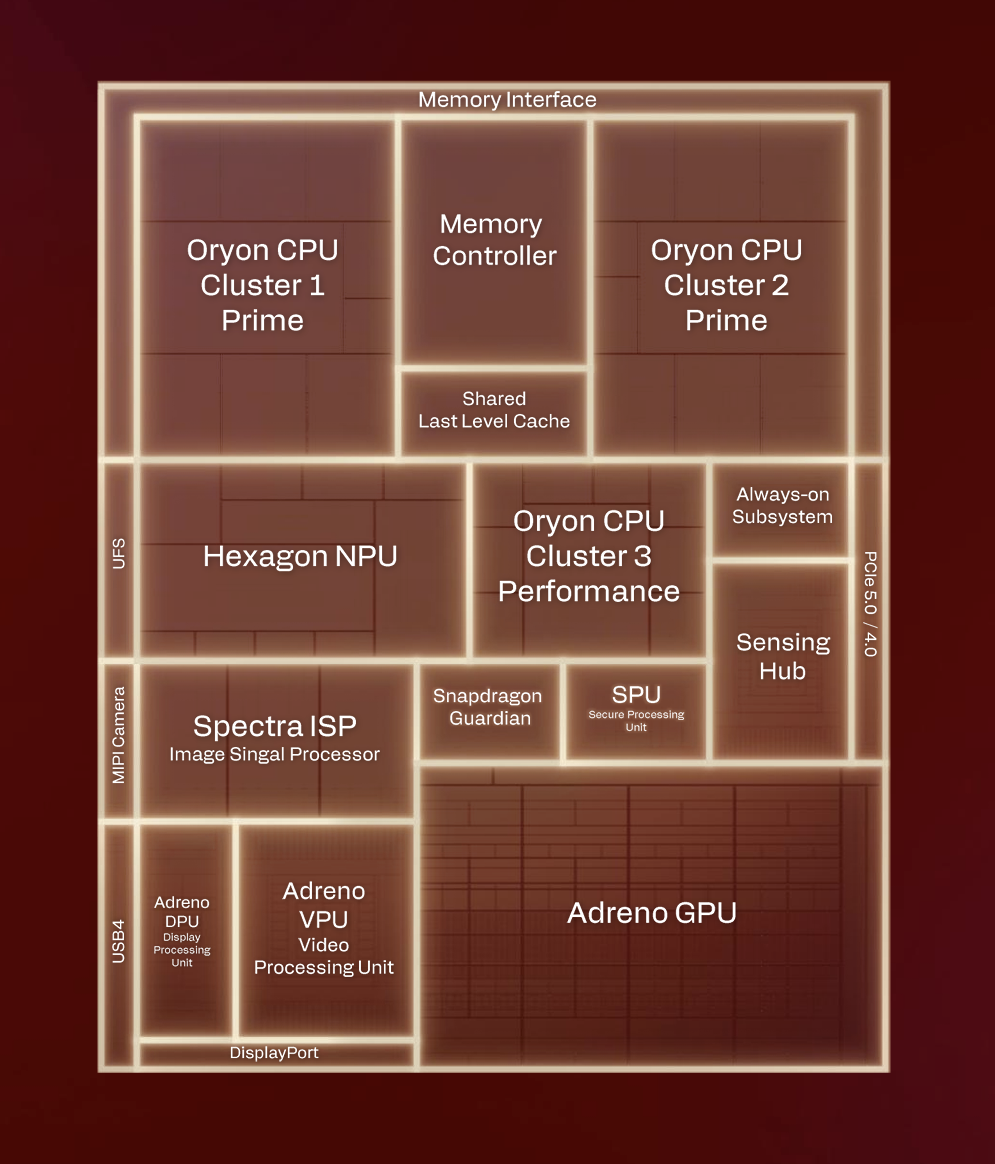
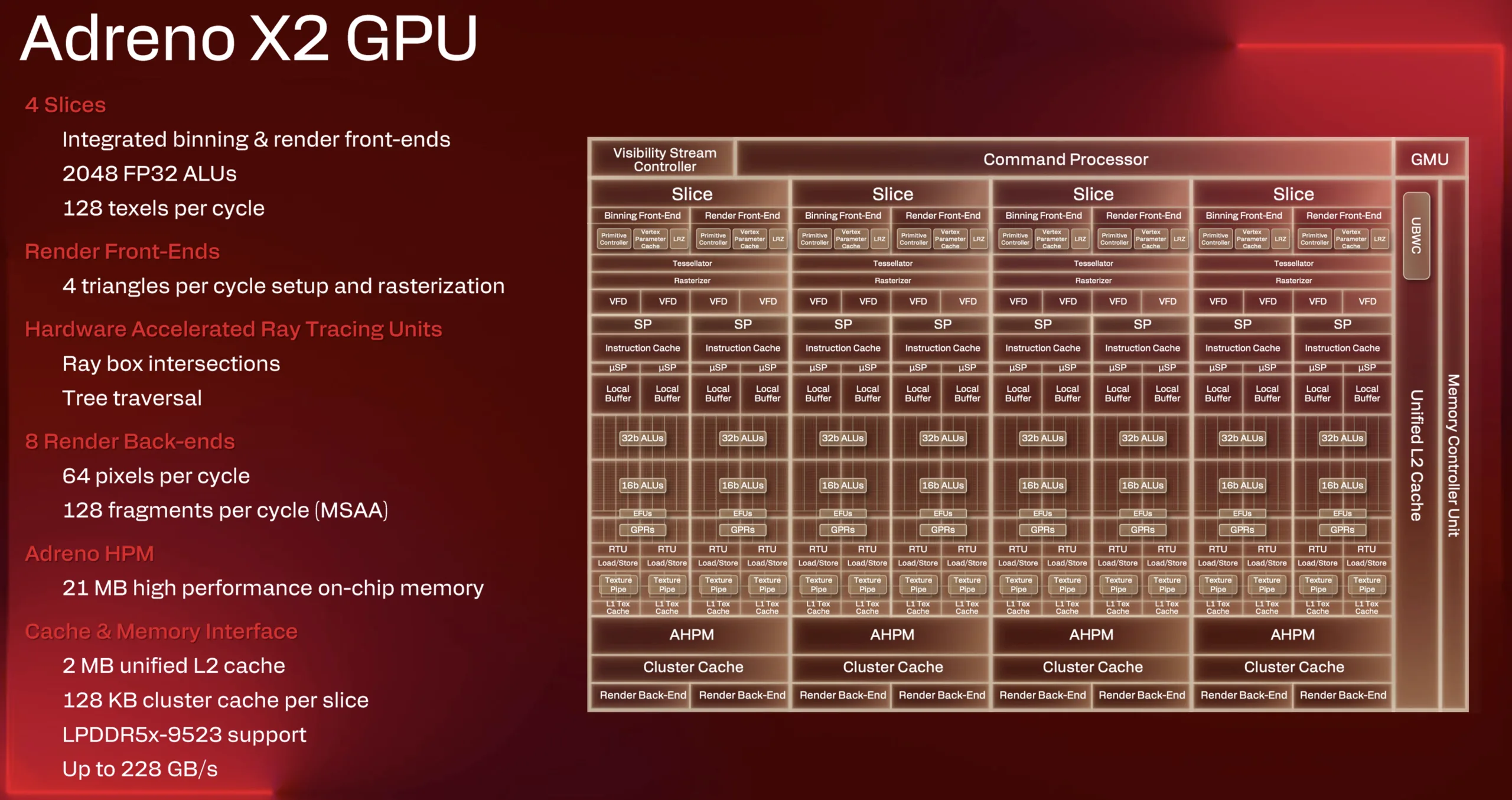
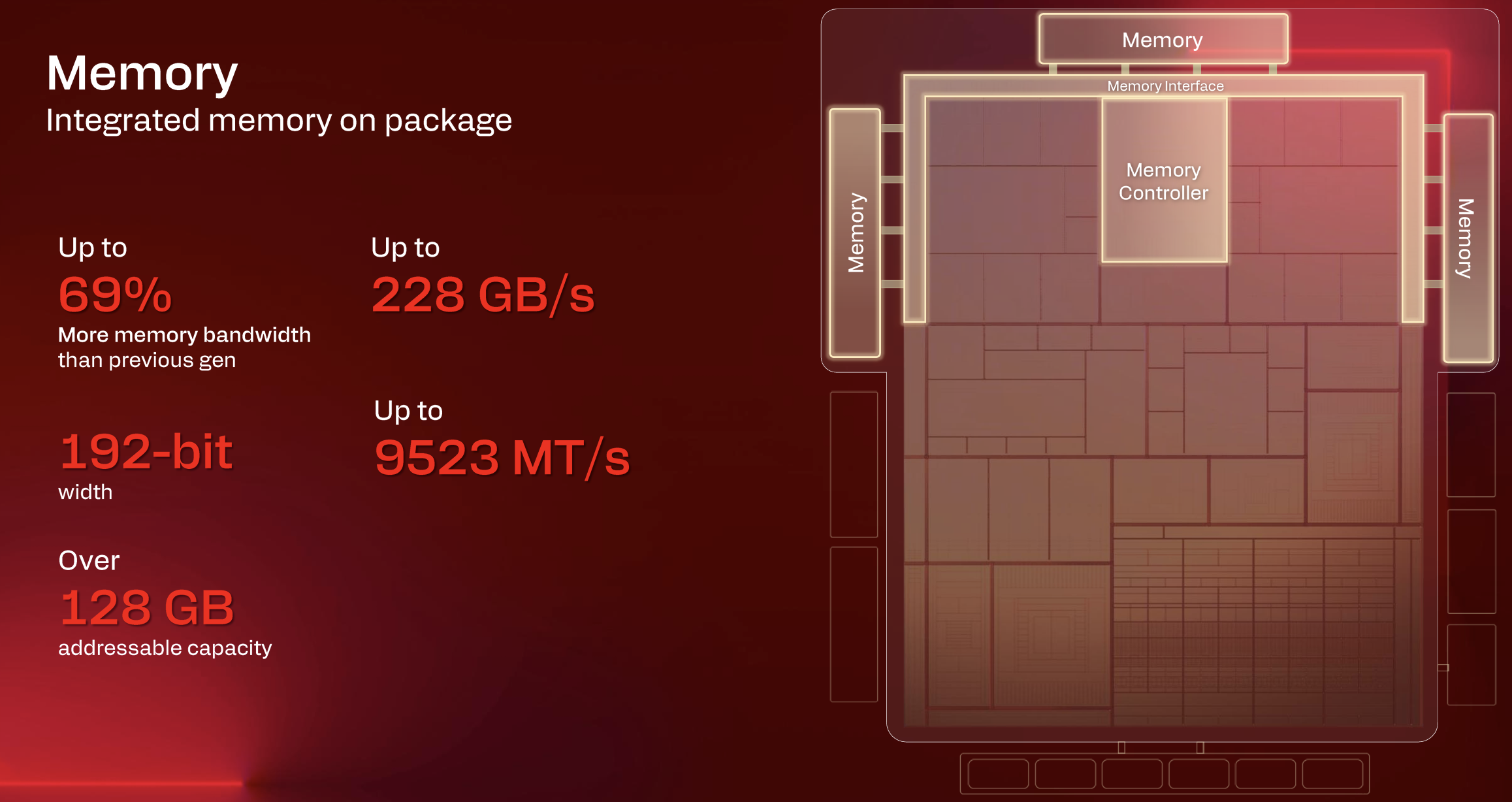
Qualcomm also improved the GPU and NPU, but the information about hardware changes is limited. The performance is supposed to be much better and we are curious to test these claims since the GPU performance of the first-generation Snapdragon X chips was definitely a weak spot compared to AMD and Intel. GPU driver updates will be available via Qualcomm's own Snapdragon control panel and not only via laptop manufacturers. The new Qualcomm Hexagon NPU offers 80 TOPS of AI processing and therefore meets the requirements of Microsoft's Copilot+ certification. The maximum amount of memory is 128 GB (LPDDR5x-9523) with a maximum bandwidth of 228 GB/s.
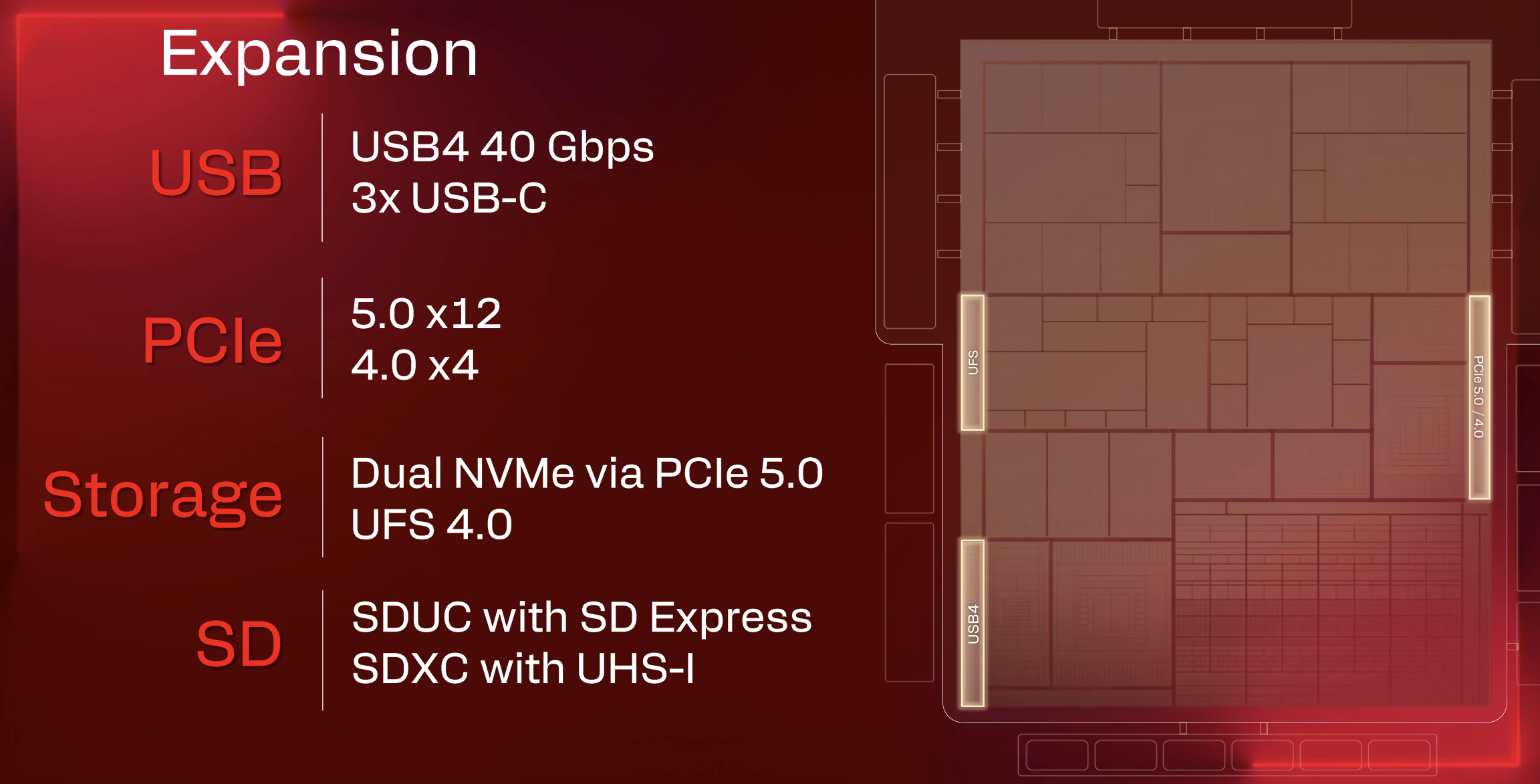
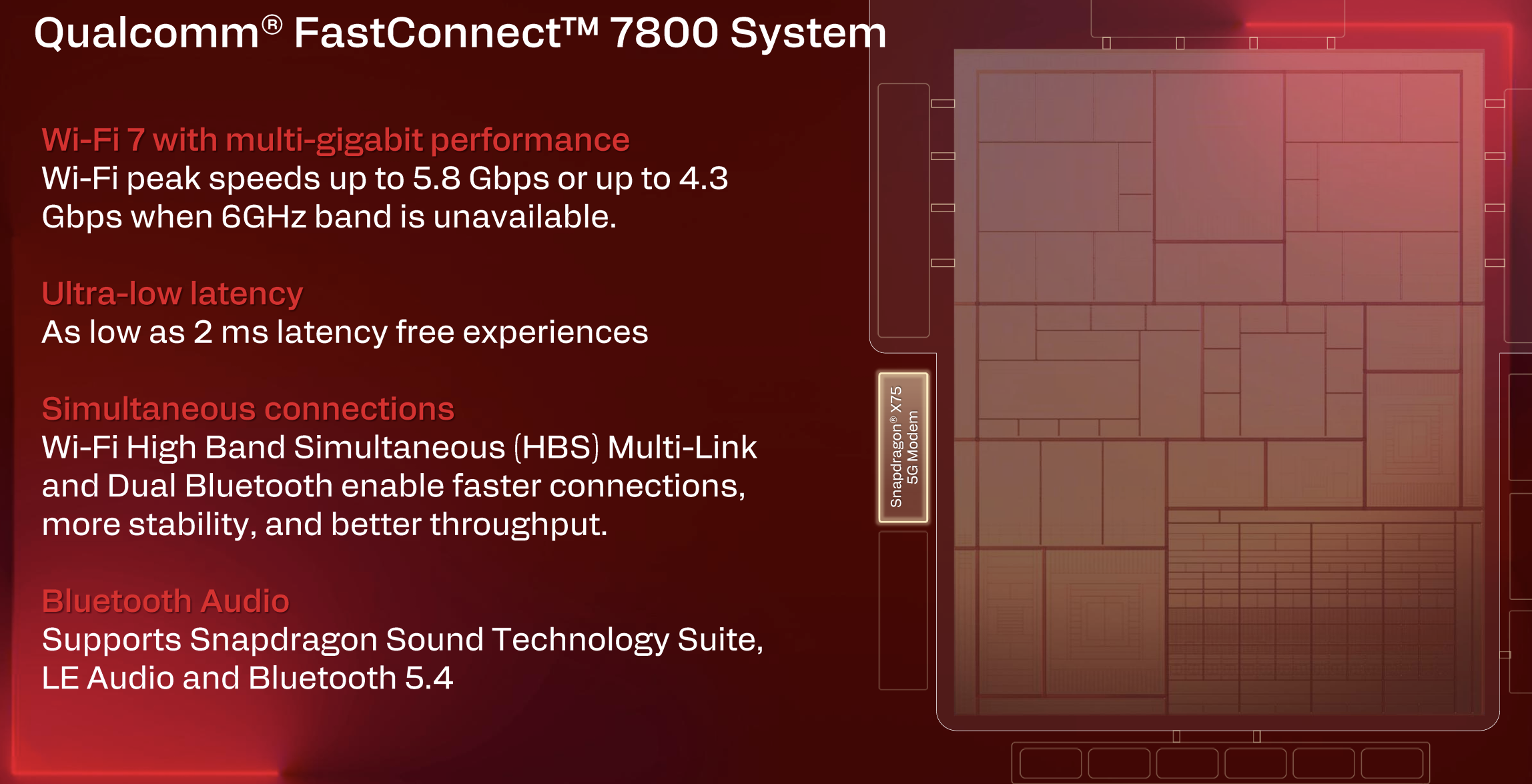
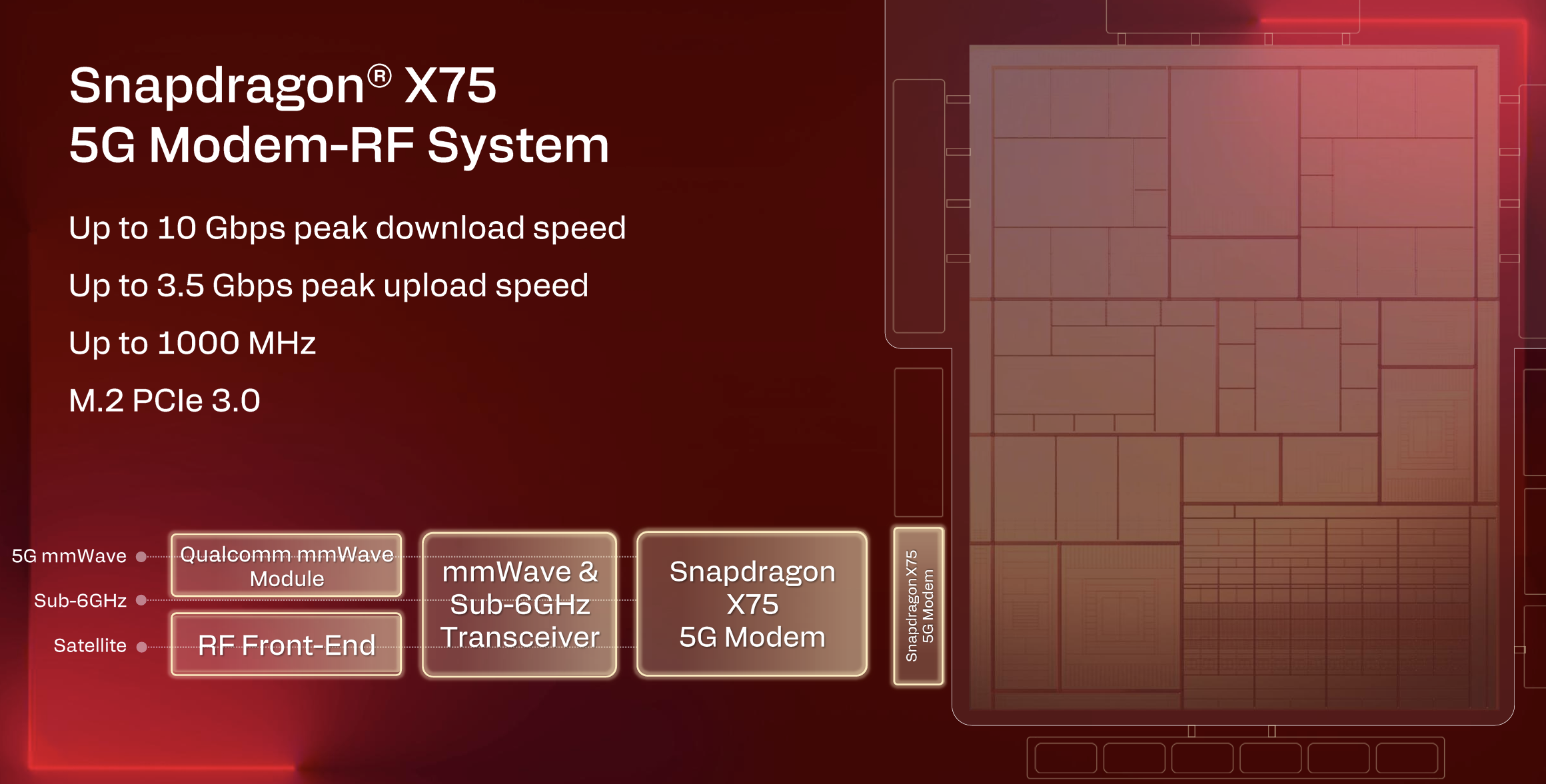
Connectivity is once again limited to three USB-C 4.0 ports (no Thunderbolt) and up to 12 PCIe 5.0 lanes in addition to 4 PCIe 4.0 lanes. Wi-Fi options will once again include Wi-Fi 6E as well as Wi-Fi 7 and a 5G modem is available, but we do not think there will be many devices with integrated 5G connectivity. You can attach up to three 4K displays at 144 Hz or 5K at 60 Hz.
Test Systems

Our test systems are the updated 14-inch Asus Zenbook A14 with the Snapdragon X2 Elite (X2E-88-100) as well as the brand-new 16-inch Asus Zenbook A16 with the Snapdragon X2 Elite Extreme (X2E-94-100). There is an even faster version (X2E-96-100) with a slightly higher single-core turbo frequency (5.0 vs. 4.7 GHz), so the single-core performance should be a bit higher compared to the X2E-94-100. Both chips use the Adreno X2-90 GPU, but with different clocks. While the iGPU of the X2E-94-100 is running at 1850 MHz, the iGPU of the X2E-88-100 is limited to 1700 MHz.
Both Zenbooks offer different power modes with different power levels. We mainly used the fastest settings, but for the multi-core tests and the efficiency, we also checked the two slower modes for each device. The larger Zenbook A16 is equipped with 48 GB RAM (LPDDR5x-9523) and the smaller Zenbook A14 with 32 GB RAM (LPDDR5x-9523) and both use the latest GPU driver 32.0.149.0. We have listed the different power levels in the table below.
| Power mode | Zenbook A16 | Zenbook A14 |
|---|---|---|
| Whisper | 52/18 Watts | 45/15 Watts |
| Standard | 75/40 Watts | 60/23 Watts |
| Performance | 97/72 Watts | 60/31 Watts |
Test Procedure
In order to make a meaningful comparison between the different processors and graphics cards, we look at the power consumption in addition to the pure performance in synthetic benchmarks from which we then determine the efficiency.
The consumption measurements are always carried out on an external display so as to eliminate the different internal displays as influencing factors. Nevertheless, we measure the overall consumption of the system here and not just compare the pure consumption values of the CPU/GPU. All the listed CPU and GPU benchmarks run natively on each operating system.
Single-Core Performance & Efficiency
Our two test processors both have a maximum single-core clock of 4.7 GHz, which is a big improvement over the previous generation, which was up to 4.2 GHz for the X1E-84-100 (which was very rare) and 4.0 GHz in the much more common X1E-80-100. The result is very good and the single-core performance is around 26 % faster than the old X1E-84-100 and around 30 % faster than the old X1E-80-100. Compared to Apple's CPUs, the single-core performance is slightly worse compared to the M4 generation and roughly 16-18 % slower than the current M5 generation. Compared to the latest Lunar Lake Core Ultra X9 388H, the single-core performance is more than 20 % better and the advantage over the Zen 5 chips is around 30 %.
As mentioned before, we can now monitor the consumption data for the CPU clusters as well as the SoC and we saw around 11-12 Watts for the cores and ~14 Watts for the SoC with a total system consumption of around 26 Watts. The previous models only consumed around 20 Watts, which means the additional 500-700 MHz results in a significantly higher power consumption, which is not really surprising considering the 3 nm manufacturing process. This also means the single-core efficiency is slightly worse compared to the old X1E-80-100 or X1E-84-100 and both Lunar Lake as well as Panther Lake are very close. AMD's Zen 5 chips clearly fall behind, while Apple's M4 and M5 generation are much more efficient here.
* ... smaller is better
Multi-Core Performance & Efficiency
The X2E-94-100 can reach up to 4.4 GHz (prime cores) and 3.6 GHz (performance cores) in multi-core scenarios, while the values for the X2E-88-100 are a bit lower (4.0 GHz for prime cores & 3.4 GHz for performance cores). The multi-core performance for both chips is pretty impressive and still superior to most mobile chips from AMD and Intel even at lower power limits. If we take the best results, the X2E-94-100 is only beaten by the new Apple M5 Pro with 18 cores, but it is faster than the M4 Pro with 14 cores. It also beats AMD's Ryzen AI Max+ 395 with 32 cores and is clearly ahead of all the other mobile processors from AMD as well as Intel in this TDP range. Only high-end HX processors like the Core Ultra 9 275HX or the Ryzen 9 9955HX provide even more multi-core-performance, but at much higher consumption values. The X2E-88-100 is slightly slower, but still superior to other mobile CPUs in this TDP range. Considering the weight of the Zenbook A14 (under 1 kg) and the Zenbook A16 (1.23 kg), these results are impressive.
| Geekbench 6.7 / Multi-Core | |
| Apple M5 Pro 18-Core | |
| Qualcomm Snapdragon X2 Elite Extreme X2E-94-100 | |
| Apple M4 Pro 14-Core | |
| Apple M4 Pro 12-Core (6.3.0) | |
| Apple M4 Pro 12-Core (6.3.0 High Power) | |
| Qualcomm Snapdragon X2 Elite X2E-88-100 | |
| AMD Ryzen 9 9955HX (6.5.0 Pro) | |
| AMD Ryzen AI Max+ 395 (6.5.0 Pro) | |
| Intel Core Ultra 9 275HX (6.4.0 Pro) | |
| Apple M5 10-Core | |
| Intel Core Ultra X9 388H (6.5.0 Pro) | |
| Apple M5 10-Core | |
| Apple M5 10-Core | |
| Qualcomm Snapdragon X Elite X1E-84-100 | |
| AMD Ryzen AI Max PRO 390 (6.4.0 Pro) | |
| Apple M4 10-Core | |
| Apple M4 10-Core | |
| AMD Ryzen AI 9 465 (6.5.0 Pro) | |
| Intel Core Ultra 5 338H (6.5.0 Pro) | |
| Intel Core Ultra 7 255H (6.4.0 Pro) | |
| AMD Ryzen AI 7 350 (6.4.0 Pro) | |
| Qualcomm Snapdragon X Plus X1P-64-100 | |
| Intel Core Ultra 7 155H (6.2.1) | |
| Intel Core Ultra 7 268V (6.4.0 Pro) | |
| Qualcomm Snapdragon X Plus X1P-42-100 | |
| Intel Core Ultra 5 228V (6.4.0 Pro) | |
| Intel Core Ultra 5 225U (6.4.0 Pro) | |
Both new Snapdragon X2 processors put up very good efficiency numbers. The efficiency obviously goes down when you use the faster power modes, but we can still see a clear advantage over the previous Snapdragon X1 generation. The Galaxy Book4 Edge 16 is a bit of an outlier here, because even though it is the fastest Snapdragon X1 chip in theory, the multi-core performance (roughly 50 % compared to the X2E-94-100 in standard mode) suffers from its very low power limits. The smaller X2E-88-100 manages slightly better efficiency numbers compared to the X2E-94-100, but as we have seen before, the TDP are also different. All in all, the new Snapdragon X2 chips are more efficient than the previous generation and only Apple's standard M4 and M5 SoCs manage better numbers, while the M4 Pro and the M5 Pro are pretty much on the same level here. All the x86 competitors from AMD and Intel are clearly worse in terms of multi-core efficiency.
* ... smaller is better
GPU Performance
The GPU performance is very interesting, because while we have two versions of the new Adreno X2-90, the performance results are very different. The iGPU of the X2E-88-100 only runs at up to 1700 MHz, which results in a GPU consumption of around 18 Watts (and therefore comparable to the M5 GPU), while the iGPU of the X2E-94-100 runs at up to 1850 MHz, which results in a GPU consumption of up to 25 Watts.
The results in the synthetic benchmarks are pretty good and Qualcomm managed to improve the GPU performance considerably. The new iGPUs are pretty much at least twice as powerful as before, which is impressive. The performance difference between the two Adreno X2-90 GPUs is around 15 % in our benchmarks.
Compared to the current Apple M5 GPU, the Adreno X2-90 with 1850 MHz is slightly faster, while the X2-90 with 1700 MHz is pretty much on the same performance level. AMD's Strix Halo iGPUs are, as expected, more powerful, but also consume much more power. The other Zen 5 iGPUs on the other hand are clearly beaten.
In comparison to Intel, the new Adreno X2-90 GPUs can beat the Lunar Lake iGPUs from last year, but the latest panther Lake models like the Arc B370 or Arc B390 are faster, but the advantage varies between the benchmarks. Still, you have to consider that these GPUs consume quite a bit more power (~37-43 Watts). The new base iGPU of the Panther Lake generation on the other hand is pretty slow and clearly beaten by the Adreno X2-90.
Gaming Performance
Finally, we also take a look at the gaming performance and we will add more benchmark results soon. The compatibility was improved compared to the release of the original Snapdragon X1E almost two years ago, but there are still issues. These vary between graphics errors (for example AC Shadows when you use High graphics preset) or they game simply does not work at all (like F1 24 or F1 25). Epic online Services Anti-Cheat is supported now (so Fortnite works, for example), while Qualcomm is still working on supporting other services as well. Microsoft's GamePass is now supported.
The actual gaming performance is slightly better compared to the synthetic results and the difference compared to Intel's new Panther Lake iGPUs is usually smaller for the Snapdragon X2 Elite Extreme. This means you can easily play titles like Cyberpunk 2077 or Baldur's Gate 3 with high details. The Adreno GPU supports AMD's FSR technology, but there is no support of frame generation.
GPU Efficiency
We use the game Cyberpunk 2077 running on an external screen to determine the GPU efficiency. Our results show a pretty wide range for the two new Adreno X2-90 GPUs and the Zenbook A14 with the 1700 MHz version is much more efficient, but this result is also affected by the higher SoC in general. The slower Adreno X2-90 is actually more efficient than the M5 GPU in the MacBook Pro 14.
The faster Adreno X2-90 in the Zenbook A16 on the other hand is comparable to the efficiency of Lunar Lake iGPUs and more efficient than the Arc B390 iGPU, but is slightly worse compared to the Arc B370 iGPU.
Verdict - The new Snapdragon X2 is a big step forward
The new Snapdragon X2 generation left a very good impression during our analysis and the performance was significantly increased for the CPU as well as the GPU. While the additional single-core performance also results in higher consumption values with pretty much the same efficiency as before, we can see a much better CPU mutli-core as well as GPU efficiency. The improvement of the GPU performance is particularly impressive and while the new Adreno X2-90 GPU cannot quite keep up with Intel's latest Arc B370/B390 models, it is not far behind.
Qualcomm also managed to reduce the gap to Apple in terms of multi-core CPU performance and efficiency as well as GPU efficiency, even though the raw GPU performance is only on the level of the M5 GPU with 10 cores and not comparable to the faster M5 Pro/Max GPUs.
All in all, this means the new Snapdragon X2 processors are superior to the x86 competition in many scenarios, especially for thin and light devices like our two Zenbooks. And when you consider the launch prices of our two test systems (Asus Zenbook A14 with X2E-88-100 and 24 GB RAM for $1149 and the Zenbook A16 with the X2E-94-100 with 48 GB RAM for $1599), well, then direct x86 competitors will probably have a serious problem (also considering the current RAM prices).
We will try to get our hands on more laptops with the new Snapdragon X2 chips as quickly as possible and update this article with the results. Until then, please also see our in-depth reviews of the new Asus Zenbook A14 and Asus Zenbook A16 for more information and direct comparisons with their x86 counterparts.
 Add as a preferred source on Google


