




Fear over memory prices boosts PC market, as shortage may inflate DRAM another 60%
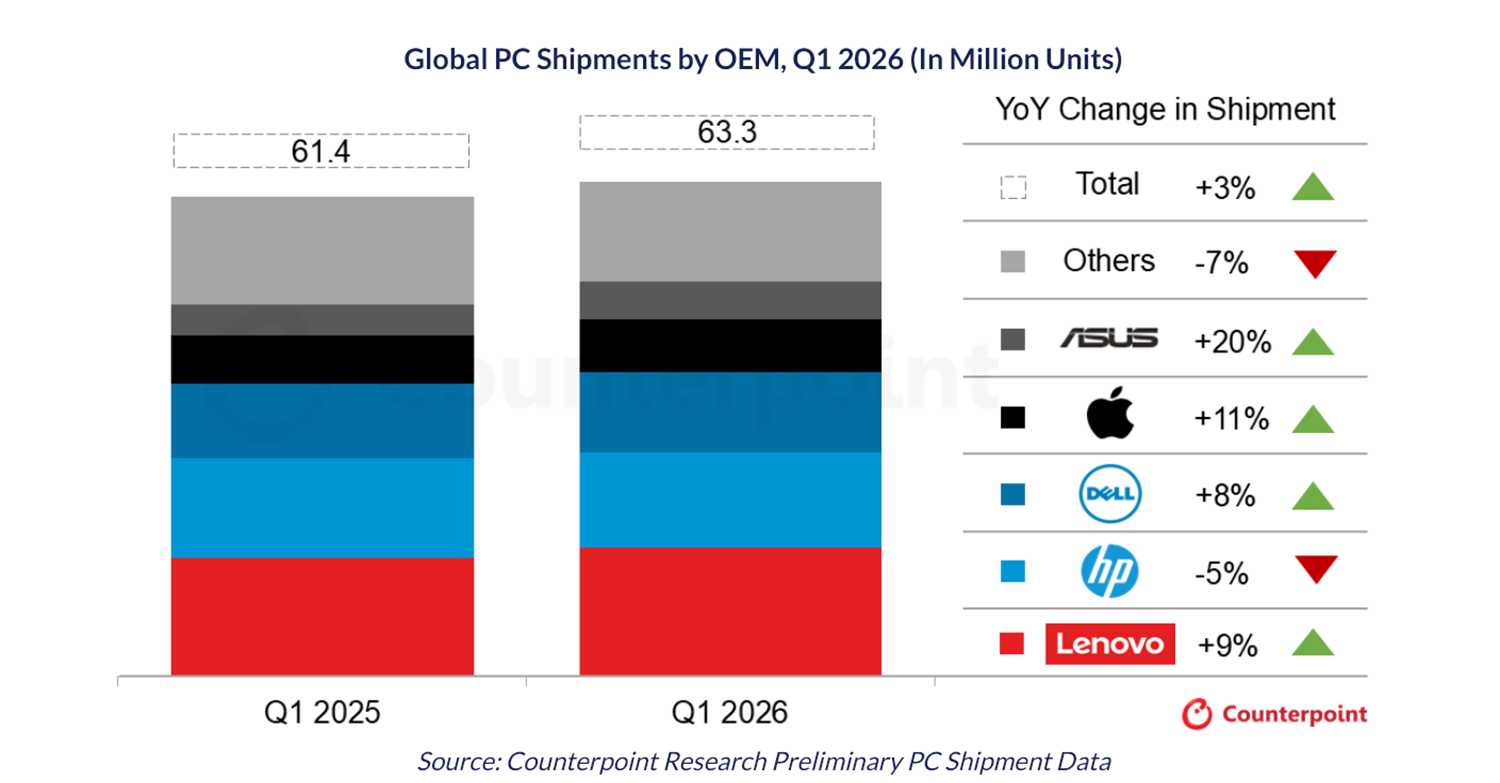
Despite concerns that astronomical memory prices will cripple laptop and desktop sales, the market thrived in Q1 2026. The Counterpoint market intelligence firm highlights how global PC shipments jumped 3.2% year over year. However, even bolstered by Windows 11 upgrades, a predicted 60% increase in DRAM costs could reverse that trend.
Who profited the most from the memory crisis?
The report reveals that manufacturers like Lenovo, Asus, and Apple benefited from panic buying. With Lenovo executives urging customers to take action, shipments rose 9% YoY. Asus led the way at 20%, largely due to the memory shortage driving laptop purchases.
Apple may be best equipped to withstand dwindling component supplies. The MacBook Neo already contributed toward a 11% YoY jump in orders. Counterpoint also noted that smaller OEMs struggled compared to more dominant PC makers. It’s more difficult for these companies to secure long-term contracts with DRAM giants like Samsung and SK Hynix.
While skyrocketing memory prices were a major factor, Microsoft's end of support for Windows 10 played a role. The newer OS required some laptop owners to invest in compatible hardware.
The arrival of Qualcomm’s Snapdragon X2 Elite processor and other AI-capable chips also had an impact. More companies are relying on AI-driven applications, tempting them to upgrade PCs.
Losses could overwhelm gains in PC sales
The analysis has a much gloomier forecast for the remainder of 2026. The article explains that the increase in shipments resulted from “frontloading demand rather than signaling sustained growth.” DDR5 RAM costs have spiked by as much as 100% since late 2025. TrendForce projects that prices could rise by another 50-60% in Q2 2026.
Lenovo, Asus, and their competitors may find that laptop and desktop orders drop noticeably. If DRAM supplies remain low, they could release fewer new models. MSI has begun shifting some of its focus from gaming inventory to AI servers. Enterprise clients are more likely to continue buying products with higher profit margins.
Unfortunately, the entry-level market is most at risk from inflated memory prices. Many gamers have had to delay new builds because DDR5 RAM has become unaffordable.
Source(s)
 Add as a preferred source on Google


