




Steam survey shows 16 GB DDR5 RAM rising, as high memory prices restrict PC builds
Uncertainty surrounds memory prices, as recently, the cost of DDR5 RAM has begun to fall. Still, analysts believe the shortage driven by AI data center demand will persist. The March Steam survey suggests that gamers have been compromising with gaming PC builds and laptop purchases.
How memory usage is evolving for Steam users
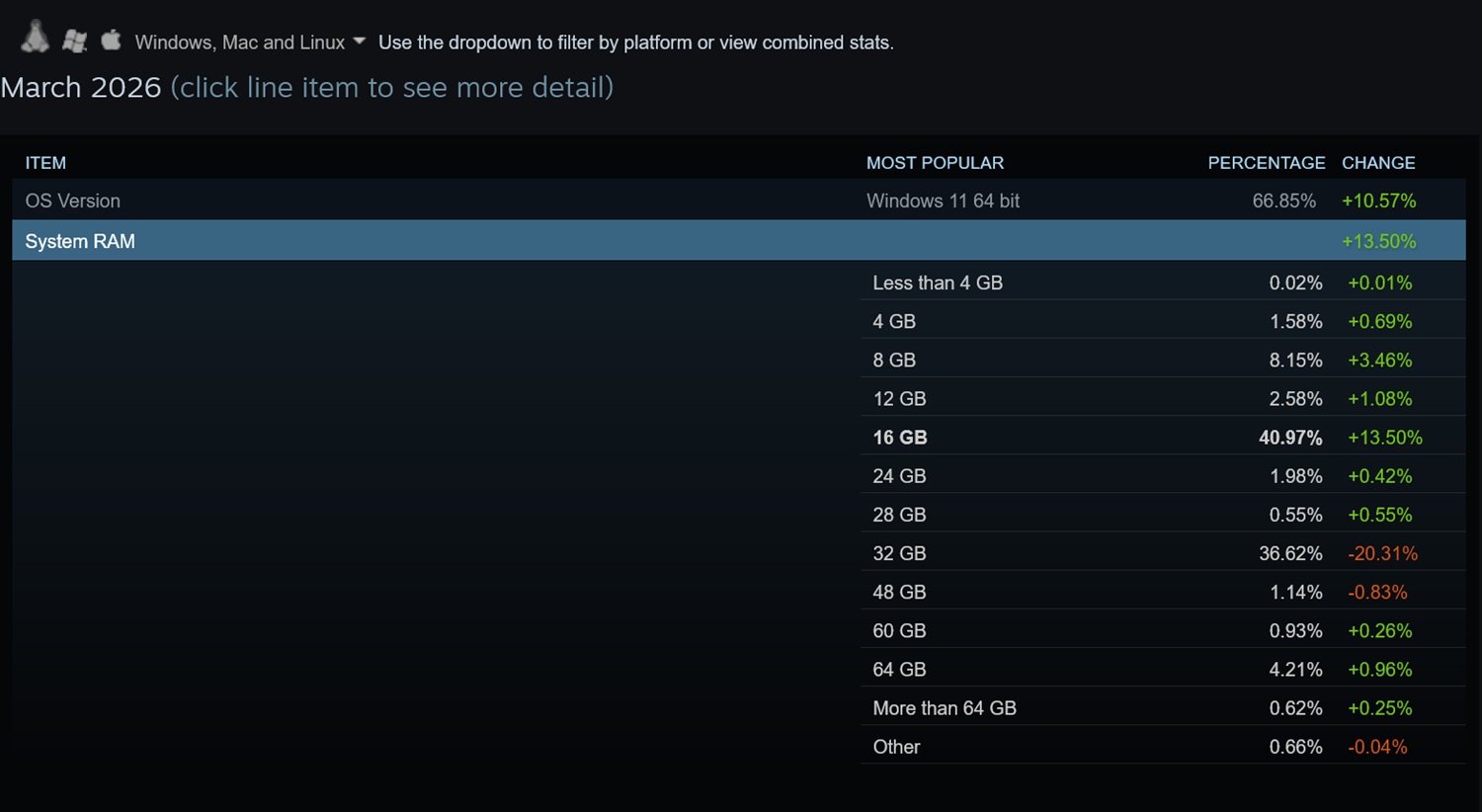
Each month, Valve reveals the most popular hardware configurations among its staggering number of players. One of the obvious changes is found in the System RAM category. 32 GB capacities saw a noteworthy 20.31% fall compared to the previous report. Meanwhile, PCs with 16 GB worth of modules experienced a 13.50% rise in popularity.
At 40.97%, the option including 16 GB DDR4 and DDR5 RAM sticks has reclaimed the top spot in the Steam survey. The 32 GB alternative now sits at 36.62%, as gamers contend with inflated memory prices.
Unfortunately, Valve’s data doesn’t differentiate between speeds. Some new motherboards support DDR4 to cater to the budget-conscious audience. Even so, the older-generation components have also become much more expensive in recent months.
Is 16 GB of RAM enough?
The memory shortage has clearly forced some gamers to rethink their planned system specs. When paired with suitable CPUs and GPUs, 16 GB DDR4 and DDR5 capacities are sufficient to play many AAA games. However, if running intensive background tasks, they may encounter stutters or freezes.
It’s also important to remember that higher-end gaming PC builds rank lower in the Steam survey. For example, once again, the Nvidia RTX 3060 is the most commonly relied on graphics card. These users are less likely to install piles of DDR5 RAM on their motherboards. Nevertheless, most new desktop and laptop buyers are looking to improve performance.
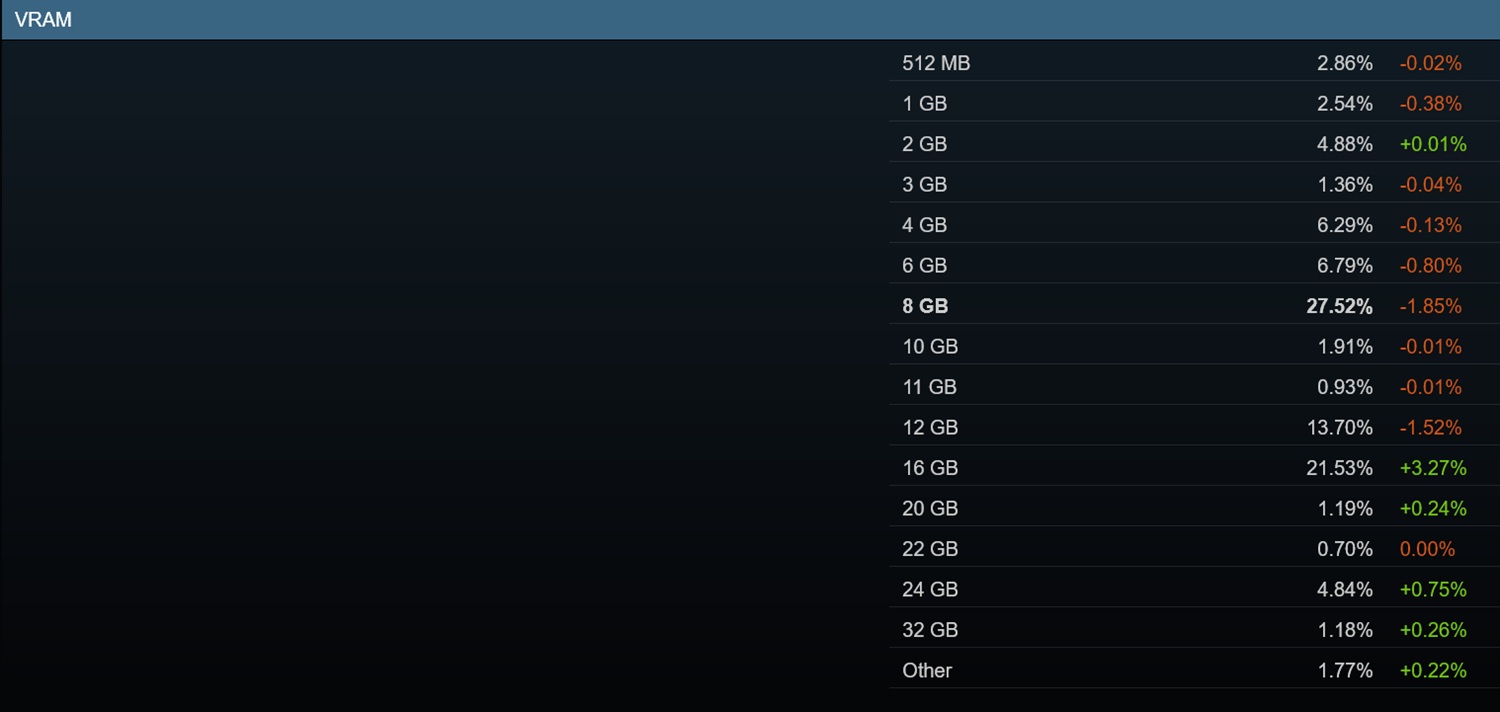
The stretched component supply is not affecting other hardware in the same way. Graphics cards with 16 GB of VRAM rose by 3.27%, bringing their overall share to 21.53%. GPUs using 8 GB of VRAM remain more prevalent, but declined by 1.85%. The memory shortage has made targets offering higher capacities more costly. Yet, buyers have less flexibility to upgrade these parts than they do with system RAM.
Source(s)
 Add as a preferred source on Google


