




With memory prices expected to rise another 45% in 2026, Lenovo may delay laptop launches
CES 2026 will once again feature new work and gaming laptops from brands like Lenovo and HP. However, record-setting memory prices could force the companies to shuffle their plans. A new report from the Korean business newspaper Chosun Biz reveals that delays are one option.
To avoid increasing the MSRPs of inventory, notebook makers have desperately tried to secure more DRAM. Sources told Chosun Biz that some manufacturers have signed preliminary contracts with Samsung, Micron, and SK Hynix. Even so, it won’t prevent DDR5 RAM prices from soaring 45% higher by the end of 2026.
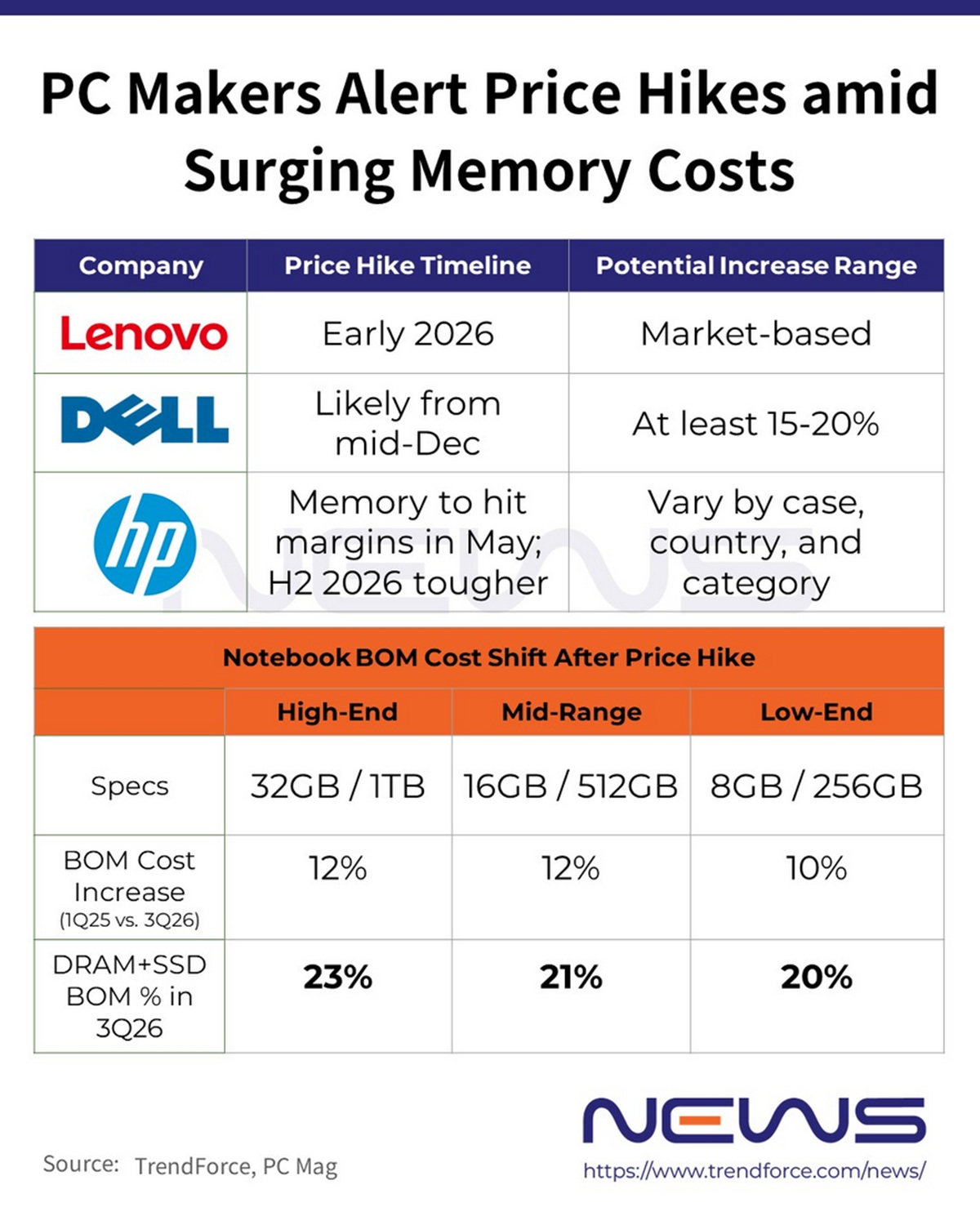
With the AI industry also monopolizing NAND supplies, more expensive SSDs add to the concerns. The report quotes TrendForce, which projects that storage and memory prices will account for up to 23% of the cost of laptop materials. An insider revealed that one manufacturer plans to raise the prices of high-end models by as much as 30%.
Laptop sales may crash after a successful 2025
Before the memory shortage, PC sales had been on the upswing in part because of forced Windows 11 upgrades. That trend will likely reverse in 2026, as buyers avoid Lenovo laptops and alternatives from its rivals. Realizing a slowdown in purchases is inevitable, postponed launches are one potential outcome.
Other manufacturers, including Dell and Framework, have already announced impending price hikes. Yet, competitors have had slightly different responses to the higher memory prices. Asus reportedly was considering producing its own DDR5 RAM before denying the rumor.
Companies that have less direct access to the three memory giants are particularly vulnerable. The U.S.-based Maingear now encourages customers to mail in their own modules to complete custom builds. Yet, without recycling parts from older systems, that won’t result in significant savings for consumers.
Source(s)
 Add as a preferred source on Google


