




Titanium instead of plastic: How Samsung is reinventing its foldable phone
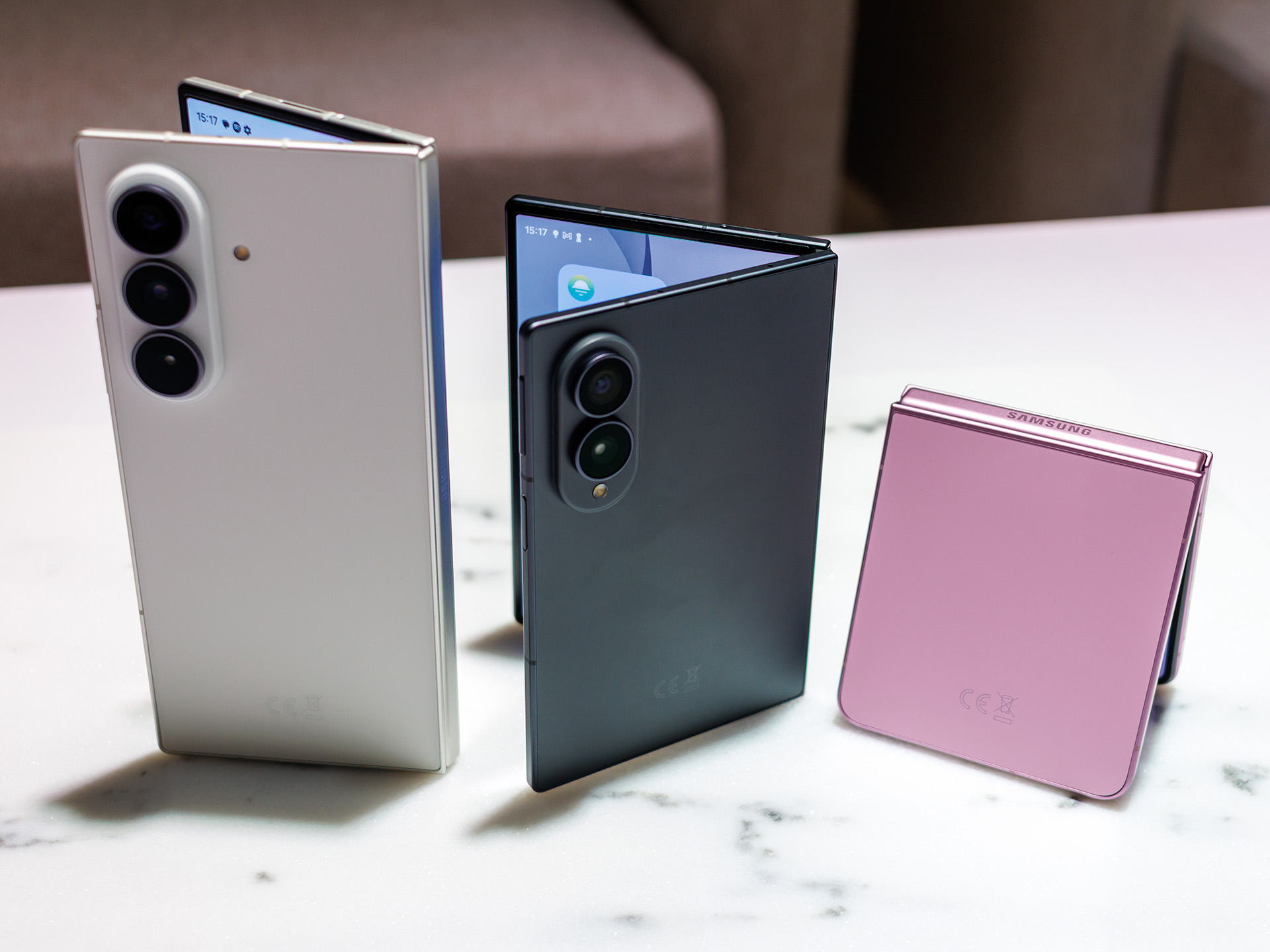
Anyone buying a foldable device essentially wants two things at once: a device that feels like a full-fledged tablet and one that still fits into a jacket pocket. Rarely does this equation work out without compromises. Samsung believes it has now taken a decisive step toward a solution with the new Galaxy Z series. The key? A metal typically associated with aircraft manufacturing, though it has also served as the casing for certain premium smartphones. During the launch of the Samsung Galaxy Z series in London, we had the opportunity to speak with BD Yang, EVP and Deputy Head of the Core Component Technology Team at Samsung.
Seven generations, one lesson

Since the very first folding movement, Samsung states that it has tested countless materials, analyzed usage data, and learned from repair cases. BD Yang sums it up this way:
„Across seven generations of foldable development, we have handled countless materials. With this generation, we believed titanium had the qualities to take foldable technology to the next level." - BD Yang
The problem: Titanium is strong and dimensionally stable, but inherently rigid. This very characteristic, which makes it so attractive in space travel, for example, initially stood in the way of its use in foldable displays. Creating a component capable of bending hundreds of thousands of times without breaking or suffering permanent deformation was simply not feasible with conventional titanium.
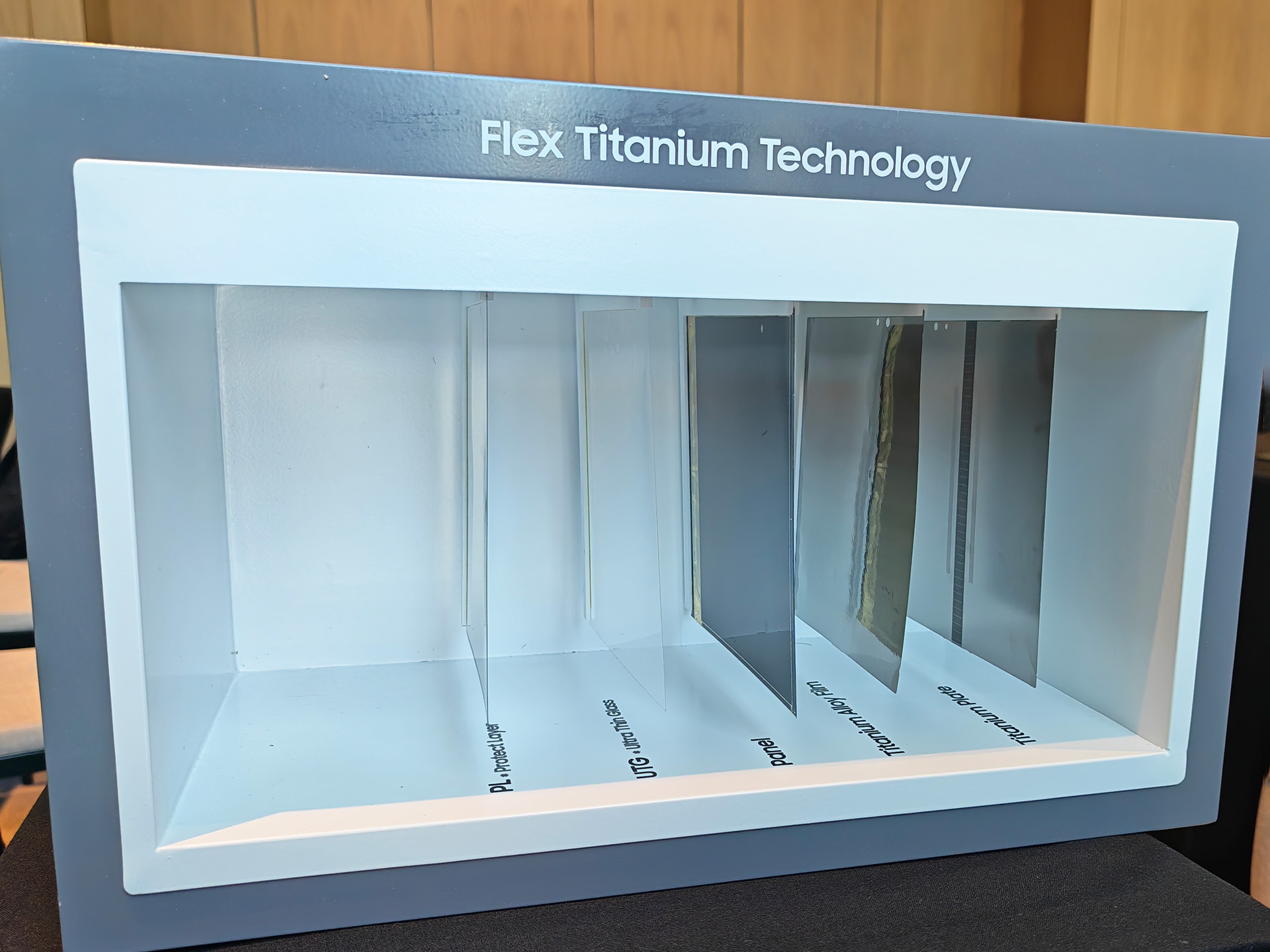
Samsung’s solution is called Flex Titanium and consists of two coordinated elements: The bottom layer of the display is a Grade 4 titanium plate featuring a fine grid structure created via wet etching and laser processing. Larger etched openings allow the folding zone to move smoothly, while microscopic laser perforations provide precise support for the display. On top of this lies a wafer-thin titanium alloy foil, just a few dozen micrometers thick, about a third the thickness of a human hair. Containing elements such as vanadium, aluminum, and chromium, it has been specially processed to remain flexible despite its titanium base.
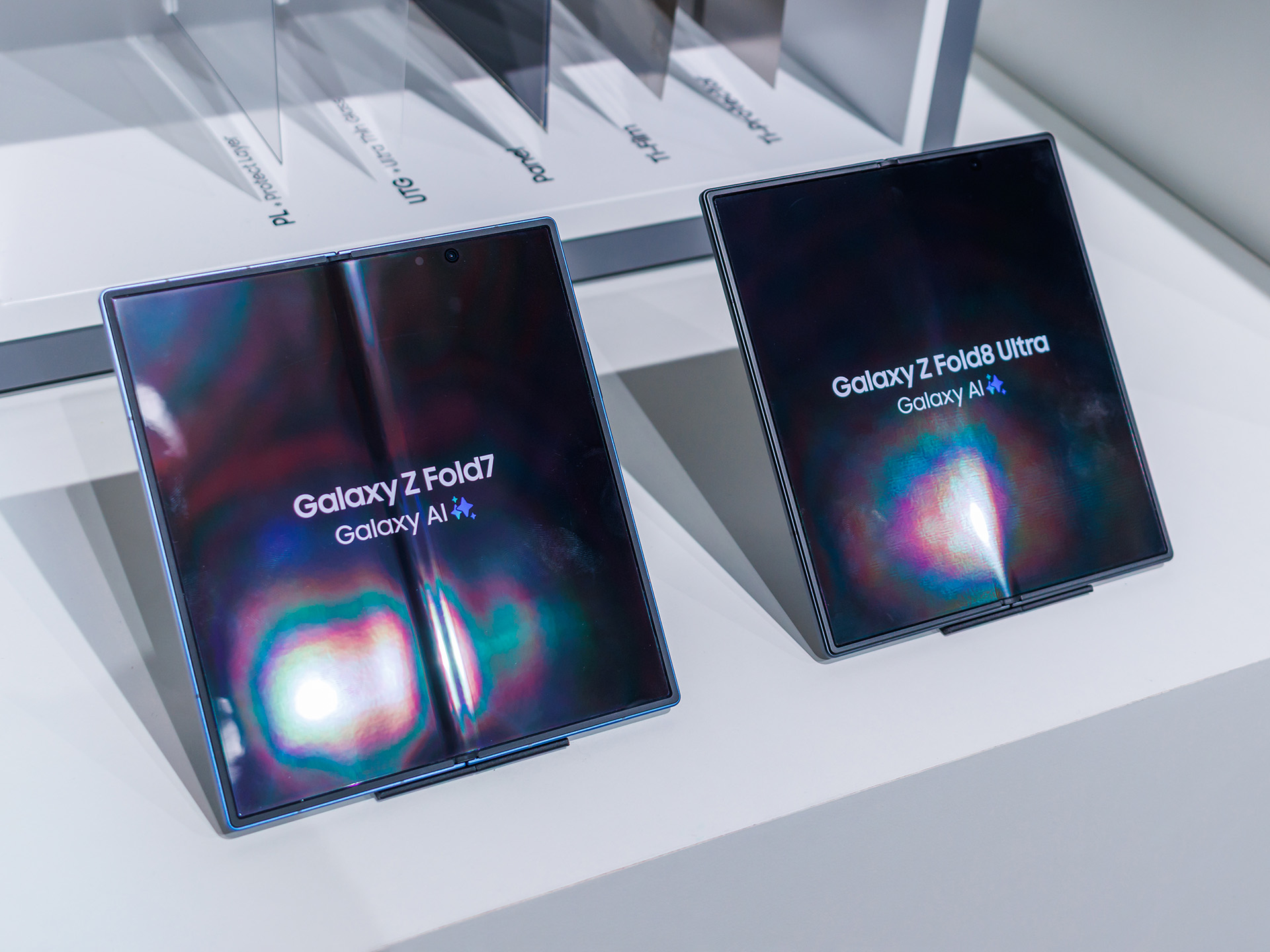
The result of this dual-material strategy is that the display module is 10 percent thinner, the visible crease in the center of the screen is reduced, and the device feels flatter and more immersive when unfolded. A new anti-reflective coating further enhances this effect.
Gaining space translates into engineering freedom
The real advantage, however, lies not only in the thinner display itself, but in the amount of installation space that is freed up as a result. This additional interior room gave Samsung’s engineers the opportunity to rethink the entire battery system.
For the Galaxy Z Fold8 Ultra, this means a 5,000 mAh battery housed in a body just 4.1 millimeters thick. This is made possible, in part, by a new silicon-carbon anode material that allows for higher energy density. To ensure that this material remains stable in everyday use, Samsung has practically redesigned the entire cell chemistry: from a protective carbon coating on the anode, to a stabilizing coating on the cathode, to a new, highly porous separator. "This innovation isn't just about switching the anode material," explains Yang. "It’s about a comprehensive improvement of the entire cell system and its architecture."
Samsung is also taking a new approach to charging: rather than applying a one-size-fits-all charging solution across the entire product lineup, each model features a custom-tailored architecture. In the Fold8 Ultra and Fold8, a dual-cell system distributes the 45-watt charging power across two separate paths; this reduces the electrical load on each cell and enables a 67 percent charge in just 30 minutes, while simultaneously generating less heat within the slim chassis.

More than a hundred reliability tests
Not every improvement in the new series involves complex material research; some simply stem from user feedback. As foldables became thinner, they became harder to grip and open with one hand. Samsung’s solution: a finely tuned combination of hinge mechanics, magnetic force, and display tension, along with a small cutout at the fold that provides a natural point of leverage for the finger.
New materials and thinner casings inevitably raise questions about long-term durability. Samsung addresses this with a testing program comprising over a hundred reliability checks designed to simulate real-world usage scenarios, including drops, repeated folding, pressure, moisture, and dust. According to Samsung, the crucial point is not to test individual components in isolation, but to consider the entire device as a system, just as it will be used in everyday life. Notably, testing does not stop when the product is ready for market; it continues beyond that point to gather further insights.
„We made our decision by closely monitoring our consumer and changing usage patterns over the past seven generations.“ – BD Yang
What distinguishes the new Galaxy Z series from previous generations is less a single spectacular innovation than the interplay of many small decisions. Titanium creates space; that space allows for a larger battery; the battery requires a new charging architecture; and ultimately, the entire system must be reliable enough to withstand years of daily use.
Samsung remains steadfast on the issue of pulse-width modulation (PWM); it will stick to its current approach with the new foldable smartphones and will not employ high-frequency PWM dimming. We asked Yang about it: There are no reliable medical studies that support a connection between the lower PWM frequency and complaints among users. The disadvantage of high-frequency PWM dimming lies particularly in its inferior color reproduction and higher energy consumption. Samsung is unwilling to accept this compromise without a compelling reason.
Whether it is the Galaxy Z Fold8 Ultra for maximum productivity, the Galaxy Z Fold8 for a large, immersive display, or the more compact Galaxy Z Flip8, Samsung applies the same philosophy to all three models: customer experience drives materials research, materials research leads to technical solutions, and technical solutions ultimately result in a device the user can trust in their everyday life.
Only the coming months of real-world use and our own testing will reveal whether this promise holds true. Yet, the combination of a titanium display structure, a redesigned battery system, and rigorous stress testing already makes one thing clear: with its foldables, Samsung is no longer focusing on isolated highlights, but rather on a well-conceived, integrated system.
 Add as a preferred source on Google


