




Xiaomi's Xring O3 demolishes the competition in early performance tests
Xiaomi has now taken the wraps off its flagship chipset for the year. Xring O3 succeeds last year's already impressive Xring O1 and delivers significantly improved performance en route to a showdown with Qualcomm's upcoming Snapdragon 8 Elite Extreme Gen 6 and Apple's A20 Pro.
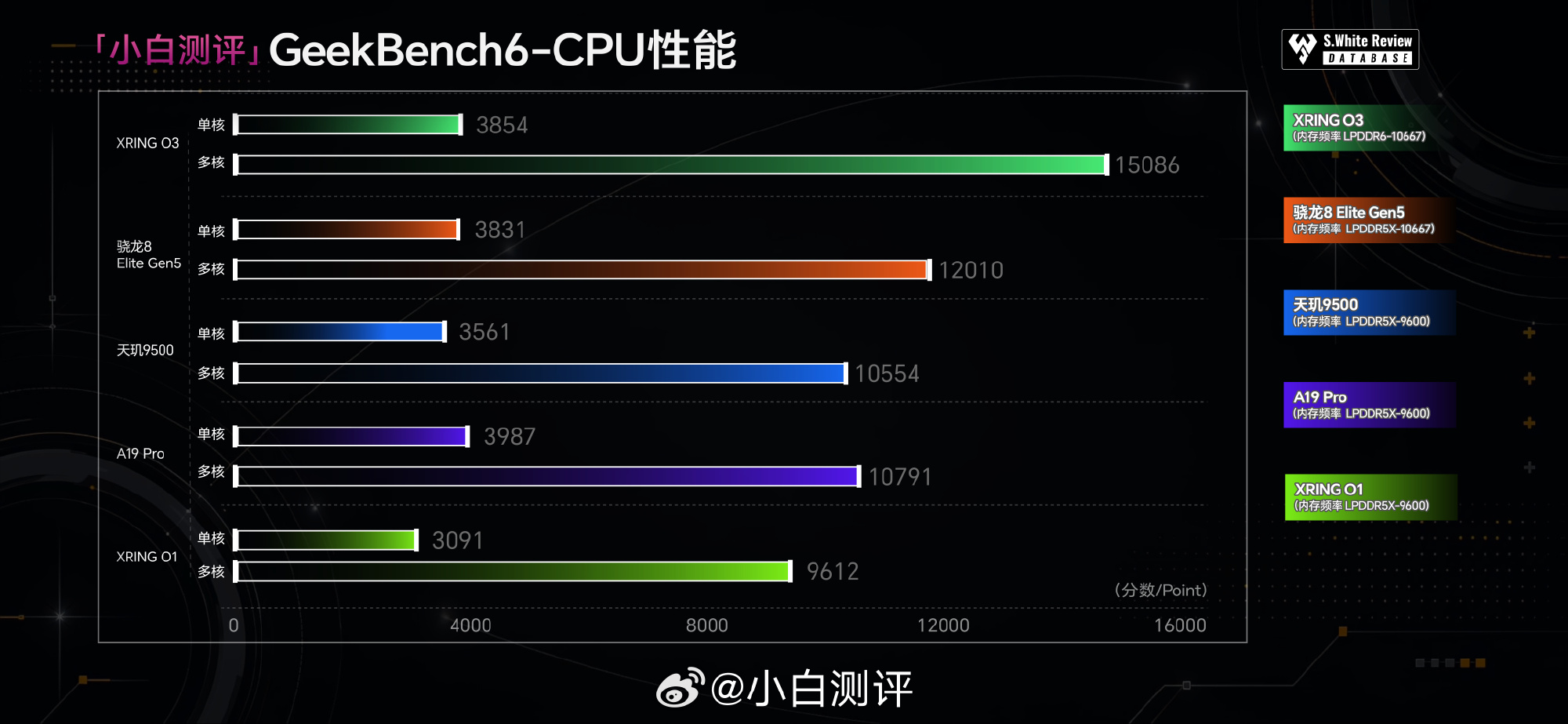
As tested by Chinese media outlet Xiaobai's Tech Reviews, the new Xring O3 lays a strong claim to being the most powerful smartphone chipset in the world, at least aboard what is certain to be a reference design machine. On Geekbench, Xiaomi's chipset earns a single-core score of 3,854—on par with the Snapdragon 8 Elite Gen 5 and A19 Pro, and 25% higher than Xring O1 manages.
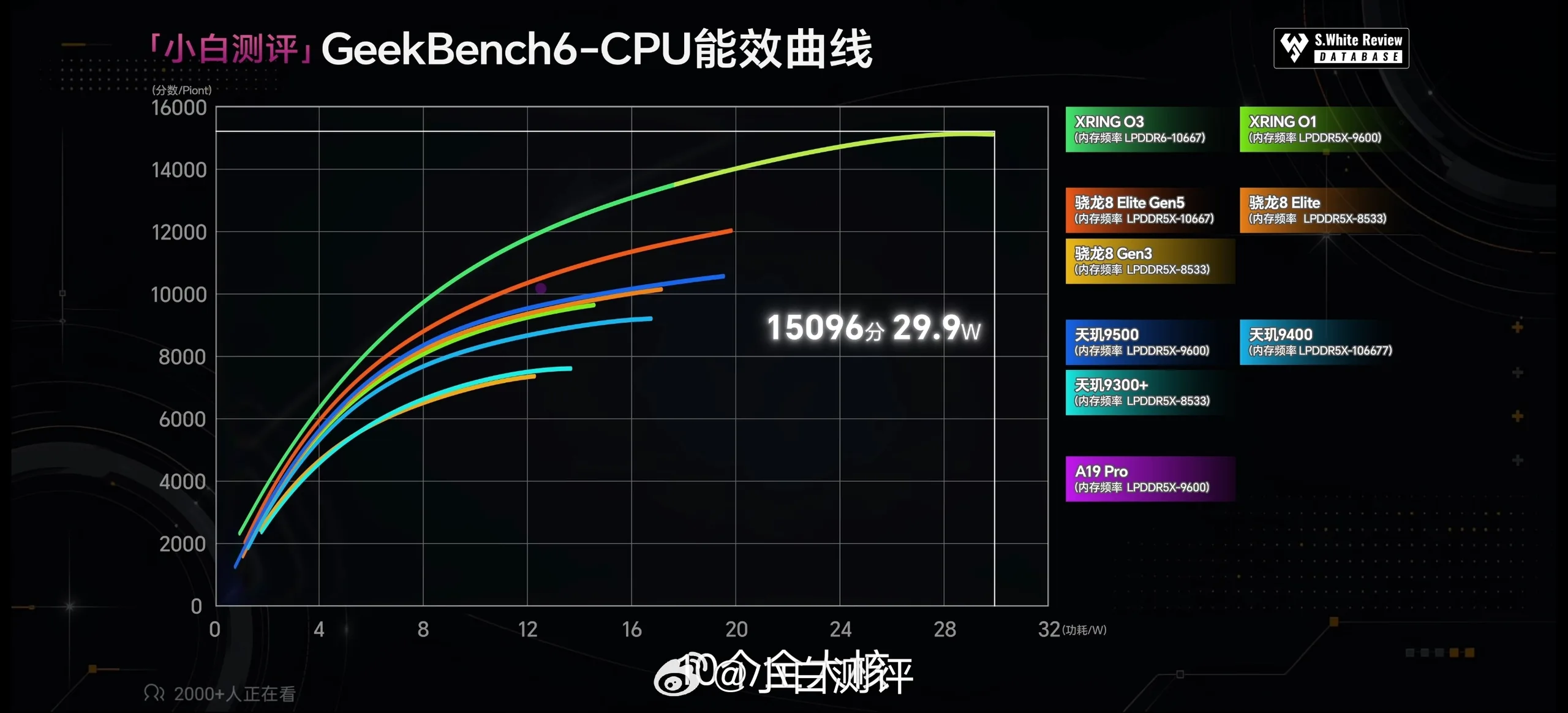
Multi-core performance is where Xring O3 spreads its wings, however. The 10-core CPU delivers an astonishing score of 15,086. In comparison, even the most powerful Snapdragon 8 Elite Gen 5 device in our tests—the iQOO 15 Ultra—does not breach the 12,000 mark. Xring 03's multi-core score is also around 55% higher than Xring O1's. More impressively, Xring O3 does this while being more efficient than Qualcomm's chipset.
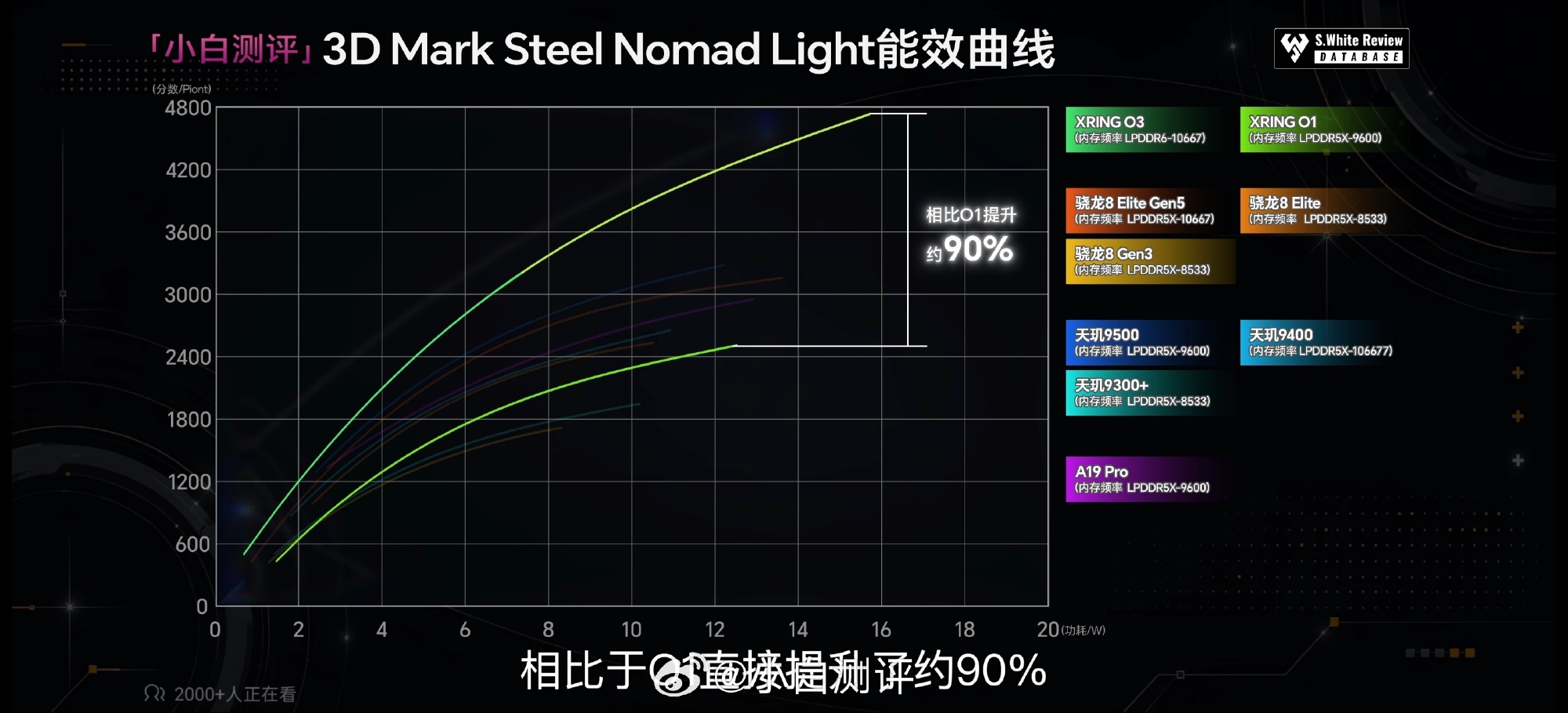
It's a similar situation in the GPU department. On 3DMark's Steel Nomad Light test, Xring O3 delivers performance numbers over 40% higher than all current-gen flagship chipsets, and up to 90% higher than last year's Xring O1. Again, it also manages all of that while being more efficient on a perf-per-watt basis.
All of this considered, Xring O3 looks set to be capable of taking on the imminent flagship chipsets from Qualcomm, Apple, and MediaTek—even while built on TSMC's N3P node, vs the N2 process that'll underpin those chipsets. As previously mentioned, however, these tests were run on a prototype machine and are likely optimistic. We'll have to wait for the debuts of Xring O3-powered devices like the Xiaomi 18 Fold and Pad 9 Pro Max for a proper evaluation of the chipset's qualities, but things look promising regardless.
Source(s)
 Add as a preferred source on Google


