




Xiaomi unveils AI Cube mini PC with three Xring chips and 150 W performance
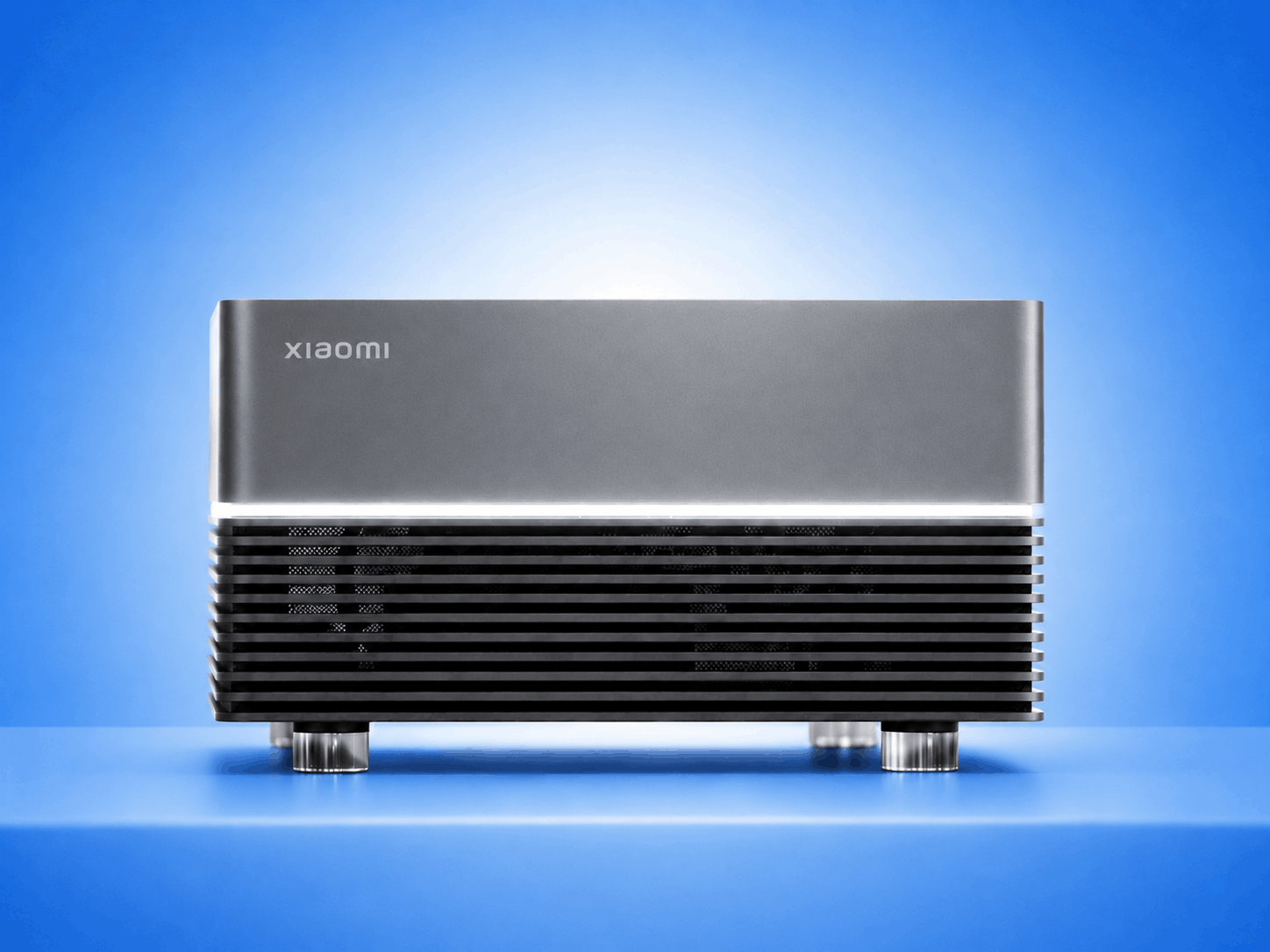
Xiaomi has shown the AI Cube, an engineering prototype mini PC designed to run AI models locally. It was unveiled at the company's Xring chip technology conference on August 24.
The AI Cube uses the Xring O3, O100 and D100 chips for local AI workloads. Xiaomi says the three-chip design can deliver up to 150 W of sustained performance. For comparison, the GMKtec EVO-X2 with AMD's Ryzen AI Max+ 395, which we have reviewed, runs at up to 140 W for short periods and 120 W under sustained load. Unlike the Ryzen AI Max+ 395 systems we have covered, it uses separate chips for computing and AI tasks.
The Xring O3 is the main processor and will debut in the Xiaomi 18 Fold. It has a 10-core CPU, a 16-core G2-Ultra NX GPU, and a 200 TOPS NPU for AI workloads. Xiaomi also says the chip supports its MiMo on-device AI models.
For high-bandwidth AI workloads, the Xring O100 uses 6nm 3D wafer-level stacked packaging and has 28,672 effective data lines. Xiaomi says it can reach up to 1.22 TB/s of near-memory computing bandwidth.
The Xring D100 is designed for high-performance AI and intelligent driving workloads. It uses a 3nm process and has a 20-core CPU and 16-core NPU. The chip supports up to 160 GB of unified memory and can locally deploy models with up to 200 billion parameters.
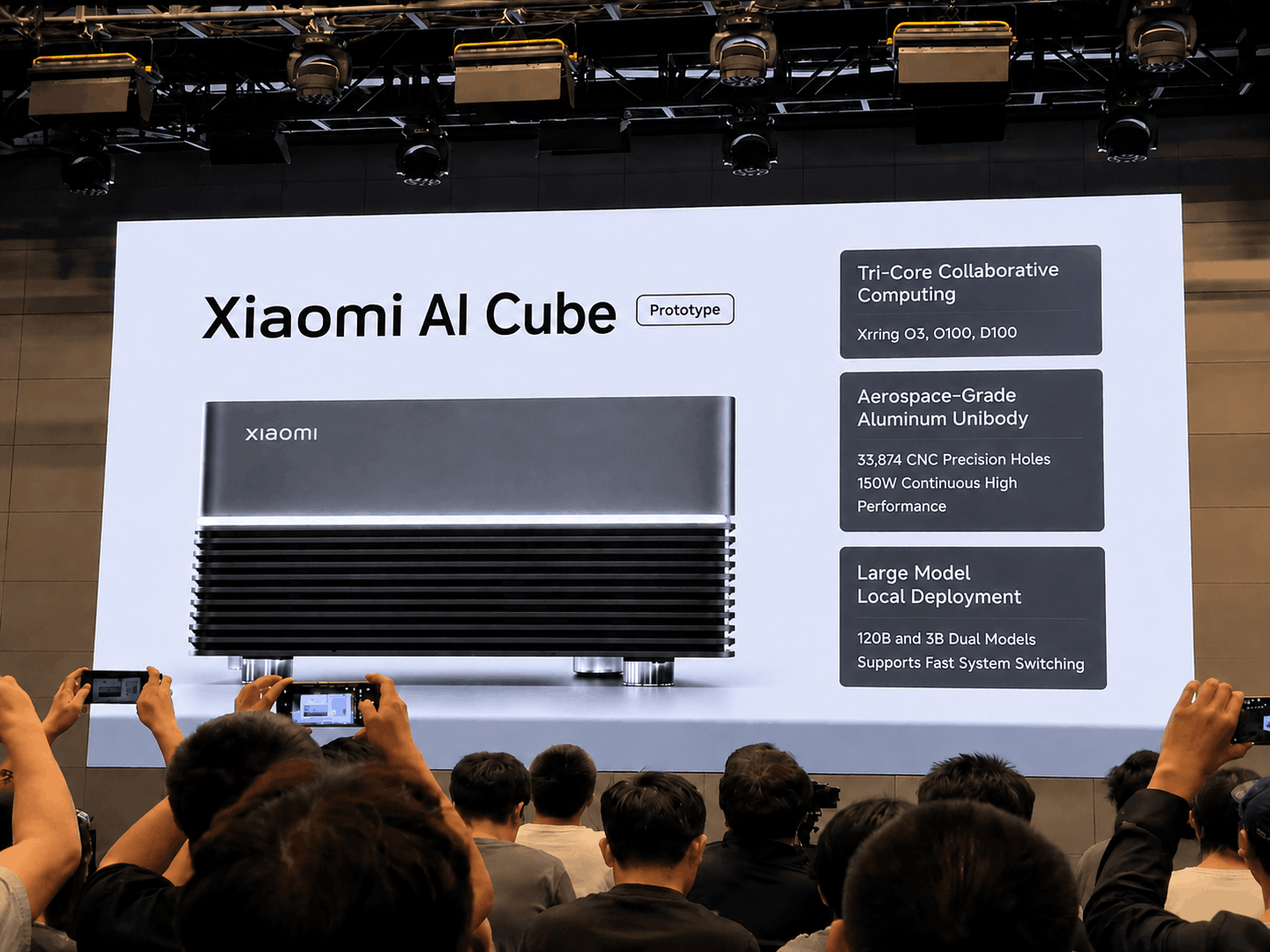
Compact AI systems such as Nvidia's DGX Spark (available on Amazon) and Asus' Ascent GX10 also offer 128 GB of unified memory and support local models with up to 200 billion parameters. Xiaomi's prototype takes a different route by combining three of its own Xring chips in one system.
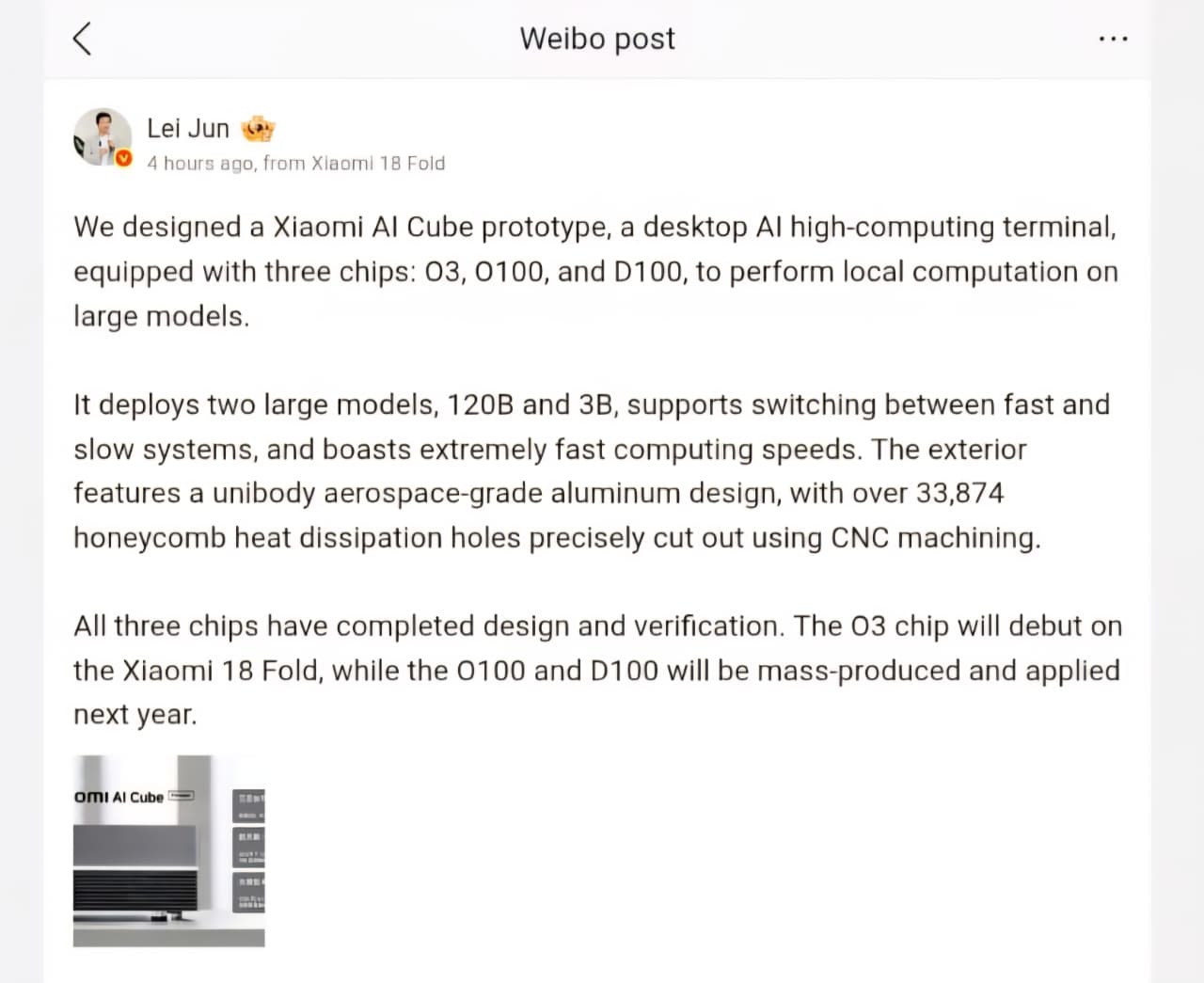
The mini PC also has an unusual chassis design. Its shell uses aerospace aluminum unibody molding with 33,874 CNC precision perforations. For local AI use, Xiaomi says the prototype can deploy 120B and 3B large models and switch between fast and slow systems.
Xiaomi's event materials indicate that the O100 and D100 are planned for commercial launch in 2027. The company has not yet announced a release date or price for the AI Cube.
Source(s)
 Add as a preferred source on Google


