




Xiaomi launches XRing O3, claims it is the fastest smartphone SoC with an AnTuTu score of over 5 million
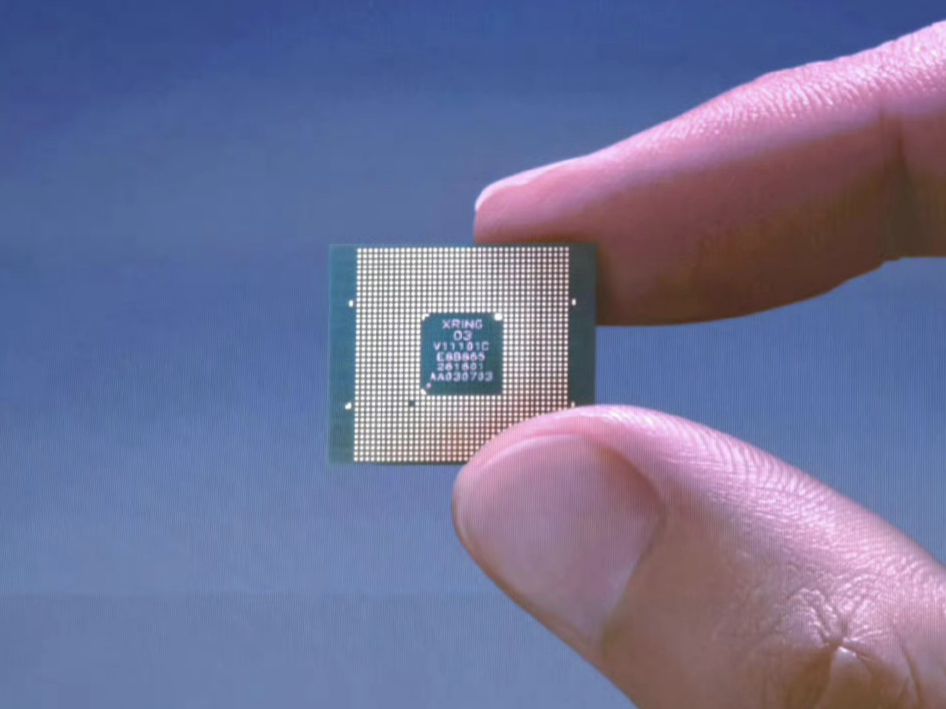
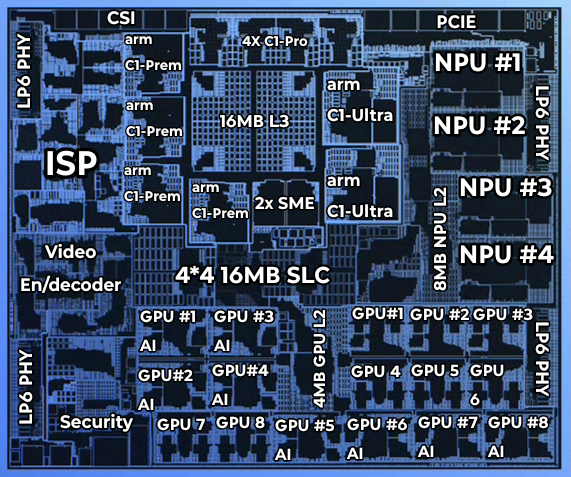
Xiaomi has officially unveiled the XRing O3, its latest custom application processor. The chip is built on TSMC's N3P process node, occupies a 133 mm² die, and packs 24 billion transistors. Xiaomi has provided a promotional die shot, and we have mapped the functional blocks.
CPU performance and cache
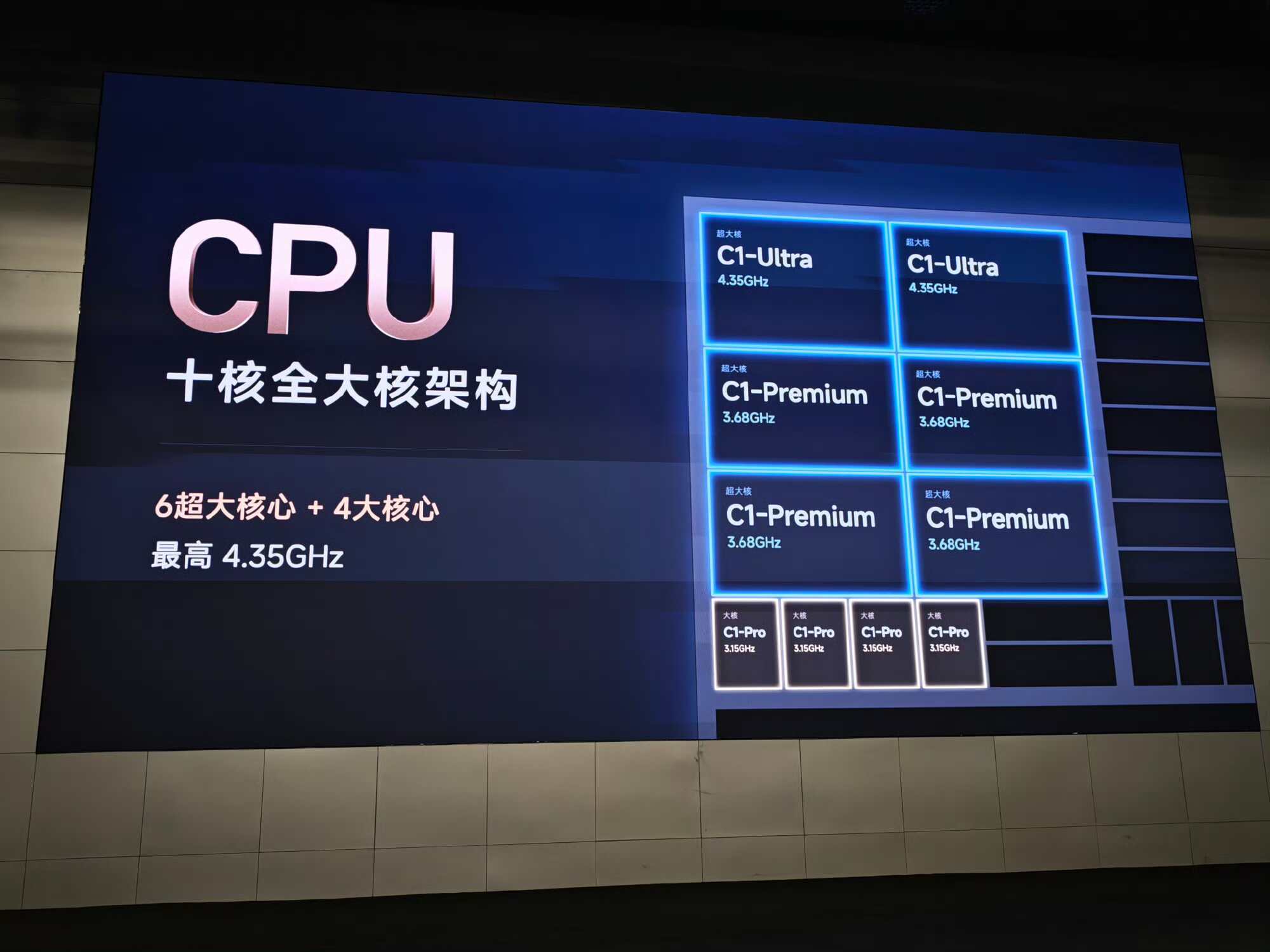
The O3 follows recent flagship smartphone chips in abandoning traditional Arm Cortex-A5xx "Nano" efficiency cores. The CPU cluster uses an all-big-core design consisting of two C1-Ultra cores running at up to 4.35 GHz, four C1-Premium cores at up to 3.68 GHz, and four C1-Pro cores at up to 3.15 GHz. Xiaomi groups the two Ultra and four Premium cores as six "super-large" cores and the four Pro cores as four "large" cores.
The CPU complex includes 12 MB of private L2 cache, a shared 16 MB L3 cache, and 16 MB of SLC, for a combined 44 MB of on-chip cache. Xiaomi has not detailed the per-core L2 allocation. The CPU cluster includes two SME (Scalable Matrix Extension) units.
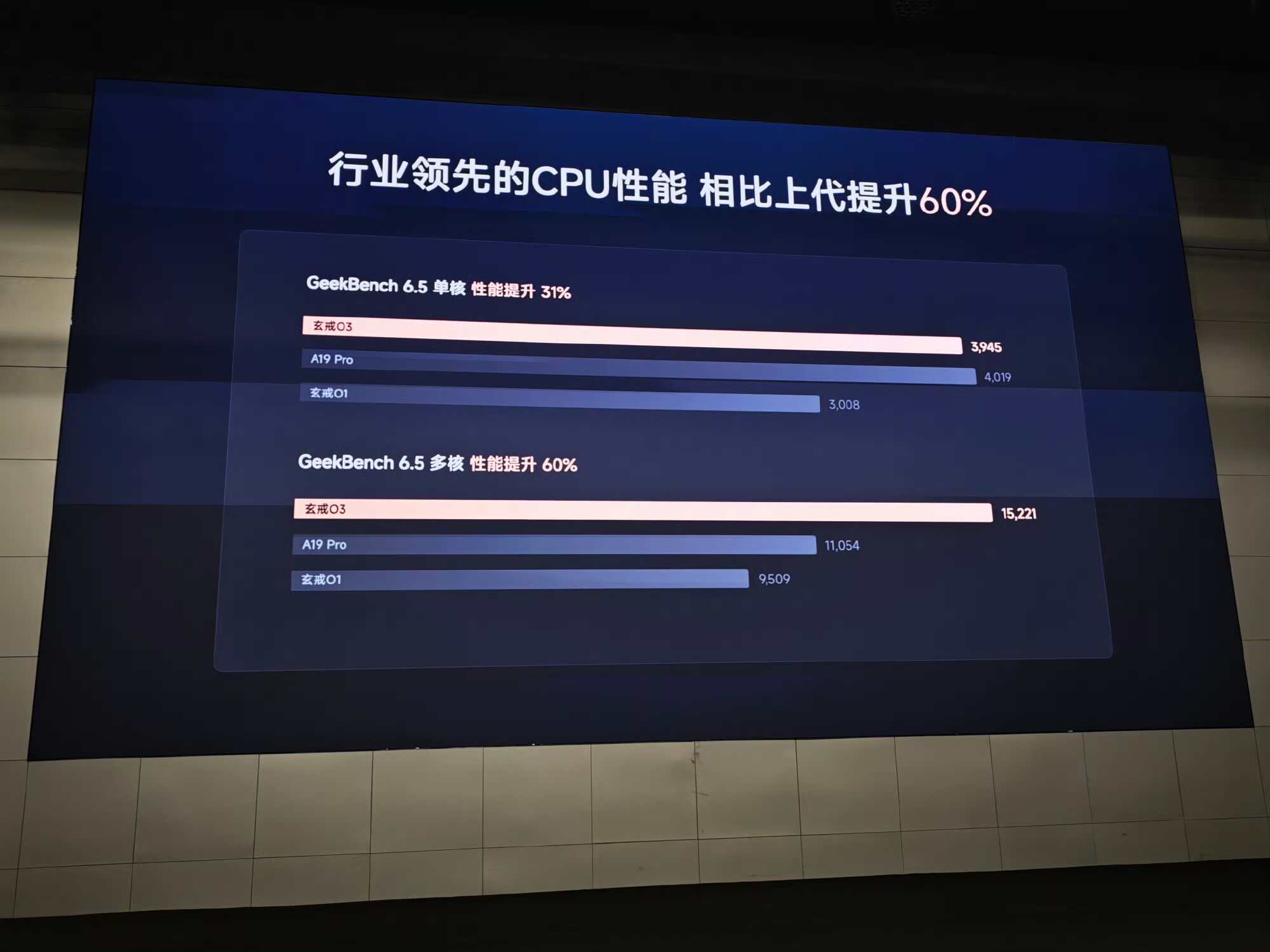
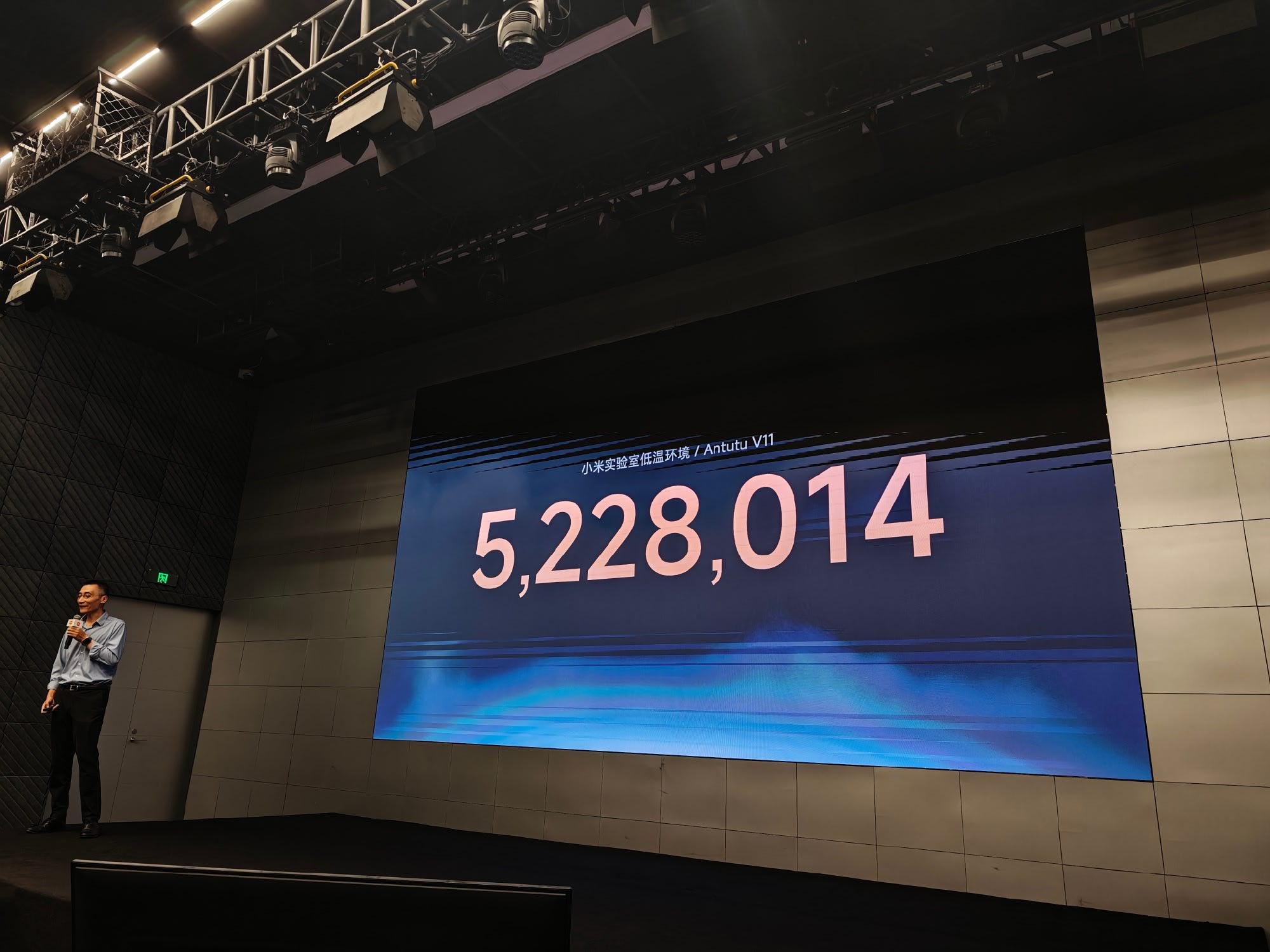
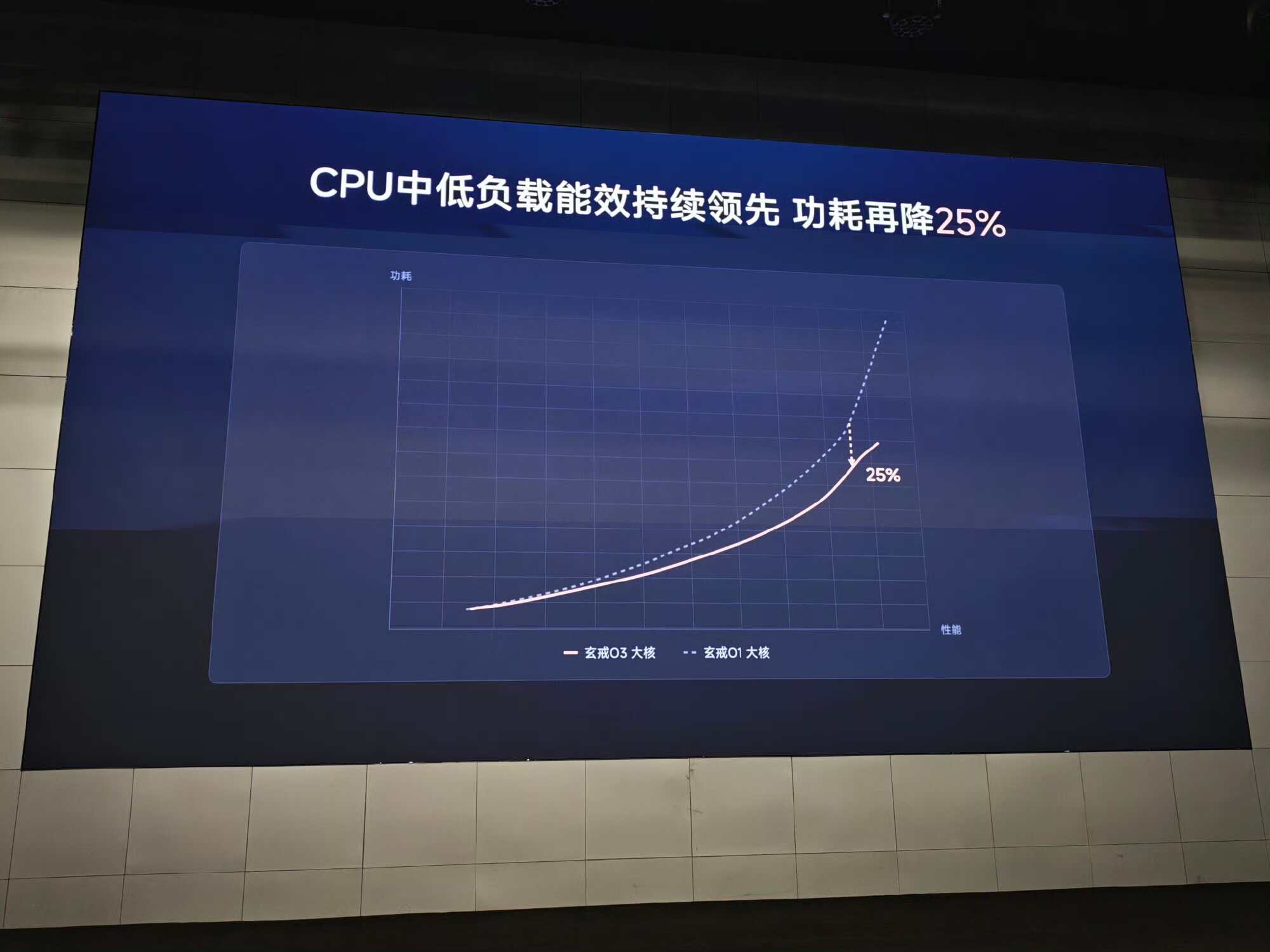
Performance figures shared during the announcement include Geekbench 6.5 scores of 3,945 in single-core testing and 15,221 in multi-core testing. Xiaomi says these scores are 31% and 61% higher than those of the older XRing O1, respectively, and claims that the multi-core result leads the mobile SoC market, with the chip even outperforming the Apple M4 in our benchmarks. Under low-to-medium loads, Xiaomi claims power consumption drops by up to 25% compared with the previous generation. The chip also posts an AnTuTu V11 score of 5,228,014.
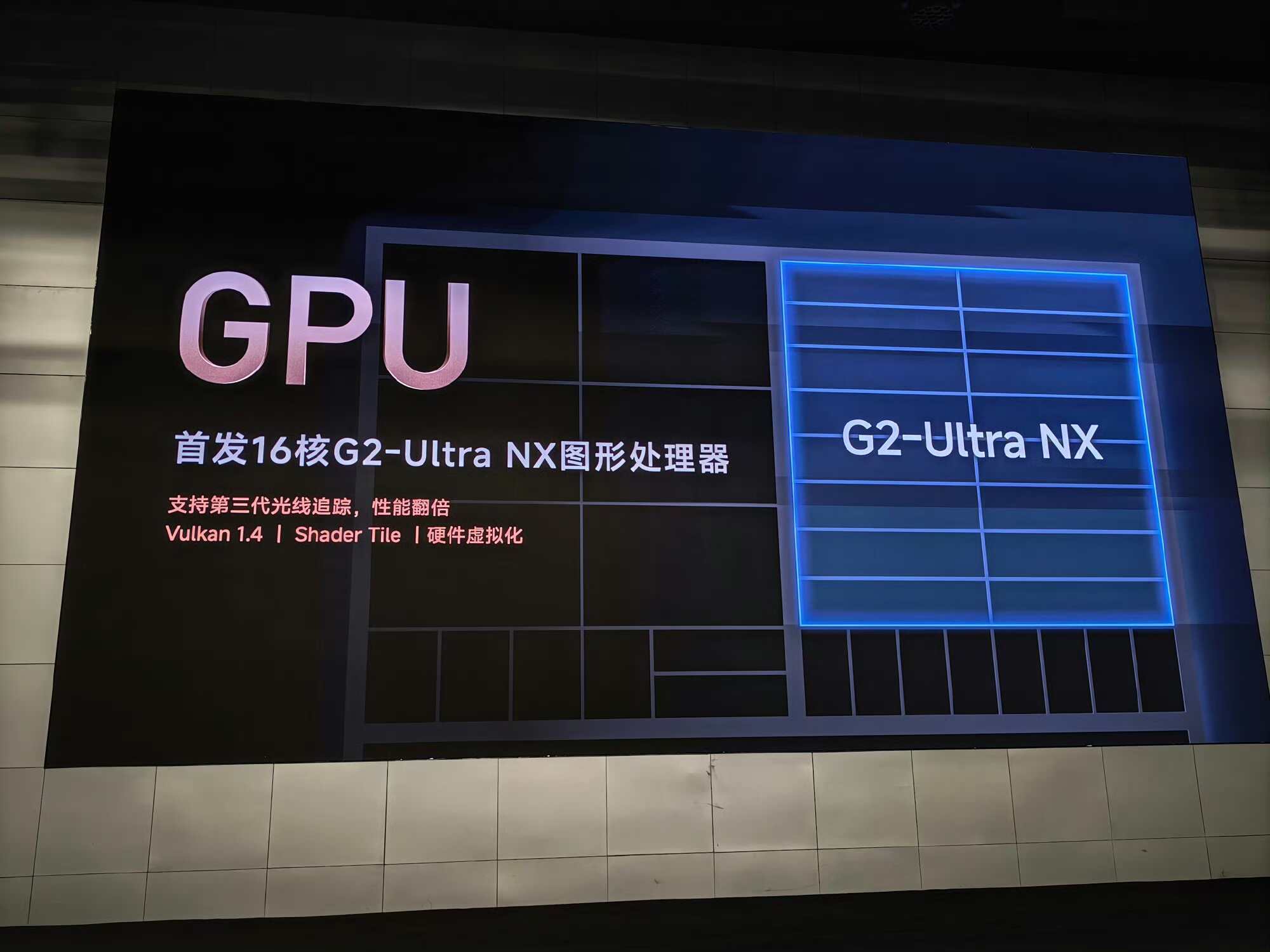
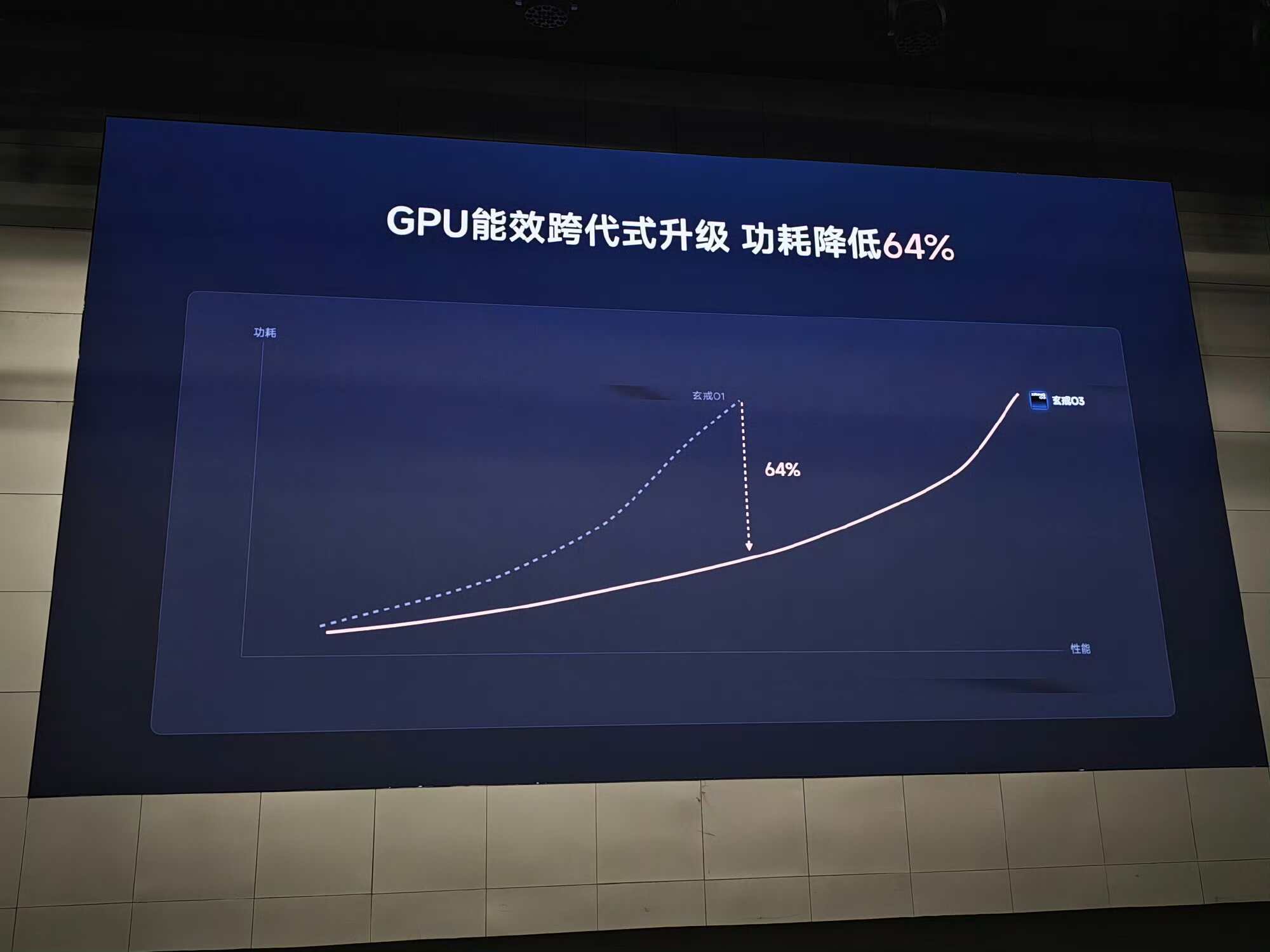
On the graphics front, Xiaomi has selected the unreleased Mali-G2 Ultra NX MC16. The GPU has 16 compute units (CUs) and 4 MB of dedicated L2 cache. Eight of these CUs integrate dedicated NX tensor accelerators, while the remaining eight do not, a distinction visible in the die shot. Xiaomi states that the new GPU can match the O1's peak performance while using 64% less power.
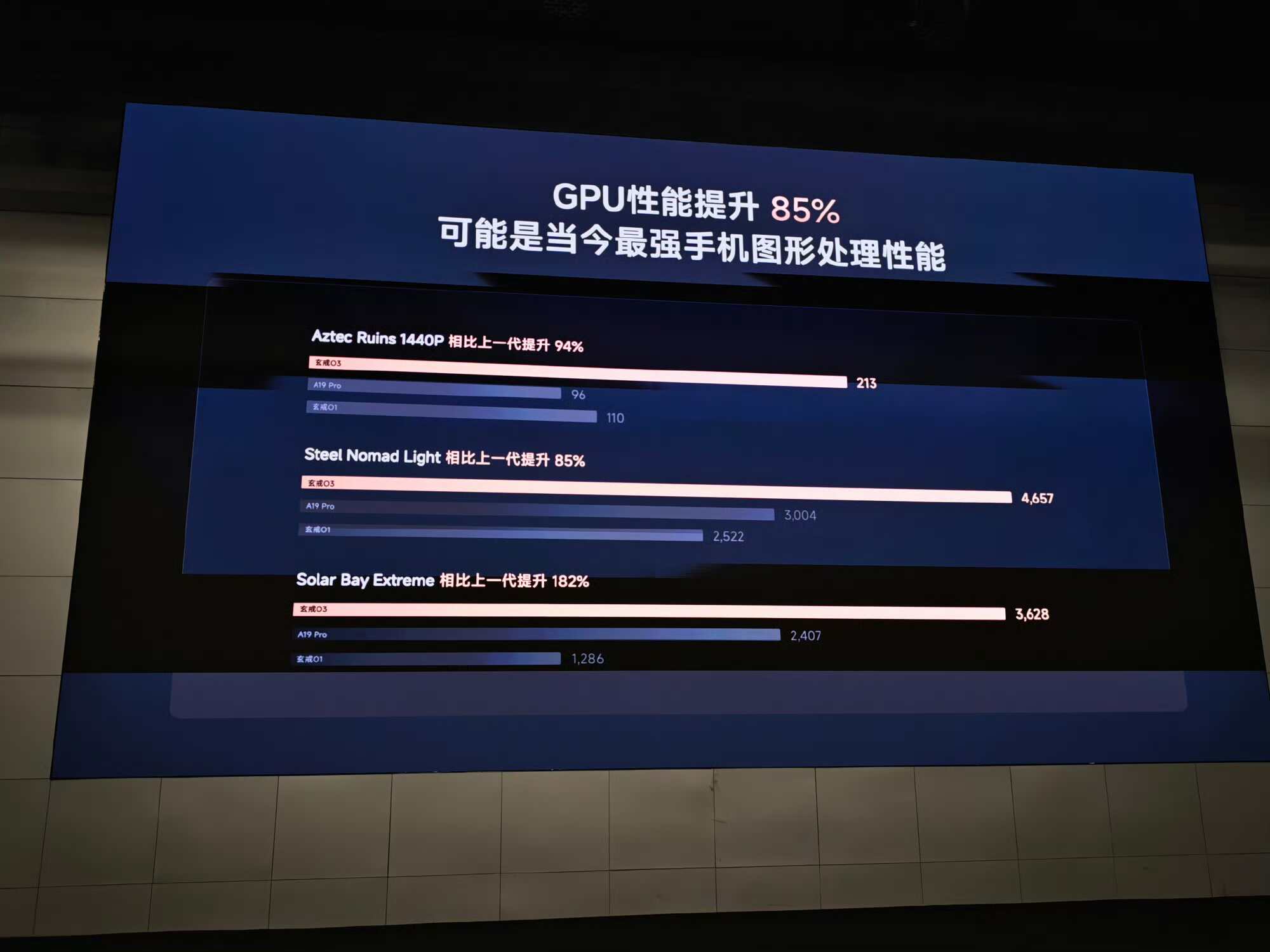
In Steel Nomad Lite, the GPU scores 4,567, an 85% increase over the O1. In 3DMark Solar Bay Extreme, it scores 3,628, which Xiaomi says is 182% higher than the O1's score and 63% higher than that of the competing A19 Pro.
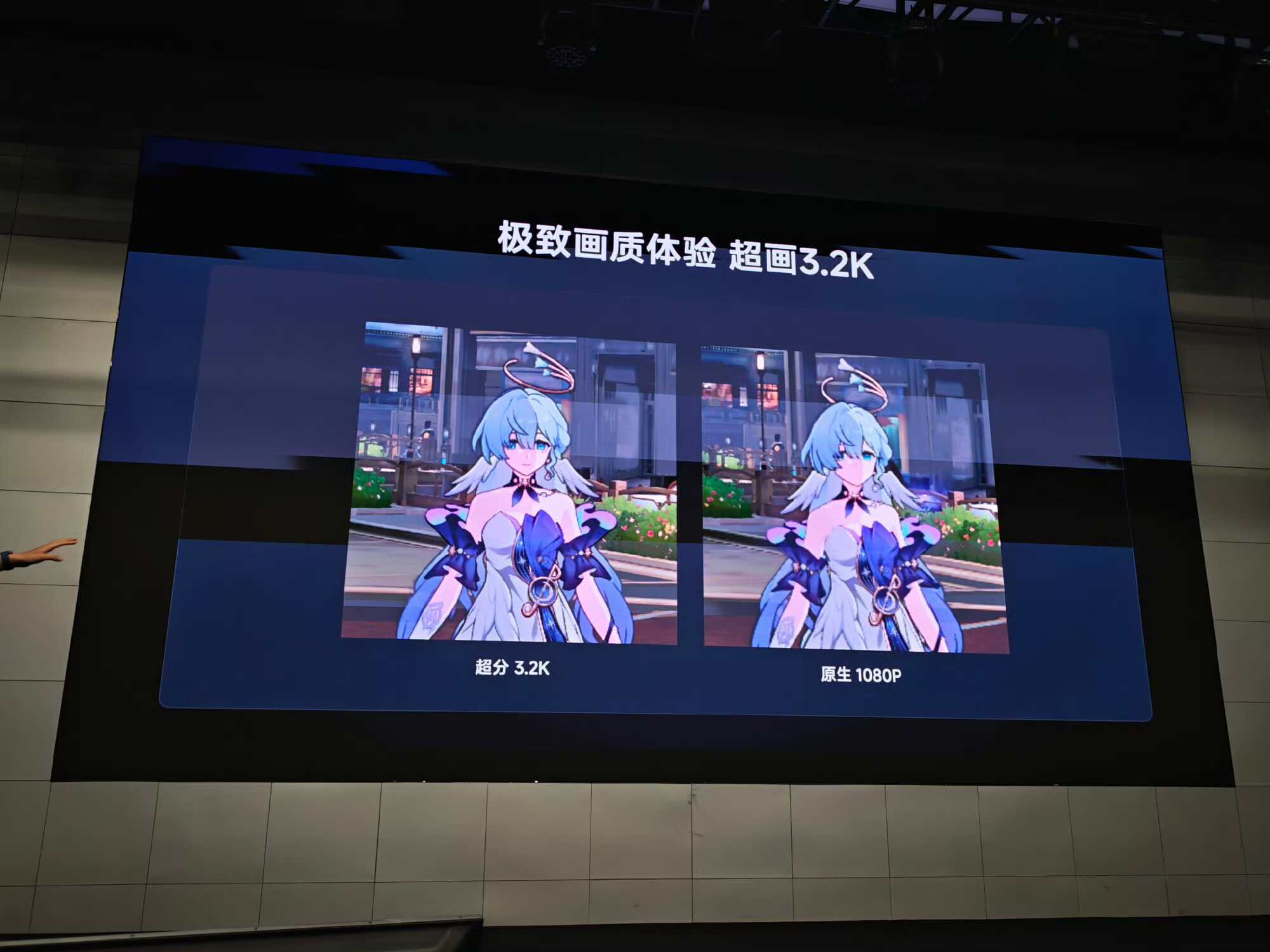
With the GPU now hosting dedicated neural cores, Xiaomi can perform upscaling and frame generation on the GPU itself without transferring data to a system-level NPU. Frame data flows directly from the shading cores into the internal NX accelerator for spatial and temporal AI upscaling before post-processing. Because the image data never leaves the GPU cache hierarchy, this inline execution bypasses round trips to main memory, eliminating bandwidth bottlenecks and reducing frame latency. Xiaomi claims a 20% reduction in power consumption when rendering at 540p and upscaling to 1080p compared with native 1080p rendering. The upscaling technology also supports upscaling from 1080p to 3.4K and frame generation from 60 fps to 120 fps.
NPU performance for on-device AI
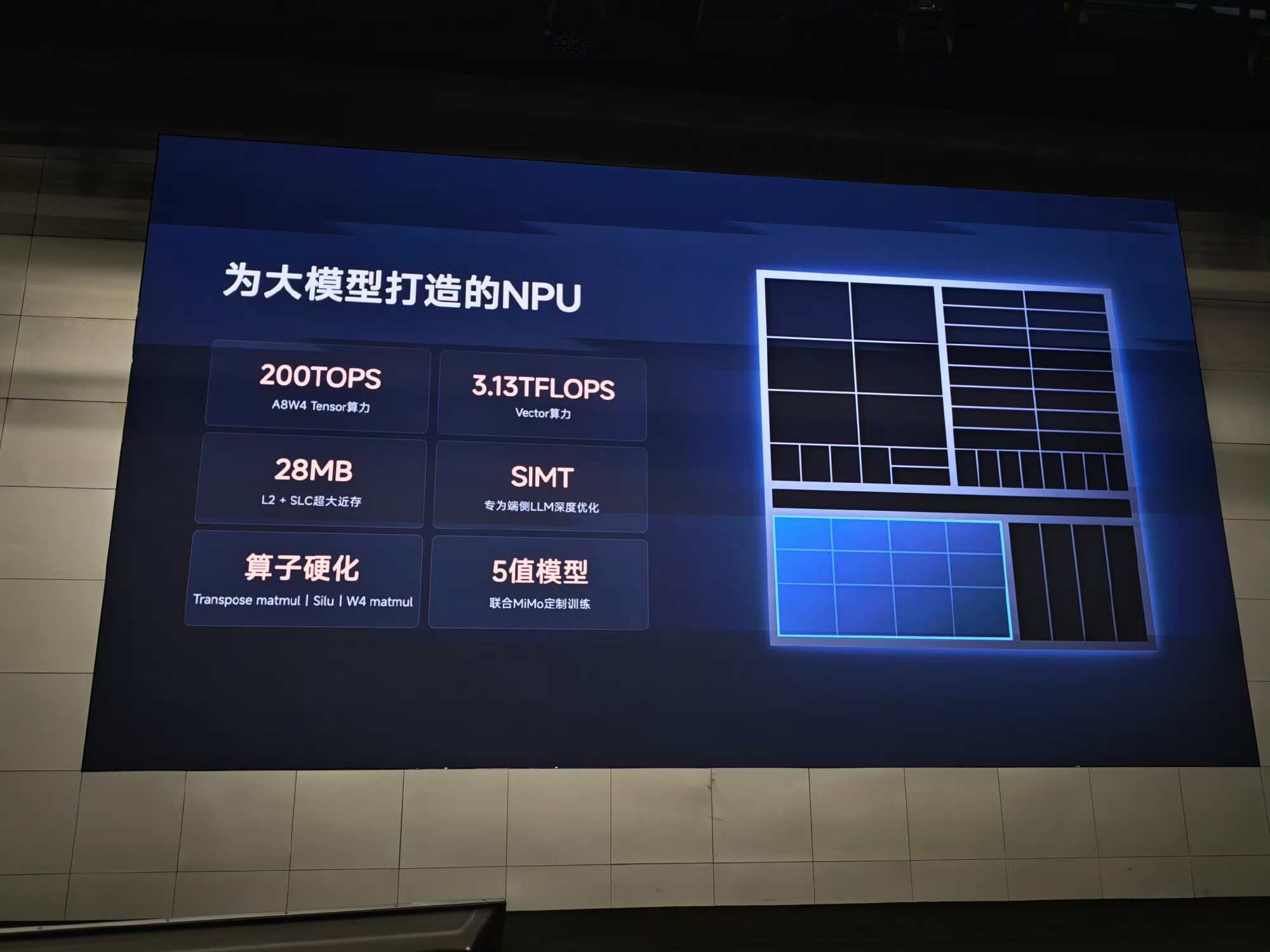
For on-device AI inference, the dedicated quad-core NPU delivers 200 TOPS of compute at A8W4 precision (INT8 activations / INT4 weights) and 3.13 TFLOPS of vector throughput. The NPU uses a SIMT architecture optimized for transposed matrix multiplication, SiLU activation, and W4 matrix multiplication. Xiaomi has also developed a five-value quantization model jointly with its MiMo model team and optimized it for the XRing NPU.
ISP
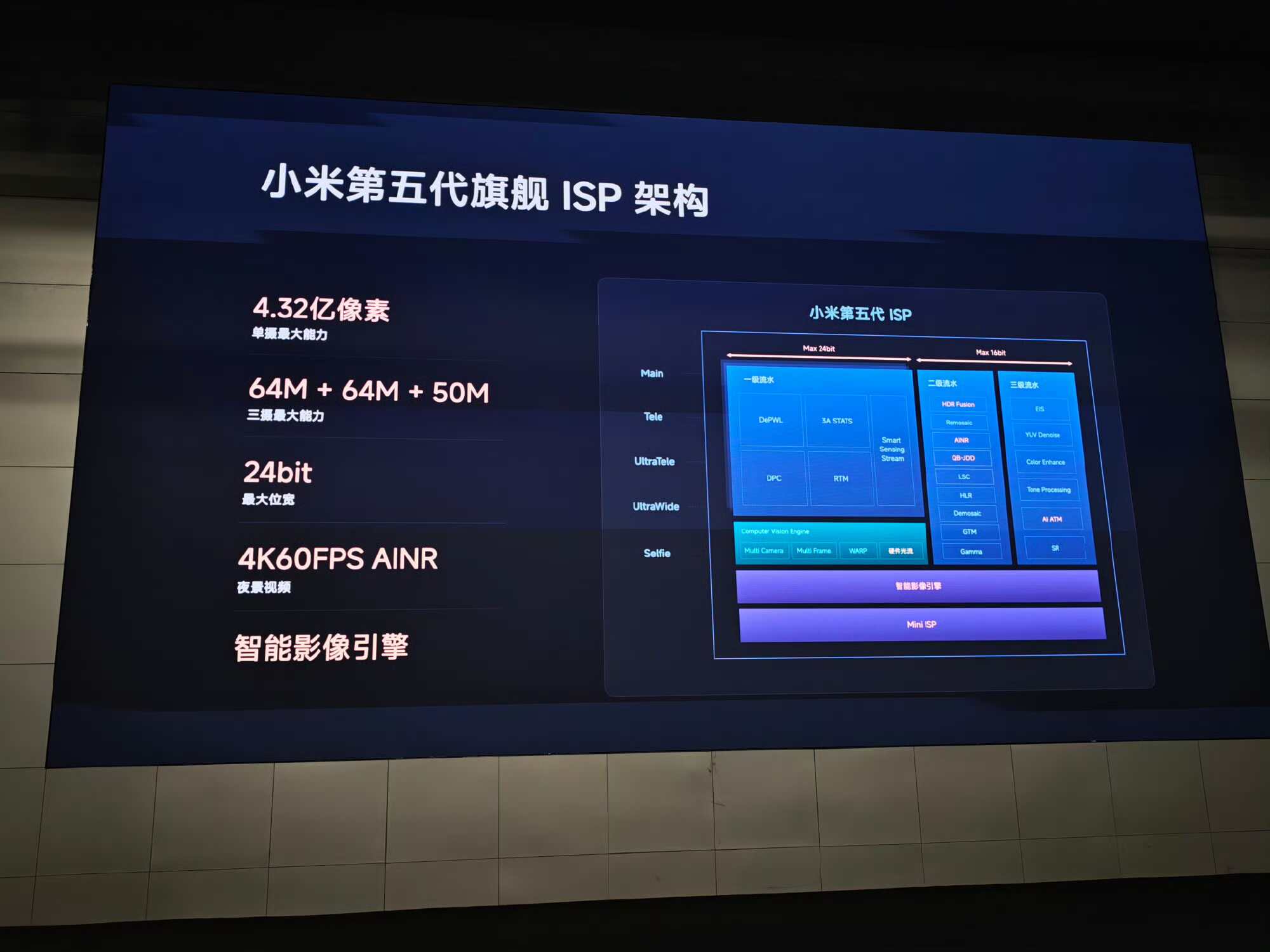
Xiaomi's fifth-generation flagship ISP now supports a single sensor of up to 432 MP, triple-camera configurations of 64 MP + 64 MP + 50 MP, and a pipeline with a bit depth of up to 24 bits. It can process 4K60 AI noise-reduced night video. The architecture includes a computer-vision engine with hardware optical flow, multi-camera and multi-frame processing, and a Mini ISP for always-on camera tasks.
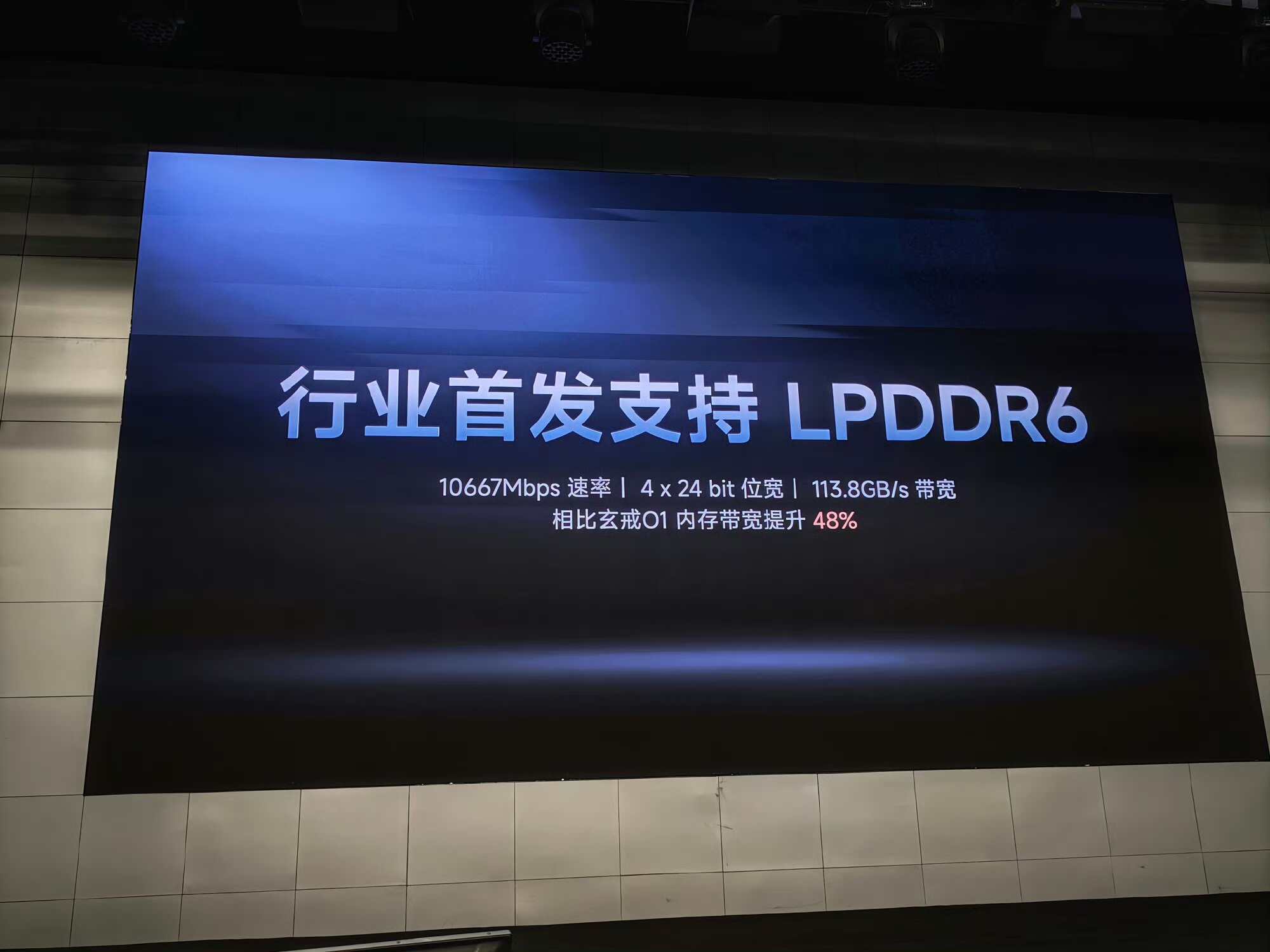
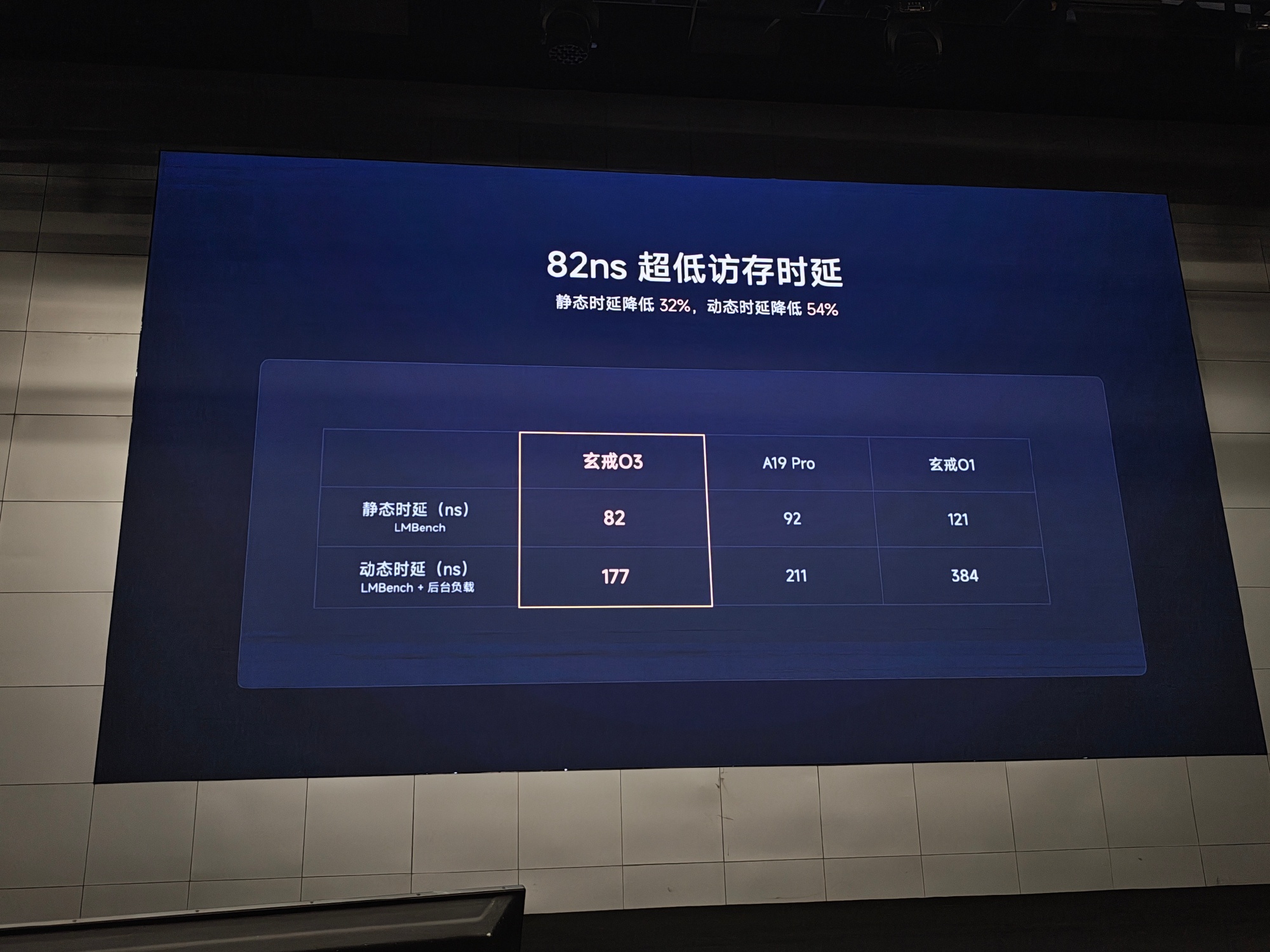
To prevent bandwidth bottlenecks across the CPU, GPU, and NPU, the SoC is the first to natively support next-generation LPDDR6 memory at 10,667 MT/s over four 24-bit channels, providing a maximum bandwidth of 113.8 GB/s. Xiaomi quotes a memory access latency of 82 ns, enabled by its unified fusion bus, high-level metal routing, and prefetch technology. The chip also supports H.266 hardware decoding.
A RISC-V-based XRing security core handles trusted execution, with certifications for SM-series cryptography and CCRC EAL5+. The platform supports hybrid software-hardware fusion load scheduling with granularity down to 1 ms.
Availability
Xiaomi has announced that the chip will debut in the Xiaomi 18 Fold and the Xiaomi Pad 9 Pro Max, both of which are scheduled for release in September.
Source(s)
 Add as a preferred source on Google


