




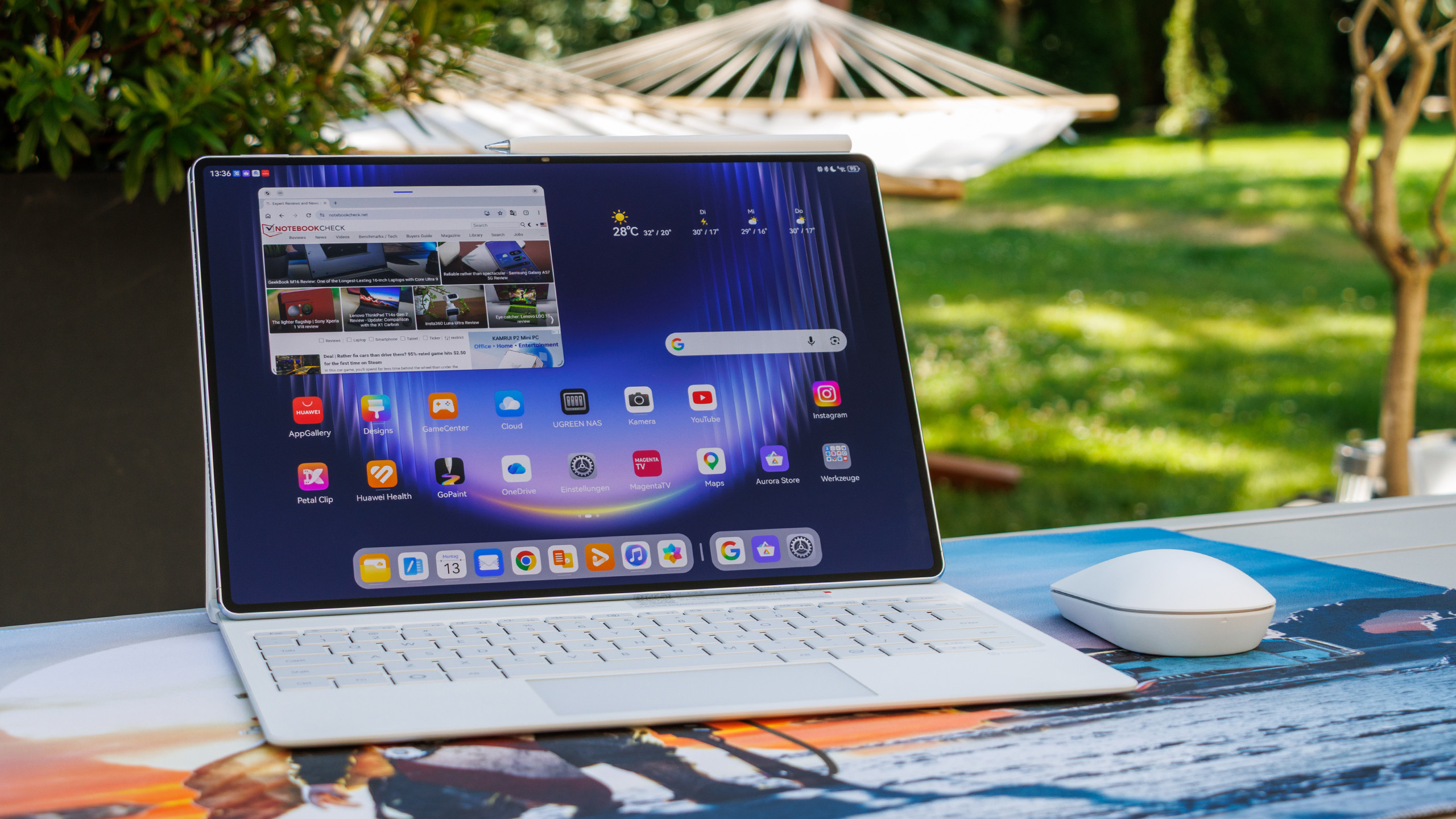
Huawei MatePad Pro Max verdict
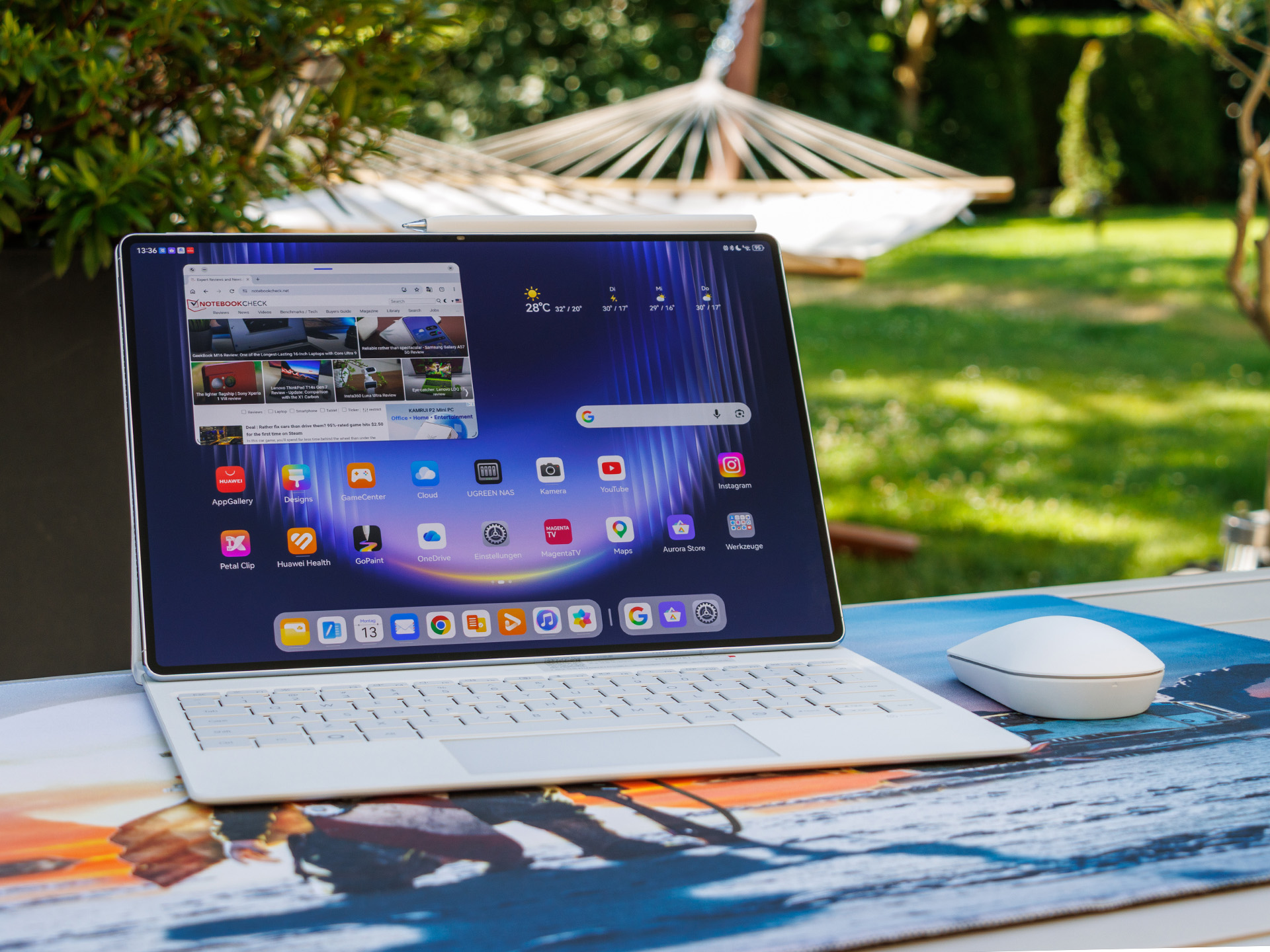
The Huawei MatePad Pro Max stands out above all for its huge, very bright OLED display with an excellent PaperMatte finish, high-quality build, and powerful speakers. Input and accessories also make the tablet a serious PC replacement for productive tasks. Everyday performance from the Kirin 9030 Pro is good, but Huawei falls well behind the competition when it comes to graphics performance.
There are also compromises on the software side: the lack of Google services, a large amount of preinstalled third-party software, and advertising detract from an otherwise well-rounded package. The lack of 6 GHz Wi-Fi and comparatively short battery life also cost it points. On the other hand, the Pro Max scores with good connectivity, low temperatures, and an extremely slim design. Nevertheless, it is an impressive premium tablet that particularly excels in display quality and multimedia, but does not lead the pack in every area.
Pros
Cons
Price and availability
The Huawei MatePad Pro Max is available directly from Huawei's online store.

Table of Contents
- Huawei MatePad Pro Max verdict
- Spezifications: Huawei MatePad Pro Max
- Chassis – MatePad Pro Max is incredibly thin
- Features – Fast USB included
- Software – Android 16 finally on the horizon
- Communications and GNSS – No 6 GHz Wi-Fi on the MatePad Pro Max
- Cameras – Optics with natural colors
- Accessories and warranty – Accessories turn it into a PC replacement
- Input devices and operation – Fingerprint sensor in the power button
- Display – OLED with PaperMatte finish
- Performance – MatePad with Kirin T93 Pro
- Emissions – Doesn't get too hot
- Battery life – 9,760 mAh in the MatePad Pro Max
- Notebookcheck overall rating
- Potential alternatives in comparison
Large display, slim chassis, and plenty of performance: With the MatePad Pro Max, Huawei aims to finally blur the line between tablet and laptop. But is the powerful hardware enough to actually replace a computer in everyday use? We put the XXL tablet through its paces in daily use.
Spezifications: Huawei MatePad Pro Max
Chassis – MatePad Pro Max is incredibly thin
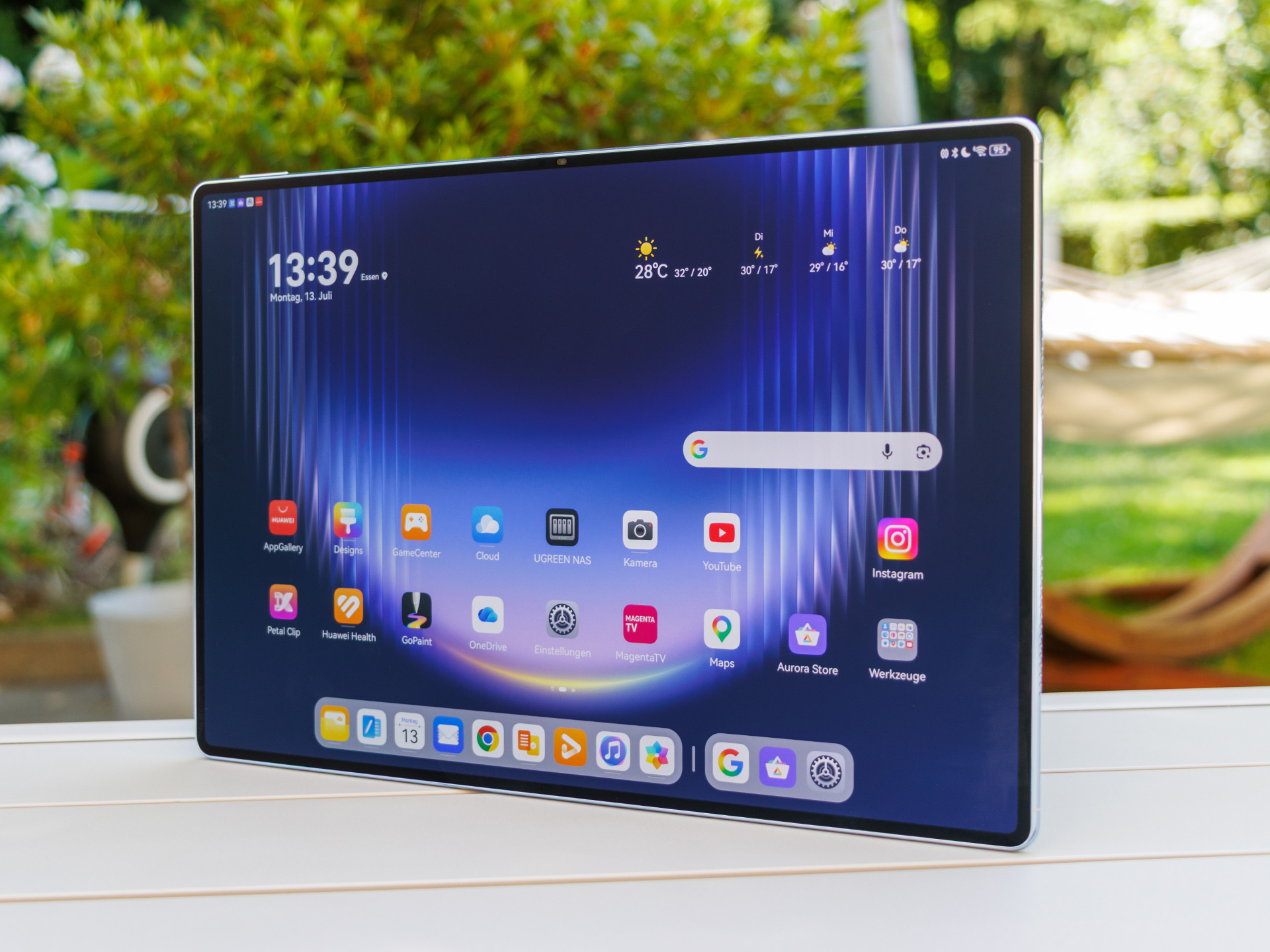
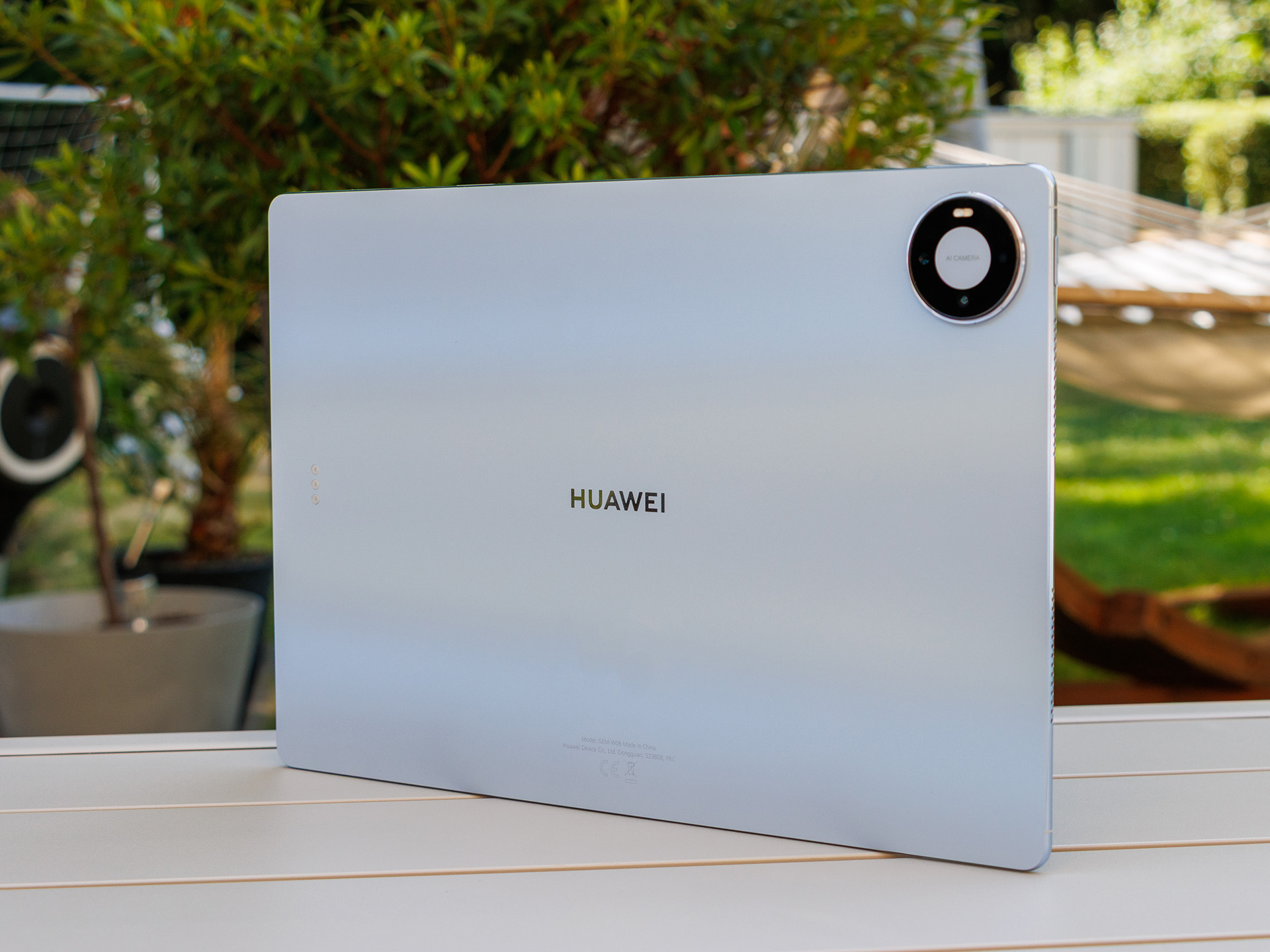
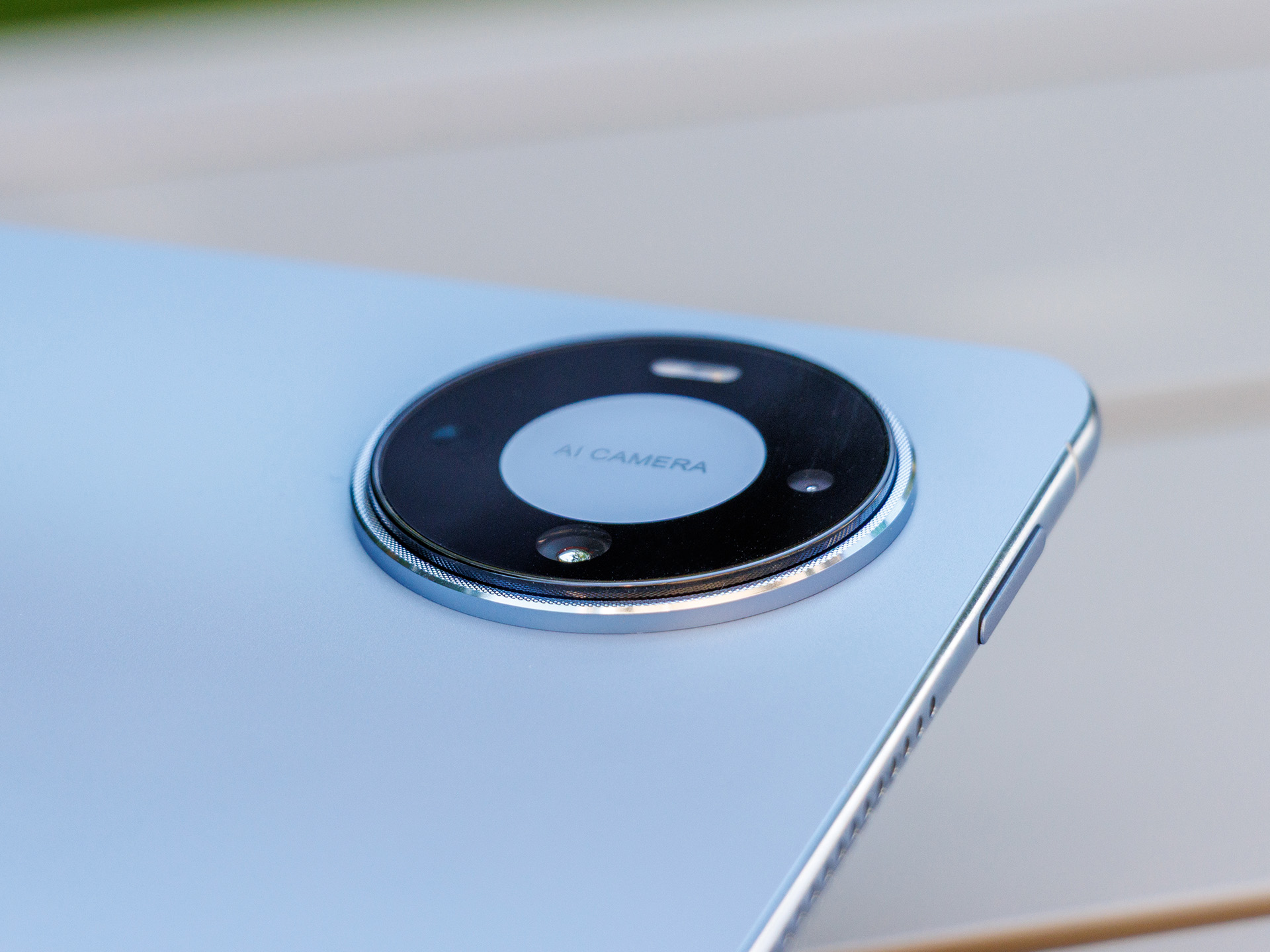
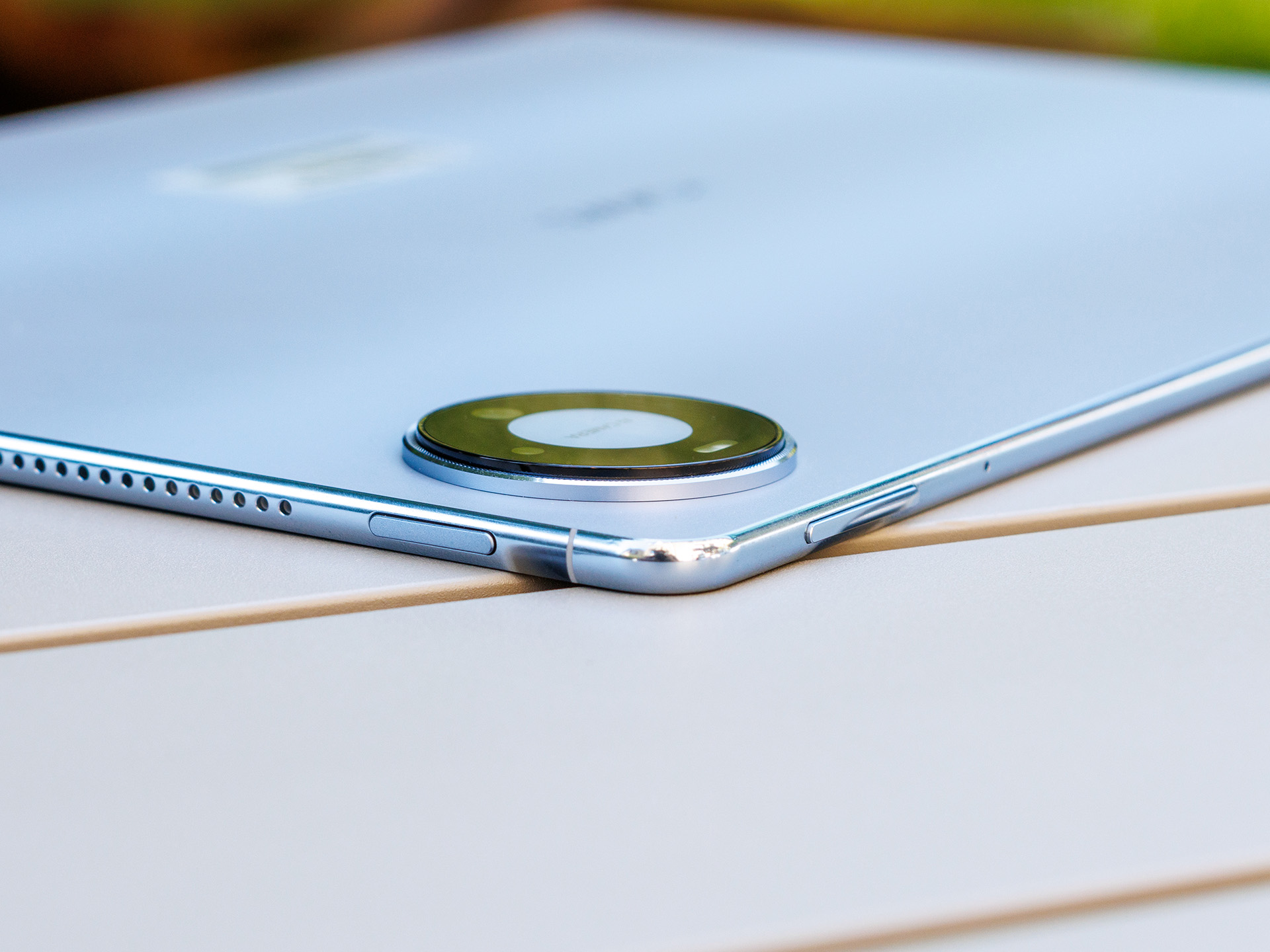
With a chassis height of just 4.7 mm, the Huawei MatePad Pro Max aims to be the thinnest tablet in its size class, which would make it another 0.1 mm thinner than the MagicPad 4. We measure exactly 5 mm in the center of the tablet, while the thickness reaches up to 7.85 mm around the cameras. Despite the slight increase in thickness, wobbling on flat surfaces remains limited.
The MatePad Pro Max impresses with clean, tight gaps and excellent build quality. The aluminum frame also gives the tablet a premium look and feel. It sits comfortably in the hands and feels rigid, although it does produce a little creaking.
The MatePad Pro Max is available in gray and blue. It is neither dustproof nor waterproof.
Features – Fast USB included
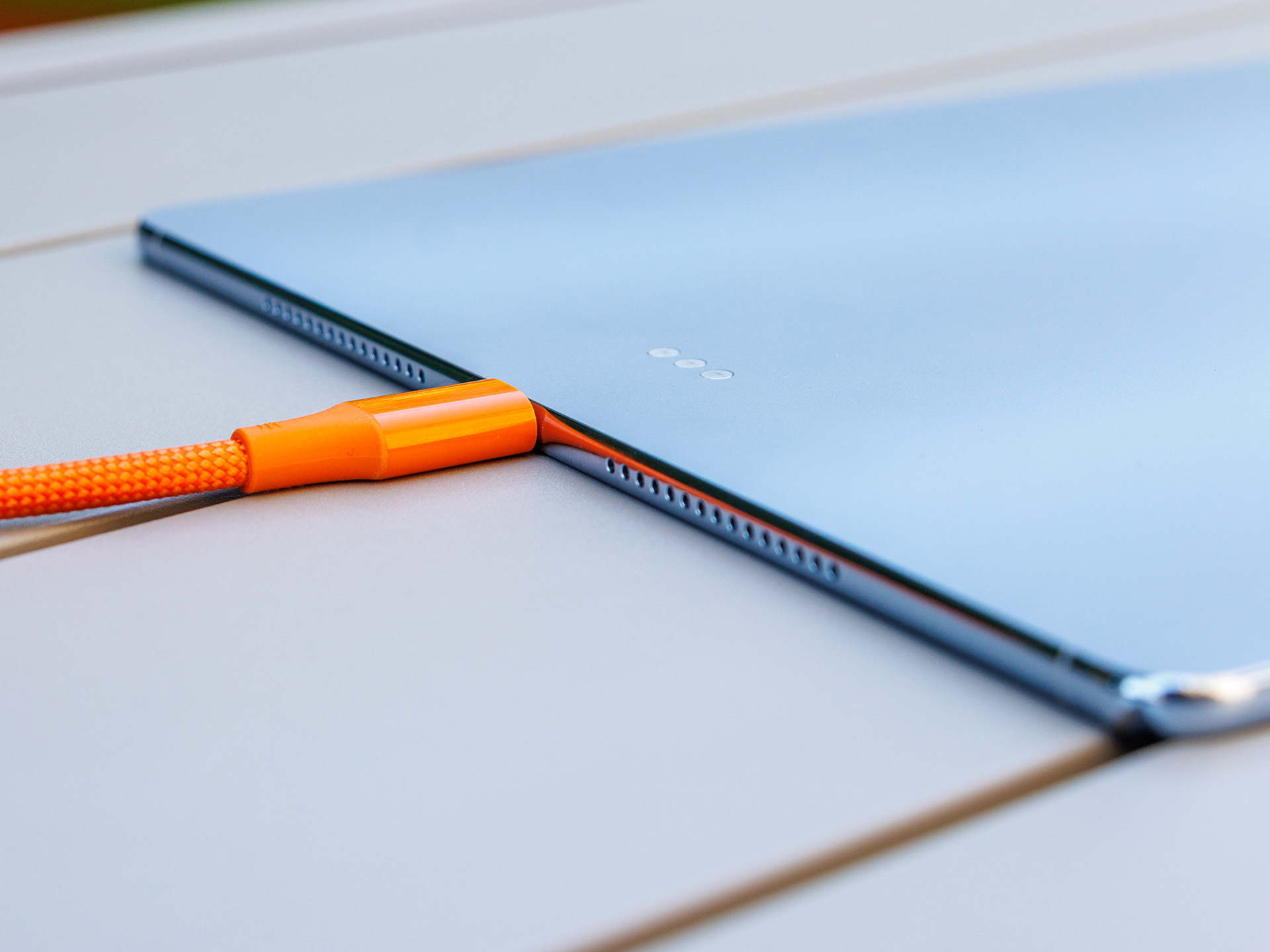
The Huawei MatePad Pro Max offers a modern, high-end feature set. In our copy test with a connected Samsung Portable SSD T7, the USB 3.2 port achieves a fast data transfer rate of 252 MB/s. The interface also supports wired video output, although it only mirrors the display.
Like most Huawei tablets, the Pro Max also supports NearLink, which is required to connect the optional keyboard and stylus.
Software – Android 16 finally on the horizon
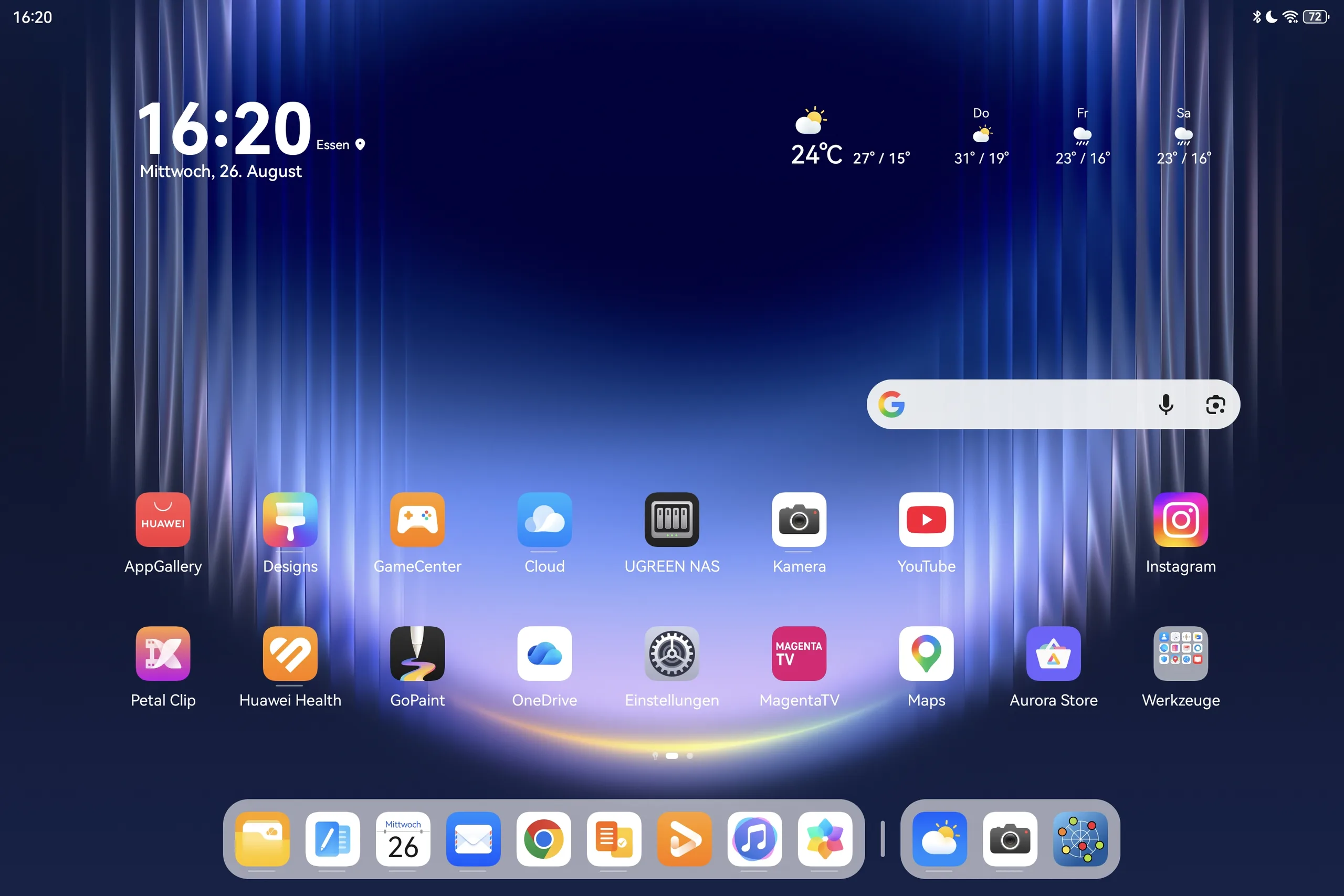
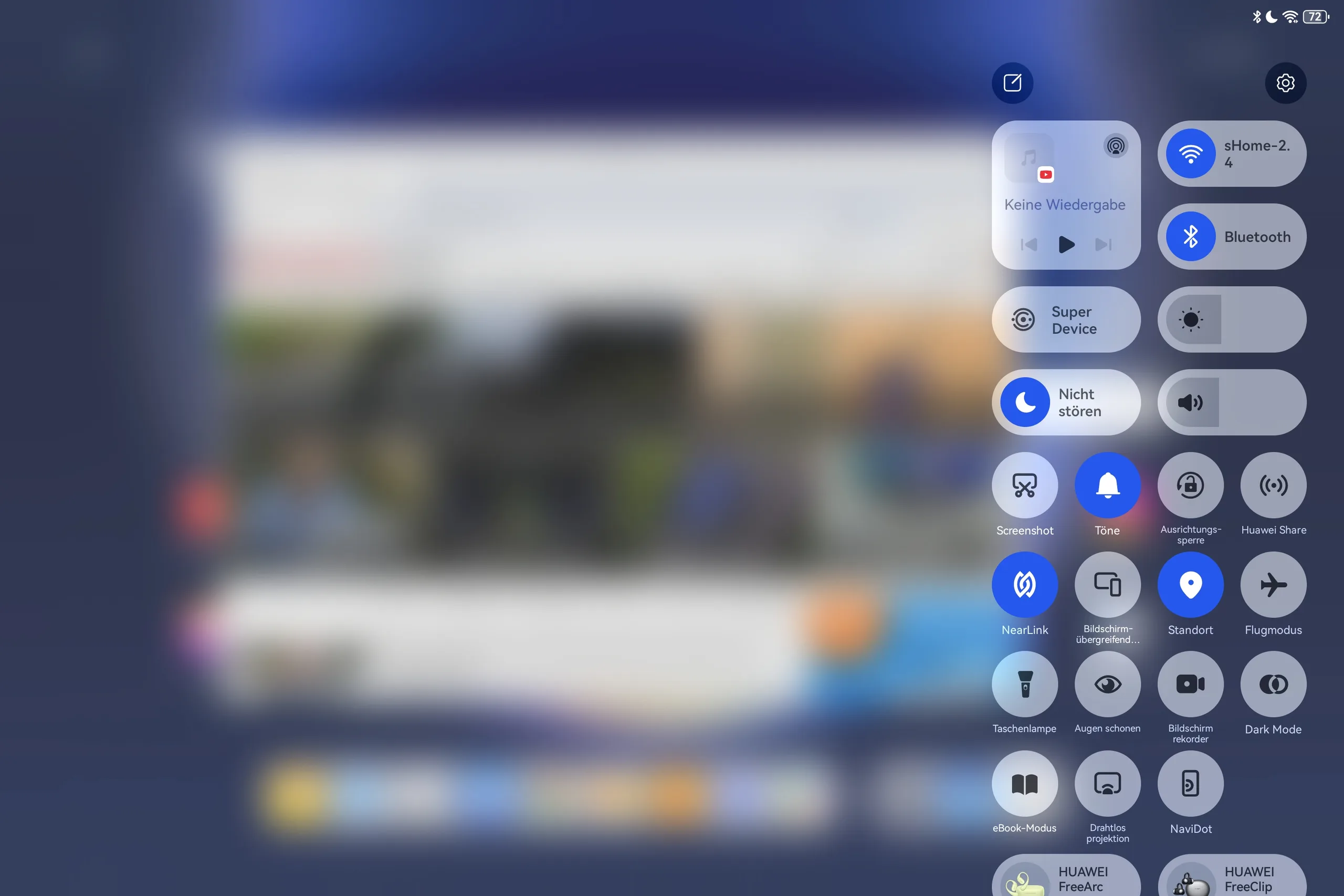
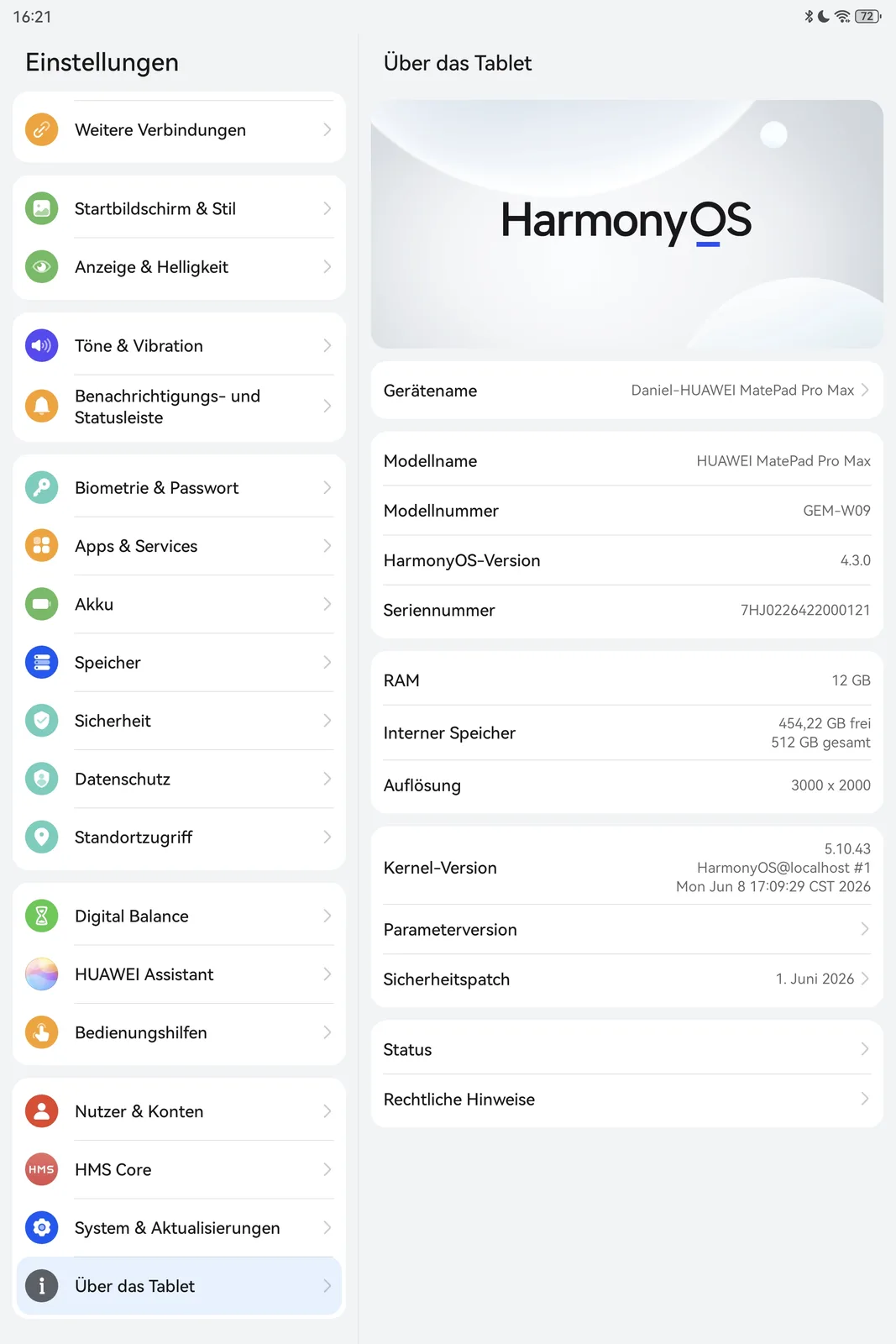
The MatePad Pro Max runs Huawei's HarmonyOS 4.3, which is still based on Open Android 12. According to our colleagues at Huawei.Blog, EMUI 16 will probably be based on Android 16. If that is confirmed, we expect at least all products featuring Huawei's current flagship SoC to receive an update, which would include the Pro Max. Huawei has not yet confirmed this, however. The tablet receives security patches for six years.
As with all Huawei products, Google Play services are not installed. The Play Store can nevertheless be accessed through the Aurora Store. It can be downloaded directly from the AppGallery and is easy to set up. You can find out how to do this in this article.
Huawei installs quite a few third-party apps and also displays a fair amount of app advertising throughout the system. However, this can be uninstalled or disabled.
Sustainability
Huawei avoids obvious plastics in the packaging, although the package itself is wrapped in plastic film. The tablet is not designed to be repaired by the user.
Huawei also does not provide detailed information on the sustainability of the MatePad Pro Max.
Communications and GNSS – No 6 GHz Wi-Fi on the MatePad Pro Max
There is no cellular option for the MatePad Pro Max, nor is there NFC. On the other hand, it offers an otherwise nearly complete and modern connectivity package with Wi-Fi 7, Bluetooth 6.0, and NearLink.
Unfortunately, the 6 GHz frequency band is not supported for Wi-Fi. Transfer rates are nevertheless high thanks to the modern standard, although they could be somewhat more stable. In everyday use, however, this does not result in any noticeable limitations.
| Networking | |
| Huawei MatePad Pro Max | |
| iperf3 transmit Wi-Fi6/7 RT-BE96U | |
| iperf3 receive Wi-Fi6/7 RT-BE96U | |
| Samsung Galaxy Tab S11 Ultra | |
| iperf3 transmit AXE11000 | |
| iperf3 receive AXE11000 | |
| iperf3 transmit AXE11000 6GHz | |
| iperf3 receive AXE11000 6GHz | |
| Apple iPad Pro 13 2024 | |
| iperf3 transmit AXE11000 | |
| iperf3 receive AXE11000 | |
| iperf3 transmit AXE11000 6GHz | |
| iperf3 receive AXE11000 6GHz | |
| Honor MagicPad 4 | |
| iperf3 transmit AXE11000 | |
| iperf3 receive AXE11000 | |
| iperf3 transmit AXE11000 6GHz | |
| iperf3 receive AXE11000 6GHz | |
| Lenovo Idea Tab Pro Gen 2 | |
| iperf3 transmit AXE11000 6GHz | |
| iperf3 receive AXE11000 6GHz | |
| Average 802.11 a/b/g/n/ac/ax/be | |
| iperf3 transmit AXE11000 | |
| iperf3 receive AXE11000 | |
| iperf3 transmit AXE11000 6GHz | |
| iperf3 receive AXE11000 6GHz | |
| iperf3 transmit Wi-Fi6/7 RT-BE96U | |
| iperf3 receive Wi-Fi6/7 RT-BE96U | |
| Average of class Tablet | |
| iperf3 transmit AXE11000 | |
| iperf3 receive AXE11000 | |
| iperf3 transmit AXE11000 6GHz | |
| iperf3 receive AXE11000 6GHz | |
| iperf3 transmit Wi-Fi6/7 RT-BE96U | |
| iperf3 receive Wi-Fi6/7 RT-BE96U | |
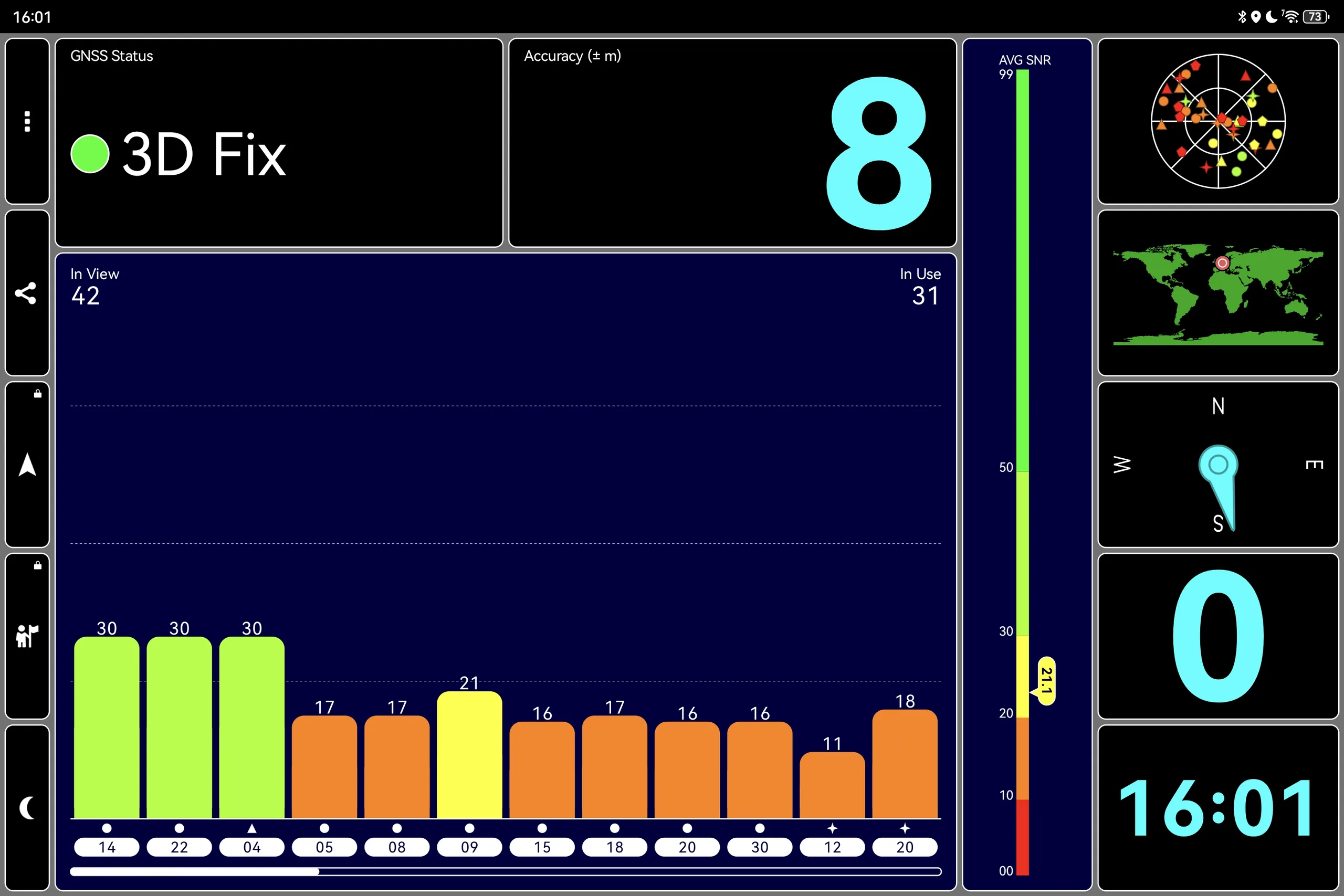
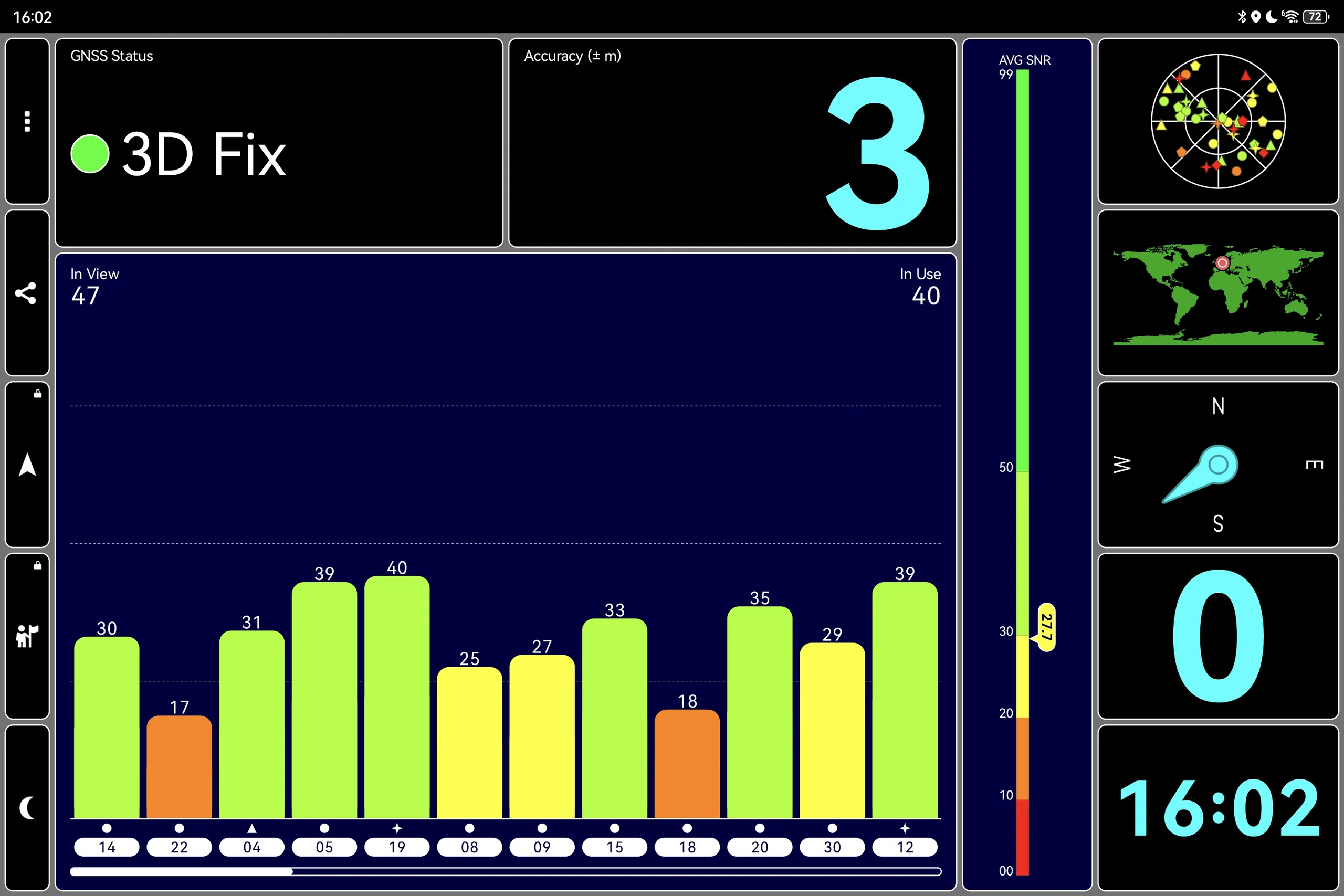
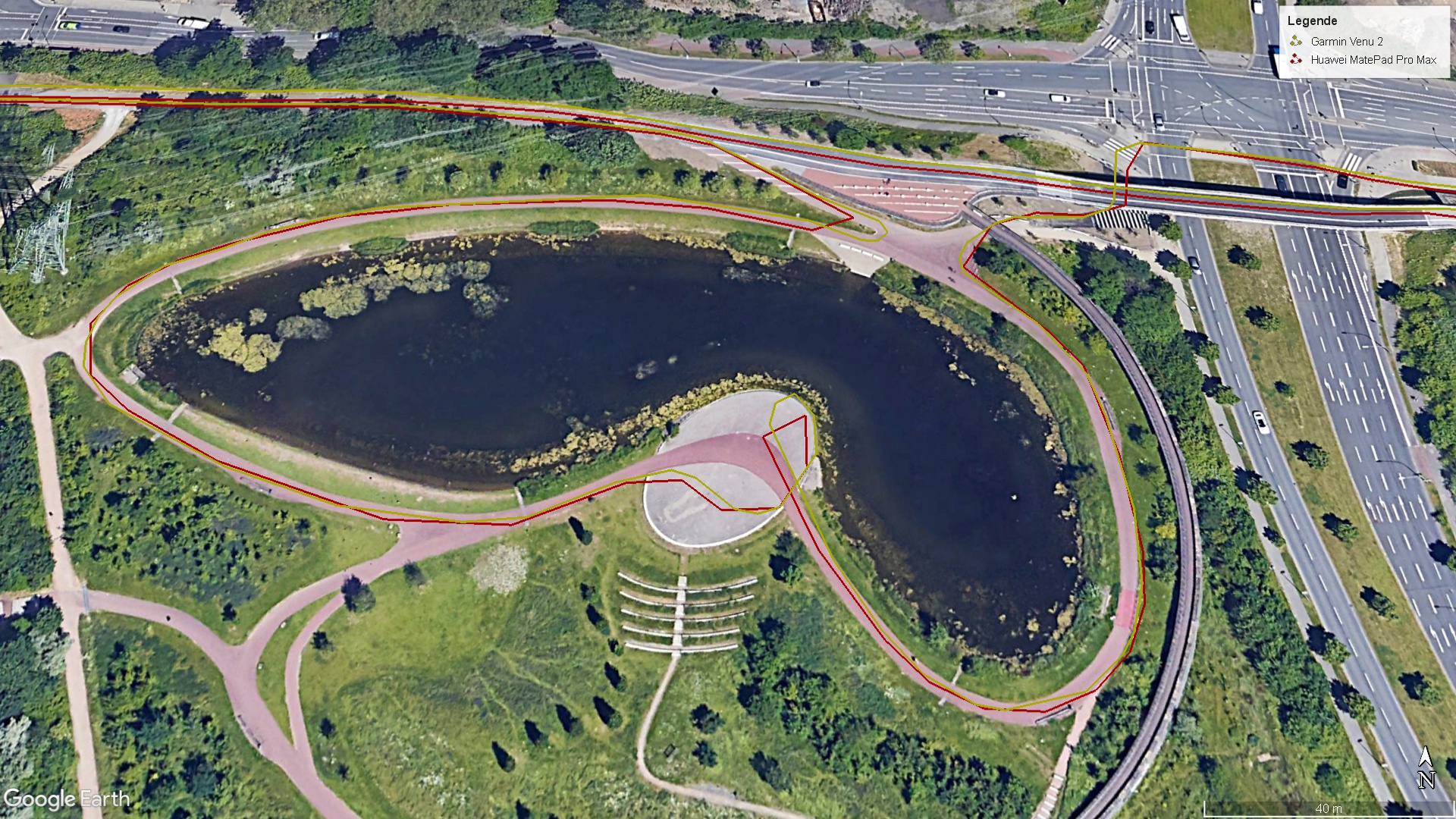
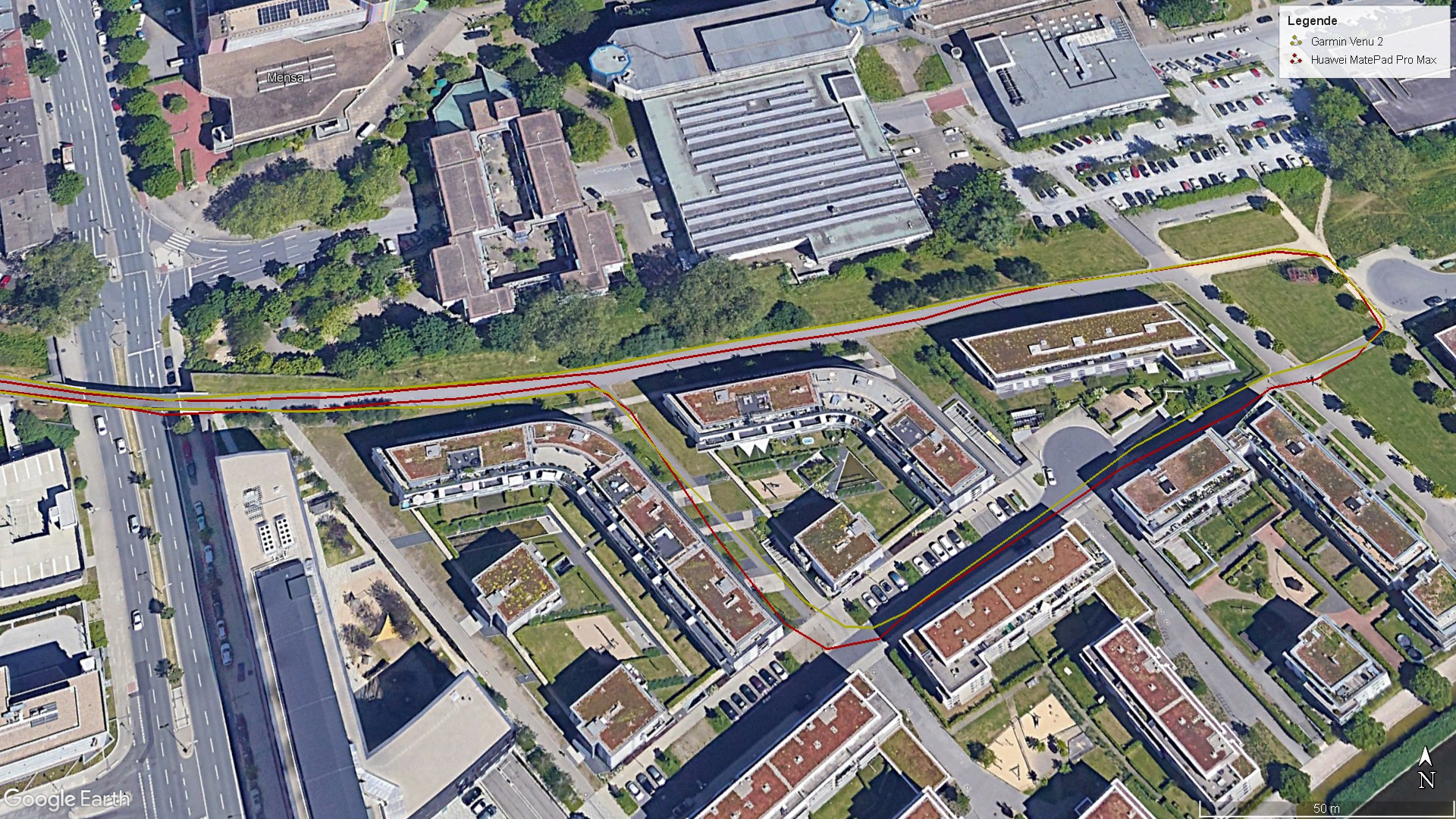
Satellite positioning with the Huawei MatePad Pro Max is fast and accurate outdoors. Indoors, however, the tablet has a harder time determining its location, and accuracy decreases.
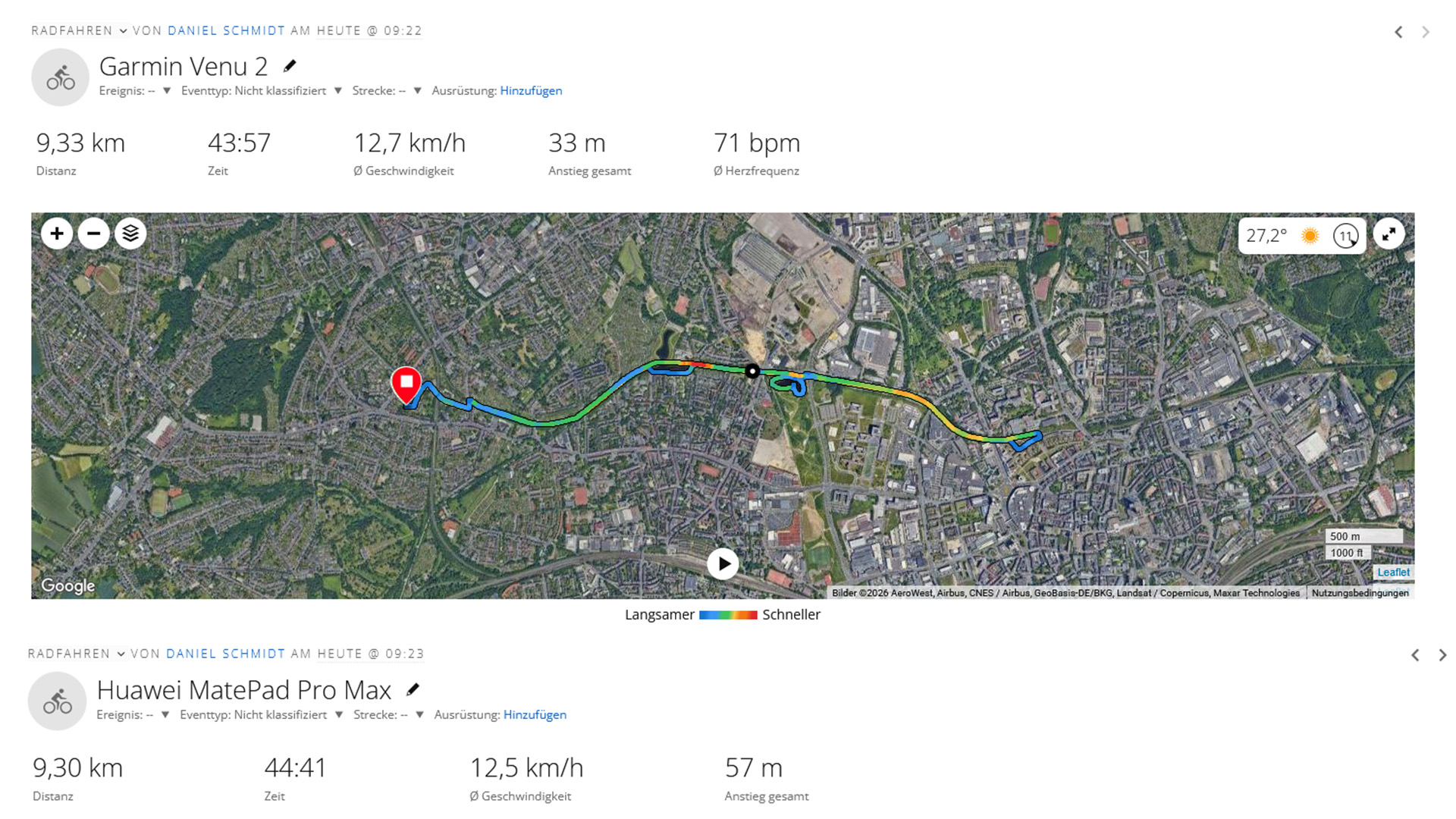
During a bike ride, we compare the tablet with the Garmin Venu 2. It becomes apparent that the Pro Max retrieves its location less frequently, but still provides a solid track recording. That is more than sufficient for navigation tasks.
Cameras – Optics with natural colors

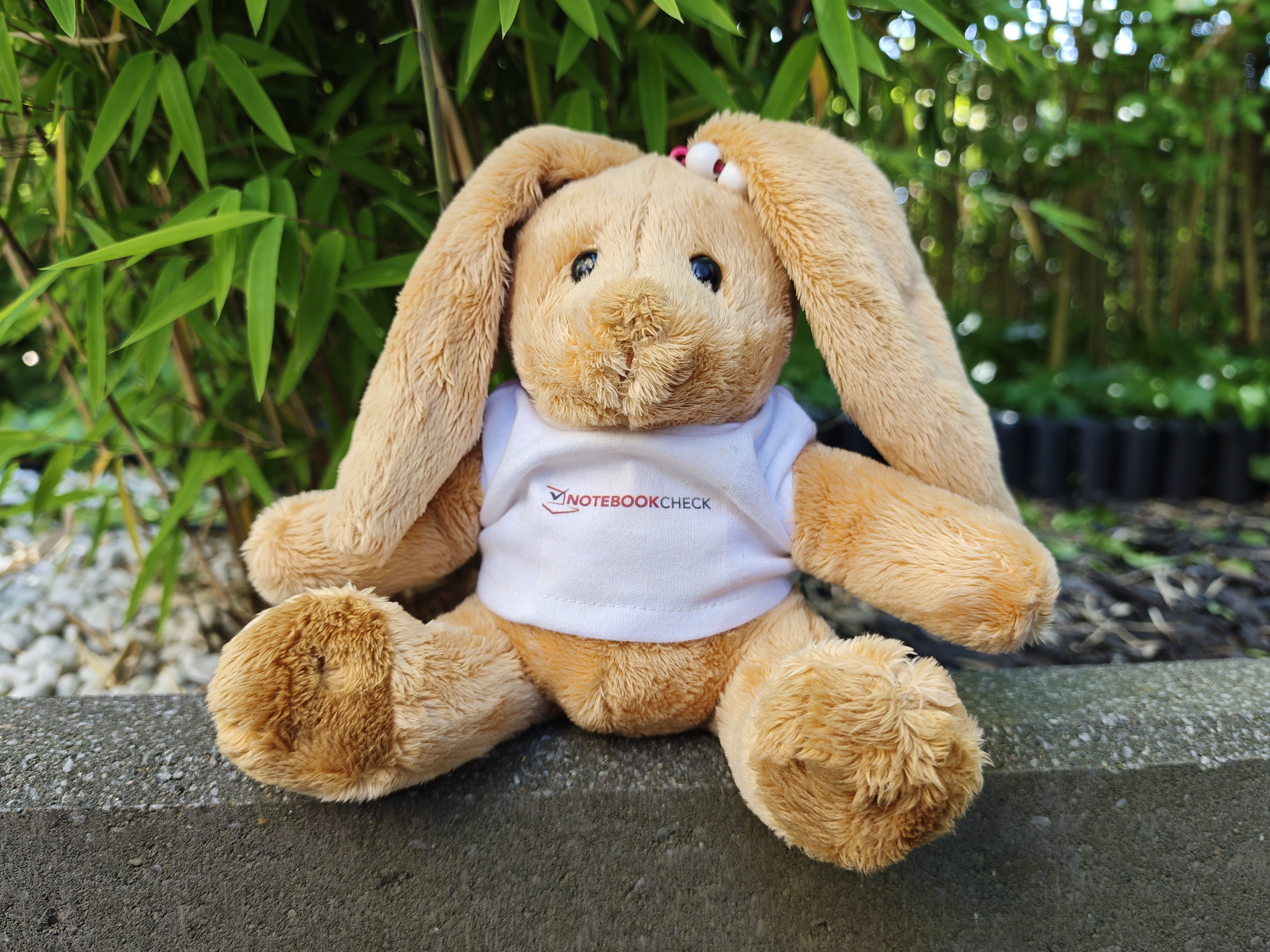
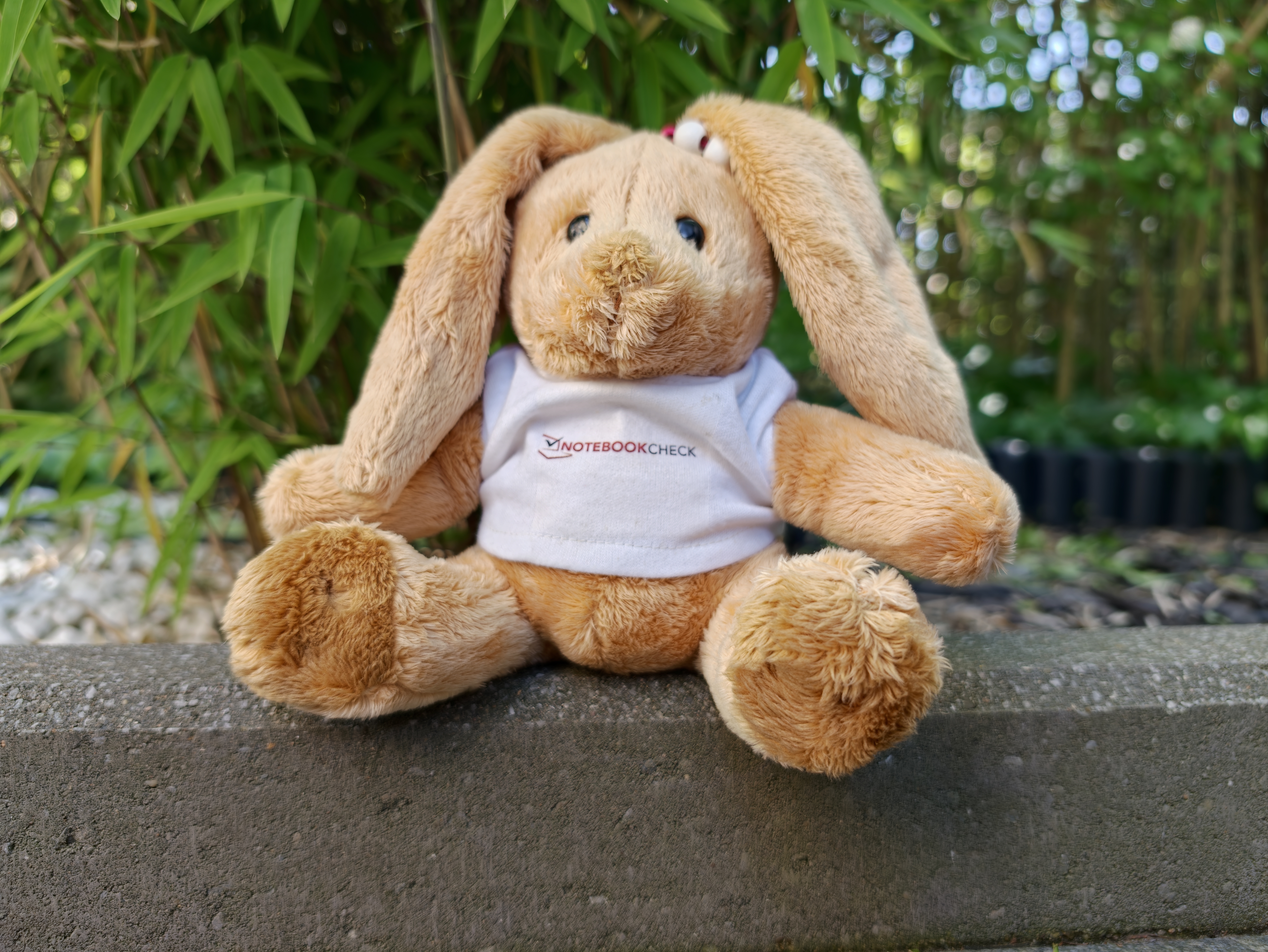
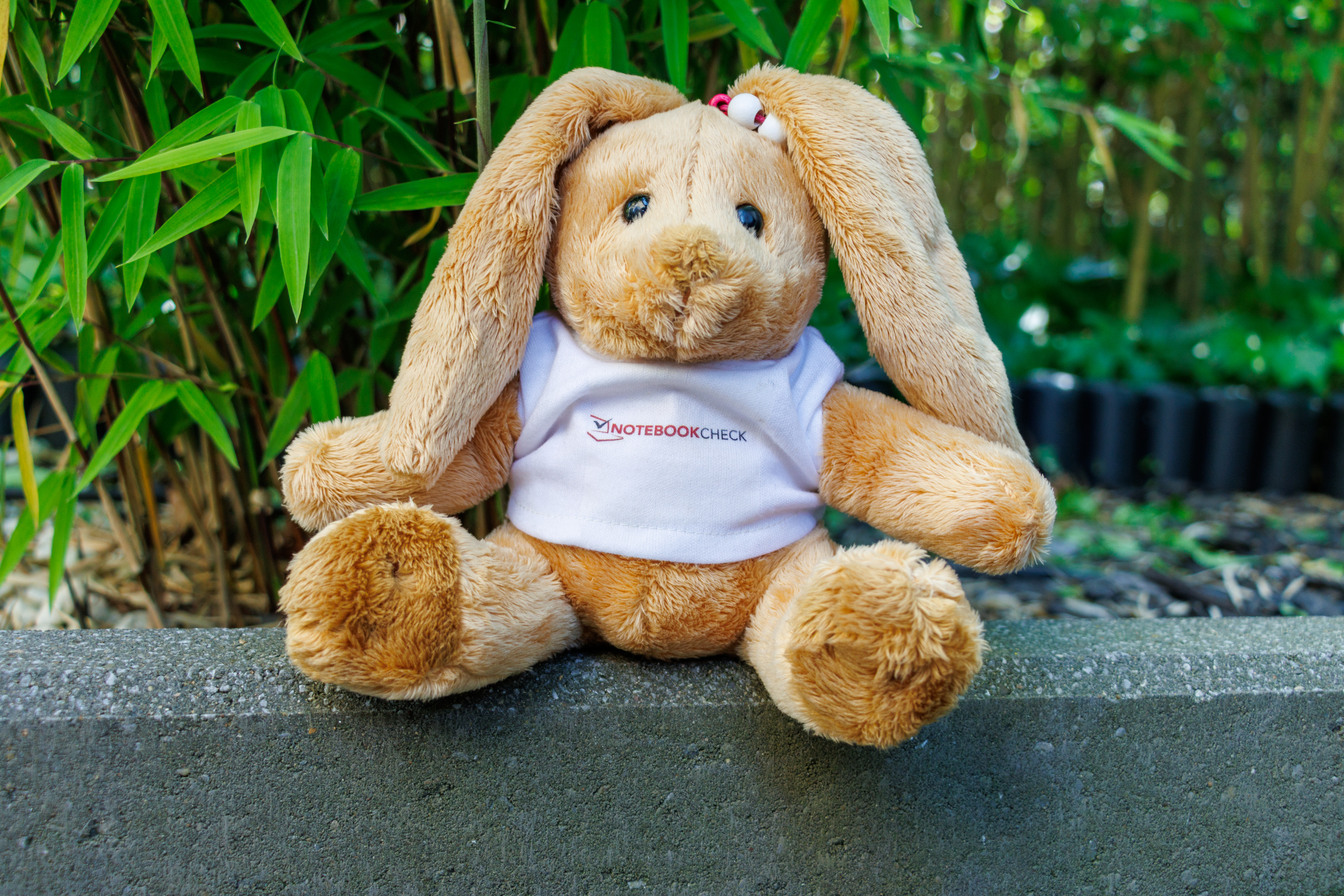
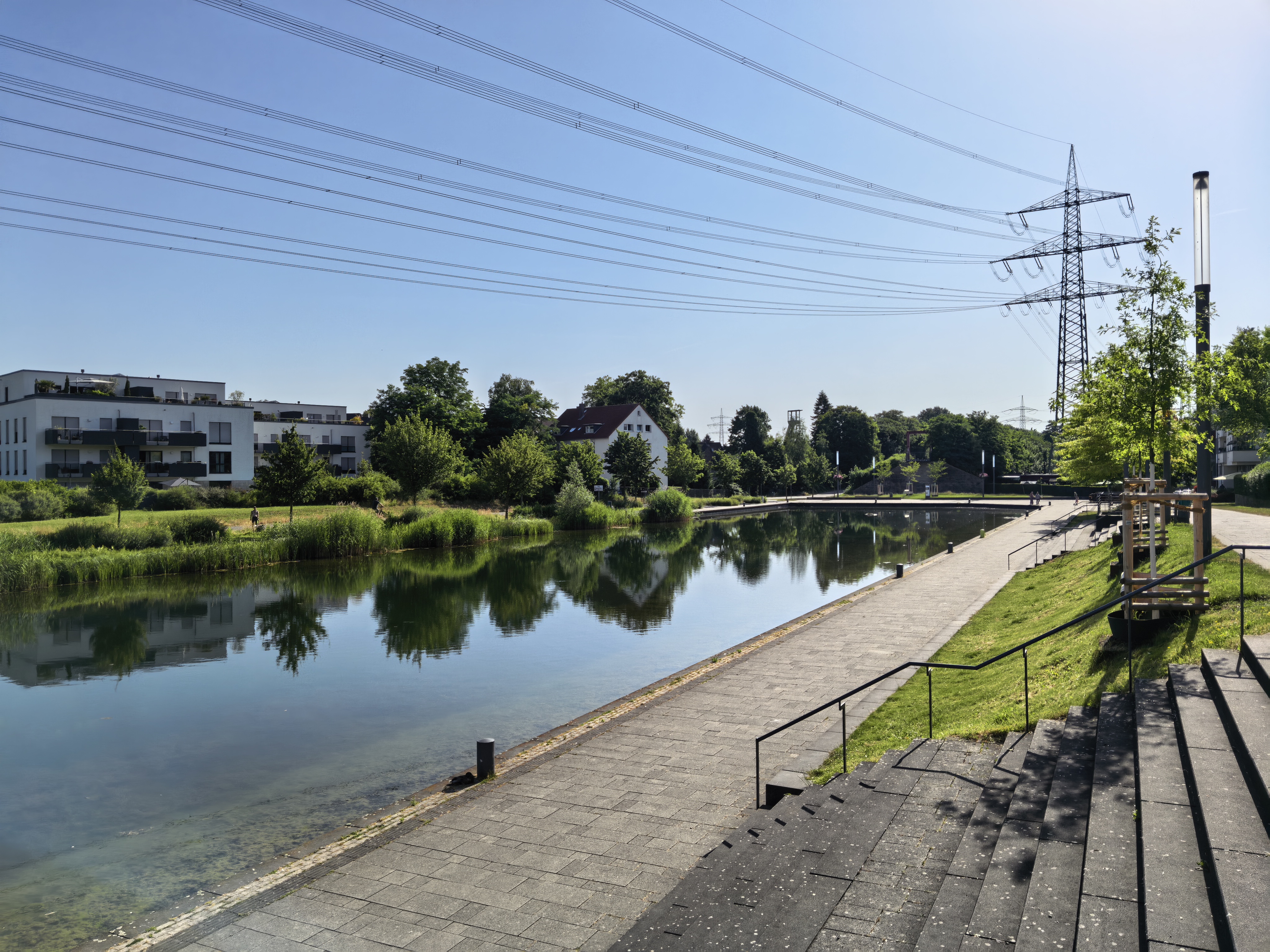
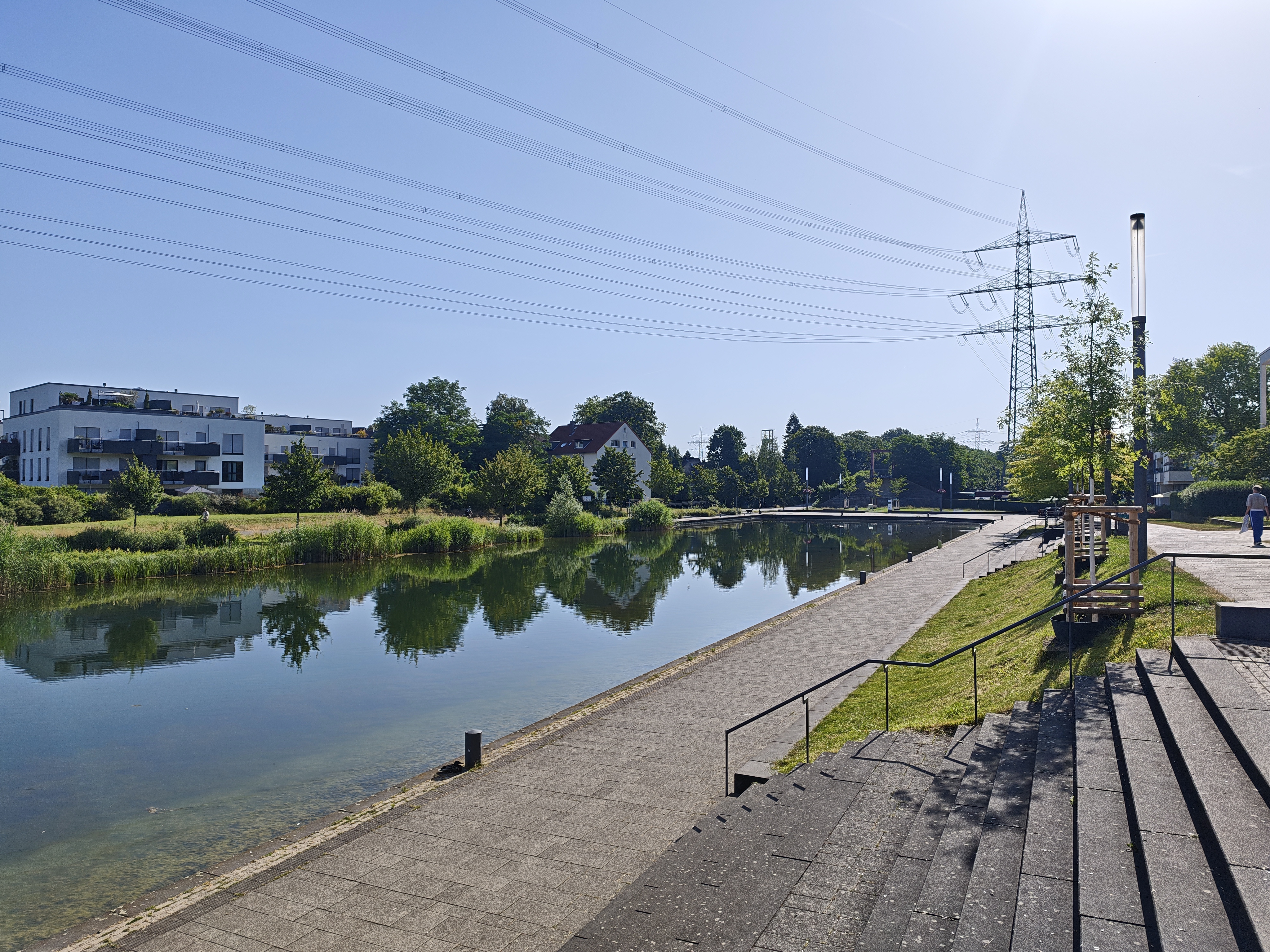
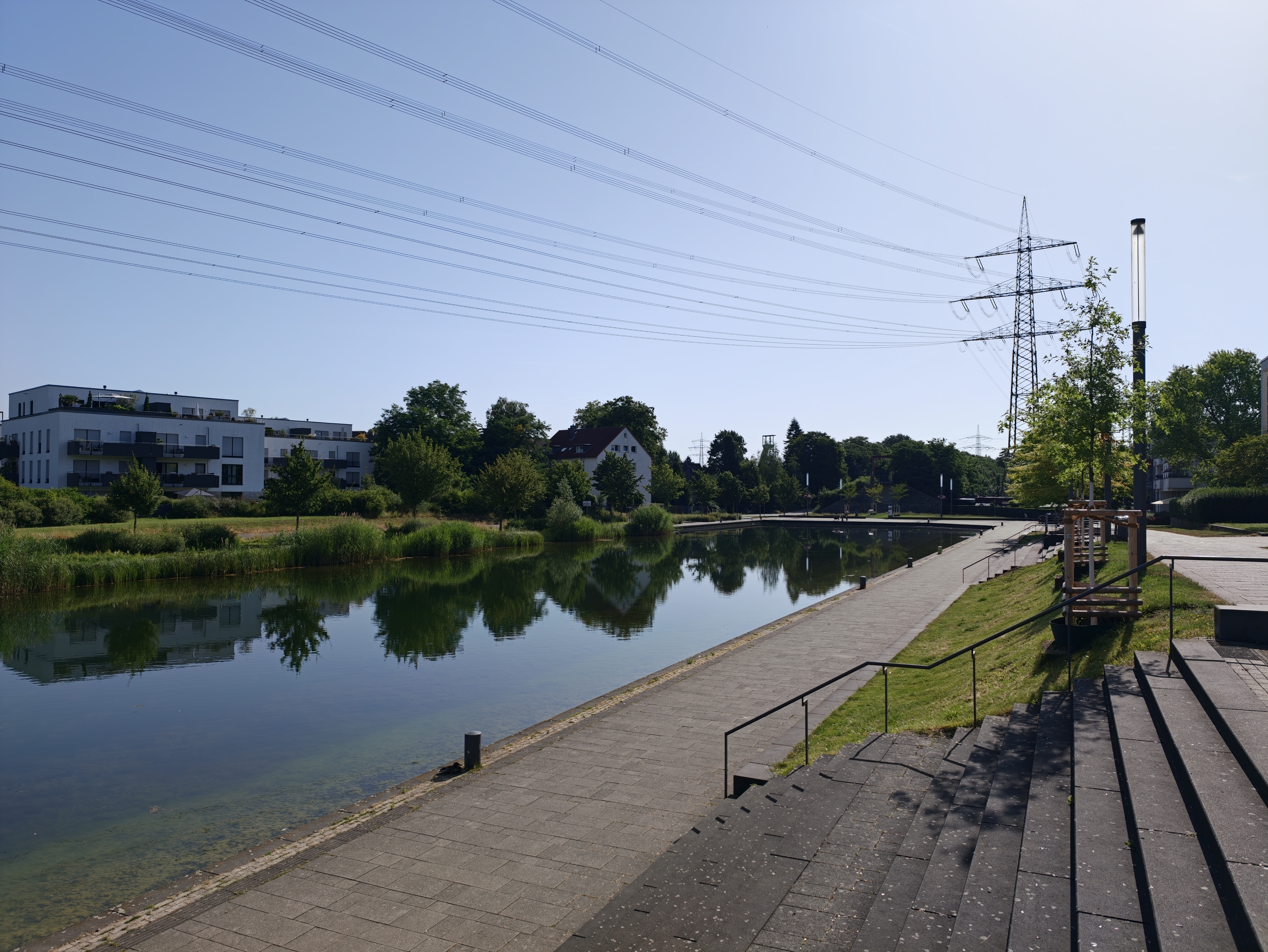
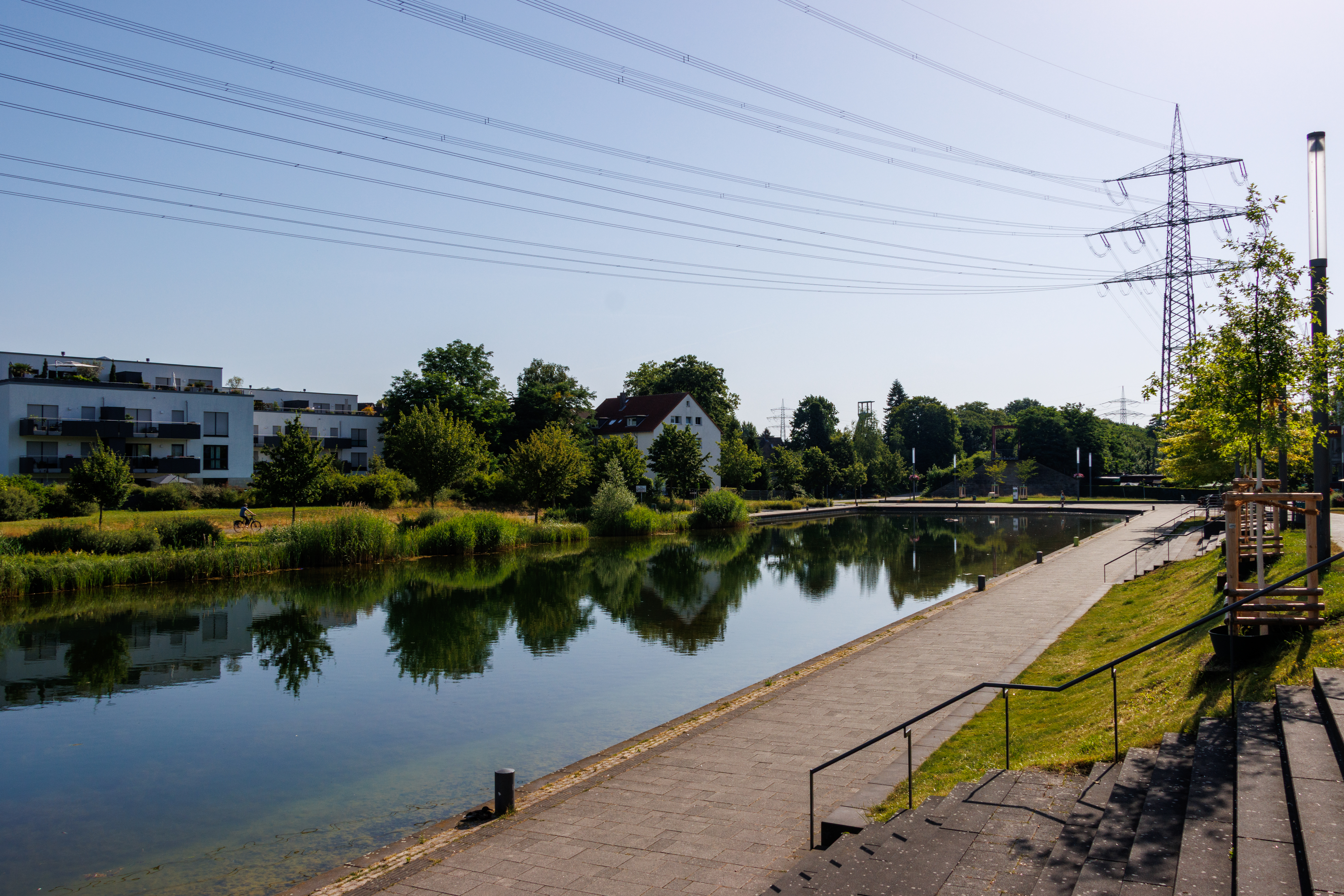
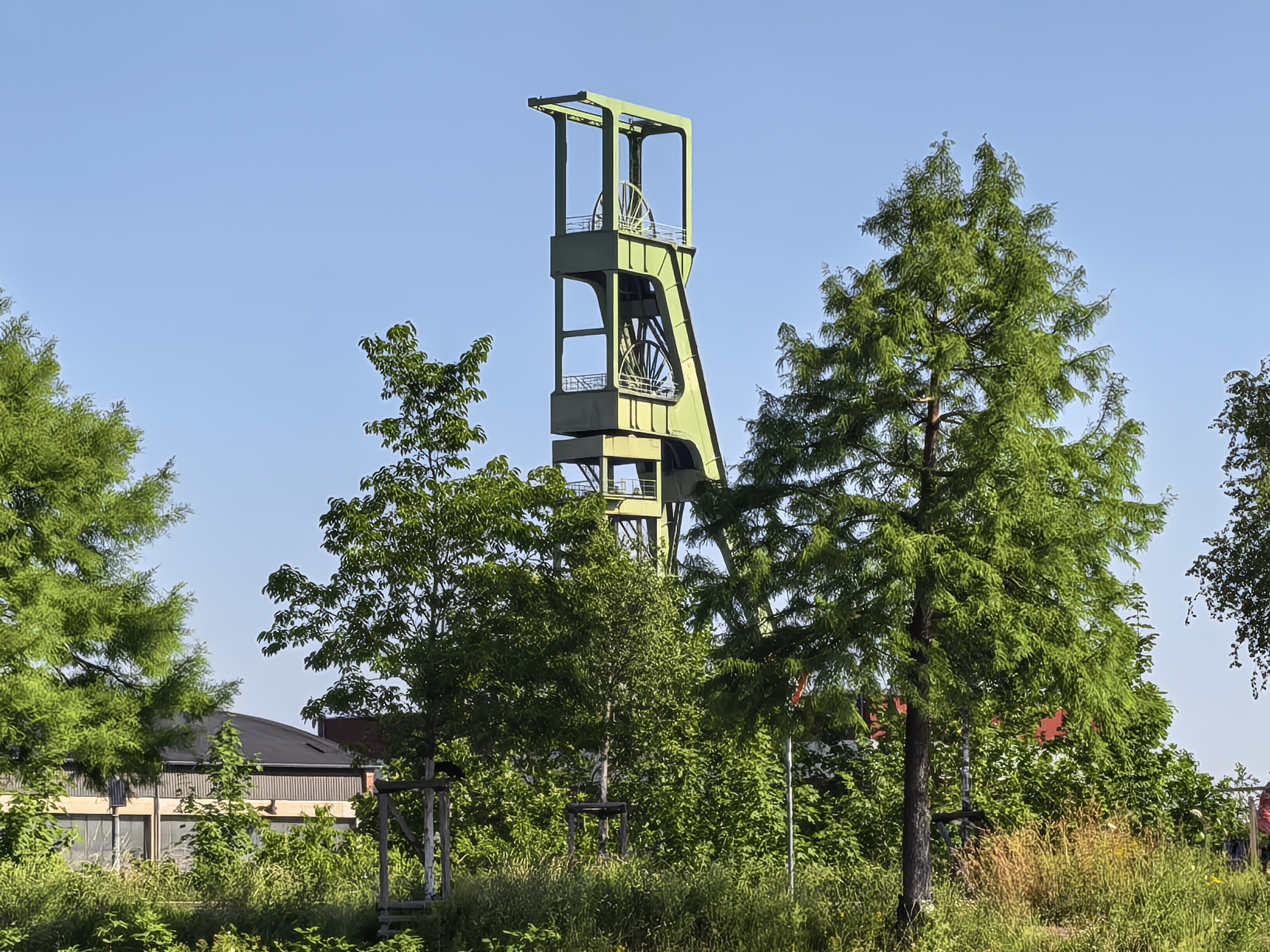
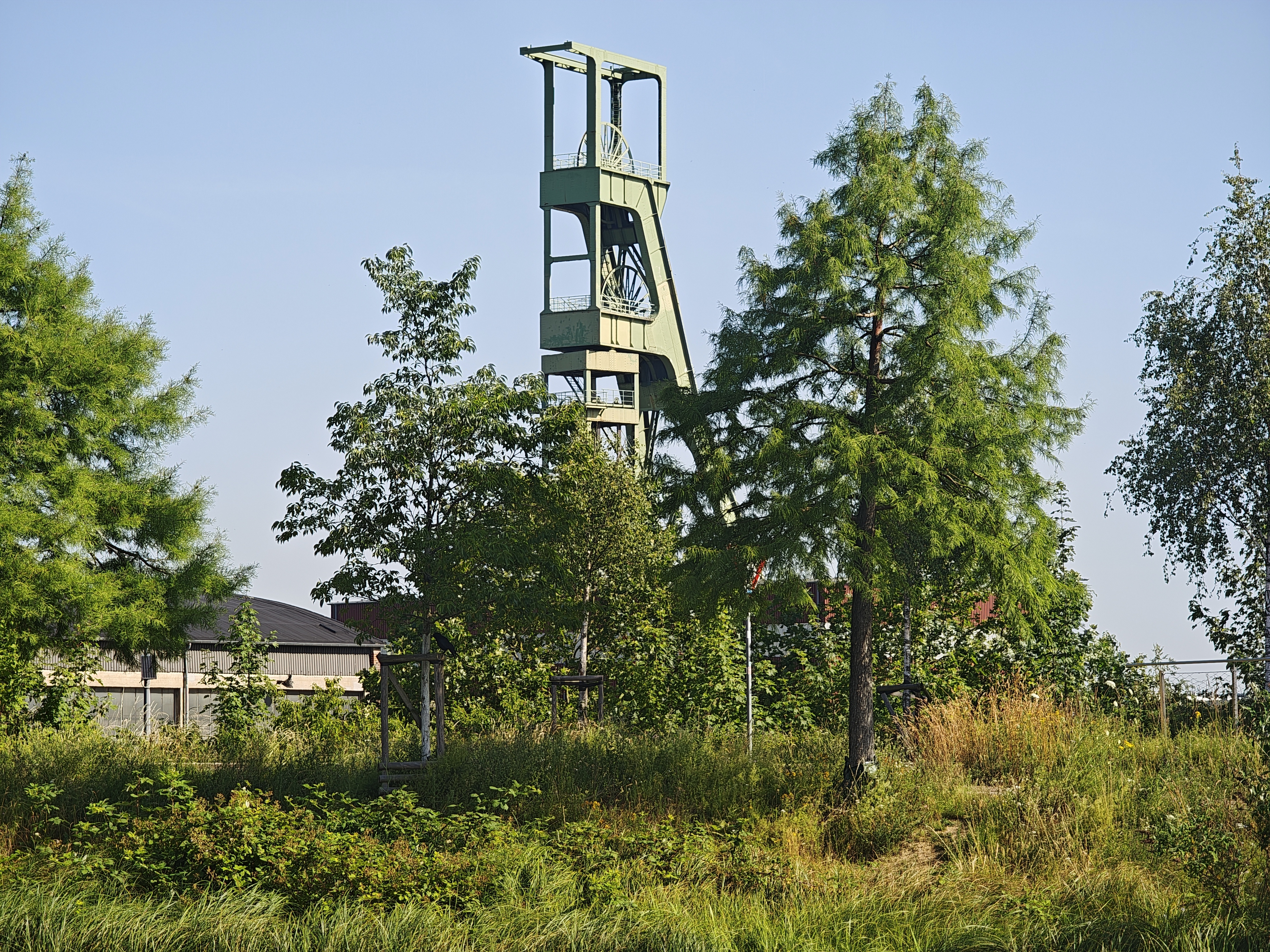
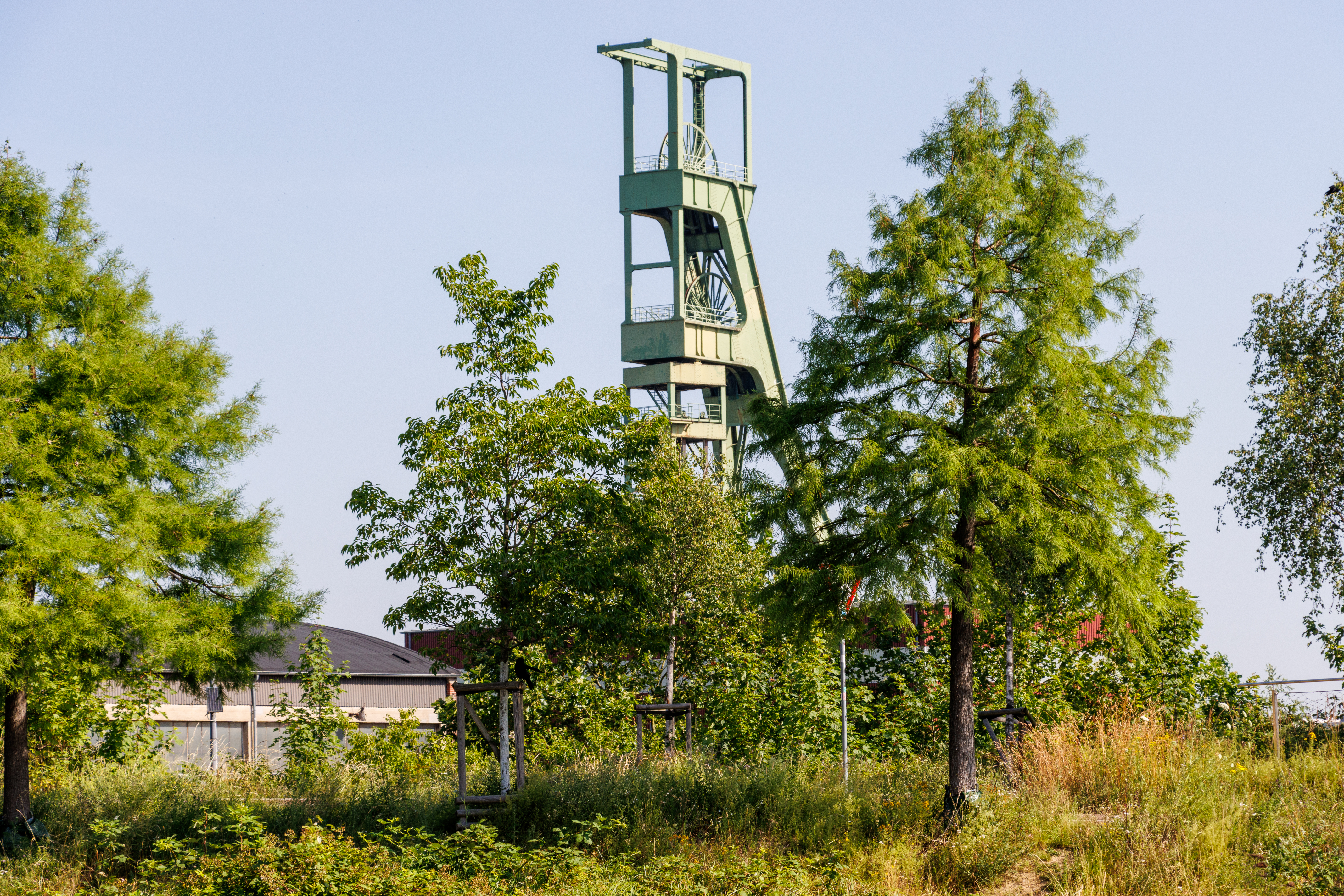
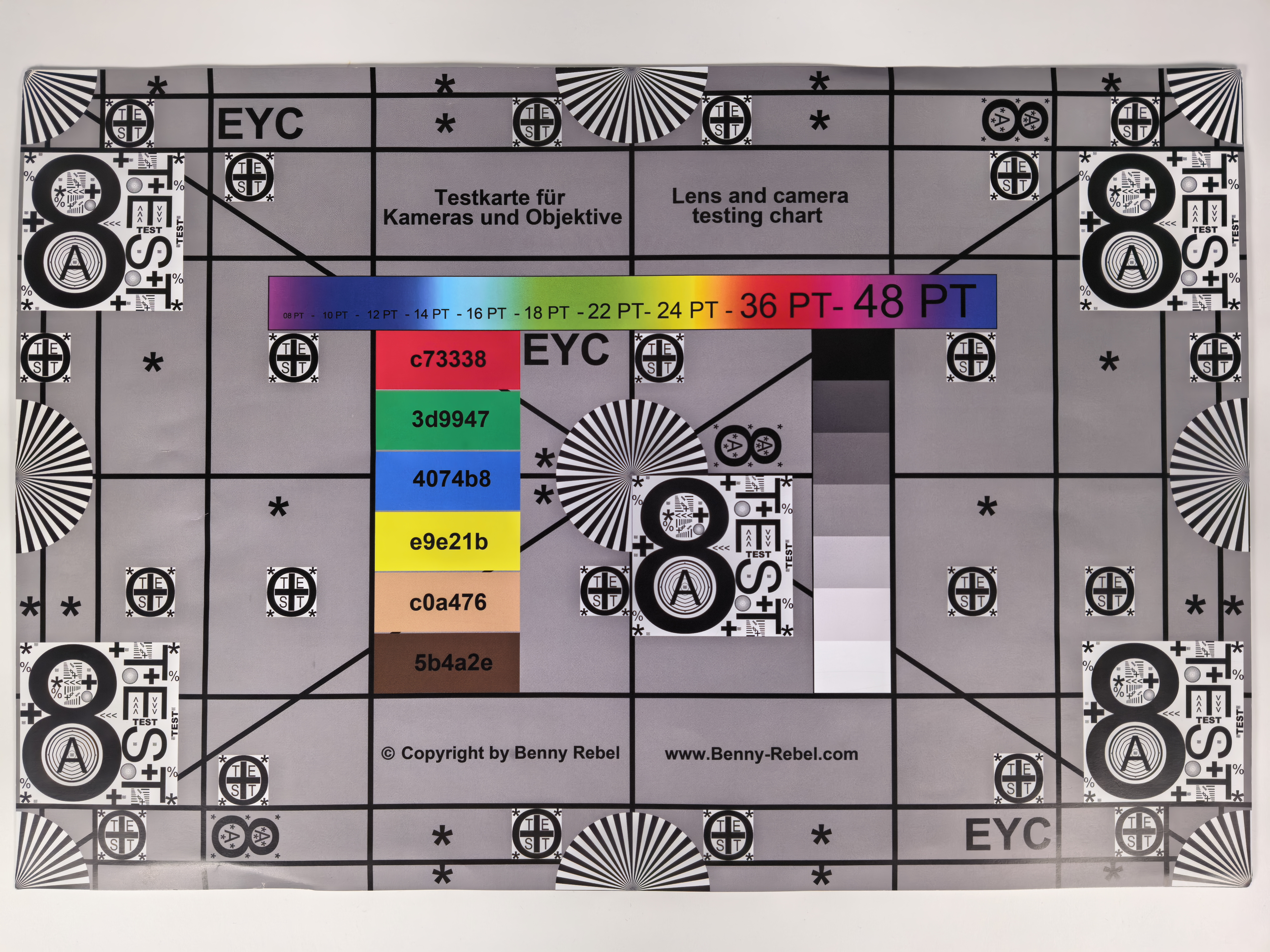
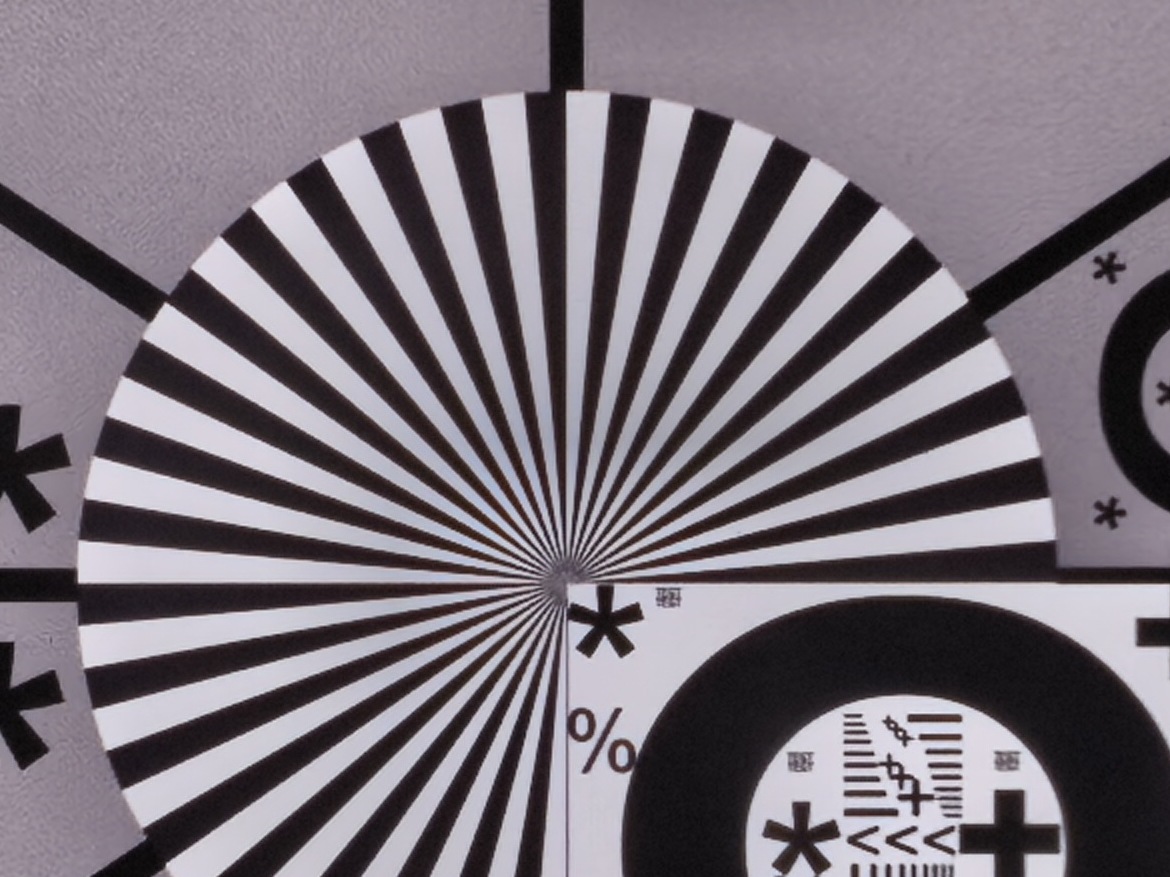
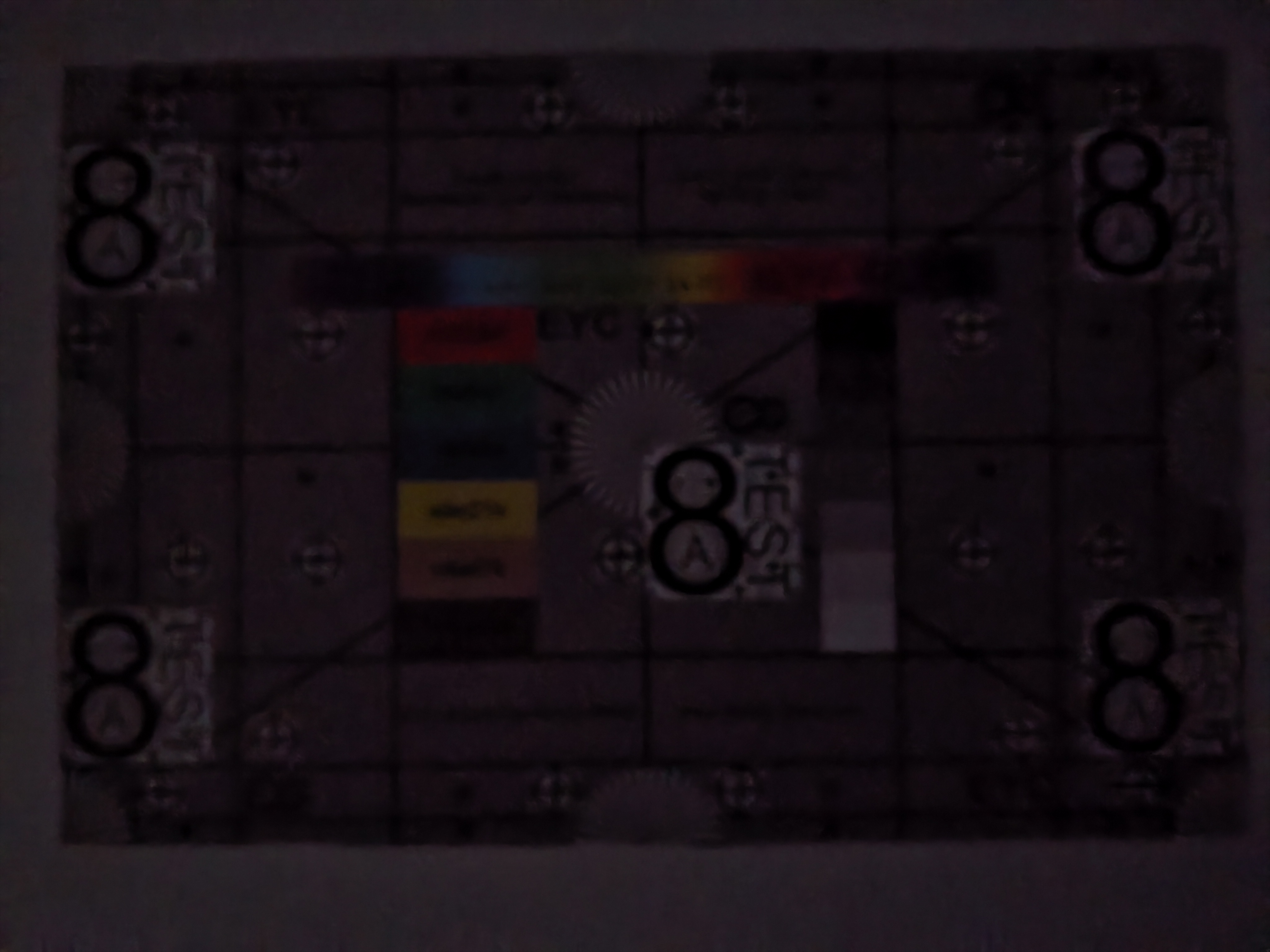
The two cameras on the Huawei MatePad Pro Max are certainly not a highlight when it comes to photography, but they deliver clear image quality in good lighting conditions, producing good results for documentation purposes and providing an appealing video-calling experience.
Videos can be recorded in Ultra HD at up to 60 FPS with both cameras, but there is no optical image stabilization.
Image comparison
Choose a scene and navigate within the first image. One click changes the position on touchscreens. One click on the zoomed-in image opens the original in a new window. The first image shows the scaled photograph of the test device.
HauptkameraHauptkamera5-facher ZoomLow-Light








Accessories and warranty – Accessories turn it into a PC replacement
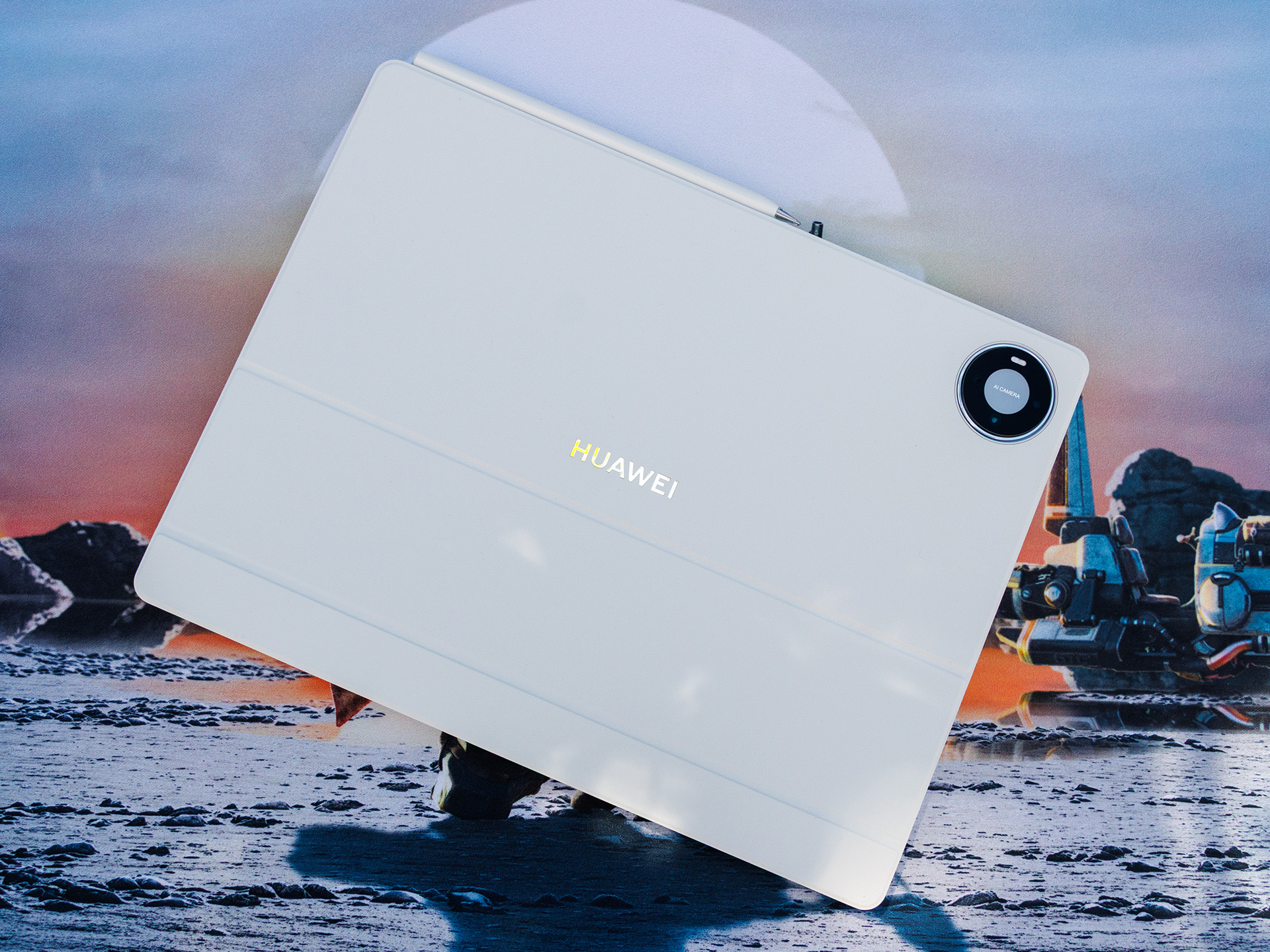
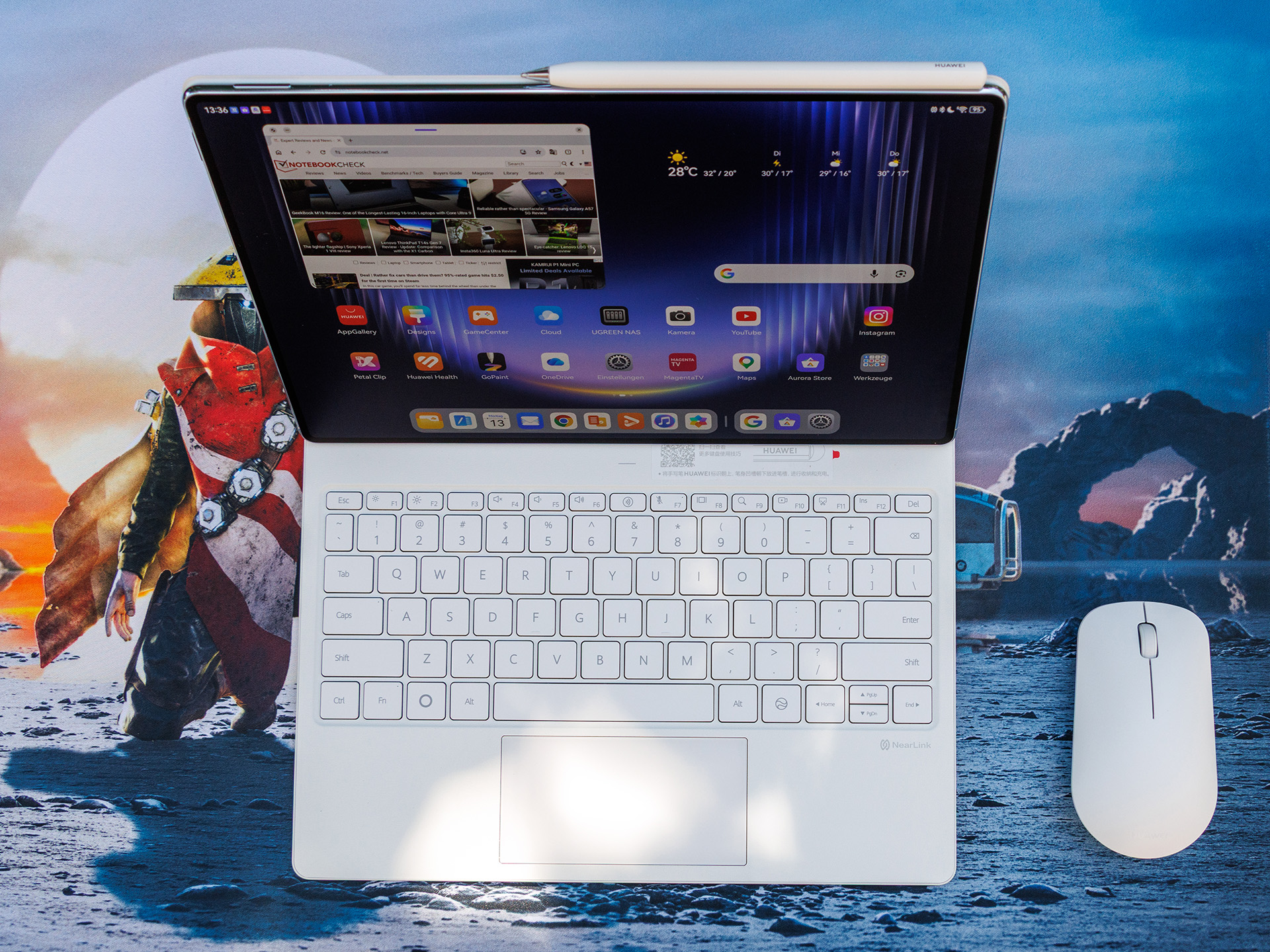
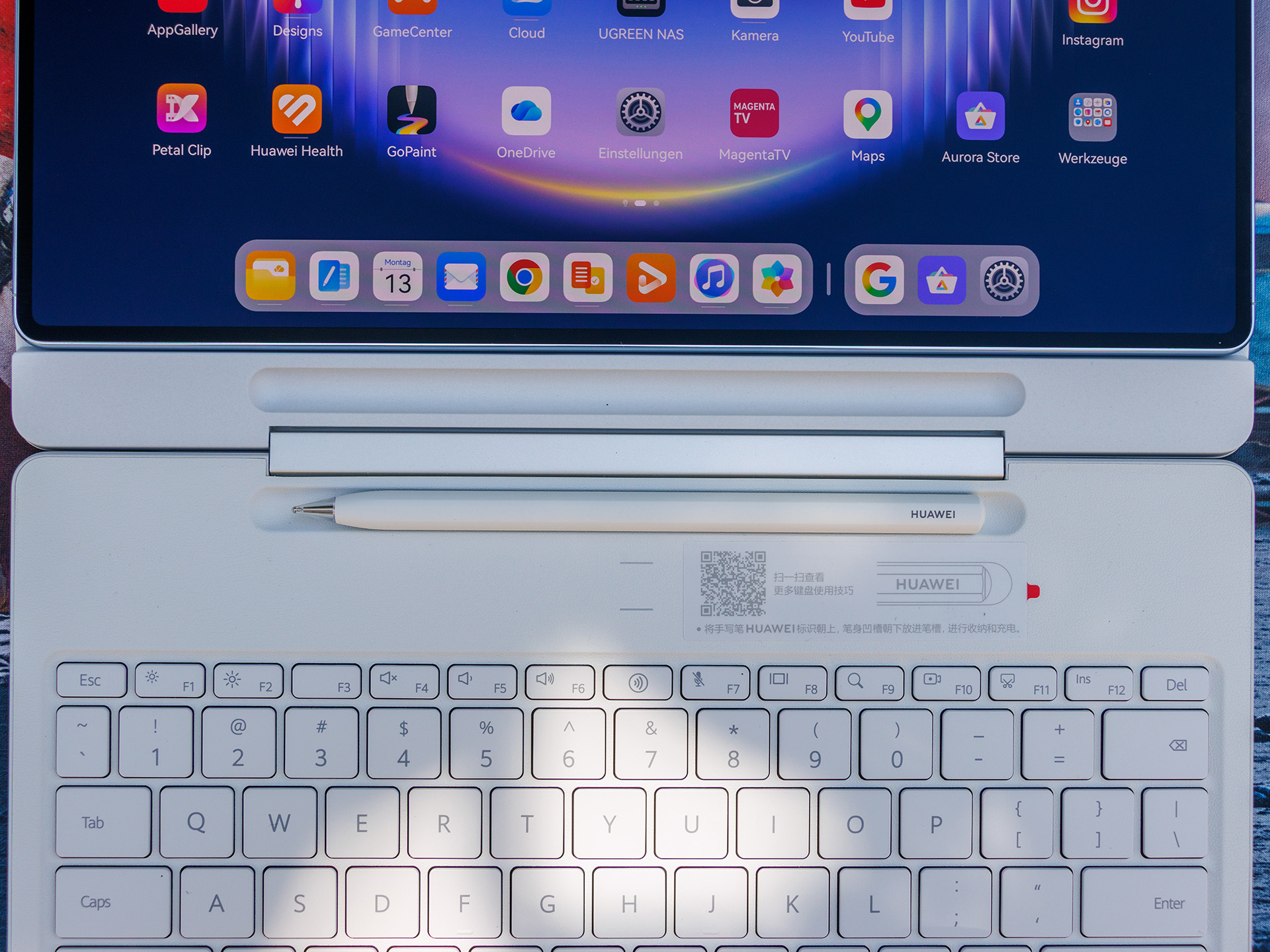
In Germany, the €1,299 MSRP (roughly $1507,15) also includes the keyboard. A polishing cloth and a USB-C cable are also included in the box. An optional compatible power adapter, the Huawei M-Pencil Pro, and a mouse are available. Huawei usually offers the former at a significant discount when purchasing the tablet directly. If you already own a Bluetooth-enabled mouse, you can use that as well.
Input devices and operation – Fingerprint sensor in the power button
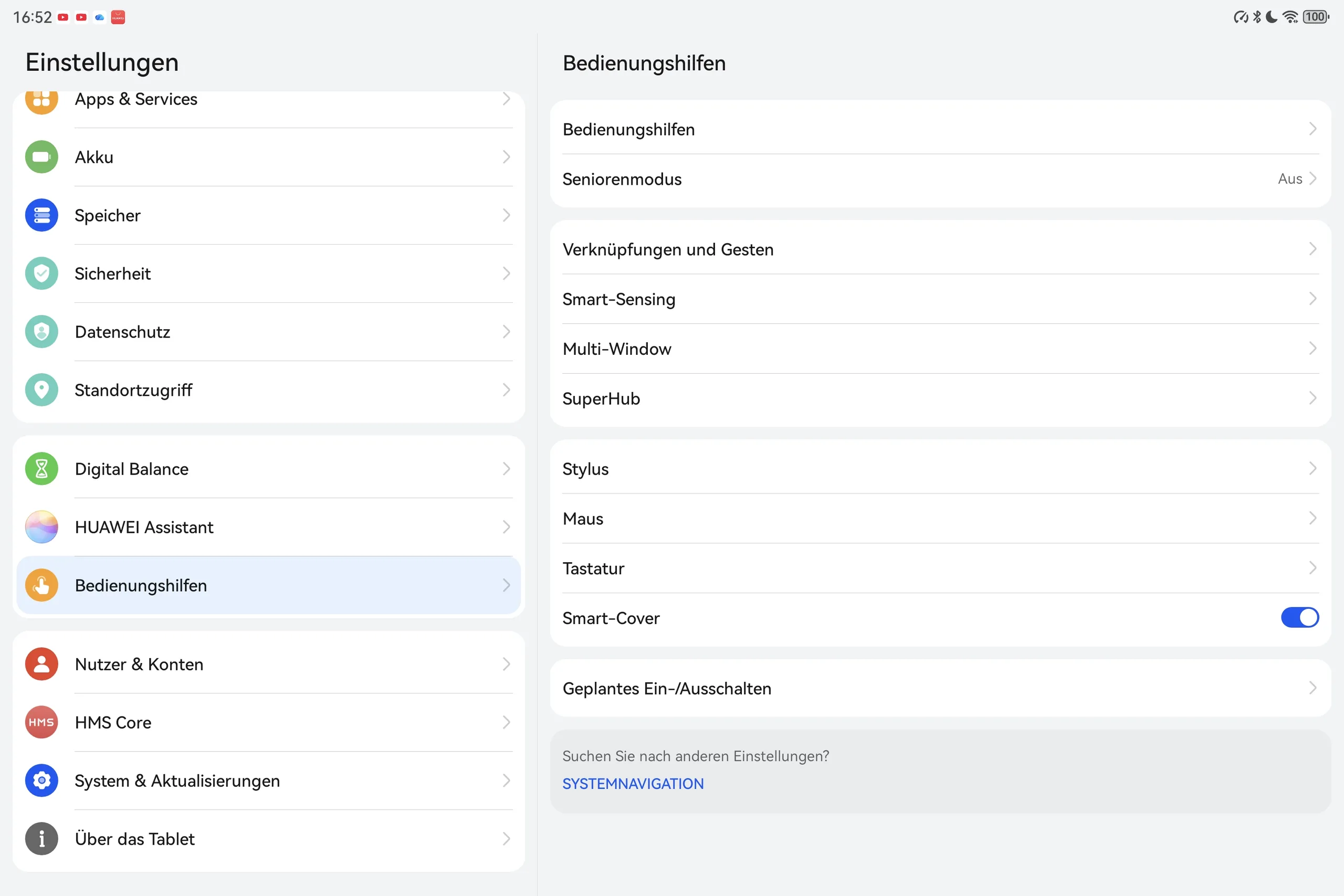
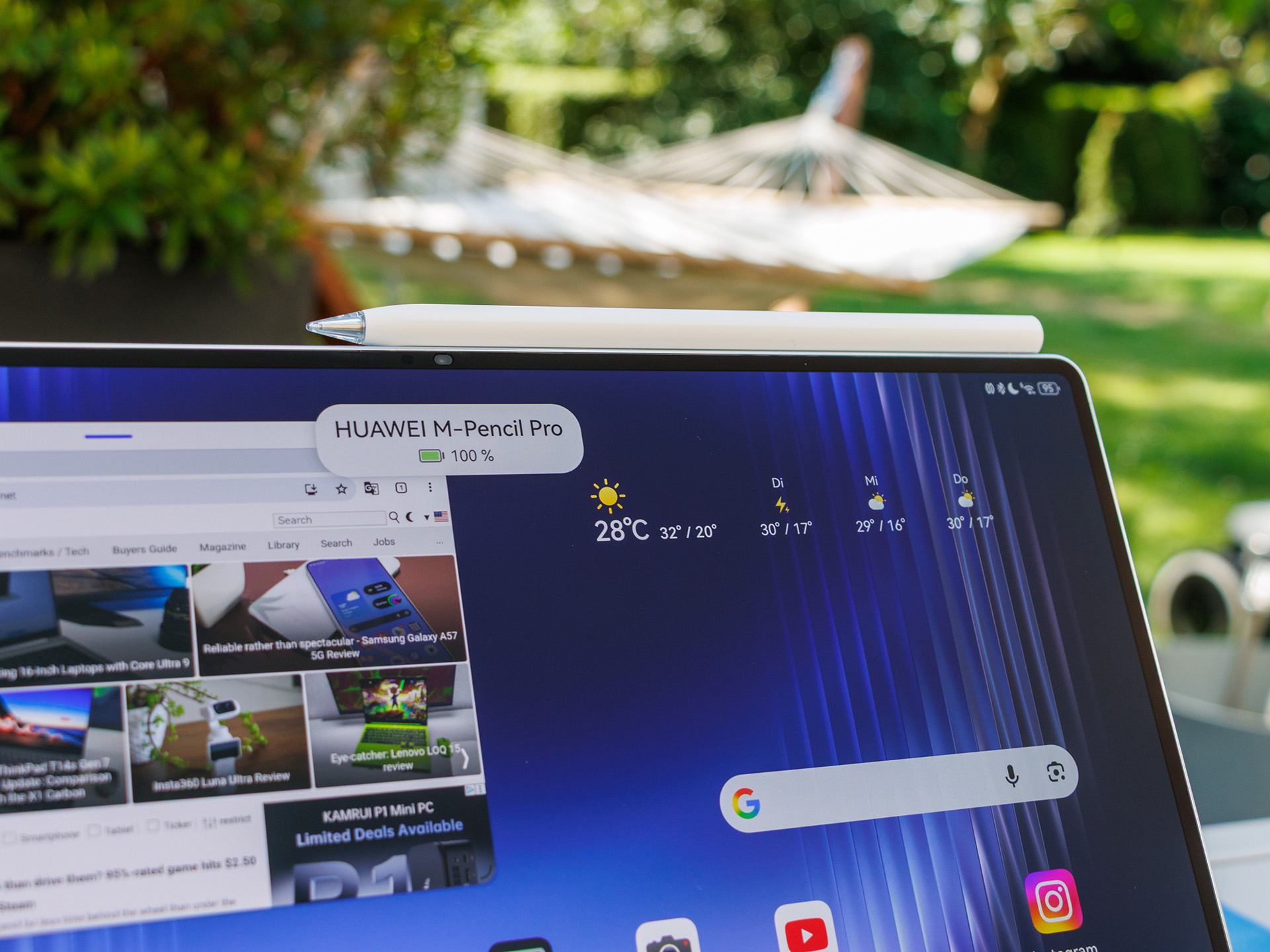
The capacitive touchscreen on the Huawei MatePad Pro Max offers excellent gliding properties and accurately recognizes input across the entire surface. The optional M-Pencil Pro provides an excellent writing experience and a wide range of features. It is suitable not only for taking notes but also for creative work.
Huawei does not include a vibration motor. For biometric security, however, there is a fingerprint sensor built into the power button. Face recognition via the front-facing camera is also supported.
In addition to knuckle gestures, smart-sensing features are also implemented. These allow the display to remain on while you are looking at it and enable contactless scrolling.
The keyboard not only includes a well-positioned storage slot for the stylus, but also offers a great typing experience and a small trackpad. Unfortunately, only two viewing angles are available, and both are fairly steep.
Display – OLED with PaperMatte finish

The huge display on the Huawei MatePad Pro Max has a refresh rate of up to 144 Hz and is rated to reach up to 1,600 nits.
In our test, it briefly reaches 987 cd/m² in the center of the screen with a full-screen white image, but then quickly dims to 908 cd/m², which is why we used the lower value as the reference. With smaller white areas, brightness increases further, although we measure no more than 1,485 cd/m².
PWM is used to control brightness, reaching a high-frequency level of 1,479 Hz at minimum brightness. The base frequency is also comparatively high at 360 Hz, making issues for sensitive users unlikely.
| |||||||||||||||||||||||||
Brightness Distribution: 98 %
Center on Battery: 908 cd/m²
Contrast: ∞:1 (Black: 0 cd/m²)
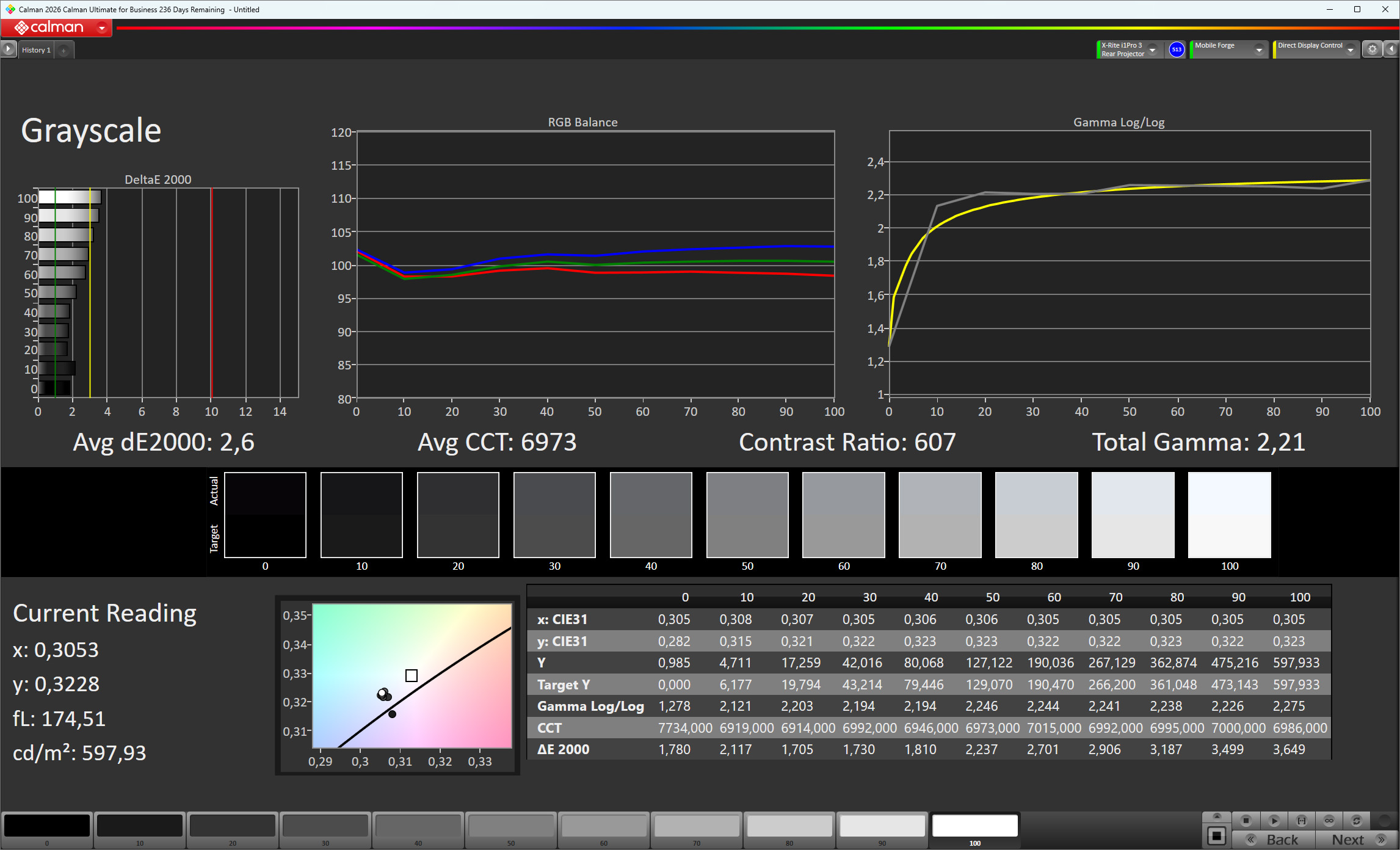
ΔE ColorChecker Calman: 1.5 | ∀{0.5-29.43 Ø4.69}
ΔE Greyscale Calman: 2.6 | ∀{0.09-98 Ø4.94}
99.8% sRGB (Calman 2D)
Gamma: 2.21
CCT: 6973 K
| Huawei MatePad Pro Max OLED, 3000x2000, 13.2" | Samsung Galaxy Tab S11 Ultra Dynamic AMOLED 2X, 2960x1848, 14.6" | Apple iPad Pro 13 2024 Tandem OLED, 2752x2064, 13" | Honor MagicPad 4 OLED, 3000x1920, 12.3" | Lenovo Idea Tab Pro Gen 2 IPS, 3504x2109, 13" | |
|---|---|---|---|---|---|
| Display | 13% | 85% | -49% | ||
| APL18 Peak Brightness (cd/m²) | 1441 | 1575 9% | 2337 62% | 751 -48% | |
| HDR Peak Brightness (cd/m²) | 1485 | 1739 17% | 3084 108% | 738 -50% | |
| Response Times | -187% | -197% | -1030% | -2816% | |
| Response Time Grey 50% / Grey 80% * (ms) | 0.52 ? | 3.51 ? -575% | 3.39 ? -552% | 16.6 ? -3092% | 22.8 ? -4285% |
| Response Time Black / White * (ms) | 0.94 ? | 0.73 ? 22% | 0.69 ? 27% | 0.91 ? 3% | 13.6 ? -1347% |
| PWM Frequency (Hz) | 360 | 480 | 240 | 60 | |
| PWM Amplitude * (%) | 15.71 | 16.95 -8% | 25.86 -65% | 16.05 -2% | |
| Screen | -15% | 20% | 20% | -7% | |
| Brightness middle (cd/m²) | 908 | 966 6% | 1000 10% | 829 -9% | 618 -32% |
| Brightness (cd/m²) | 898 | 965 7% | 1010 12% | 827 -8% | 599 -33% |
| Brightness Distribution (%) | 98 | 88 -10% | 98 0% | 90 -8% | 92 -6% |
| Black Level * (cd/m²) | 0.5 | ||||
| Colorchecker dE 2000 * | 1.5 | 2.8 -87% | 1 33% | 0.9 40% | 1.59 -6% |
| Colorchecker dE 2000 max. * | 3.7 | 4.6 -24% | 2.5 32% | 1.7 54% | 3.79 -2% |
| Greyscale dE 2000 * | 2.6 | 2.1 19% | 1.7 35% | 1.3 50% | 1.7 35% |
| Gamma | 2.21 100% | 2.06 107% | 2.21 100% | 2.25 98% | 2.399 92% |
| CCT | 6973 93% | 6305 103% | 6661 98% | 6601 98% | 6583 99% |
| Contrast (:1) | 1236 | ||||
| Total Average (Program / Settings) | -63% /
-57% | -89% /
-52% | -308% /
-255% | -957% /
-577% |
* ... smaller is better
Screen Flickering / PWM (Pulse-Width Modulation)
| Screen flickering / PWM detected | 360 Hz Amplitude: 15.71 % Secondary Frequency: 1479 Hz | 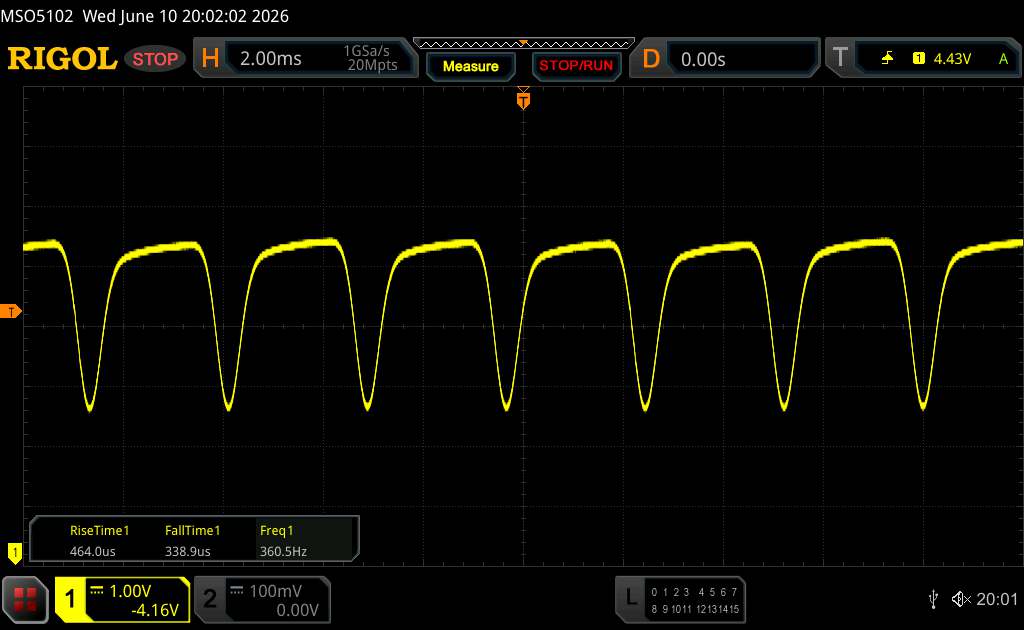 | |
The display backlight flickers at 360 Hz (worst case, e.g., utilizing PWM) . The frequency of 360 Hz is relatively high, so most users sensitive to PWM should not notice any flickering. However, there are reports that some users are still sensitive to PWM at 500 Hz and above, so be aware. In comparison: 52 % of all tested devices do not use PWM to dim the display. If PWM was detected, an average of 7611 (minimum: 5 - maximum: 343500) Hz was measured. | |||
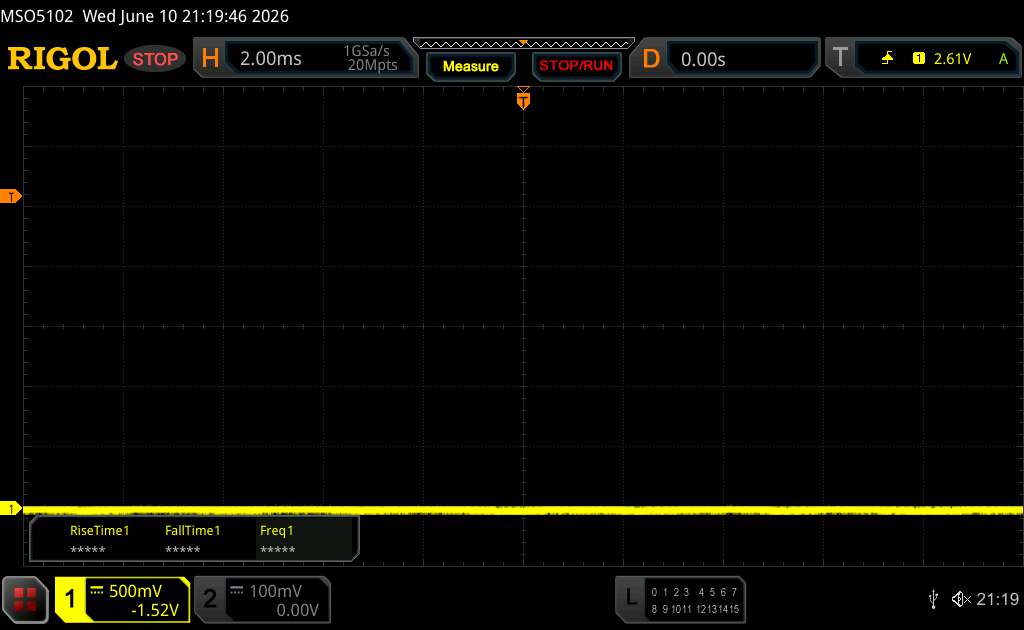
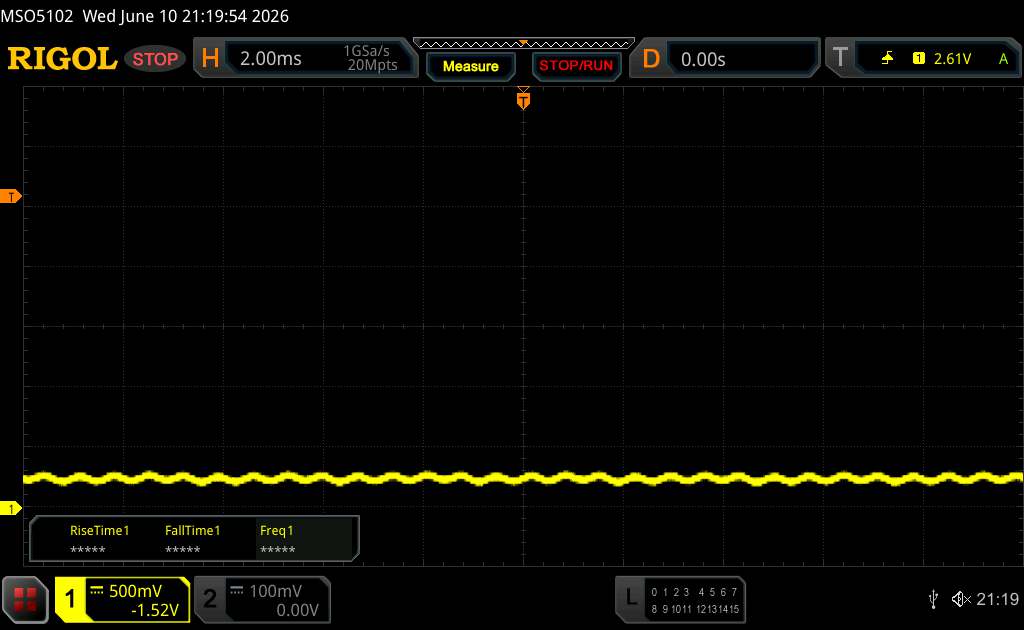
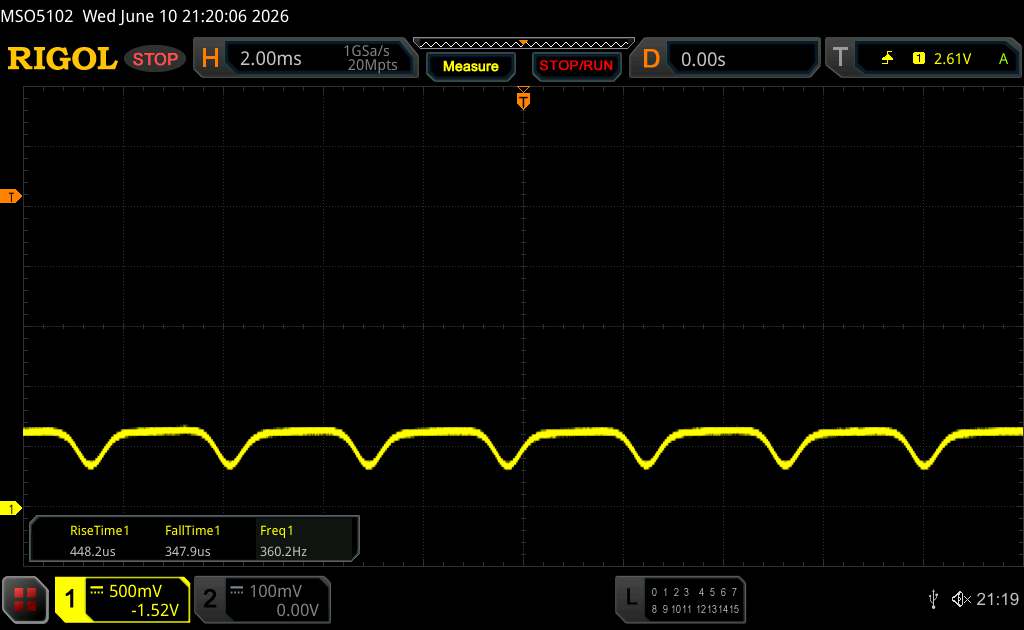
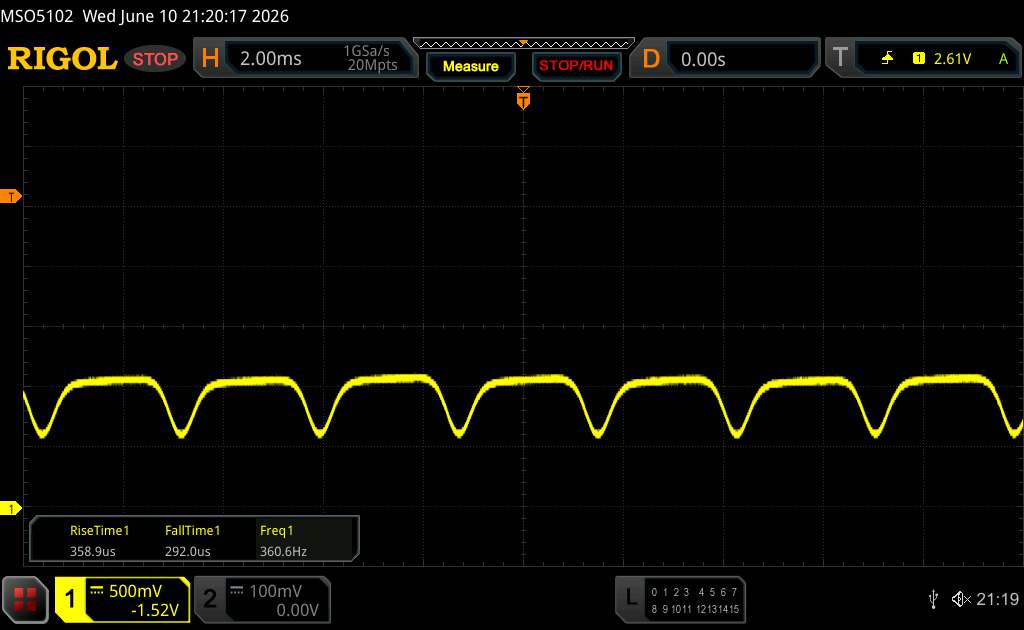
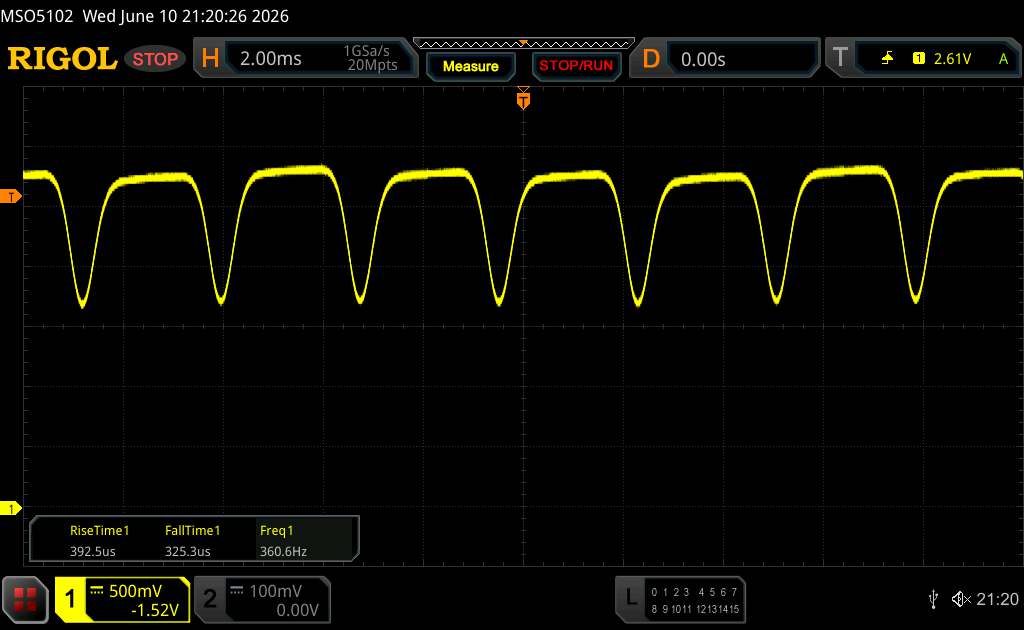
Measurement series at a fixed zoom level and different brightness settings (The amplitude curve at minimum brightness appears flat, but this is due to the scaling. The enlarged version of the amplitude at minimum brightness is shown in the information box.)
The Huawei tablet's color reproduction is good. However, given its premium positioning, it is somewhat too cool and could be calibrated more accurately.


Display Response Times
| ↔ Response Time Black to White | ||
|---|---|---|
| 0.94 ms ... rise ↗ and fall ↘ combined | ↗ 0.4695 ms rise | 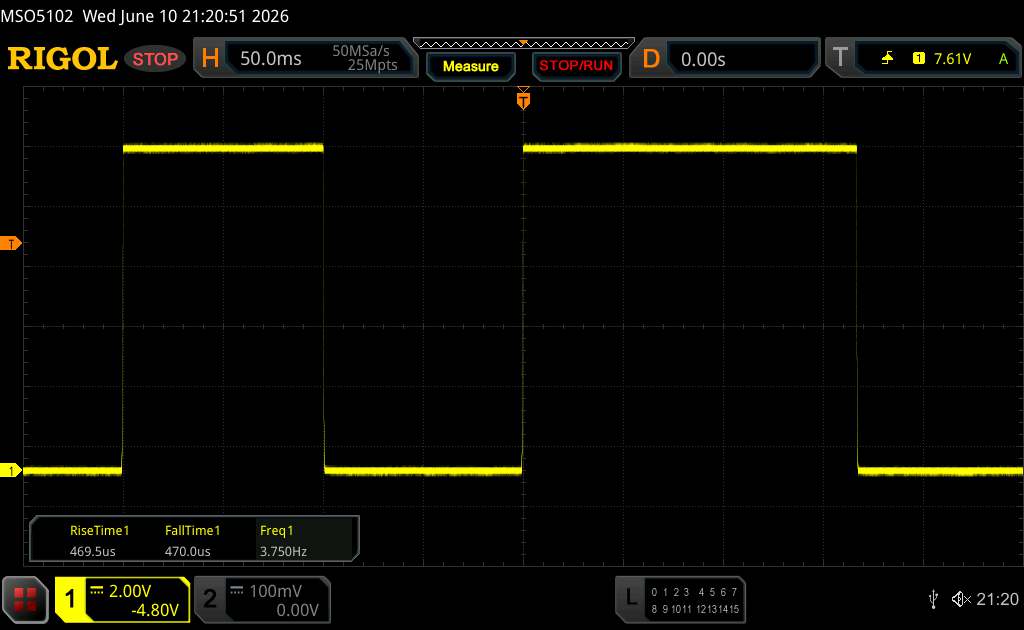 |
| ↘ 0.47 ms fall | ||
| The screen shows very fast response rates in our tests and should be very well suited for fast-paced gaming. In comparison, all tested devices range from 0.1 (minimum) to 240 (maximum) ms. » 4 % of all devices are better. This means that the measured response time is better than the average of all tested devices (19.7 ms). | ||
| ↔ Response Time 50% Grey to 80% Grey | ||
| 0.52 ms ... rise ↗ and fall ↘ combined | ↗ 0.273 ms rise | 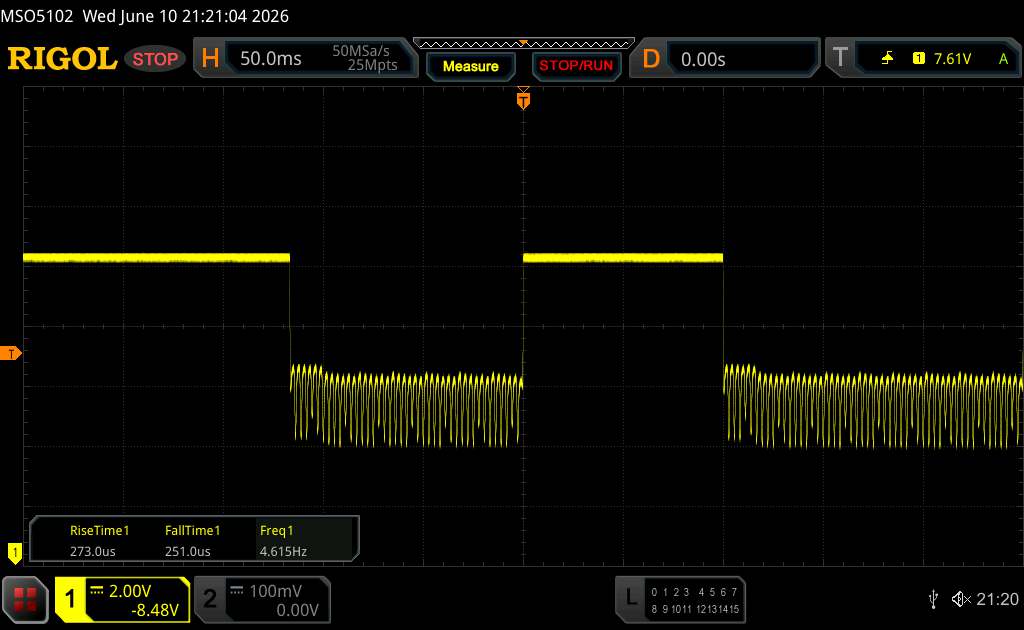 |
| ↘ 0.251 ms fall | ||
| The screen shows very fast response rates in our tests and should be very well suited for fast-paced gaming. In comparison, all tested devices range from 0.13 (minimum) to 636 (maximum) ms. » 1 % of all devices are better. This means that the measured response time is better than the average of all tested devices (30.7 ms). | ||
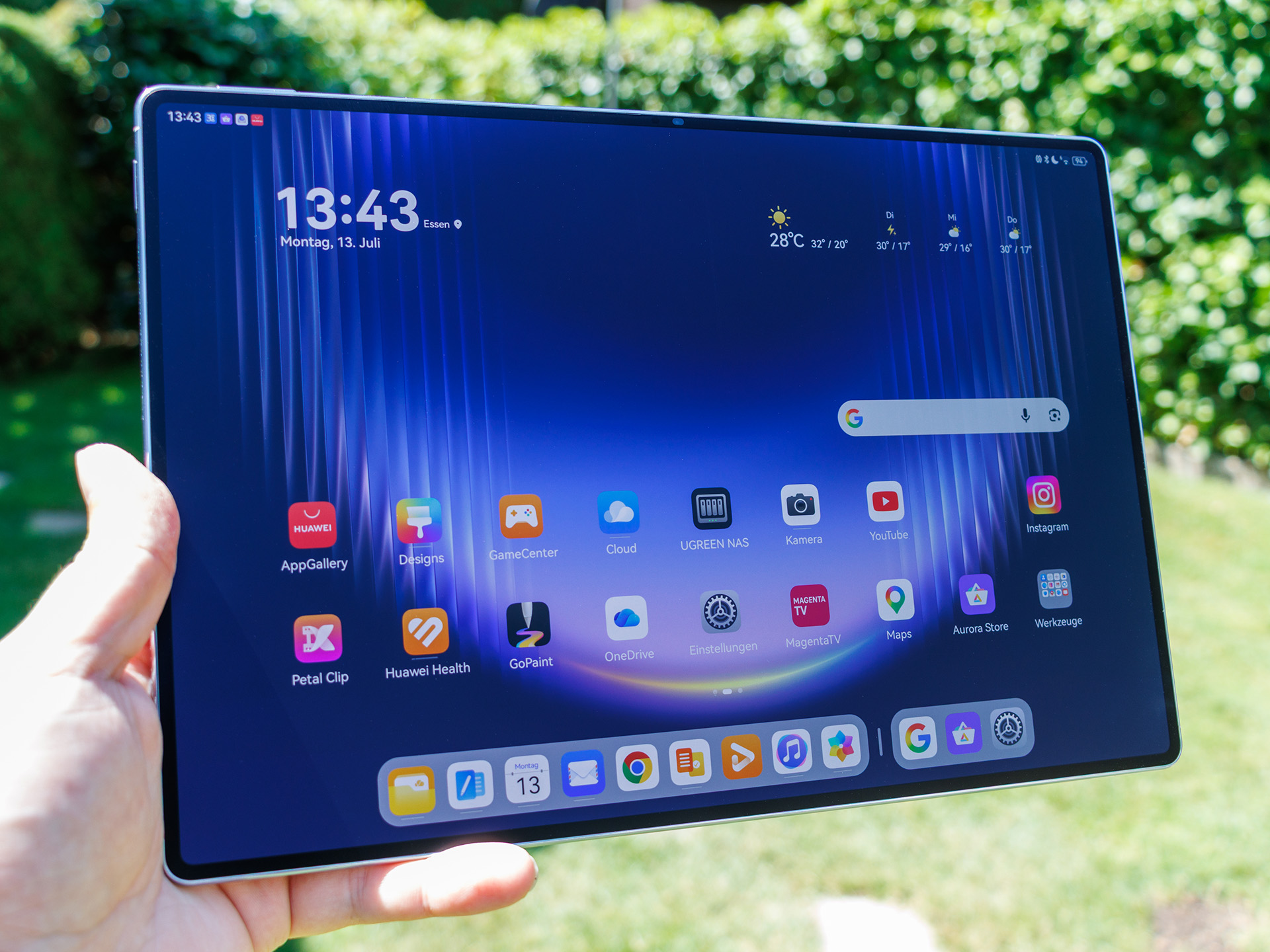
The MatePad Pro Max makes an excellent impression outdoors. The matte PaperMatte finish makes a huge difference and provides excellent readability even in direct sunlight.
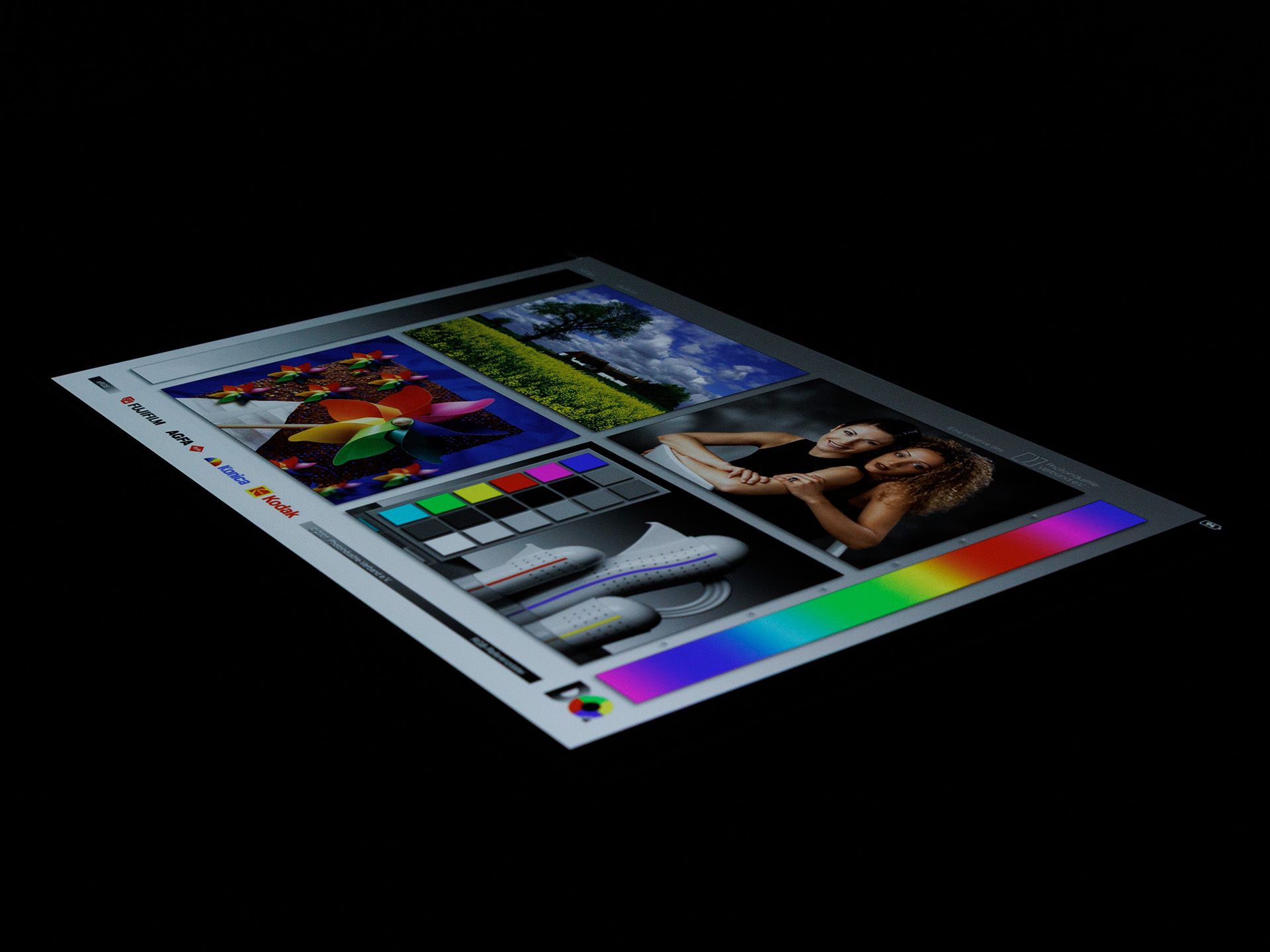
The display's viewing-angle stability is very good, with only a slight drop in brightness at shallow viewing angles.
Performance – MatePad with Kirin T93 Pro
The MatePad Pro Max is nominally equipped with the Kirin T93 Pro. As Huawei confirms to us, this is simply the Kirin 9030 Pro, Huawei's most powerful chipset at the moment.
While the SoC does not exactly set the benchmarks on fire, it delivers very good everyday performance and handles multitasking without any noticeable delays.
| Antutu v11 - Score | |
| Honor MagicPad 4 | |
| Huawei MatePad Pro Max | |
| Average HiSilicon Kirin 9030 Pro (1793229 - 1982664, n=2) | |
| Average of class Tablet (522205 - 4184631, n=12, last 2 years) | |
| UL Procyon AI Inference for Android - Overall Score NNAPI | |
| Samsung Galaxy Tab S11 Ultra | |
| Honor MagicPad 4 | |
| Average of class Tablet (3600 - 76852, n=53, last 2 years) | |
| Huawei MatePad Pro Max | |
| Average HiSilicon Kirin 9030 Pro (10532 - 14655, n=2) | |
Graphics are handled by the Maleoon 935, which now also supports ray tracing. This is an area where the tablet cannot keep up with the current competition.
GFXBench (DX / GLBenchmark) 2.7: T-Rex Onscreen | 1920x1080 T-Rex Offscreen
GFXBench 3.0: on screen Manhattan Onscreen OGL | 1920x1080 1080p Manhattan Offscreen
GFXBench 3.1: on screen Manhattan ES 3.1 Onscreen | 1920x1080 Manhattan ES 3.1 Offscreen
GFXBench: on screen Car Chase Onscreen | 1920x1080 Car Chase Offscreen | on screen Aztec Ruins High Tier Onscreen | 2560x1440 Aztec Ruins High Tier Offscreen | on screen Aztec Ruins Normal Tier Onscreen | 1920x1080 Aztec Ruins Normal Tier Offscreen | 3840x2160 4K Aztec Ruins High Tier Offscreen
| 3DMark / Wild Life Extreme Unlimited | |
| Apple iPad Pro 13 2024 | |
| Samsung Galaxy Tab S11 Ultra | |
| Honor MagicPad 4 | |
| Lenovo Idea Tab Pro Gen 2 | |
| Huawei MatePad Pro Max | |
| 3DMark / Wild Life Extreme | |
| Apple iPad Pro 13 2024 | |
| Samsung Galaxy Tab S11 Ultra | |
| Honor MagicPad 4 | |
| Lenovo Idea Tab Pro Gen 2 | |
| Huawei MatePad Pro Max | |
| 3DMark / Wild Life Unlimited Score | |
| Apple iPad Pro 13 2024 | |
| Samsung Galaxy Tab S11 Ultra | |
| Honor MagicPad 4 | |
| Lenovo Idea Tab Pro Gen 2 | |
| Huawei MatePad Pro Max | |
| 3DMark / Solar Bay Score | |
| Apple iPad Pro 13 2024 | |
| Samsung Galaxy Tab S11 Ultra | |
| Honor MagicPad 4 | |
| Huawei MatePad Pro Max | |
| 3DMark / Solar Bay Unlimited Score | |
| Apple iPad Pro 13 2024 | |
| Samsung Galaxy Tab S11 Ultra | |
| Honor MagicPad 4 | |
| Huawei MatePad Pro Max | |
| 3DMark / Solar Bay Extreme Score | |
| Samsung Galaxy Tab S11 Ultra | |
| Huawei MatePad Pro Max | |
| 3DMark / Solar Bay Extreme Unlimited Score | |
| Samsung Galaxy Tab S11 Ultra | |
| Huawei MatePad Pro Max | |
| 3DMark / Steel Nomad Light Unlimited Score | |
| Apple iPad Pro 13 2024 | |
| Samsung Galaxy Tab S11 Ultra | |
| Honor MagicPad 4 | |
| Huawei MatePad Pro Max | |
| 3DMark / Steel Nomad Light Score | |
| Apple iPad Pro 13 2024 | |
| Samsung Galaxy Tab S11 Ultra | |
| Honor MagicPad 4 | |
| Huawei MatePad Pro Max | |
| GFXBench (DX / GLBenchmark) 2.7 / T-Rex Onscreen | |
| Apple iPad Pro 13 2024 | |
| Samsung Galaxy Tab S11 Ultra | |
| Honor MagicPad 4 | |
| Huawei MatePad Pro Max | |
| GFXBench (DX / GLBenchmark) 2.7 / T-Rex Offscreen | |
| Samsung Galaxy Tab S11 Ultra | |
| Apple iPad Pro 13 2024 | |
| Honor MagicPad 4 | |
| Huawei MatePad Pro Max | |
| GFXBench 3.0 / Manhattan Onscreen OGL | |
| Apple iPad Pro 13 2024 | |
| Samsung Galaxy Tab S11 Ultra | |
| Honor MagicPad 4 | |
| Huawei MatePad Pro Max | |
| GFXBench 3.0 / 1080p Manhattan Offscreen | |
| Apple iPad Pro 13 2024 | |
| Honor MagicPad 4 | |
| Samsung Galaxy Tab S11 Ultra | |
| Huawei MatePad Pro Max | |
| GFXBench 3.1 / Manhattan ES 3.1 Onscreen | |
| Samsung Galaxy Tab S11 Ultra | |
| Apple iPad Pro 13 2024 | |
| Honor MagicPad 4 | |
| Huawei MatePad Pro Max | |
| GFXBench 3.1 / Manhattan ES 3.1 Offscreen | |
| Apple iPad Pro 13 2024 | |
| Samsung Galaxy Tab S11 Ultra | |
| Honor MagicPad 4 | |
| Huawei MatePad Pro Max | |
| GFXBench / Car Chase Onscreen | |
| Apple iPad Pro 13 2024 | |
| Samsung Galaxy Tab S11 Ultra | |
| Honor MagicPad 4 | |
| Huawei MatePad Pro Max | |
| GFXBench / Car Chase Offscreen | |
| Apple iPad Pro 13 2024 | |
| Samsung Galaxy Tab S11 Ultra | |
| Honor MagicPad 4 | |
| Huawei MatePad Pro Max | |
| GFXBench / Aztec Ruins High Tier Onscreen | |
| Samsung Galaxy Tab S11 Ultra | |
| Apple iPad Pro 13 2024 | |
| Honor MagicPad 4 | |
| Lenovo Idea Tab Pro Gen 2 | |
| Huawei MatePad Pro Max | |
| GFXBench / Aztec Ruins High Tier Offscreen | |
| Apple iPad Pro 13 2024 | |
| Samsung Galaxy Tab S11 Ultra | |
| Honor MagicPad 4 | |
| Lenovo Idea Tab Pro Gen 2 | |
| Huawei MatePad Pro Max | |
| GFXBench / Aztec Ruins Normal Tier Onscreen | |
| Samsung Galaxy Tab S11 Ultra | |
| Apple iPad Pro 13 2024 | |
| Honor MagicPad 4 | |
| Huawei MatePad Pro Max | |
| Lenovo Idea Tab Pro Gen 2 | |
| GFXBench / Aztec Ruins Normal Tier Offscreen | |
| Apple iPad Pro 13 2024 | |
| Samsung Galaxy Tab S11 Ultra | |
| Honor MagicPad 4 | |
| Lenovo Idea Tab Pro Gen 2 | |
| Huawei MatePad Pro Max | |
| GFXBench / 4K Aztec Ruins High Tier Offscreen | |
| Apple iPad Pro 13 2024 | |
| Samsung Galaxy Tab S11 Ultra | |
| Honor MagicPad 4 | |
| Lenovo Idea Tab Pro Gen 2 | |
| Huawei MatePad Pro Max | |
| Jetstream 2 - 2.0 Total | |
| Apple iPad Pro 13 2024 (Safari Mobile 17) | |
| Honor MagicPad 4 (Chrome 148) | |
| Samsung Galaxy Tab S11 Ultra (Chrome 140) | |
| Lenovo Idea Tab Pro Gen 2 (Chrome 147) | |
| Huawei MatePad Pro Max (Chrome 151) | |
| Average HiSilicon Kirin 9030 Pro (n=1) | |
| Average of class Tablet (48 - 420, n=54, last 2 years) | |
| Octane V2 - Total Score | |
| Apple iPad Pro 13 2024 (Safari Mobile 17) | |
| Samsung Galaxy Tab S11 Ultra (Chrome 140) | |
| Honor MagicPad 4 (Chrome 148) | |
| Huawei MatePad Pro Max (Chrome 151) | |
| Average HiSilicon Kirin 9030 Pro (48753 - 67832, n=2) | |
| Average of class Tablet (4497 - 138481, n=69, last 2 years) | |
| Mozilla Kraken 1.1 - Total | |
| Average of class Tablet (243 - 13119, n=64, last 2 years) | |
| Average HiSilicon Kirin 9030 Pro (588 - 787, n=2) | |
| Huawei MatePad Pro Max (Chrome 151) | |
| Samsung Galaxy Tab S11 Ultra (Chrome 140) | |
| Honor MagicPad 4 (Chrome 148) | |
| Apple iPad Pro 13 2024 (Safari Mobile 17) | |
| WebXPRT 5 - Overall | |
| Honor MagicPad 4 (Chrome 148) | |
| Huawei MatePad Pro Max (Chrome 151) | |
| Average of class Tablet (19 - 102, n=8, last 2 years) | |
| Average HiSilicon Kirin 9030 Pro (43 - 62, n=2) | |
* ... smaller is better
| Huawei MatePad Pro Max | Samsung Galaxy Tab S11 Ultra | Honor MagicPad 4 | Lenovo Idea Tab Pro Gen 2 | Average 512 GB UFS 4.1 Flash | Average of class Tablet | |
|---|---|---|---|---|---|---|
| AndroBench 3-5 | -42% | -38% | -50% | -26% | -55% | |
| Sequential Read 256KB (MB/s) | 4327.68 | 4076.86 -6% | 1978.75 -54% | 1912.4 -56% | 3616 ? -16% | 2117 ? -51% |
| Sequential Write 256KB (MB/s) | 4118.12 | 2257.93 -45% | 1752.63 -57% | 1852.7 -55% | 3225 ? -22% | 1691 ? -59% |
| Random Read 4KB (MB/s) | 494.4 | 384.4 -22% | 513.85 4% | 347.8 -30% | 414 ? -16% | 280 ? -43% |
| Random Write 4KB (MB/s) | 1022.64 | 50.66 -95% | 574.85 -44% | 438.3 -57% | 498 ? -51% | 327 ? -68% |
Emissions – Doesn't get too hot
Temperature
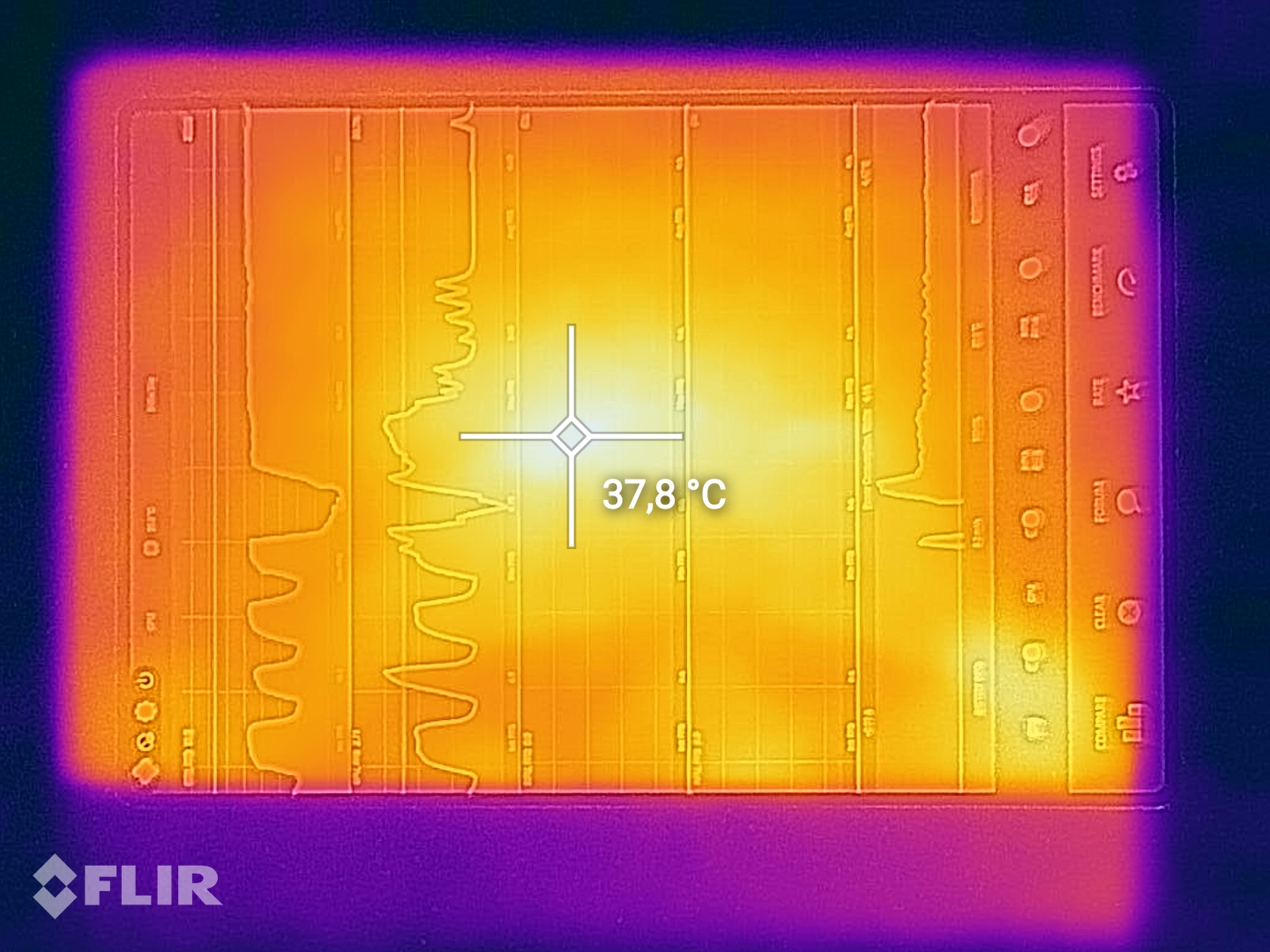
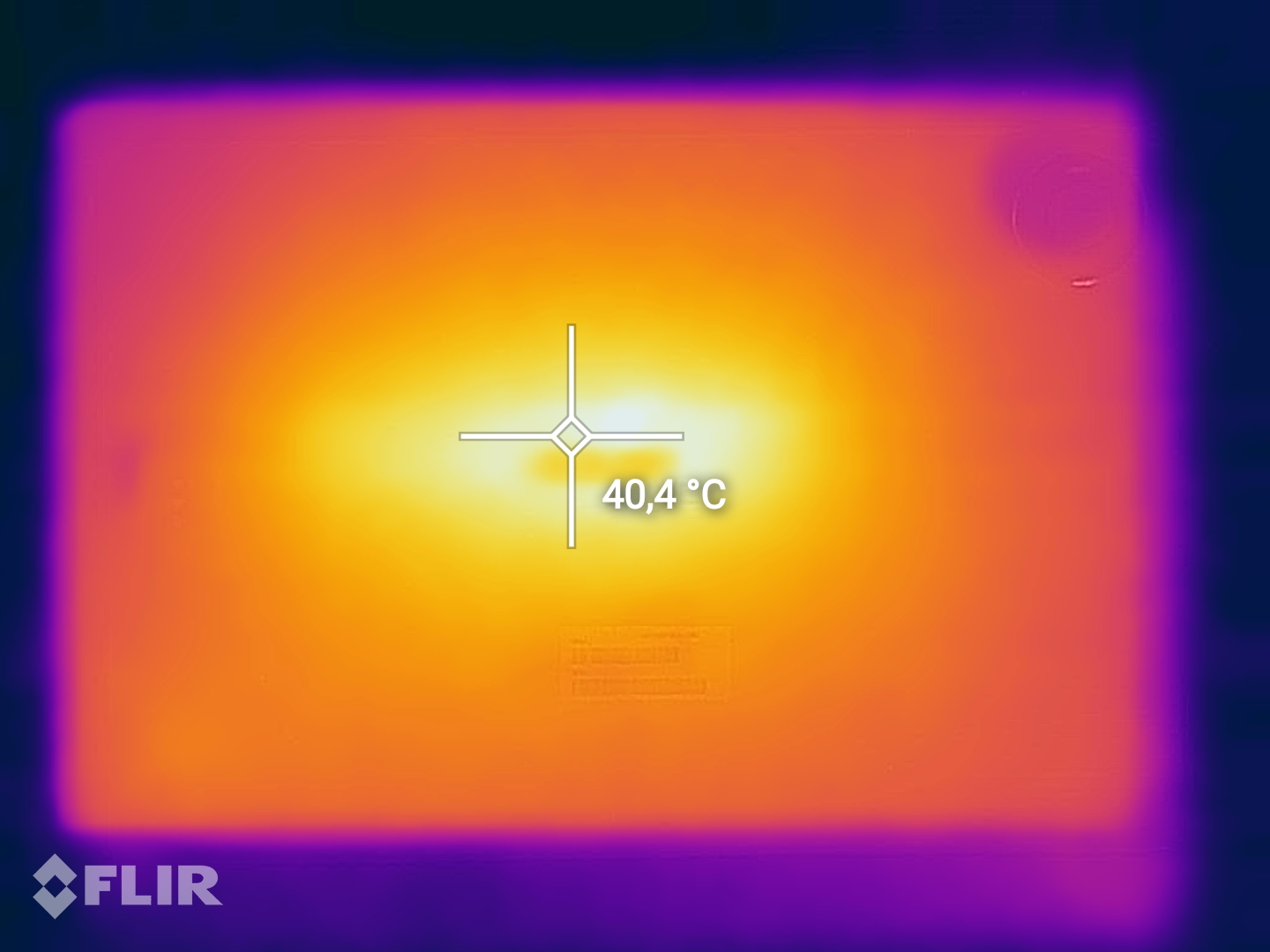
Surface temperatures remain below 40 °C even under sustained load. The SoC remains stable in most stress tests and throttles relatively little, but still delivers only around 50% of the competition's performance.
(+) The maximum temperature on the upper side is 37.8 °C / 100 F, compared to the average of 33.7 °C / 93 F, ranging from 20.7 to 53.2 °C for the class Tablet.
(+) The bottom heats up to a maximum of 39.8 °C / 104 F, compared to the average of 33.2 °C / 92 F
(+) In idle usage, the average temperature for the upper side is 27.6 °C / 82 F, compared to the device average of 30 °C / 86 F.
3DMark Stress tests
| 3DMark | |
| Wild Life Stress Test Stability | |
| Apple iPad Pro 13 2024 | |
| Honor MagicPad 4 | |
| Lenovo Idea Tab Pro Gen 2 | |
| Samsung Galaxy Tab S11 Ultra | |
| Huawei MatePad Pro Max | |
| Wild Life Extreme Stress Test | |
| Honor MagicPad 4 | |
| Lenovo Idea Tab Pro Gen 2 | |
| Samsung Galaxy Tab S11 Ultra | |
| Huawei MatePad Pro Max | |
| Apple iPad Pro 13 2024 | |
| Solar Bay Stress Test Stability | |
| Honor MagicPad 4 | |
| Huawei MatePad Pro Max | |
| Lenovo Idea Tab Pro Gen 2 | |
| Samsung Galaxy Tab S11 Ultra | |
| Apple iPad Pro 13 2024 | |
| Solar Bay Extreme Stress Test Stability | |
| Huawei MatePad Pro Max | |
| Samsung Galaxy Tab S11 Ultra | |
| Steel Nomad Light Stress Test Stability | |
| Huawei MatePad Pro Max | |
| Samsung Galaxy Tab S11 Ultra | |
| Apple iPad Pro 13 2024 | |
Speakers
The six drivers in the Huawei MatePad Pro Max can get extremely loud while also delivering genuine bass and a surprisingly balanced sound profile. Despite the tablet's low profile, they rank among the best speakers found in a tablet.
Huawei MatePad Pro Max audio analysis
(+) | speakers can play relatively loud (89.3 dB)
Bass 100 - 315 Hz
(+) | good bass - only 4.1% away from median
(+) | bass is linear (6.1% delta to prev. frequency)
Mids 400 - 2000 Hz
(+) | balanced mids - only 4.1% away from median
(+) | mids are linear (3.8% delta to prev. frequency)
Highs 2 - 16 kHz
(+) | balanced highs - only 2.2% away from median
(+) | highs are linear (3.9% delta to prev. frequency)
Overall 100 - 16.000 Hz
(+) | overall sound is linear (8% difference to median)
Compared to same class
» 1% of all tested devices in this class were better, 1% similar, 98% worse
» The best had a delta of 7%, average was 21%, worst was 130%
Compared to all devices tested
» 2% of all tested devices were better, 1% similar, 98% worse
» The best had a delta of 4%, average was 23%, worst was 136%
Samsung Galaxy Tab S11 Ultra audio analysis
(+) | speakers can play relatively loud (86.6 dB)
Bass 100 - 315 Hz
(±) | reduced bass - on average 8% lower than median
(±) | linearity of bass is average (7.3% delta to prev. frequency)
Mids 400 - 2000 Hz
(+) | balanced mids - only 3.1% away from median
(+) | mids are linear (4.2% delta to prev. frequency)
Highs 2 - 16 kHz
(+) | balanced highs - only 1.9% away from median
(+) | highs are linear (5% delta to prev. frequency)
Overall 100 - 16.000 Hz
(+) | overall sound is linear (8.5% difference to median)
Compared to same class
» 2% of all tested devices in this class were better, 1% similar, 97% worse
» The best had a delta of 7%, average was 21%, worst was 130%
Compared to all devices tested
» 2% of all tested devices were better, 1% similar, 97% worse
» The best had a delta of 4%, average was 23%, worst was 136%
Battery life – 9,760 mAh in the MatePad Pro Max
Power consumption
The Huawei tablet's power consumption is low, although it could be slightly lower when idle at minimum display brightness.
| Off / Standby |   0.1 / 0.27 Watt 0.1 / 0.27 Watt |
| Idle |  2.57 / 4.36 / 4.44 Watt 2.57 / 4.36 / 4.44 Watt |
| Load |
9.52 / 12.9 Watt |
    
| |
Key:
min: ,
med: ,
max: Metrahit Energy | |
| Huawei MatePad Pro Max 9760 mAh | Samsung Galaxy Tab S11 Ultra 11600 mAh | Apple iPad Pro 13 2024 10209 mAh | Honor MagicPad 4 10100 mAh | Average HiSilicon Kirin 9030 Pro | Average of class Tablet | |
|---|---|---|---|---|---|---|
| Power Consumption | -28% | -5% | -13% | 21% | 5% | |
| Idle Minimum * (Watt) | 2.57 | 2.67 -4% | 1.94 25% | 3.53 -37% | 1.55 ? 40% | 2.15 ? 16% |
| Idle Average * (Watt) | 4.36 | 6.31 -45% | 5.02 -15% | 4.77 -9% | 2.95 ? 32% | 3.87 ? 11% |
| Idle Maximum * (Watt) | 4.44 | 6.35 -43% | 5.05 -14% | 4.86 -9% | 3 ? 32% | 4.26 ? 4% |
| Load Average * (Watt) | 9.52 | 12.23 -28% | 8.71 9% | 11.21 -18% | 9.52 ? -0% | 8.87 ? 7% |
| Load Maximum * (Watt) | 12.9 | 15.8 -22% | 16.93 -31% | 11.67 10% | 12.9 ? -0% | 14.4 ? -12% |
* ... smaller is better
Power consumption: Geekbench (150 cd/m²)
Power consumption: GFXbench (150 cd/m²)
Battery life
The MatePad Pro Max has the smallest battery in our comparison and also delivers the shortest runtimes. Considering its size, however, the results are still very good.
Notebookcheck overall rating
The Huawei MatePad Pro Max shines with its outstanding PaperMatte OLED display, strong feature set, and first-class audio, but falls behind the competition in performance, software, and battery life.
Huawei MatePad Pro Max
- 08/28/2026 v8
Daniel Schmidt
 Total Sustainability Score:
 Potential alternatives in comparison
Image | Model / Review | Price | Weight | Drive | Display |
|---|---|---|---|---|---|
1. 87.5%  | Huawei MatePad Pro Max HiSilicon Kirin 9030 Pro ⎘ HiSilicon Maleoon 935 ⎘ 12 GB Memory, 512 GB UFS 4.x | Amazon: 1. $379.99 TCL NXTPAPER 14 Android Tabl... 2. $1,099.99 Samsung Galaxy Tab S10+ Plus... 3. $1,103.99 Samsung Galaxy Tab S11 512GB... List Price: 1299€ | 509 g | 512 GB UFS 4.1 Flash | 13.20" 3000x2000 273 PPI OLED |
2. 89.1%  | Samsung Galaxy Tab S11 Ultra Mediatek Dimensity 9400+ ⎘ ARM Immortalis-G925 MC12 ⎘ 12 GB Memory, 256 GB UFS 4.x | List Price: 1489€ | 695 g | 256 GB UFS 4.0 Flash | 14.60" 2960x1848 239 PPI Dynamic AMOLED 2X |
3. 89.2%  | Apple iPad Pro 13 2024 Apple M4 10-Core ⎘ Apple M4 10-core GPU ⎘ 16 GB Memory, 1024 GB | List Price: 2279€ | 579 g | 1 TB NAND Flash | 13.00" 2752x2064 265 PPI Tandem OLED |
4. 89.6%  | Honor MagicPad 4 Qualcomm Snapdragon 8 Gen 5 ⎘ Qualcomm Adreno 829 ⎘ 12 GB Memory, 256 GB UFS 4.x | Amazon: 1. $835.00 HONOR MagicPad4 (12.3 Inch, ... 2. $1,059.00 HONOR MagicPad4 (12.3 Inch, ... 3. $799.00 HONOR MagicPad4 (12.3 Inch, ... List Price: 600€ | 450 g | 256 GB UFS 4.0 Flash | 12.30" 3000x1920 290 PPI OLED |
5. 86.5%  | Lenovo Idea Tab Pro Gen 2 Qualcomm Snapdragon 8s Gen 4 SM8735 ⎘ Qualcomm Adreno 825 ⎘ 8 GB Memory, 128 GB UFS 3.1 | List Price: 529€ | 598 g | 128 GB UFS 3.1 Flash | 13.00" 3504x2109 315 PPI IPS |
Transparency
The selection of devices to be reviewed is made by our editorial team. The test sample was provided to the author as a loan by the manufacturer or retailer for the purpose of this review. The lender had no influence on this review, nor did the manufacturer receive a copy of this review before publication. There was no obligation to publish this review. As an independent media company, Notebookcheck is not subjected to the authority of manufacturers, retailers or publishers.
This is how Notebookcheck is testing
Every year, Notebookcheck independently reviews hundreds of laptops and smartphones using standardized procedures to ensure that all results are comparable. We have continuously developed our test methods for around 20 years and set industry standards in the process. In our test labs, high-quality measuring equipment is utilized by experienced technicians and editors. These tests involve a multi-stage validation process. Our complex rating system is based on hundreds of well-founded measurements and benchmarks, which maintains objectivity. Further information on our test methods can be found here.
 Add as a preferred source on Google


