





Verdict on the Xiaomi Redmi Note 15 Pro 5G
The Xiaomi Redmi Note 15 Pro 5G offers a lot of smartphone for a street price of less than €400. Features such as Gorilla Glass Victus 2 for display protection, a straight, nearly borderless display, water and dust protection in accordance with IP68, long battery life of around 30 hours in our practical WLAN test, and six years of security updates are highly impressive in this price.
Plus, an extremely bright AMOLED screen, a decent main camera, usable speakers, and good positioning capability including SBAS for greater accuracy further add to the appeal. The housing only heats up slightly under load and the SoC throttling is quite minimal.
That being said, it helps to note that there are also phones with more power in this price range. This is noticeable in gaming, for example, where you often have to make do with just 40 fps for more demanding games and high settings.
The screen uses PWM flickering but at least tries to mitigate this with DC dimming. You'll have to check whether this suits you personally.
Overall, there is not much to criticize about the Xiaomi Redmi Note 15 Pro 5G, so it is likely that it will once again be a bestseller this year.
Pros
Cons
Price and availability
Xiaomi wants just under €400 for the Redmi Note 15 Pro 5G and this is exactly the price you pay on Amazon DE. An 8 GB + 512 GB SKU can be had from Amazon US for $425.
Other online retailers may offer the Redmi Note 15 Pro at even cheaper prices, with savings of up to €90 in some cases.

Table of Contents
- Verdict on the Xiaomi Redmi Note 15 Pro 5G
- Specifications
- Build: Very robust with clear changes
- Hardware: A lot for €400
- Software: Up to 6 years of updates
- Communication and GNSS: Precise positioning
- Phone functions and voice quality: Partly muffled
- Cameras: 200 MP in a Redmi Note
- Accessories and warranty: With or without charger?
- Input devices and operation: Precise fingerprint sensor
- Display: Bright, but with PWM
- Performance: A minor speed bump
- Gaming: Up to 60 fps possible
- Emissions: Hardly any throttling
- Battery life: A long-lasting mid-range phone
- Notebookcheck's overall impressions of the Xiaomi Redmi Note 15 Pro 5G
- Potential alternatives in comparison
Xiaomi's Redmi Note 15 series is set to shake up the mid-range once again, and the Redmi Note 15 Pro 5G is at the forefront. Like its predecessor, it puts the competition under pressure with a bright screen, a powerful battery, and good speakers.
But has Xiaomi learned from the weaknesses of the last generation, particularly with respect to the somewhat low performance? Let's find out.
Specifications
Build: Very robust with clear changes
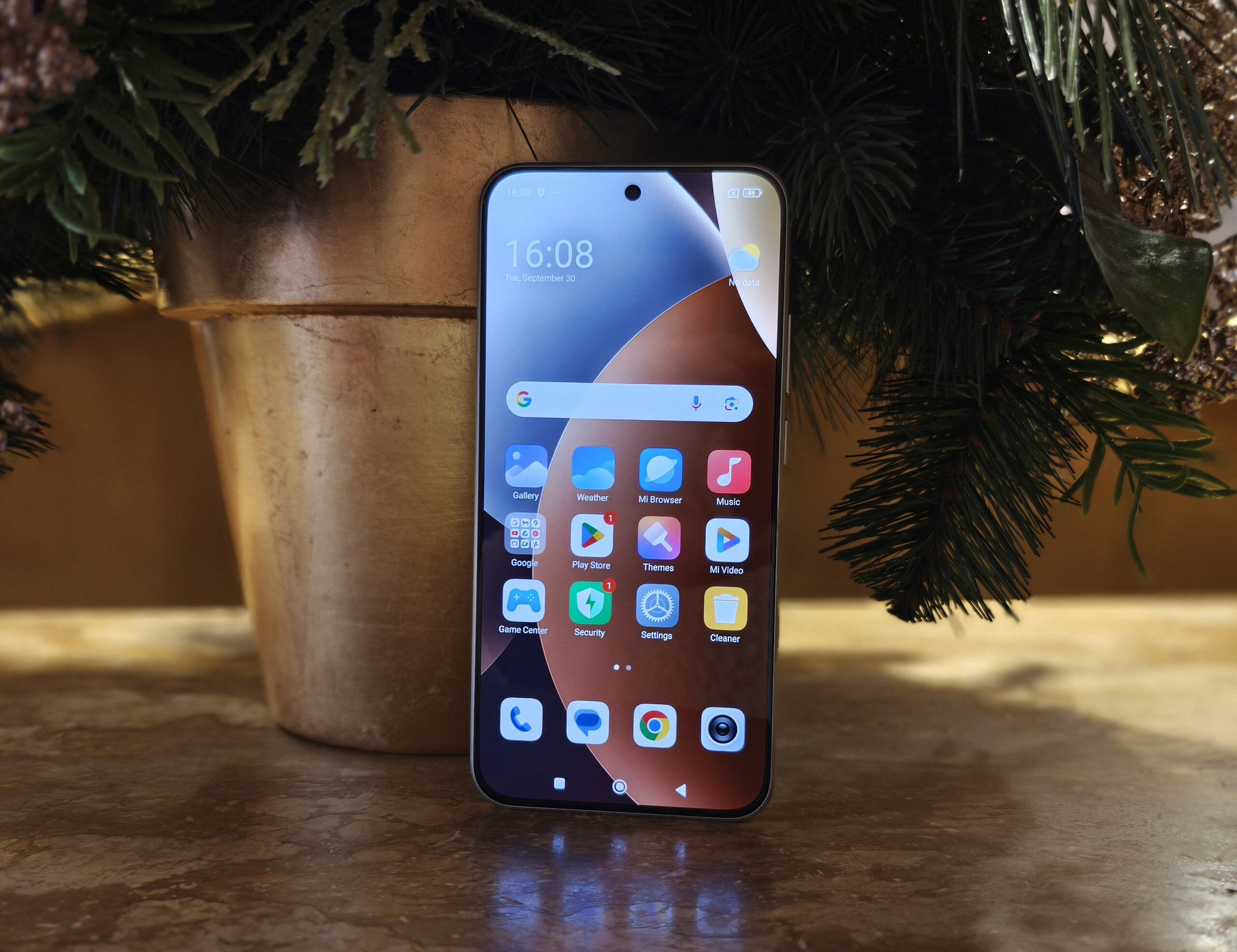
Visually, the Redmi Note 15 Pro 5G differs significantly from its predecessor. The display is no longer stretched across the corners but is now straight and the phone has a metal frame all the way around.
The screen-to-body ratio has now been improved to 90% and clearly goes beyond the limits of this segment. All that remains is a very narrow black border around the screen, which is barely noticeable.
Other things on the housing are also unusual for the price range. Gorilla Glass Victus 2 is currently one of the best protective glasses for the screen and is installed in the Redmi Note 15 Pro 5G.
Xiaomi has also put a lot of thought into durability and has equipped its phone with multi-stage shock absorption. However, you can twist the phone a little with your bare hands and cause it to creak, which reduces the impression of quality.
The Xiaomi phone is also protected against water and dust in accordance with IP68 standards, so it can be taken for a swim in shallow water. A special function then uses rapid vibrations to eject water and dust from the speakers.
The phone, whose matte back is available in Black, Light blue, and Titanium colors, is somewhat heavier than comparable phones but also comes with a more powerful battery.




Hardware: A lot for €400
There are three storage variants of the Xiaomi Redmi Note 15 Pro 5G to choose from:
- 8 GB RAM / 256 GB storage: €399.90
- 8 GB RAM / 512 GB storage: €429.90
- 12 GB RAM / 512 GB storage: €449.90
The memory cannot be expanded via microSD.
You can't expect a USB 3.x port in this price range, so there is no option to output an image signal to a display via cable. However, this is easily possible wirelessly via Miracast.
NFC for contactless payments and an infrared port are also on board.




Software: Up to 6 years of updates
HyperOS 2 comes pre-installed on the smartphone, Xiaomi's in-house software is based on Android 15. This is actually somewhat disappointing, as current smartphones are usually released with Android 16. Even if you have HyperOS 3 on your phone, you should still be wary, as according to Xiaomi, this can be based on Android 15 or Android 16.
The manufacturer promises security updates for six years, i.e. until the beginning of 2032. Since the Redmi Note 12 series still gets Hyper OS 3, but based on Android 15, you should be able to expect at least three major OS updates.
HyperOS does a few things differently to the standard Android but also integrates advertising into some of its system apps. This can only be turned off individually or with a trick. Some third-party apps are also pre-installed for advertising purposes, but these can be uninstalled quite easily.


Sustainability
Xiaomi does not provide any really reliable information about the device's carbon footprint or environment sustainability efforts.
That being said, there is a self-repair portal with instructions and spare parts.
Communication and GNSS: Precise positioning
The Xiaomi Redmi Note 15 Pro 5G comes with Wi-Fi 6 as the fastest Wi-Fi standard but cannot access the less-used 6 GHz 6E frequency band. Xiaomi has apparently also skimped on the antenna equipment, as the phone only achieves very average speeds of around 300 Mb/s. Other phones in this price range are able to perform much faster.
Xiaomi has enabled many mobile frequencies, so the Redmi phone can also be used when traveling abroad. The reception is usually at a high level in random samples during our test.
| Networking | |
| Xiaomi Redmi Note 15 Pro 5G | |
| iperf3 transmit AXE11000 | |
| iperf3 receive AXE11000 | |
| Xiaomi Redmi Note 14 Pro 5G | |
| iperf3 transmit AXE11000 | |
| iperf3 receive AXE11000 | |
| Motorola Edge 60 Neo | |
| iperf3 transmit AXE11000 6GHz | |
| iperf3 receive AXE11000 6GHz | |
| OnePlus Nord CE 5 | |
| iperf3 transmit AXE11000 | |
| iperf3 receive AXE11000 | |
| Samsung Galaxy A36 5G | |
| iperf3 transmit AXE11000 | |
| iperf3 receive AXE11000 | |
| Average 802.11 a/b/g/n/ac/ax | |
| iperf3 transmit AXE11000 | |
| iperf3 receive AXE11000 | |
| iperf3 transmit AXE11000 6GHz | |
| iperf3 receive AXE11000 6GHz | |
| Average of class Smartphone | |
| iperf3 transmit AXE11000 | |
| iperf3 receive AXE11000 | |
| iperf3 transmit AXE11000 6GHz | |
| iperf3 receive AXE11000 6GHz | |


If you step outside with the Redmi Note 15 Pro 5G, you will be located quickly and with a good accuracy of 2 meters. The SBAS system also helps here for even greater accuracy.
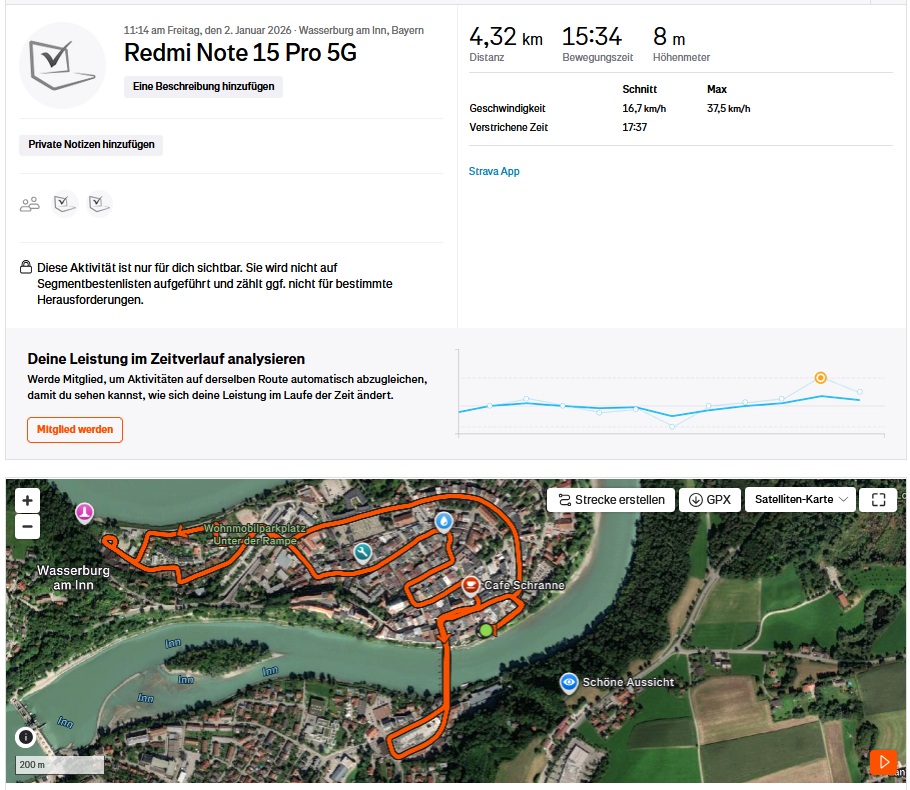
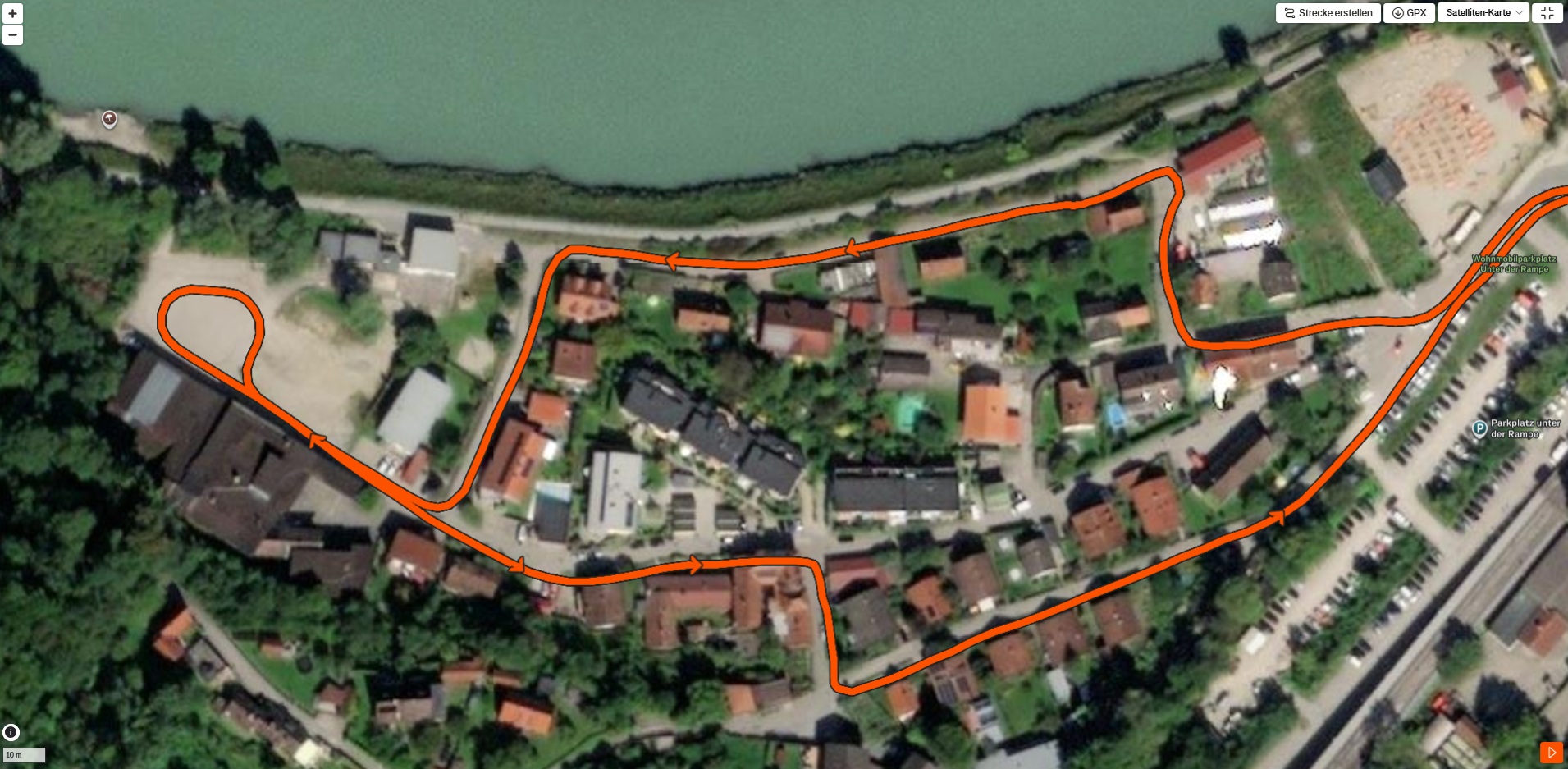
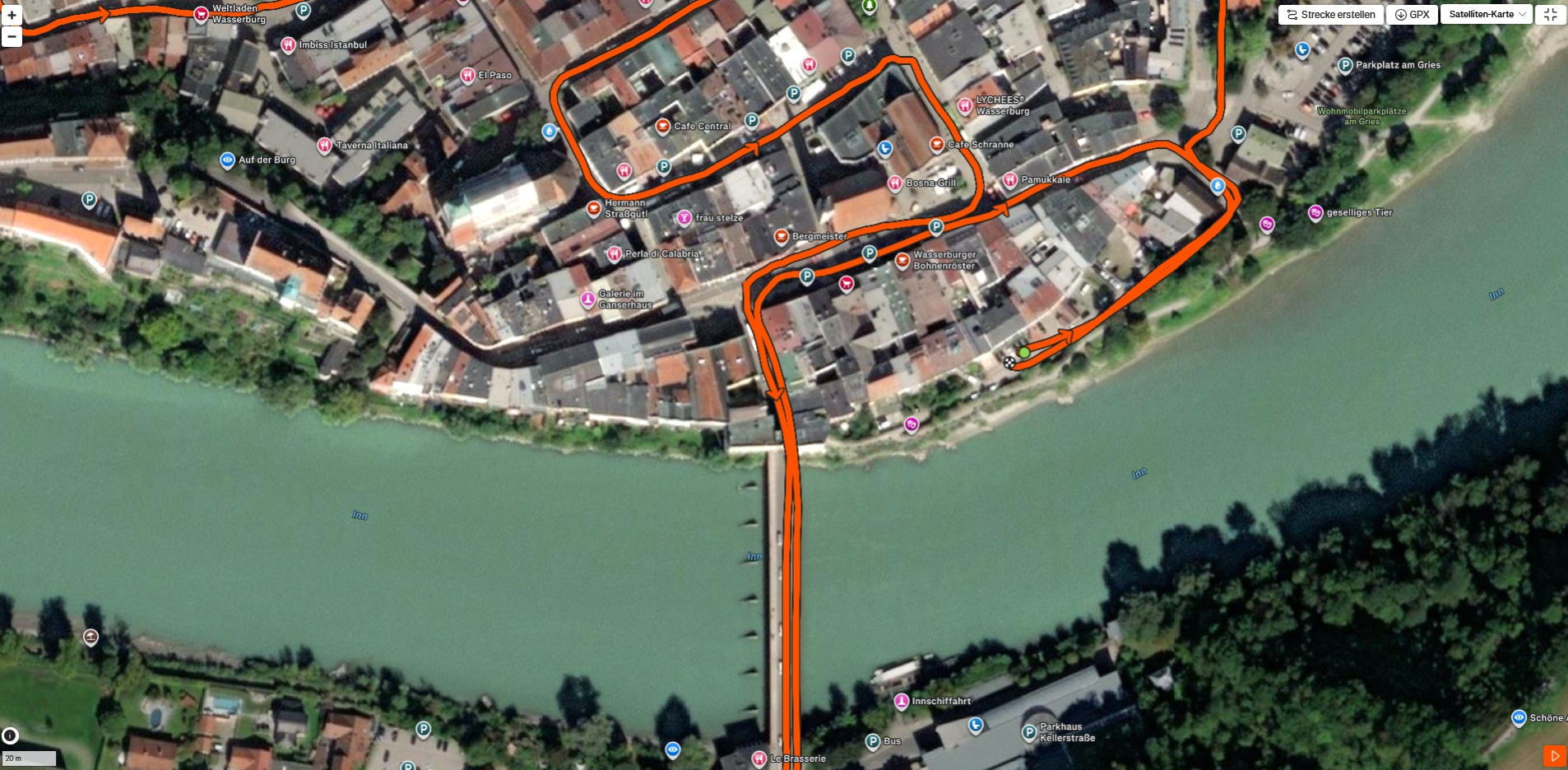
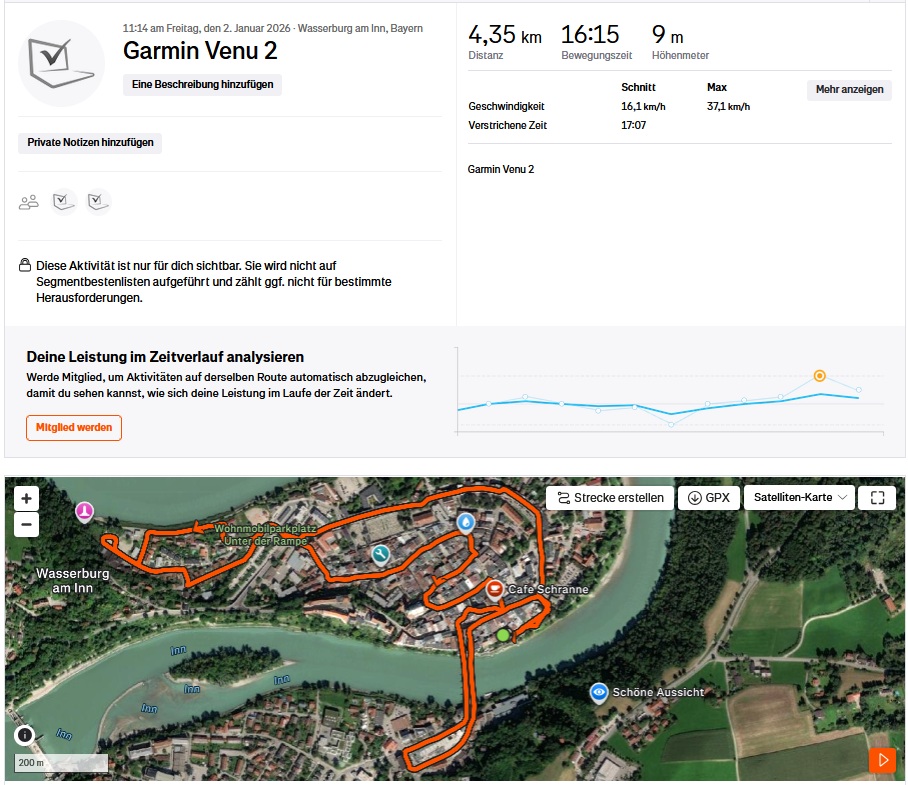
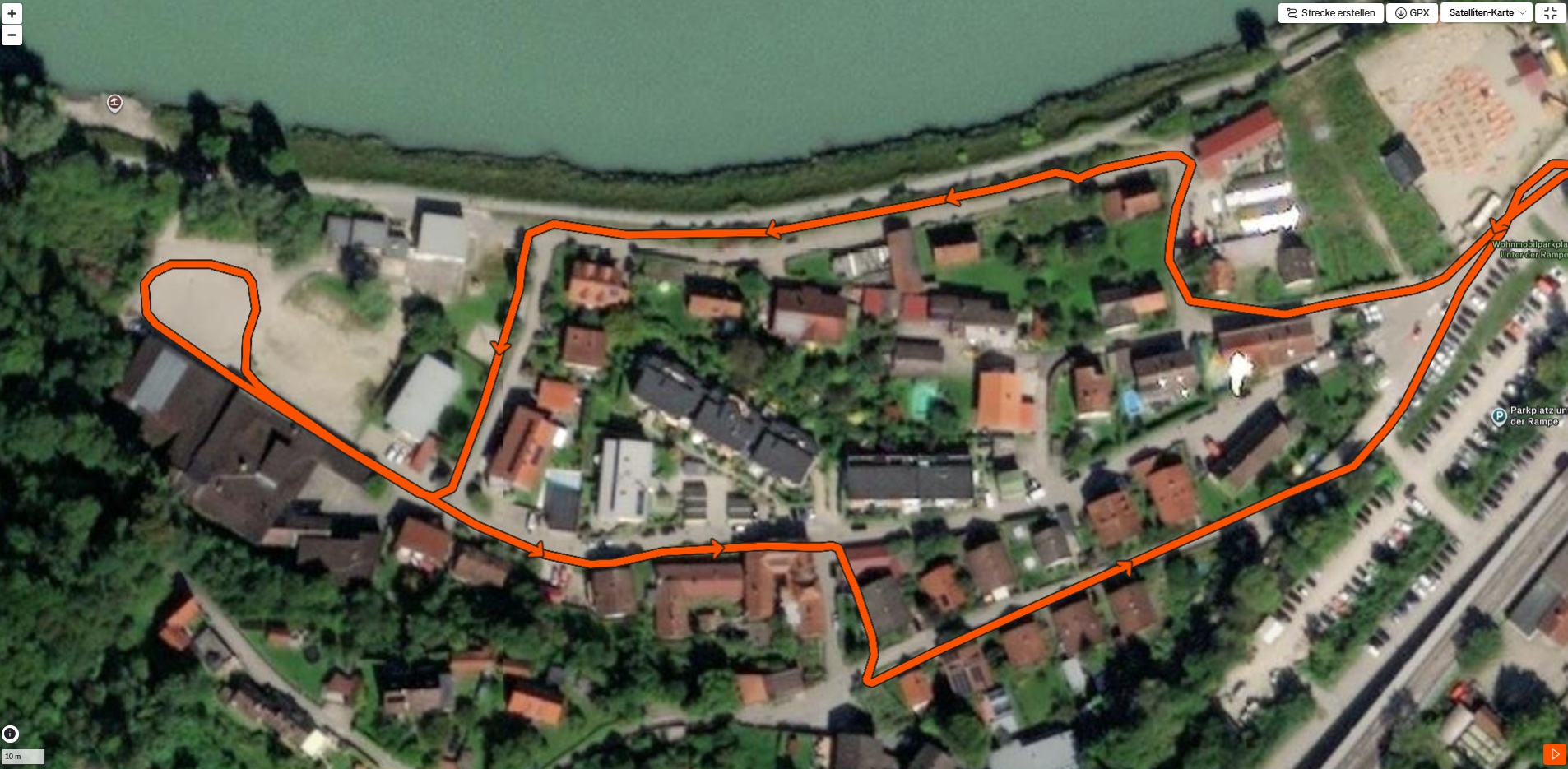
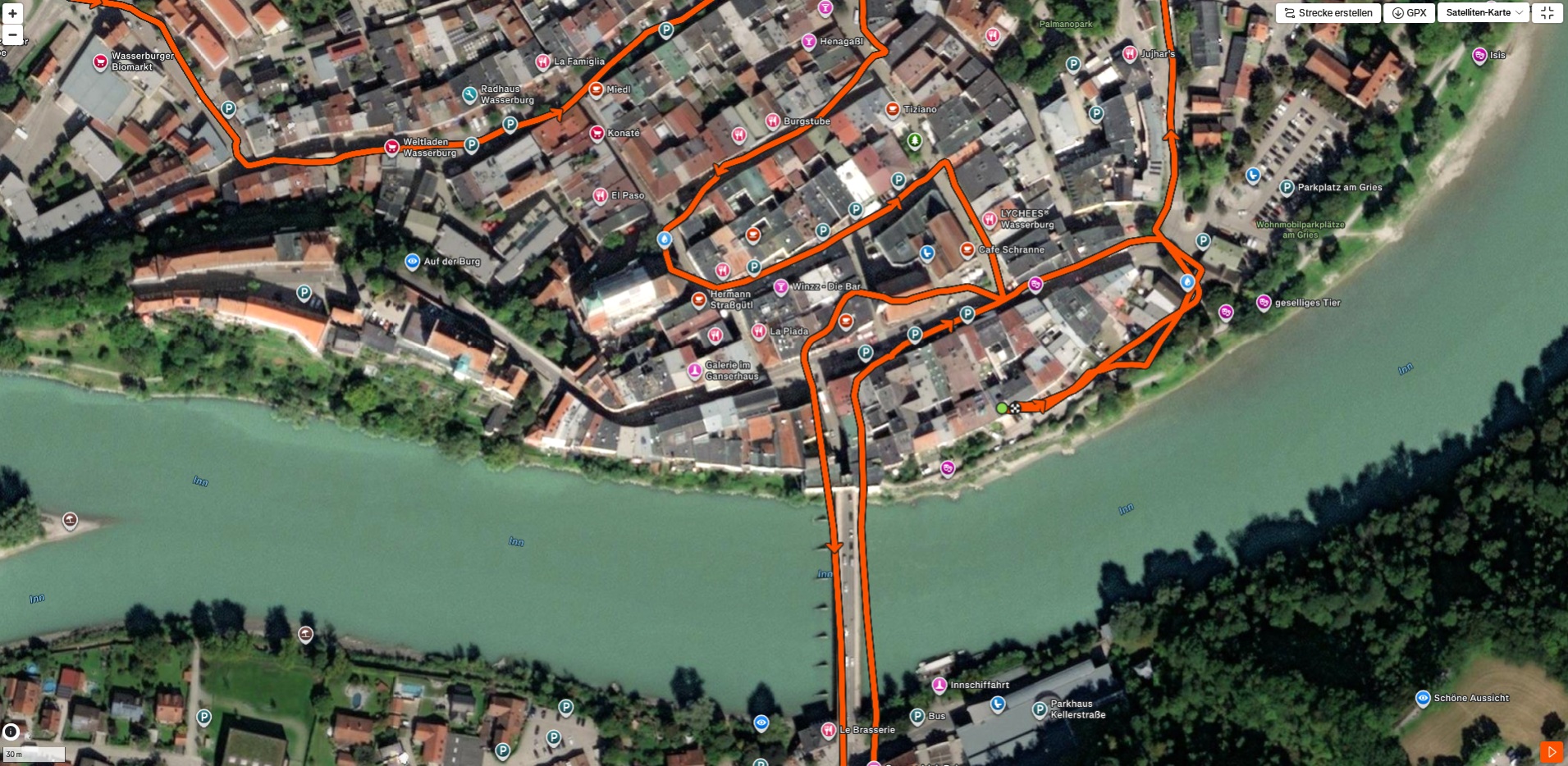
We also carry out our practical navigation test with a walk around the city to which we also take the Garmin Venu 2 smartwatch as a comparison device. Due to the weather, this time we take the car for a change.
Xiaomi's phone is very accurate when it comes to positioning, and we only detect deviations before the bridge crossing and on the bridge itself. These are also within an acceptable range, so we have no qualms in recommending the Redmi Note 15 Pro for navigation.
Phone functions and voice quality: Partly muffled
The Redmi Note 15 Pro 5G comes with important phone functions such as VoLTE and VoWiFi. VoNR (telephony via the 5G network) is also supported.
The voice quality is quite good in a test call. However, the other party sometimes sounds a little muffled.
Cameras: 200 MP in a Redmi Note

Xiaomi remains faithful to the ISOCELL HP3 as the main sensor of the Redmi Note 15 Pro 5G — this was also installed as the main camera in the predecessor.
The 1/1.4-inch sensor uses 16-in-1 pixel binning as standard to achieve larger and more light-sensitive pixels, resulting in a resolution of 12.5 MP in most cases. The full 200 MP resolution can be used in a special mode.
A good quality zoom is possible by simply reducing the image section, allowing the Redmi Note 15 Pro 5G to take decent photos at up to 4x magnification even without a telephoto lens.
If you use the main camera without zoom in the standard setting, you get photos with decent brightness dynamics, but the general sharpness is only average. Individual details also appear somewhat washed out. Colors are partially oversaturated.
In low light, the autofocus struggles and sometimes produces blurred photos.
Panoramas can be photographed with a wide-angle camera. However, these look very muddy in detail and should therefore not be enlarged too much.
The selfie camera on the front has a 20 MP resolution. At first glance, the photos appear to be of good quality, although the details are somewhat blurred.
Image comparison
Choose a scene and navigate within the first image. One click changes the position on touchscreens. One click on the zoomed-in image opens the original in a new window. The first image shows the scaled photograph of the test device.
Hauptkamera PflanzeHauptkamera UmgebungHauptkamera Low LightWeitwinkelkamera















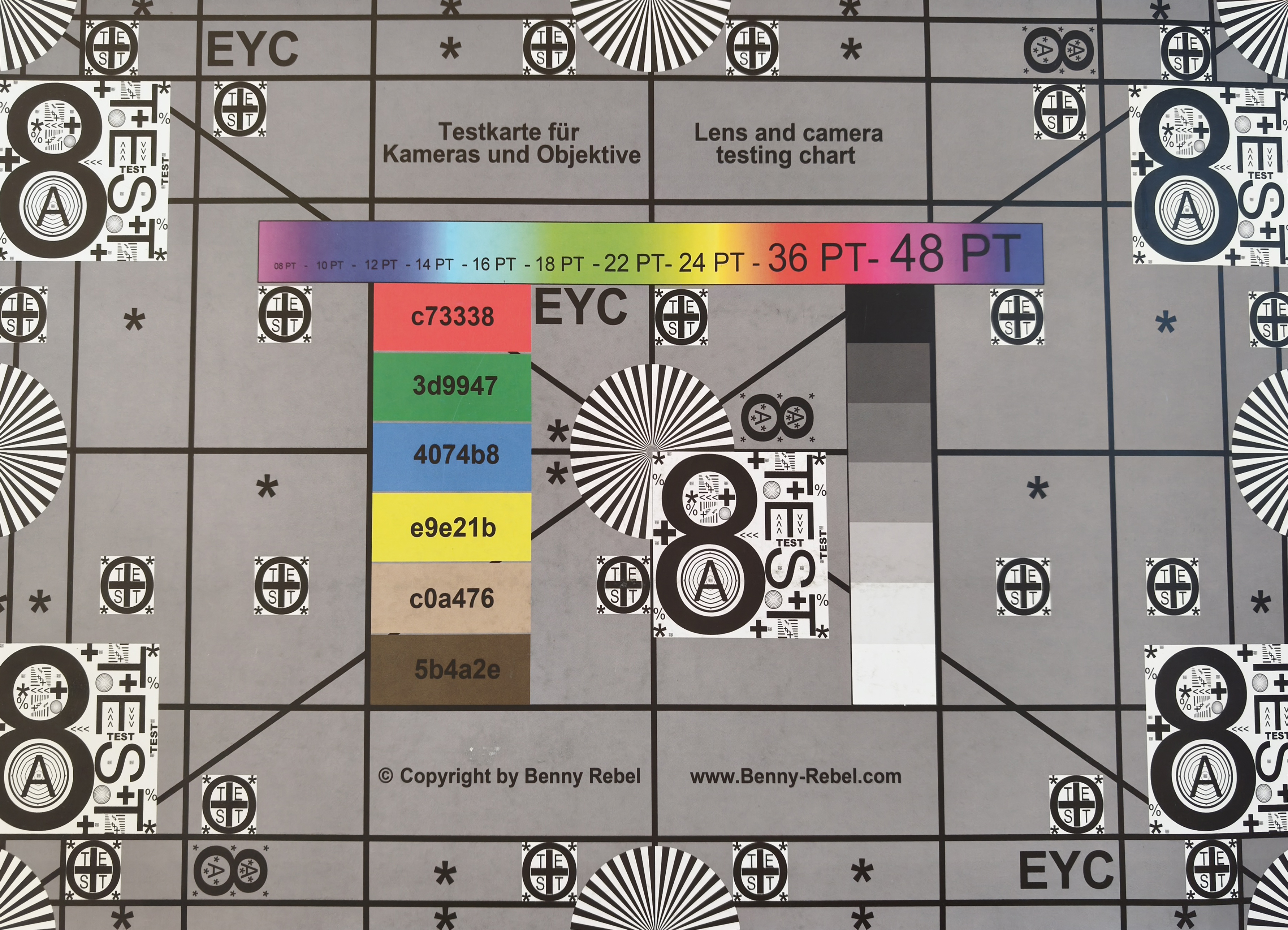
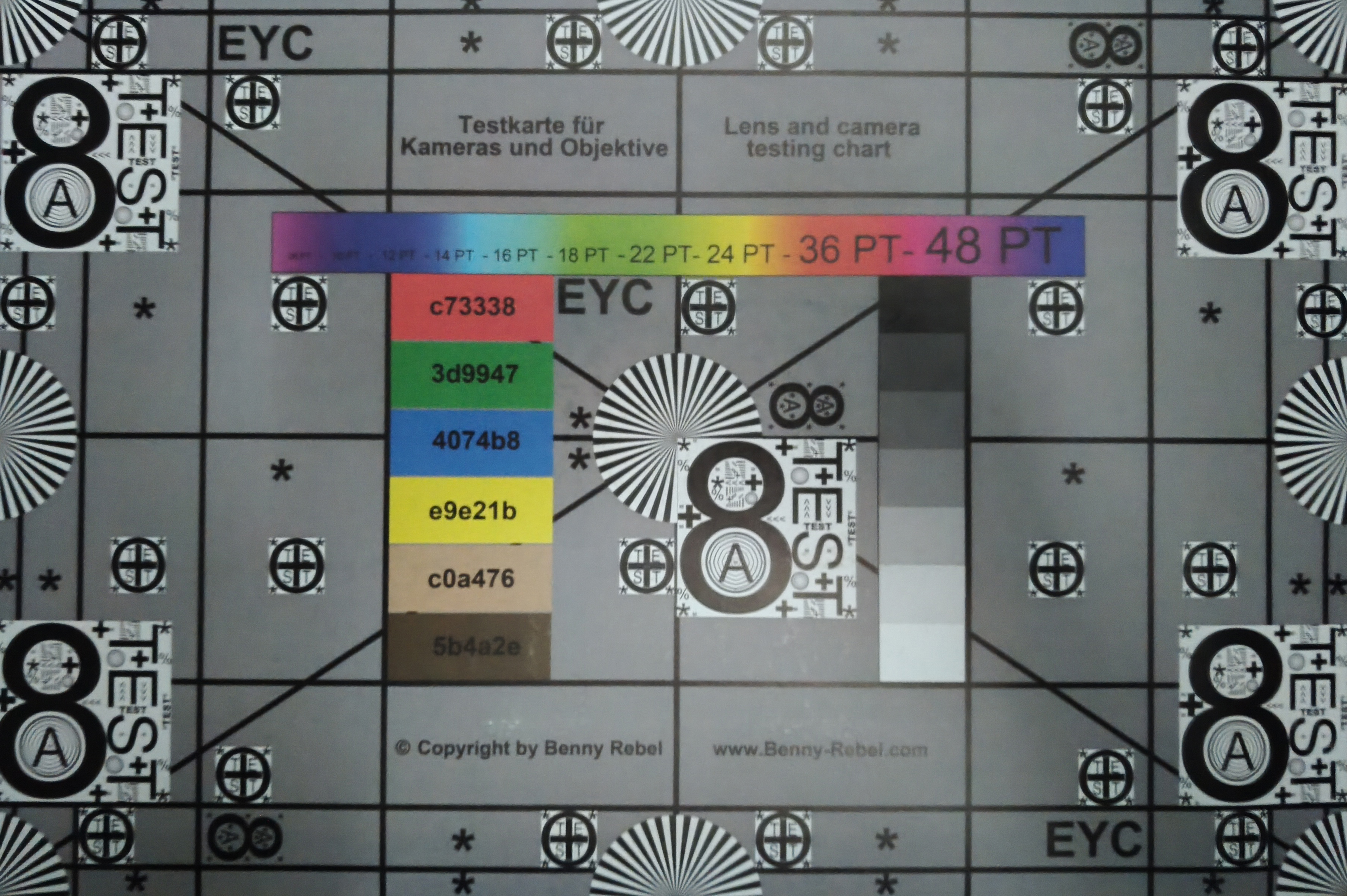
Under studio lighting, the sharpness of the test chart is good. Even difficult colors such as red do not cause any problems.
At an illumination level of just 1 lux, the image becomes much coarser, but the subject is still clearly recognizable.




Accessories and warranty: With or without charger?
Our test device comes with a charger, as we received it from abroad. However, buyers in the EU should not look forward to this. A case, charging cable, and a SIM tool are included in the package.
Xiaomi grants a 12-month warranty.
Input devices and operation: Precise fingerprint sensor
The 120 Hz screen enables rapid responses to inputs and the touch sampling rate of up to 2,560 Hz makes the touchscreen very precise. Inputs are therefore usually made without delay.
The fingerprint sensor is located behind the screen and is positioned quite close to the edge so that even people with smaller hands can reach it easily. It unlocks the phone almost immediately and very reliably.
Face recognition is also possible. However, this is done without additional sensors via the front camera, so it is not quite as reliable. However, it also worked perfectly in our test.


Display: Bright, but with PWM

The screen is also slightly larger than its predecessor due to the slightly narrower bezels. The resolution is also slightly higher at 2,772 x 1,280 pixels to compensate for this.
In everyday use, the screen is about as bright as its predecessor with a maximum brightness of up to 1,155 cd/m². However, Xiaomi has once again increased the brightness in HDR mode — up to 3,000 cd/m² is now possible in this mode.
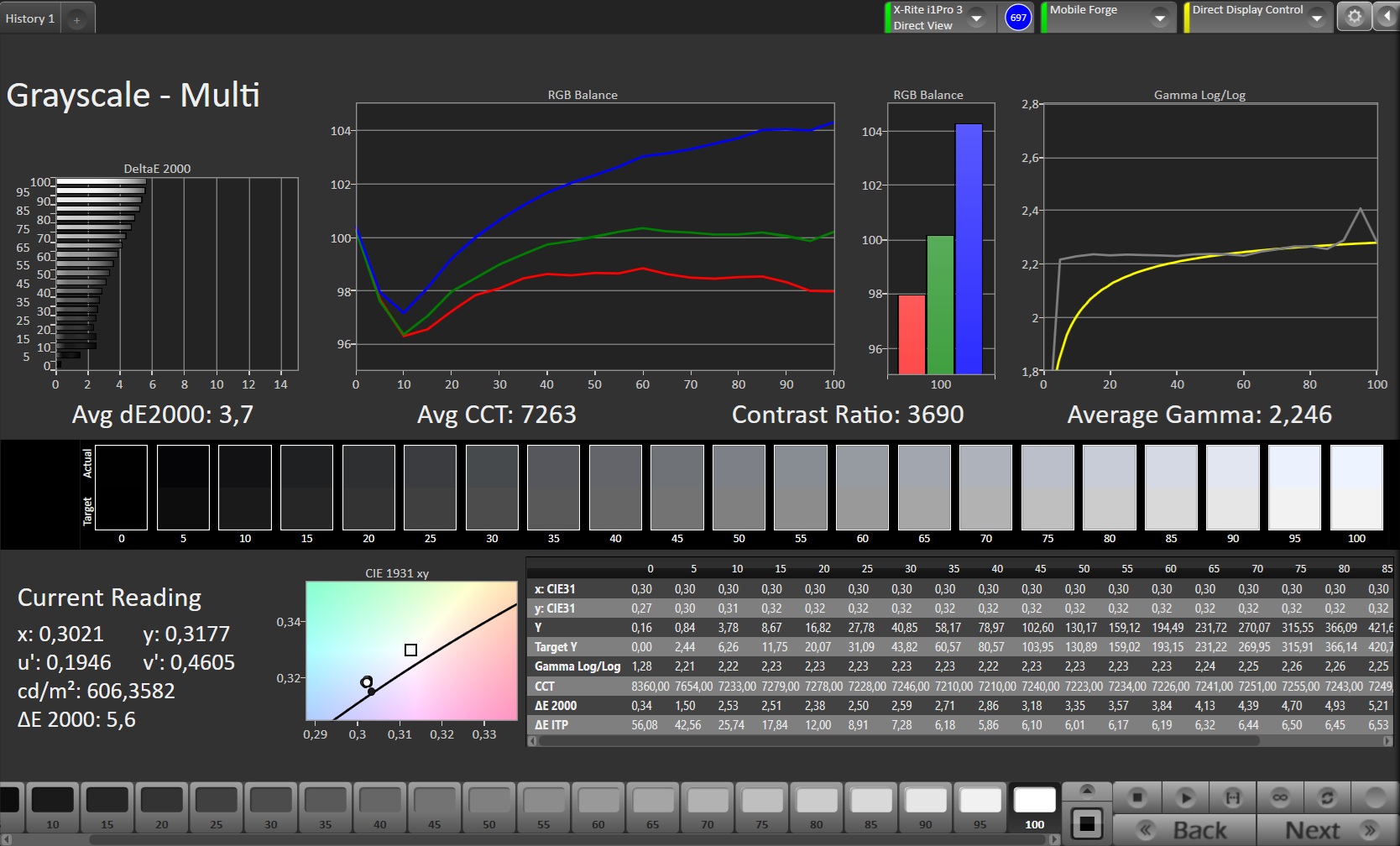
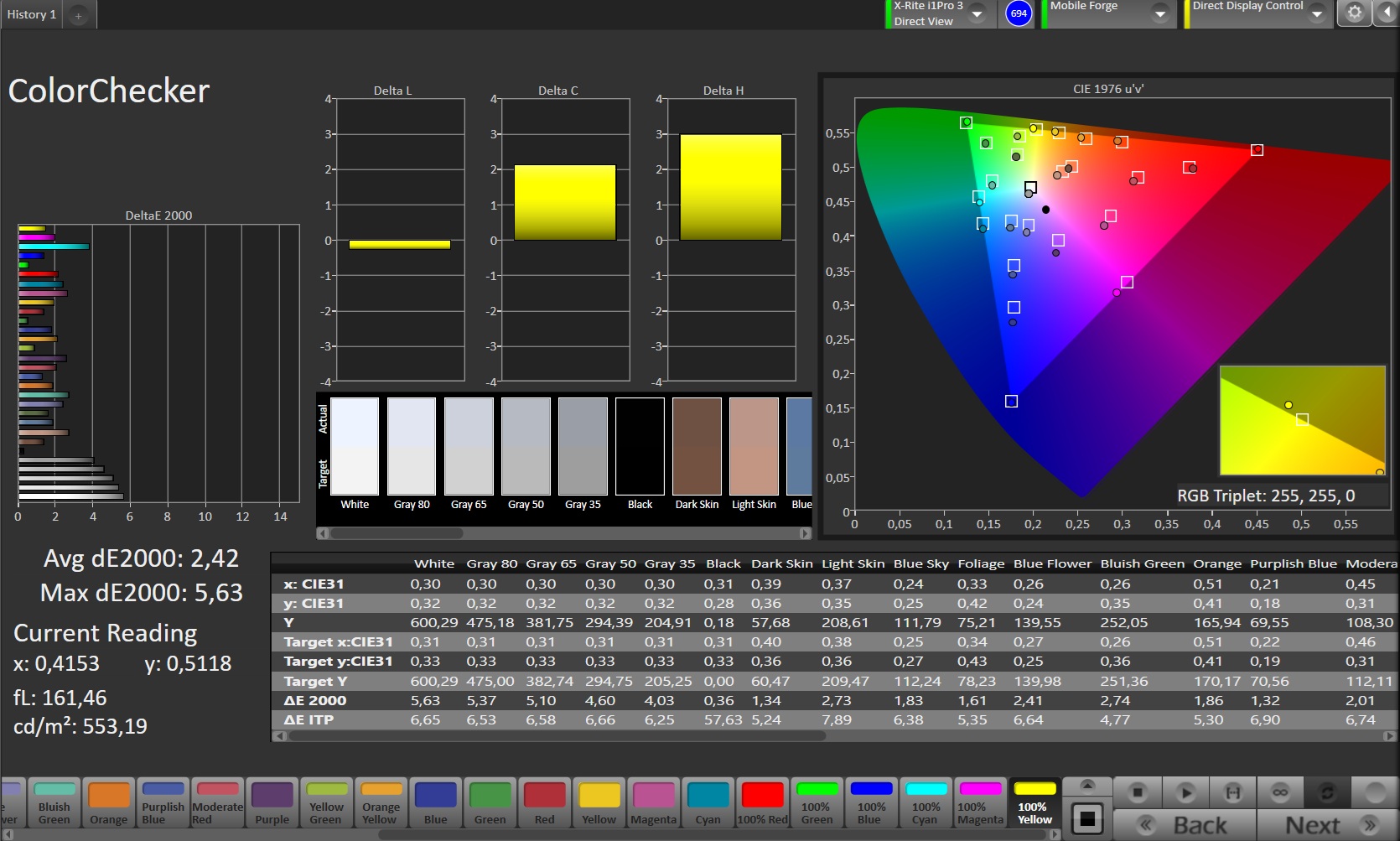
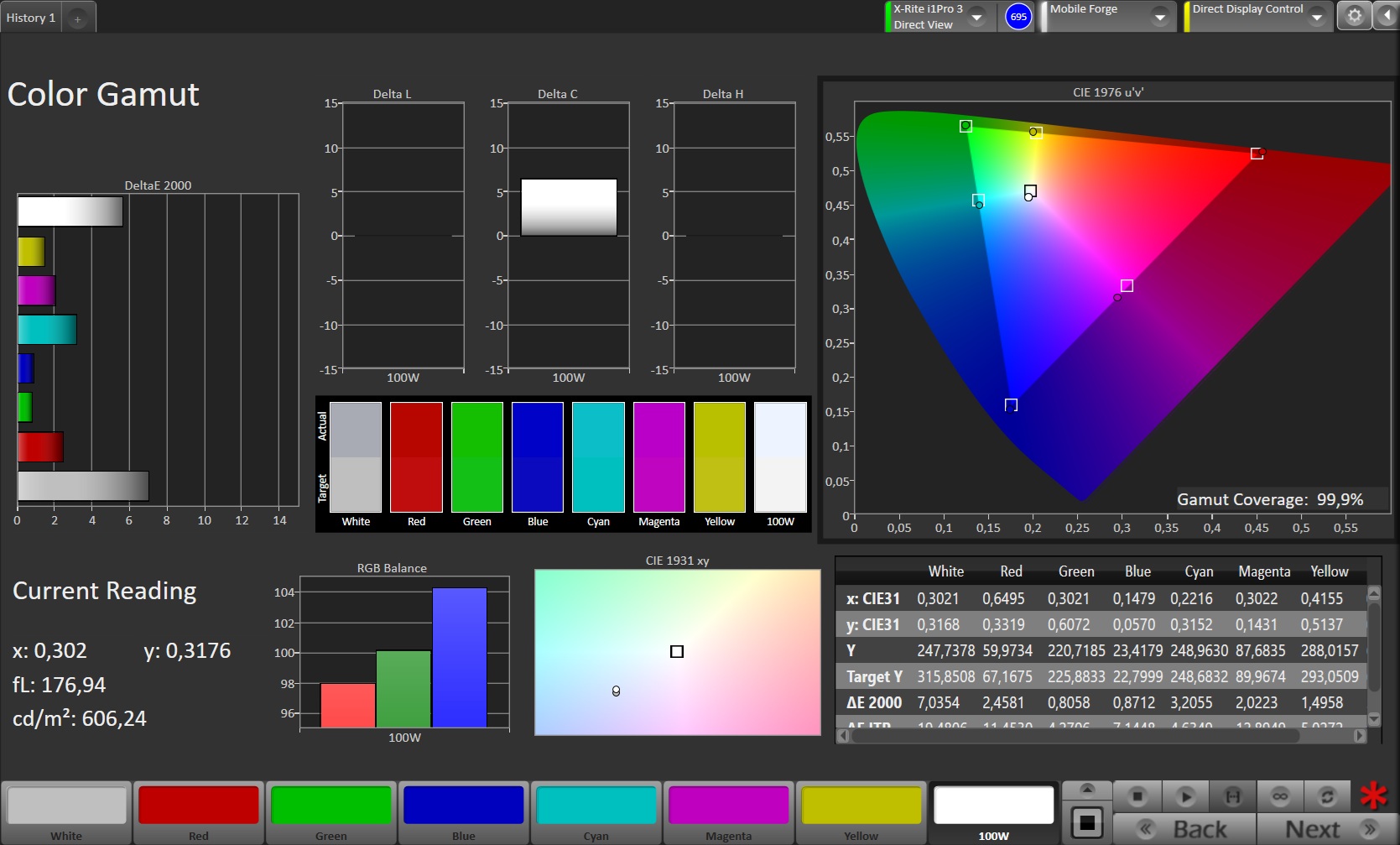
Color accuracy, however, is not as good this time around. In the original "Color Pro" mode, there is a slight blue cast. Blue tones in particular deviate slightly from the optimum.
| |||||||||||||||||||||||||
Brightness Distribution: 97 %
Center on Battery: 1155 cd/m²
Contrast: ∞:1 (Black: 0 cd/m²)
ΔE ColorChecker Calman: 2.42 | ∀{0.5-29.43 Ø4.68}
ΔE Greyscale Calman: 3.7 | ∀{0.09-98 Ø4.93}
99.9% sRGB (Calman 2D)
Gamma: 2.246
CCT: 7263 K
| Xiaomi Redmi Note 15 Pro 5G AMOLED, 2772x1280, 6.8" | Xiaomi Redmi Note 14 Pro 5G AMOLED, 2712x1220, 6.7" | Motorola Edge 60 Neo pOLED, 2670x1200, 6.4" | OnePlus Nord CE 5 AMOLED, 2392x1080, 6.8" | Samsung Galaxy A36 5G Super AMOLED, 2340x1080, 6.7" | |
|---|---|---|---|---|---|
| Screen | 28% | 22% | 29% | 20% | |
| Brightness middle (cd/m²) | 1155 | 1138 -1% | 1132 -2% | 1315 14% | 1127 -2% |
| Brightness (cd/m²) | 1136 | 1137 0% | 1114 -2% | 1300 14% | 1137 0% |
| Brightness Distribution (%) | 97 | 97 0% | 98 1% | 97 0% | 98 1% |
| Black Level * (cd/m²) | |||||
| Colorchecker dE 2000 * | 2.42 | 1.1 55% | 1.55 36% | 1.22 50% | 1.8 26% |
| Colorchecker dE 2000 max. * | 5.63 | 2.6 54% | 3.28 42% | 2.7 52% | 2.8 50% |
| Greyscale dE 2000 * | 3.7 | 1.6 57% | 1.5 59% | 2 46% | 2.1 43% |
| Gamma | 2.246 98% | 2.23 99% | 2.107 104% | 2.258 97% | 2.11 104% |
| CCT | 7263 89% | 6284 103% | 6473 100% | 6503 100% | 6466 101% |
* ... smaller is better
| Display / APL18 Peak Brightness | |
| Xiaomi Redmi Note 15 Pro 5G | |
| Samsung Galaxy A36 5G | |
| Xiaomi Redmi Note 14 Pro 5G | |
| Display / HDR Peak Brightness | |
| Xiaomi Redmi Note 15 Pro 5G | |
| Xiaomi Redmi Note 14 Pro 5G | |
| Samsung Galaxy A36 5G | |
Screen Flickering / PWM (Pulse-Width Modulation)
| Screen flickering / PWM detected | 120.5 Hz Amplitude: 16 % | 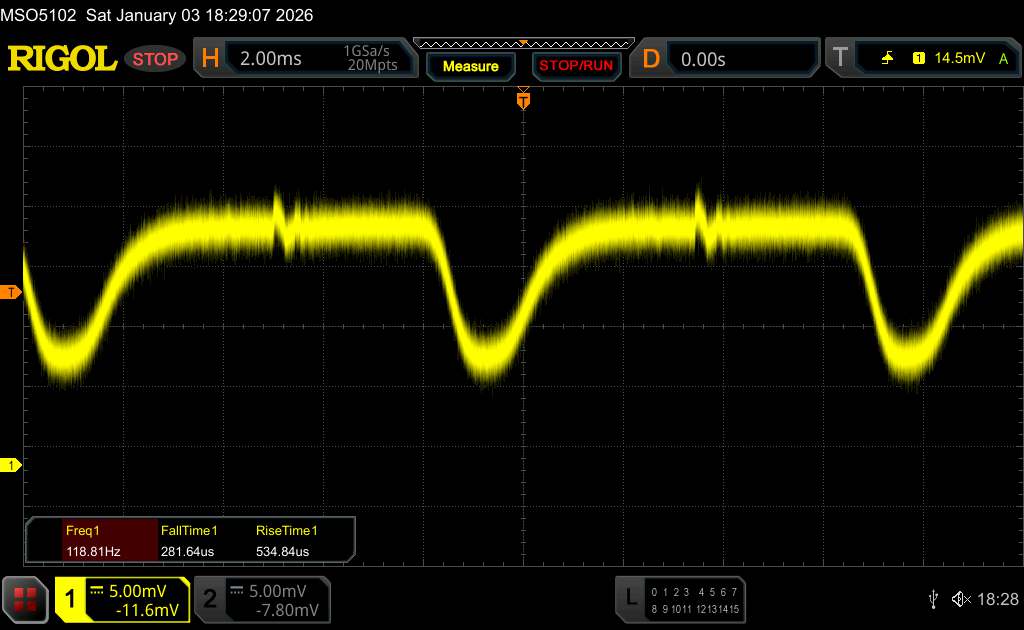 | |
The display backlight flickers at 120.5 Hz (worst case, e.g., utilizing PWM) . The frequency of 120.5 Hz is very low, so the flickering may cause eyestrain and headaches after extended use. In comparison: 52 % of all tested devices do not use PWM to dim the display. If PWM was detected, an average of 7572 (minimum: 5 - maximum: 343500) Hz was measured. | |||
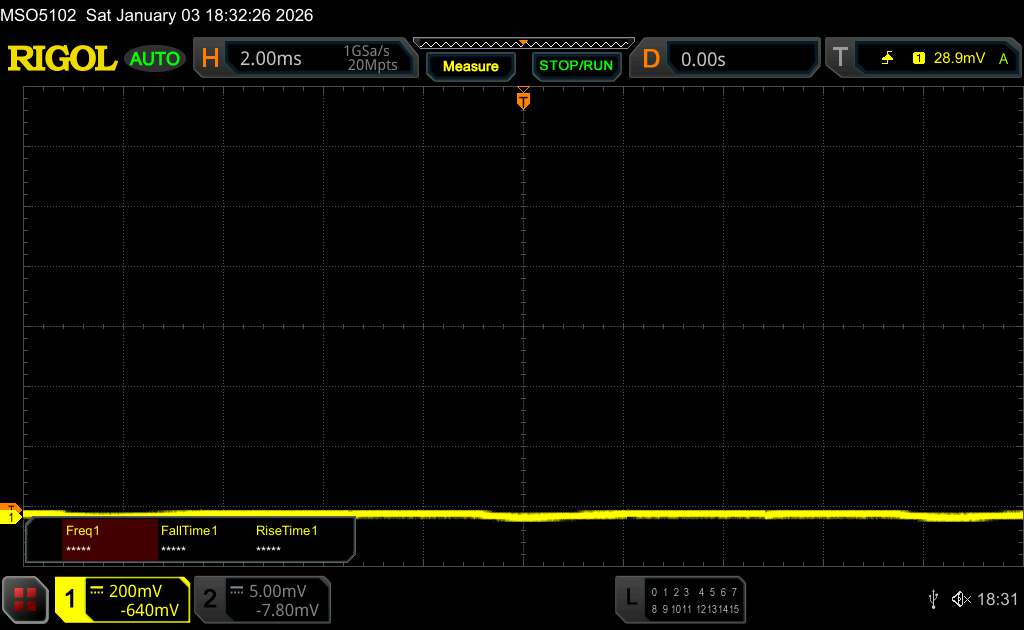
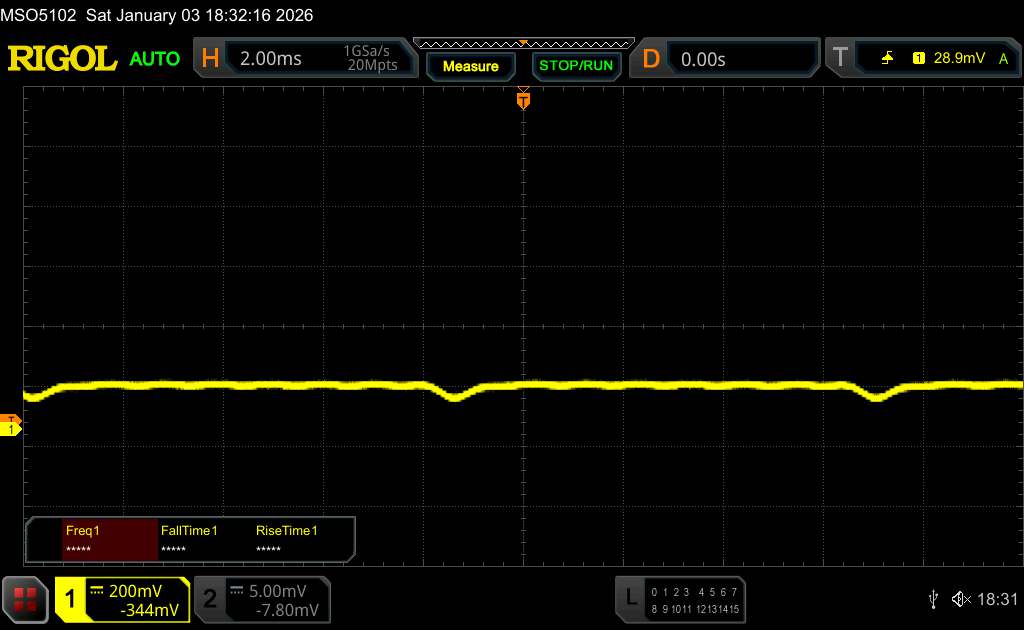
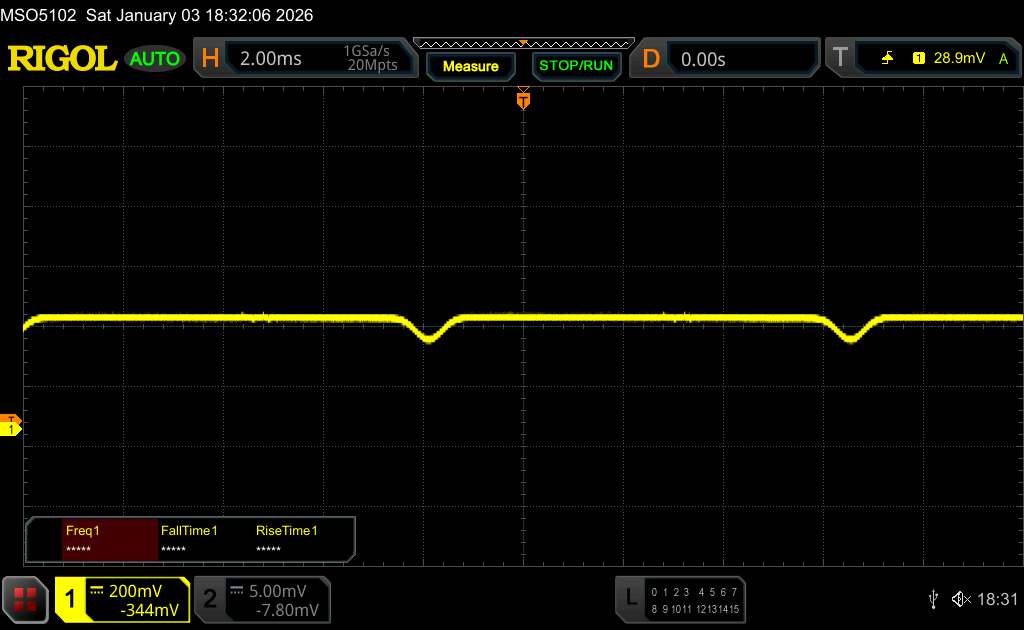
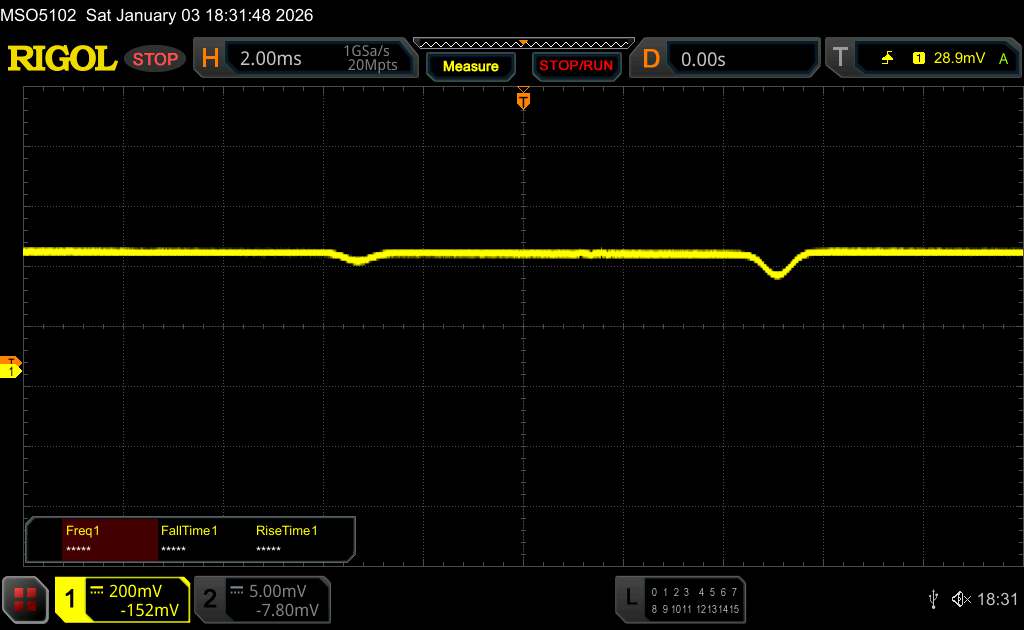
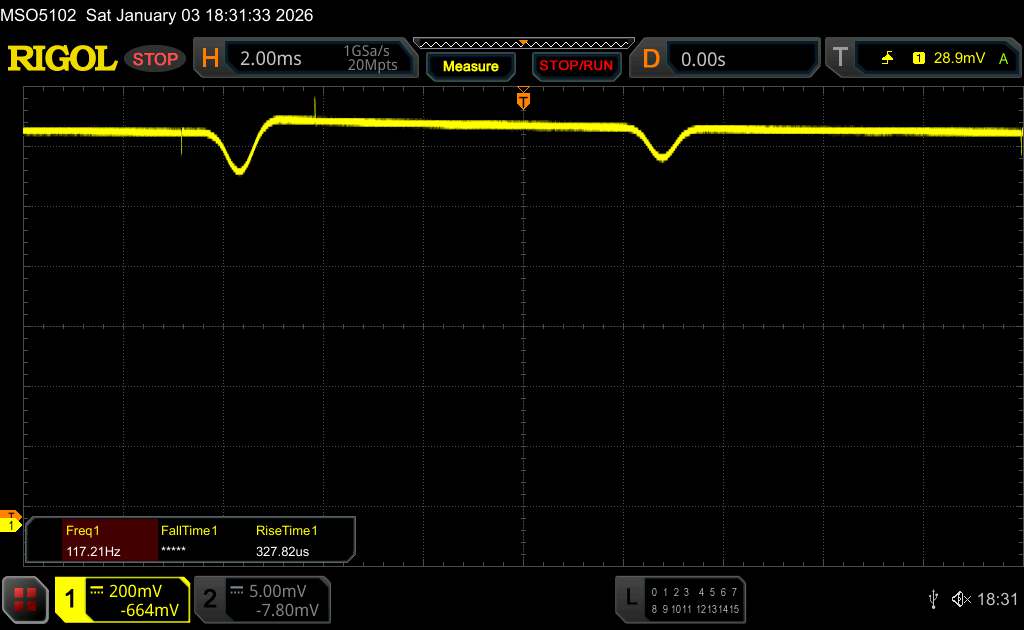
Measurement series with fixed zoom level and different brightness settings (The amplitude curve at minimum brightness looks flat, but this is due to the scaling. The info box shows the enlarged version of the amplitude at minimum brightness)
We detect PWM flickering with a frequency around the frame rate, i.e. around 120 Hz. However, Xiaomi promises that up to 3,840 Hz PWM is also possible.
Nevertheless, we would advise sensitive people to test the screen thoroughly before buying.
Display Response Times
| ↔ Response Time Black to White | ||
|---|---|---|
| 1.4 ms ... rise ↗ and fall ↘ combined | ↗ 0.6 ms rise | 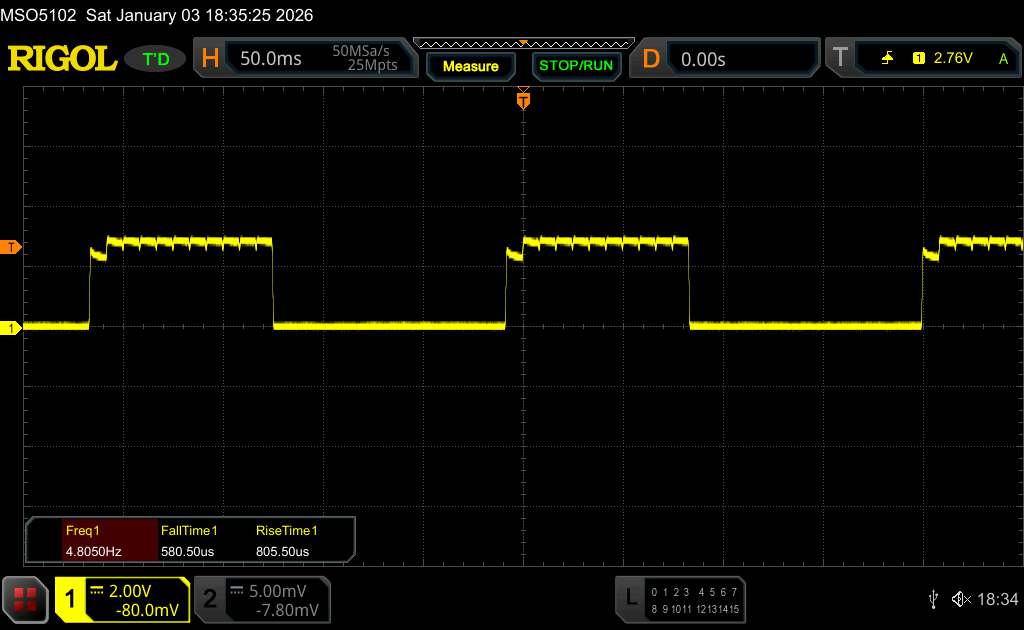 |
| ↘ 0.8 ms fall | ||
| The screen shows very fast response rates in our tests and should be very well suited for fast-paced gaming. In comparison, all tested devices range from 0.1 (minimum) to 240 (maximum) ms. » 9 % of all devices are better. This means that the measured response time is better than the average of all tested devices (19.6 ms). | ||
| ↔ Response Time 50% Grey to 80% Grey | ||
| 1.4 ms ... rise ↗ and fall ↘ combined | ↗ 0.7 ms rise | 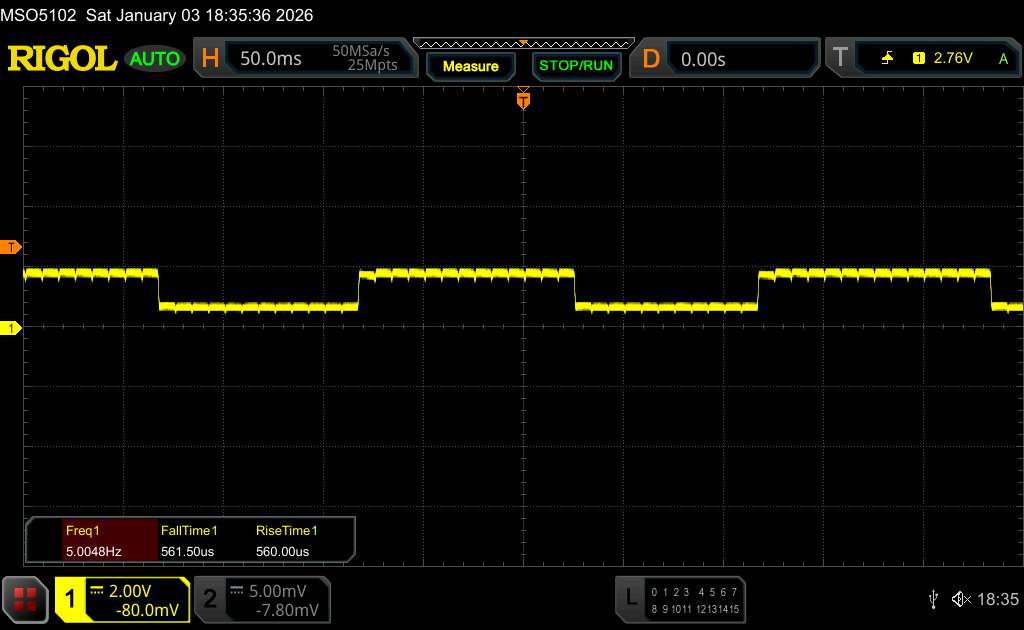 |
| ↘ 0.7 ms fall | ||
| The screen shows very fast response rates in our tests and should be very well suited for fast-paced gaming. In comparison, all tested devices range from 0.13 (minimum) to 636 (maximum) ms. » 7 % of all devices are better. This means that the measured response time is better than the average of all tested devices (30.7 ms). | ||
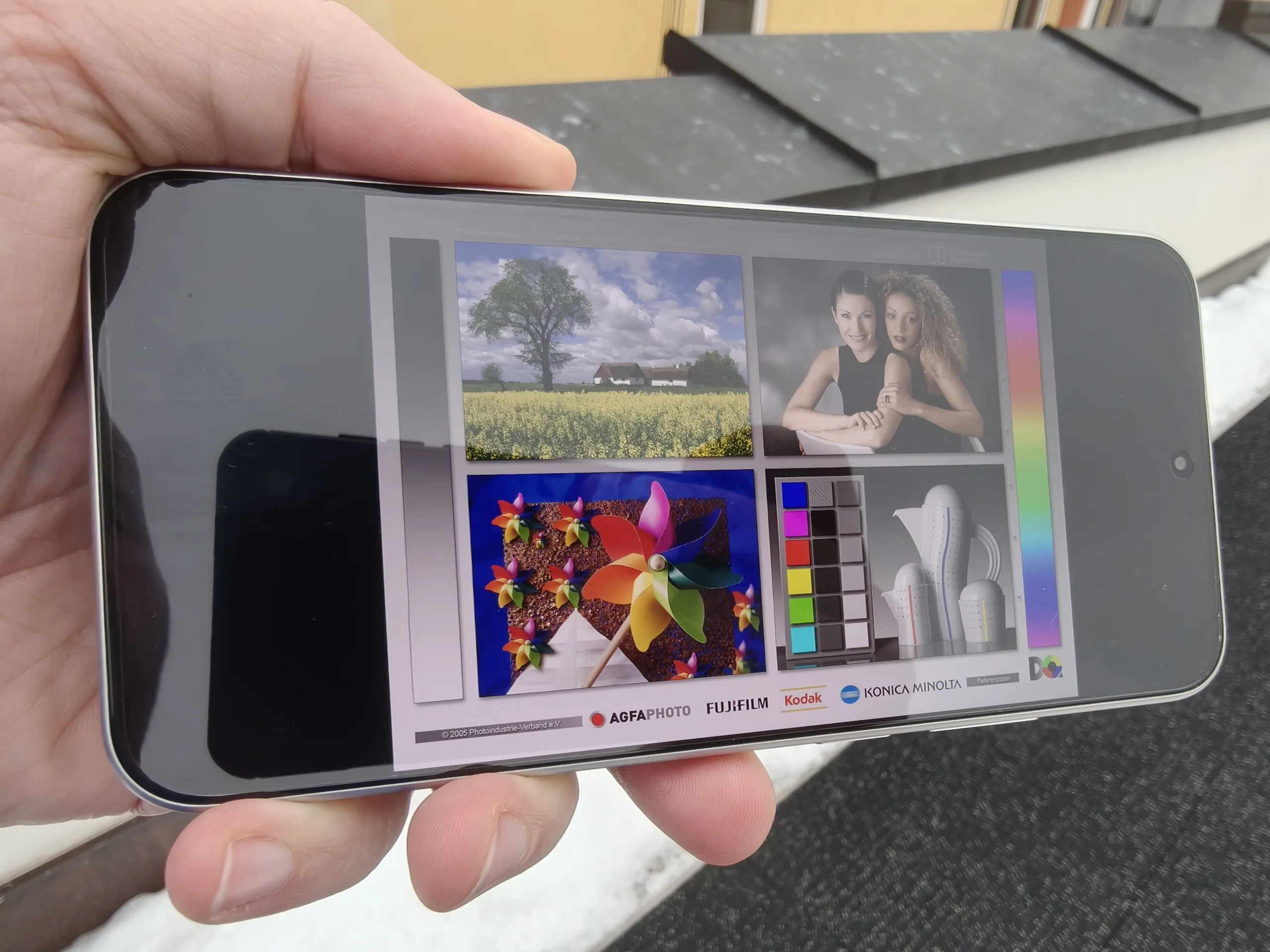
The Redmi Phone can be used very well outdoors thanks to its high brightness.
The viewing angles are unobjectionable. The screen content can be seen very well even at flat angles.

Performance: A minor speed bump
Xiaomi uses the MediaTek Dimensity 7400-Ultra SoC in the Redmi Note 15 Pro 5G. This chip largely corresponds to the Dimensity 7400 or 7400X in terms of performance.
This means that there is only a small performance update compared to the Redmi Note 14 Pro 5G, and that phone's performance was already a point of contention back in the day.
For everyday use, the performance is usually sufficient to prevent stuttering. However, the performance reserves for more complex apps are not all that great.
| CrossMark - Overall | |
| Average of class Smartphone (376 - 2856, n=107, last 2 years) | |
| Samsung Galaxy A36 5G | |
| Xiaomi Redmi Note 14 Pro 5G | |
| UL Procyon AI Inference for Android - Overall Score NNAPI | |
| Motorola Edge 60 Neo | |
| Average of class Smartphone (2895 - 66164, n=99, last 2 years) | |
| Xiaomi Redmi Note 15 Pro 5G | |
| Average MediaTek Dimensity 7400-Ultra (n=1) | |
| Samsung Galaxy A36 5G | |
| Xiaomi Redmi Note 14 Pro 5G | |
| AImark - Score v3.x | |
| Average of class Smartphone (293 - 231543, n=66, last 2 years) | |
| Motorola Edge 60 Neo | |
| Samsung Galaxy A36 5G | |
| Xiaomi Redmi Note 14 Pro 5G | |
The Redmi Note 15 Pro 5G also only delivers standard values in terms of graphics power. The OnePlus Nord CE5 shows that a lot more graphics performance is possible in this price range.
GFXBench (DX / GLBenchmark) 2.7: T-Rex Onscreen | 1920x1080 T-Rex Offscreen
GFXBench 3.0: on screen Manhattan Onscreen OGL | 1920x1080 1080p Manhattan Offscreen
GFXBench 3.1: on screen Manhattan ES 3.1 Onscreen | 1920x1080 Manhattan ES 3.1 Offscreen
GFXBench: on screen Car Chase Onscreen | 1920x1080 Car Chase Offscreen | on screen Aztec Ruins High Tier Onscreen | 2560x1440 Aztec Ruins High Tier Offscreen | on screen Aztec Ruins Normal Tier Onscreen | 1920x1080 Aztec Ruins Normal Tier Offscreen | 3840x2160 4K Aztec Ruins High Tier Offscreen
| 3DMark / Wild Life Extreme Unlimited | |
| OnePlus Nord CE 5 | |
| Motorola Edge 60 Neo | |
| Xiaomi Redmi Note 15 Pro 5G | |
| Samsung Galaxy A36 5G | |
| Xiaomi Redmi Note 14 Pro 5G | |
| 3DMark / Wild Life Extreme | |
| OnePlus Nord CE 5 | |
| Motorola Edge 60 Neo | |
| Xiaomi Redmi Note 15 Pro 5G | |
| Samsung Galaxy A36 5G | |
| Xiaomi Redmi Note 14 Pro 5G | |
| 3DMark / Wild Life Unlimited Score | |
| OnePlus Nord CE 5 | |
| Motorola Edge 60 Neo | |
| Samsung Galaxy A36 5G | |
| Xiaomi Redmi Note 14 Pro 5G | |
| 3DMark / Steel Nomad Light Unlimited Score | |
| Motorola Edge 60 Neo | |
| Xiaomi Redmi Note 15 Pro 5G | |
| Xiaomi Redmi Note 14 Pro 5G | |
| 3DMark / Steel Nomad Light Score | |
| Motorola Edge 60 Neo | |
| Xiaomi Redmi Note 15 Pro 5G | |
| Xiaomi Redmi Note 14 Pro 5G | |
| GFXBench (DX / GLBenchmark) 2.7 / T-Rex Onscreen | |
| Samsung Galaxy A36 5G | |
| Motorola Edge 60 Neo | |
| Xiaomi Redmi Note 15 Pro 5G | |
| Xiaomi Redmi Note 14 Pro 5G | |
| GFXBench (DX / GLBenchmark) 2.7 / T-Rex Offscreen | |
| Motorola Edge 60 Neo | |
| Samsung Galaxy A36 5G | |
| Xiaomi Redmi Note 15 Pro 5G | |
| Xiaomi Redmi Note 14 Pro 5G | |
| GFXBench 3.0 / Manhattan Onscreen OGL | |
| Motorola Edge 60 Neo | |
| Samsung Galaxy A36 5G | |
| Xiaomi Redmi Note 14 Pro 5G | |
| Xiaomi Redmi Note 15 Pro 5G | |
| GFXBench 3.0 / 1080p Manhattan Offscreen | |
| Motorola Edge 60 Neo | |
| Xiaomi Redmi Note 15 Pro 5G | |
| Xiaomi Redmi Note 14 Pro 5G | |
| Samsung Galaxy A36 5G | |
| GFXBench 3.1 / Manhattan ES 3.1 Onscreen | |
| Samsung Galaxy A36 5G | |
| Motorola Edge 60 Neo | |
| Xiaomi Redmi Note 15 Pro 5G | |
| Xiaomi Redmi Note 14 Pro 5G | |
| GFXBench 3.1 / Manhattan ES 3.1 Offscreen | |
| Motorola Edge 60 Neo | |
| Xiaomi Redmi Note 15 Pro 5G | |
| Xiaomi Redmi Note 14 Pro 5G | |
| Samsung Galaxy A36 5G | |
| GFXBench / Car Chase Onscreen | |
| Samsung Galaxy A36 5G | |
| Motorola Edge 60 Neo | |
| Xiaomi Redmi Note 15 Pro 5G | |
| Xiaomi Redmi Note 14 Pro 5G | |
| GFXBench / Car Chase Offscreen | |
| Motorola Edge 60 Neo | |
| Xiaomi Redmi Note 15 Pro 5G | |
| Xiaomi Redmi Note 14 Pro 5G | |
| Samsung Galaxy A36 5G | |
| GFXBench / Aztec Ruins High Tier Onscreen | |
| OnePlus Nord CE 5 | |
| Samsung Galaxy A36 5G | |
| Motorola Edge 60 Neo | |
| Xiaomi Redmi Note 15 Pro 5G | |
| Xiaomi Redmi Note 14 Pro 5G | |
| GFXBench / Aztec Ruins High Tier Offscreen | |
| OnePlus Nord CE 5 | |
| Xiaomi Redmi Note 14 Pro 5G | |
| Motorola Edge 60 Neo | |
| Xiaomi Redmi Note 15 Pro 5G | |
| Samsung Galaxy A36 5G | |
| GFXBench / Aztec Ruins Normal Tier Onscreen | |
| OnePlus Nord CE 5 | |
| Samsung Galaxy A36 5G | |
| Motorola Edge 60 Neo | |
| Xiaomi Redmi Note 15 Pro 5G | |
| Xiaomi Redmi Note 14 Pro 5G | |
| GFXBench / Aztec Ruins Normal Tier Offscreen | |
| OnePlus Nord CE 5 | |
| Motorola Edge 60 Neo | |
| Samsung Galaxy A36 5G | |
| Xiaomi Redmi Note 15 Pro 5G | |
| Xiaomi Redmi Note 14 Pro 5G | |
| GFXBench / 4K Aztec Ruins High Tier Offscreen | |
| OnePlus Nord CE 5 | |
| Motorola Edge 60 Neo | |
| Xiaomi Redmi Note 14 Pro 5G | |
| Xiaomi Redmi Note 15 Pro 5G | |
| Samsung Galaxy A36 5G | |
When surfing the Internet, the Redmi Note 15 Pro achieves decent results and you can usually visit even more complex websites without any problems.
The loading times are average — you have to wait a little for a picture every now and then.
| Jetstream 2 - 2.0 Total | |
| Average of class Smartphone (63.9 - 423, n=115, last 2 years) | |
| Samsung Galaxy A36 5G (Chrome 135) | |
| OnePlus Nord CE 5 (Chrome 141) | |
| Average MediaTek Dimensity 7400-Ultra (n=1) | |
| Xiaomi Redmi Note 15 Pro 5G (Chrome 144) | |
| Xiaomi Redmi Note 14 Pro 5G (Chrome 133) | |
| Speedometer 2.0 - Result 2.0 | |
| Average of class Smartphone (49.3 - 733, n=73, last 2 years) | |
| Xiaomi Redmi Note 15 Pro 5G (Chrome 144) | |
| Average MediaTek Dimensity 7400-Ultra (n=1) | |
| Samsung Galaxy A36 5G (Chrome 135) | |
| Xiaomi Redmi Note 14 Pro 5G (Chrome 133) | |
| Speedometer 3 - Score 3.0 | |
| Average of class Smartphone (3.06 - 56.5, n=81, last 2 years) | |
| Xiaomi Redmi Note 15 Pro 5G (Chrome 144) | |
| Average MediaTek Dimensity 7400-Ultra (n=1) | |
| Samsung Galaxy A36 5G (Chrome 135) | |
| Xiaomi Redmi Note 14 Pro 5G (Chrome 133) | |
| WebXPRT 4 - Overall | |
| Average of class Smartphone (56 - 278, n=89, last 2 years) | |
| Samsung Galaxy A36 5G (Chrome 135) | |
| Motorola Edge 60 Neo (Chrome 141) | |
| Xiaomi Redmi Note 15 Pro 5G (Chrome 144) | |
| Average MediaTek Dimensity 7400-Ultra (n=1) | |
| Xiaomi Redmi Note 14 Pro 5G (Chrome 133) | |
| Octane V2 - Total Score | |
| Average of class Smartphone (6015 - 160221, n=130, last 2 years) | |
| Xiaomi Redmi Note 15 Pro 5G (Chrome 144) | |
| Average MediaTek Dimensity 7400-Ultra (n=1) | |
| Samsung Galaxy A36 5G (Chrome 135) | |
| Motorola Edge 60 Neo (Chrome 141) | |
| Xiaomi Redmi Note 14 Pro 5G (Chrome 133) | |
| Mozilla Kraken 1.1 - Total | |
| Xiaomi Redmi Note 14 Pro 5G (Chrome 133) | |
| Average MediaTek Dimensity 7400-Ultra (n=1) | |
| Xiaomi Redmi Note 15 Pro 5G (Chrome 144) | |
| Samsung Galaxy A36 5G (Chrome 135) | |
| Motorola Edge 60 Neo (Chrome 141) | |
| Average of class Smartphone (216 - 2718, n=119, last 2 years) | |
* ... smaller is better
The UFS 2.2 storage does not break any speed records but is a good choice in this class. Data transfers are usually sufficiently fast and loading times are not too long.
| Xiaomi Redmi Note 15 Pro 5G | Xiaomi Redmi Note 14 Pro 5G | OnePlus Nord CE 5 | Samsung Galaxy A36 5G | Average 256 GB UFS 2.2 Flash | Average of class Smartphone | |
|---|---|---|---|---|---|---|
| AndroBench 3-5 | 6% | 10% | -33% | -5% | 91% | |
| Sequential Read 256KB (MB/s) | 945 | 1009.67 7% | 1235 31% | 968.34 2% | 906 ? -4% | 2279 ? 141% |
| Sequential Write 256KB (MB/s) | 837.4 | 833.64 0% | 795 -5% | 166.77 -80% | 739 ? -12% | 1980 ? 136% |
| Random Read 4KB (MB/s) | 184 | 248.81 35% | 222 21% | 233.98 27% | 223 ? 21% | 319 ? 73% |
| Random Write 4KB (MB/s) | 326.1 | 266.92 -18% | 302 -7% | 62.58 -81% | 248 ? -24% | 366 ? 12% |
Gaming: Up to 60 fps possible
Gaming with very high frame rates on the Redmi Note 15 Pro 5G is usually just a pipedream. The games we tested all limit the frame rate to 60 fps. This is also achieved very consistently in games like Call of Duty Mobile, for example.
However, the more demanding Genshin Impact or PUBG Mobile only run at 40-50 fps in high detail settings. This is probably sufficient for casual gamers, but those who are more demanding will have to look elsewhere.
We test the frame rates with the GameBench software.


Emissions: Hardly any throttling
Temperature
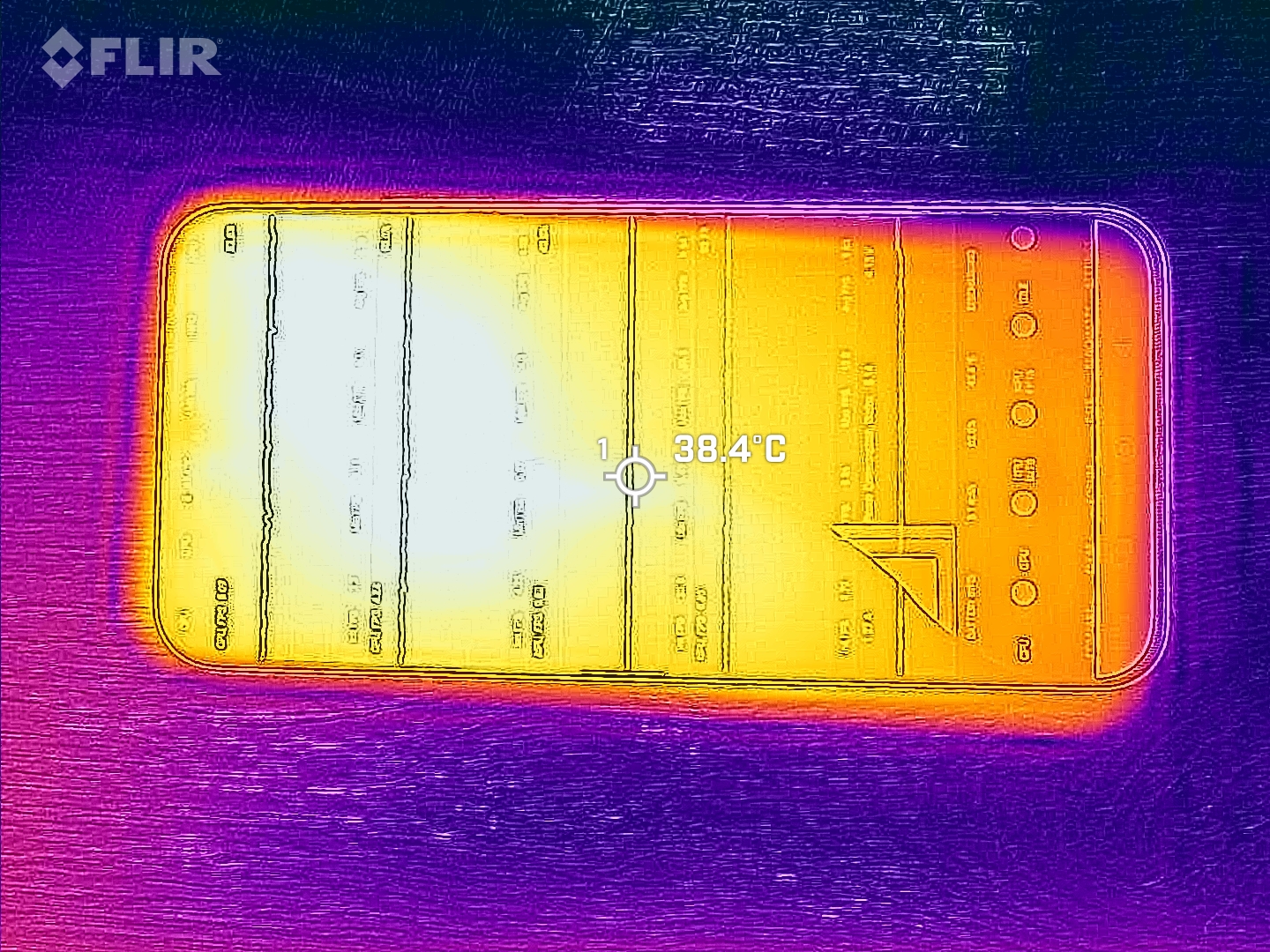
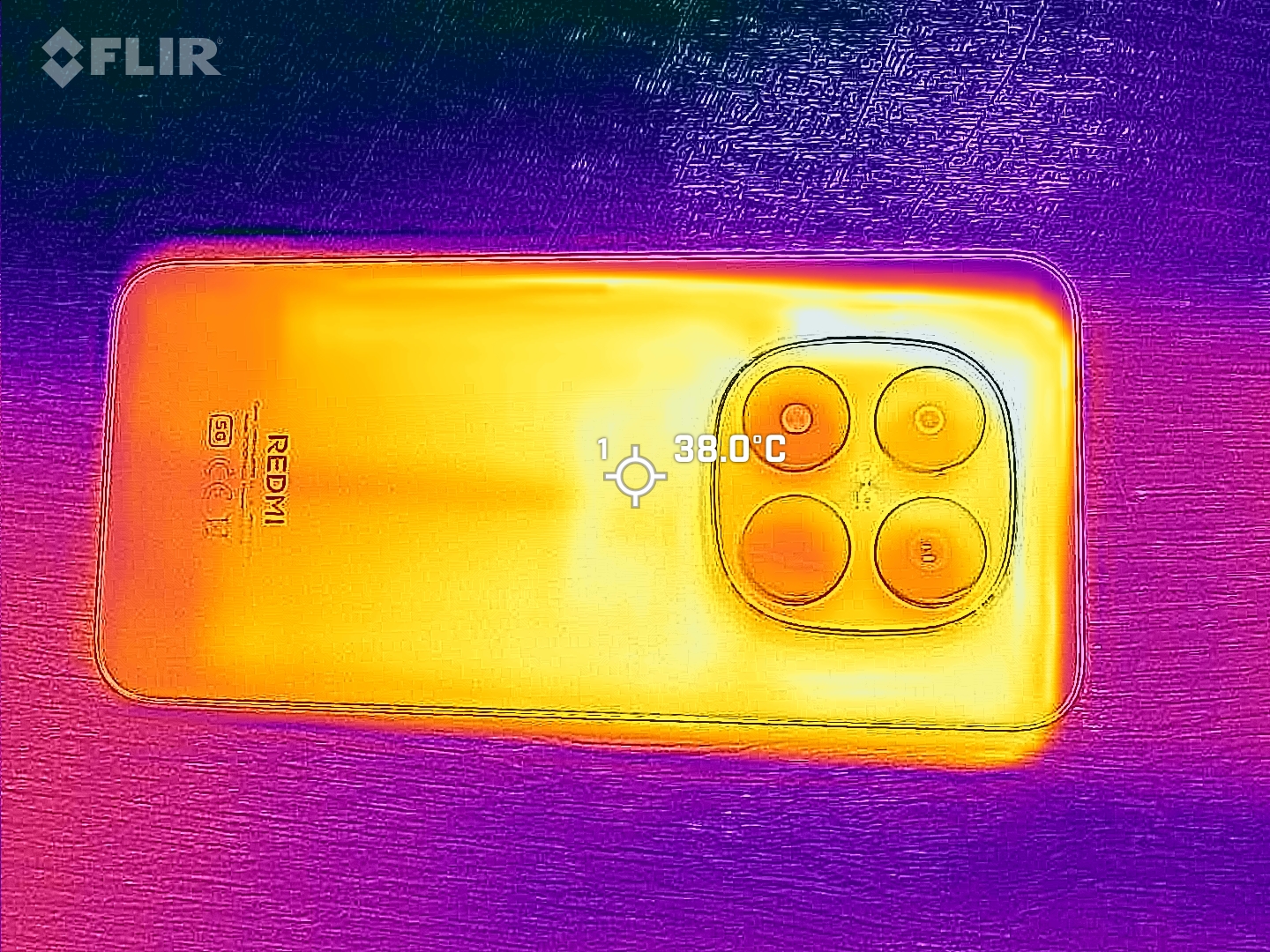
The maximum temperature rise on the casing is 40.7 °C under prolonged load. This is noticeable by hand but not problematic.
In the 3DMark stress tests, we check whether the performance is also constantly available without throttling. We find the frame rates are still very similar even after several repetitions of the benchmarks.
(+) The maximum temperature on the upper side is 38.8 °C / 102 F, compared to the average of 35.4 °C / 96 F, ranging from 21.9 to 247 °C for the class Smartphone.
(±) The bottom heats up to a maximum of 40.7 °C / 105 F, compared to the average of 34.1 °C / 93 F
(+) In idle usage, the average temperature for the upper side is 25.1 °C / 77 F, compared to the device average of 33 °C / 91 F.
3DMark Stress Tests
| 3DMark | |
| Wild Life Stress Test Stability | |
| Samsung Galaxy A36 5G | |
| Motorola Edge 60 Neo | |
| Xiaomi Redmi Note 14 Pro 5G | |
| Wild Life Extreme Stress Test | |
| Xiaomi Redmi Note 15 Pro 5G | |
| Xiaomi Redmi Note 14 Pro 5G | |
| Motorola Edge 60 Neo | |
| Samsung Galaxy A36 5G | |
| OnePlus Nord CE 5 | |
| Steel Nomad Light Stress Test Stability | |
| Motorola Edge 60 Neo | |
| Xiaomi Redmi Note 15 Pro 5G | |
| Xiaomi Redmi Note 14 Pro 5G | |
Speakers
The Xiaomi Redmi Note 15 5G has a speaker on the bottom edge and is also supported by the earpiece, which also has a grille on the upper edge of the housing allowing for slightly wider stereo effects.
The speakers can get quite loud, and the sound is balanced overall but shows slight dips in the mid-range treble. This can lead to an overemphasis of very high frequencies, which creates a somewhat unpleasant sound at high volumes.
If you want to avoid this, you can connect external speakers or headphones via USB port or Bluetooth. A wide range of codecs is available for wireless transmission and also for sound in Hi-Res Audio quality.
Xiaomi Redmi Note 15 Pro 5G audio analysis
(+) | speakers can play relatively loud (87.8 dB)
Bass 100 - 315 Hz
(-) | nearly no bass - on average 22.7% lower than median
(+) | bass is linear (6.6% delta to prev. frequency)
Mids 400 - 2000 Hz
(±) | higher mids - on average 7.1% higher than median
(+) | mids are linear (4.7% delta to prev. frequency)
Highs 2 - 16 kHz
(±) | higher highs - on average 5.1% higher than median
(+) | highs are linear (6.5% delta to prev. frequency)
Overall 100 - 16.000 Hz
(±) | linearity of overall sound is average (16.8% difference to median)
Compared to same class
» 9% of all tested devices in this class were better, 7% similar, 84% worse
» The best had a delta of 11%, average was 34%, worst was 136%
Compared to all devices tested
» 30% of all tested devices were better, 7% similar, 62% worse
» The best had a delta of 4%, average was 23%, worst was 136%
Samsung Galaxy A36 5G audio analysis
(+) | speakers can play relatively loud (90.5 dB)
Bass 100 - 315 Hz
(-) | nearly no bass - on average 26.4% lower than median
(±) | linearity of bass is average (7.3% delta to prev. frequency)
Mids 400 - 2000 Hz
(±) | reduced mids - on average 6.1% lower than median
(+) | mids are linear (4.3% delta to prev. frequency)
Highs 2 - 16 kHz
(+) | balanced highs - only 3% away from median
(+) | highs are linear (1.8% delta to prev. frequency)
Overall 100 - 16.000 Hz
(±) | linearity of overall sound is average (17.9% difference to median)
Compared to same class
» 16% of all tested devices in this class were better, 8% similar, 75% worse
» The best had a delta of 11%, average was 34%, worst was 136%
Compared to all devices tested
» 38% of all tested devices were better, 8% similar, 54% worse
» The best had a delta of 4%, average was 23%, worst was 136%
Battery life: A long-lasting mid-range phone
Energy consumption
The Dimensity 7400-Ultra SoC is initially somewhat more energy-hungry than many other smartphones in this class, but its consumption is relatively low at a maximum of 7.4 W under high load.
The phone can be charged with a maximum of 45 W power, and wireless charging is not possible.
A charger is not included in Europe, but the phone works with all power adapters in our test lab without any problems. A full charge takes around 1:30 hours.
Other devices can be supplied with up to 22.5 W power via wired reverse charging.
| Off / Standby |   0.1 / 0.2 Watt 0.1 / 0.2 Watt |
| Idle |  1.2 / 1.5 / 1.9 Watt 1.2 / 1.5 / 1.9 Watt |
| Load |
4 / 7.4 Watt |
    
| |
Key:
min: ,
med: ,
max: Metrahit Energy | |
| Xiaomi Redmi Note 15 Pro 5G 6580 mAh | Xiaomi Redmi Note 14 Pro 5G 5110 mAh | Motorola Edge 60 Neo 5000 mAh | Samsung Galaxy A36 5G 5000 mAh | Average MediaTek Dimensity 7400-Ultra | Average of class Smartphone | |
|---|---|---|---|---|---|---|
| Power Consumption | 6% | -1% | -13% | 0% | -14% | |
| Idle Minimum * (Watt) | 1.2 | 1.17 2% | 0.8 33% | 0.86 28% | 1.2 ? -0% | 0.903 ? 25% |
| Idle Average * (Watt) | 1.5 | 1.38 8% | 1.2 20% | 1.75 -17% | 1.5 ? -0% | 1.477 ? 2% |
| Idle Maximum * (Watt) | 1.9 | 1.41 26% | 1.7 11% | 1.82 4% | 1.9 ? -0% | 1.679 ? 12% |
| Load Average * (Watt) | 4 | 3.58 10% | 5.4 -35% | 5.31 -33% | 4 ? -0% | 6.64 ? -66% |
| Load Maximum * (Watt) | 7.4 | 8.44 -14% | 10.1 -36% | 10.95 -48% | 7.4 ? -0% | 10.5 ? -42% |
* ... smaller is better
Power consumption: Geekbench (150 cd/m²)
Power consumption: GFXbench (150 cd/m²)
Battery life
Xiaomi has fitted a significantly more powerful battery than before, and the Redmi Note 15 Pro 5G now features a 6,580 mAh battery.
This means that good battery life can be achieved in practice. In our WLAN surfing test at 150 nits, the phone lasted over 30 hours. That means the phone should last for two days of normal use without charging. If you rarely use your phone, you can wait much longer before charging it.
Under high load, for example when gaming, you still get a runtime of 5:11 hours, which is a good value.
| Xiaomi Redmi Note 15 Pro 5G 6580 mAh | Xiaomi Redmi Note 14 Pro 5G 5110 mAh | Motorola Edge 60 Neo 5000 mAh | OnePlus Nord CE 5 5200 mAh | Samsung Galaxy A36 5G 5000 mAh | |
|---|---|---|---|---|---|
| Battery runtime | -28% | -20% | -45% | -26% | |
| Reader / Idle (h) | 39.2 | 29.2 -26% | 33.4 -15% | ||
| H.264 (h) | 31.7 | 23.7 -25% | 24.3 -23% | ||
| WiFi v1.3 (h) | 30.5 | 20.1 -34% | 24.4 -20% | 16.9 -45% | 14.8 -51% |
| Load (h) | 5.2 | 3.9 -25% | 4.5 -13% |
Notebookcheck's overall impressions of the Xiaomi Redmi Note 15 Pro 5G
Thanks to the long battery life, the very bright screen, and the good main camera, the Xiaomi Redmi Note 15 Pro 5G maintains its place at the top of the mid-range smartphone segment.
However, the device would benefit from a little more performance to make it stand out even more.

Xiaomi Redmi Note 15 Pro 5G
- 01/25/2026 v8
Florian Schmitt
 Total Sustainability Score:
 Potential alternatives in comparison
Image | Model / Review | Price | Weight | Drive | Display |
|---|---|---|---|---|---|
1. 77.6%  | Xiaomi Redmi Note 15 Pro 5G MediaTek Dimensity 7400-Ultra ⎘ ARM Mali-G615 MP2 ⎘ 8 GB Memory, 256 GB UFS 2.2 | List Price: 400€ | 210 g | 256 GB UFS 2.2 Flash | 6.83" 2772x1280 447 PPI AMOLED |
2. 77.8%  | Xiaomi Redmi Note 14 Pro 5G MediaTek Dimensity 7300 ⎘ ARM Mali-G615 MP2 ⎘ 8 GB Memory, 256 GB UFS 2.2 | List Price: 400€ | 190 g | 256 GB UFS 2.2 Flash | 6.67" 2712x1220 446 PPI AMOLED |
3. 79.5%  | Motorola Edge 60 Neo MediaTek Dimensity 7400X ⎘ ARM Mali-G615 MP2 ⎘ 8 GB Memory, 256 GB UFS 3.1 | Amazon: 1. $643.00 Motorola Edge 60 Neo Dual-SI... 2. $331.99 Motorola Edge 60 16.9 Cm (6.... 3. $626.00 Motorola Edge 60 Neo Dual-SI... List Price: 399€ | 175 g | 256 GB UFS 3.1 Flash | 6.36" 2670x1200 460 PPI pOLED |
4. 80.8%  | OnePlus Nord CE 5 MediaTek Dimensity 8350 ⎘ ARM Mali-G615 MP6 ⎘ 8 GB Memory, 128 GB UFS 3.1 | List Price: 349€ | 199 g | 128 GB UFS 3.1 Flash | 6.77" 2392x1080 388 PPI AMOLED |
5. 78%  | Samsung Galaxy A36 5G Qualcomm Snapdragon 6 Gen 3 ⎘ Qualcomm Adreno 710 ⎘ 6 GB Memory, 256 GB UFS 3.1 | List Price: 379€ | 195 g | 256 GB UFS 3.1 Flash | 6.70" 2340x1080 385 PPI Super AMOLED |
Transparency
The selection of devices to be reviewed is made by our editorial team. The test sample was provided to the author as a loan by the manufacturer or retailer for the purpose of this review. The lender had no influence on this review, nor did the manufacturer receive a copy of this review before publication. There was no obligation to publish this review. As an independent media company, Notebookcheck is not subjected to the authority of manufacturers, retailers or publishers.
This is how Notebookcheck is testing
Every year, Notebookcheck independently reviews hundreds of laptops and smartphones using standardized procedures to ensure that all results are comparable. We have continuously developed our test methods for around 20 years and set industry standards in the process. In our test labs, high-quality measuring equipment is utilized by experienced technicians and editors. These tests involve a multi-stage validation process. Our complex rating system is based on hundreds of well-founded measurements and benchmarks, which maintains objectivity. Further information on our test methods can be found here.
 Add as a preferred source on Google


