




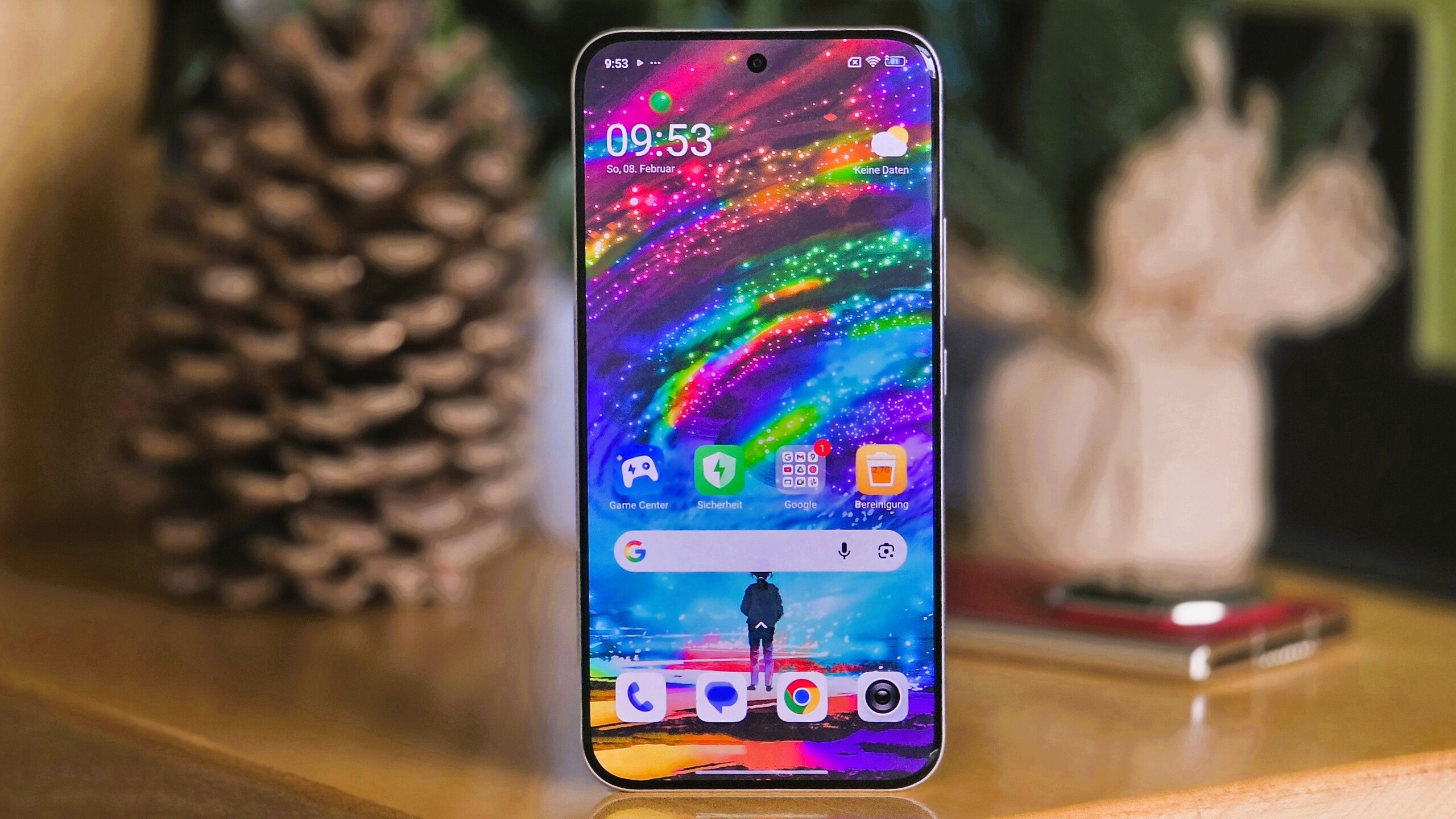
Verdict on the Xiaomi Redmi Note 15 Pro+
The Redmi Note 15 Pro+ is not a classic smartphone for the construction site or for outdoor fans, but it does have the features of a rugged phone, such as water and dust resistance, drop resistance, and high temperature resistance. Thanks to the slim design, however, these virtues are not visible at first glance.
In theory, the large OLED screen is very suitable for outdoor use due to its high peak brightness. But in everyday use, the strong dimming of the brightness can become a problem for outdoor readability after a short time.
Xiaomi has not done itself any favors with the choice of processor. The Redmi Note 15 Pro+ is not a performance high-flyer in the target price range and its sister model, the Poco F7, is clearly the better choice in this aspect.
Pros
Cons
Pricing and availability of the Xiaomi Redmi Note 15 Pro+
The Redmi Note 15 Pro+ is offered in the base version with an RRP of just under €500 in Brown, Blue or Black color options. The mid-range smartphone is available directly from the manufacturer or from Amazon.de.
In the US, the 12 GB + 512 GB variant of the Redmi Note 15 Pro+ can be had from Amazon US for $510, but the smartphone is listed as being compatible only with T-Mobile networks.

Table of Contents
- Verdict on the Xiaomi Redmi Note 15 Pro+
- Specifications of the Xiaomi Redmi Note 15 Pro+
- Build: Waterproof and dustproof Redmi Note
- Features: Redmi Note 15 Pro+ with UFS memory
- Software: Mid-range Xiaomi smartphone still on Android 15
- Communication and GNSS: Xiaomi phone without Wi-Fi 7
- Phone functions and voice quality: Redmi Note comes with eSIM
- Cameras: Redmi Note 15 Pro+ with 200 MP sensor and OIS
- Accessories and warranty: Xiaomi omits the power adapter from the Redmi smartphone
- Input devices and operation: Mid-range phone with up to 2,560 Hz touch response
- Display: Redmi Note 15 Pro+ with large OLED and PWM dimming
- Performance: Redmi Note 15 Pro+ with Qualcomm Snapdragon 7s Gen 4
- Emissions: A cool mid-range smartphone
- Energy and battery life: Android phone without wireless charging
- Notebookcheck's overall impressions of the Redmi Note 15 Pro+
- Potenial alternatives in comparison
The new Redmi Note 15 Pro+ belongs to Xiaomi's premium mid-range lineup. The European version is not only at a disadvantage compared to its Chinese counterpart but is also distributed globally with slight changes.
The battery in our test sample shrinks from 7,000 mAh to 6,500 mAh, but it can be charged faster than the version for the Chinese market with a maximum of 100 W speeds.
Xiaomi has also given the main camera a megapixel upgrade for Europe — instead of a 50 MP sensor, a 200 MP sensor from Samsung is used. However, this is somewhat less suitable for low-light scenes than the Light Fusion 800 in the Chinese model or the Poco M8 Pro.
Specifications of the Xiaomi Redmi Note 15 Pro+
Build: Waterproof and dustproof Redmi Note

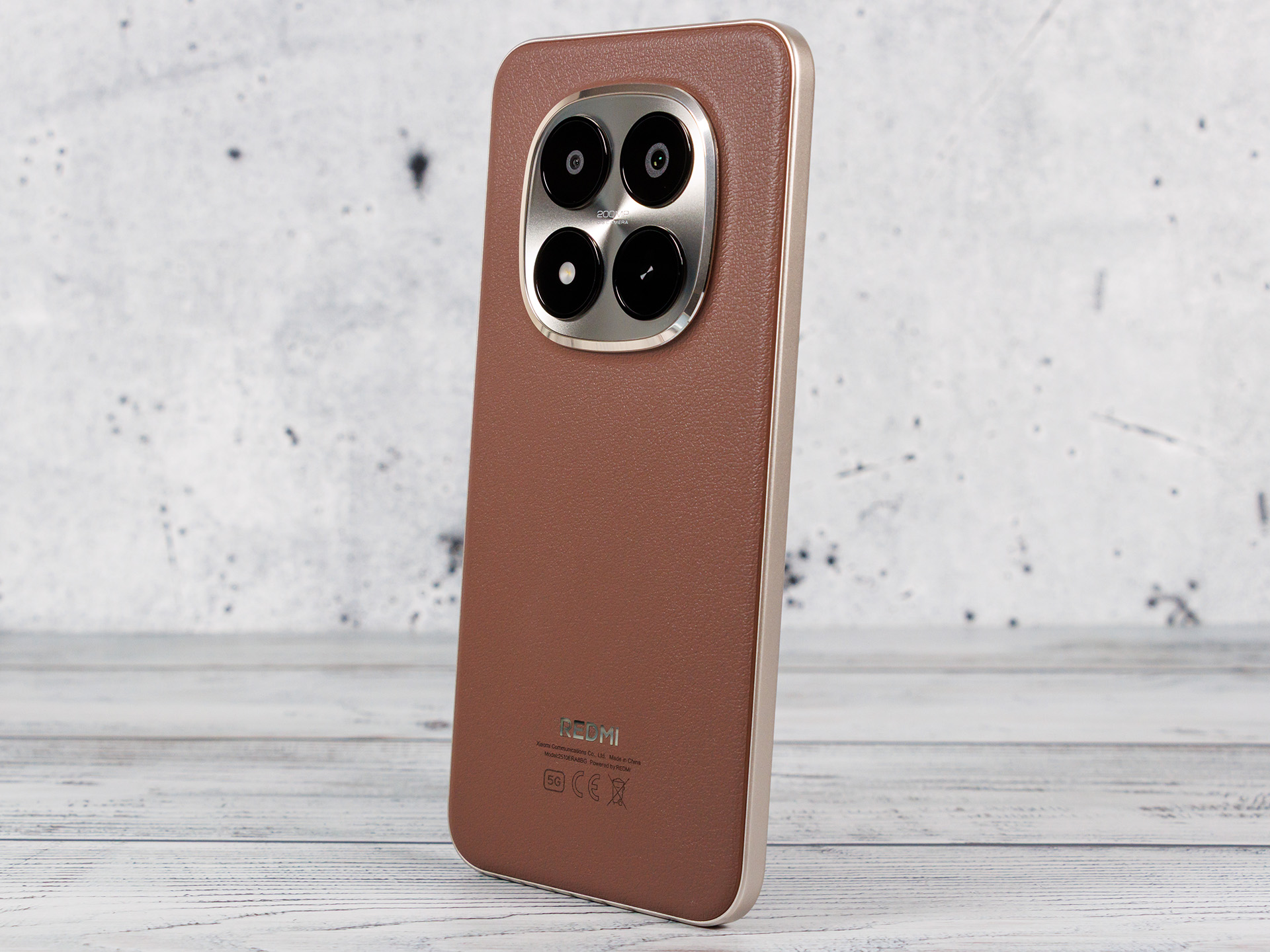
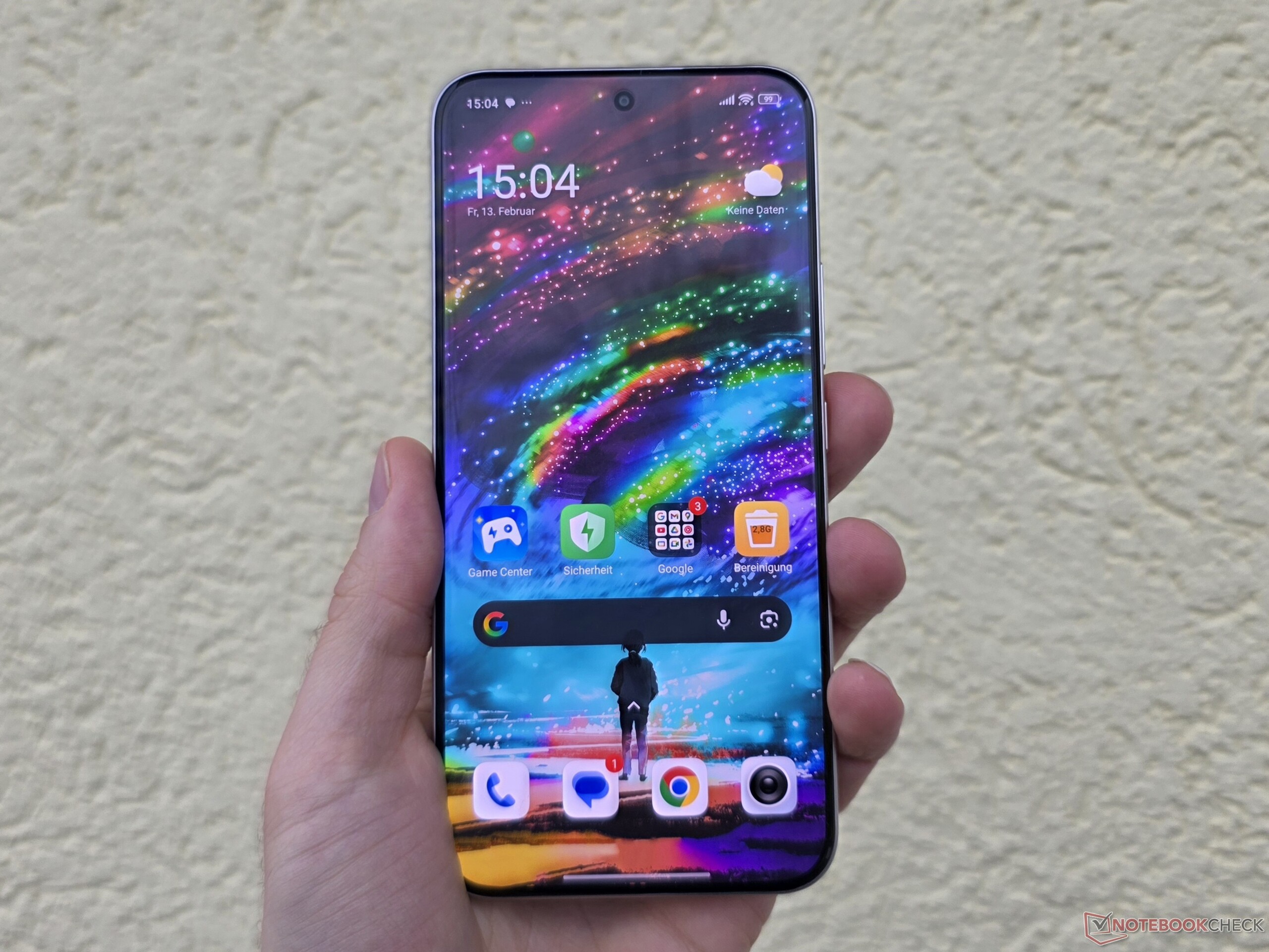
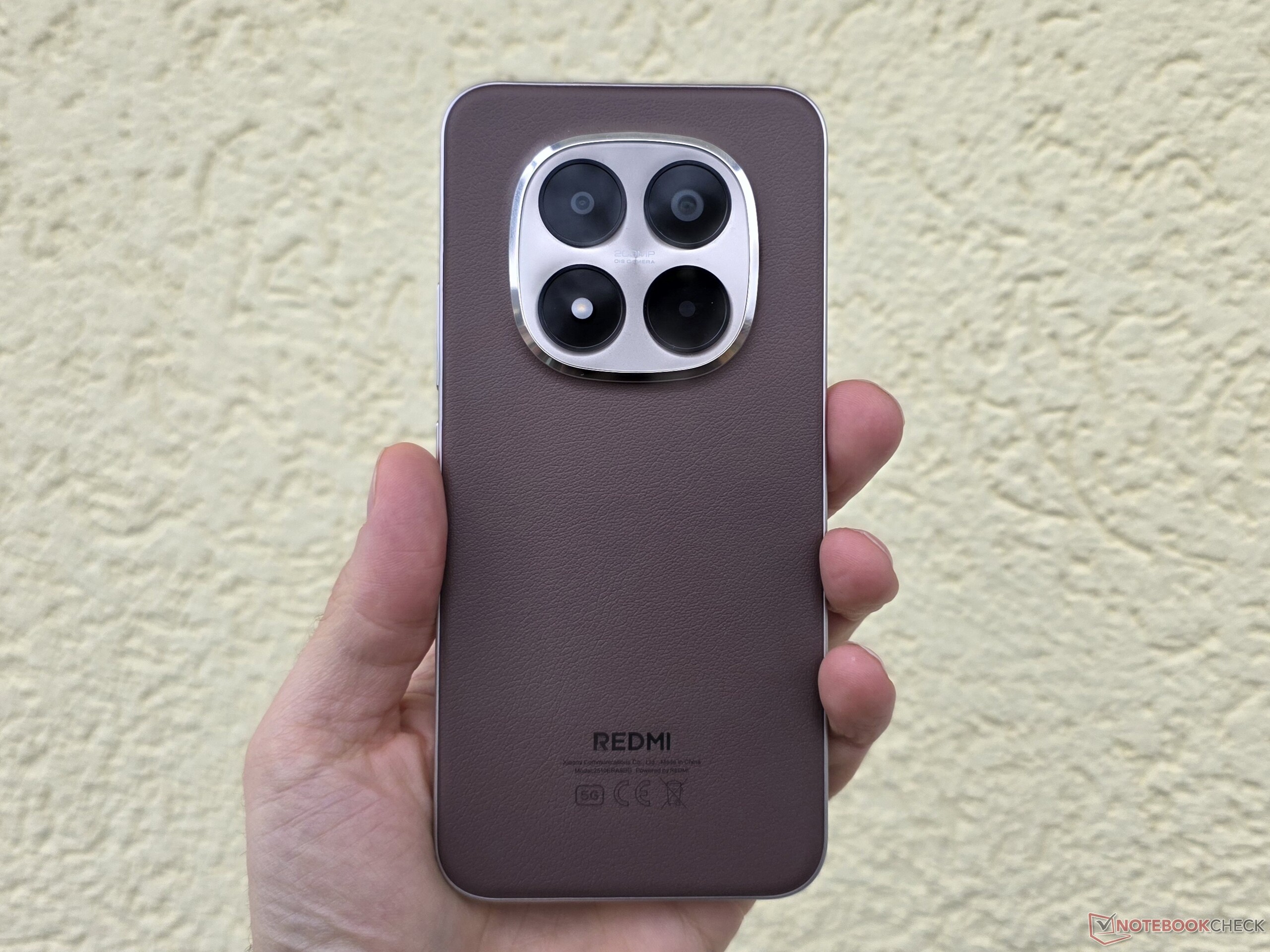
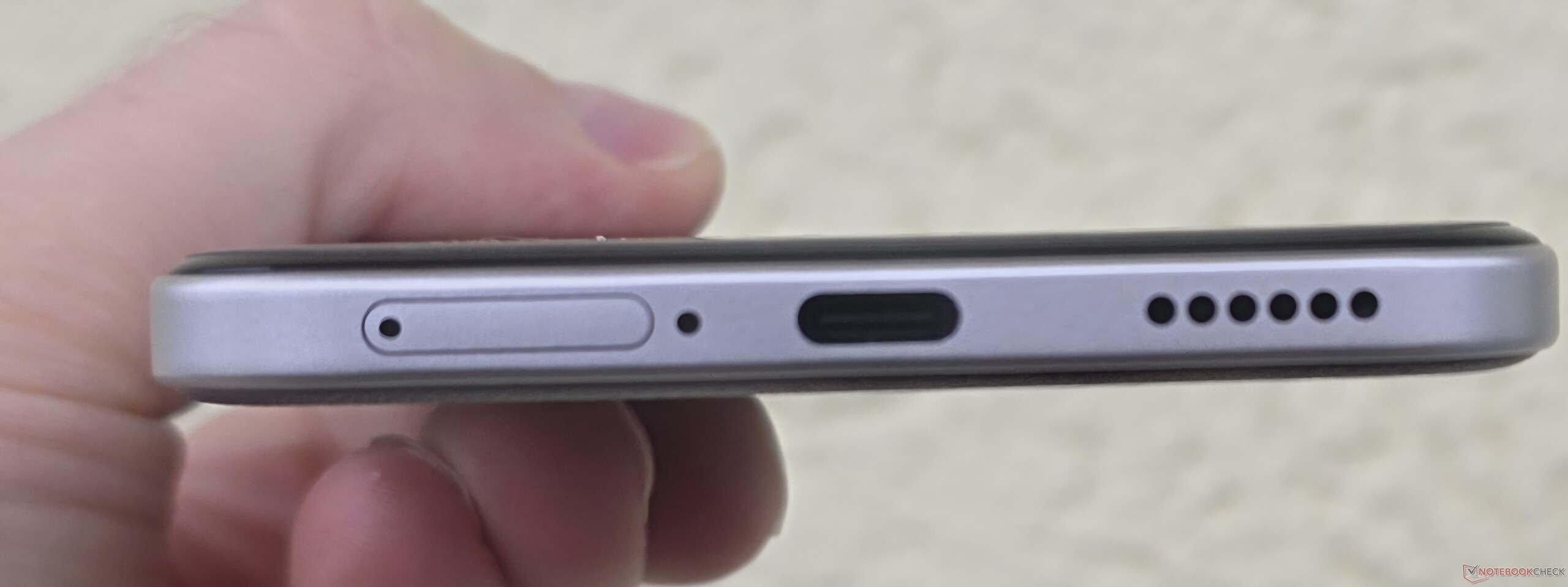
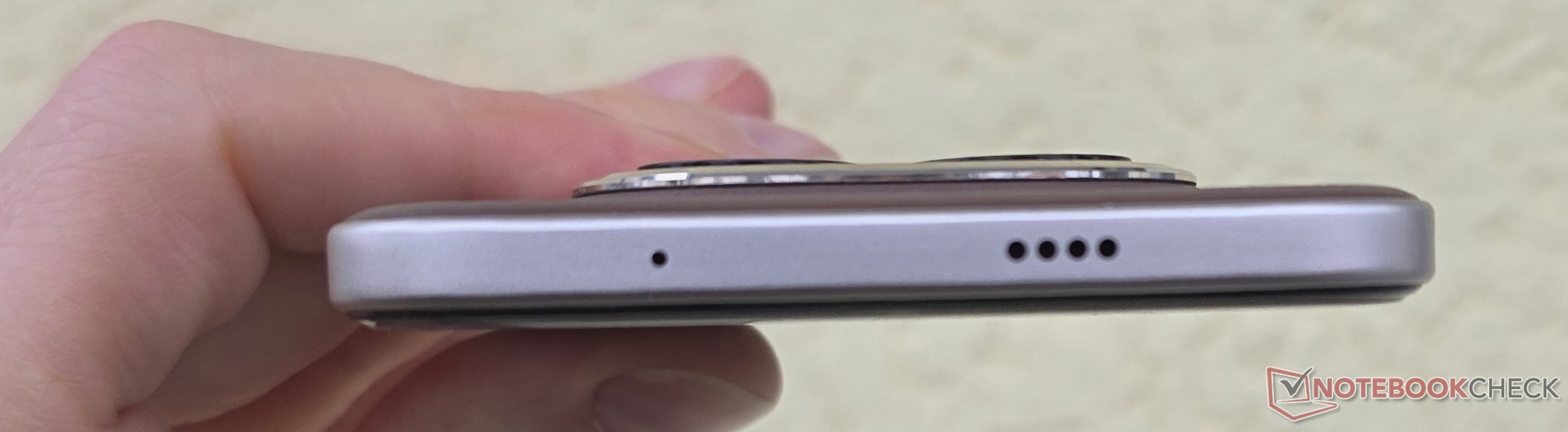
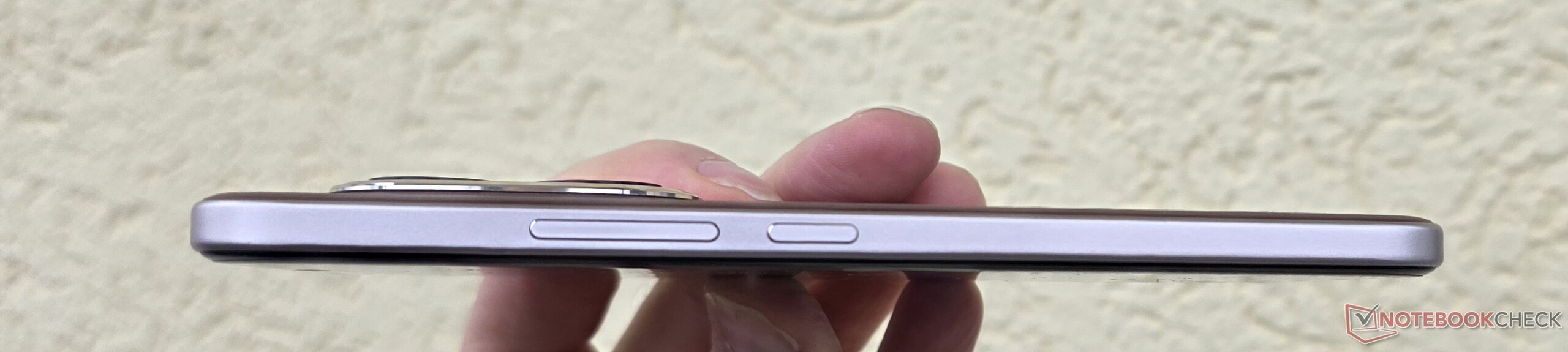
The Redmi Note 15 Pro+ 5G impresses with its robust design despite its rather thin and light casing. The mid-range phone offers IP68 dust and water resistance as well as a "titanium structure", which guarantees certified drop resistance from a height of up to 2.5 meters.
Resistant Corning Gorilla Glass Victus 2 is used for the display protection, while the back is made of glass fiber or vegan leather (both plastic materials).
In the drop test we carried out on wooden flooring from a height of around 1.5 meters, the Xiaomi smartphone showed impressive workmanship with no signs of visible damage.
Features: Redmi Note 15 Pro+ with UFS memory
The Redmi Note 15 Pro+ offers good features but is limited in terms of USB speed. The interface only supports the USB 2.0 standard, and the data transfer rate was severely limited in our test. We only achieved a slow 30 MB/s with a Samsung Portable SSD T7. External hard disks can be formatted with FAT32 (up to 2 TB) and exFAT (up to 128 GB). The NTFS format is also supported.
In addition, the Redmi Note 15 Pro+ comes with NFC for contactless payments and an infrared transmitter. The mid-range phone also features USB On-The-Go (OTG), which allows external USB devices, such as memory sticks, to be connected quickly.
Software: Mid-range Xiaomi smartphone still on Android 15
The Redmi Note 15 Pro+ is somewhat disappointing when it comes to software updates, as Xiaomi still ships its mid-range phone with HyperOS 2 and Android 15. At least, the manufacturer promises an upgrade to Android 19 and security updates until 2032. The latter are to be rolled out once a quarter.
Striking are the frequent advertisements, which can only be deactivated to a limited extent.


Sustainability
Xiaomi does not provide information about the ecological footprint or possible environmental efforts for the Redmi Note 15 Pro+. The mid-range smartphone is listed in the EPREL database with repairability class C. The packaging is made of cardboard.
Communication and GNSS: Xiaomi phone without Wi-Fi 7
The Xiaomi phone reveals light and shadow in our Wi-Fi measurement. Although the 6 GHz channel is used for transmission with our reference router Asus ROG Rapture GT-AXE11000 thanks to Wi-Fi 6E, the less than 1,000 Mbps transfer rates are surprisingly slow. However, this should hardly be relevant in everyday use.
When on the move, the Redmi Note 15 Pro+ supports access to the mobile 5G network at best but also has a ready selection of LTE bands.
| Networking | |
| Xiaomi Redmi Note 15 Pro+ 5G | |
| iperf3 transmit AXE11000 | |
| iperf3 receive AXE11000 | |
| iperf3 transmit AXE11000 6GHz | |
| iperf3 receive AXE11000 6GHz | |
| Honor Magic8 Lite | |
| iperf3 transmit AXE11000 | |
| iperf3 receive AXE11000 | |
| Google Pixel 9a | |
| iperf3 receive AXE11000 | |
| iperf3 receive AXE11000 | |
| iperf3 transmit AXE11000 6GHz | |
| iperf3 receive AXE11000 6GHz | |
| Sony Xperia 10 VII | |
| iperf3 transmit AXE11000 | |
| iperf3 receive AXE11000 | |
| iperf3 transmit AXE11000 6GHz | |
| iperf3 receive AXE11000 6GHz | |
| Xiaomi Poco F7 | |
| iperf3 transmit AXE11000 | |
| iperf3 receive AXE11000 | |
| Xiaomi Redmi Note 14 Pro+ 5G | |
| iperf3 transmit AXE11000 | |
| iperf3 receive AXE11000 | |
| iperf3 transmit AXE11000 6GHz | |
| iperf3 receive AXE11000 6GHz | |
| Average Wi-Fi 6E | |
| iperf3 transmit AXE11000 | |
| iperf3 receive AXE11000 | |
| iperf3 transmit AXE11000 6GHz | |
| iperf3 receive AXE11000 6GHz | |
| Average of class Smartphone | |
| iperf3 transmit AXE11000 | |
| iperf3 receive AXE11000 | |
| iperf3 transmit AXE11000 6GHz | |
| iperf3 receive AXE11000 6GHz | |


The phone's positioning is determined via global satellite networks in single band. We check the positioning quality with a Garmin Venu 2. Minor inaccuracies can be seen on the route, and the mid-range phone likes to cut corners. Nevertheless, the route guidance provided is very accurate.


Phone functions and voice quality: Redmi Note comes with eSIM


The Redmi Note 15 Pro+ enables the use of up to two nano SIM cards including dual SIM 5G + 5G functionality as well as the integration of an eSIM. Also on board are VoLTE and calls via the home Wi-Fi. Xiaomi's offline communication of the 15T series based on a Bluetooth protocol is also offered.
The voice quality is good. Voices are reproduced clearly and sufficiently loud.
Cameras: Redmi Note 15 Pro+ with 200 MP sensor and OIS

The rear camera setup has not changed much compared to the predecessor. The 1/1.4-inch 200 MP sensor delivers an appealing sharpness and natural color reproduction in good lighting conditions, although the white balance is sometimes not right.
In low-light scenarios, however, the Samsung HP3 is only partially convincing, despite its large aperture of f/1.7.
Zooming on the Redmi Note 15 Pro+ is exclusively digital. Thanks to the high number of pixels, the 2x magnification is lossless and is impressive in bright light. Beyond the 4x zoom, however, there is hardly any detail left.
The ultrawide angle lens has a low resolution of just 8 MP, and the results are not really usable without OIS and fixed focus. Similar to the competition in this price segment, this lens is more for the spec sheet than any practical use.






Image comparison
Choose a scene and navigate within the first image. One click changes the position on touchscreens. One click on the zoomed-in image opens the original in a new window. The first image shows the scaled photograph of the test device.
Main camera Main cameraLow lightUltrawide angle5x zoom

























Accessories and warranty: Xiaomi omits the power adapter from the Redmi smartphone
Xiaomi provides its mid-range phone with a USB Type-C cable, a SIM eject tool, and a protective cover. A matching power adapter is not included in the scope of delivery in German-speaking countries.
Xiaomi only offers a warranty of 12 months for the smartphone, which does not affect the retailer's own warranty. The Xiaomi Care insurance package can be taken out as an option starting from €39.
Input devices and operation: Mid-range phone with up to 2,560 Hz touch response
The Redmi Note 15 Pro+ uses an optical sensor to recognize fingerprints. This works very well in everyday use. If you want to use your face for unlocking, you have to resort to a much less reliable 2D face recognition.
Inputs via the touchscreen are processed quickly with a sampling rate of up to 480 Hz, which can go up to 2,560 Hz in games. However, the mid-range smartphone repeatedly shows stutters and sometimes also significant drops in performance.
This tends to happen especially when many processes are running in the background or the Redmi Note 15 Pro+ is brought out of standby after a long time.
Xiaomi has installed a good X-axis linear vibration motor for the mid-range, even if it is not at the top level in terms of haptic feedback.


Display: Redmi Note 15 Pro+ with large OLED and PWM dimming

The Redmi Note 15 Pro+ comes with a large 6.83-inch AMOLED screen. The panel sports a 120 Hz refresh rate and has a high pixel density of 447 ppi.
We can confirm the advertised peak brightness of 3,200 nits based on our measurements (HDR: 2,965 cd/m², APL18: 3,146 cd/m²), although the peak luminance drops below 990 cd/m² after a short time. In everyday use, the maximum brightness is also reduced with manual brightness control (578 cd/m², 779 cd/m² sun mode).
The high PWM frequency of 3,840 Hz of the mid-range phone may cause eye burns or headaches for sensitive people, but the probability is rather low thanks to the combination of DC dimming and the high-frequency PWM dimming.
| |||||||||||||||||||||||||
Brightness Distribution: 99 %
Center on Battery: 1699 cd/m²
Contrast: ∞:1 (Black: 0 cd/m²)
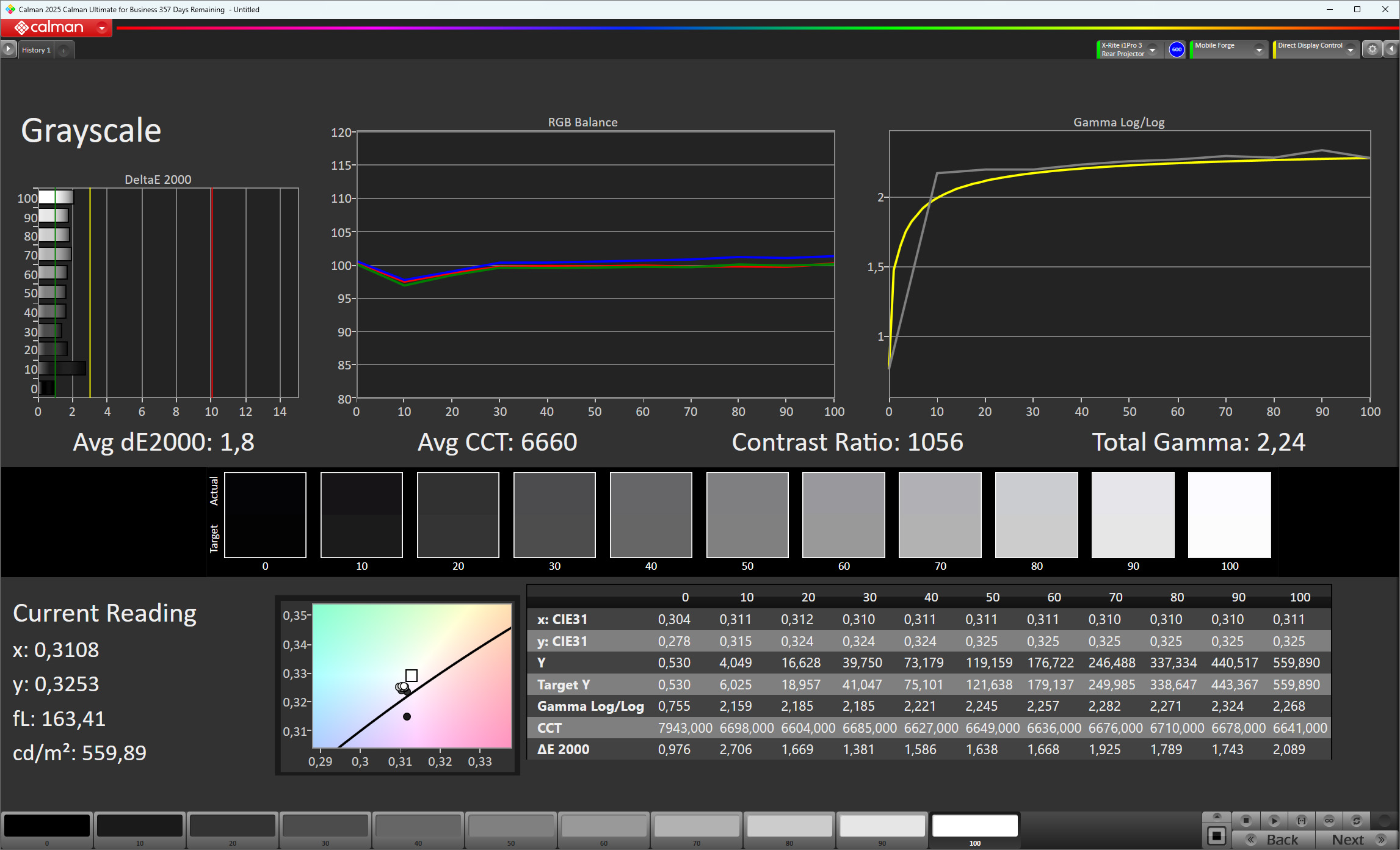
ΔE ColorChecker Calman: 1.7 | ∀{0.5-29.43 Ø4.73}
ΔE Greyscale Calman: 1.8 | ∀{0.09-98 Ø4.98}
99.8% sRGB (Calman 2D)
Gamma: 2.24
CCT: 6660 K
| Xiaomi Redmi Note 15 Pro+ 5G AMOLED, 2772x1280, 6.8" | Honor Magic8 Lite OLED, 2640x1200, 6.8" | Google Pixel 9a pOLED, 2424x1080, 6.3" | Sony Xperia 10 VII OLED, 2340x1080, 6.1" | Xiaomi Poco F7 AMOLED, 2772x1280, 6.8" | Xiaomi Redmi Note 14 Pro+ 5G AMOLED, 2712x1220, 6.7" | |
|---|---|---|---|---|---|---|
| Screen | -3% | 4% | 1% | 3% | 3% | |
| Brightness middle (cd/m²) | 1699 | 1754 3% | 1978 16% | 820 -52% | 1616 -5% | 1210 -29% |
| Brightness (cd/m²) | 1709 | 1748 2% | 1775 4% | 823 -52% | 1637 -4% | 1222 -28% |
| Brightness Distribution (%) | 99 | 98 -1% | 76 -23% | 97 -2% | 95 -4% | 92 -7% |
| Black Level * (cd/m²) | ||||||
| Colorchecker dE 2000 * | 1.7 | 1.5 12% | 1.1 35% | 1 41% | 1.1 35% | 1 41% |
| Colorchecker dE 2000 max. * | 3.4 | 3.5 -3% | 3 12% | 1.8 47% | 2.8 18% | 2.7 21% |
| Greyscale dE 2000 * | 1.8 | 2.4 -33% | 2.2 -22% | 1.4 22% | 2.2 -22% | 1.5 17% |
| Gamma | 2.24 98% | 2.27 97% | 2.22 99% | 2.24 98% | 2.24 98% | 2.25 98% |
| CCT | 6660 98% | 6358 102% | 6622 98% | 6544 99% | 6639 98% | 6509 100% |
* ... smaller is better
| Display / APL18 Peak Brightness | |
| Xiaomi Poco F7 | |
| Xiaomi Redmi Note 15 Pro+ 5G | |
| Google Pixel 9a | |
| Honor Magic8 Lite | |
| Xiaomi Redmi Note 14 Pro+ 5G | |
| Sony Xperia 10 VII | |
| Display / HDR Peak Brightness | |
| Honor Magic8 Lite | |
| Xiaomi Poco F7 | |
| Xiaomi Redmi Note 14 Pro+ 5G | |
| Xiaomi Redmi Note 15 Pro+ 5G | |
| Google Pixel 9a | |
| Sony Xperia 10 VII | |
Screen Flickering / PWM (Pulse-Width Modulation)
| Screen flickering / PWM detected | 120 Hz Amplitude: 16.9 % Secondary Frequency: 3846 Hz | 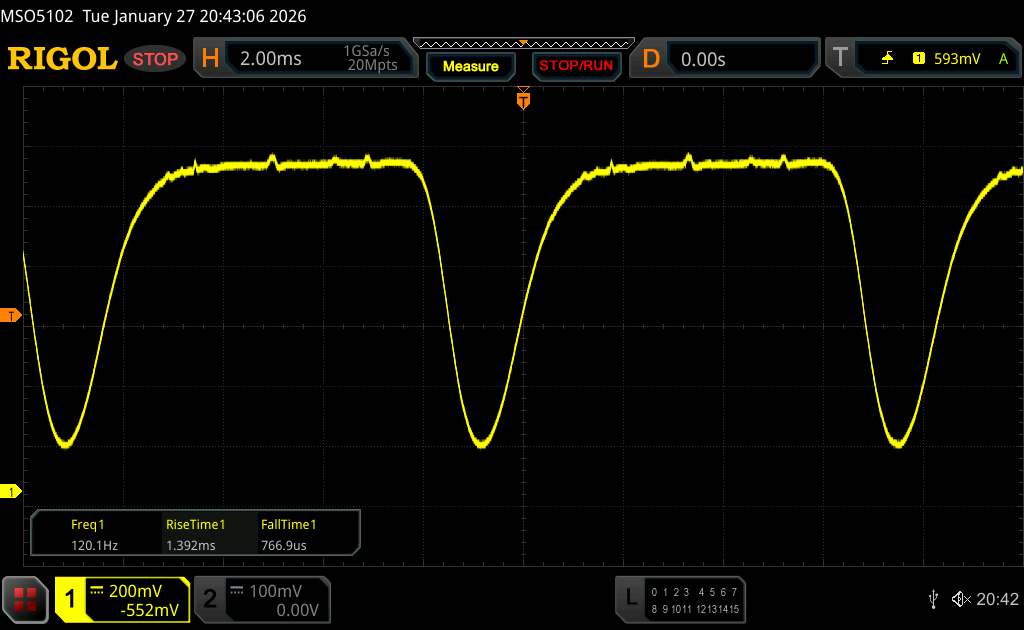 | |
The display backlight flickers at 120 Hz (worst case, e.g., utilizing PWM) . The frequency of 120 Hz is very low, so the flickering may cause eyestrain and headaches after extended use. In comparison: 52 % of all tested devices do not use PWM to dim the display. If PWM was detected, an average of 7857 (minimum: 5 - maximum: 343500) Hz was measured. | |||
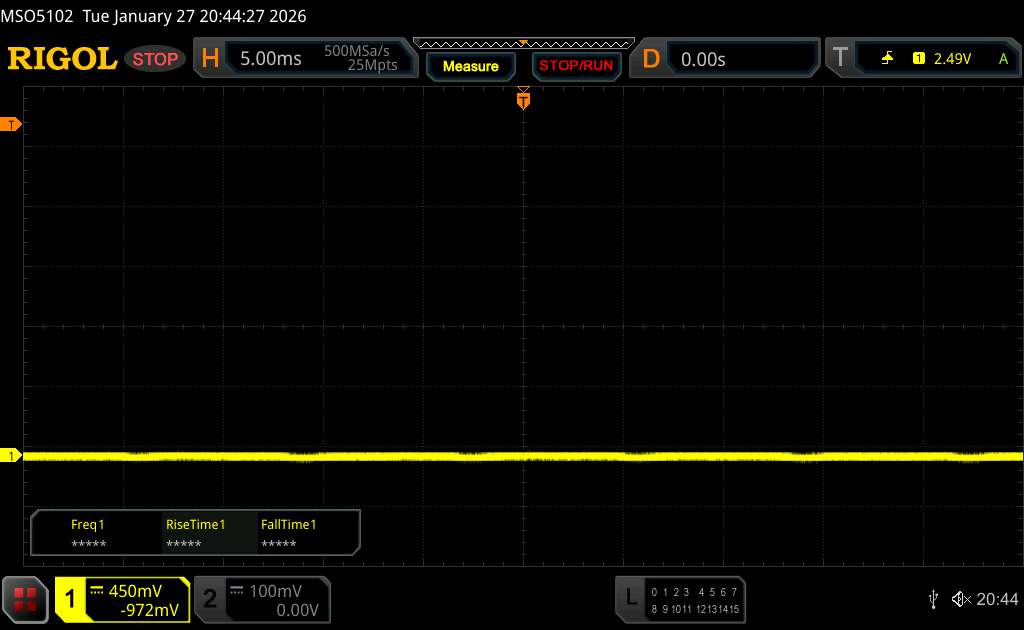
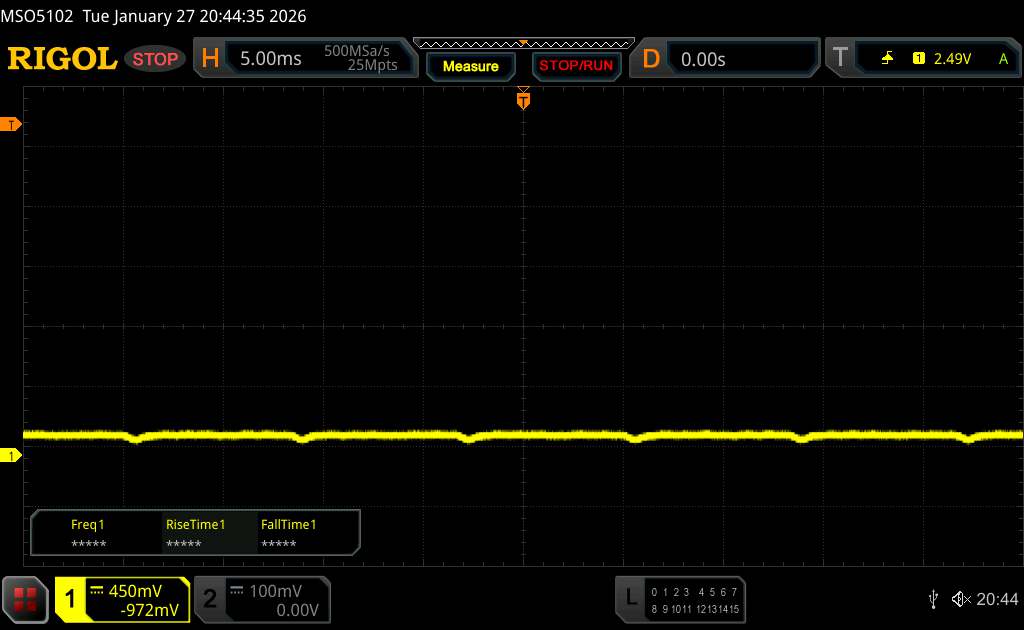
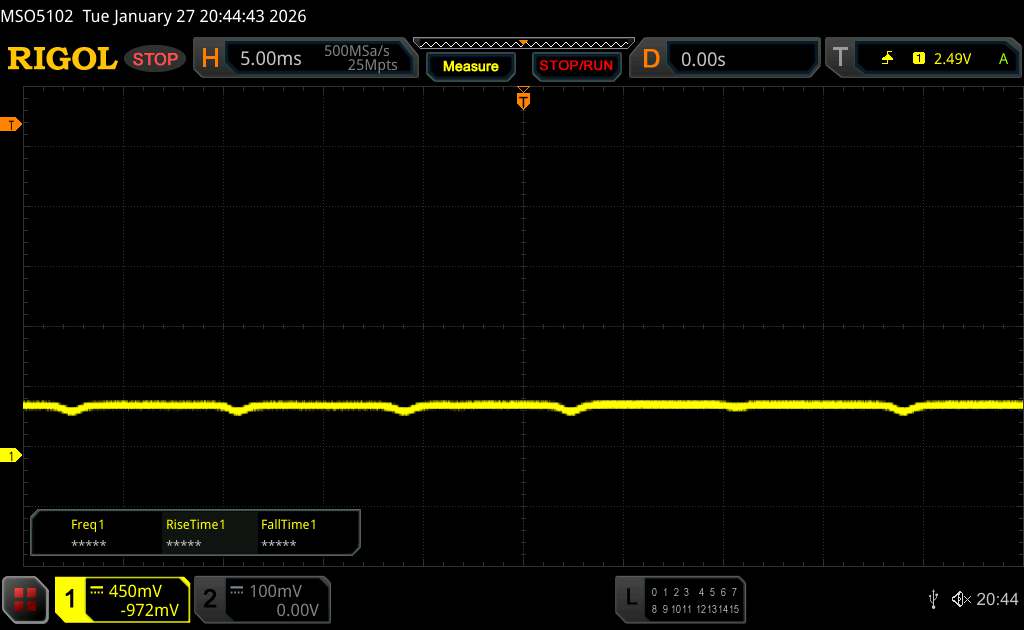
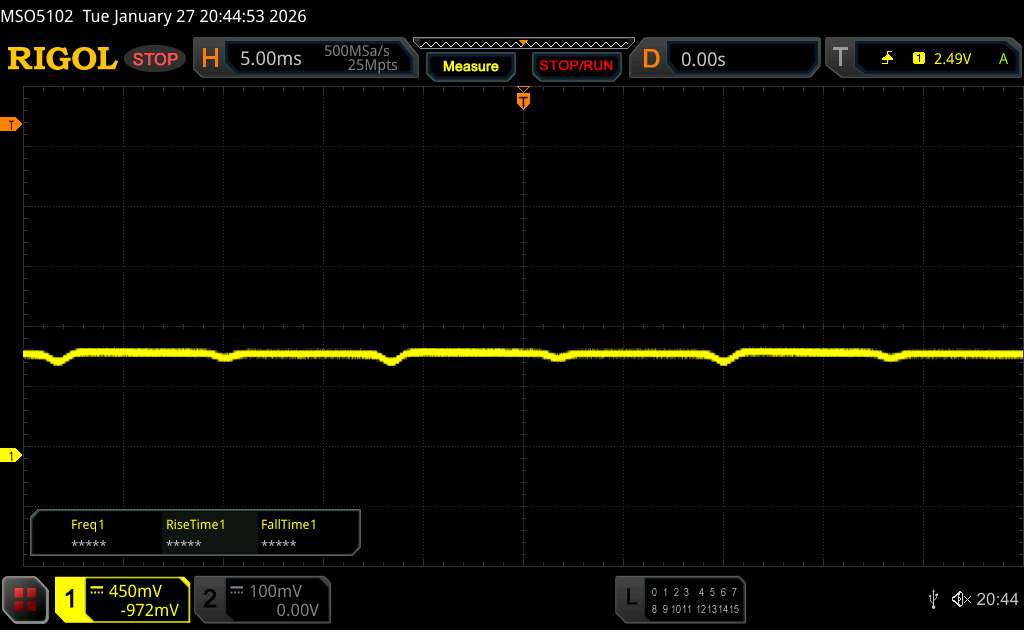
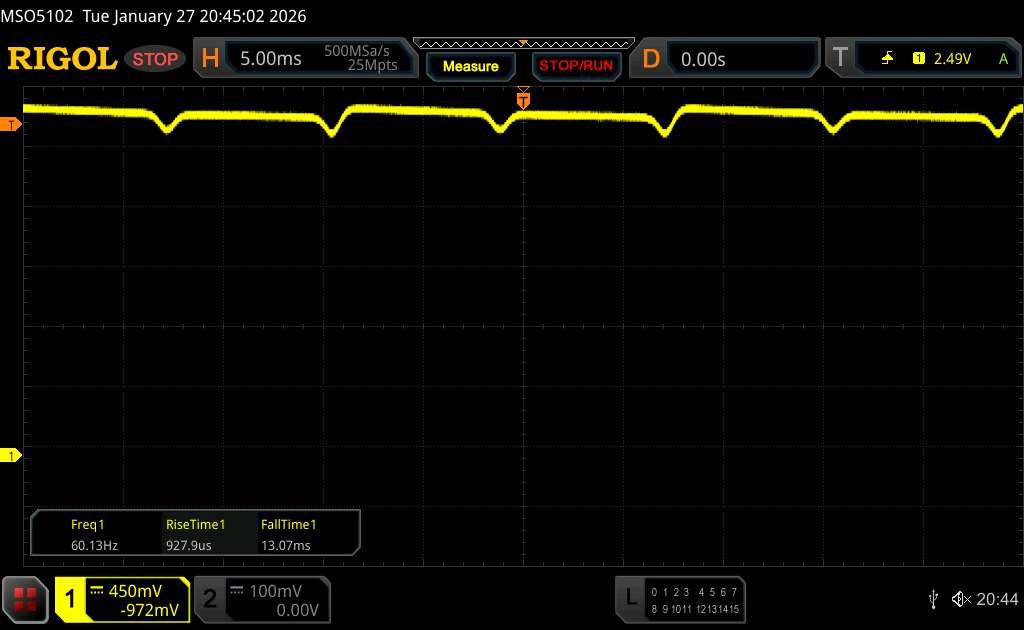
Measurement series with fixed zoom level and different brightness settings (The amplitude curve at minimum brightness looks flat, but this is due to the scaling. The info box shows the enlarged version of the amplitude at minimum brightness)
Our analysis with the photo spectrometer and the software from Calman results in low average Delta-E deviations in the P3 color space for the Redmi Note 15 Pro+.


Display Response Times
| ↔ Response Time Black to White | ||
|---|---|---|
| 1.17 ms ... rise ↗ and fall ↘ combined | ↗ 0.556 ms rise | 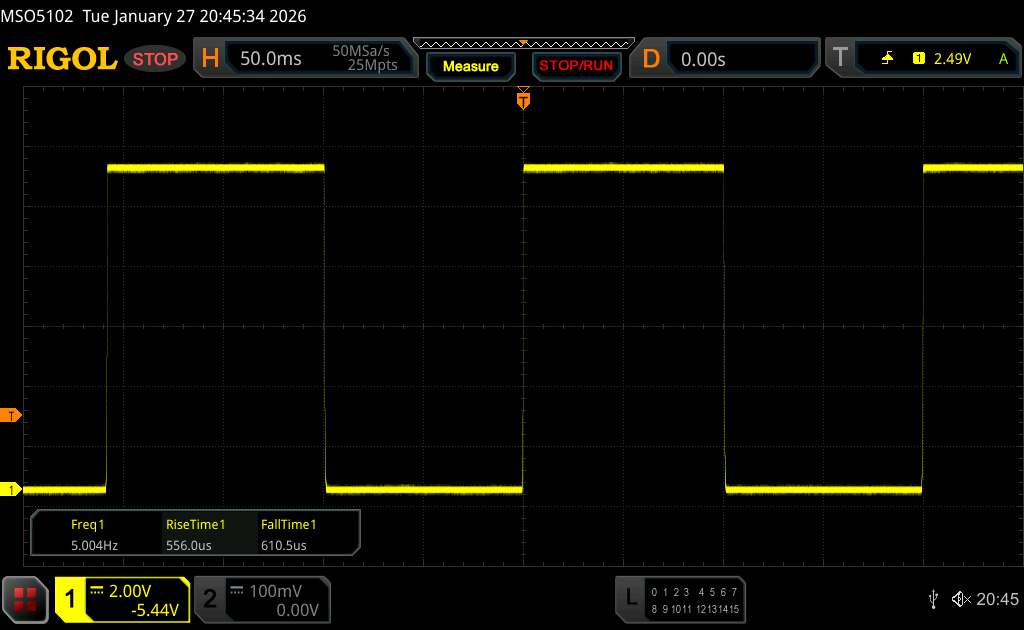 |
| ↘ 0.6105 ms fall | ||
| The screen shows very fast response rates in our tests and should be very well suited for fast-paced gaming. In comparison, all tested devices range from 0.1 (minimum) to 240 (maximum) ms. » 6 % of all devices are better. This means that the measured response time is better than the average of all tested devices (19.9 ms). | ||
| ↔ Response Time 50% Grey to 80% Grey | ||
| 1.13 ms ... rise ↗ and fall ↘ combined | ↗ 0.532 ms rise | 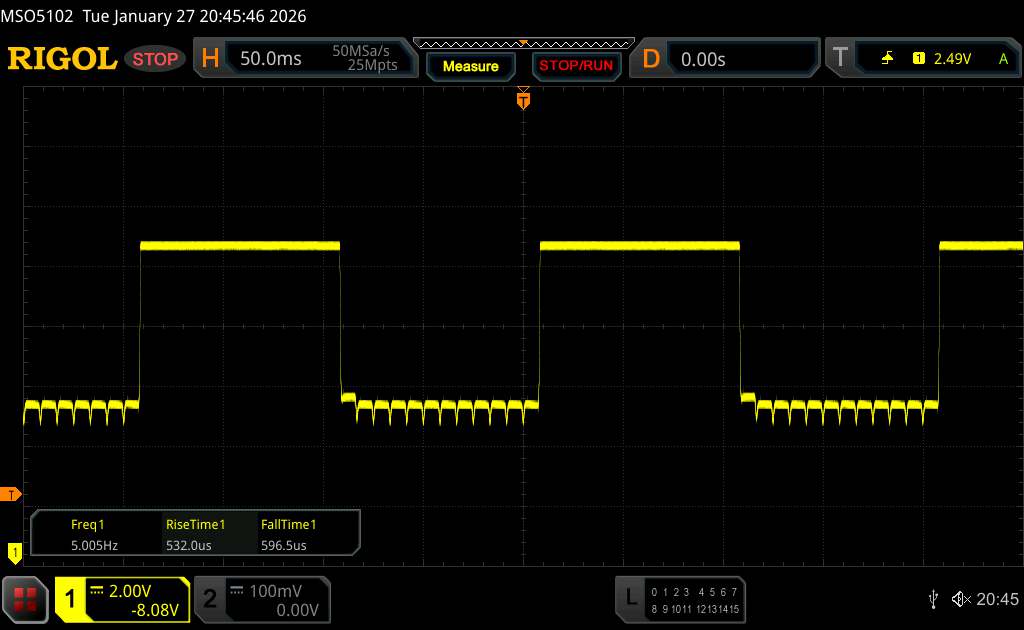 |
| ↘ 0.5965 ms fall | ||
| The screen shows very fast response rates in our tests and should be very well suited for fast-paced gaming. In comparison, all tested devices range from 0.165 (minimum) to 636 (maximum) ms. » 5 % of all devices are better. This means that the measured response time is better than the average of all tested devices (31.2 ms). | ||



Performance: Redmi Note 15 Pro+ with Qualcomm Snapdragon 7s Gen 4
Xiaomi installs a Snapdragon 7s Gen 4 in the Redmi Note 15 Pro+, which performs slightly better in benchmarks than the Qualcomm SoC in the predecessor. However, the manufacturer has not made a big leap with it.
Considering the stutters in everyday use, the Snapdragon 8s Gen 4 of the Poco F7 would have been a better choice.
| UL Procyon AI Inference for Android - Overall Score NNAPI | |
| Google Pixel 9a | |
| Average of class Smartphone (3769 - 81594, n=114, last 2 years) | |
| Xiaomi Poco F7 | |
| Sony Xperia 10 VII | |
| Xiaomi Redmi Note 15 Pro+ 5G | |
| Average Qualcomm Snapdragon 7s Gen 4 (8216 - 8756, n=3) | |
| Xiaomi Redmi Note 14 Pro+ 5G | |
The graphics unit is an Adreno 810 which reaches its limits due to the rather high 1,280p resolution of the Redmi smartphone. Especially in the demanding high-tier tests of the GFXBench, the competition sometimes performs significantly better.
At a 4K resolution, the Redmi Note 15 Pro+ even fails at the 10 fps mark.
GFXBench (DX / GLBenchmark) 2.7: T-Rex Onscreen | 1920x1080 T-Rex Offscreen
GFXBench 3.0: on screen Manhattan Onscreen OGL | 1920x1080 1080p Manhattan Offscreen
GFXBench 3.1: on screen Manhattan ES 3.1 Onscreen | 1920x1080 Manhattan ES 3.1 Offscreen
GFXBench: on screen Car Chase Onscreen | 1920x1080 Car Chase Offscreen | on screen Aztec Ruins High Tier Onscreen | 2560x1440 Aztec Ruins High Tier Offscreen | on screen Aztec Ruins Normal Tier Onscreen | 1920x1080 Aztec Ruins Normal Tier Offscreen | 3840x2160 4K Aztec Ruins High Tier Offscreen
| 3DMark / Wild Life Extreme Unlimited | |
| Xiaomi Poco F7 | |
| Google Pixel 9a | |
| Xiaomi Redmi Note 15 Pro+ 5G | |
| Xiaomi Redmi Note 14 Pro+ 5G | |
| Honor Magic8 Lite | |
| Sony Xperia 10 VII | |
| 3DMark / Wild Life Extreme | |
| Xiaomi Poco F7 | |
| Google Pixel 9a | |
| Xiaomi Redmi Note 15 Pro+ 5G | |
| Xiaomi Redmi Note 14 Pro+ 5G | |
| Honor Magic8 Lite | |
| Sony Xperia 10 VII | |
| 3DMark / Wild Life Unlimited Score | |
| Xiaomi Poco F7 | |
| Google Pixel 9a | |
| Xiaomi Redmi Note 15 Pro+ 5G | |
| Xiaomi Redmi Note 14 Pro+ 5G | |
| Honor Magic8 Lite | |
| Sony Xperia 10 VII | |
| 3DMark / Solar Bay Score | |
| Xiaomi Poco F7 | |
| Xiaomi Redmi Note 14 Pro+ 5G | |
| 3DMark / Solar Bay Unlimited Score | |
| Xiaomi Poco F7 | |
| Xiaomi Redmi Note 14 Pro+ 5G | |
| 3DMark / Steel Nomad Light Unlimited Score | |
| Xiaomi Poco F7 | |
| Google Pixel 9a | |
| Xiaomi Redmi Note 15 Pro+ 5G | |
| Xiaomi Redmi Note 14 Pro+ 5G | |
| Sony Xperia 10 VII | |
| 3DMark / Steel Nomad Light Score | |
| Xiaomi Poco F7 | |
| Google Pixel 9a | |
| Xiaomi Redmi Note 15 Pro+ 5G | |
| Xiaomi Redmi Note 14 Pro+ 5G | |
| Honor Magic8 Lite | |
| Sony Xperia 10 VII | |
| GFXBench (DX / GLBenchmark) 2.7 / T-Rex Onscreen | |
| Xiaomi Poco F7 | |
| Xiaomi Redmi Note 15 Pro+ 5G | |
| Xiaomi Redmi Note 14 Pro+ 5G | |
| Google Pixel 9a | |
| Sony Xperia 10 VII | |
| GFXBench (DX / GLBenchmark) 2.7 / T-Rex Offscreen | |
| Xiaomi Poco F7 | |
| Google Pixel 9a | |
| Xiaomi Redmi Note 15 Pro+ 5G | |
| Xiaomi Redmi Note 14 Pro+ 5G | |
| Sony Xperia 10 VII | |
| GFXBench 3.0 / Manhattan Onscreen OGL | |
| Xiaomi Poco F7 | |
| Google Pixel 9a | |
| Sony Xperia 10 VII | |
| Xiaomi Redmi Note 15 Pro+ 5G | |
| Xiaomi Redmi Note 14 Pro+ 5G | |
| GFXBench 3.0 / 1080p Manhattan Offscreen | |
| Xiaomi Poco F7 | |
| Google Pixel 9a | |
| Sony Xperia 10 VII | |
| Xiaomi Redmi Note 15 Pro+ 5G | |
| Xiaomi Redmi Note 14 Pro+ 5G | |
| GFXBench 3.1 / Manhattan ES 3.1 Onscreen | |
| Xiaomi Poco F7 | |
| Google Pixel 9a | |
| Sony Xperia 10 VII | |
| Xiaomi Redmi Note 15 Pro+ 5G | |
| Xiaomi Redmi Note 14 Pro+ 5G | |
| GFXBench 3.1 / Manhattan ES 3.1 Offscreen | |
| Xiaomi Poco F7 | |
| Google Pixel 9a | |
| Xiaomi Redmi Note 15 Pro+ 5G | |
| Xiaomi Redmi Note 14 Pro+ 5G | |
| Sony Xperia 10 VII | |
| GFXBench / Car Chase Onscreen | |
| Xiaomi Poco F7 | |
| Google Pixel 9a | |
| Xiaomi Redmi Note 14 Pro+ 5G | |
| Sony Xperia 10 VII | |
| Xiaomi Redmi Note 15 Pro+ 5G | |
| GFXBench / Car Chase Offscreen | |
| Xiaomi Poco F7 | |
| Google Pixel 9a | |
| Xiaomi Redmi Note 15 Pro+ 5G | |
| Xiaomi Redmi Note 14 Pro+ 5G | |
| Sony Xperia 10 VII | |
| GFXBench / Aztec Ruins High Tier Onscreen | |
| Xiaomi Poco F7 | |
| Google Pixel 9a | |
| Xiaomi Redmi Note 15 Pro+ 5G | |
| Xiaomi Redmi Note 14 Pro+ 5G | |
| Honor Magic8 Lite | |
| Sony Xperia 10 VII | |
| GFXBench / Aztec Ruins High Tier Offscreen | |
| Xiaomi Poco F7 | |
| Google Pixel 9a | |
| Xiaomi Redmi Note 15 Pro+ 5G | |
| Xiaomi Redmi Note 14 Pro+ 5G | |
| Honor Magic8 Lite | |
| Sony Xperia 10 VII | |
| GFXBench / Aztec Ruins Normal Tier Onscreen | |
| Xiaomi Poco F7 | |
| Google Pixel 9a | |
| Xiaomi Redmi Note 15 Pro+ 5G | |
| Xiaomi Redmi Note 14 Pro+ 5G | |
| Honor Magic8 Lite | |
| Sony Xperia 10 VII | |
| GFXBench / Aztec Ruins Normal Tier Offscreen | |
| Xiaomi Poco F7 | |
| Google Pixel 9a | |
| Xiaomi Redmi Note 15 Pro+ 5G | |
| Xiaomi Redmi Note 14 Pro+ 5G | |
| Honor Magic8 Lite | |
| Sony Xperia 10 VII | |
| GFXBench / 4K Aztec Ruins High Tier Offscreen | |
| Xiaomi Poco F7 | |
| Google Pixel 9a | |
| Xiaomi Redmi Note 15 Pro+ 5G | |
| Xiaomi Redmi Note 14 Pro+ 5G | |
| Honor Magic8 Lite | |
| Sony Xperia 10 VII | |
| Jetstream 2 - 2.2 Total | |
| Xiaomi Poco F7 (Chrome 138.0.7204.168) | |
| Average of class Smartphone (2 - 480, n=80, last 2 years) | |
| Average Qualcomm Snapdragon 7s Gen 4 (150.8 - 197.2, n=5) | |
| Xiaomi Redmi Note 15 Pro+ 5G (Chrome 144) | |
| Google Pixel 9a (Chrome 137) | |
| Sony Xperia 10 VII (Chrome 143) | |
| Speedometer 3 - Score 3.0 | |
| Xiaomi Poco F7 (Chrome 138.0.7204.168) | |
| Average of class Smartphone (3.06 - 45.5, n=106, last 2 years) | |
| Google Pixel 9a (Chrome 137) | |
| Xiaomi Redmi Note 15 Pro+ 5G (Chrome 144) | |
| Average Qualcomm Snapdragon 7s Gen 4 (10.8 - 11.6, n=3) | |
| Xiaomi Redmi Note 14 Pro+ 5G (Chrome 132) | |
| WebXPRT 4 - Overall | |
| Xiaomi Poco F7 (Chrome 138.0.7204.168) | |
| Average of class Smartphone (56 - 306, n=115, last 2 years) | |
| Average Qualcomm Snapdragon 7s Gen 4 (125 - 147, n=3) | |
| Xiaomi Redmi Note 15 Pro+ 5G (Chrome 144) | |
| Xiaomi Redmi Note 14 Pro+ 5G (Chrome 132) | |
| Sony Xperia 10 VII (Chrome 143) | |
| Google Pixel 9a (Chrome 137) | |
| Octane V2 - Total Score | |
| Xiaomi Poco F7 (Chrome 138.0.7204.168) | |
| Google Pixel 9a (Chrome 137) | |
| Average of class Smartphone (2800 - 126661, n=159, last 2 years) | |
| Average Qualcomm Snapdragon 7s Gen 4 (48731 - 49622, n=3) | |
| Xiaomi Redmi Note 15 Pro+ 5G (Chrome 144) | |
| Sony Xperia 10 VII (Chrome 143) | |
| Xiaomi Redmi Note 14 Pro+ 5G (Chrome 132) | |
| Mozilla Kraken 1.1 - Total | |
| Sony Xperia 10 VII (Chrome 143) | |
| Google Pixel 9a (Chrome 137) | |
| Average of class Smartphone (257 - 28190, n=137, last 2 years) | |
| Xiaomi Redmi Note 14 Pro+ 5G (Chrome 132) | |
| Average Qualcomm Snapdragon 7s Gen 4 (812 - 819, n=3) | |
| Xiaomi Redmi Note 15 Pro+ 5G (Chrome 144) | |
| Xiaomi Poco F7 (Chrome 138.0.7204.168) | |
* ... smaller is better
| Xiaomi Redmi Note 15 Pro+ 5G | Honor Magic8 Lite | Google Pixel 9a | Sony Xperia 10 VII | Xiaomi Poco F7 | Xiaomi Redmi Note 14 Pro+ 5G | Average 512 GB UFS 2.2 Flash | Average of class Smartphone | |
|---|---|---|---|---|---|---|---|---|
| AndroBench 3-5 | 92% | 28% | 35% | 204% | -6% | 10% | 90% | |
| Sequential Read 256KB (MB/s) | 1034.37 | 1948.54 88% | 1688.82 63% | 1022.21 -1% | 4042.86 291% | 992.72 -4% | 1026 ? -1% | 2241 ? 117% |
| Sequential Write 256KB (MB/s) | 987.09 | 1828.13 85% | 853.5 -14% | 973.41 -1% | 4035.38 309% | 931.68 -6% | 936 ? -5% | 1921 ? 95% |
| Random Read 4KB (MB/s) | 171.52 | 344.19 101% | 241.03 41% | 298.75 74% | 346.06 102% | 171.2 0% | 218 ? 27% | 307 ? 79% |
| Random Write 4KB (MB/s) | 213.85 | 412.87 93% | 261.8 22% | 354.89 66% | 453.7 112% | 186.14 -13% | 255 ? 19% | 361 ? 69% |
Emissions: A cool mid-range smartphone
Temperature
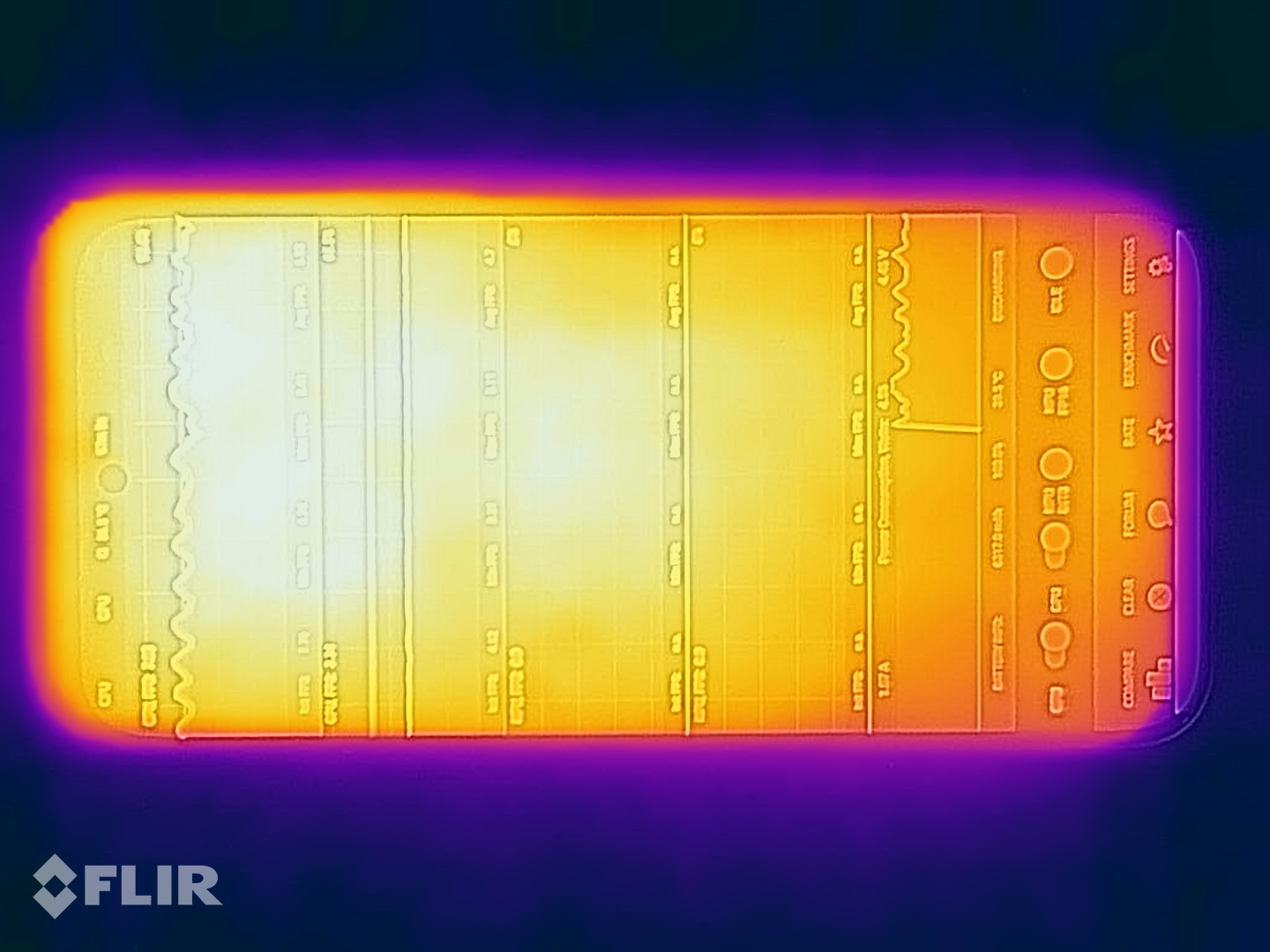
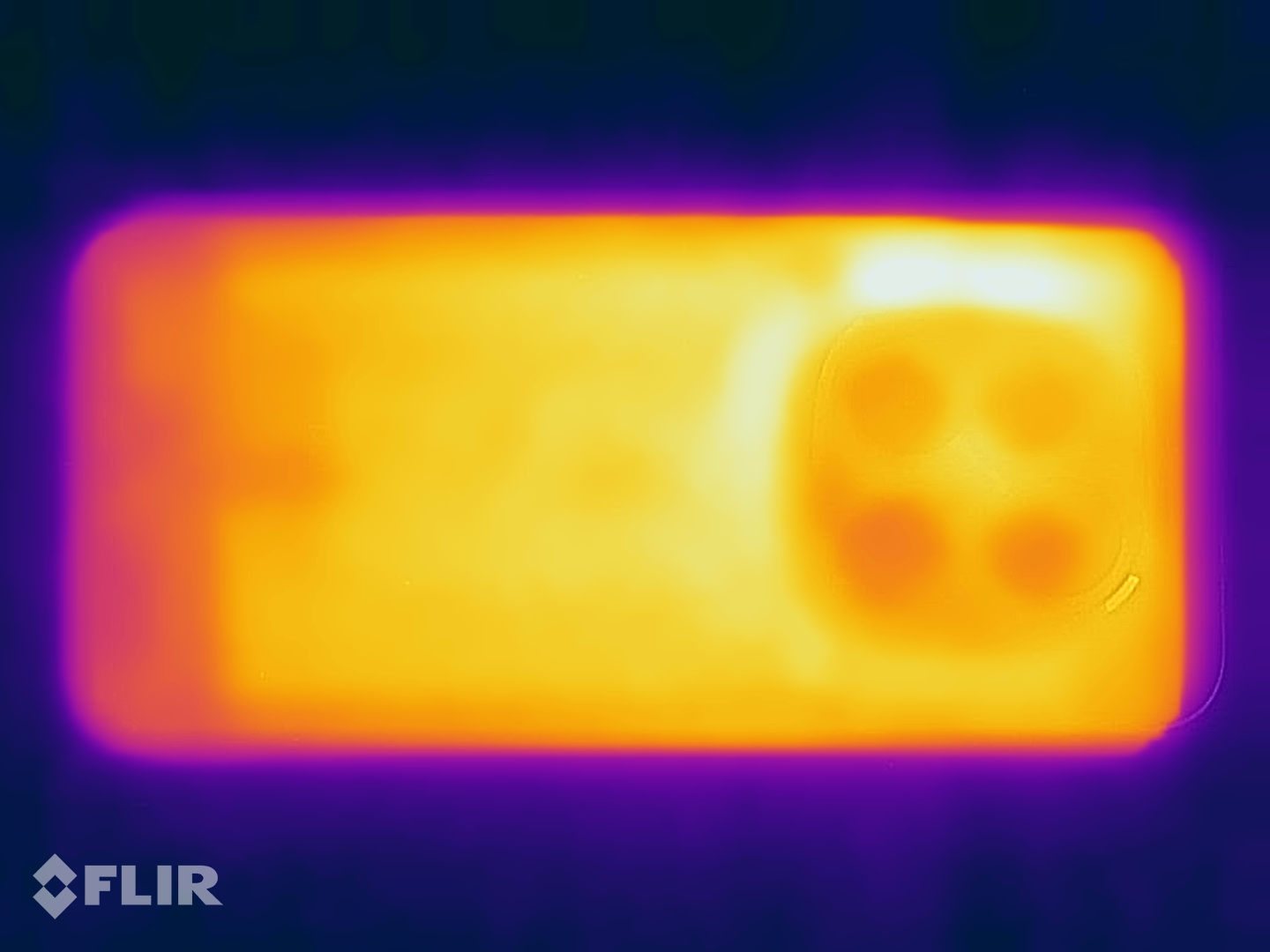
The surface temperatures are low. The 3DMark stress tests also do not reveal any significant fluctuations in frame rates under computationally intensive loads.
(+) The maximum temperature on the upper side is 38.8 °C / 102 F, compared to the average of 35.3 °C / 96 F, ranging from 21.9 to 247 °C for the class Smartphone.
(+) The bottom heats up to a maximum of 37.3 °C / 99 F, compared to the average of 34 °C / 93 F
(+) In idle usage, the average temperature for the upper side is 26 °C / 79 F, compared to the device average of 32.9 °C / 91 F.
3DMark Stress Tests
| 3DMark | |
| Wild Life Stress Test Stability | |
| Sony Xperia 10 VII | |
| Honor Magic8 Lite | |
| Xiaomi Redmi Note 15 Pro+ 5G | |
| Xiaomi Redmi Note 14 Pro+ 5G | |
| Xiaomi Poco F7 | |
| Google Pixel 9a | |
| Wild Life Extreme Stress Test | |
| Sony Xperia 10 VII | |
| Honor Magic8 Lite | |
| Xiaomi Redmi Note 15 Pro+ 5G | |
| Xiaomi Redmi Note 14 Pro+ 5G | |
| Xiaomi Poco F7 | |
| Google Pixel 9a | |
| Solar Bay Stress Test Stability | |
| Xiaomi Poco F7 | |
| Steel Nomad Light Stress Test Stability | |
| Sony Xperia 10 VII | |
| Xiaomi Redmi Note 15 Pro+ 5G | |
| Honor Magic8 Lite | |
| Xiaomi Redmi Note 14 Pro+ 5G | |
| Google Pixel 9a | |
| Xiaomi Poco F7 | |
Speakers
The Redmi Note 15 Pro+ comes with stereo speakers with a slight hint of bass. While the highs drop off, the mids show an increasing progression in the pink noise.
Xiaomi Redmi Note 15 Pro+ 5G audio analysis
(+) | speakers can play relatively loud (94.5 dB)
Bass 100 - 315 Hz
(-) | nearly no bass - on average 15.7% lower than median
(+) | bass is linear (3.6% delta to prev. frequency)
Mids 400 - 2000 Hz
(±) | higher mids - on average 7.6% higher than median
(+) | mids are linear (5.1% delta to prev. frequency)
Highs 2 - 16 kHz
(±) | higher highs - on average 8.9% higher than median
(+) | highs are linear (5.3% delta to prev. frequency)
Overall 100 - 16.000 Hz
(±) | linearity of overall sound is average (18.7% difference to median)
Compared to same class
» 22% of all tested devices in this class were better, 9% similar, 69% worse
» The best had a delta of 11%, average was 34%, worst was 134%
Compared to all devices tested
» 42% of all tested devices were better, 8% similar, 50% worse
» The best had a delta of 4%, average was 24%, worst was 134%
Xiaomi Redmi Note 14 Pro+ 5G audio analysis
(+) | speakers can play relatively loud (90.6 dB)
Bass 100 - 315 Hz
(-) | nearly no bass - on average 25.6% lower than median
(±) | linearity of bass is average (7.7% delta to prev. frequency)
Mids 400 - 2000 Hz
(±) | reduced mids - on average 5% lower than median
(+) | mids are linear (4.5% delta to prev. frequency)
Highs 2 - 16 kHz
(+) | balanced highs - only 3.1% away from median
(+) | highs are linear (4.4% delta to prev. frequency)
Overall 100 - 16.000 Hz
(±) | linearity of overall sound is average (16.6% difference to median)
Compared to same class
» 8% of all tested devices in this class were better, 5% similar, 86% worse
» The best had a delta of 11%, average was 34%, worst was 134%
Compared to all devices tested
» 29% of all tested devices were better, 6% similar, 66% worse
» The best had a delta of 4%, average was 24%, worst was 134%
Energy and battery life: Android phone without wireless charging
Power consumption
The battery grows in comparison to its predecessor to 6,500 mAh, and can now be charged with up to 100 W speeds. This means that the Redmi Note 15 Pro+ is fully charged ideally in around 45 minutes.
Wireless charging is not supported, but the battery can be used as a power bank with up to 22.5 W power delivery.
The power consumption is inconspicuous for a 6.83-inch smartphone.
| Off / Standby |   0.03 / 0.21 Watt 0.03 / 0.21 Watt |
| Idle |  0.96 / 1.18 / 1.3 Watt 0.96 / 1.18 / 1.3 Watt |
| Load |
3.79 / 7.5 Watt |
    
| |
Key:
min: ,
med: ,
max: Metrahit Energy | |
| Xiaomi Redmi Note 15 Pro+ 5G 6500 mAh | Honor Magic8 Lite 7500 mAh | Google Pixel 9a 5100 mAh | Sony Xperia 10 VII 5000 mAh | Xiaomi Poco F7 6500 mAh | Xiaomi Redmi Note 14 Pro+ 5G 5110 mAh | Average Qualcomm Snapdragon 7s Gen 4 | Average of class Smartphone | |
|---|---|---|---|---|---|---|---|---|
| Power Consumption | -94% | -76% | -2% | -36% | -3% | -97% | -34% | |
| Idle Minimum * (Watt) | 0.96 | 1.36 -42% | 0.71 26% | 0.85 11% | 1.18 -23% | 1.07 -11% | 1.136 ? -18% | 0.865 ? 10% |
| Idle Average * (Watt) | 1.18 | 2.68 -127% | 2.36 -100% | 1.11 6% | 1.44 -22% | 1.26 -7% | 3.77 ? -219% | 1.459 ? -24% |
| Idle Maximum * (Watt) | 1.3 | 2.76 -112% | 2.41 -85% | 1.17 10% | 1.48 -14% | 1.28 2% | 3.85 ? -196% | 1.645 ? -27% |
| Load Average * (Watt) | 3.79 | 8.24 -117% | 4.32 -14% | 7.62 -101% | 3.7 2% | 5.5 ? -45% | 6.79 ? -79% | |
| Load Maximum * (Watt) | 7.5 | 15.36 -105% | 9.09 -21% | 8.92 -19% | 7.52 -0% | 8.08 ? -8% | 11.3 ? -51% |
* ... smaller is better
Power consumption: Geekbench (150 cd/m²)
Power consumption: GFXbench (150 cd/m²)
Battery life
The battery life of the Redmi Note 15 Pro+ is very good in our practical WLAN test at 150 cd/m². Its sister model is somewhat more enduring, however.
Notebookcheck's overall impressions of the Redmi Note 15 Pro+
The Redmi Note 15 Pro+ combines durability with an appealing look and handy weight.

Xiaomi Redmi Note 15 Pro+ 5G
- 02/14/2026 v8
Marcus Herbrich
 Total Sustainability Score:
 Potenial alternatives in comparison
Image | Model / Review | Price | Weight | Drive | Display |
|---|---|---|---|---|---|
1. 79.4%  | Xiaomi Redmi Note 15 Pro+ 5G Qualcomm Snapdragon 7s Gen 4 ⎘ Qualcomm Adreno 810 ⎘ 12 GB Memory, 512 GB UFS 2.1 | Amazon: List Price: 530€ | 208 g | 512 GB UFS 2.2 Flash | 6.83" 2772x1280 447 PPI AMOLED |
2. 78%  | Honor Magic8 Lite Qualcomm Snapdragon 6 Gen 4 ⎘ Qualcomm Adreno 810 ⎘ 8 GB Memory, 512 GB | Amazon: List Price: 400€ | 189 g | 512 GB UFS 3.1 Flash | 6.79" 2640x1200 427 PPI OLED |
3. 81%  | Google Pixel 9a Google Tensor G4 ⎘ ARM Mali-G715 MP7 ⎘ 8 GB Memory, 128 GB | Amazon: List Price: 549€ | 185.9 g | 128 GB UFS 3.1 Flash | 6.30" 2424x1080 421 PPI pOLED |
4. 79.3%  | Sony Xperia 10 VII Qualcomm Snapdragon 6 Gen 3 ⎘ Qualcomm Adreno 710 ⎘ 8 GB Memory, 128 GB | Amazon: List Price: 449€ | 168 g | 128 GB UFS 3.1 Flash | 6.10" 2340x1080 422 PPI OLED |
5. 85.2%  | Xiaomi Poco F7 Qualcomm Snapdragon 8s Gen 4 SM8735 ⎘ Qualcomm Adreno 825 ⎘ 12 GB Memory, 512 GB | Amazon: | 215.7 g | 512 GB UFS 4.1 Flash | 6.83" 2772x1280 447 PPI AMOLED |
6. 79.6%  | Xiaomi Redmi Note 14 Pro+ 5G Qualcomm Snapdragon 7s Gen 3 ⎘ Qualcomm Adreno 810 ⎘ 12 GB Memory, 512 GB UFS 2.1 | Amazon: List Price: 530€ | 205 g | 512 GB UFS 2.2 Flash | 6.67" 2712x1220 446 PPI AMOLED |
Transparency
The selection of devices to be reviewed is made by our editorial team. The test sample was given to the author by the manufacturer free of charge for the purposes of review. There was no third-party influence on this review, nor did the manufacturer receive a copy of this review before publication. There was no obligation to publish this review. As an independent media company, Notebookcheck is not subjected to the authority of manufacturers, retailers or publishers.
This is how Notebookcheck is testing
Every year, Notebookcheck independently reviews hundreds of laptops and smartphones using standardized procedures to ensure that all results are comparable. We have continuously developed our test methods for around 20 years and set industry standards in the process. In our test labs, high-quality measuring equipment is utilized by experienced technicians and editors. These tests involve a multi-stage validation process. Our complex rating system is based on hundreds of well-founded measurements and benchmarks, which maintains objectivity. Further information on our test methods can be found here.
 Add as a preferred source on Google


