Notebookcheck Logo

Intel Core Ultra 5 125H vs Intel Core Ultra 5 226V

Intel Core Ultra 5 125H

► remove from comparison Intel Ultra 5 125H

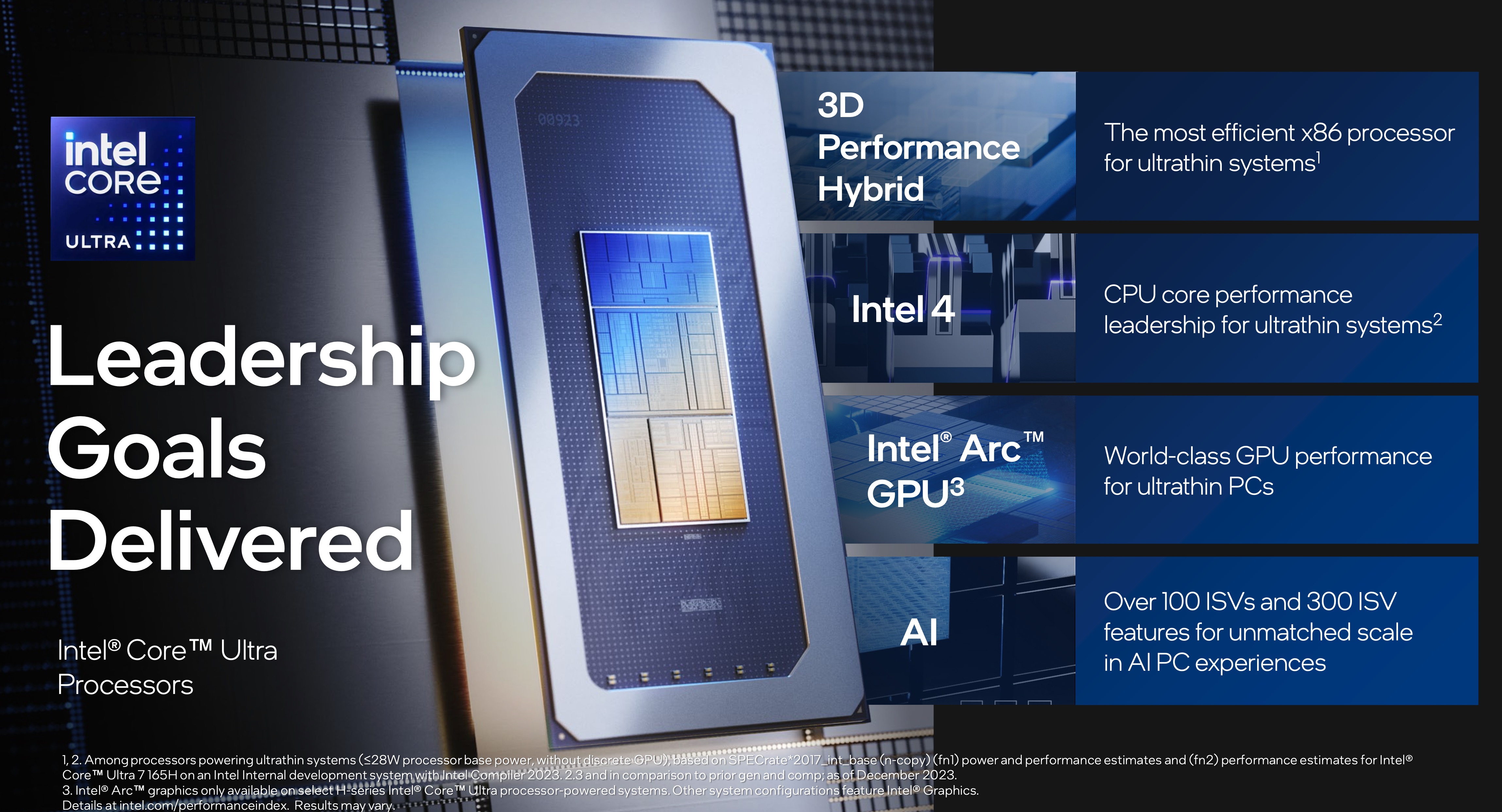
The Intel Core Ultra 5 125H is a mid-range Meteor Lake family chip that debuted in December 2023. This 1st Gen Core Ultra processor has come to replace 13th generation Core chips; it has 14 cores (4 + 8 + 2) and 18 threads at its disposal. Its Performance cores, of which there are 4, are HT-enabled and run at up to 4.5 GHz while its Efficient cores, of which there are 10 (8 main cores plus 2 extra ones found in the Low Power Island), run at up to 3.6 GHz. The 7-core Arc GPU, just out of the oven, serves as the integrated graphics adapter - this runs at up to 2.20 GHz - and there is a bevy of other brand-new technologies on offer as well, including the integrated AI Boost NPU with two Gen 3 engines for hardware AI workload acceleration.

Architecture and Features

With Meteor Lake, Intel intends to deliver higher CPU performance, higher GPU performance and at the same time, longer battery life than what Raptor Lake chips were capable of. The company also wants a large piece of the AI cake and is working with Microsoft and other partners to make that happen. As a result, Windows Defender is now AI-enabled, meaning it can use the Intel NPU to take some of the load off the main CPU cores. We also get this new Intel Device Discovery technology that is designed to give us a better hardware-based remote laptop management than ever before; and, to make things even better, Intel now offers a dedicated Arc Pro graphics driver for workstations.

This generation of Intel Core processors features Redwood architecture P-cores and Crestmont architecture E-cores. Both come with slight architectural improvements over Raptor Cove and Gracemont respectively for slightly higher performance-per-clock figures; the interesting thing is that of the 10 E-cores, two are actually a separate cluster located on what Intel calls a "Low Power Island". Essentially, the latter is an SoC within an SoC that can stay active while most other parts of the chip are temporarily switched off to save power. The low-power E-cores run at up to 2.5 GHz. Intel hopes this approach will let it deliver unprecedentedly low power consumption figures when under low load, boosting battery life of laptops and tablets powered by Meteor Lake.

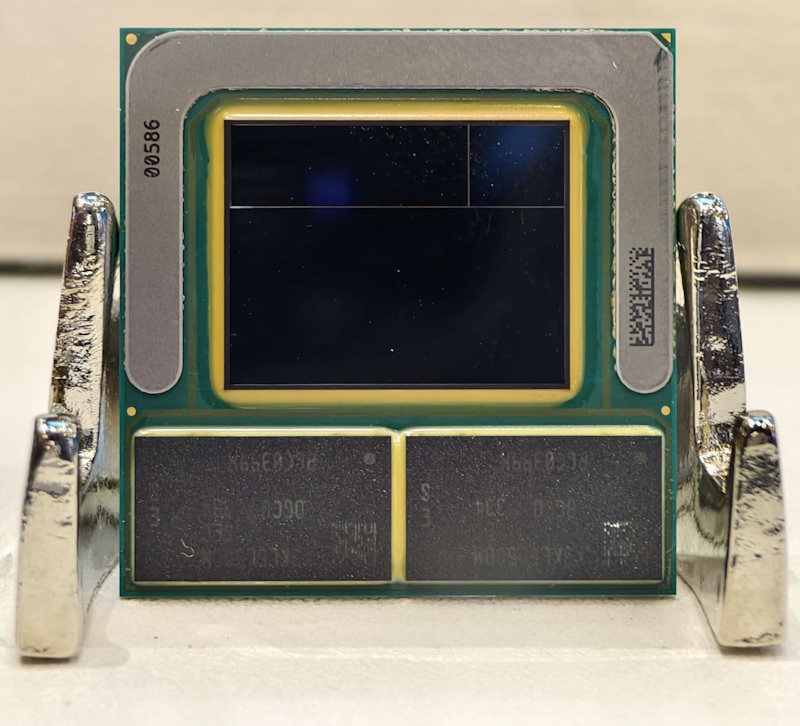
To build its Meteor Lake processors, Intel uses the Foveros technology (stacking several chips on top of each other). This is a cost-cutting measure more than anything else, as manufacturing several small dies on several different processes is so much cheaper than making a huge single die and hoping that there are no defects in it that will require disabling some parts of it.

Elsewhere, the Core Ultra 5 125H comes with 18 MB of L3 cache which is a significant reduction compared to the 24 MB that the 155H, the 165H and the 185H have. The processor has a very healthy number of PCIe 5 and PCIe 4 lanes for NVMe SSD speeds up to 15.7 GB/s; it supports RAM running at up to 7467 MHz (DDR5-5600, LPDDR5-7467, LPDDR5x-7467, to be specific - which is about as good as what 8040 series Ryzen chips have). Naturally, the 125H features built-in Thunderbolt 4 support and Intel CNVi Wi-Fi support. It is also worth mentioning that Intel chose to keep native SATA III support that AMD had removed from its Ryzen processors quite a while ago.

The 125H is compatible with 64-bit Windows 10, 64-bit Windows 11 and with many Linux distros.

Performance

While we have no way of knowing what the 125H will be like, as of December 2023, it's safe to expect the chip to be slightly slower than the Ryzen 7 7735HS (Zen 3 Plus, 8 cores, 16 threads, up to 4.75 GHz), as far as multi-thread performance is concerned.

Either way, real-world performance of the chip may vary significantly depending on how high the CPU power limits are and how competent the cooling solution of the system is.

Graphics

The 7-core Arc GPU running at up to 2.20 GHz is set to overshadow the Radeon 760M; just like the 8-core Arc GPU, this graphics adapter is set to be miles ahead of the aging Xe-series integrated GPUs. As long as one chooses to take Intel's word for it, that is.

A proper DX12 Ultimate graphics adapter, the Arc is no stranger to ray tracing and other modern technologies including AI frame generation (XeSS). It will let you connect up to four SUHD 4320p monitors and it will both HW-encode and HW-encode the most widely used video codecs including AVC, HEVC and AV1 in a fast and efficient manner.

Your mileage may vary depending on how high the CPU power limits are, how competent the cooling solution of your system is, how fast the RAM of your system is. The latter is really important; Intel stresses that for the Arc to deliver the best results possible, multi-channel RAM configuration is a must.

Power consumption

The Base power consumption, in the case of the 125H, is 28 W while its maximum Turbo power consumption is supposed to be within 115 W. A powerful cooling solution is a must for any system powered by this chip.

This Core Ultra 5 series processor is comprised of five small chips ("tiles") that are connected using Intel's Foveros technology. The tile containing main CPU cores is produced on the fairly modern 7 nm Intel process marketed as Intel 4 while most other tiles (the iGPU, the I/O die, ...) are built with TSMC's N5 and N6 processes. The base tile is built with the old Intel 22FFL process.

Intel Core Ultra 5 226V

► remove from comparison Intel Core Ultra 5 226V

The Intel Core Ultra 5 226V is one of the 2 slowest Lunar Lake family processors as of Nov 2024. This is an SoC for use in tablets and laptops of the slimmer kind that was unveiled in Autumn 2024. It features 4 new Skymont E-cores and 4 new Lion Cove P-cores running at up to 3.5 GHz and 4.5 GHz respectively, along with the new Arc 130V iGPU and 16 GB of on-package LPDDR5x-8533 RAM. A new 40 TOPS neural engine, Thunderbolt 4 and PCIe 5 SSD support are included as well.

The only difference between this chip and the Ultra 5 228V is the amount of on-package, non-replaceable RAM: 16 GB vs 32 GB respectively.

Architecture and Features

Lunar Lake is built using the Foveros technology (stacking several dies on top of each other and next to each other), just like Meteor Lake was. The new chips make use of the enormous BGA2833 socket interface. Of the 8 cores, not a single one is Hyper-Threading-enabled which is the opposite of what AMD currently does with its Zen 5/5c chips.

Intel claims Lion Cove cores bring a 14% IPC improvement over Redwood Cove. For Skymont and Crestmont, the difference is a staggering 68%. Several tweaks and improvements are present here, such as the Low Latency Fabric that is supposed to make small data transfers between cores/caches a lot faster. The 226V's level 3 cache is pretty small as compared to more expensive Ultra 7 2xxV and Ultra 9 2xxV chips at 8 MB vs 12 MB. Elsewhere, the 226V has 4 PCIe 5 and 4 PCIe 4 lanes for connecting various kinds of devices, including NVMe SSDs at up to 15.75 GB/s. Thunderbolt 4 support is onboard by default, as is support for CNVi WiFi 7 + BT 5.4 cards from Intel. The 40 TOPS "AI Boost" neural engine is present along with technologies such as Threat Detection to make AI-enabled applications such as the Windows Defender more powerful.

Intel is predicted to get short of on-package RAM in subsequent CPU generations.

Performance

Our in-house testing of an Acer laptop powered by the Ultra 5 chip revealed the latter to be about as fast as the Ryzen 7 7730U and the Ryzen 7 7735U in multi-threaded tasks which is OK but not mind-blowing for late 2024. It is worth noting that the laptop in question does not use the Intel-recommended 17 W long-term power target; instead, the processor gets 30 W to eat which affects its benchmark scores significantly.

Generally speaking, the 226V, 228V, 236V and 238V are slower than the 256V, 258V, 266V, 268V, 288V due to the difference in their last-level cache size as well as clock speeds. However, the difference in performance between the slowest Lunar Lake chip, the 226V, and the fastest chip, the 288V is fairly small at around 10% to 15%. Exact figures depend on the TDP values of the laptops being pitted against each other more than on anything else.

Graphics

The Arc Graphics 130V has 7 Xe² architecture "cores" running at up to 1,850 MHz, as well as 7 ray tracing units at its disposal. This is a direct successor to the Arc 7 iGPU; it is DirectX 12 Ultimate-enabled and able to HW-decode a long list of video codecs such as h.266 VVC, h.265 HEVC, h.264 AVC, AV1 and VP9. Three SUHD 4320p monitors can be used simultaneously with this iGPU.

Its performance can be vastly different depending on which benchmarks and games one runs. Oftentimes, it isn't much faster than its direct predecessor, the Arc 7. It is clear the 130V isn't fast enough to run most triple-A 2024 games at 1080p. However, it's still more than good enough for an occasional gaming session.

Power consumption

While this 2nd generation Core Ultra processor is supposed to consume 17 W when under long-term workloads, the only laptop powered by this chip that we have tested as of early Nov 2024 has a much higher value than that at 30 W.

The Intel-recommended short-term power limit for the chip sits at 37 W.

ModelIntel Core Ultra 5 125HIntel Core Ultra 5 226V
CodenameMeteor Lake-HLunar Lake
SeriesIntel Meteor Lake-HIntel Lunar Lake
Series: Lunar Lake Lunar Lake
Intel Core Ultra 9 185H compare3.8 - 5.1 GHz16 / 22 cores24 MB L3
Intel Core Ultra 7 165H compare3.8 - 5 GHz16 / 22 cores24 MB L3
Intel Core Ultra 7 155H compare3.8 - 4.8 GHz16 / 22 cores24 MB L3
Intel Core Ultra 5 125H « 3.6 - 4.5 GHz14 / 18 cores18 MB L3
Intel Core Ultra 5 135H compare3.6 - 4.6 GHz14 / 18 cores18 MB L3
Intel Core Ultra 9 288V compare3.3 - 5.1 GHz8 / 8 cores12 MB L3
Intel Core Ultra 7 268V compare2.2 - 5 GHz8 / 8 cores12 MB L3
Intel Core Ultra 7 266V compare2.2 - 5 GHz8 / 8 cores12 MB L3
Intel Core Ultra 7 258V compare2.2 - 4.8 GHz8 / 8 cores12 MB L3
Intel Core Ultra 7 256V compare2.2 - 4.8 GHz8 / 8 cores12 MB L3
Intel Core Ultra 5 238V compare2.1 - 4.7 GHz8 / 8 cores8 MB L3
Intel Core Ultra 5 236V compare2.1 - 4.7 GHz8 / 8 cores8 MB L3
Intel Core Ultra 5 228V compare2.1 - 4.5 GHz8 / 8 cores8 MB L3
Intel Core Ultra 5 226V « 2.1 - 4.5 GHz8 / 8 cores8 MB L3
Clock3600 - 4500 MHz2100 - 4500 MHz
L3 Cache18 MB8 MB
Cores / Threads14 / 18
4 x 4.5 GHz Intel Redwood Cove P-Core
8 x 3.6 GHz Intel Crestmont E-Core
2 x 2.5 GHz Intel Crestmont E-Core
8 / 8
4 x 4.5 GHz Intel Lion Cove P-Core
4 x 3.5 GHz Intel Skymont E-Core
TDP28 Watt17 Watt
Technology7 nm3 nm
max. Temp.110 °C100 °C
SocketBGA2049BGA2833
FeaturesDDR5-5600/LPDDR5-7467/LPDDR5x-7467 RAM, PCIe 5, Thr. Director, DL Boost, AI Boost, vPro Essen., MMX, SSE, SSE2, SSE3, SSSE3, SSE4.1, SSE4.2, AES, AVX, AVX2, AVX-VNNI, FMA3, SHALPDDR5x-8533 RAM, PCIe 5 + PCIe 4, USB 4, AI Boost NPU (40 TOPS), Thread Director, PSE, Threat Detection, MMX, SSE, SSE2, SSE3, SSSE3, SSE4.1, SSE4.2, AES, AVX, AVX2, AVX-VNNi, FMA3, SHA
iGPUIntel Arc 7-Core iGPU ( - 2200 MHz)Intel Arc Graphics 130V (300 - 1850 MHz)
NPU / AI11 TOPS INT840 TOPS INT8
Architecturex86x86
Announced
Manufacturerark.intel.comark.intel.com
L1 Cache1.4 MB
L2 Cache14 MB
TDP Turbo PL237 Watt
Chip AI97 TOPS INT8

Benchmarks

Performance Rating - CB R15 + R20 + 7-Zip + X265 + Blender + 3DM11 CPU - Ultra 5 125H
35.7 pt (59%)
Restrict / Search: Model: Max. age: years
Performance Rating - CB R15 + R20 + 7-Zip + X265 + Blender + 3DM11 CPU - Core Ultra 5 226V
36.4 pt (61%)
Restrict / Search: Model: Max. age: years
Cinebench 2024 - Cinebench 2024 CPU Single Core
min: 97     avg: 100.2     median: 100 (50%)     max: 102.2 Points
min: 111     avg: 112.3     median: 112 (56%)     max: 114.1 Points
Cinebench 2024 - Cinebench 2024 CPU Multi Core
min: 331     avg: 638     median: 668 (12%)     max: 815 Points
min: 530     avg: 572     median: 584 (11%)     max: 609 Points
Cinebench R23 - Cinebench R23 Multi Core
min: 9194     avg: 12514     median: 12989 (12%)     max: 14564 Points
min: 9827     avg: 9870     median: 9857.5 (9%)     max: 9940 Points
Cinebench R23 - Cinebench R23 Single Core
min: 1549     avg: 1661     median: 1655 (67%)     max: 1735 Points
min: 1699     avg: 1742     median: 1732 (70%)     max: 1821 Points
Cinebench R20 - Cinebench R20 CPU (Single Core)
min: 622     avg: 640     median: 633 (69%)     max: 664 Points
min: 653     avg: 670     median: 666.5 (73%)     max: 703 Points
Cinebench R20 - Cinebench R20 CPU (Multi Core)
min: 3673     avg: 4830     median: 4948 (12%)     max: 5618 Points
min: 3826     avg: 3856     median: 3849 (9%)     max: 3889 Points
Cinebench R15 - Cinebench R15 CPU Multi 64 Bit
min: 1700     avg: 1996     median: 2077 (13%)     max: 2245 Points
min: 1483     avg: 1504     median: 1505.5 (10%)     max: 1531 Points
Cinebench R15 - Cinebench R15 CPU Single 64 Bit
min: 235     avg: 242.6     median: 246 (68%)     max: 251 Points
min: 261     avg: 267.5     median: 266.5 (74%)     max: 278 Points
Cinebench R11.5 - Cinebench R11.5 CPU Multi 64 Bit
min: 21.9     avg: 25.6     median: 26.7 (34%)     max: 27.02 Points
19.1 Points (25%)
Cinebench R11.5 - Cinebench R11.5 CPU Single 64 Bit
min: 2.86     avg: 2.9     median: 2.9 (70%)     max: 3.03 Points
3.1 Points (75%)
Cinebench R10 - Cinebench R10 Rend. Single (32bit)
min: 8948     avg: 9295     median: 9334.5 (56%)     max: 9561 Points
9738 Points (59%)
Cinebench R10 - Cinebench R10 Rend. Multi (32bit)
min: 45559     avg: 50476     median: 51477.5 (37%)     max: 53390 Points
42086 Points (30%)
Cinebench R10 - Cinebench R10 Rend. Multi (64bit)
min: 78788     avg: 78803     median: 78802.5 (50%)     max: 78817 Points
Cinebench R10 - Cinebench R10 Rend. Single (64bit)
min: 12858     avg: 13070     median: 13069.5 (16%)     max: 13281 Points
wPrime 2.10 - wPrime 2.0 1024m *
min: 148.994     avg: 231     median: 247 (3%)     max: 296.9 s
wPrime 2.10 - wPrime 2.0 32m *
min: 4.107     avg: 6     median: 4.5 (1%)     max: 9.5 s
WinRAR - WinRAR 4.0
min: 5594     avg: 7773     median: 6209 (10%)     max: 13080 Points
4824 Points (8%)
7-Zip 18.03 - 7-Zip 18.03 Multi Thread 4 runs
0 MIPS (0%)
min: 32929     avg: 33177     median: 33110 (19%)     max: 33446 MIPS
7-Zip 18.03 - 7-Zip 18.03 Single Thread 4 runs
min: 4663     avg: 4950     median: 5004 (59%)     max: 5136 MIPS
min: 5240     avg: 5299     median: 5305 (63%)     max: 5341 MIPS
X264 HD Benchmark 4.0 - x264 Pass 2
min: 129.6     avg: 132     median: 132.3 (3%)     max: 134 fps
93.6 fps (2%)
X264 HD Benchmark 4.0 - x264 Pass 1
min: 304.5     avg: 306.1     median: 305.3 (8%)     max: 308.5 fps
305.4 fps (8%)
HWBOT x265 Benchmark v2.2 - HWBOT x265 4k Preset
min: 9.7     avg: 13.5     median: 13.8 (24%)     max: 16.7 fps
min: 12.2     avg: 12.5     median: 12.6 (22%)     max: 12.8 fps
TrueCrypt - TrueCrypt Serpent
min: 0.817     avg: 0.8     median: 0.8 (25%)     max: 0.869 GB/s
0.6 GB/s (19%)
TrueCrypt - TrueCrypt Twofish
min: 1.2     avg: 1.4     median: 1.4 (24%)     max: 1.4 GB/s
1.1 GB/s (19%)
TrueCrypt - TrueCrypt AES
min: 8.8     avg: 8.9     median: 9 (23%)     max: 9 GB/s
7.1 GB/s (18%)
Blender - Blender 3.3 Classroom CPU *
min: 391     avg: 500     median: 435 (6%)     max: 671 Seconds
min: 550     avg: 579     median: 572 (7%)     max: 624 Seconds
Blender - Blender 2.79 BMW27 CPU *
min: 228     avg: 278.7     median: 248 (2%)     max: 364 Seconds
min: 346     avg: 351.8     median: 352.5 (2%)     max: 357 Seconds
R Benchmark 2.5 - R Benchmark 2.5 *
min: 0.4898     avg: 0.5     median: 0.5 (11%)     max: 0.565 sec
min: 0.4719     avg: 0.5     median: 0.5 (10%)     max: 0.4896 sec
3DMark 06 - CPU - 3DMark 06 - CPU
min: 12498     avg: 13652     median: 13866 (30%)     max: 13971 Points
10506 Points (22%)
Super Pi mod 1.5 XS 1M - Super Pi mod 1.5 XS 1M *
min: 7.4     avg: 7.5     median: 7.5 (2%)     max: 7.744 s
8.8 s (2%)
Super Pi mod 1.5 XS 2M - Super Pi mod 1.5 XS 2M *
min: 16.446     avg: 16.6     median: 16.5 (1%)     max: 16.967 s
19.2 s (1%)
Super Pi Mod 1.5 XS 32M - Super Pi mod 1.5 XS 32M *
min: 394.697     avg: 406.3     median: 403.6 (2%)     max: 423.565 s
458.3 s (2%)
3DMark Vantage - 3DM Vant. Perf. CPU no Physx
min: 43778     avg: 65927     median: 71115.5 (55%)     max: 71915 Points
48122 Points (37%)
3DMark 11 - 3DM11 Performance Physics
min: 12766     avg: 16294     median: 16940 (42%)     max: 17992 Points
min: 13908     avg: 14264     median: 14291 (35%)     max: 14451 Points
3DMark - 3DMark Ice Storm Physics
min: 69572     avg: 72139     median: 72618 (59%)     max: 73481 Points
min: 76606     avg: 82379     median: 82379 (67%)     max: 88152 Points
3DMark - 3DMark Ice Storm Extreme Physics
min: 69751     avg: 71822     median: 72061.5 (58%)     max: 73412 Points
3DMark - 3DMark Ice Storm Unlimited Physics
min: 79411     avg: 83102     median: 84374 (68%)     max: 85520 Points
3DMark - 3DMark Cloud Gate Physics
min: 14164     avg: 14874     median: 14955 (38%)     max: 15261 Points
min: 13013     avg: 13232     median: 13330 (34%)     max: 13354 Points
3DMark - 3DMark Fire Strike Standard Physics
min: 16291     avg: 21020     median: 21944 (39%)     max: 22978 Points
min: 19392     avg: 19786     median: 19827.5 (35%)     max: 20013 Points
3DMark - 3DMark Time Spy CPU
min: 6216     avg: 8197     median: 8719 (37%)     max: 9182 Points
min: 6638     avg: 7187     median: 7298.5 (31%)     max: 7639 Points
Geekbench 6.5 - Geekbench 6.5 Single-Core
min: 2199     avg: 2277     median: 2288 (53%)     max: 2316 Points
min: 2527     avg: 2590     median: 2582 (60%)     max: 2697 Points
Geekbench 6.5 - Geekbench 6.5 Multi-Core
min: 11087     avg: 11404     median: 11411.5 (44%)     max: 11749 Points
min: 9850     avg: 10001     median: 10010.5 (39%)     max: 10151 Points
Geekbench 5.5 - Geekbench 5.1 - 5.5 64 Bit Single-Core
min: 1593     avg: 1657     median: 1668 (56%)     max: 1699 Points
min: 1852     avg: 1878     median: 1877.5 (63%)     max: 1912 Points
Geekbench 5.5 - Geekbench 5.1 - 5.5 64 Bit Multi-Core
min: 9069     avg: 10217     median: 10309 (18%)     max: 10856 Points
min: 8704     avg: 8891     median: 8920 (16%)     max: 8995 Points
Geekbench 5.0 - Geekbench 5.0 64 Bit Single-Core
min: 1596     avg: 1628     median: 1627.5 (7%)     max: 1659 Points
Geekbench 5.0 - Geekbench 5.0 64 Bit Multi-Core
min: 10676     avg: 10712     median: 10711.5 (34%)     max: 10747 Points
Geekbench 4.4 - Geekbench 4.1 - 4.4 64 Bit Single-Core
min: 6734     avg: 6816     median: 6750 (67%)     max: 6964 Points
7753 Points (77%)
Geekbench 4.4 - Geekbench 4.1 - 4.4 64 Bit Multi-Core
min: 38648     avg: 38726     median: 38736 (38%)     max: 38793 Points
31261 Points (31%)
Mozilla Kraken 1.1 - Kraken 1.1 Total Score *
min: 560     avg: 580     median: 575 (1%)     max: 607 ms
min: 503     avg: 518     median: 510 (1%)     max: 543 ms
Octane V2 - Octane V2 Total Score
min: 85765     avg: 86220     median: 86219.5 (57%)     max: 86674 Points
min: 93103     avg: 96298     median: 97354 (64%)     max: 98436 Points
WebXPRT 4 - WebXPRT 4 Score
min: 222     avg: 231.3     median: 231 (60%)     max: 240 Points
min: 248     avg: 256.2     median: 255.3 (66%)     max: 266 Points
WebXPRT 3 - WebXPRT 3 Score
min: 245     avg: 253.7     median: 254 (46%)     max: 263 Points
min: 272     avg: 281     median: 282 (51%)     max: 286 Points
CrossMark - CrossMark Overall
min: 1480     avg: 1558     median: 1540.5 (57%)     max: 1633 Points
min: 1522     avg: 1568     median: 1560 (57%)     max: 1620 Points
Power Consumption - Prime95 Power Consumption - external Monitor *
min: 41.3     avg: 64.4     median: 62.2 (11%)     max: 90.6 Watt
min: 29.4     avg: 46.6     median: 47.9 (8%)     max: 55.5 Watt
Power Consumption - Cinebench R15 Multi Power Consumption - external Monitor *
min: 56.7     avg: 70.7     median: 64.3 (12%)     max: 89.2 Watt
min: 50.5     avg: 53     median: 52.8 (10%)     max: 56.1 Watt
Power Consumption - Idle Power Consumption - external Monitor *
min: 4.31     avg: 8     median: 6.4 (4%)     max: 14.4 Watt
min: 2.89     avg: 4.8     median: 5 (3%)     max: 6.42 Watt
Power Consumption - Idle Power Consumption 150cd 1min *
min: 5.71     avg: 6.7     median: 6.7 (5%)     max: 7.68 Watt
min: 4.27     avg: 5.5     median: 5.5 (4%)     max: 6.69 Watt
Power Consumption - Power Efficiency - Cinebench R15 Multi external Monitor
min: 24     avg: 28     median: 28 (21%)     max: 31.3 Points per Watt
min: 27.3     avg: 28.5     median: 28.3 (21%)     max: 30 Points per Watt

Average Benchmarks Intel Core Ultra 5 125H → 100% n=44

Average Benchmarks Intel Core Ultra 5 226V → 92% n=44

- Range of benchmark values for this graphics card
red legend - Average benchmark values for this graphics card
* Smaller numbers mean a higher performance
1 This benchmark is not used for the average calculation

Add one or more devices and compare

In the following list you can select (and also search for) devices that should be added to the comparison. You can select more than one device.

restrict list:
v1.35
log 14. 21:12:51

#0 ran 0s before starting gpusingle class +0s ... 0s

#1 checking url part for id 16911 +0s ... 0s

#2 checking url part for id 18000 +0s ... 0s

#3 redirected to Ajax server, took 1768421570s time from redirect:0 +0s ... 0s

#4 did not recreate cache, as it is less than 5 days old! Created at Wed, 14 Jan 2026 11:44:35 +0100 +0s ... 0s

#5 composed specs +0.008s ... 0.009s

#6 did output specs +0s ... 0.009s

#7 getting avg benchmarks for device 16911 +0.004s ... 0.013s

#8 got single benchmarks 16911 +0.016s ... 0.029s

#9 getting avg benchmarks for device 18000 +0.004s ... 0.032s

#10 got single benchmarks 18000 +0.01s ... 0.043s

#11 got avg benchmarks for devices +0s ... 0.043s

#12 No cached benchmark found, getting uncached values +0.017s ... 0.06s

#13 min, max, avg, median took s +0.042s ... 0.102s

#14 return log +0.003s ... 0.104s

Please share our article, every link counts!
Mail Logo
Google Logo Add as a preferred
source on Google
> Expert Reviews and News on Laptops, Smartphones and Tech Innovations > Benchmarks / Tech > Processor Comparison - Head 2 Head
Redaktion, 2017-09- 8 (Update: 2023-07- 1)