




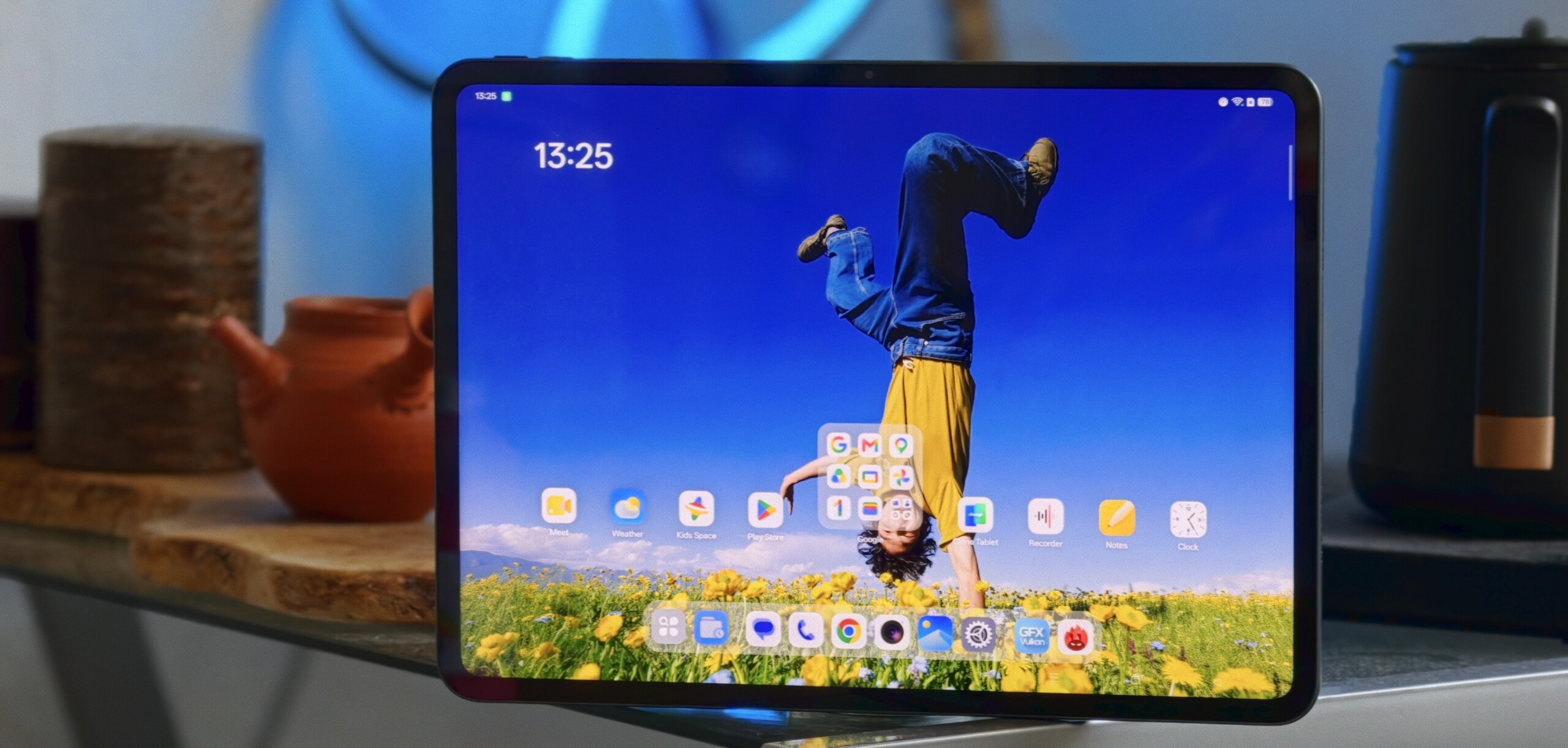
Verdict on the Oppo Pad 5
Had Oppo launched the Chinese version unchanged in Europe, the Pad 5 could have been a real mid-range hit. However, the global model now has very little in common with its Chinese counterpart.
Oppo has made cuts in almost every important area, with the possible exception of the chassis. As the display, chipset, storage, battery and features have all been downgraded in the global version, the Chinese and European versions of the Pad 5 are essentially different tablets.
The cost-cutting measures affecting the processor and integrated graphics are particularly noticeable in everyday use. The Pad 5 does not feel especially responsive or smooth during daily operation. Nor does it offer enough performance to run current games at high frame rates at the 12.1-inch display's high resolution.
Overall, the Pad 5 is better compared with competitors at the lower end of the mid-range segment, although these are available at considerably lower prices. Examples include the Xiaomi Redmi Pad 2 Pro and Lenovo Tab K12.
At this lower price level, the Oppo tablet does offer some advantages over the competition thanks to its bright LCD display. Those who would also consider an 11-inch tablet will find the Xiaomi Pad 8 a significantly better alternative, currently available for considerably less money.
Pros
Cons
Price and availability of the Oppo Pad 5
The European Oppo Pad 5 has little in common with the version launched in China several months ago. Alongside the numerous downgrades, Oppo has also decided to offer the global model with no more than 8 GB of RAM and 128 GB of storage.
The Wi-Fi version is priced at €459, while the 5G model costs €529. The Pad 5 is available from retailers including Amazon, as well as directly from the manufacturer.

- $525.00OPPO Pad SE 11 Inch 128GB ROM + 4GB RAM WiFi + Bluetooth Tablet (Twilight Blue) - International Version
- $143.992026 12 Inch Android 16 Tablet with Keyboard, 24GB+256GB+2TB Expand(Silver)
- $13.95Gylint Case for Oppo Pad 5 Pro/OnePlus Pad 4 13.2 inch, Ultra-Thin PU Leather Smart Cover with Auto Wake/Sleep Green
Table of Contents
- Verdict on the Oppo Pad 5
- Oppo Pad 5 specifications
- Chassis: Android tablet with relatively slim display bezels
- Features: affordable iPad Air alternative with slow USB and microSD expansion
- Software: Android tablet with long-term security updates
- Communication and GNSS: affordable premium mid-range tablet with 5G and GPS
- Cameras: Oppo Pad 5 with a 13 MP camera for the lecture hall
- Accessories and warranty: mid-range tablet with stylus support
- Input devices and operation: Oppo omits the fingerprint sensor
- Display: Android tablet with high brightness, but no OLED
- Performance: Oppo's mid-range tablet is significantly less suitable for gaming than the iPad
- Emissions: Android tablet with minimal heat generation and minimal throttling
- Battery life: low power consumption from the Oppo Pad 5
- Notebookcheck overall rating
- Comparison of alternatives at a glance
Oppo Pad 5 specifications
Chassis: Android tablet with relatively slim display bezels
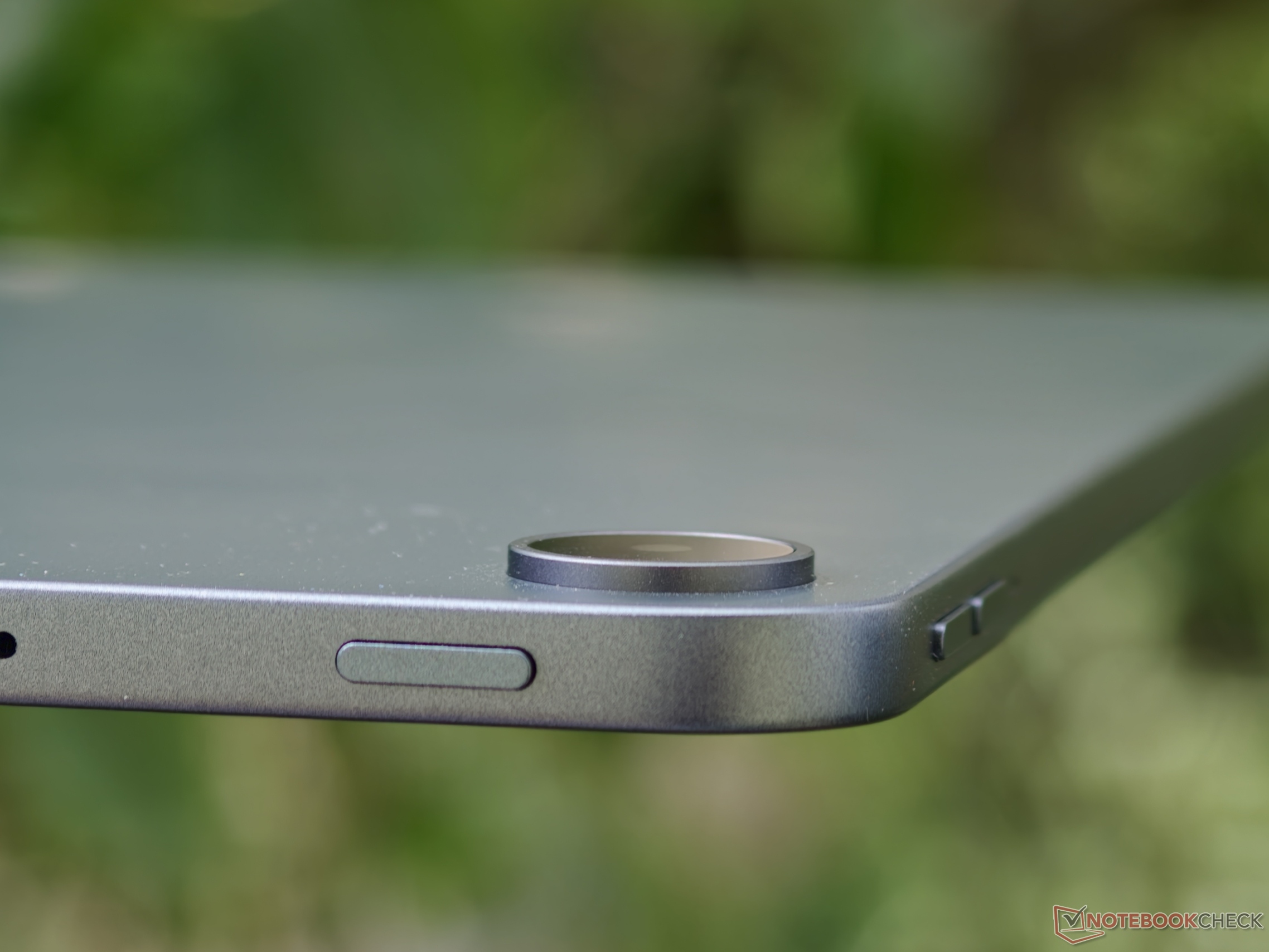
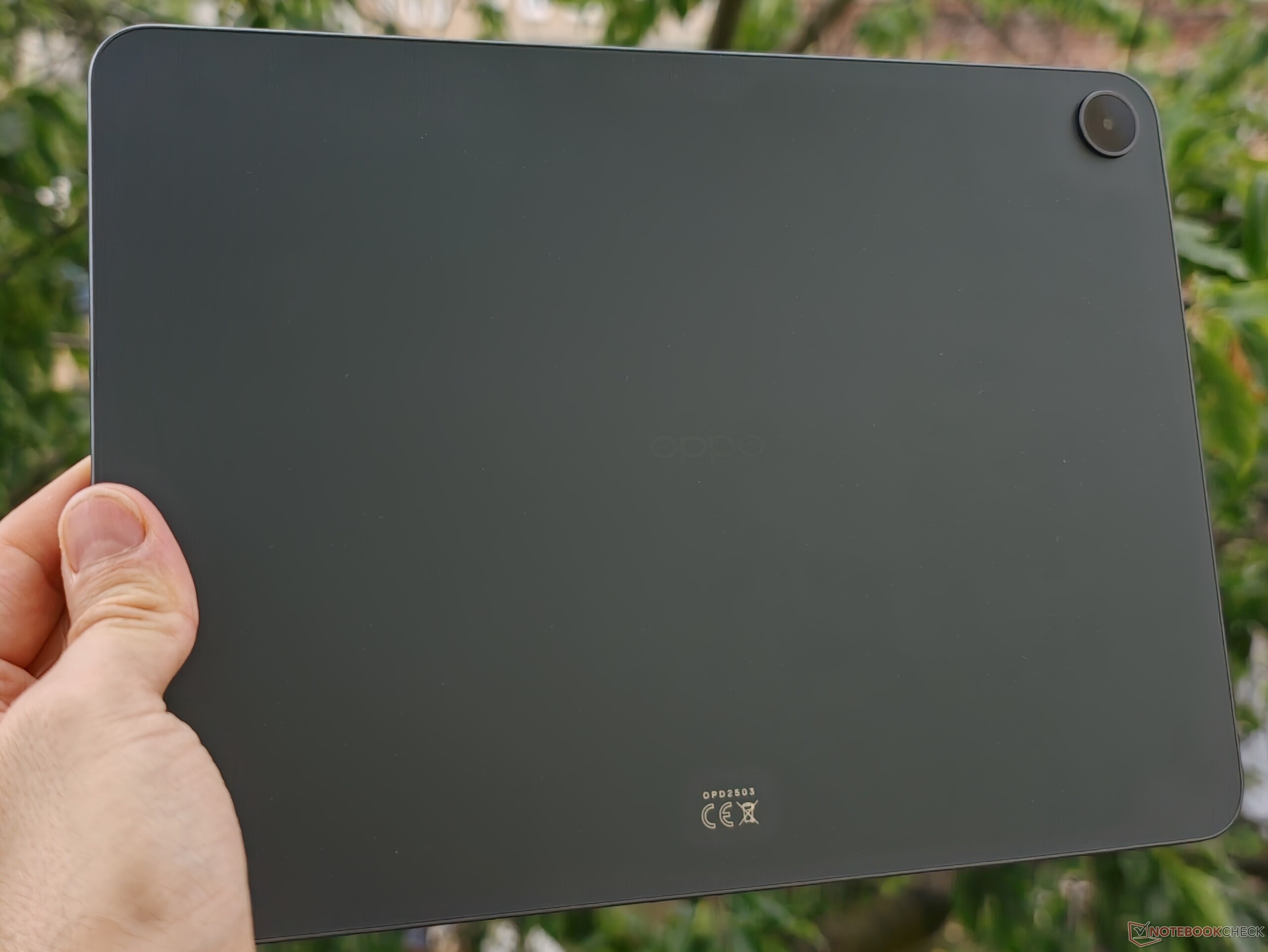
Compared directly with the Pro model, the Pad 5 feels distinctly mid-range. The chassis not only appears thicker, but also feels less premium due to its plastic frame and rear panel. Build quality is nevertheless good.
The relatively slim screen bezels for a mid-range tablet give the device an attractive appearance and result in a good screen-to-body ratio of just under 87%. The manufacturer does not provide any information about the type of protective display glass used.
Our review unit comes in the glossy version, although the Pad 5 is also available as a Matte Display Edition.

Features: affordable iPad Air alternative with slow USB and microSD expansion
The Pad 5 comes with only one USB 2.0 port, which means the connection is not only quite slow but also cannot output a video signal to an external display. The latter, however, seems to be a minor inconvenience, as Oppo does not offer a desktop mode similar to Samsung DeX.
Instead, this mid-range tablet supports microSD cards up to 2 TB. When paired with our reference card, the Angelbird V60, the Pad 5 also delivers very satisfactory copy speeds. Thanks to USB-OTG, memory sticks can also be easily connected.
| SD Card Reader - average JPG Copy Test (av. of 3 runs) | |
| Oppo Pad 5 (Angelbird V60) | |
| Lenovo ThinkTab X11 (Angelbird V60) | |
| Average of class Tablet (10.2 - 79.2, n=42, last 2 years) | |
Cross-Platform Disk Test (CPDT)
Software: Android tablet with long-term security updates
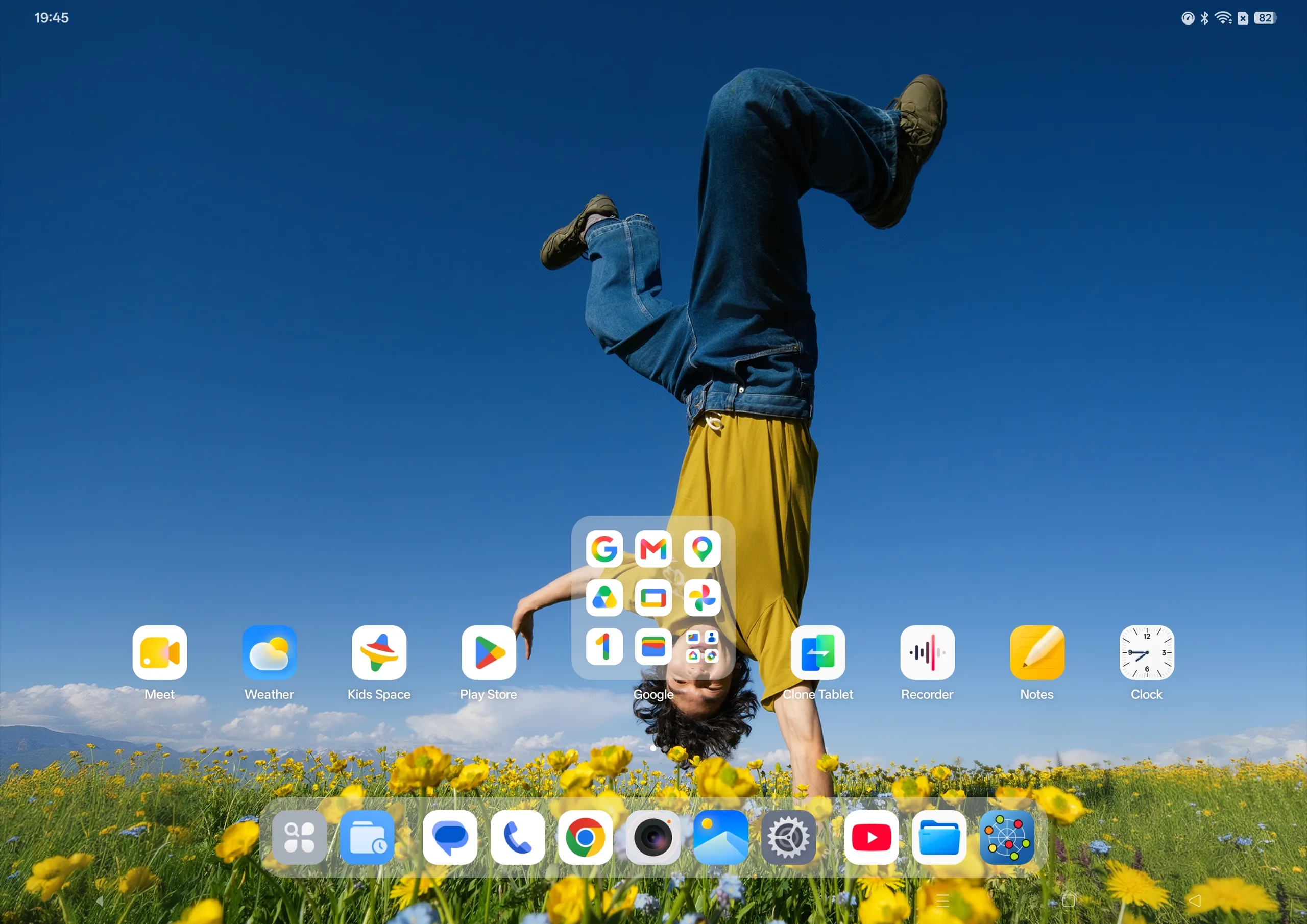
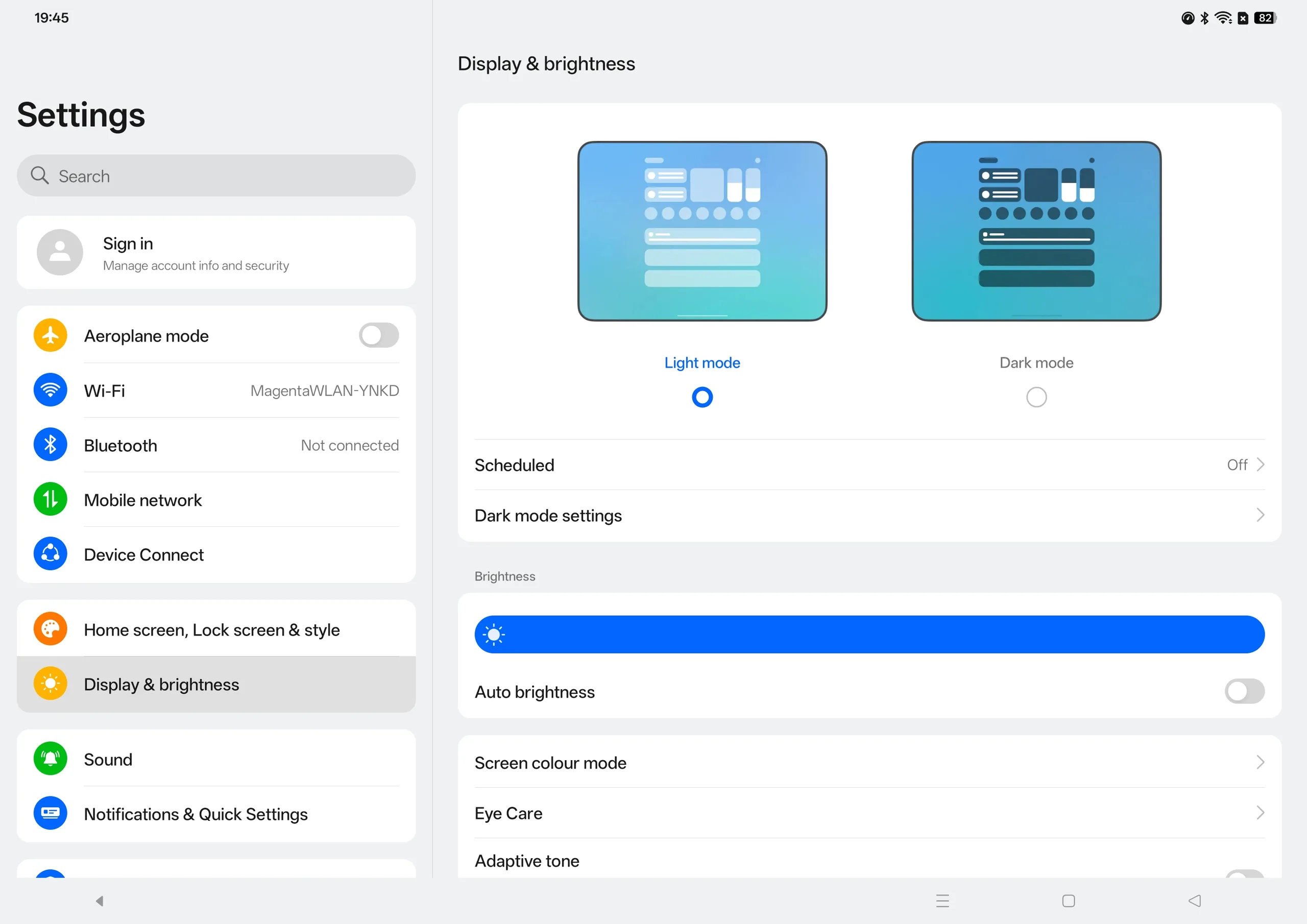
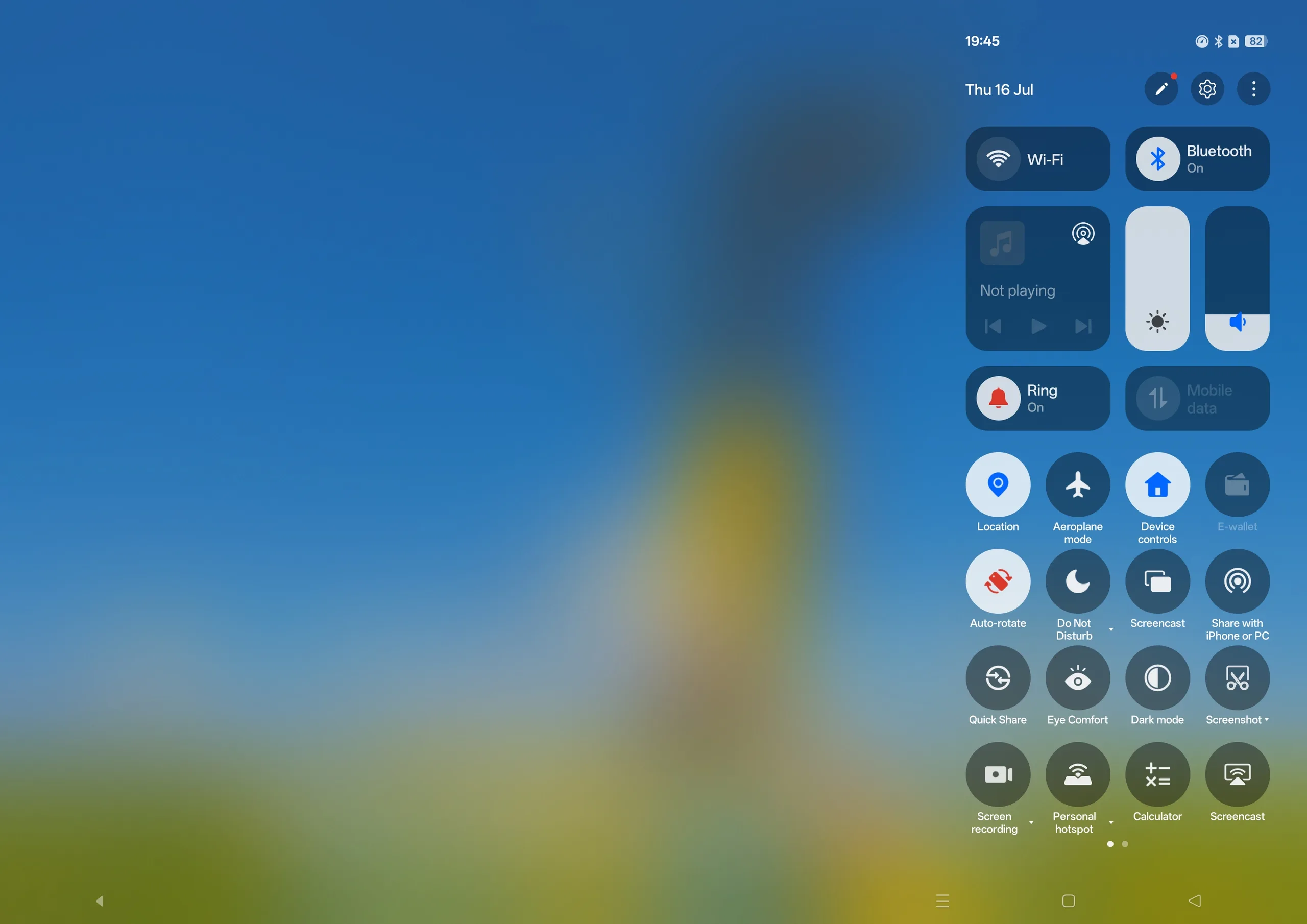
The Pad 5 comes with Android 16 and Oppo's proprietary ColorOS 16 interface, including Oppo AI. The mid-range tablet is set to receive security updates until May 2032. However, the manufacturer has not stated how frequently these updates will be rolled out. The same applies to the number of future Android version updates.
Sustainability
We could not find any precise information about the materials used in the Oppo tablet or the proportion of recycled content. The packaging appears to be free of plastic, although it is sealed in plastic film.
The Pad 5 is listed in the EPREL database with repairability class B.
Communication and GNSS: affordable premium mid-range tablet with 5G and GPS
At least in Europe, Oppo's mid-range tablet supports only Wi-Fi 6, without access to the fast 6 GHz frequency band for wireless data transfers. However, even over the 5 GHz Wi-Fi band, transfer speeds in our test were very low when paired with our Asus reference router. We measured a peak of only around 400 Mbit/s, although this should still be sufficient for most everyday use cases.
Our review unit is the 5G version, which includes a GNSS module and A-GPS. The optional Wi-Fi version, however, must rely on a wireless network for location services.
| Networking | |
| Oppo Pad 5 | |
| iperf3 transmit Wi-Fi6/7 RT-BE96U | |
| iperf3 receive Wi-Fi6/7 RT-BE96U | |
| Lenovo ThinkTab X11 | |
| iperf3 transmit AXE11000 6GHz | |
| iperf3 receive AXE11000 6GHz | |
| Average 802.11 a/b/g/n/ac/ax/be | |
| iperf3 transmit AXE11000 6GHz | |
| iperf3 receive AXE11000 6GHz | |
| iperf3 transmit Wi-Fi6/7 RT-BE96U | |
| iperf3 receive Wi-Fi6/7 RT-BE96U | |
| Average of class Tablet | |
| iperf3 transmit AXE11000 6GHz | |
| iperf3 receive AXE11000 6GHz | |
| iperf3 transmit Wi-Fi6/7 RT-BE96U | |
| iperf3 receive Wi-Fi6/7 RT-BE96U | |
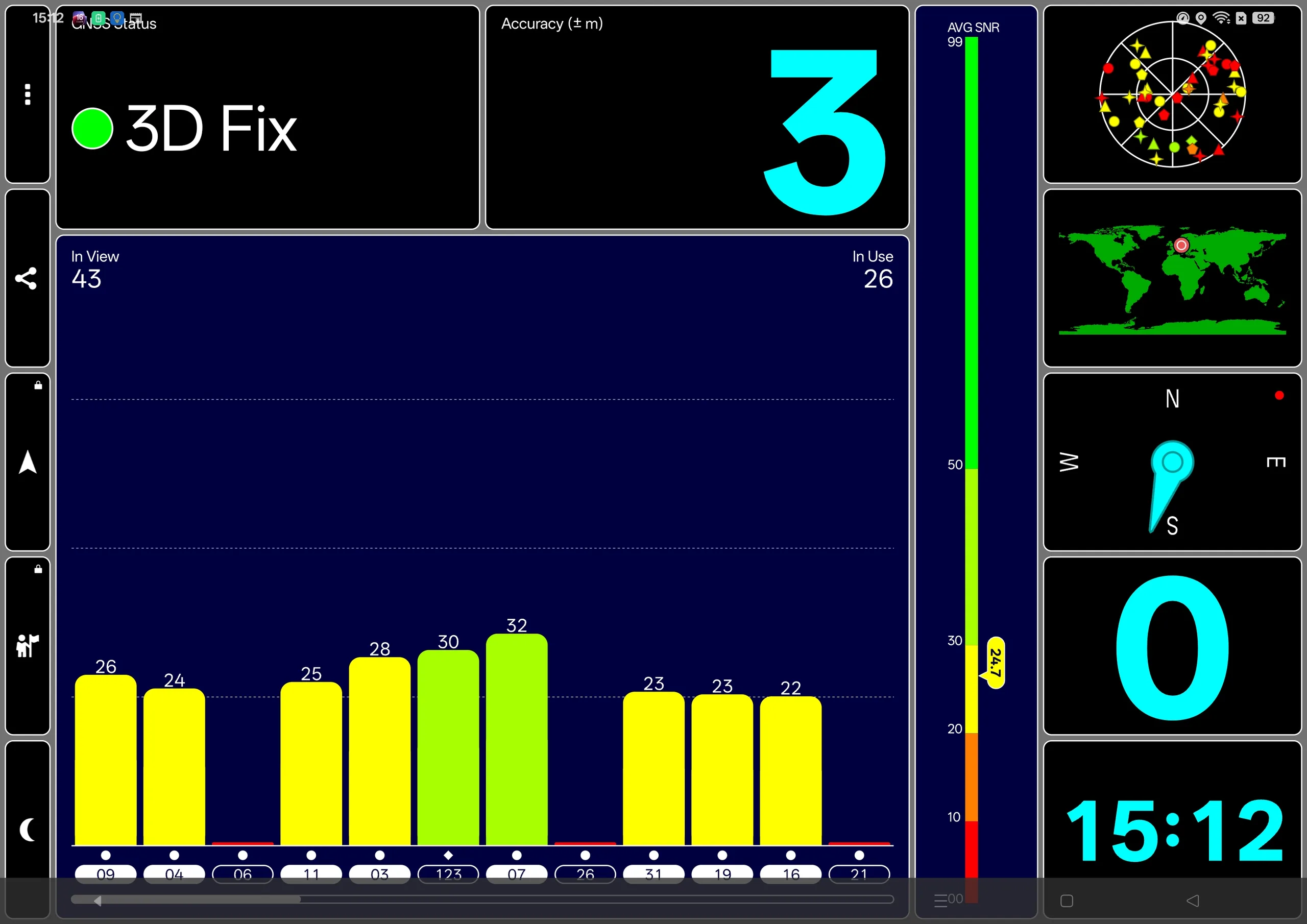
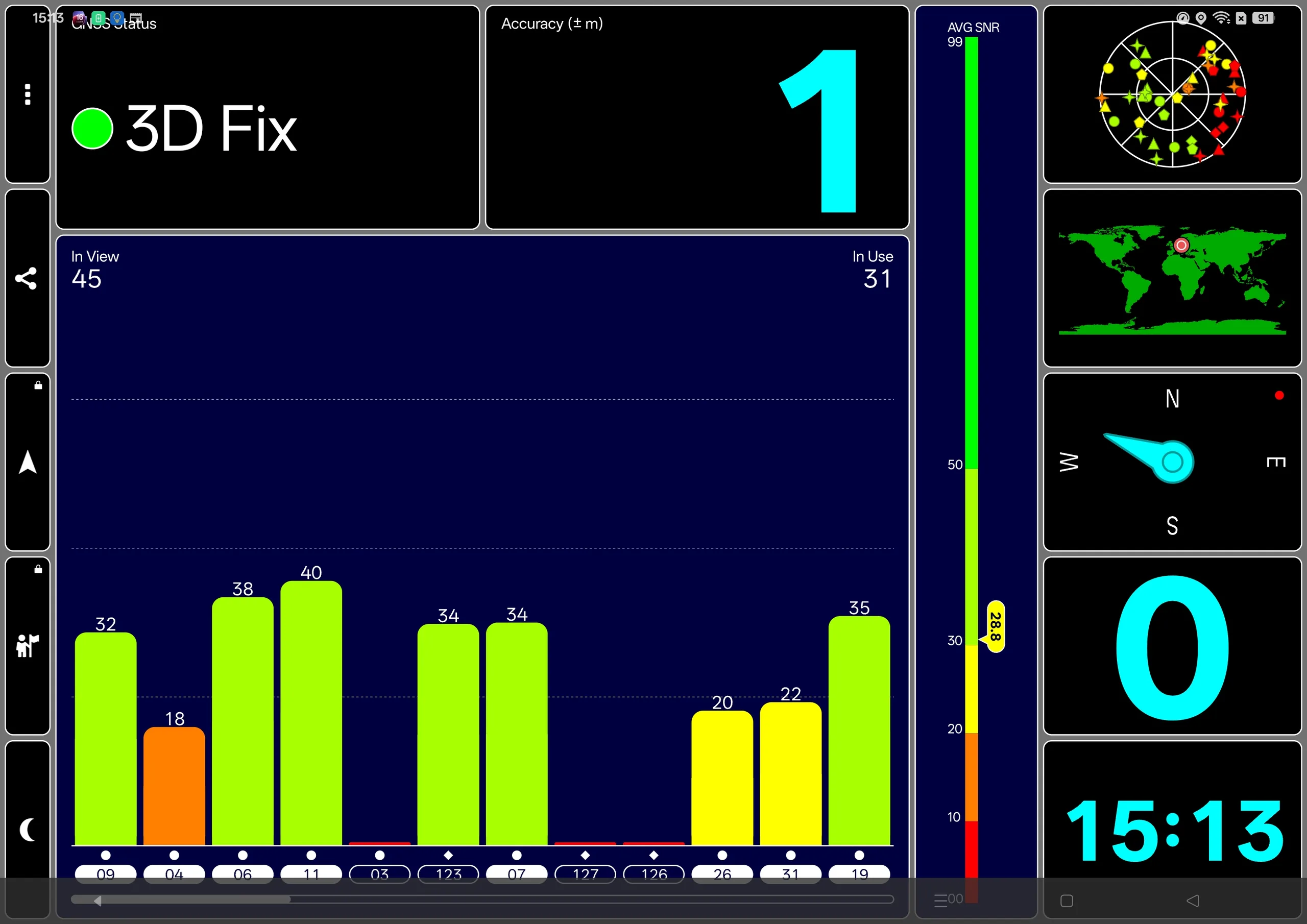
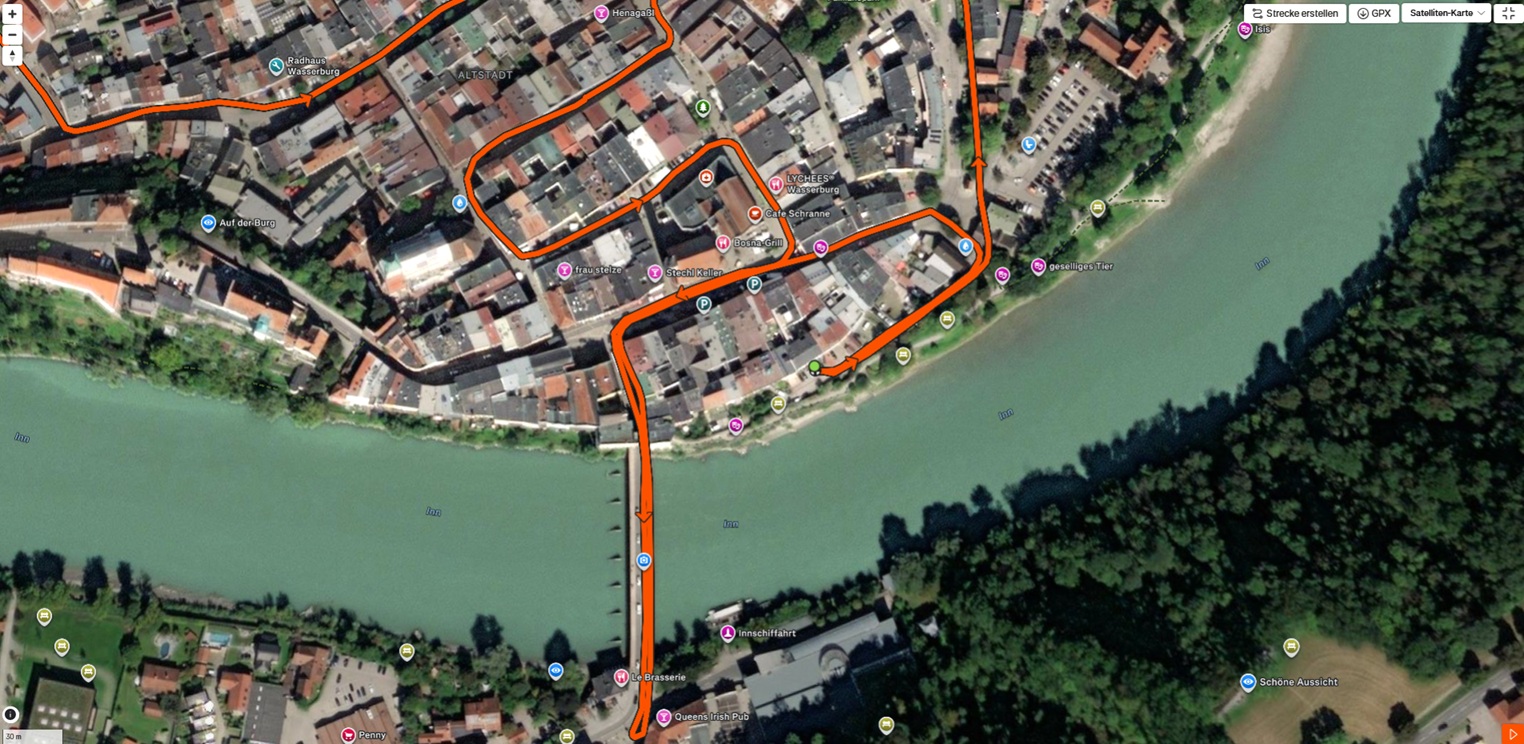
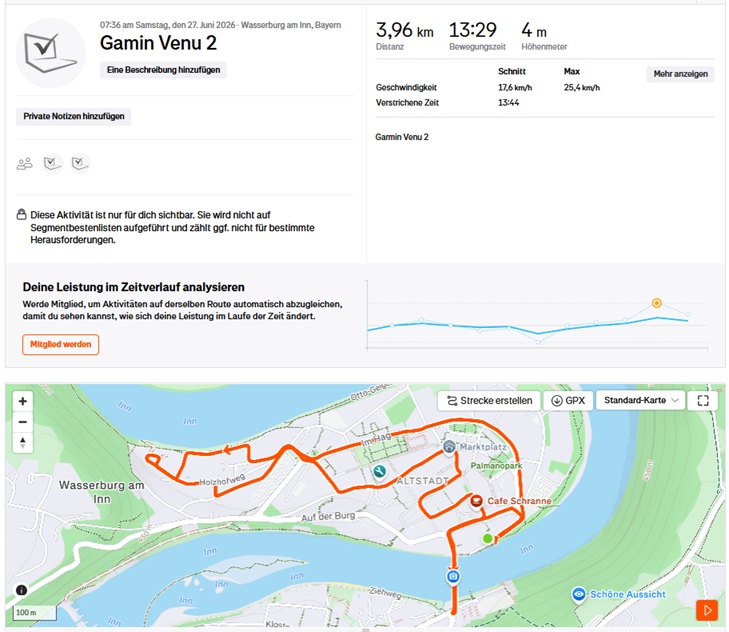
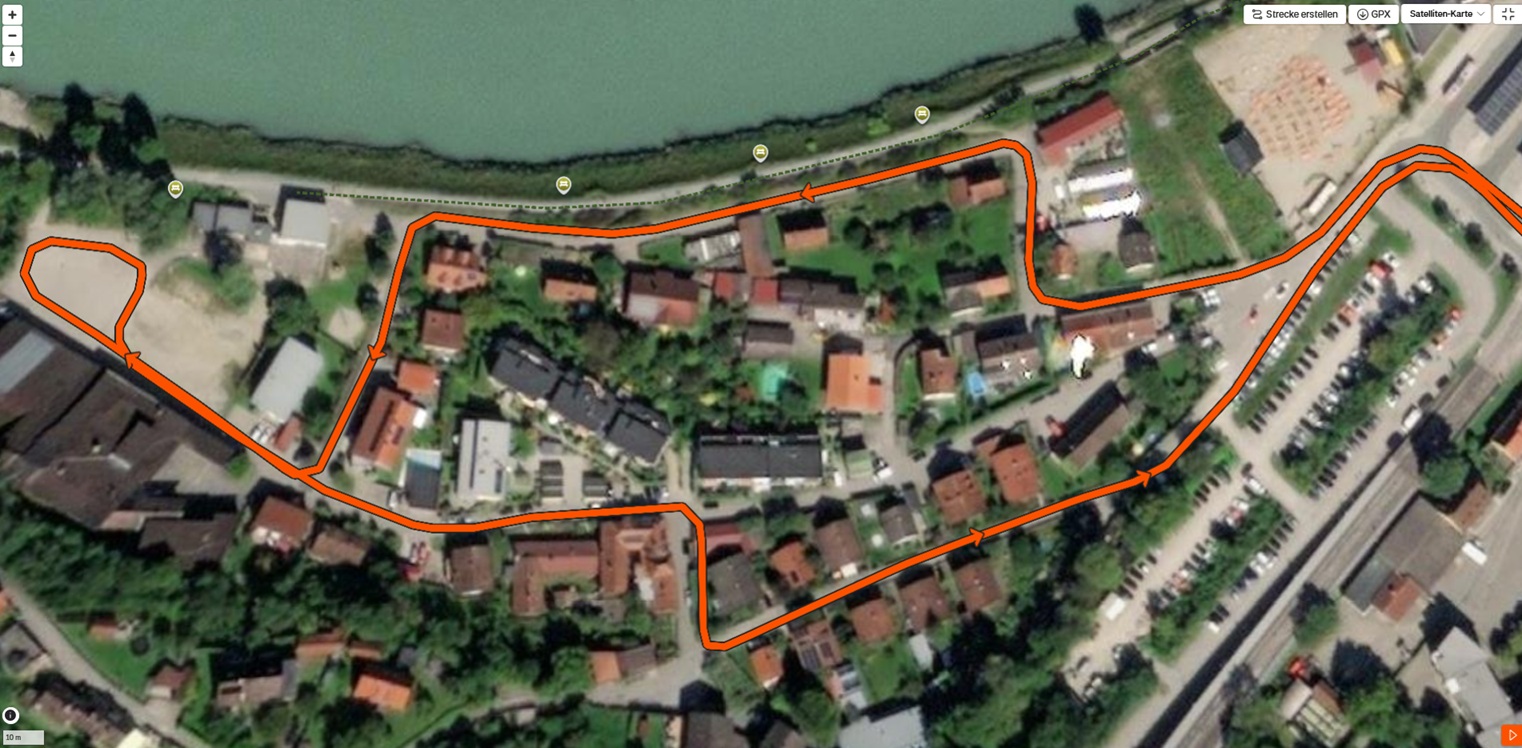
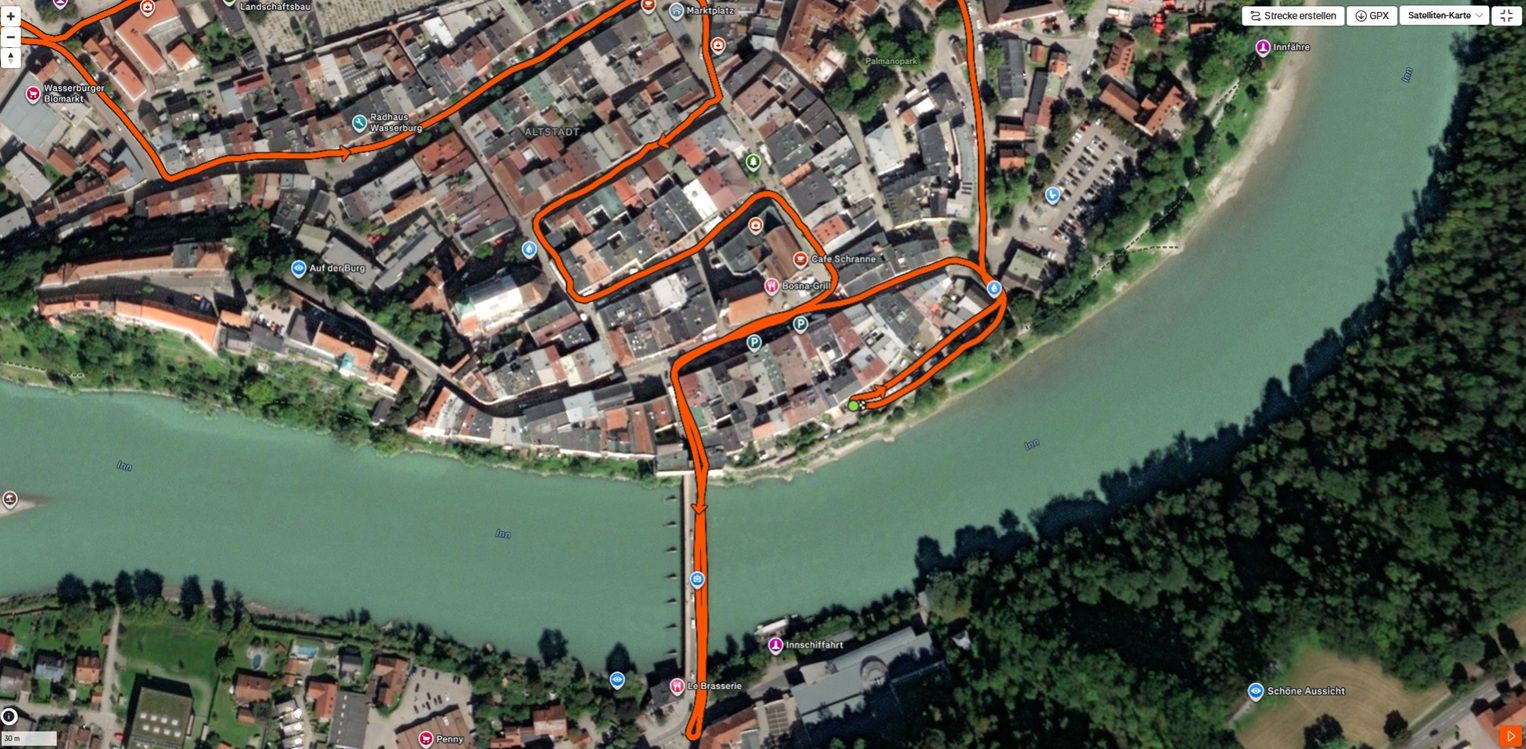
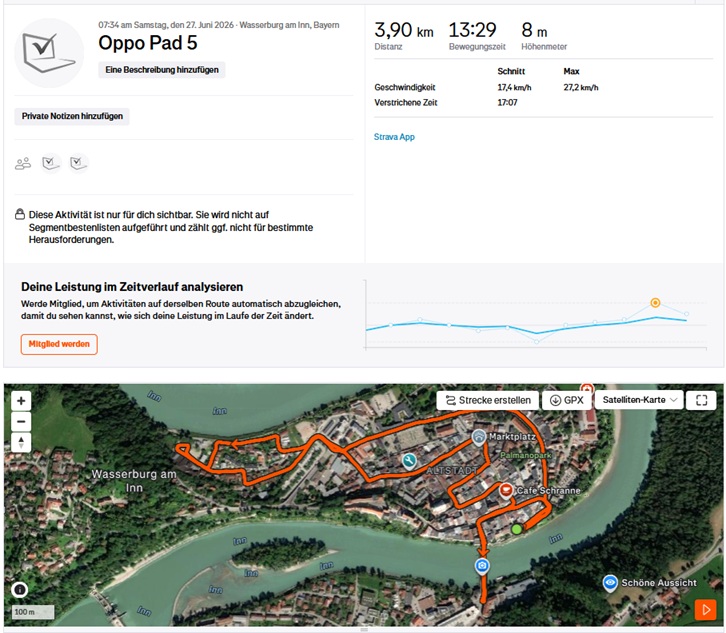
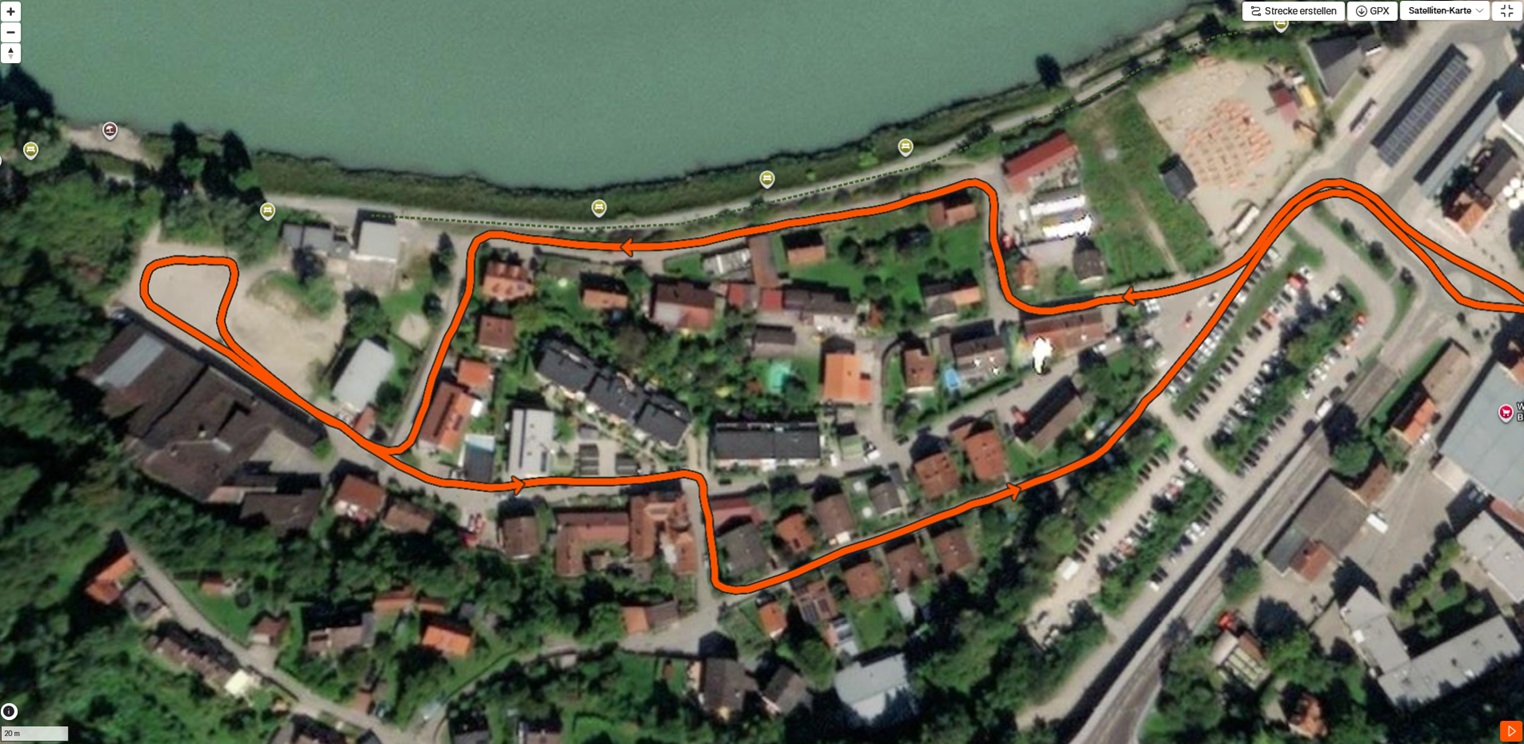
Despite the size of the Pad 5, we nevertheless recorded a route together with the Garmin Venu 2 for comparison purposes. Pleasingly, the tablet establishes a satellite connection quickly and accurately. It also determines its location very quickly indoors.
Anyone who has always wanted an enormous navigation device for car journeys can certainly use the Pad 5 for this purpose, as its positioning accuracy proved to be very precise in practice.
Cameras: Oppo Pad 5 with a 13 MP camera for the lecture hall

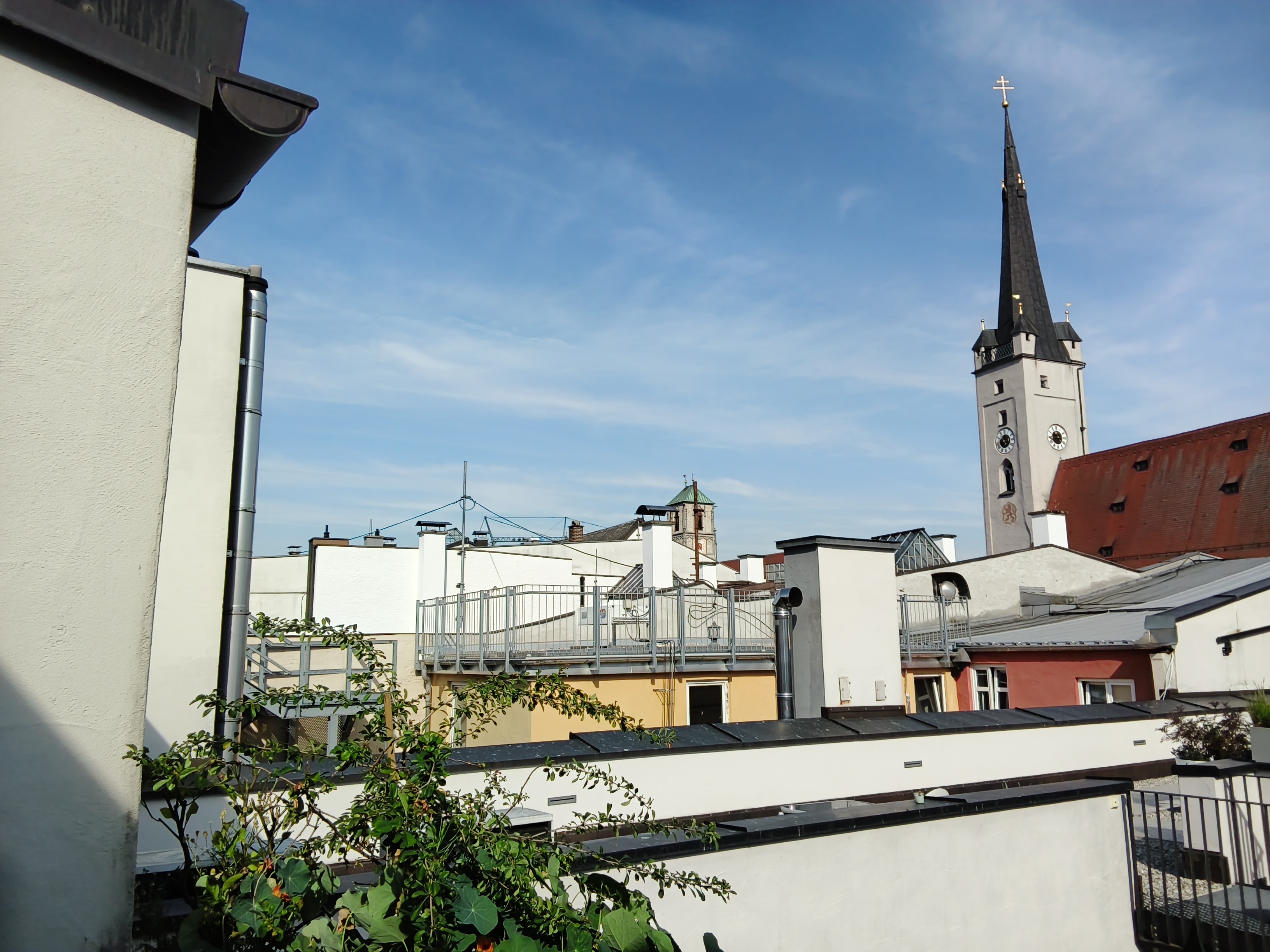
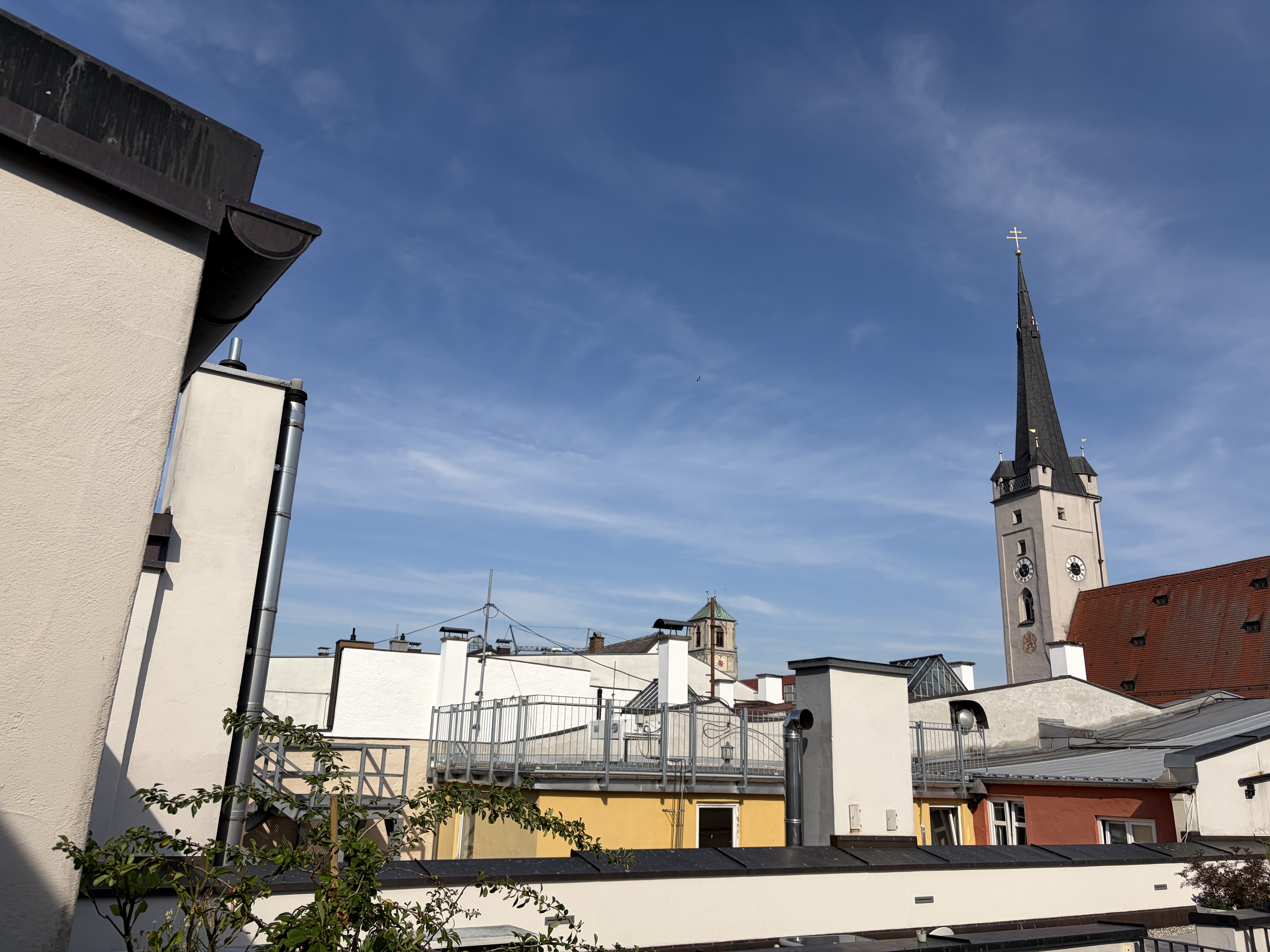
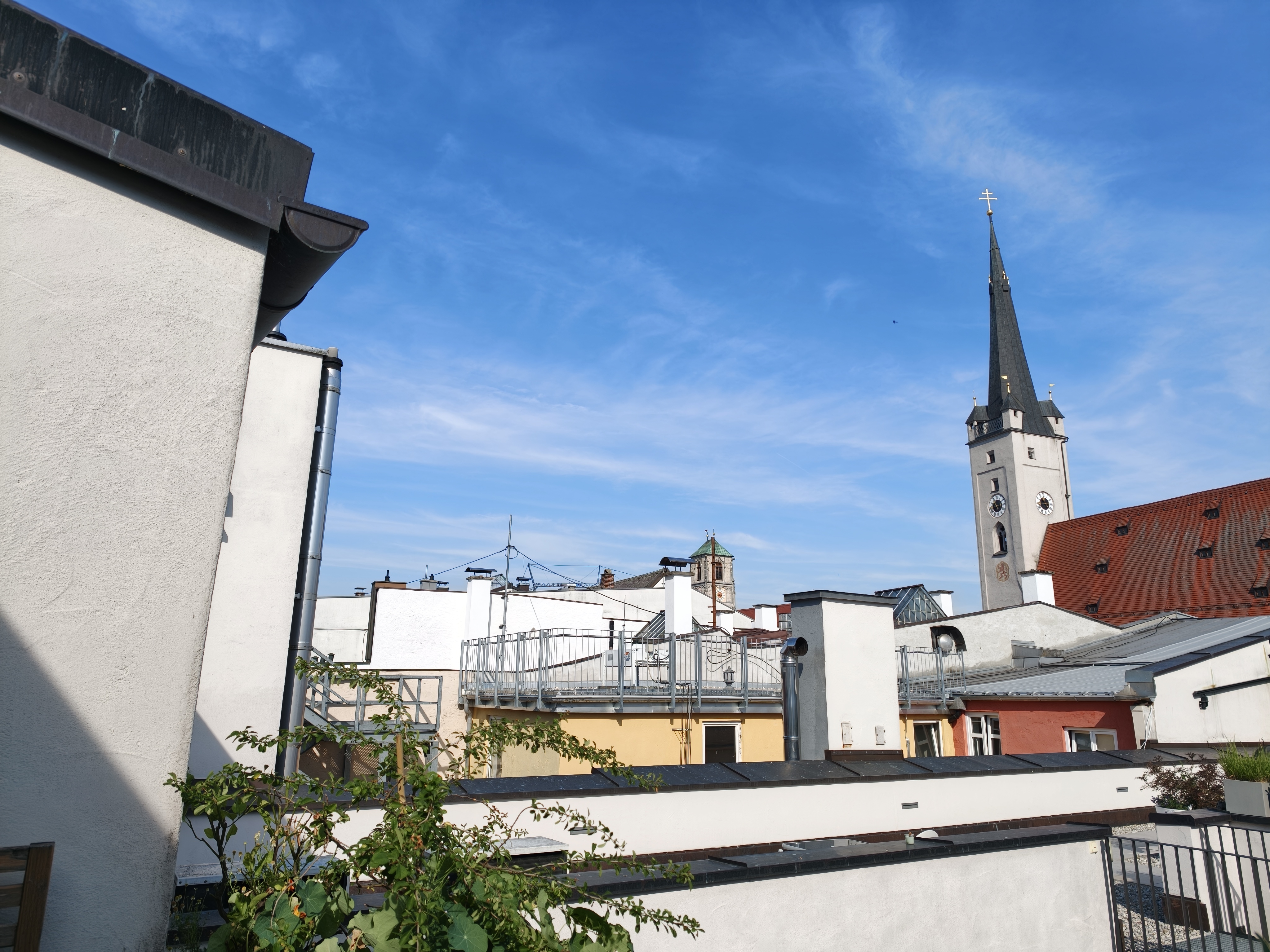
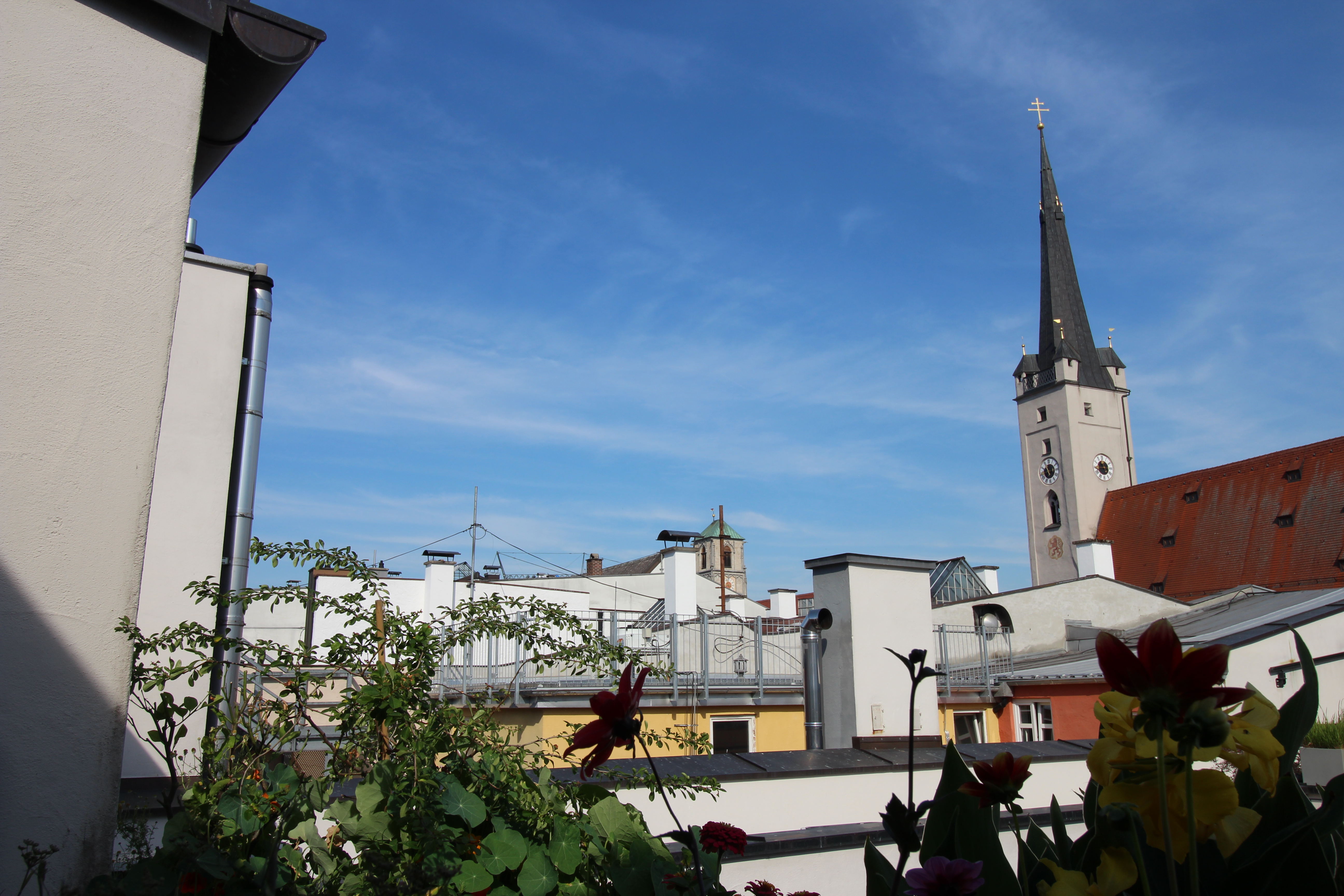
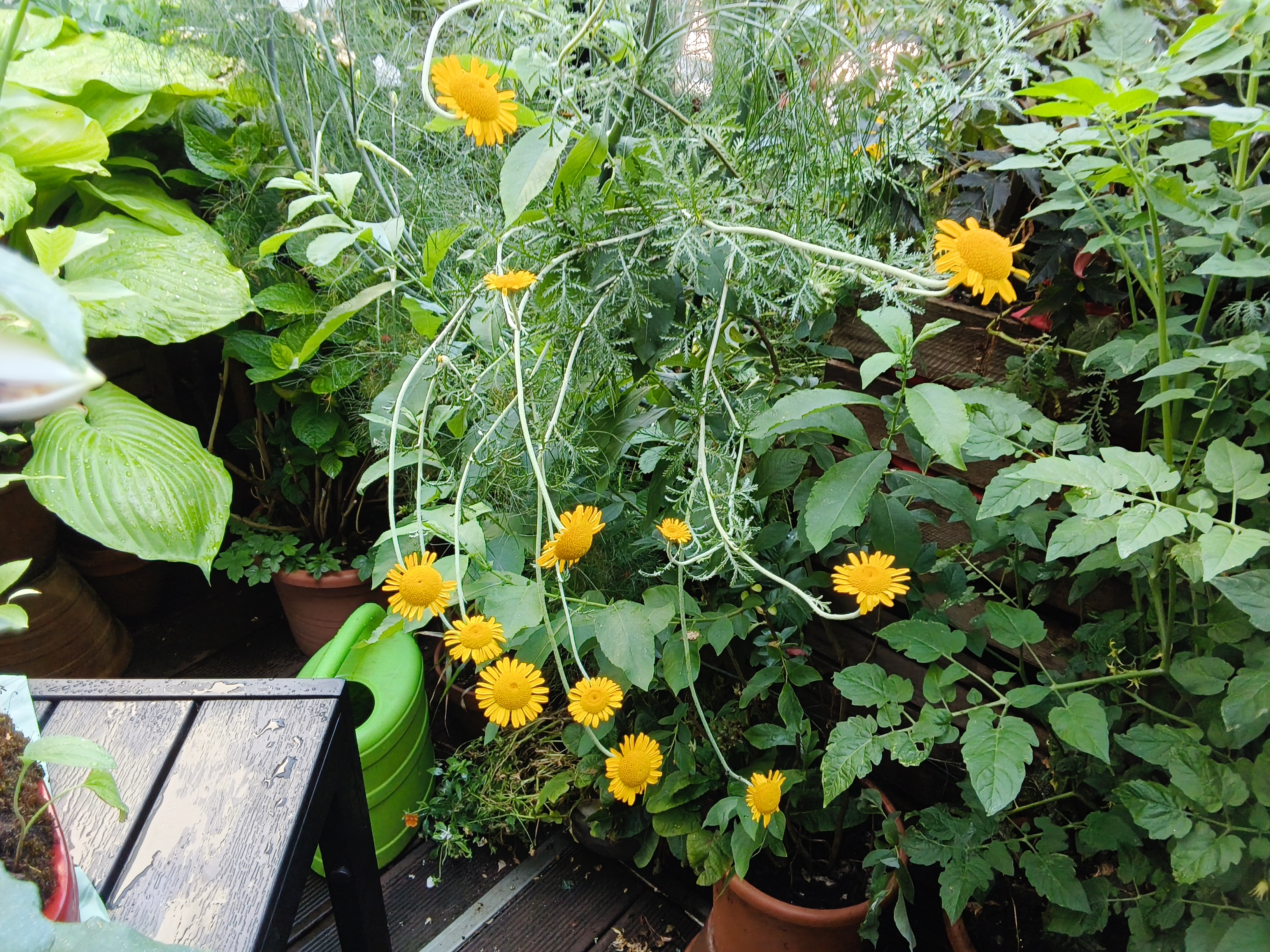
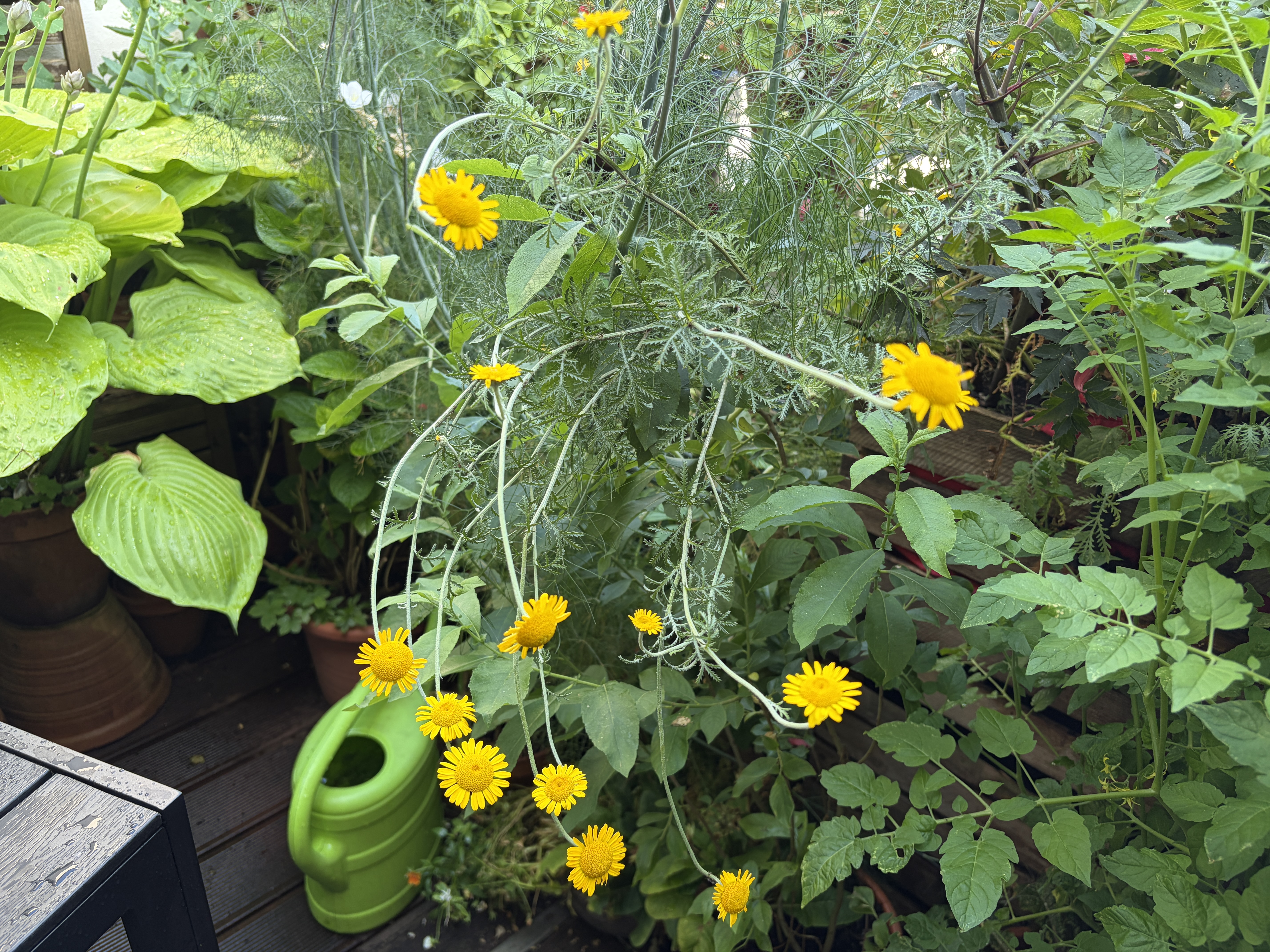
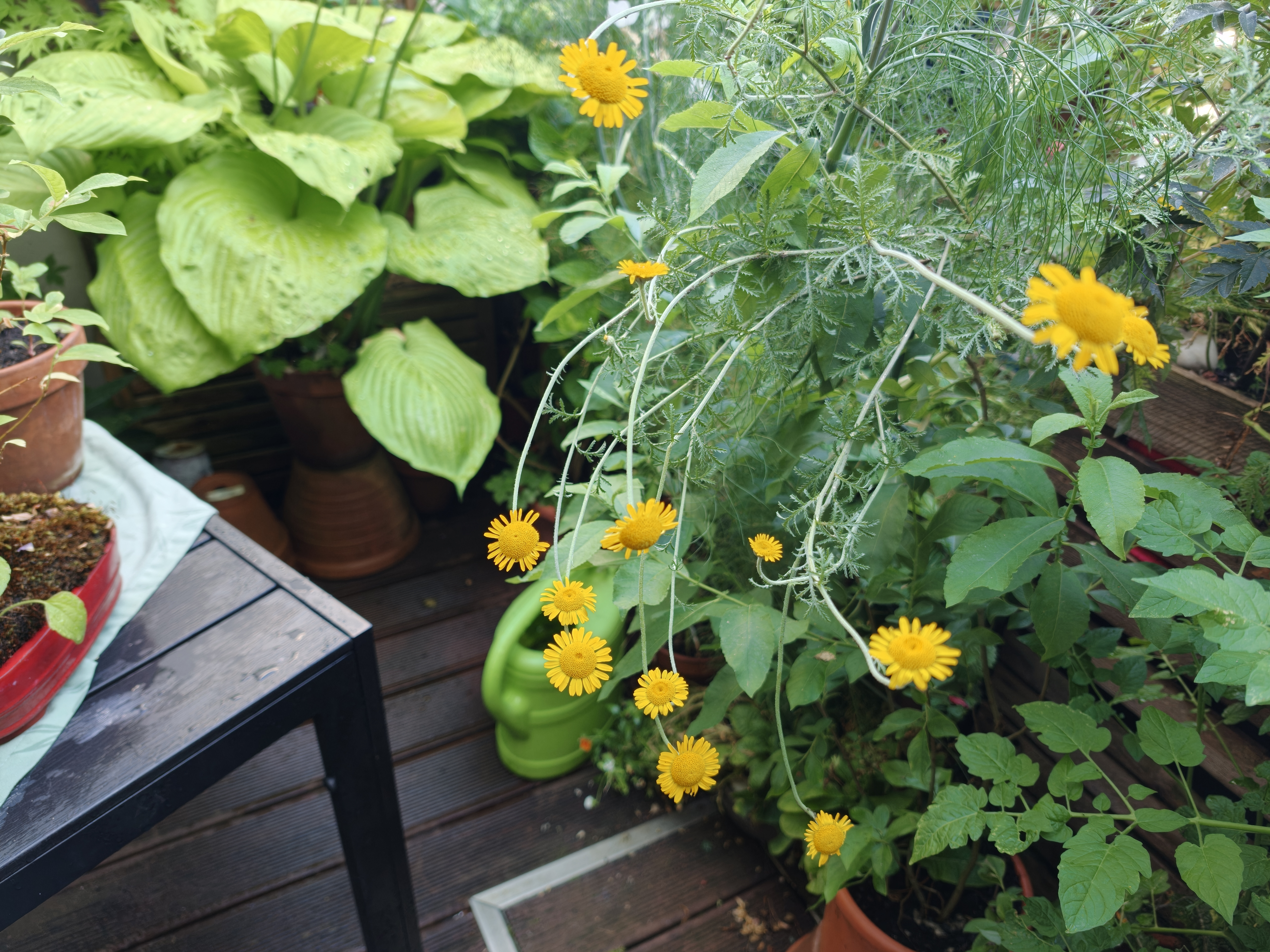
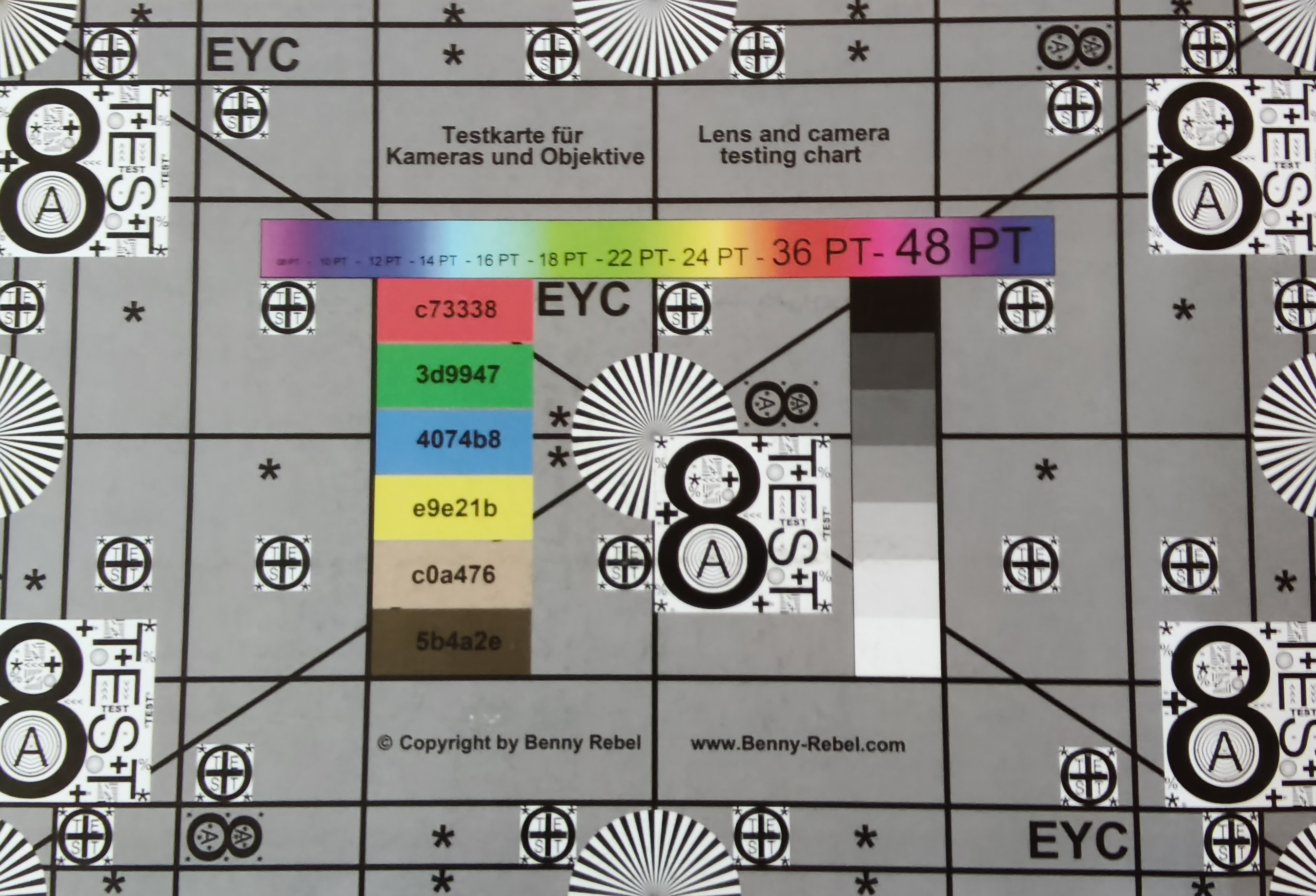
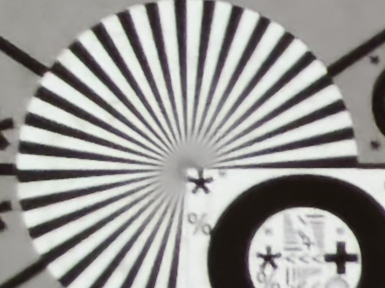
In daylight, the Pad 5's rear-facing 13 MP camera can produce usable results, although the level of sharpness is not particularly high. The camera offers autofocus and satisfactory colour reproduction.
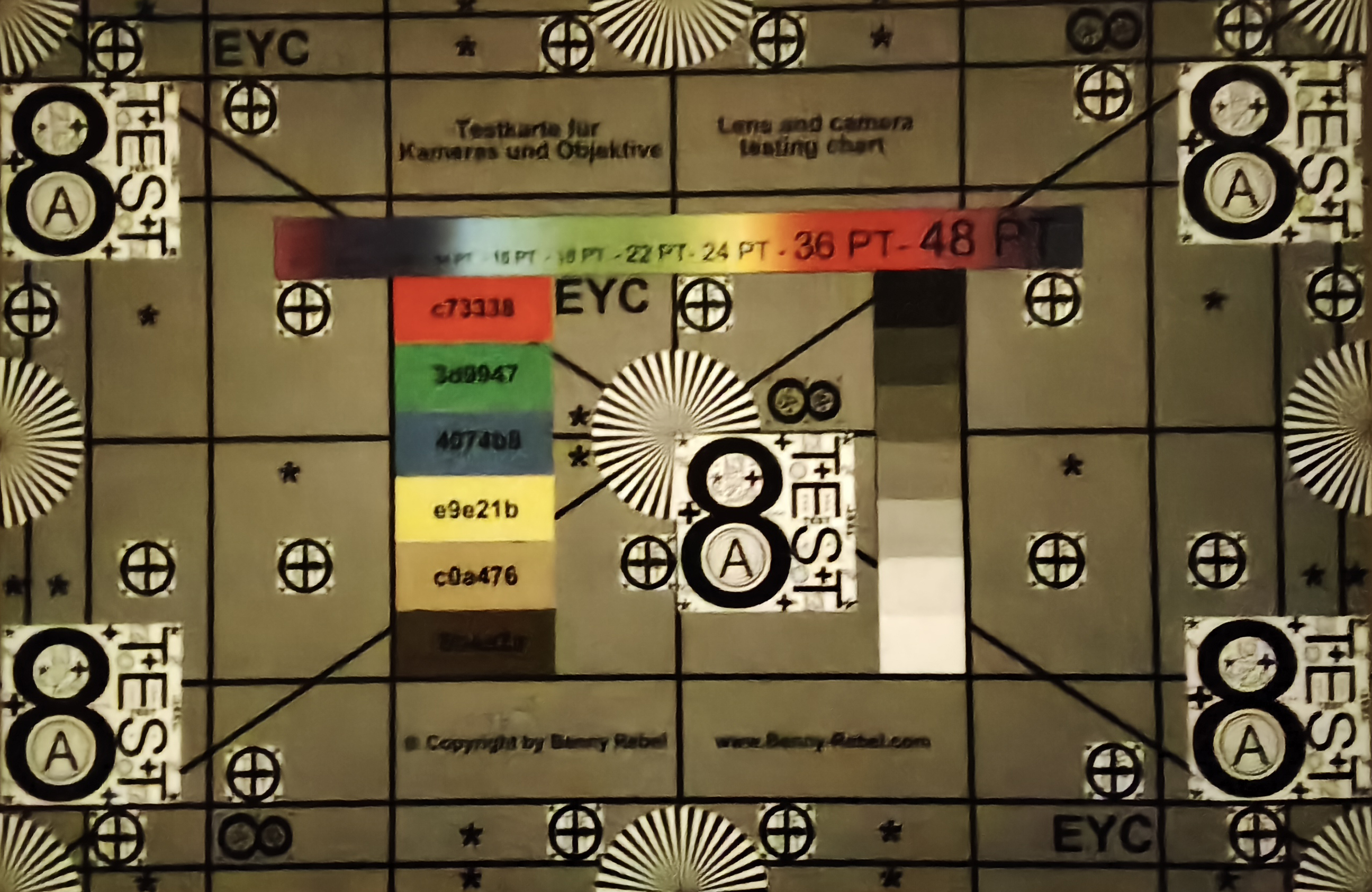
However, in our colour analysis under controlled artificial lighting, the Pad 5 showed some significant deviations, particularly for bluish tones (DeltaE > 15). Nevertheless, the Oppo tablet is well suited to photographing documents or lecture notes.









Accessories and warranty: mid-range tablet with stylus support
Our review unit does not come with a power adapter. The box contains only a USB cable and documentation. The optional Oppo Pencil 2R (€39 RRP) must be purchased separately. The Pencil 2 Pro did not work with the Pad 5 in our test.
Oppo provides a 24-month warranty for the Pad 5 in Germany. Warranty terms may vary in other countries.
Input devices and operation: Oppo omits the fingerprint sensor
The large LCD responds accurately and without issue. However, the 120 Hz refresh rate suggests that the display should feel smoother than it does. In everyday use, the Dimensity 7300 often appears overwhelmed. Animations can look choppy, while scrolling in the browser is sometimes jerky.
The Pad 5 also lacks pogo pins for expanding its input options with a keyboard cover. The same applies to a vibration motor and fingerprint sensor. At least, the tablet supports less secure 2D facial recognition via the front-facing camera, which unlocks the device reliably and quickly in daylight.
Display: Android tablet with high brightness, but no OLED
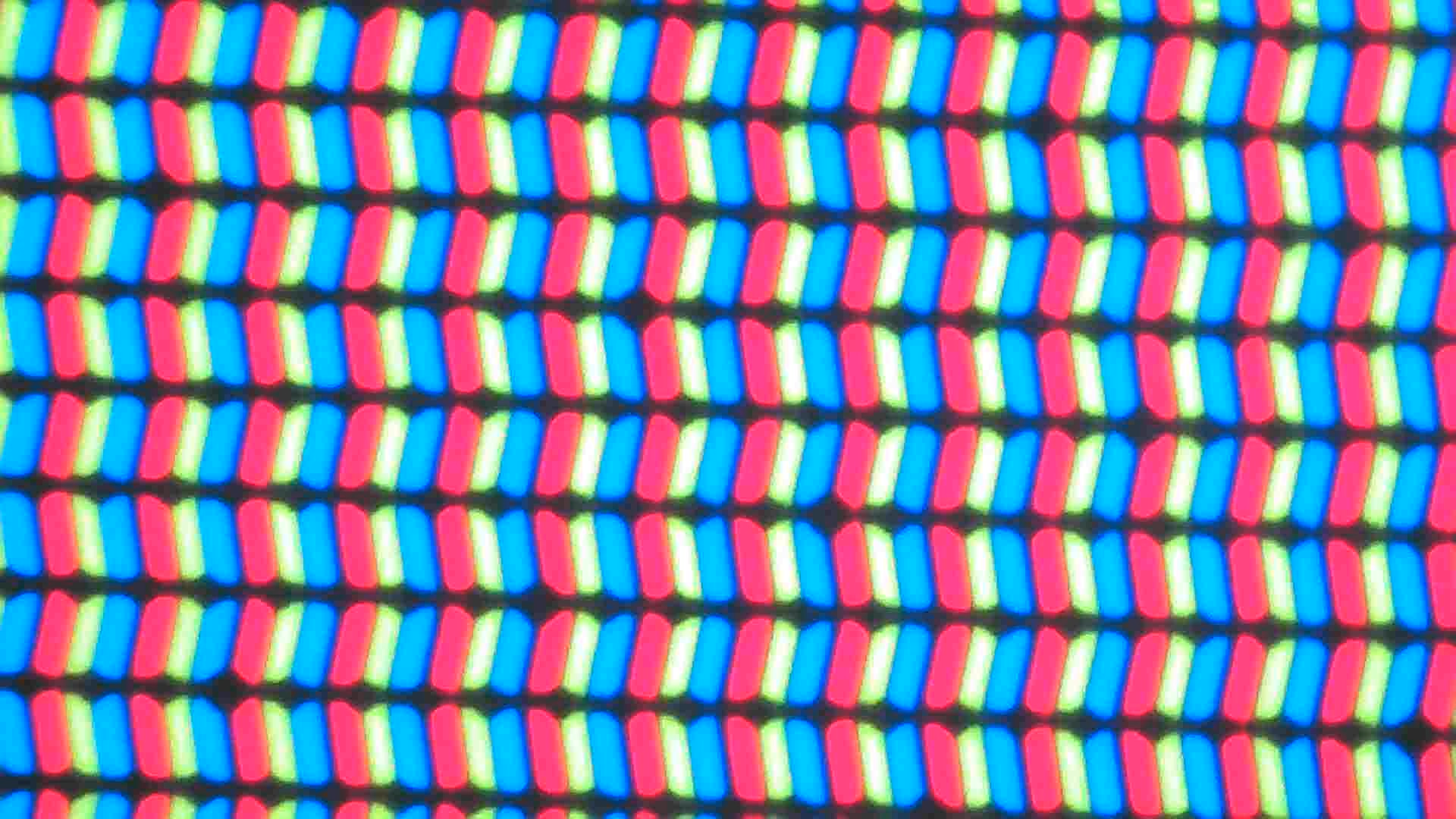
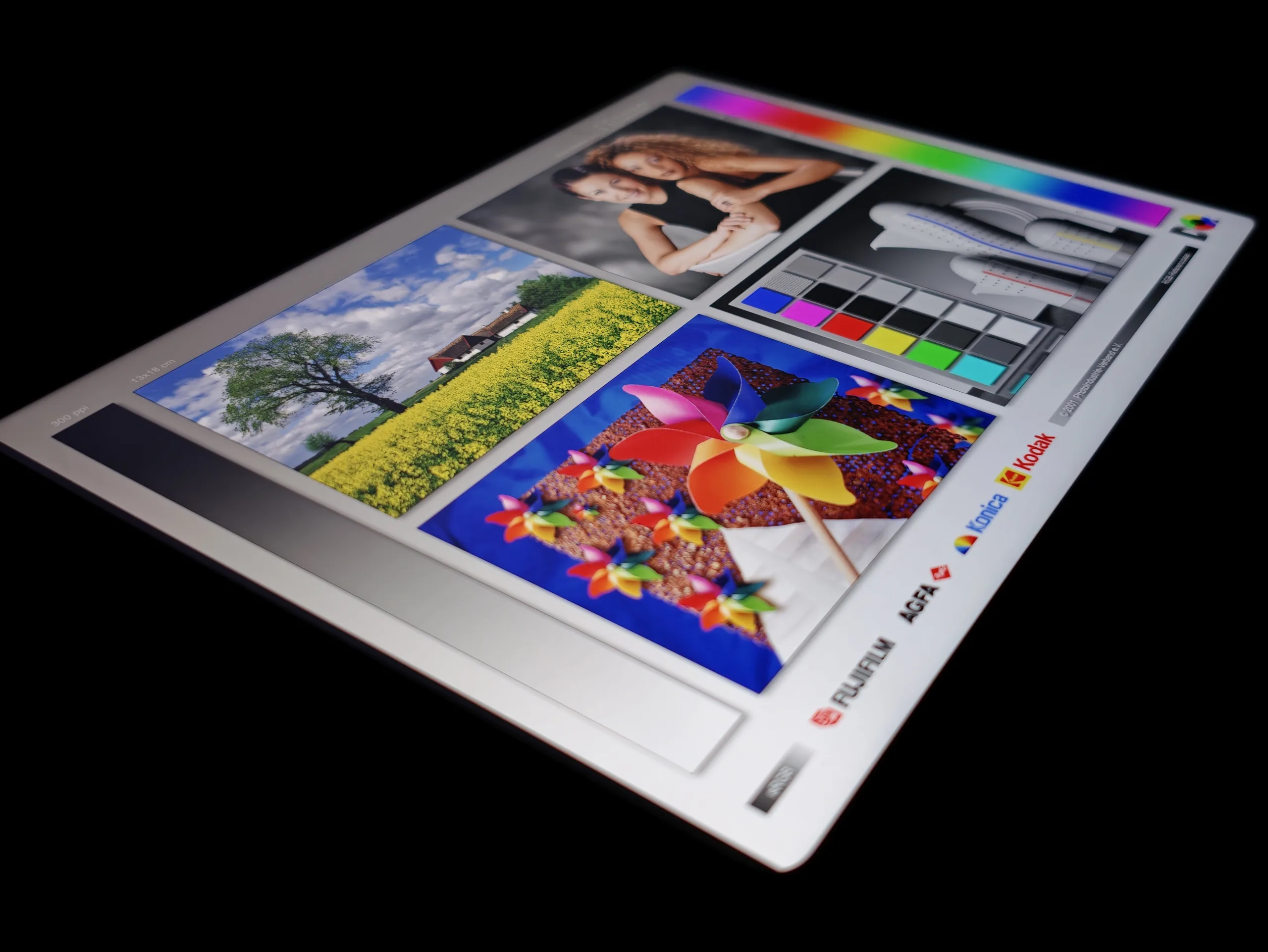
The 12.1-inch LCD panel delivers sharp images for a mid-range tablet thanks to its 1,980p resolution and pixel density of 283 ppi. As the Pad 5 does not use an OLED screen, it does not rely on PWM to control brightness. This makes the display easier on the eyes for sensitive users, even during prolonged use.
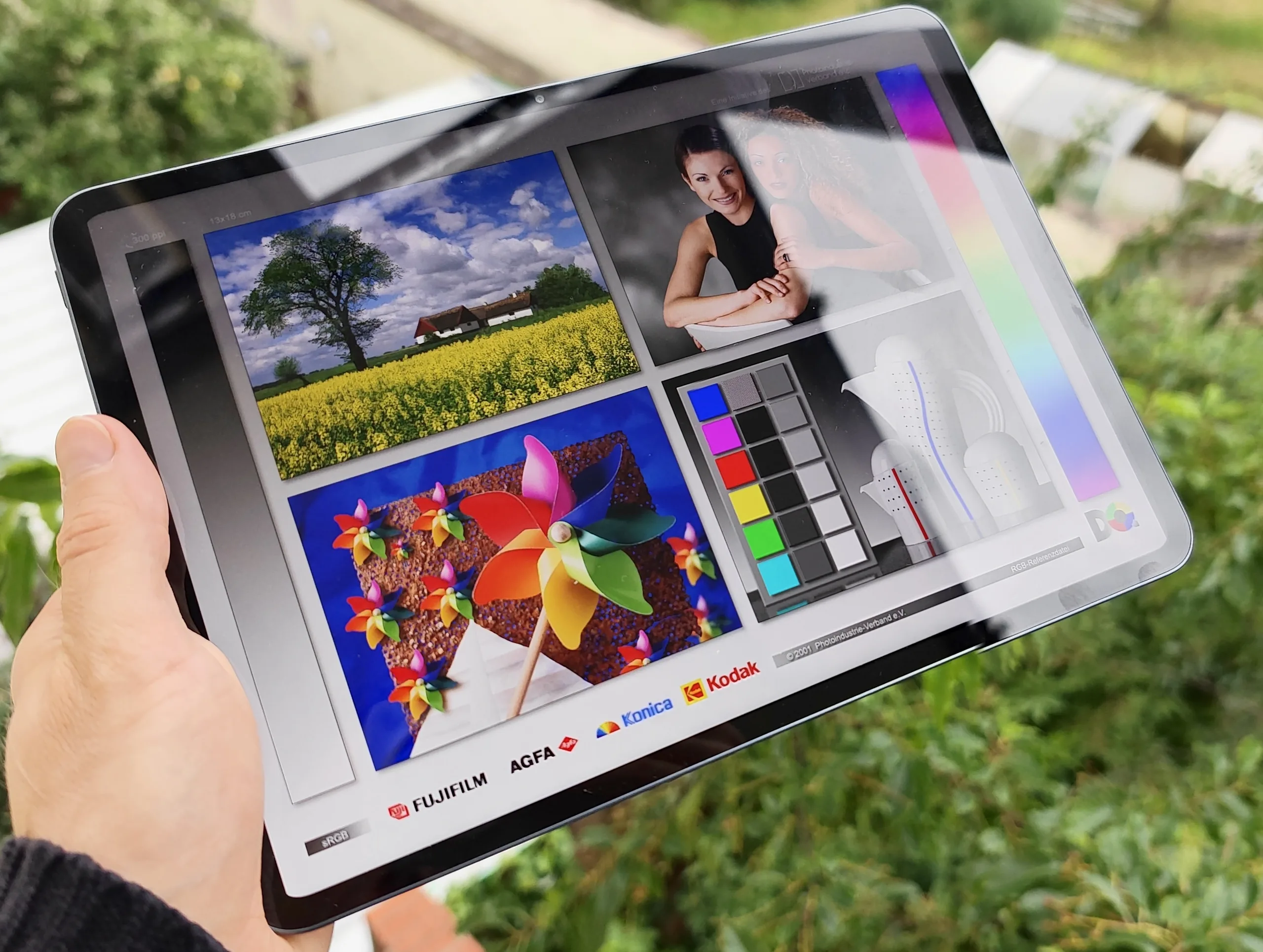
The brightness level of around 900 cd/m² in our APL18 measurement is very satisfactory, and the Oppo tablet offers slightly more headroom when displaying HDR content. However, despite Dolby Vision support, the 926 cd/m² we measured is still somewhat low for optimal reproduction of HDR effects.
| |||||||||||||||||||||||||
Brightness Distribution: 93 %
Center on Battery: 892 cd/m²
Contrast: 1115:1 (Black: 0.8 cd/m²)
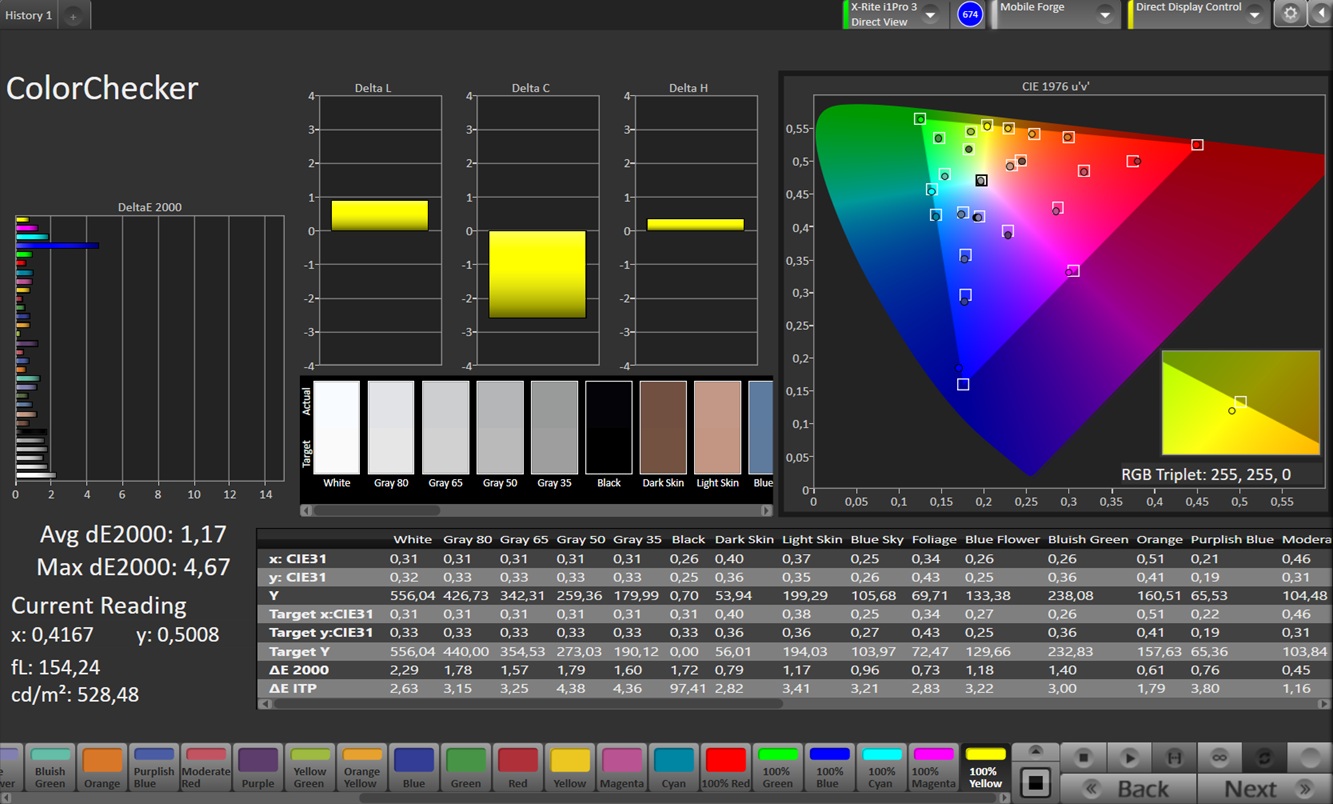
ΔE ColorChecker Calman: 1.17 | ∀{0.5-29.43 Ø4.7}
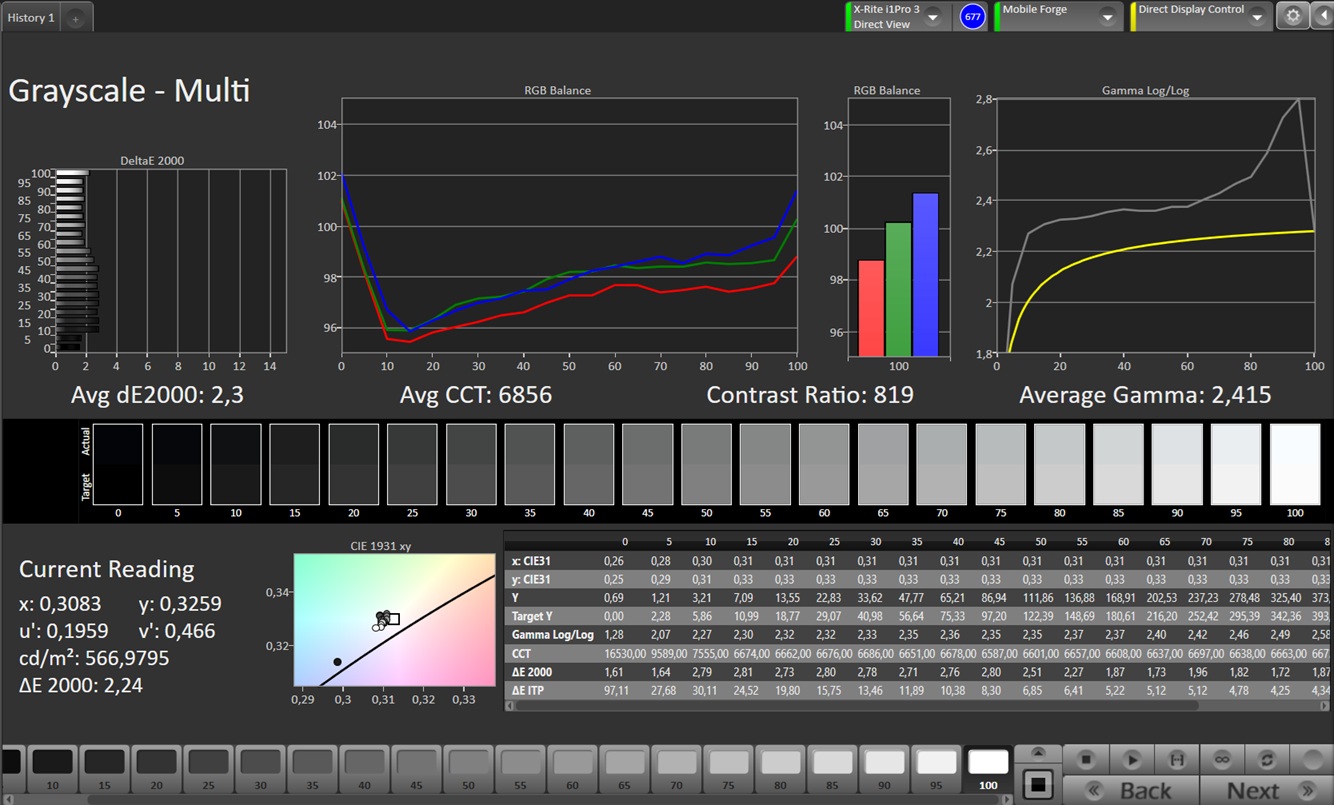
ΔE Greyscale Calman: 2.3 | ∀{0.09-98 Ø4.95}
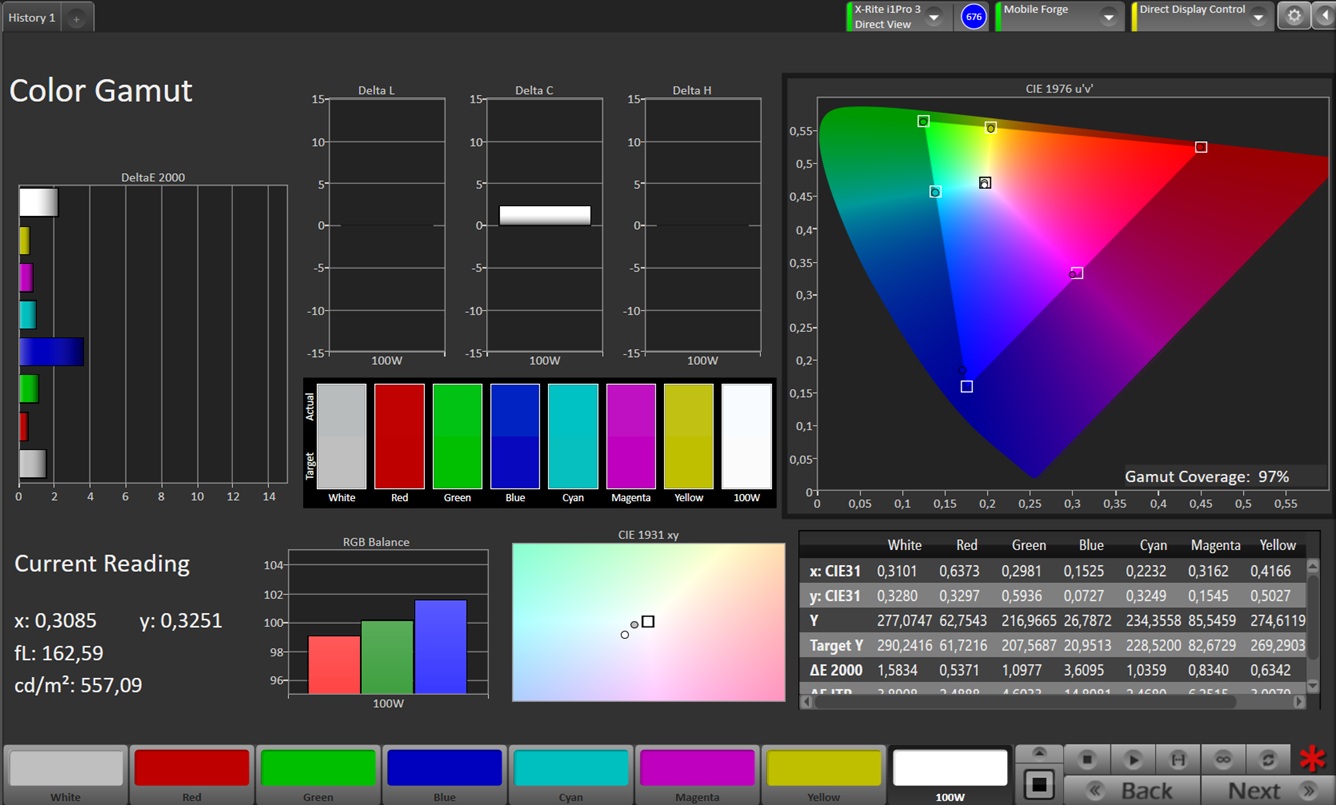
97% sRGB (Calman 2D)
Gamma: 2.415
CCT: 6856 K
| Oppo Pad 5 LCD, 2800x1980, 12.1" | Xiaomi Pad 8 IPS, 3200x2136, 11.2" | Honor MagicPad 4 OLED, 3000x1920, 12.3" | Huawei MatePad 12 X 2025 LCD, 2800x1840, 12" | |
|---|---|---|---|---|
| Display | 196% | 5% | ||
| APL18 Peak Brightness (cd/m²) | 903 | 2337 159% | 959 6% | |
| HDR Peak Brightness (cd/m²) | 926 | 3084 233% | 965 4% | |
| Response Times | -56% | 64% | -20% | |
| Response Time Grey 50% / Grey 80% * (ms) | 25.1 ? | 33.6 ? -34% | 16.6 ? 34% | 29.44 ? -17% |
| Response Time Black / White * (ms) | 13.1 ? | 23.2 ? -77% | 0.91 ? 93% | 16.13 ? -23% |
| PWM Frequency (Hz) | 60 | |||
| PWM Amplitude * (%) | 16.05 | |||
| Screen | 18% | 19% | -56% | |
| Brightness middle (cd/m²) | 892 | 627 -30% | 829 -7% | 970 9% |
| Brightness (cd/m²) | 862 | 613 -29% | 827 -4% | 906 5% |
| Brightness Distribution (%) | 93 | 96 3% | 90 -3% | 90 -3% |
| Black Level * (cd/m²) | 0.8 | 0.3 63% | 0.87 -9% | |
| Contrast (:1) | 1115 | 2090 87% | 1115 0% | |
| Colorchecker dE 2000 * | 1.17 | 1.25 -7% | 0.9 23% | 3.6 -208% |
| Colorchecker dE 2000 max. * | 4.67 | 2.95 37% | 1.7 64% | 8.2 -76% |
| Greyscale dE 2000 * | 2.3 | 1.8 22% | 1.3 43% | 6.1 -165% |
| Gamma | 2.415 91% | 2.183 101% | 2.25 98% | 2.25 98% |
| CCT | 6856 95% | 6898 94% | 6601 98% | 7149 91% |
| Total Average (Program / Settings) | -19% /
4% | 93% /
64% | -24% /
-40% |
* ... smaller is better
Screen Flickering / PWM (Pulse-Width Modulation)
| Screen flickering / PWM not detected | 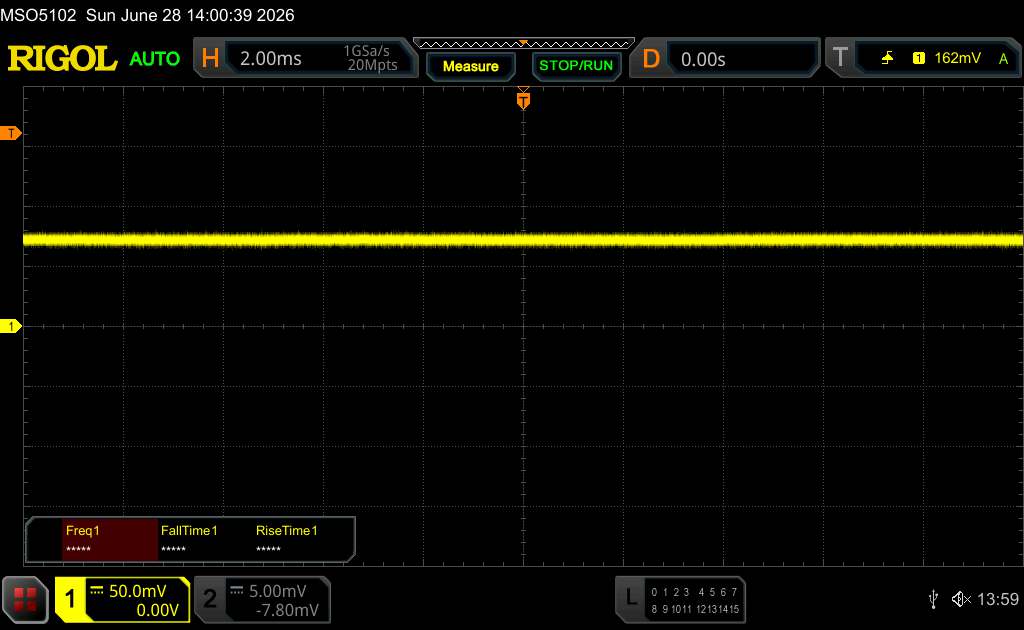 | ||
In comparison: 52 % of all tested devices do not use PWM to dim the display. If PWM was detected, an average of 7665 (minimum: 5 - maximum: 343500) Hz was measured. | |||
The contrast ratio of around 1,100:1 is also less than ideal for HDR enthusiasts. With a black level of 0.8 cd/m², black tones on the Pad 5 appear somewhat greyish and washed out. However, colour accuracy is very good, with only minor deviations from the sRGB colour space. We examined the colour calibration using Calman analysis software and a spectrophotometer.
Display Response Times
| ↔ Response Time Black to White | ||
|---|---|---|
| 13.1 ms ... rise ↗ and fall ↘ combined | ↗ 9.4 ms rise | 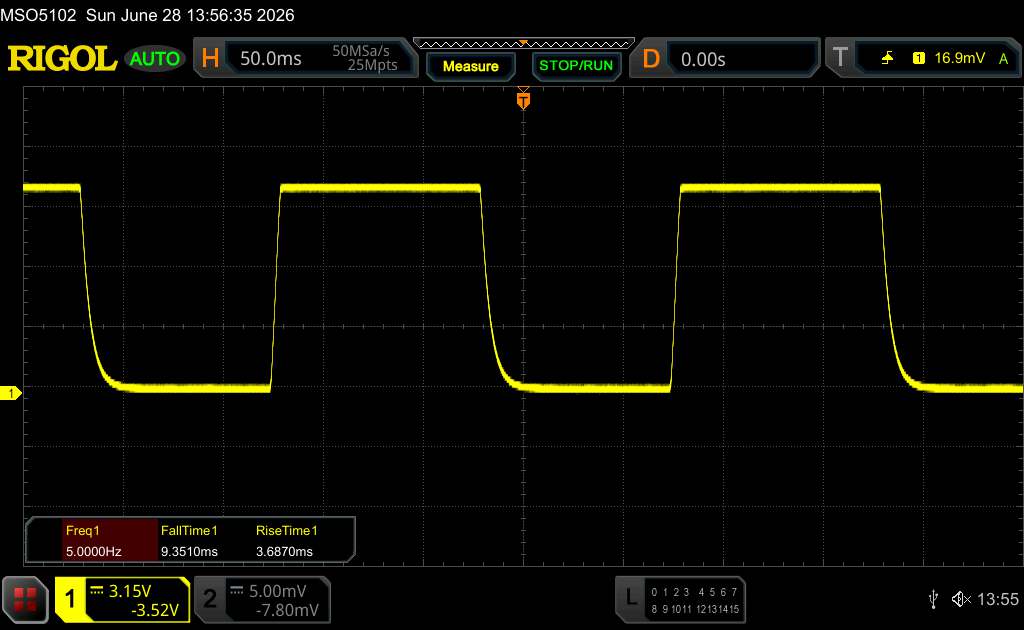 |
| ↘ 3.7 ms fall | ||
| The screen shows good response rates in our tests, but may be too slow for competitive gamers. In comparison, all tested devices range from 0.1 (minimum) to 240 (maximum) ms. » 34 % of all devices are better. This means that the measured response time is better than the average of all tested devices (19.7 ms). | ||
| ↔ Response Time 50% Grey to 80% Grey | ||
| 25.1 ms ... rise ↗ and fall ↘ combined | ↗ 19.1 ms rise | 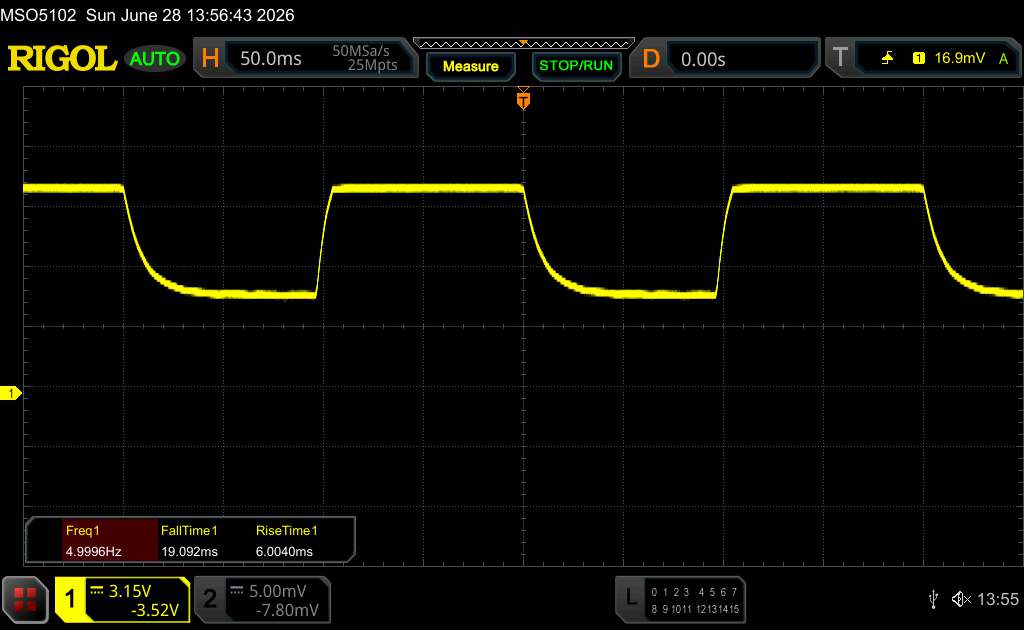 |
| ↘ 6 ms fall | ||
| The screen shows relatively slow response rates in our tests and may be too slow for gamers. In comparison, all tested devices range from 0.13 (minimum) to 636 (maximum) ms. » 36 % of all devices are better. This means that the measured response time is better than the average of all tested devices (30.8 ms). | ||
Performance: Oppo's mid-range tablet is significantly less suitable for gaming than the iPad
The most serious downgrade in the global version concerns the SoC. Unlike the Chinese version with the Dimensity 9400+, our review unit is equipped only with a Dimensity 7300. In 2026, this chipset no longer has much to offer in the mid-range segment.
In the Geekbench benchmarks, competitors in this price range are more than twice as fast as the Pad 5. With the processor used in the Chinese version, scores around three times higher would be possible in both the single-core and multi-core tests. The Oppo tablet also fails to impress in the PCMark and CrossMark system benchmarks. Only in the AI tests are the results occasionally competitive.
| PCMark for Android - Work 3.x | |
| Honor MagicPad 4 | |
| Xiaomi Pad 8 | |
| Average of class Tablet (7084 - 27428, n=58, last 2 years) | |
| Average MediaTek Dimensity 7300 (11724 - 15834, n=14) | |
| Oppo Pad 5 | |
| CrossMark - Overall | |
| Honor MagicPad 4 | |
| Average of class Tablet (319 - 2375, n=47, last 2 years) | |
| Oppo Pad 5 | |
| Average MediaTek Dimensity 7300 (390 - 791, n=11) | |
| UL Procyon AI Inference for Android - Overall Score NNAPI | |
| Oppo Pad 5 | |
| Average MediaTek Dimensity 7300 (8087 - 29436, n=10) | |
| Honor MagicPad 4 | |
| Average of class Tablet (3600 - 76852, n=52, last 2 years) | |
| Xiaomi Pad 8 | |
| AI Benchmark - Score V6 | |
| Honor MagicPad 4 | |
| Xiaomi Pad 8 | |
| Average of class Tablet (70.4 - 22476, n=36, last 2 years) | |
| Oppo Pad 5 | |
| Average MediaTek Dimensity 7300 (232 - 581, n=8) | |
| Antutu v11 - Score | |
| Honor MagicPad 4 | |
| Xiaomi Pad 8 | |
| Average of class Tablet (522205 - 4184631, n=11, last 2 years) | |
| Oppo Pad 5 | |
| Average MediaTek Dimensity 7300 (n=1) | |
The differences are even more pronounced when it comes to the integrated graphics. The Pad 5's Mali-G615 MP2 does not even reach the 20 fps mark in the onscreen results of the GFXBench Tier test. Its 3DMark scores are also more than 80% lower than those of the Xiaomi Pad 8. Even the iPad 10 is better suited to gaming than the Oppo tablet.
GFXBench (DX / GLBenchmark) 2.7: T-Rex Onscreen | 1920x1080 T-Rex Offscreen
GFXBench 3.0: on screen Manhattan Onscreen OGL | 1920x1080 1080p Manhattan Offscreen
GFXBench 3.1: on screen Manhattan ES 3.1 Onscreen | 1920x1080 Manhattan ES 3.1 Offscreen
GFXBench: on screen Car Chase Onscreen | 1920x1080 Car Chase Offscreen | on screen Aztec Ruins High Tier Onscreen | 2560x1440 Aztec Ruins High Tier Offscreen | on screen Aztec Ruins Normal Tier Onscreen | 1920x1080 Aztec Ruins Normal Tier Offscreen | 3840x2160 4K Aztec Ruins High Tier Offscreen
| 3DMark / Wild Life Extreme Unlimited | |
| Honor MagicPad 4 | |
| Xiaomi Pad 8 | |
| Huawei MatePad 12 X 2025 | |
| Oppo Pad 5 | |
| 3DMark / Wild Life Extreme | |
| Honor MagicPad 4 | |
| Xiaomi Pad 8 | |
| Huawei MatePad 12 X 2025 | |
| Oppo Pad 5 | |
| 3DMark / Wild Life Unlimited Score | |
| Honor MagicPad 4 | |
| Xiaomi Pad 8 | |
| Huawei MatePad 12 X 2025 | |
| Oppo Pad 5 | |
| 3DMark / Solar Bay Score | |
| Honor MagicPad 4 | |
| Xiaomi Pad 8 | |
| 3DMark / Solar Bay Unlimited Score | |
| Honor MagicPad 4 | |
| Xiaomi Pad 8 | |
| 3DMark / Steel Nomad Light Unlimited Score | |
| Honor MagicPad 4 | |
| Xiaomi Pad 8 | |
| Huawei MatePad 12 X 2025 | |
| Oppo Pad 5 | |
| 3DMark / Steel Nomad Light Score | |
| Honor MagicPad 4 | |
| Xiaomi Pad 8 | |
| Huawei MatePad 12 X 2025 | |
| Oppo Pad 5 | |
| GFXBench (DX / GLBenchmark) 2.7 / T-Rex Onscreen | |
| Xiaomi Pad 8 | |
| Oppo Pad 5 | |
| Honor MagicPad 4 | |
| GFXBench (DX / GLBenchmark) 2.7 / T-Rex Offscreen | |
| Honor MagicPad 4 | |
| Xiaomi Pad 8 | |
| Oppo Pad 5 | |
| GFXBench 3.0 / Manhattan Onscreen OGL | |
| Xiaomi Pad 8 | |
| Honor MagicPad 4 | |
| Oppo Pad 5 | |
| GFXBench 3.0 / 1080p Manhattan Offscreen | |
| Honor MagicPad 4 | |
| Xiaomi Pad 8 | |
| Oppo Pad 5 | |
| GFXBench 3.1 / Manhattan ES 3.1 Onscreen | |
| Xiaomi Pad 8 | |
| Honor MagicPad 4 | |
| Oppo Pad 5 | |
| GFXBench 3.1 / Manhattan ES 3.1 Offscreen | |
| Honor MagicPad 4 | |
| Xiaomi Pad 8 | |
| Oppo Pad 5 | |
| GFXBench / Car Chase Onscreen | |
| Honor MagicPad 4 | |
| Xiaomi Pad 8 | |
| Oppo Pad 5 | |
| GFXBench / Car Chase Offscreen | |
| Honor MagicPad 4 | |
| Xiaomi Pad 8 | |
| Oppo Pad 5 | |
| GFXBench / Aztec Ruins High Tier Onscreen | |
| Honor MagicPad 4 | |
| Xiaomi Pad 8 | |
| Huawei MatePad 12 X 2025 | |
| Oppo Pad 5 | |
| GFXBench / Aztec Ruins High Tier Offscreen | |
| Honor MagicPad 4 | |
| Xiaomi Pad 8 | |
| Huawei MatePad 12 X 2025 | |
| Oppo Pad 5 | |
| GFXBench / Aztec Ruins Normal Tier Onscreen | |
| Honor MagicPad 4 | |
| Xiaomi Pad 8 | |
| Huawei MatePad 12 X 2025 | |
| Oppo Pad 5 | |
| GFXBench / Aztec Ruins Normal Tier Offscreen | |
| Honor MagicPad 4 | |
| Xiaomi Pad 8 | |
| Huawei MatePad 12 X 2025 | |
| Oppo Pad 5 | |
| GFXBench / 4K Aztec Ruins High Tier Offscreen | |
| Honor MagicPad 4 | |
| Xiaomi Pad 8 | |
| Huawei MatePad 12 X 2025 | |
| Oppo Pad 5 | |
| Jetstream 2 - 2.2 Total | |
| Honor MagicPad 4 (Chrome 148) | |
| Average of class Tablet (61.3 - 579, n=43, last 2 years) | |
| Oppo Pad 5 (Chrome 14ß) | |
| Average MediaTek Dimensity 7300 (116.9 - 149.6, n=6) | |
| Octane V2 - Total Score | |
| Honor MagicPad 4 (Chrome 148) | |
| Xiaomi Pad 8 (Chrome 142) | |
| Average of class Tablet (2794 - 138481, n=69, last 2 years) | |
| Oppo Pad 5 (Chrome 14ß) | |
| Average MediaTek Dimensity 7300 (22739 - 42038, n=14) | |
| Mozilla Kraken 1.1 - Total | |
| Average of class Tablet (243 - 14670, n=64, last 2 years) | |
| Average MediaTek Dimensity 7300 (1028 - 2154, n=11) | |
| Oppo Pad 5 (Chrome 14ß) | |
| Xiaomi Pad 8 (Chrome 142) | |
| Honor MagicPad 4 (Chrome 148) | |
| WebXPRT 5 - Overall | |
| Honor MagicPad 4 (Chrome 148) | |
| Average of class Tablet (37 - 102, n=6, last 2 years) | |
| Oppo Pad 5 (Chrome 14ß) | |
| Average MediaTek Dimensity 7300 (n=1) | |
* ... smaller is better
| Oppo Pad 5 | Xiaomi Pad 8 | Honor MagicPad 4 | Huawei MatePad 12 X 2025 | Average 128 GB UFS 3.1 Flash | Average of class Tablet | |
|---|---|---|---|---|---|---|
| AndroBench 3-5 | 73% | 68% | 140% | -15% | 18% | |
| Sequential Read 256KB (MB/s) | 1922.71 | 3899.2 103% | 1978.75 3% | 3939.89 105% | 1586 ? -18% | 2120 ? 10% |
| Sequential Write 256KB (MB/s) | 1674.97 | 3391.2 102% | 1752.63 5% | 2609.8 56% | 807 ? -52% | 1719 ? 3% |
| Random Read 4KB (MB/s) | 208.83 | 325.1 56% | 513.85 146% | 473.25 127% | 246 ? 18% | 280 ? 34% |
| Random Write 4KB (MB/s) | 266.49 | 348.2 31% | 574.85 116% | 988.72 271% | 250 ? -6% | 332 ? 25% |
Emissions: Android tablet with minimal heat generation and minimal throttling
Temperature
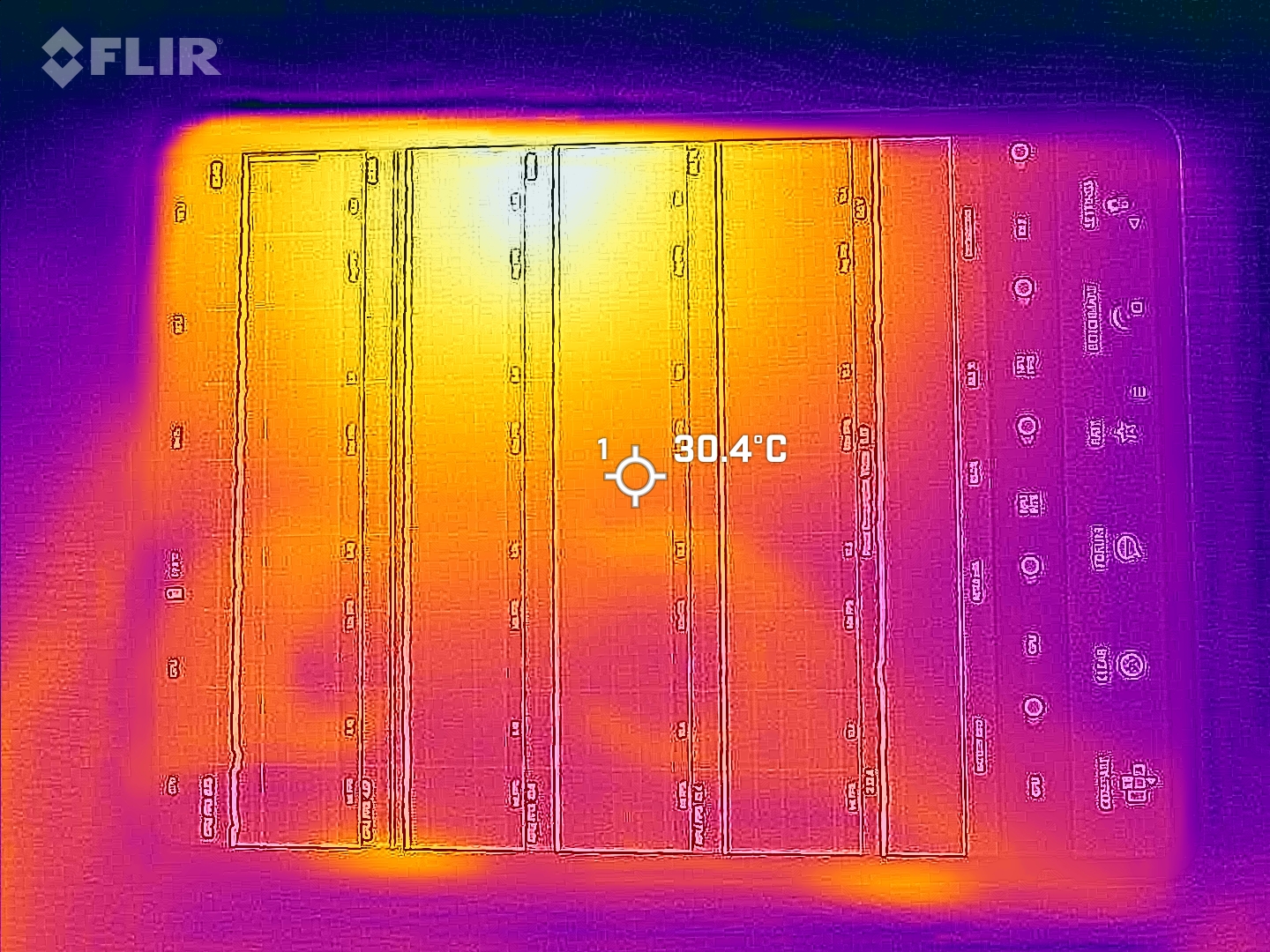
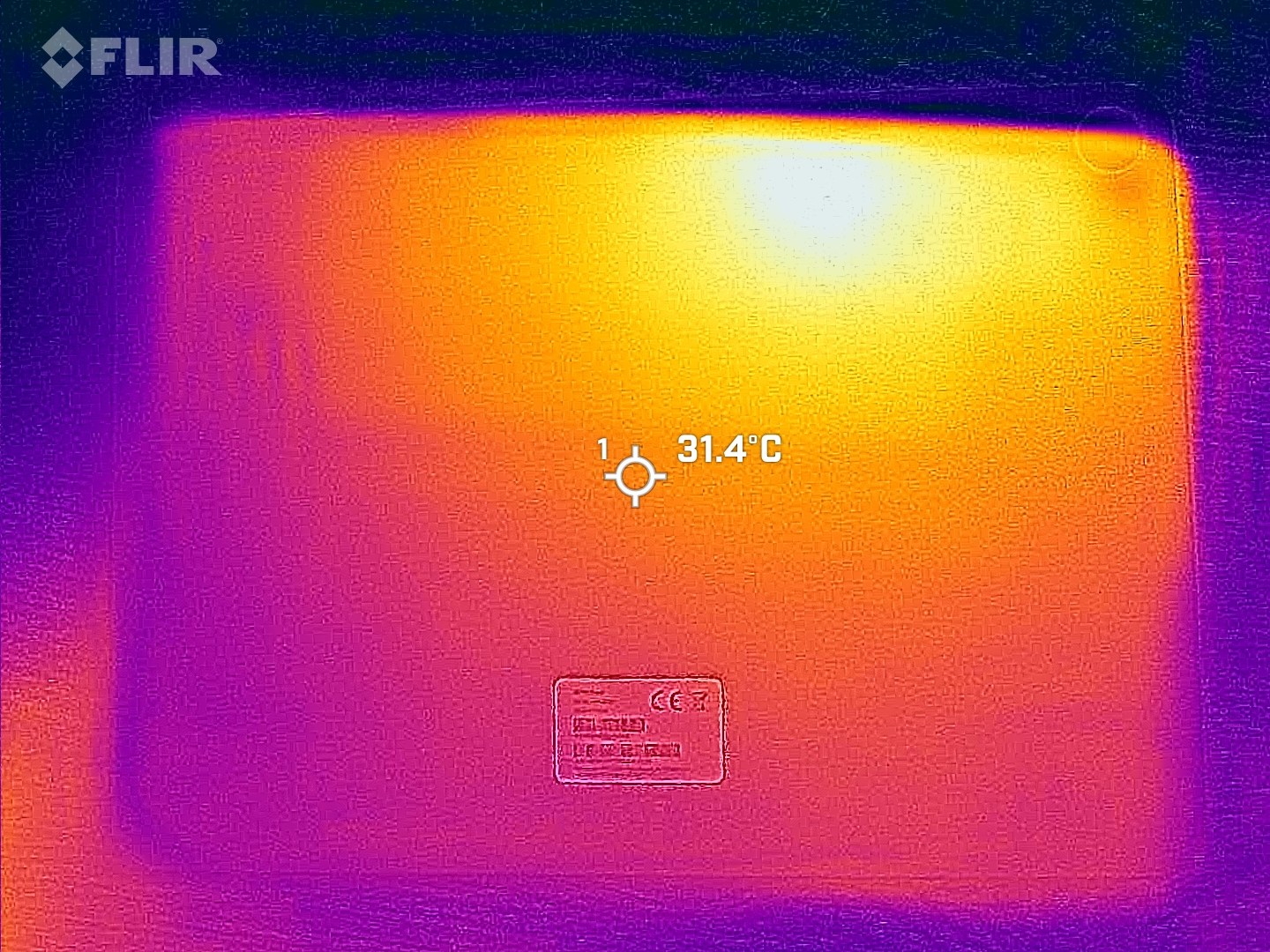
Surface temperatures remained very low in our measurements. Even the small, localised hotspot typical of a tablet did not exceed 40 °C on the Pad 5. Performance also remained almost unchanged during the stress tests, albeit at an extremely low level.
(+) The maximum temperature on the upper side is 37.7 °C / 100 F, compared to the average of 33.7 °C / 93 F, ranging from 20.7 to 53.2 °C for the class Tablet.
(+) The bottom heats up to a maximum of 38.7 °C / 102 F, compared to the average of 33.2 °C / 92 F
(+) In idle usage, the average temperature for the upper side is 28.8 °C / 84 F, compared to the device average of 30 °C / 86 F.
3DMark stress tests
| 3DMark | |
| Wild Life Stress Test Stability | |
| Oppo Pad 5 | |
| Huawei MatePad 12 X 2025 | |
| Honor MagicPad 4 | |
| Xiaomi Pad 8 | |
| Wild Life Extreme Stress Test | |
| Oppo Pad 5 | |
| Honor MagicPad 4 | |
| Xiaomi Pad 8 | |
| Solar Bay Stress Test Stability | |
| Honor MagicPad 4 | |
| Xiaomi Pad 8 | |
| Steel Nomad Light Stress Test Stability | |
| Huawei MatePad 12 X 2025 | |
| Oppo Pad 5 | |
| Xiaomi Pad 8 | |
Speakers
The Oppo tablet uses four speakers, which provide a solid sound experience. However, for such a large tablet with plenty of space inside the chassis, we would have expected greater depth. Our pink-noise measurement also revealed a drop-off in the super-high frequencies.
For external audio output, users can connect wired devices via the USB port or use Bluetooth 5.4 wirelessly. The latter supports a solid range of codecs, including SBC, AAC, aptX, aptX HD and LDAC.
Oppo Pad 5 audio analysis
(+) | speakers can play relatively loud (86.8 dB)
Bass 100 - 315 Hz
(±) | reduced bass - on average 14% lower than median
(±) | linearity of bass is average (10.5% delta to prev. frequency)
Mids 400 - 2000 Hz
(±) | higher mids - on average 6.1% higher than median
(+) | mids are linear (6% delta to prev. frequency)
Highs 2 - 16 kHz
(+) | balanced highs - only 4.6% away from median
(±) | linearity of highs is average (9.1% delta to prev. frequency)
Overall 100 - 16.000 Hz
(±) | linearity of overall sound is average (18.8% difference to median)
Compared to same class
» 50% of all tested devices in this class were better, 6% similar, 44% worse
» The best had a delta of 7%, average was 21%, worst was 130%
Compared to all devices tested
» 44% of all tested devices were better, 8% similar, 48% worse
» The best had a delta of 4%, average was 23%, worst was 136%
Xiaomi Pad 8 audio analysis
(+) | speakers can play relatively loud (86.9 dB)
Bass 100 - 315 Hz
(±) | reduced bass - on average 13% lower than median
(±) | linearity of bass is average (11.4% delta to prev. frequency)
Mids 400 - 2000 Hz
(±) | higher mids - on average 5.2% higher than median
(+) | mids are linear (5.6% delta to prev. frequency)
Highs 2 - 16 kHz
(+) | balanced highs - only 3.1% away from median
(+) | highs are linear (6.2% delta to prev. frequency)
Overall 100 - 16.000 Hz
(+) | overall sound is linear (11.9% difference to median)
Compared to same class
» 15% of all tested devices in this class were better, 4% similar, 80% worse
» The best had a delta of 7%, average was 21%, worst was 130%
Compared to all devices tested
» 9% of all tested devices were better, 3% similar, 88% worse
» The best had a delta of 4%, average was 23%, worst was 136%
Battery life: low power consumption from the Oppo Pad 5
Power consumption
The 10,050 mAh battery charges at a maximum of only 33 watts. However, power consumption is excellent and highly efficient for a 12.1-inch tablet. Around 2 watts in our idle measurement is a very good result.
| Off / Standby |   0.1 / 0.2 Watt 0.1 / 0.2 Watt |
| Idle |  1.8 / 1.9 / 2.1 Watt 1.8 / 1.9 / 2.1 Watt |
| Load |
6.7 / 9 Watt |
    
| |
Key:
min: ,
med: ,
max: Metrahit Energy | |
| Oppo Pad 5 10420 mAh | Xiaomi Pad 8 9200 mAh | Honor MagicPad 4 10100 mAh | Huawei MatePad 12 X 2025 10100 mAh | Average MediaTek Dimensity 7300 | Average of class Tablet | |
|---|---|---|---|---|---|---|
| Power Consumption | -7% | -95% | -132% | 23% | -68% | |
| Idle Minimum * (Watt) | 1.8 | 1.3 28% | 3.53 -96% | 1.49 17% | 1.072 ? 40% | 2.21 ? -23% |
| Idle Average * (Watt) | 1.9 | 2 -5% | 4.77 -151% | 6.09 -221% | 1.555 ? 18% | 4.01 ? -111% |
| Idle Maximum * (Watt) | 2.1 | 2.3 -10% | 4.86 -131% | 6.16 -193% | 1.827 ? 13% | 4.4 ? -110% |
| Load Average * (Watt) | 6.7 | 6.6 1% | 11.21 -67% | 4.4 ? 34% | 8.97 ? -34% | |
| Load Maximum * (Watt) | 9 | 13.3 -48% | 11.67 -30% | 7.95 ? 12% | 14.5 ? -61% |
* ... smaller is better
Power consumption: Geekbench (150 cd/m²)
Power consumption: GFXBench (150 cd/m²)
Battery life
The Pad 5 also performs very well in our battery test with the display brightness adjusted to 150 cd/m². At 19 hours, the Oppo tablet offers long battery life, even though it does not match the endurance of the Pro model.
| Oppo Pad 5 10420 mAh | Xiaomi Pad 8 9200 mAh | Honor MagicPad 4 10100 mAh | Huawei MatePad 12 X 2025 10100 mAh | |
|---|---|---|---|---|
| Battery runtime | ||||
| WiFi v1.3 (h) | 19.1 | 20.7 8% | 13.1 -31% | 14.3 -25% |
Notebookcheck overall rating
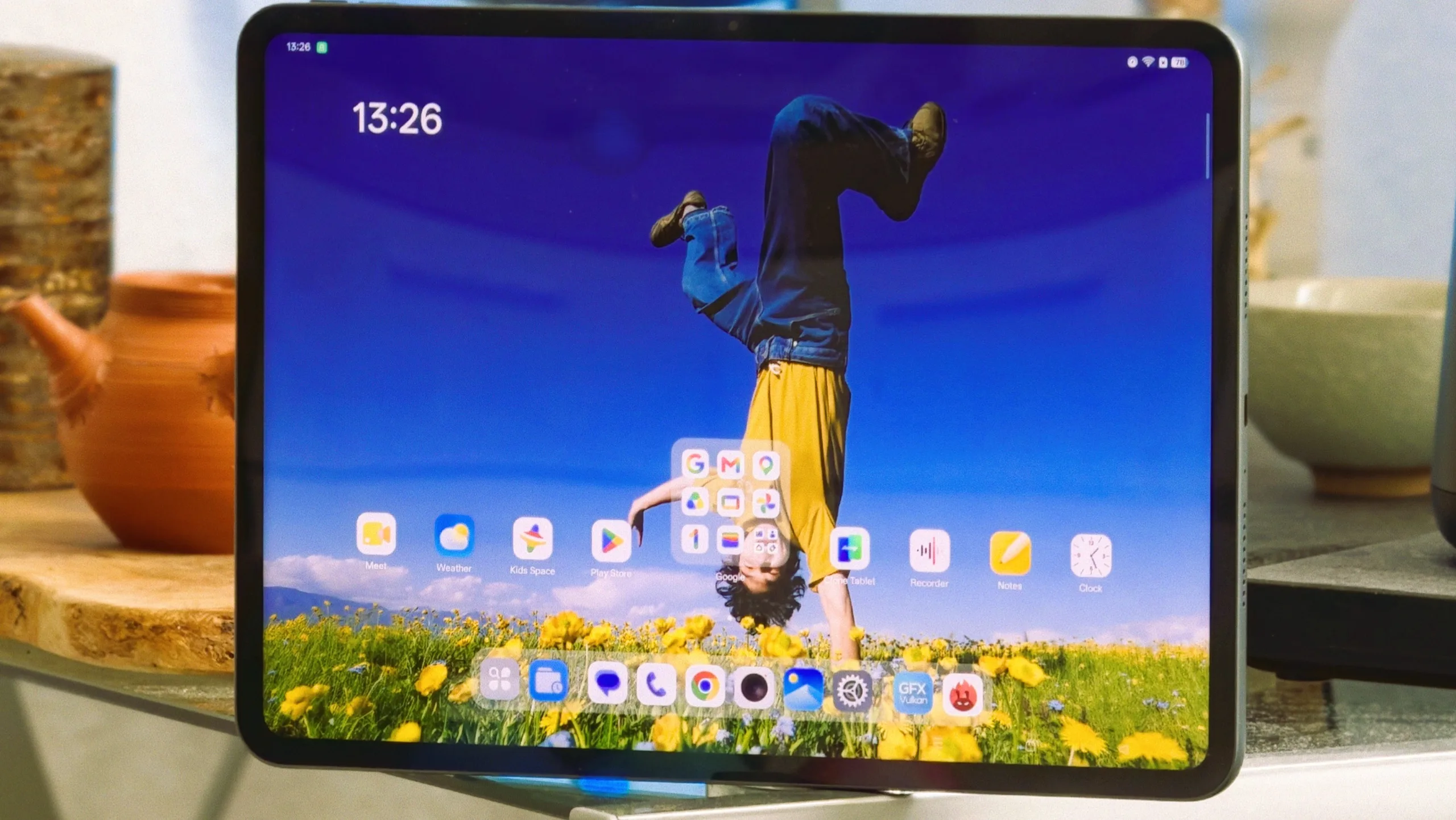
Anyone looking for a tablet with 5G and stylus support will find the Oppo Pad 5 an affordable alternative to the iPad Air 13 or Galaxy Tab S11 Ultra. However, the performance on offer is extremely low for a mid-range tablet.
Oppo Pad 5
- 07/16/2026 v8
Marcus Herbrich
 Total Sustainability Score:
 Comparison of alternatives at a glance
Image | Model / Review | Price | Weight | Drive | Display |
|---|---|---|---|---|---|
1. 80.9%  | Oppo Pad 5 MediaTek Dimensity 7300 ⎘ ARM Mali-G615 MP2 ⎘ 8 GB Memory, 128 GB UFS 3.1 | List Price: 459€ | 577 g | 128 GB UFS 3.1 Flash | 12.10" 2800x1980 283 PPI LCD |
2. 87.1%  | Xiaomi Pad 8 Qualcomm Snapdragon 8s Gen 4 SM8735 ⎘ Qualcomm Adreno 825 ⎘ 12 GB Memory, 256 GB UFS 4.x | Amazon: 1. $382.50 XIAOMI Pad 8 Ai WiFi Version... 2. $406.13 XIAOMI Pad 8 Ai WiFi Version... 3. $379.50 XIAOMI Pad 8 Ai WiFi Version... List Price: 437€ | 485 g | 256 GB UFS 4.1 Flash | 11.20" 3200x2136 344 PPI IPS |
3. 89.6%  | Honor MagicPad 4 Qualcomm Snapdragon 8 Gen 5 ⎘ Qualcomm Adreno 829 ⎘ 12 GB Memory, 256 GB UFS 4.x | Amazon: 1. $899.00 HONOR MagicPad4 (12.3 Inch, ... 2. $853.00 HONOR MagicPad4 (12.3 Inch, ... 3. $1,020.00 HONOR MagicPad4 (12.3 Inch, ... List Price: 600€ | 450 g | 256 GB UFS 4.0 Flash | 12.30" 3000x1920 290 PPI OLED |
4. 83.2%  | Huawei MatePad 12 X 2025 HiSilicon Kirin T92 ⎘ HiSilicon Maleoon 920 ⎘ 12 GB Memory, 256 GB UFS 4.x | Amazon: List Price: 649€ | 555 g | 256 GB UFS 4.0 Flash | 12.00" 2800x1840 279 PPI LCD |
Transparency
The selection of devices to be reviewed is made by our editorial team. The test sample was provided to the author as a loan by the manufacturer or retailer for the purpose of this review. The lender had no influence on this review, nor did the manufacturer receive a copy of this review before publication. There was no obligation to publish this review. As an independent media company, Notebookcheck is not subjected to the authority of manufacturers, retailers or publishers.
This is how Notebookcheck is testing
Every year, Notebookcheck independently reviews hundreds of laptops and smartphones using standardized procedures to ensure that all results are comparable. We have continuously developed our test methods for around 20 years and set industry standards in the process. In our test labs, high-quality measuring equipment is utilized by experienced technicians and editors. These tests involve a multi-stage validation process. Our complex rating system is based on hundreds of well-founded measurements and benchmarks, which maintains objectivity. Further information on our test methods can be found here.
 Add as a preferred source on Google


