




Nvidia CEO Jensen Huang says gamers ‘completely wrong’ about DLSS 5
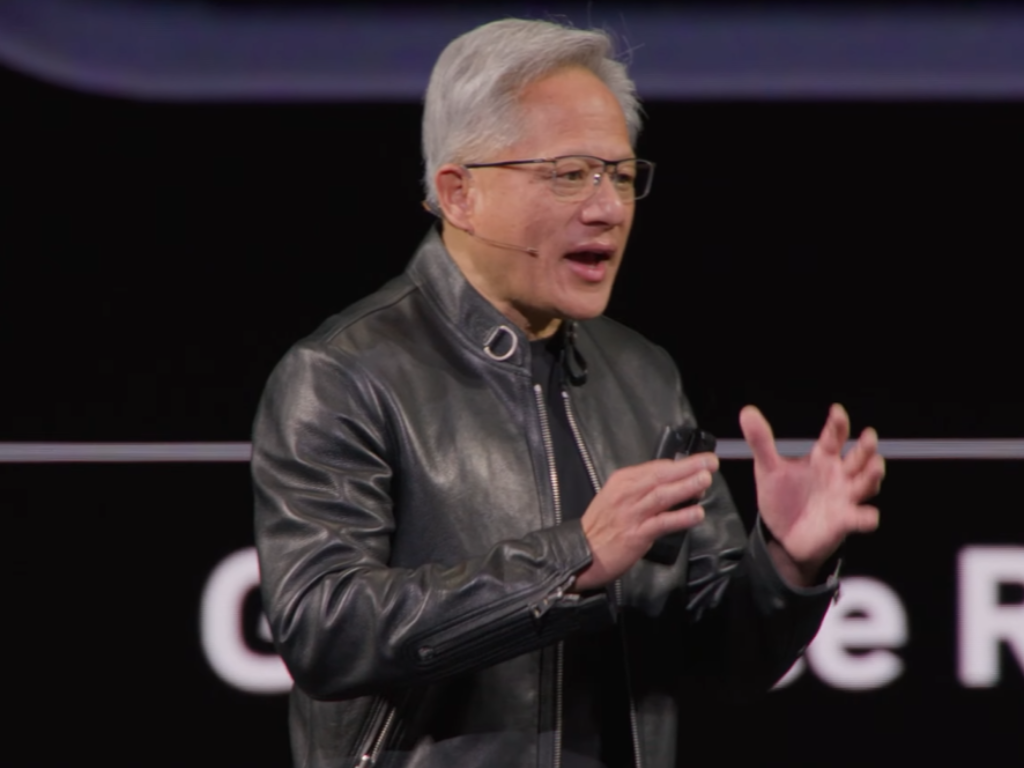
Nvidia's CEO Jensen Huang has openly commented on gamers criticizing the company’s latest DLSS 5 technology, which many have called out for warping intentional artistic styles into a generic “yassified” look and altering characters in games like Resident Evil Requiem, Starfield, and Hogwarts Legacy with “uncanny valley” faces. Without hesitation, Jensen Huang said that gamers are “completely wrong” about DLSS 5.
Nvidia announced DLSS 5 at GTC 2026 to a tough crowd
Days after Nvidia announced DLSS 5 at its GTC 2026 event, gamers complained that the upcoming tech, instead of clearing artifacts and improving visuals, significantly distorts a game’s original artistic design with a glossy, photorealistic sheen. Most complaints stated that DLSS 5 makes things look homogenized.
Gamers were incredibly furious when they saw Leon Kennedy and Grace Ashcroft from Resident Evil Requiem. The characters appeared distinctly altered and more idealized than in their original art direction, with many comparing the reveal to new Instagram beauty filters or “AI slop.”
Huang: Gamers are “completely wrong” about DLSS 5
However, Jensen Huang sat down at a press Q&A with Tom’s Hardware at GTC 2026 and addressed the backlash first and foremost when questioned by the news outlet’s editor-in-chief. Speaking about the outrage over DLSS 5 among gamers, Huang said, “Well, first of all, they’re completely wrong.”
He continued to explain the core ideology behind the jump to DLSS 5, saying, “The reason for that is because, as I have explained very carefully, DLSS 5 fuses controllability of the geometry and textures, and everything about the game, with generative AI.”
Instead of acting as a blanket filter on top of frames, Huang says DLSS 5 will operate at a more granular, geometry-based level, blending traditional rendering with AI to deliver better lighting, textures, details, and assets, while developers remain in control of the game’s artistic direction.
Nvidia CEO claims DLSS 5 will allow developers to retain “direct control.”
Jensen Huang further explained, “It’s not post-processing; it’s not post-processing at the frame level. It’s generative control at the geometry level. All of that is directly under the game developer's control. This is very different from traditional generative AI; it’s content-controlled generative AI. That’s why we call it neural rendering.”
Gamers are worried that Nvidia’s DLSS 5 will steamroll games like Hogwarts Legacy, Resident Evil Requiem, and more in the future, as all of them are scheduled to receive DLSS 5 updates.
While Nvidia says that DLSS 5 is the company’s biggest achievement since ray tracing, promising hyper-realistic visuals without tanking performance, its impact on performance and visuals remains to be seen. DLSS 5 is slated to roll out gradually in the fall of 2026.
At the end of the day, the backlash behind DLSS 5 will either die down or grow, depending on how developers tweak and implement it in their video games, even as gamers continue to push back against what is perceived to be an increasing amount of ‘AI slop’ across the board even as Nvidia's GPUs continue to remain short across the board, propelling enthusiast-class options to even higher prices.
 Add as a preferred source on Google


