




Huawei Watch D3 review: How the smartwatch measures arterial stiffness
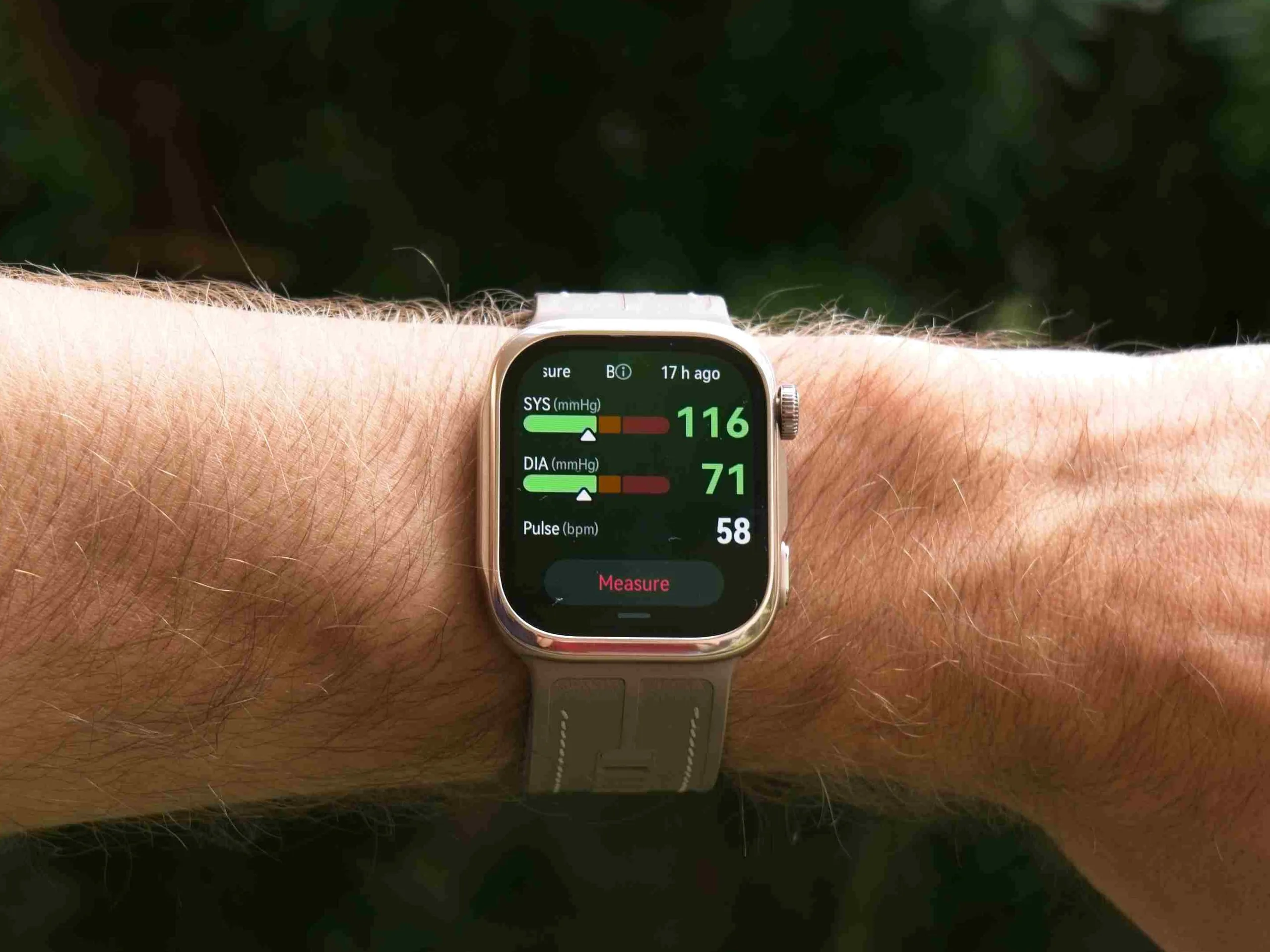
The Huawei Watch D3 is a strong smartwatch that clearly positions itself as a specialized health wearable rather than a multisport or outdoor watch. Having previously examined the ECG functionality and certified blood pressure monitoring, this article focuses on its arterial stiffness measurement. While other smartwatches also analyze arterial stiffness, the Watch D3 goes beyond standard optical PPG methods by incorporating its integrated ECG sensor directly into the measurement process.
Harmful Stiffness
To help visualize vascular stiffness, imagine a garden hose or cooling-water hose—specifically what happens when you turn the water flow on and off. Each time the valve opens or closes, much like with every heartbeat, a pressure surge travels through the hose. Because liquids are virtually incompressible, their volume remains constant under pressure, meaning the hose walls themselves must absorb the force.
Without this elasticity, the cardiovascular system loses its Windkessel function (elastic reservoir function) —its ability to dampen pressure spikes like a flexible reservoir. Without that dampening effect, organs and vessel walls are subjected directly to those elevated peak pressures, forcing the heart to work against greater resistance. Furthermore, the initial pressure wave reflects off the peripheral vascular system and bounces back toward the heart. The heart must then pump against this returning wave. In mechanical terms, it operates like a pump pushing against fluid backflow, impairing efficiency and increasing strain.
The Watch D3 Uses Two Sensors
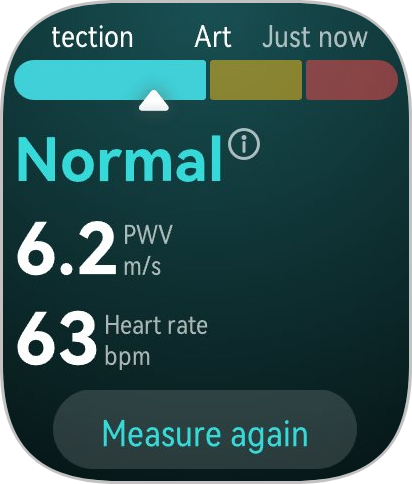
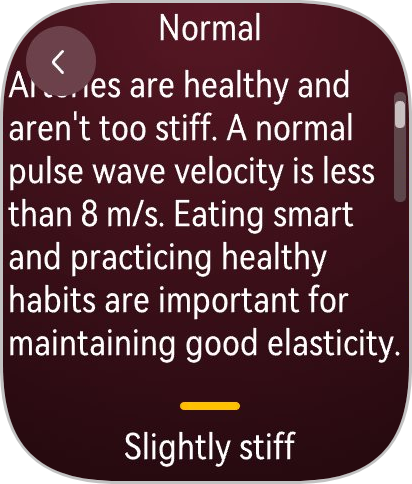
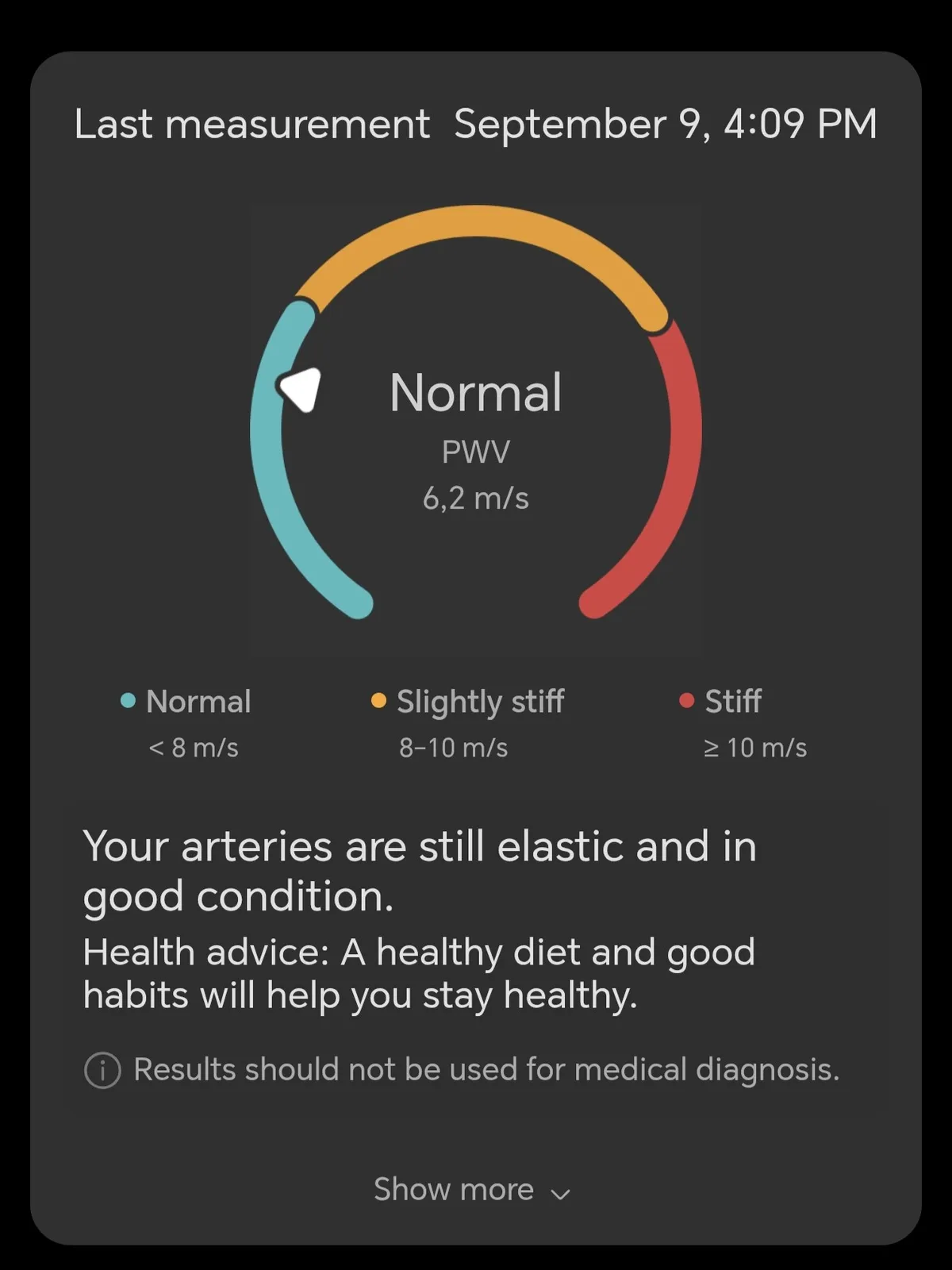
In the case of the Huawei Watch D3, this pressure surge is measured using data from two distinct sensors. The electrocardiograph records the heart’s electrical activity, while the optical sensors detect the mechanical pulse at the wrist. By calculating the time delay between the heartbeat and the arrival of the pressure wave at the wrist, the watch determines—or at least estimates—pulse wave velocity (PWV). The Watch D3 displays this value in meters per second (m/s) alongside a risk classification: readings below 8 m/s indicate healthy elasticity, whereas values above 10 m/s suggest elevated cardiovascular risk.
Not a Medical Device, Different Measurement Method
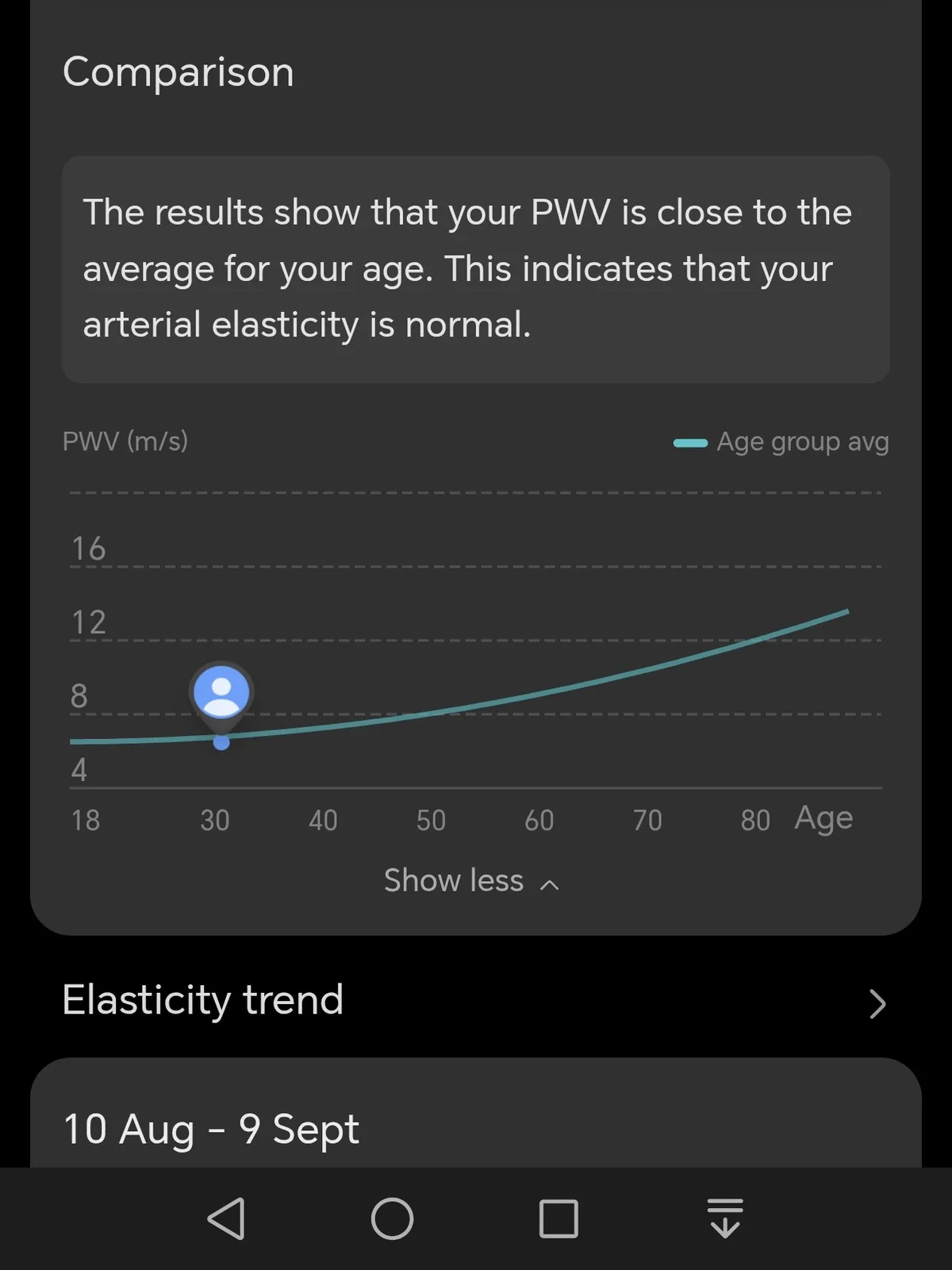
Measurement and evaluation can be performed directly on the Huawei Watch D3, and the feature functioned flawlessly during testing. However, unlike the watch's ECG and certified blood pressure monitoring, the arterial stiffness measurement lacks medical device certification. Huawei explicitly notes this distinction. In clinical settings, carotid-femoral pulse wave velocity (cfPWV)—which measures transit time between the carotid artery in the neck and the femoral artery in the groin—remains the gold standard. This differs fundamentally from the Watch D3's methodology, which tracks the pulse wave along the path from the heart to the radial artery at the wrist.
 Add as a preferred source on Google


No comments for this article
