




How Lenovo is trying to keep this Legion laptop with 32 GB RAM affordable
Let say you have been in a coma for a year and wake up today, eager to buy a gaming laptop to play all the games you have missed since your absence: Chances are, you would not believe the prices.
Navigating the PC market in 2026 is an unfortunate experience, but if you need a laptop, there is no way of getting around it. For laptop manufacturers, making and selling more affordable laptops is of key importance, as pricing is now one of the major considerations.
Among the components that drive the price up, memory is the main culprit. Therefore, to lower the price of a laptop, choosing a model with less memory can be an option, though that creates obvious performance limitations. For gaming laptops, this may not be an option, as a gaming laptop with performance issues fails its main function. Worse: Gaming laptops become even more expensive as they typically include a dedicated GPU with extra video memory (VRAM).
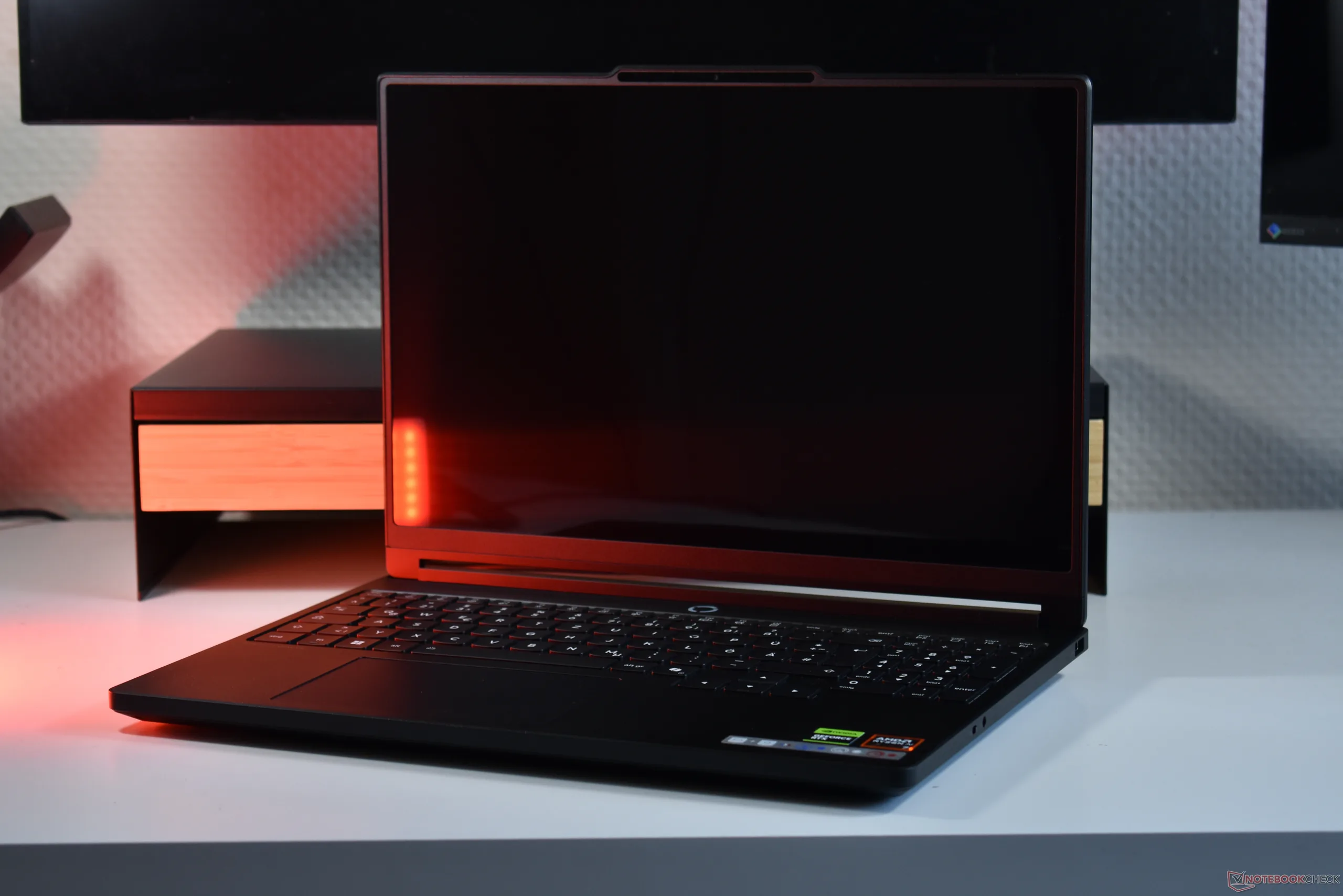
Thus, building a more affordable gaming laptop is a real challenge. Yet, for some gaming laptops, affordability is the only reason why they exist. Take the Lenovo Legion 5 15AGP11 we tested, for example. This is a 15.3 inch gaming laptop with an OLED screen, RTX 5060 GPU and Ryzen AI 7 CPU, and 32 GB RAM, but since it is a Legion 5, it is made to be a more affordable solution - compared to the Legion 7 line, that is. Our review unit retails for around €2,000.
This is far from cheap, but even to achieve that pricing, Lenovo had to try to lower the costs in various ways. For starters, the lower half of the chassis is entirely made out of plastic, only the screen cover consists of aluminum. Additionally, Lenovo puts in a single-zone backlit RGB keyboard, not a multi-zone or per-key backlit one. Plus, the touchpad is made out of plastic instead of glass.
For a laptop with performance as the key metric, it makes sense to save money in other places. If you want a Legion 7 with a more premium design, you have to pay considerably more - a Legion 7 16AGP11 costs around €2,400 in a comparable configuration.
 Add as a preferred source on Google


