




Ryzen 7 7800X3D reportedly swells and kicks the bucket after 3 months despite running an up-to-date BIOS
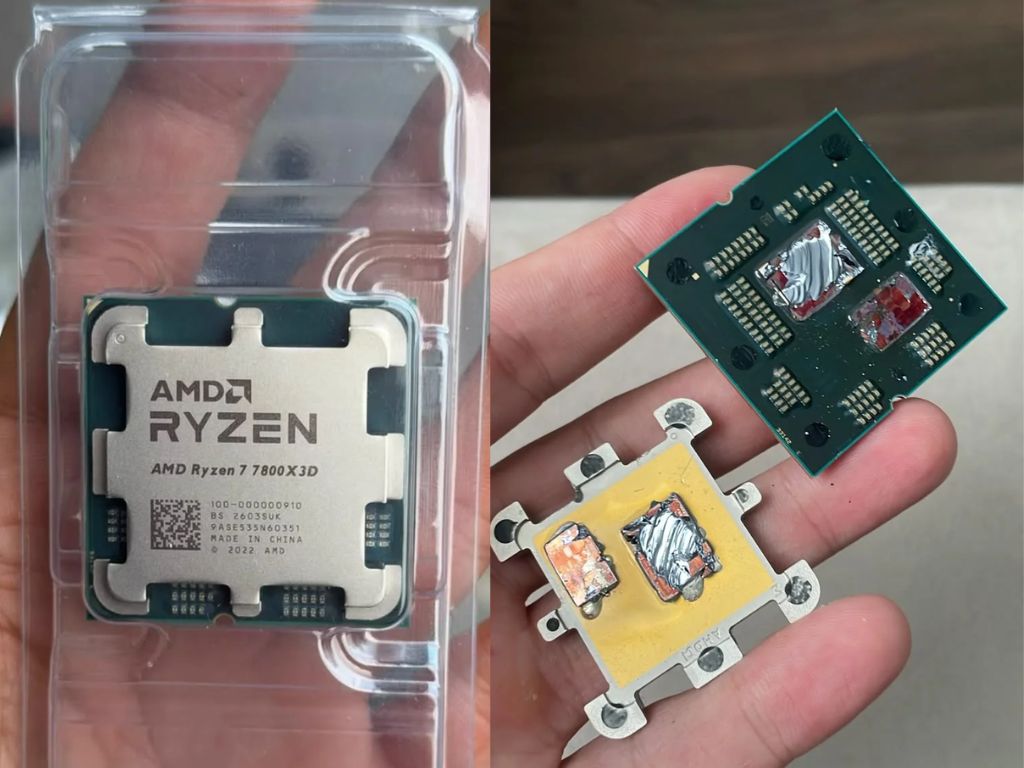
A Ryzen 7 7800X3D CPU reportedly swelled and burned while installed on an updated MSI X870 motherboard. The three-month-old CPU had not been overclocked and sustained the same physical damage AMD claimed to have fixed in 2023.
A Reddit user on r/pcmasterrace reported that their Ryzen 7 7800X3D died after three months of gaming, with visible burn marks and swelling of the package. It also severely damaged the MSI X870-P WIFI motherboard it was installed on. The only setting the Redditor changed was turning on the EXPO memory overclock in the BIOS.
AMD’s 2023 AGESA response capped the SoC voltage at 1.30V and adjusted the PROCHOT thresholds. Those measures are already incorporated into the MSI X870’s BIOS at launch, making this case harder to explain than the 2023 failures.
This PC, built just three months ago, hit the gaming community with what the AM5 platform has learned to dread: a dead Ryzen 7 7800X3D, burned and swollen, alongside a dead MSI motherboard.
The user confirmed that EXPO was enabled for a Lexar 6000 MHz kit, with voltages and power limits left entirely at default settings. The owner stated that the CPU temperature read normally before the unexpected shutdown. The system then entered a boot loop that put the build out of commission.
AMD had identified the root cause of Ryzen 7000-series CPU burnout in April 2023 as excessive SoC voltage, laying the blame squarely at some motherboard manufacturer’s feet for being too liberal with how it was supplied and rolled out new AGESA firmware that capped the rail at 1.30V. The fix in 2023 wasn’t just one change, as AGESA 1.0.0.7 also tuned PROCHOT Control and PROCHOT Deassertion Ramp Time, the two governing mechanisms for thermal safety.
A hard-to-pinpoint cause
The safeguards AMD introduced in 2023 have carried over into the much newer AGESA generations that X870 boards run, with the current AGESA revision at 1.3.0.1. That makes this case unusual, since earlier failures stemmed from boards that lacked a voltage ceiling on the SoC rail.
Neither has been established yet, but two speculations could fit the reported symptoms: a sustained elevated voltage producing isolated heat that the cooler kept masked at a sensor level, or a transient spike too brief for the firmware protection system to react to.
For now, the owner has been advised to pursue an RMA with AMD as the practical path forward. That is a practical posture rather than a complete resolution. AMD’s examination of RMAs and damaged CPUs rarely produces any public findings, and two years later, failures are still being sporadically reported on boards running current firmware.
The only problem is that the chip was delidded before the RMA was even filed. When asked about a refund or replacement, the Redditor said the RMA process was in progress, but it’s still unclear whether AMD will honor a warranty replacement or refund, given that the chip has been delidded.
Any owners running an X3D processor on AM5 should treat a BIOS update as mandatory, not optional. As this case shows, it’s sometimes not enough, even if the delidding process adds an interesting caveat here, making it hard to rule out user error at some level.
Source(s)
 Add as a preferred source on Google


