





Verdict on the Lenovo Yoga Tab Gen 2
When launching a high-quality, compact tablet like the Lenovo Yoga Tab Gen2, you can't afford any mistakes – the competition from the iPad Air, Galaxy Tab S, and Xiaomi Pad 8 Pro is simply too strong.
And Lenovo delivers in 2026, too: The second-generation Yoga Tab is a tablet that feels premium and boasts plenty of features: a microSD reader for storage expansion, a fast USB port, a bright and flicker-free display, lightning-fast internet, and a fast SoC.
While there are even more powerful tablets among its direct competitors, the Yoga Tab Gen 2 really shines when it comes to battery life: Thanks to its gigantic 11,000 mAh battery, the tablet lasts over 24 hours in our Wi-Fi test. Yet it weighs only a few grams more than its predecessor.
Lenovo also promises operating system updates for a very long time, but security updates end sooner. There is also no cellular option, which is frustrating for such a portable tablet.
Overall, the Yoga Tab Gen 2 is a very high-quality tablet that can hold its own against models from Apple, Xiaomi and Samsung.
Pros
Cons
Price and availability
The Lenovo Yoga Tab Gen 2 is available starting at around US$ 599, for example directly from the manufacturer.
Stylus and keyboard are included, at least in official Lenovo US shop.

- $384.99Lenovo Idea Tab Pro Gen 2 Tablet + Pen & Folio Case - 13″ 3.5K IPS Touchscreen Display - 144Hz - Qualcomm® Snapdragon® 8s CPU - 8GB Memory - 128GB Storage - Integrated Qualcomm® Adreno™ 825 GPU
- $619.99Lenovo Yoga Tab AI Tablet, 11" 3K 144Hz, 12GB RAM, 256GB, Pro Pen, Keyboard
- $381.99Lenovo Tab Plus Gen 2 - Entertainment Tablet and Clear Case - 12.1″ 2.5K IPS Touch Display - 120Hz - MediaTek Dimensity 7400 CPU - 8GB Memory - 256GB UFS Storage - Integrated Arm Mali-G615 MC2 GPU
Table of Contents
- Verdict on the Lenovo Yoga Tab Gen 2
- Specifications
- Case and features – Android tablet with aluminum chassis
- Communication and operation – Yoga Tab Gen 2 with extremely fast internet
- Software and sustainability – High-quality tablet with 6 years of OS updates
- Cameras – Lenovo tablet with basic cameras
- Display – Android tablet without PWM
- Performance, emissions and battery life – Yoga Tab with plenty of power
- Notebookcheck Overall Rating
- Possible alternatives compared
Specifications
Case and features – Android tablet with aluminum chassis
At 480 grams, the Lenovo Yoga Tab Gen 2 is one of the heavier tablets in its class, but it also has the largest battery capacity. And would you really notice a 22-gram weight difference compared to its predecessor?
At 86%, the screen-to-body ratio is very good: The bezels are narrow and the tablet looks modern. The metal chassis barely flexes and makes no noise. Pressure on the screen only causes visible distortion in the liquid crystal at a few spots.
IP52 certification is included, which means the tablet is fairly well protected against dust, but barely protected against water.
A USB port with speeds of up to 5 Gbit/s is available, but unfortunately it cannot output video signals, so displays cannot be connected via a cable. However, it works flawlessly via Miracast.
There is 256 GB of storage, putting the Yoga Tab Gen 2 almost exactly in the middle of the comparison devices. You can also add more storage via microSD, and the card reader performs reasonably quickly in our test.



| SD Card Reader - average JPG Copy Test (av. of 3 runs) | |
| Lenovo Yoga Tab Gen 2 (Angelbird V60) | |
| Average of class Tablet (10.2 - 79.2, n=45, last 2 years) | |
| Samsung Galaxy Tab S11 (Angelbird AV Pro V60) | |
Cross Platform Disk Test (CPDT)
Communication and operation – Yoga Tab Gen 2 with extremely fast internet
With WiFi 7, the fastest Wi-Fi standard currently available is built in, and the Yoga Tab Gen 2 makes good use of it: Thanks to a 2x2 MIMO modem, we achieve individual throughput readings of over 4.6 Gbit/s when receiving data, and signal stability is also very good.
However, neither a cellular modem nor satellite positioning is available on the Yoga Tab Gen 2, no matter how much you are willing to pay.
There is no fingerprint sensor; facial recognition via the front camera is the only biometric unlocking method available. It is quick to set up and recognizes us reliably.
There is a ToF camera on the front, which can be used for gesture and even eye control. A stylus is included with the tablet, and a keyboard cover is also available as an option.
| Networking | |
| Lenovo Yoga Tab Gen 2 | |
| iperf3 transmit Wi-Fi6/7 RT-BE96U | |
| iperf3 receive Wi-Fi6/7 RT-BE96U | |
| Lenovo Yoga Tab | |
| iperf3 transmit AXE11000 6GHz | |
| iperf3 receive AXE11000 6GHz | |
| Apple iPad Air 11 M4 2026 | |
| iperf3 transmit AXE11000 6GHz | |
| iperf3 receive AXE11000 6GHz | |
| Xiaomi Pad 8 Pro | |
| iperf3 transmit AXE11000 | |
| iperf3 receive AXE11000 | |
| iperf3 transmit AXE11000 6GHz | |
| iperf3 receive AXE11000 6GHz | |
| Samsung Galaxy Tab S11 | |
| iperf3 transmit AXE11000 | |
| iperf3 receive AXE11000 | |
| iperf3 transmit AXE11000 6GHz | |
| iperf3 receive AXE11000 6GHz | |
| Average 802.11 a/b/g/n/ac/ax/be | |
| iperf3 transmit AXE11000 | |
| iperf3 receive AXE11000 | |
| iperf3 transmit AXE11000 6GHz | |
| iperf3 receive AXE11000 6GHz | |
| iperf3 transmit Wi-Fi6/7 RT-BE96U | |
| iperf3 receive Wi-Fi6/7 RT-BE96U | |
| Average of class Tablet | |
| iperf3 transmit AXE11000 | |
| iperf3 receive AXE11000 | |
| iperf3 transmit AXE11000 6GHz | |
| iperf3 receive AXE11000 6GHz | |
| iperf3 transmit Wi-Fi6/7 RT-BE96U | |
| iperf3 receive Wi-Fi6/7 RT-BE96U | |
Software and sustainability – High-quality tablet with 6 years of OS updates
The Yoga Tab Gen 2 comes with Android 17 preinstalled. Updates are expected until early 2033, so for almost another 6 years. For the operating system, Lenovo's website even promises 7 updates.
When it comes to sustainability, Lenovo unfortunately only provides detailed information for its laptops. At least the packaging is largely plastic-free.
Cameras – Lenovo tablet with basic cameras

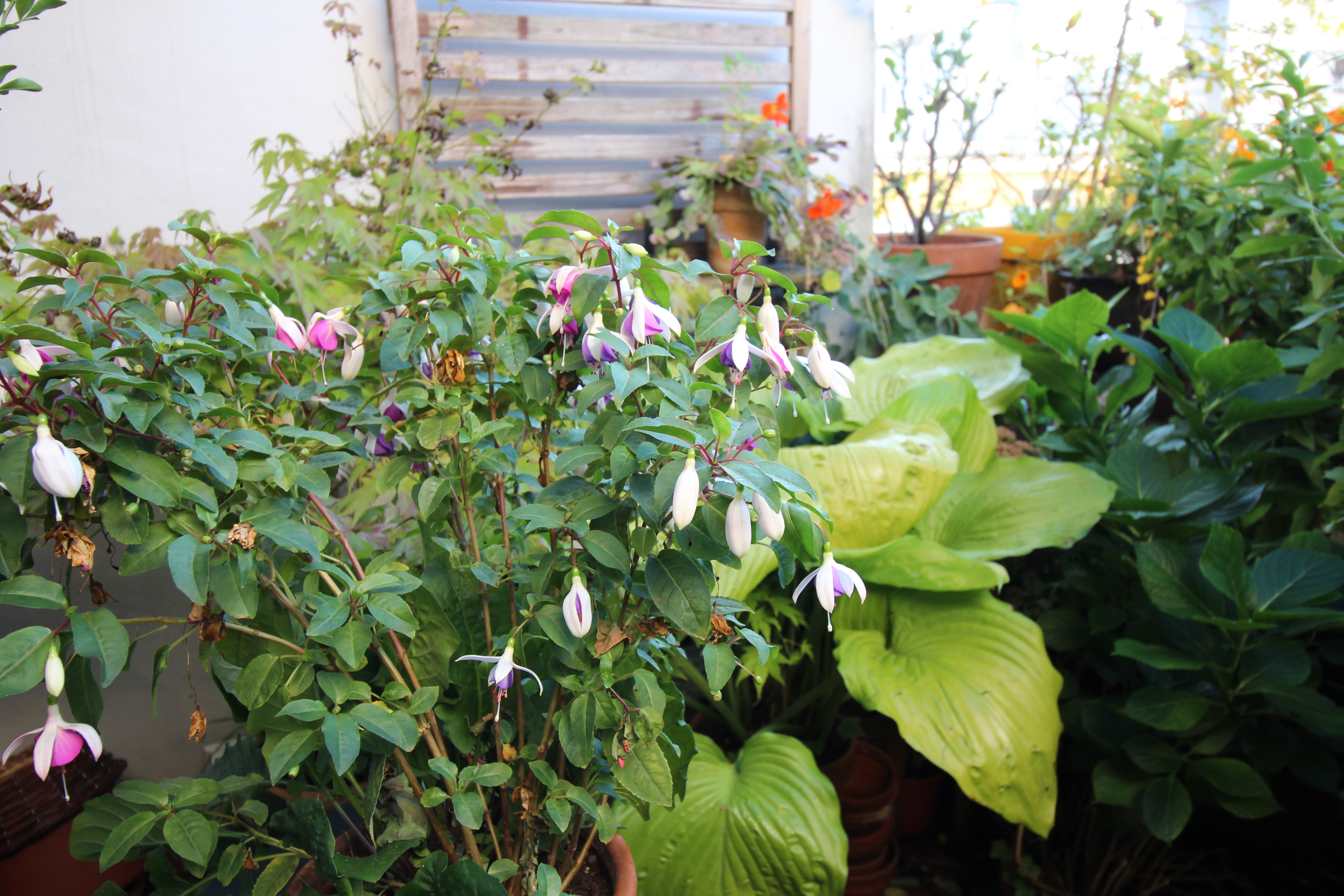
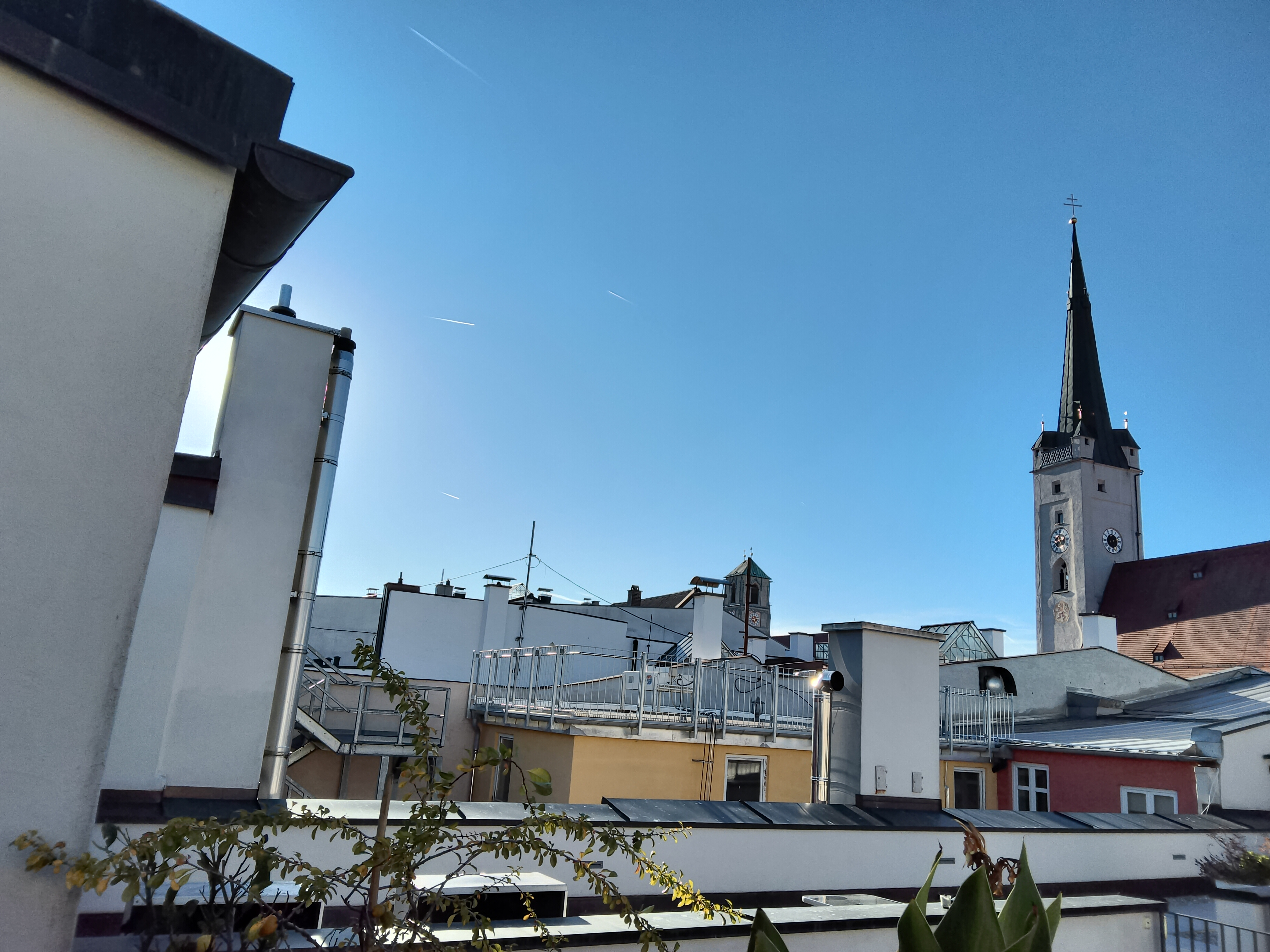
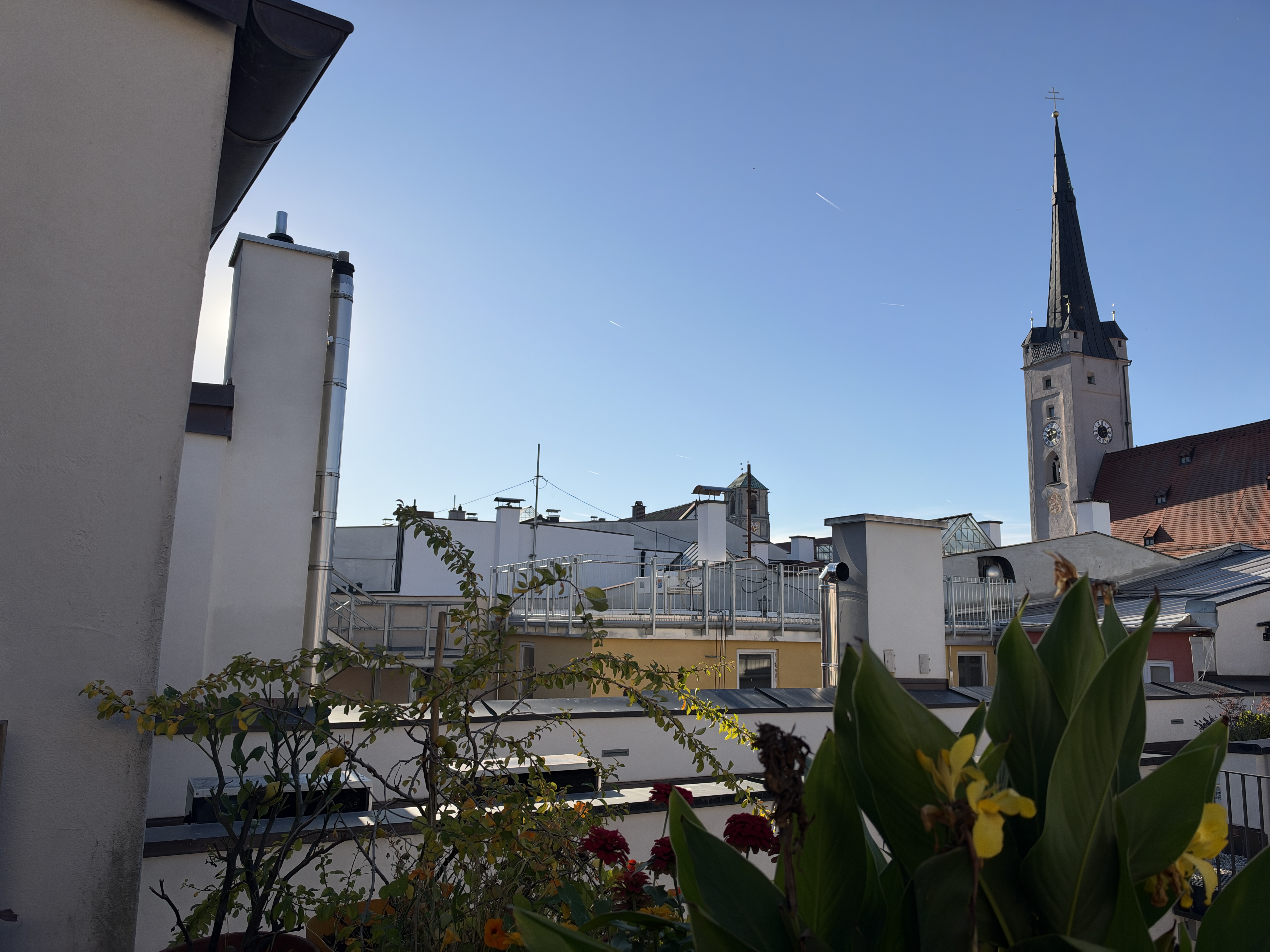
Even on a compact tablet like the Yoga Tab Gen 2, the camera is not as much of a focus as it is on smartphones.
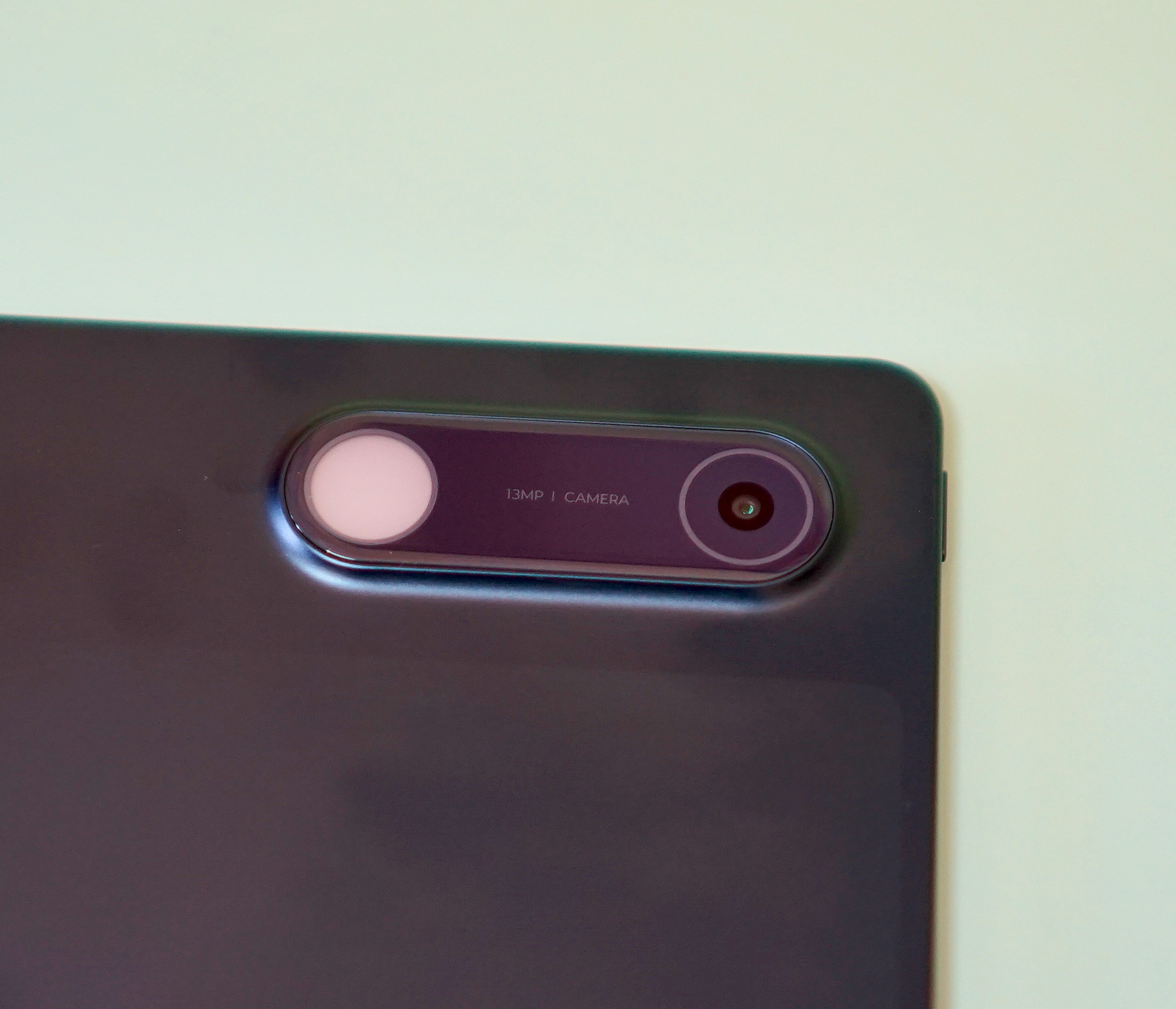
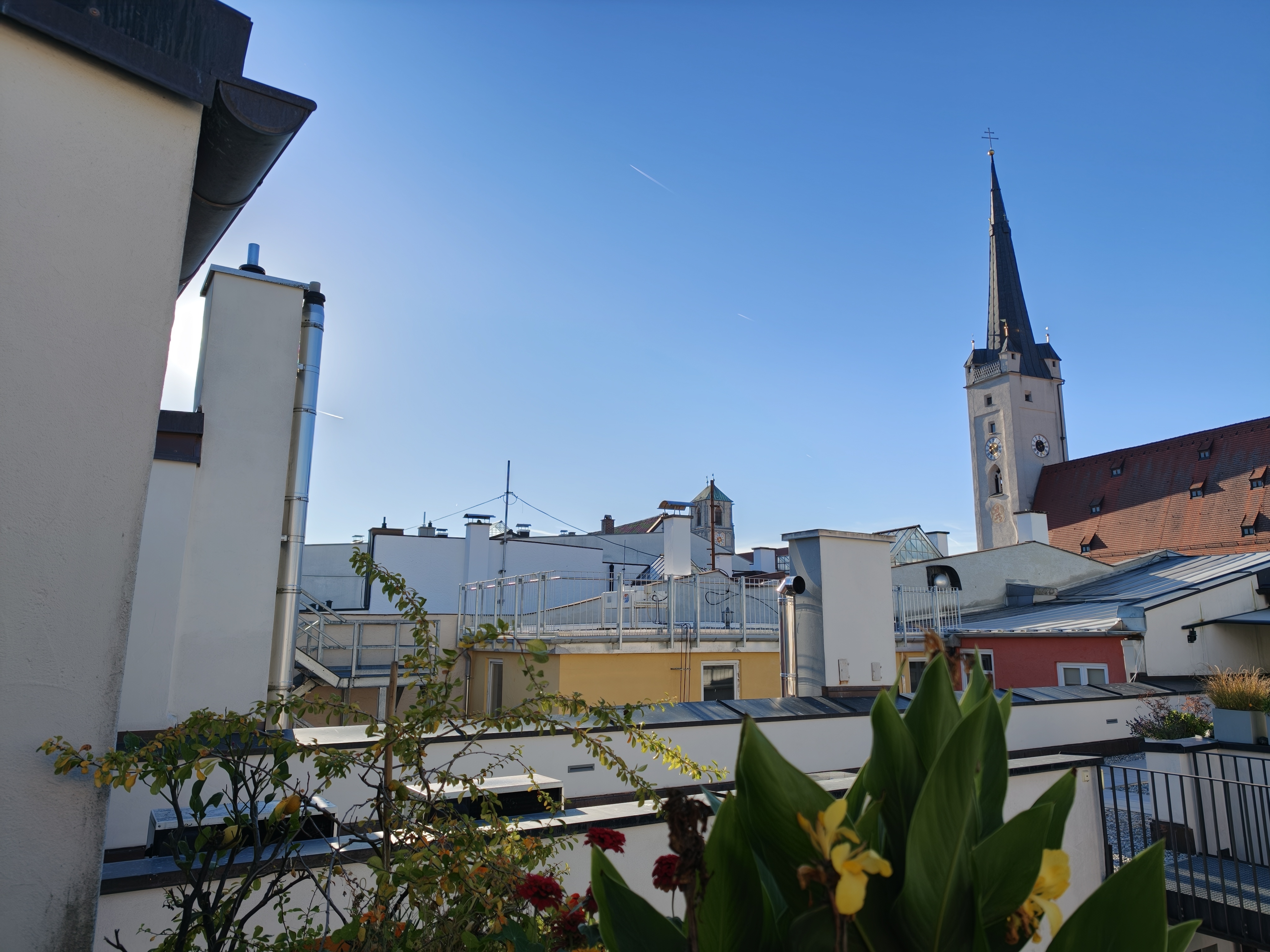
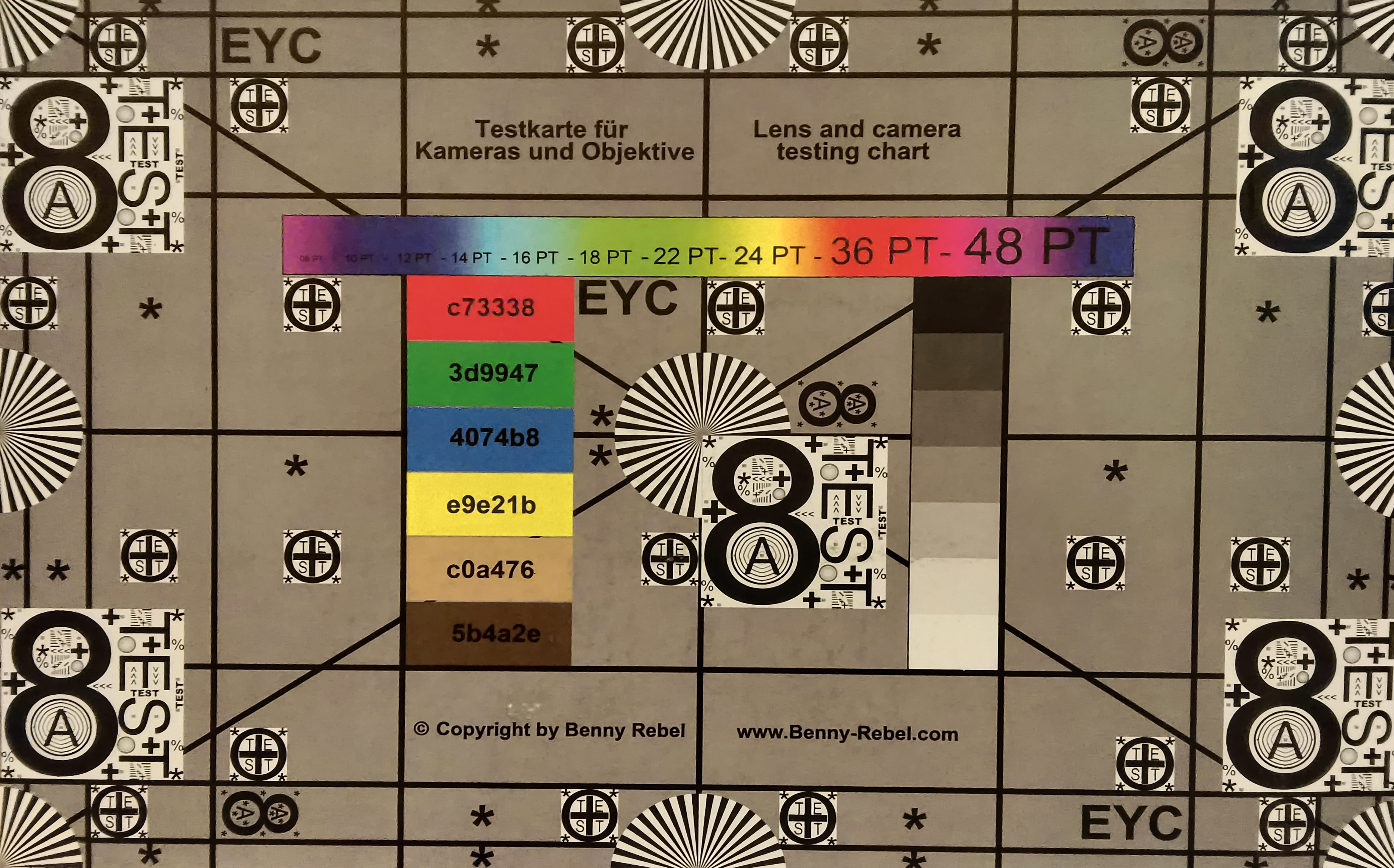
The main camera offers 13 megapixels and takes decent snapshots. It is also well suited to scanning documents.
The front camera has a resolution of 8 megapixels and takes passable selfies, although they lack fine detail.














Display – Android tablet without PWM
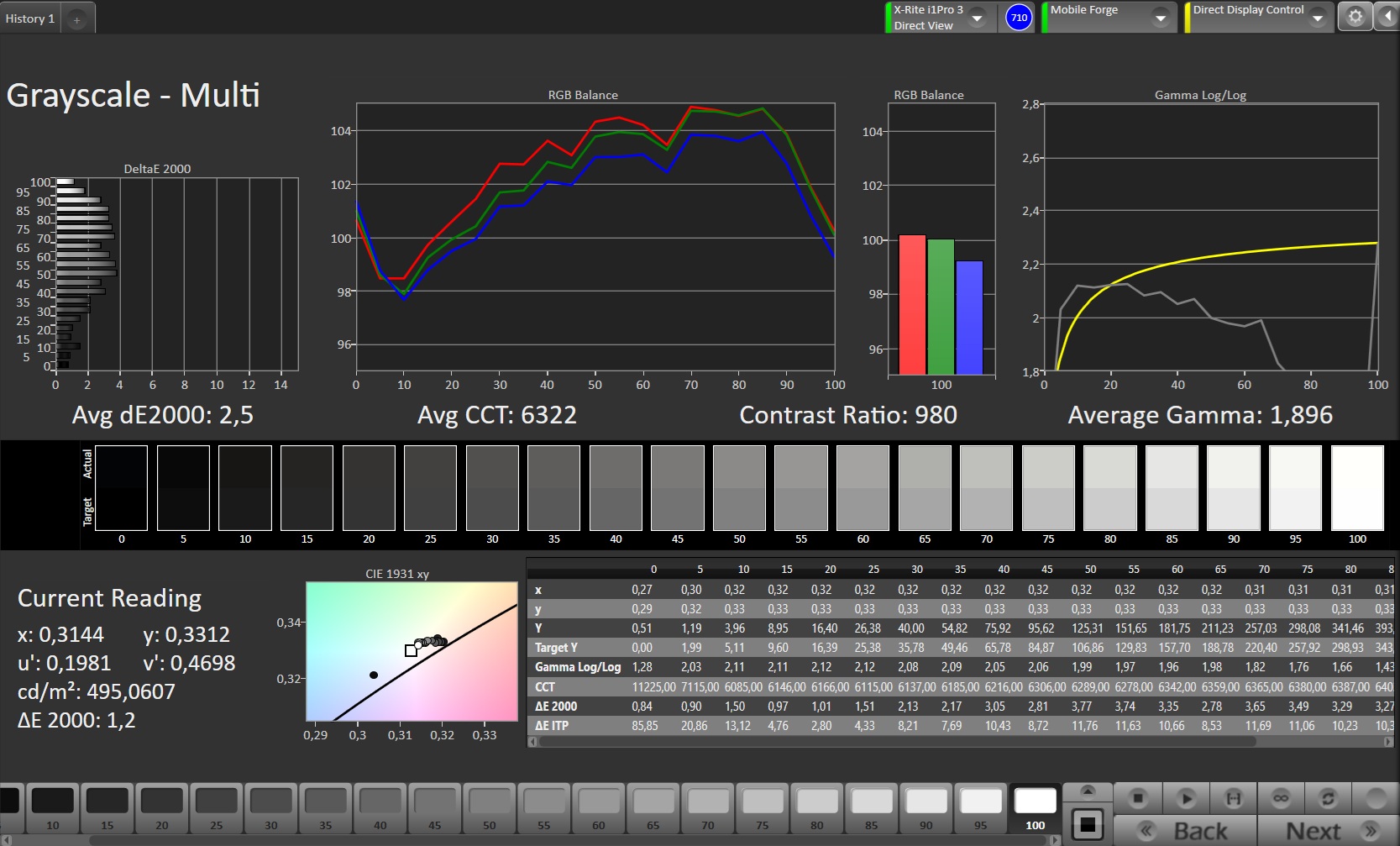
Lenovo uses an IPS display on which we are pleased to report that we detected no PWM flickering. The pixel count is very high, so even 4K content can be enjoyed at full resolution.
We measured a maximum screen brightness of around 600 cd/m² in everyday use, which leads to readability issues outdoors on brighter days. However, slightly higher brightness levels of around 800 cd/m² are possible on smaller areas and for HDR content.
| |||||||||||||||||||||||||
Center on Battery: 587 cd/m²
Contrast: 1545:1 (Black: 0.38 cd/m²)
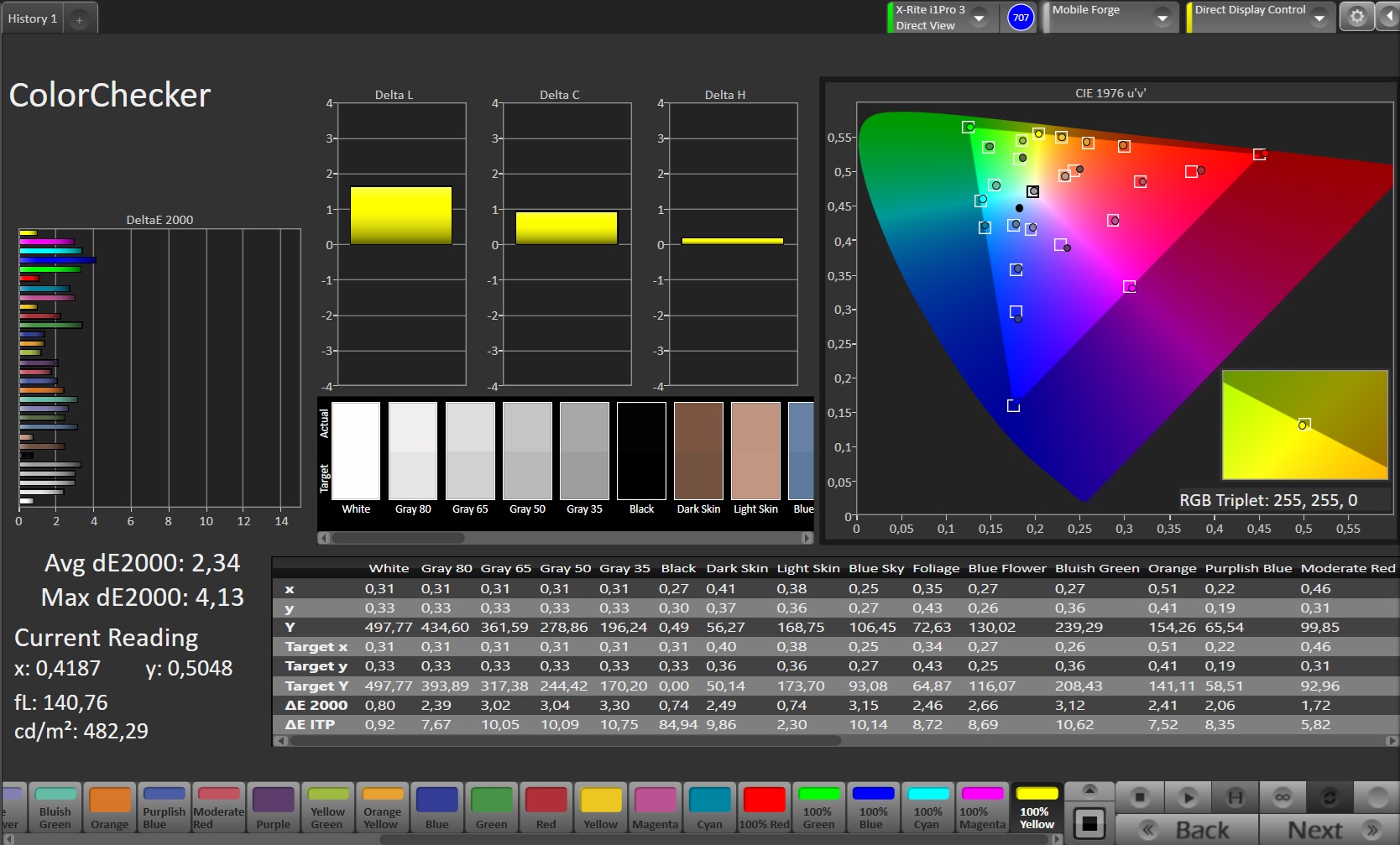
ΔE ColorChecker Calman: 2.34 | ∀{0.5-29.43 Ø4.69}
ΔE Greyscale Calman: 2.5 | ∀{0.09-98 Ø4.94}
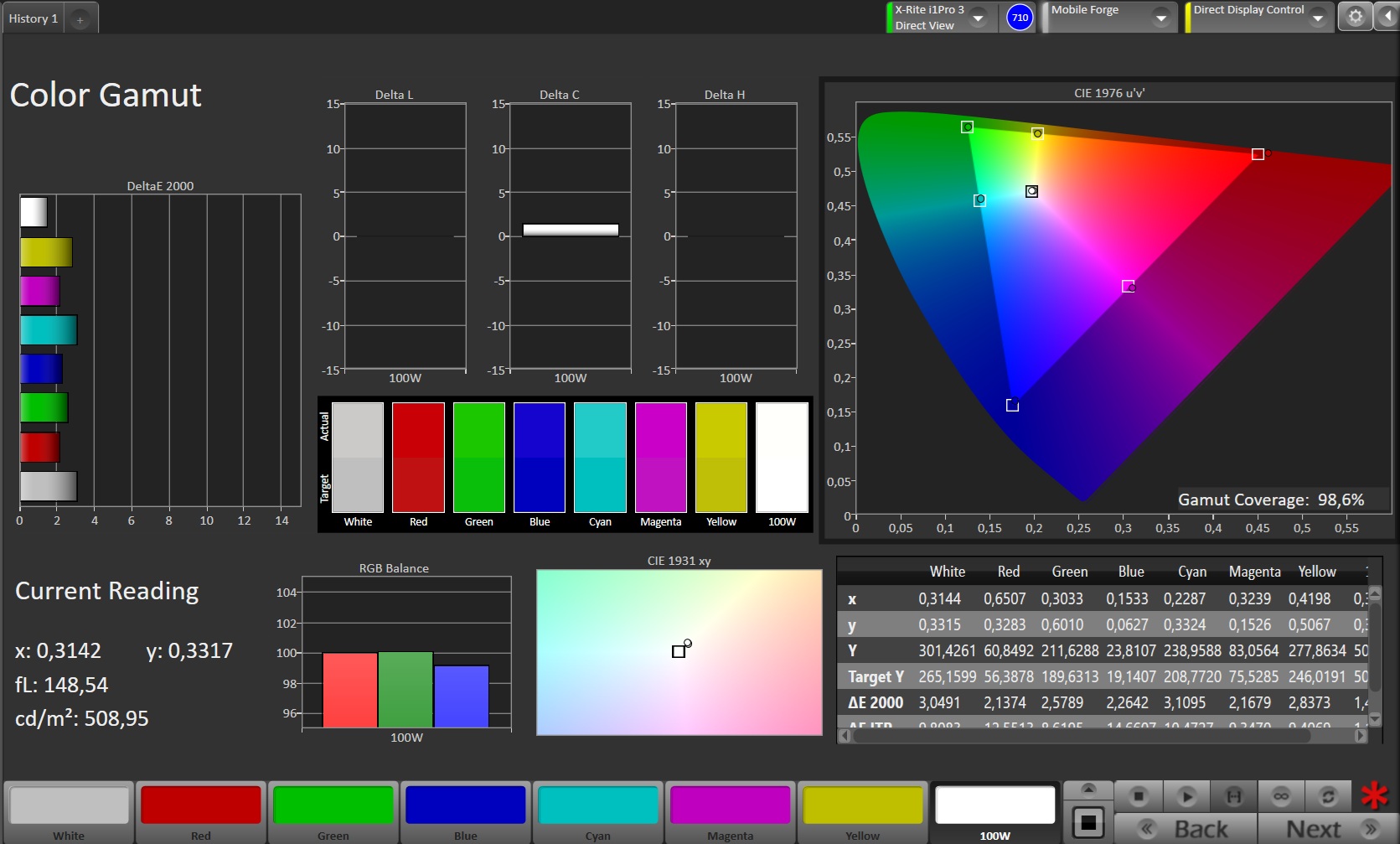
98.6% sRGB (Calman 2D)
Gamma: 1.896
CCT: 6322 K
| Lenovo Yoga Tab Gen 2 IPS, 3840x2560, 11.1" | Lenovo Yoga Tab LTPS, 3200x2000, 11.1" | Apple iPad Air 11 M4 2026 IPS, 2360x1640, 10.9" | Xiaomi Pad 8 Pro LCD, 3200x2136, 11.2" | Samsung Galaxy Tab S11 OLED - Dynamic AMOLED 2X, 2560x1600, 11" | |
|---|---|---|---|---|---|
| Display | -36% | 102% | |||
| APL18 Peak Brightness (cd/m²) | 811 | 526 -35% | 1575 94% | ||
| HDR Peak Brightness (cd/m²) | 789 | 508 -36% | 1648 109% | ||
| Response Times | 22% | 4% | -29% | 94% | |
| Response Time Grey 50% / Grey 80% * (ms) | 26.1 ? | 23.2 ? 11% | 29.6 ? -13% | 33.5 ? -28% | 1.29 ? 95% |
| Response Time Black / White * (ms) | 17.6 ? | 11.9 ? 32% | 14.1 ? 20% | 22.8 ? -30% | 1.49 ? 92% |
| PWM Frequency (Hz) | 480 | ||||
| PWM Amplitude * (%) | 15.55 | ||||
| Screen | 8% | -9% | 12% | -5% | |
| Brightness middle (cd/m²) | 587 | 609 4% | 513 -13% | 626 7% | 946 61% |
| Black Level * (cd/m²) | 0.38 | 0.4 -5% | 0.45 -18% | 0.3 21% | |
| Contrast (:1) | 1545 | 1523 -1% | 1140 -26% | 2087 35% | |
| Colorchecker dE 2000 * | 2.34 | 1.81 23% | 1.92 18% | 1.64 30% | 3.5 -50% |
| Colorchecker dE 2000 max. * | 4.13 | 2.98 28% | 4.12 -0% | 4.13 -0% | 5.5 -33% |
| Greyscale dE 2000 * | 2.5 | 2.5 -0% | 2.8 -12% | 3.1 -24% | 2.4 4% |
| Gamma | 1.896 116% | 1.934 114% | 2.222 99% | 2.2 100% | 2.02 109% |
| CCT | 6322 103% | 6853 95% | 7102 92% | 6746 96% | 6322 103% |
| Brightness (cd/m²) | 583 | 510 | 617 | 938 | |
| Brightness Distribution (%) | 91 | 98 | 96 | 96 | |
| Total Average (Program / Settings) | 15% /
12% | -14% /
-12% | -9% /
1% | 64% /
47% |
* ... smaller is better
Screen Flickering / PWM (Pulse-Width Modulation)
| Screen flickering / PWM not detected | 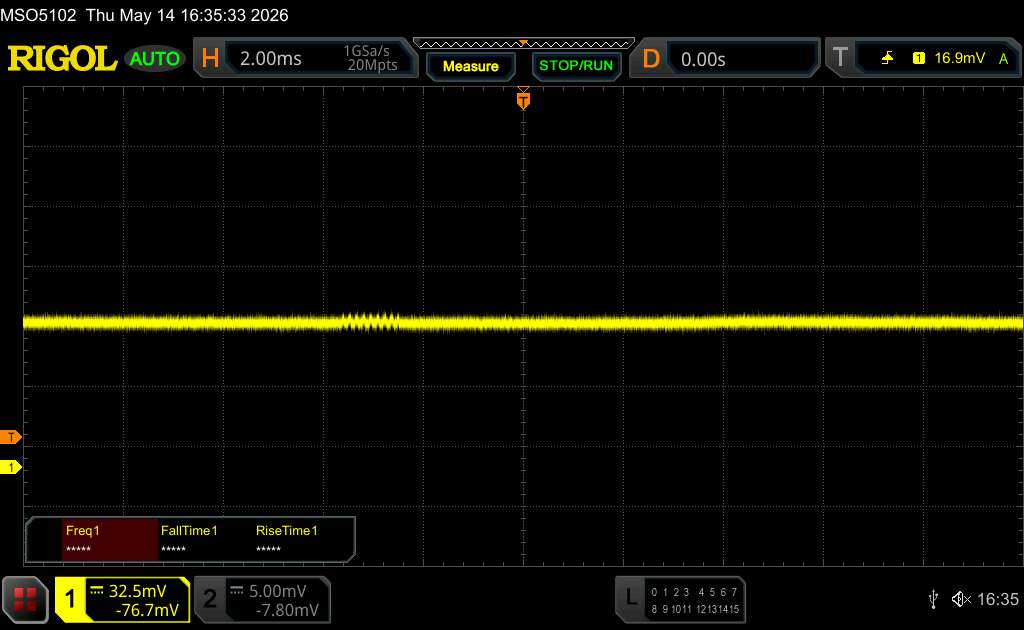 | ||
In comparison: 52 % of all tested devices do not use PWM to dim the display. If PWM was detected, an average of 7608 (minimum: 5 - maximum: 343500) Hz was measured. | |||
Display Response Times
| ↔ Response Time Black to White | ||
|---|---|---|
| 17.6 ms ... rise ↗ and fall ↘ combined | ↗ 9.9 ms rise | 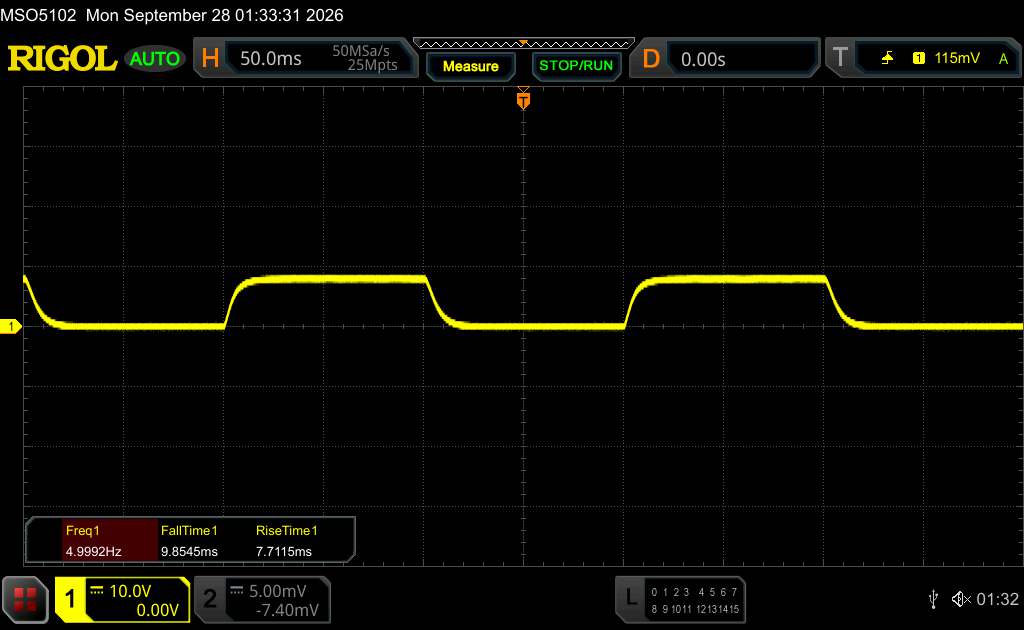 |
| ↘ 7.7 ms fall | ||
| The screen shows good response rates in our tests, but may be too slow for competitive gamers. In comparison, all tested devices range from 0.1 (minimum) to 240 (maximum) ms. » 40 % of all devices are better. This means that the measured response time is better than the average of all tested devices (19.7 ms). | ||
| ↔ Response Time 50% Grey to 80% Grey | ||
| 26.1 ms ... rise ↗ and fall ↘ combined | ↗ 13.4 ms rise | 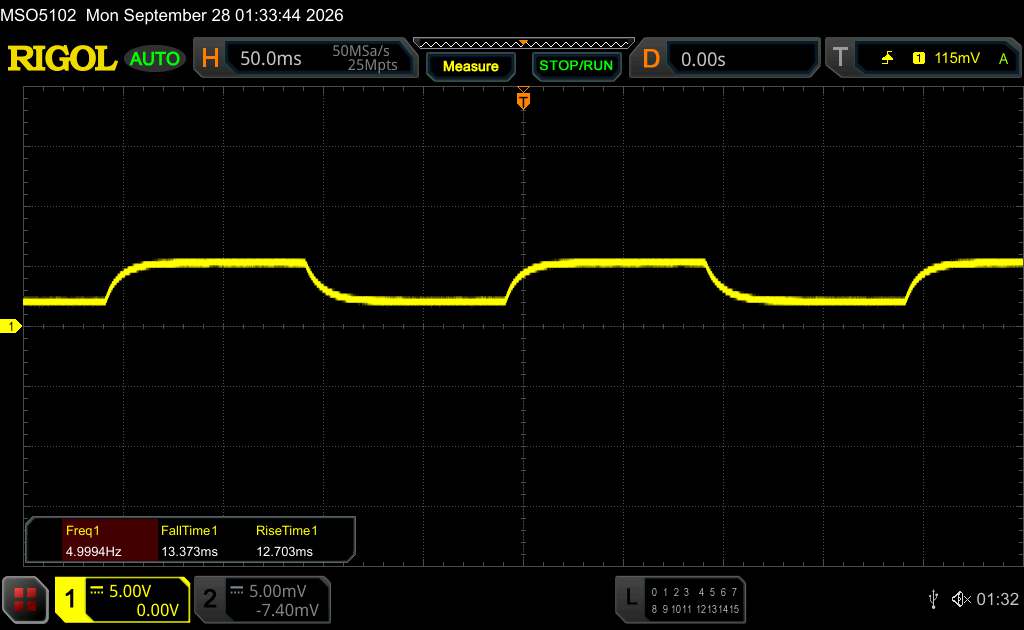 |
| ↘ 12.7 ms fall | ||
| The screen shows relatively slow response rates in our tests and may be too slow for gamers. In comparison, all tested devices range from 0.13 (minimum) to 636 (maximum) ms. » 37 % of all devices are better. This means that the measured response time is better than the average of all tested devices (30.7 ms). | ||
Performance, emissions and battery life – Yoga Tab with plenty of power
The Lenovo Yoga Tab Gen 2 uses a MediaTek Dimensity 9500s, so there is almost always enough power available. This does not make our review unit quite as fast as the iPad Air or Xiaomi Pad 8 Pro, but in everyday use, the performance difference is only noticeable during very demanding tasks. The UFS 4.0 storage reads and writes data very swiftly.
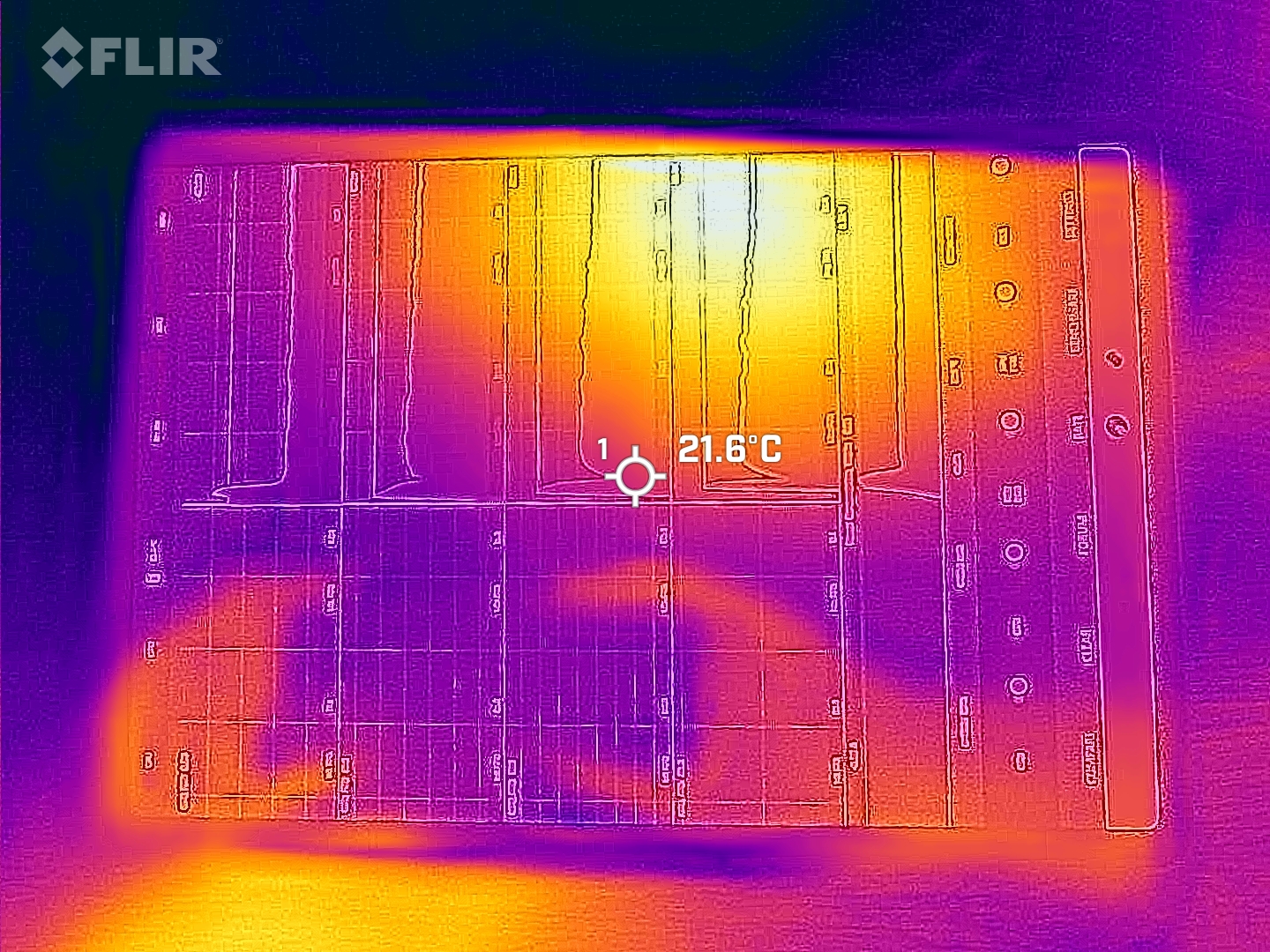
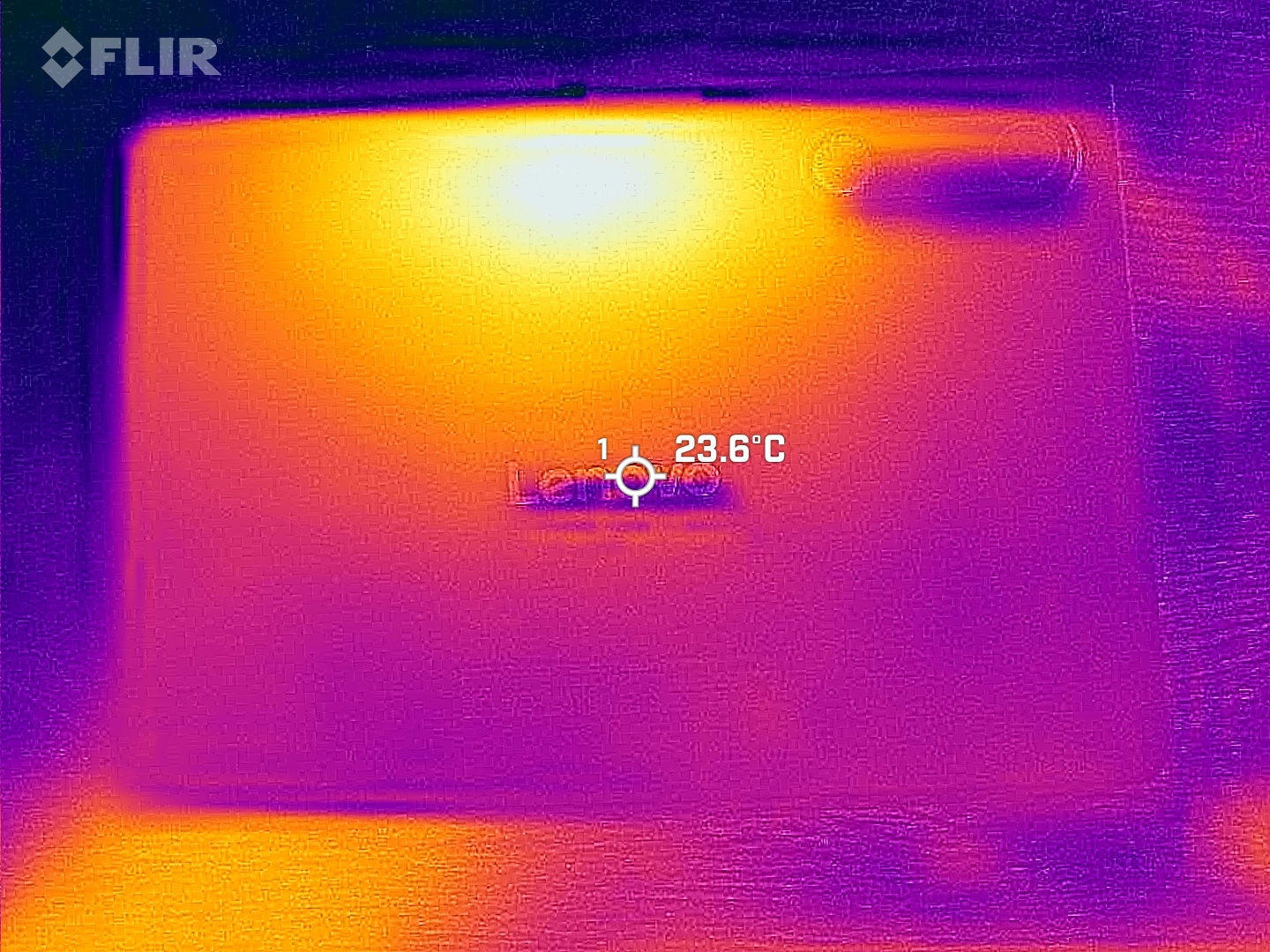
The chassis barely gets noticeably warm, but the SoC throttles significantly in the 3DMark stress tests: Performance drops to as low as 60% when the phone is used under heavy load for extended periods.
The speakers are a minor weakness of the Yoga Tab Gen 2: While they are decent overall, they can sound strained and lack definition at high volumes. The maximum loudness is not particularly high either. Many codecs are available for wireless audio output via Bluetooth.
The battery life provided by the 11,000 mAh battery is truly excellent: Its capacity has increased significantly compared to its predecessor, and it lasts over 6 hours longer in our Wi-Fi test. We ultimately achieve over 24 hours, an excellent result that only a few other tablets have managed so far.
| Lenovo Yoga Tab Gen 2 | Lenovo Yoga Tab | Xiaomi Pad 8 Pro | Samsung Galaxy Tab S11 | Average 256 GB UFS 4.0 Flash | Average of class Tablet | |
|---|---|---|---|---|---|---|
| AndroBench 3-5 | 97% | 50% | -15% | 42% | 2% | |
| Sequential Read 256KB (MB/s) | 3530.2 | 3965.86 12% | 4083.3 16% | 1694.53 -52% | 3613 ? 2% | 2117 ? -40% |
| Sequential Write 256KB (MB/s) | 1707.6 | 3363.43 97% | 3252.32 90% | 1083.12 -37% | 2625 ? 54% | 1691 ? -1% |
| Random Read 4KB (MB/s) | 348.1 | 421.72 21% | 332.87 -4% | 298.38 -14% | 390 ? 12% | 280 ? -20% |
| Random Write 4KB (MB/s) | 195.8 | 698.11 257% | 383.77 96% | 283.45 45% | 390 ? 99% | 327 ? 67% |
(+) The maximum temperature on the upper side is 33.2 °C / 92 F, compared to the average of 33.7 °C / 93 F, ranging from 20.7 to 53.2 °C for the class Tablet.
(+) The bottom heats up to a maximum of 35 °C / 95 F, compared to the average of 33.2 °C / 92 F
3DMark Stress Tests
| 3DMark | |
| Wild Life Stress Test Stability | |
| Xiaomi Pad 8 Pro | |
| Lenovo Yoga Tab Gen 2 | |
| Lenovo Yoga Tab | |
| Samsung Galaxy Tab S11 | |
| Wild Life Extreme Stress Test | |
| Xiaomi Pad 8 Pro | |
| Lenovo Yoga Tab | |
| Apple iPad Air 11 M4 2026 | |
| Lenovo Yoga Tab Gen 2 | |
| Samsung Galaxy Tab S11 | |
| Solar Bay Stress Test Stability | |
| Xiaomi Pad 8 Pro | |
| Lenovo Yoga Tab | |
| Apple iPad Air 11 M4 2026 | |
| Samsung Galaxy Tab S11 | |
| Lenovo Yoga Tab Gen 2 | |
| Solar Bay Extreme Stress Test Stability | |
| Lenovo Yoga Tab | |
| Xiaomi Pad 8 Pro | |
| Samsung Galaxy Tab S11 | |
| Lenovo Yoga Tab Gen 2 | |
| Apple iPad Air 11 M4 2026 | |
| Steel Nomad Light Stress Test Stability | |
| Lenovo Yoga Tab | |
| Samsung Galaxy Tab S11 | |
| Apple iPad Air 11 M4 2026 | |
Lenovo Yoga Tab Gen 2 audio analysis
(+) | speakers can play relatively loud (83.3 dB)
Bass 100 - 315 Hz
(-) | nearly no bass - on average 20.3% lower than median
(±) | linearity of bass is average (12.9% delta to prev. frequency)
Mids 400 - 2000 Hz
(±) | higher mids - on average 11.1% higher than median
(±) | linearity of mids is average (10.2% delta to prev. frequency)
Highs 2 - 16 kHz
(±) | higher highs - on average 6.4% higher than median
(±) | linearity of highs is average (10.5% delta to prev. frequency)
Overall 100 - 16.000 Hz
(-) | overall sound is not linear (30.5% difference to median)
Compared to same class
» 89% of all tested devices in this class were better, 3% similar, 8% worse
» The best had a delta of 7%, average was 21%, worst was 130%
Compared to all devices tested
» 89% of all tested devices were better, 3% similar, 8% worse
» The best had a delta of 4%, average was 23%, worst was 136%
Samsung Galaxy Tab S11 audio analysis
(+) | speakers can play relatively loud (86.9 dB)
Bass 100 - 315 Hz
(±) | reduced bass - on average 10% lower than median
(±) | linearity of bass is average (7.8% delta to prev. frequency)
Mids 400 - 2000 Hz
(+) | balanced mids - only 3.8% away from median
(+) | mids are linear (3.4% delta to prev. frequency)
Highs 2 - 16 kHz
(+) | balanced highs - only 1.8% away from median
(+) | highs are linear (3.9% delta to prev. frequency)
Overall 100 - 16.000 Hz
(+) | overall sound is linear (9.6% difference to median)
Compared to same class
» 4% of all tested devices in this class were better, 3% similar, 93% worse
» The best had a delta of 7%, average was 21%, worst was 130%
Compared to all devices tested
» 4% of all tested devices were better, 1% similar, 95% worse
» The best had a delta of 4%, average was 23%, worst was 136%
| Off / Standby |   0.1 / 0.2 Watt 0.1 / 0.2 Watt |
| Idle |  1.3 / 1.6 / 2 Watt 1.3 / 1.6 / 2 Watt |
    
| |
Key:
min: ,
med: ,
max: Metrahit Energy | |
| Lenovo Yoga Tab Gen 2 11000 mAh | Lenovo Yoga Tab 8860 mAh | Apple iPad Air 11 M4 2026 7606 mAh | Xiaomi Pad 8 Pro 9200 mAh | Samsung Galaxy Tab S11 8400 mAh | Average Mediatek Dimensity 9500s | Average of class Tablet | |
|---|---|---|---|---|---|---|---|
| Power Consumption | 10% | -73% | -23% | -129% | 3% | -107% | |
| Idle Minimum * (Watt) | 1.3 | 1.2 8% | 2 -54% | 1.5 -15% | 2.57 -98% | 1.363 ? -5% | 2.15 ? -65% |
| Idle Average * (Watt) | 1.6 | 1.4 13% | 2.9 -81% | 2 -25% | 4.32 -170% | 1.543 ? 4% | 3.87 ? -142% |
| Idle Maximum * (Watt) | 2 | 1.8 10% | 3.7 -85% | 2.6 -30% | 4.36 -118% | 1.777 ? 11% | 4.26 ? -113% |
| Load Average * (Watt) | 7.8 | 10.9 | 6.7 | 12.54 | 6.8 ? | 8.87 ? | |
| Load Maximum * (Watt) | 13.9 | 16.9 | 15.7 | 15.49 | 11.5 ? | 14.4 ? |
* ... smaller is better
| Lenovo Yoga Tab Gen 2 11000 mAh | Lenovo Yoga Tab 8860 mAh | Apple iPad Air 11 M4 2026 7606 mAh | Xiaomi Pad 8 Pro 9200 mAh | Samsung Galaxy Tab S11 8400 mAh | |
|---|---|---|---|---|---|
| Battery runtime | -27% | -50% | -15% | -54% | |
| WiFi v1.3 (h) | 24.1 | 17.7 -27% | 12 -50% | 20.4 -15% | 11.2 -54% |
| Reader / Idle (h) | 25.4 | 37.2 | |||
| Load (h) | 3.9 | 3.5 | |||
| H.264 (h) | 16.6 |
Notebookcheck Overall Rating
Great battery life, plenty of power, a PWM-free screen – The high-quality Lenovo Yoga Tab Gen 2 is highly recommended for anyone looking for a compact and elegant tablet.

Lenovo Yoga Tab Gen 2
- 10/08/2026 v8
Florian Schmitt
 Total Sustainability Score:
 Possible alternatives compared
Image | Model / Review | Price | Weight | Drive | Display |
|---|---|---|---|---|---|
1. 87.4%  | Lenovo Yoga Tab Gen 2 Mediatek Dimensity 9500s ⎘ ARM Immortalis-G925 MC11 ⎘ 8 GB Memory, 256 GB UFS 4.x | Amazon: 1. $384.99 Lenovo Idea Tab Pro Gen 2 Ta... 2. $619.99 Lenovo Yoga Tab AI Tablet, 1... 3. $381.99 Lenovo Tab Plus Gen 2 - Ente... List Price: 649€ | 480 g | 256 GB UFS 4.0 Flash | 11.10" 3840x2560 416 PPI IPS |
2. 88.2%  | Lenovo Yoga Tab Qualcomm Snapdragon 8 Gen 3 ⎘ Qualcomm Adreno 750 ⎘ 12 GB Memory, 256 GB UFS 4.x | Amazon: 1. $619.99 Lenovo Yoga Tab AI Tablet, 1... 2. $384.99 Lenovo Idea Tab Pro Gen 2 Ta... 3. $292.99 Lenovo Idea Tab Pro with Goo... List Price: 499€ | 458 g | 256 GB UFS 4.0 Flash | 11.10" 3200x2000 340 PPI LTPS |
3. 87.5%  | Apple iPad Air 11 M4 2026 Apple M4 8-Core ⎘ Apple M4 9-Core GPU ⎘ 12 GB Memory, 128 GB NVMe | List Price: 600€ | 464 g | 128 GB NVMe | 10.86" 2360x1640 265 PPI IPS |
4. 89.2%  | Xiaomi Pad 8 Pro Qualcomm Snapdragon 8 Elite ⎘ Qualcomm Adreno 840 ⎘ 16 GB Memory, 512 GB UFS 4.x | Amazon: 1. $639.00 XIAOMI Pad 8 Pro Ai WiFi Ver... 2. $519.50 XIAOMI Pad 8 Pro Ai WiFi Ver... 3. $375.00 XIAOMI Pad 8 Ai WiFi Version... List Price: 600€ | 485 g | 512 GB UFS 4.1 Flash | 11.20" 3200x2136 344 PPI LCD |
5. 88.2%  | Samsung Galaxy Tab S11 Mediatek Dimensity 9400+ ⎘ ARM Immortalis-G925 MC12 ⎘ 12 GB Memory, 128 GB UFS 3.1 | List Price: 899€ | 469 g | 128 GB UFS 3.1 Flash | 11.00" 2560x1600 274 PPI OLED - Dynamic AMOLED 2X |
Transparency
The selection of devices to be reviewed is made by our editorial team. The test sample was provided to the author as a loan by the manufacturer or retailer for the purpose of this review. The lender had no influence on this review, nor did the manufacturer receive a copy of this review before publication. There was no obligation to publish this review. As an independent media company, Notebookcheck is not subjected to the authority of manufacturers, retailers or publishers.
This is how Notebookcheck is testing
Every year, Notebookcheck independently reviews hundreds of laptops and smartphones using standardized procedures to ensure that all results are comparable. We have continuously developed our test methods for around 20 years and set industry standards in the process. In our test labs, high-quality measuring equipment is utilized by experienced technicians and editors. These tests involve a multi-stage validation process. Our complex rating system is based on hundreds of well-founded measurements and benchmarks, which maintains objectivity. Further information on our test methods can be found here.
 Add as a preferred source on Google


No comments for this article
