




Review verdict for the Apple MacBook Pro 16 2026 - Powerful M5 Max, insufficient PSU
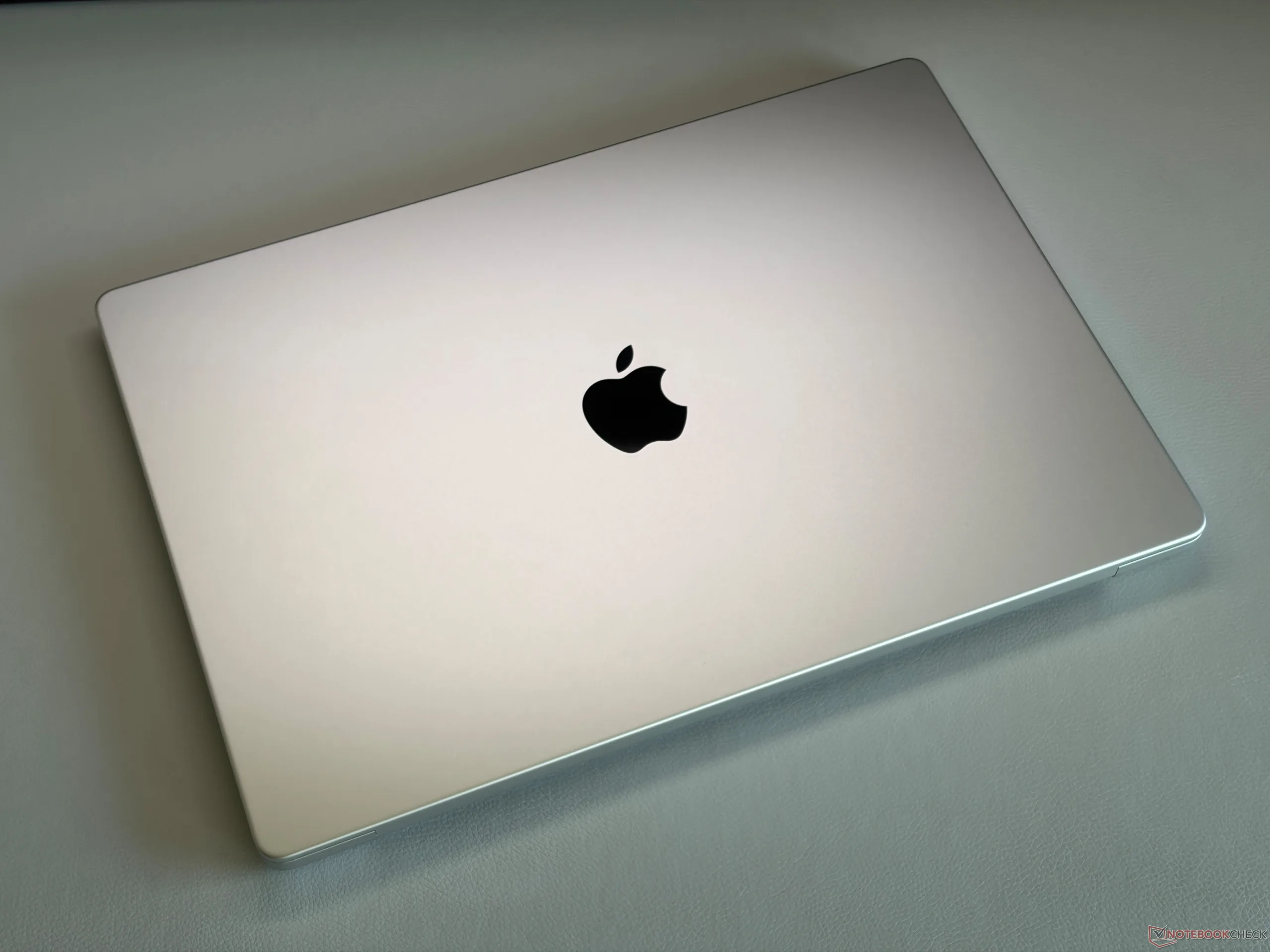
With the M5 Max, the new Apple MacBook Pro 16 (2026) establishes itself as the most powerful Apple laptop currently available. Regarding processor performance, the system outperforms Windows competitors and is twice as fast in some cases, while maintaining this performance without restriction even on battery power. Despite measurable power supply limitations under sustained heavy loads, the device serves as an uncompromising platform for professional users with the highest performance demands.
Apple once again offers the 14-inch and 16-inch versions, equipped with either the M5 Pro or M5 Max processor; two different performance variants exist for each chip. Thanks to its larger chassis and better cooling, the M5 Max delivers significantly higher performance in the 16-inch model compared to the smaller 14-inch version.
However, under sustained load, the 16-inch model's cooling system hits a 70-watt limit. Although the CPU is capped at this power draw, the included 140W power adapter proves insufficient to fully meet the system's energy needs under full load. Consequently, the battery drains by approximately 12 percent per hour, even when connected to mains power.
Nevertheless, in terms of raw processor performance, the MacBook Pro 16 M5 Max proves far superior to Windows competitors, operating up to twice as fast in some instances. Another decisive advantage over Windows systems is its rock-solid stability: while other laptops experience noticeable performance throttling when unplugged, the MacBook’s performance remains completely consistent even when running solely on battery power.
Beyond the power-related aspects, the MacBook Pro 16 excels as a multimedia notebook; it features top-tier speakers and excellent input devices, while impressive everyday battery life rounds out the package. The device continues to use a Mini-LED display, a technology that, while five years old, remains state-of-the-art and easily holds its own against the tandem OLED displays found in competing Windows laptops. However, buyers must accept two familiar downsides: there are no options for maintenance or upgrades, and Apple only provides a standard 12-month warranty. For more information on the MacBook Pro 16 M5 Max, please see our full review.
 Add as a preferred source on Google


