




Conclusion on the Motorola Razr Ultra 2026
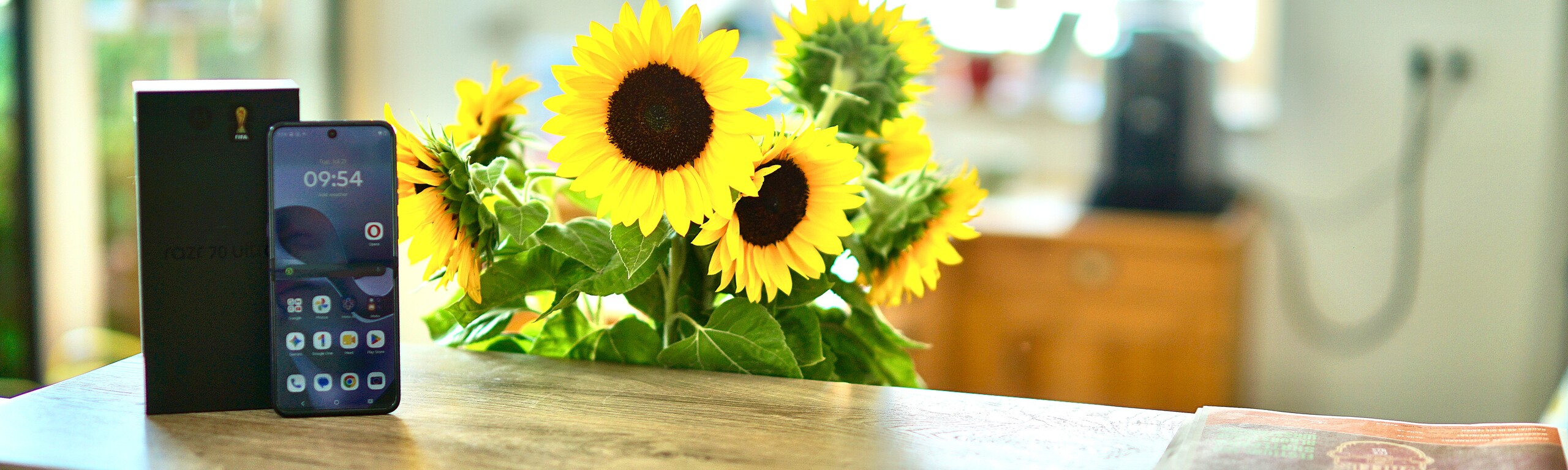
Motorola’s flip phone offers only minor improvements over its predecessor: While there are noticeable changes in battery life, otherwise Motorola is essentially selling the same flip phone as last year. Even the materials used on the back were already featured in last year’s model.
Furthermore, this year’s model still requires compromises compared to high-end phones: While the processor is fast, it’s no longer state-of-the-art. The cameras are only average in terms of image sharpness and zoom capability, and the USB 2.0 port is a shortcoming given the price.
Motorola has made improvements regarding overheating issues: In our test, the Snapdragon 8 Elite no longer causes the device to reach quite as high of temperatures. The build quality, as well as the hinge—which offers just the right amount of resistance—continue to impress in our testing.
The phone charges quickly, has sufficient battery life, and offers plenty of RAM. However, the price has risen again, making the Razr Ultra 2026 (Razr 70 Ultra) an expensive choice.
Pros
Cons
Price and Availability
Motorola is asking around US$ 1,500 for the Razr Ultra 2026, for example at amazon.com.

Table of Contents
- Conclusion on the Motorola Razr Ultra 2026
- Specifications
- Case and Features – High-Quality Hinge
- Communication and Operation – Fast WiFi 7
- Software and Sustainability – Update Issues
- Cameras – Taking selfies with the main camera is no problem
- Display – Two bright OLEDs
- Performance, Emissions, and Battery Life – Very Fast, but with Some Compromises
- Notebookcheck Overall Rating
- Comparison of Possible Alternatives
Specifications
Case and Features – High-Quality Hinge
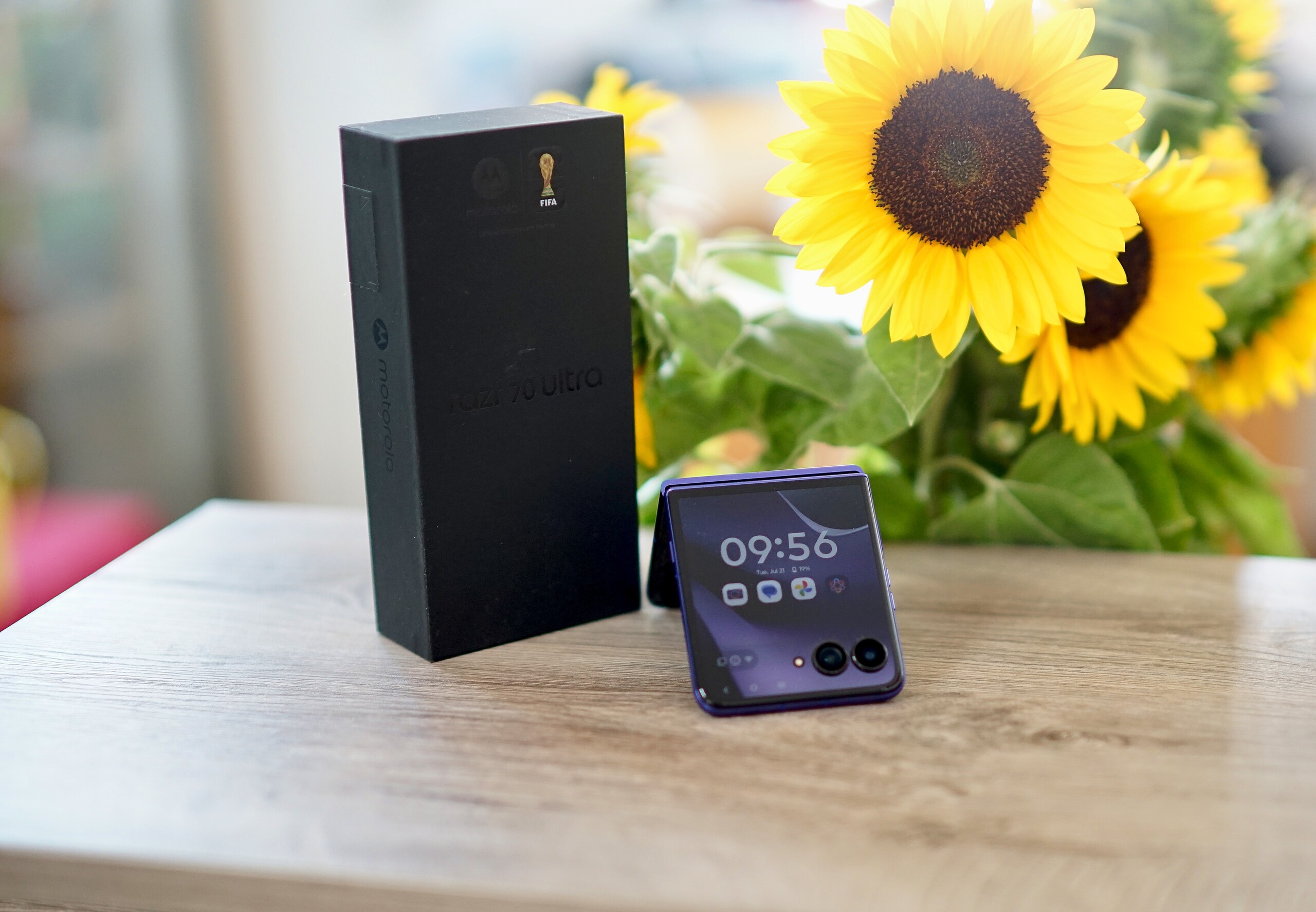
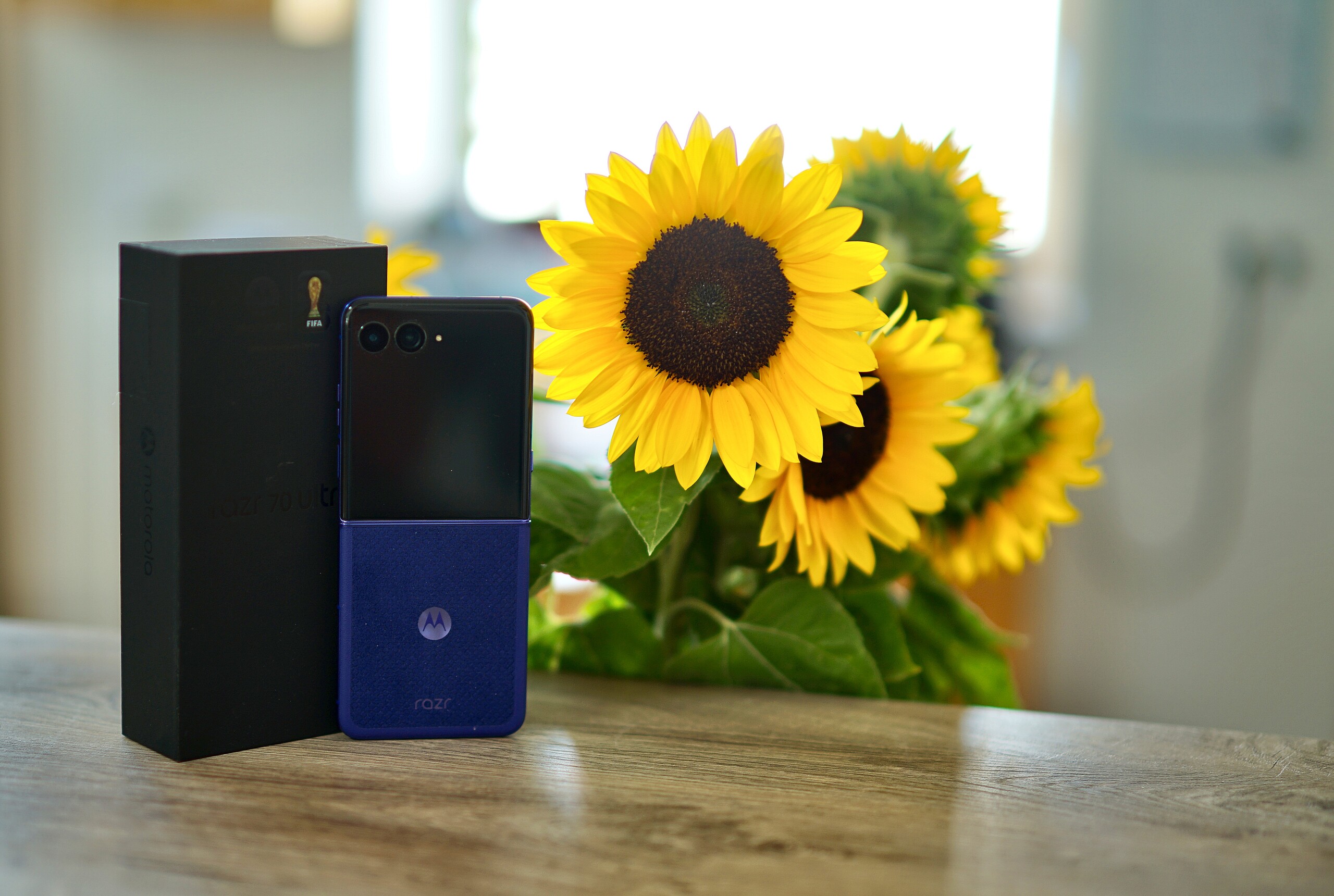
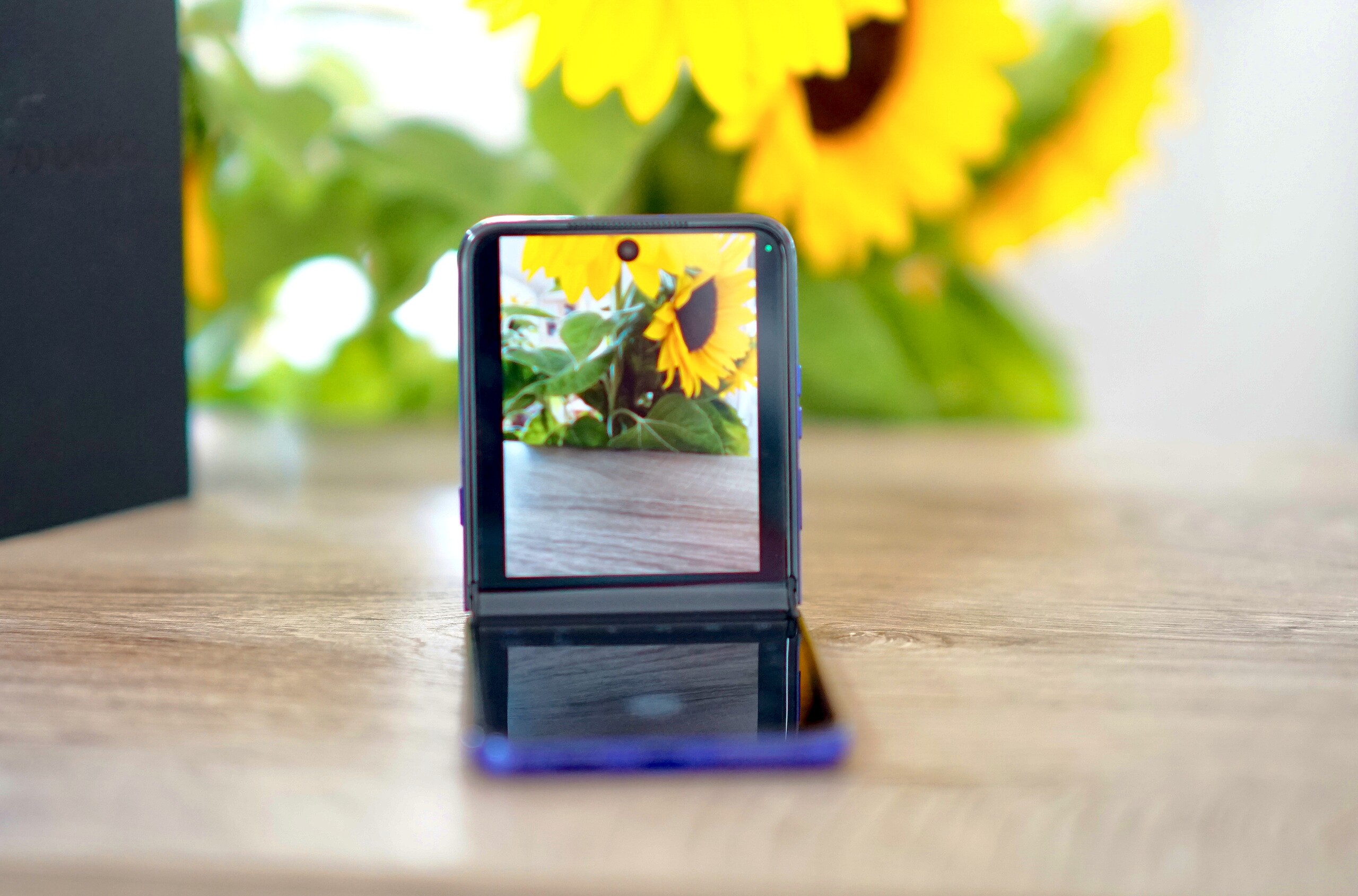
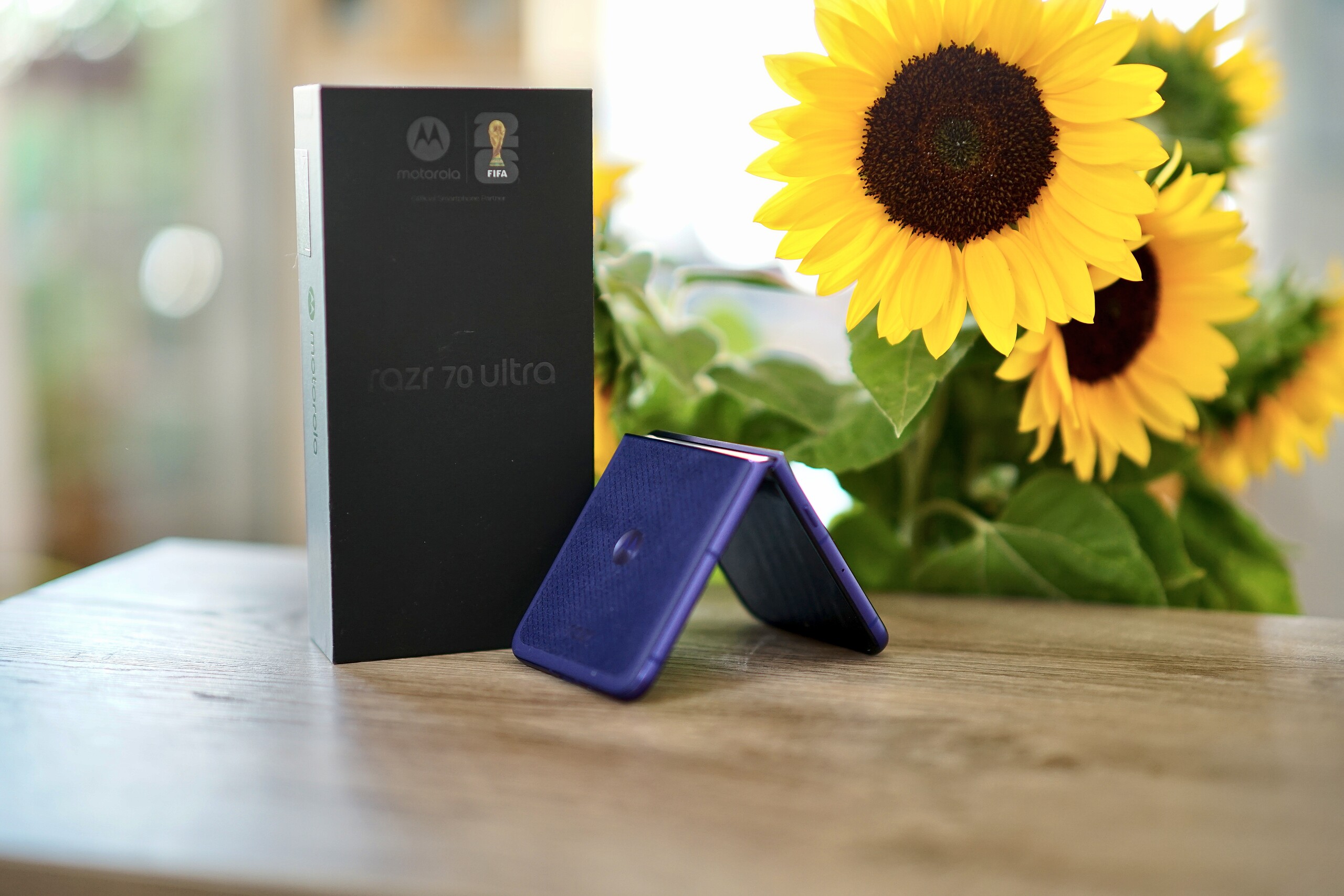
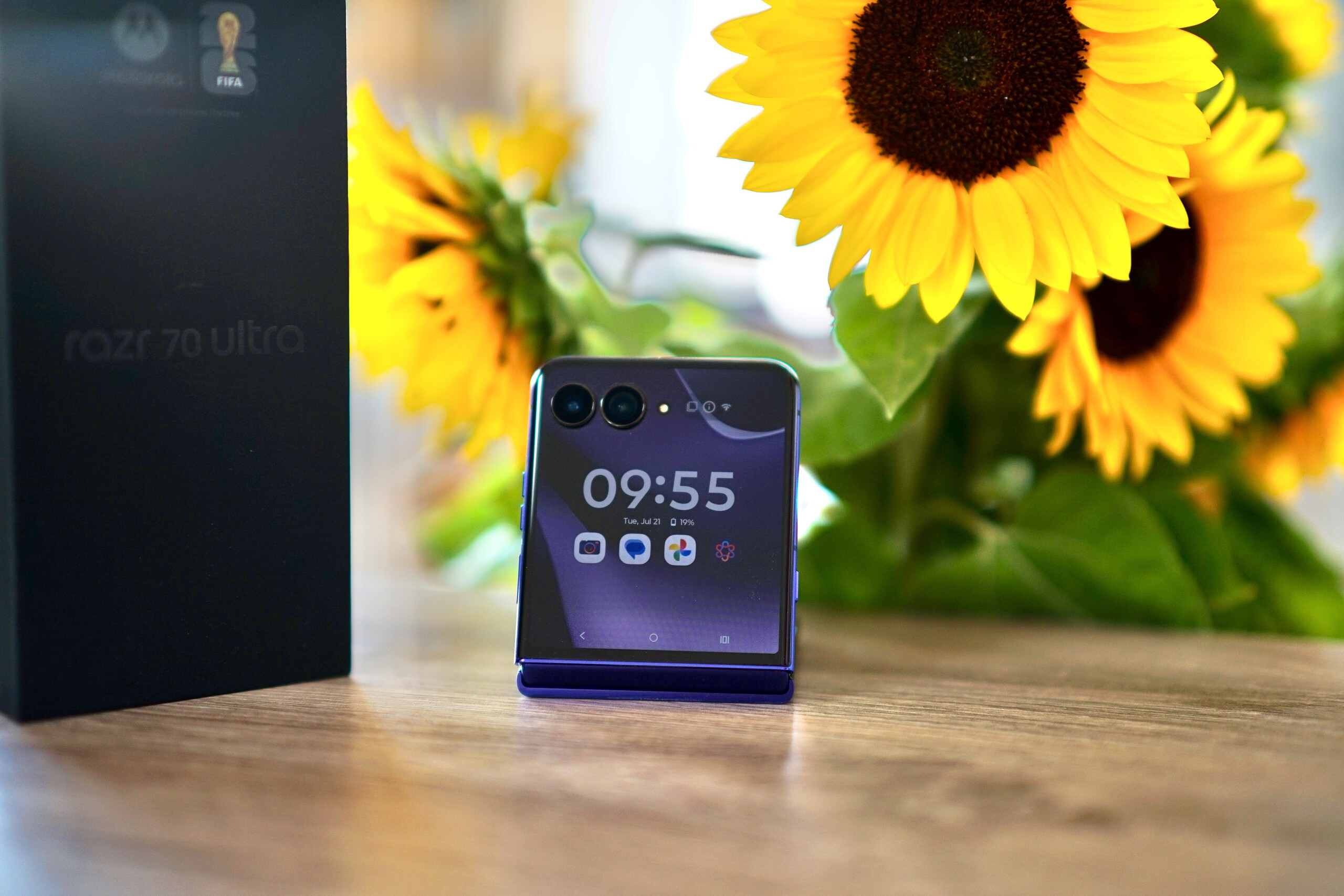
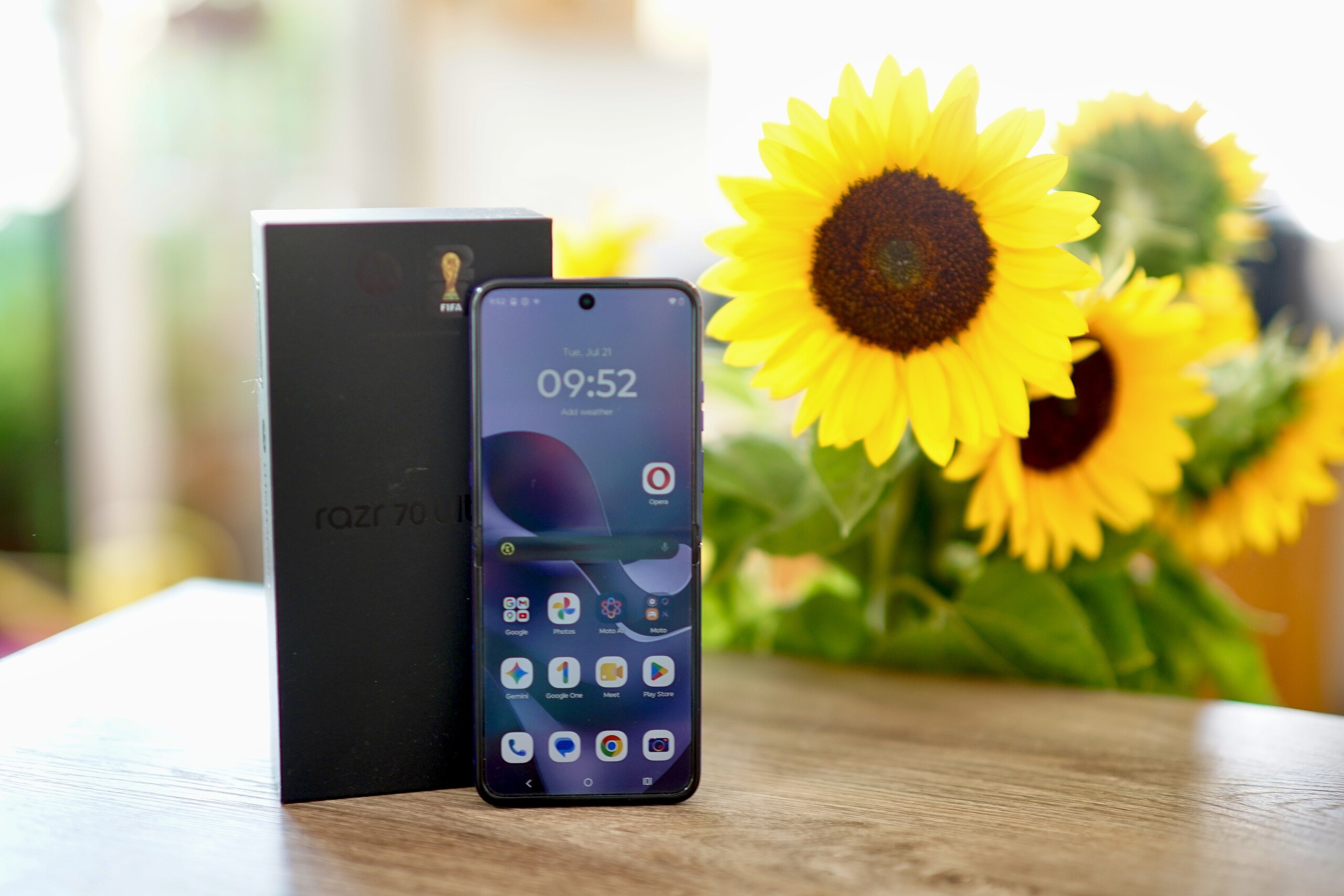
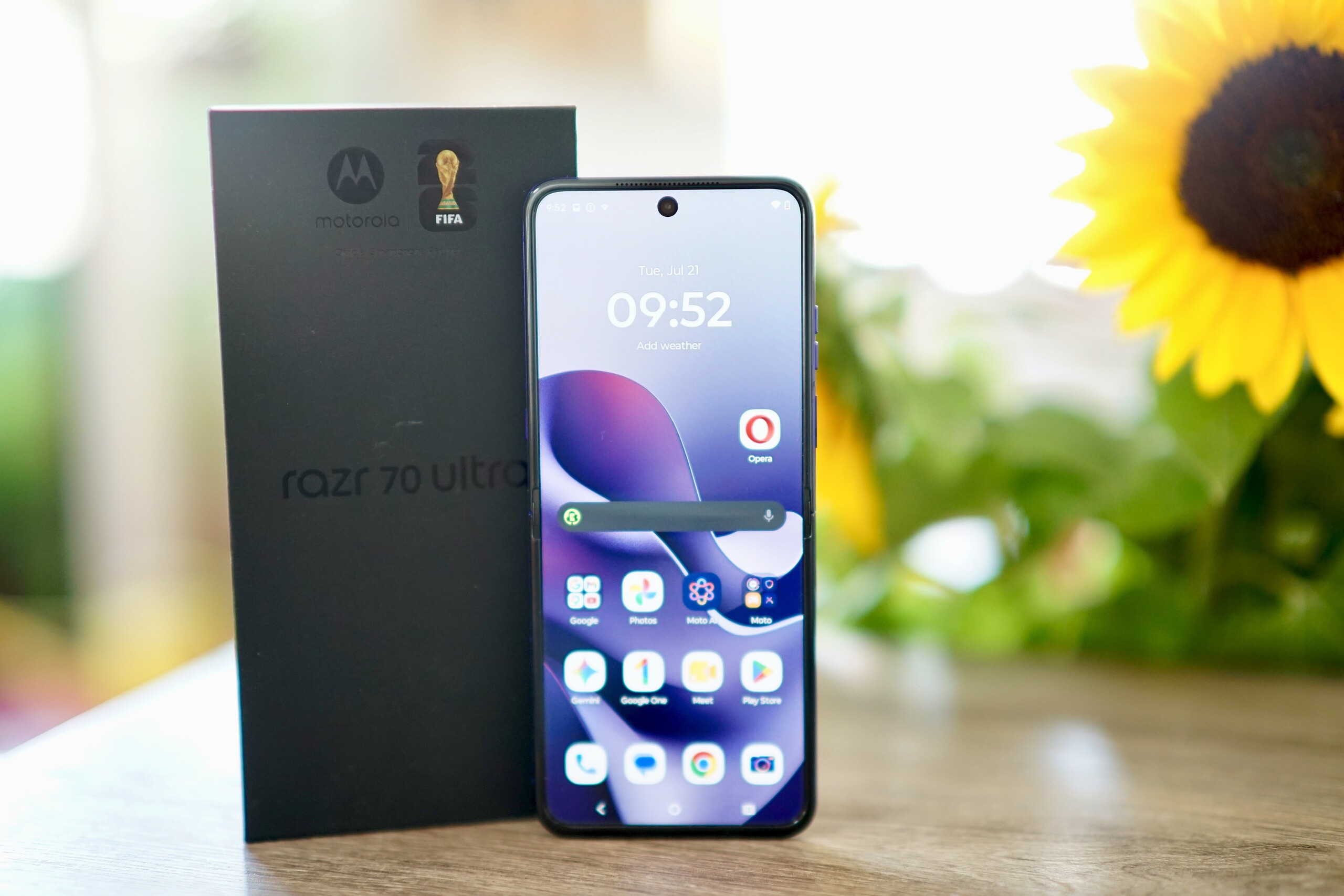
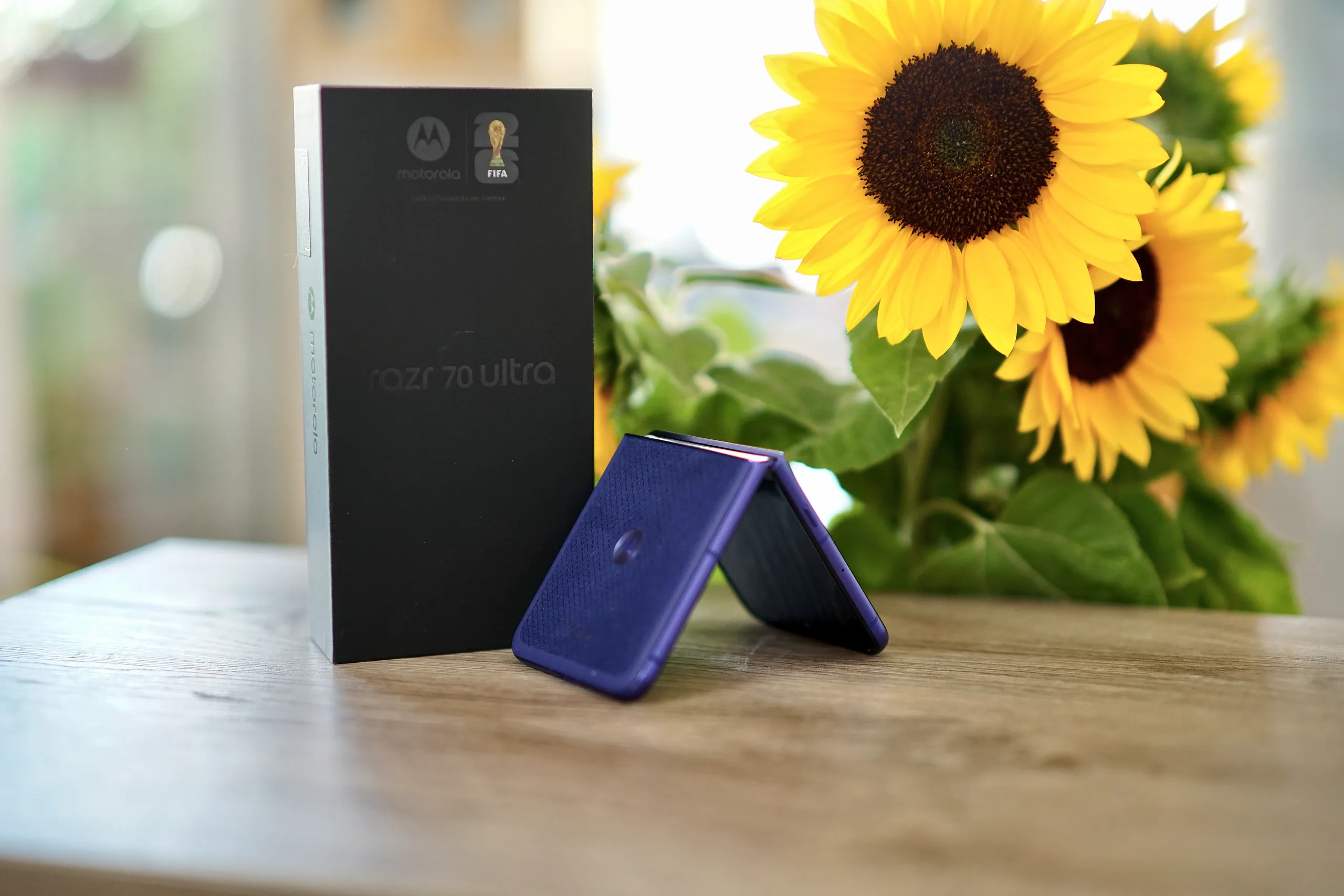
The dimensions and weight remain unchanged from the previous model, as does the clamshell design featuring a large screen on the inside and a 4-inch display on the outside. As in the previous year, Gorilla Glass Ceramic is used on the exterior. The phone is waterproof; you can even submerge it in shallow water.
There are two color options: brown with a back made of wood composite, and an Alcantara back with a dark blue pattern. The hinge is a standout feature: it opens quite easily with one hand and holds the phone securely in many positions.
Motorola is once again equipping its 2026 flip phone with 512 GB of storage and 16 GB of RAM.
Communication and Operation – Fast WiFi 7
The WiFi 7 modem in the Razr Ultra 2026, when paired with our reference router, the Asus RT-BE96U, delivers very fast and stable transfer rates.
It supports a wide range of cellular bands, allowing you to use the phone for mobile internet almost anywhere in the world. Reception was also good during our testing.
Both displays are very responsive and offer a refresh rate of up to 165 Hz.
The fingerprint sensor is integrated into the power button, so it’s easy to reach whether the phone is open or closed. It works reliably and unlocks the phone almost instantly. Face recognition is also available and works with all cameras.
| Networking | |
| Motorola Razr 70 Ultra (Razr Ultra 2026) | |
| iperf3 transmit Wi-Fi6/7 RT-BE96U | |
| iperf3 receive Wi-Fi6/7 RT-BE96U | |
| Motorola Razr 60 Ultra | |
| iperf3 transmit AXE11000 6GHz | |
| iperf3 receive AXE11000 6GHz | |
| Xiaomi Mix Flip 2 | |
| iperf3 transmit AXE11000 6GHz | |
| iperf3 receive AXE11000 6GHz | |
| Samsung Galaxy Z Flip7 | |
| iperf3 transmit AXE11000 | |
| iperf3 receive AXE11000 | |
| Motorola Razr 70 | |
| iperf3 transmit AXE11000 6GHz | |
| iperf3 receive AXE11000 6GHz | |
| Average 802.11 a/b/g/n/ac/ax/be | |
| iperf3 transmit AXE11000 | |
| iperf3 receive AXE11000 | |
| iperf3 transmit AXE11000 6GHz | |
| iperf3 receive AXE11000 6GHz | |
| iperf3 transmit Wi-Fi6/7 RT-BE96U | |
| iperf3 receive Wi-Fi6/7 RT-BE96U | |
| Average of class Smartphone | |
| iperf3 transmit AXE11000 | |
| iperf3 receive AXE11000 | |
| iperf3 transmit AXE11000 6GHz | |
| iperf3 receive AXE11000 6GHz | |
| iperf3 transmit Wi-Fi6/7 RT-BE96U | |
| iperf3 receive Wi-Fi6/7 RT-BE96U | |
Software and Sustainability – Update Issues
The software is based on Android 16 and is very close to stock Android. At the time of testing, the updates were from May 2026—so they’re already a bit older, even though Motorola actually promises updates every two months.
Security updates are scheduled to be available until February 2030—meaning just under 3 1/2 years at the time of testing. The entry in the EU’s EPREL database, however, specifies 6 years of update availability. Motorola does not interpret this to mean, however, that these updates must actually be current. Overall, the update situation is therefore uncertain.
The smartphone’s packaging does not include any plastic film.
Cameras – Taking selfies with the main camera is no problem


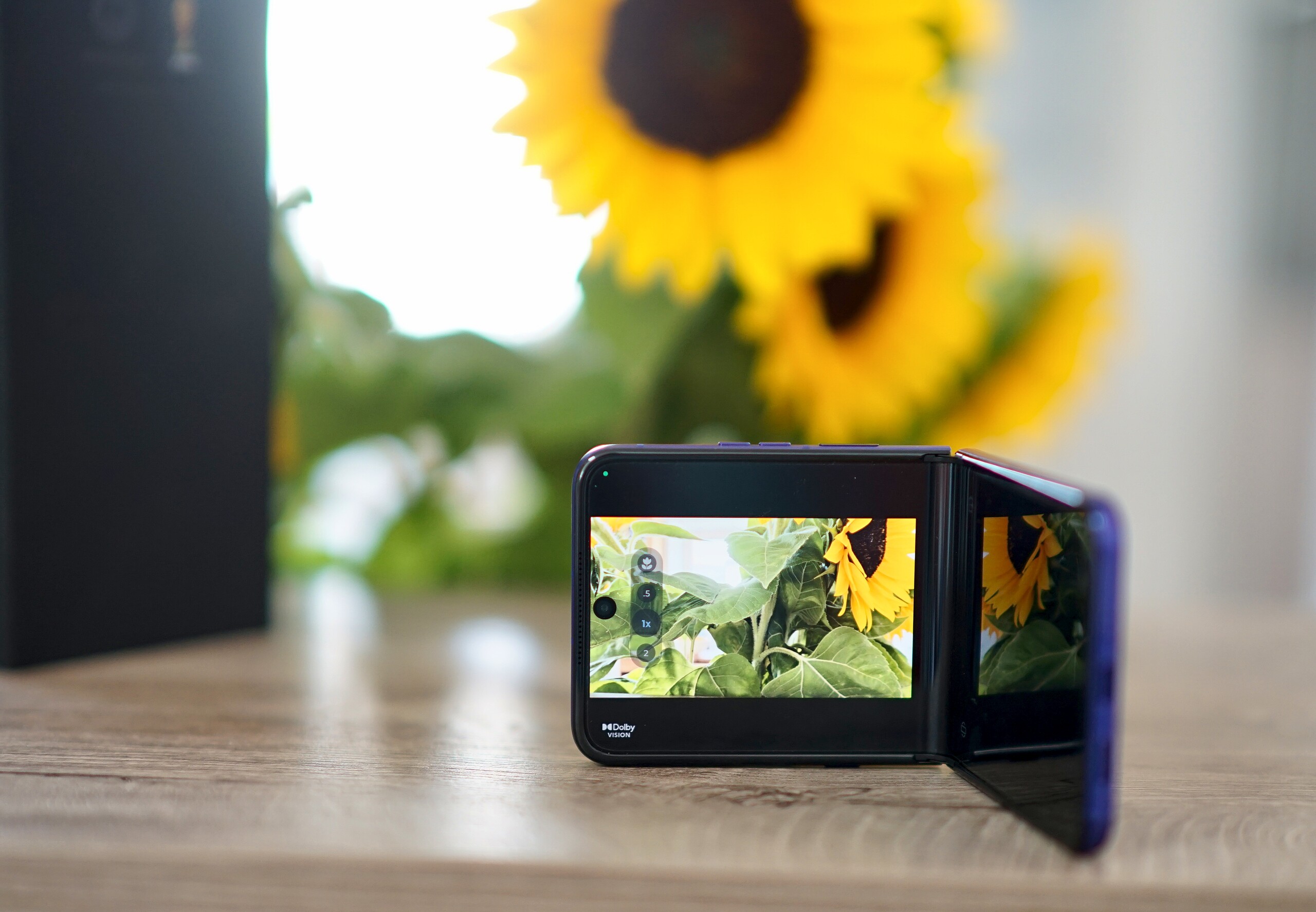
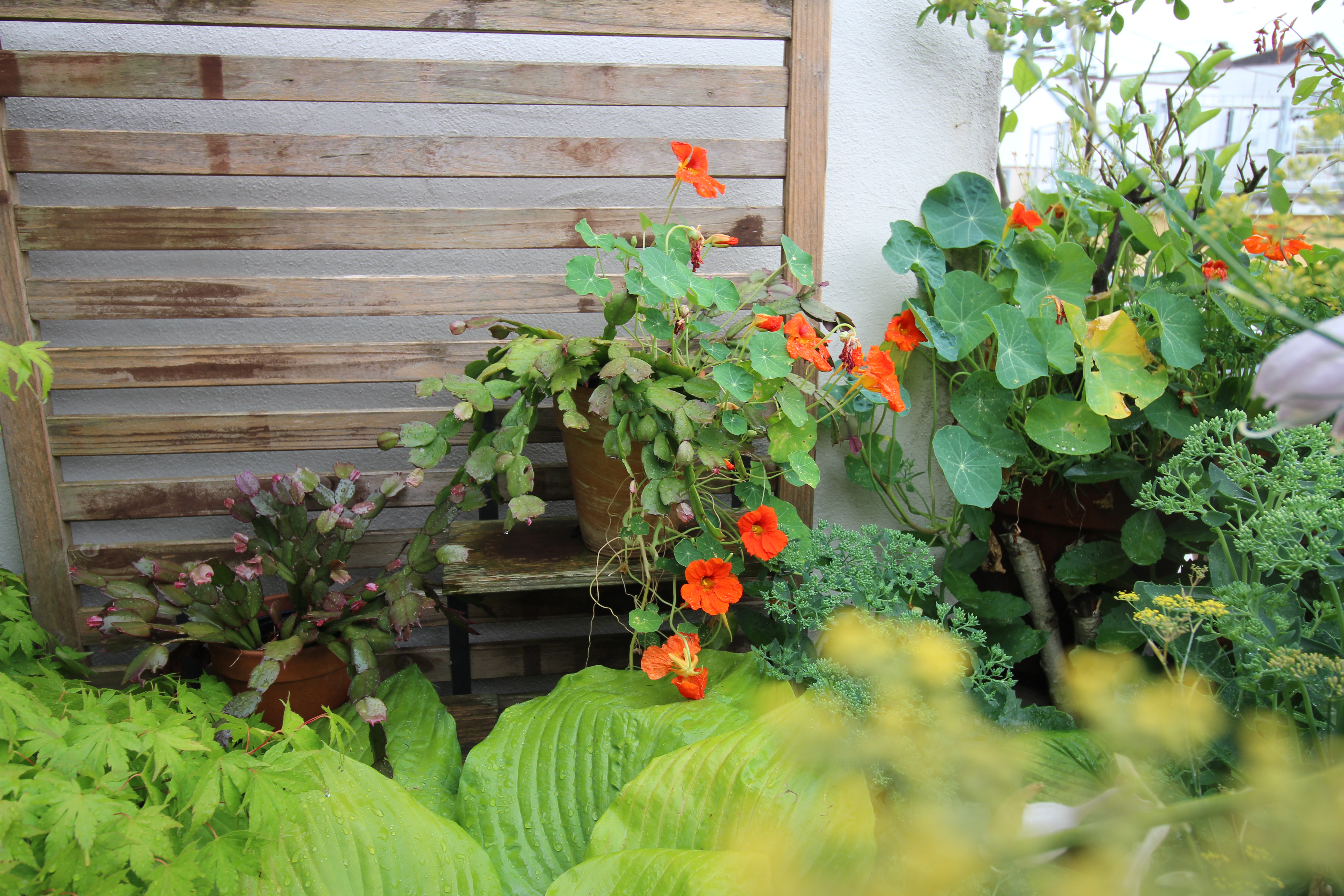
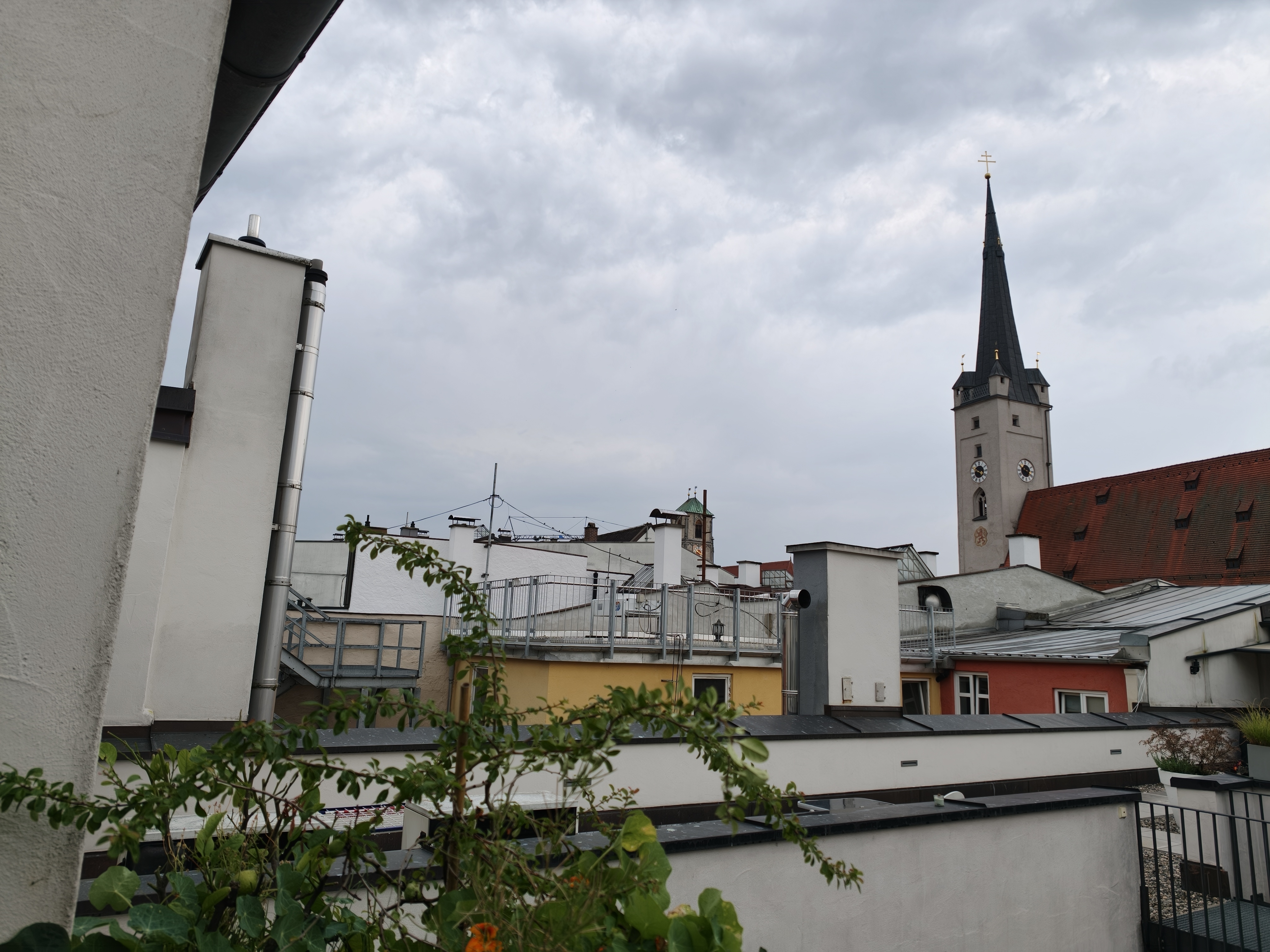
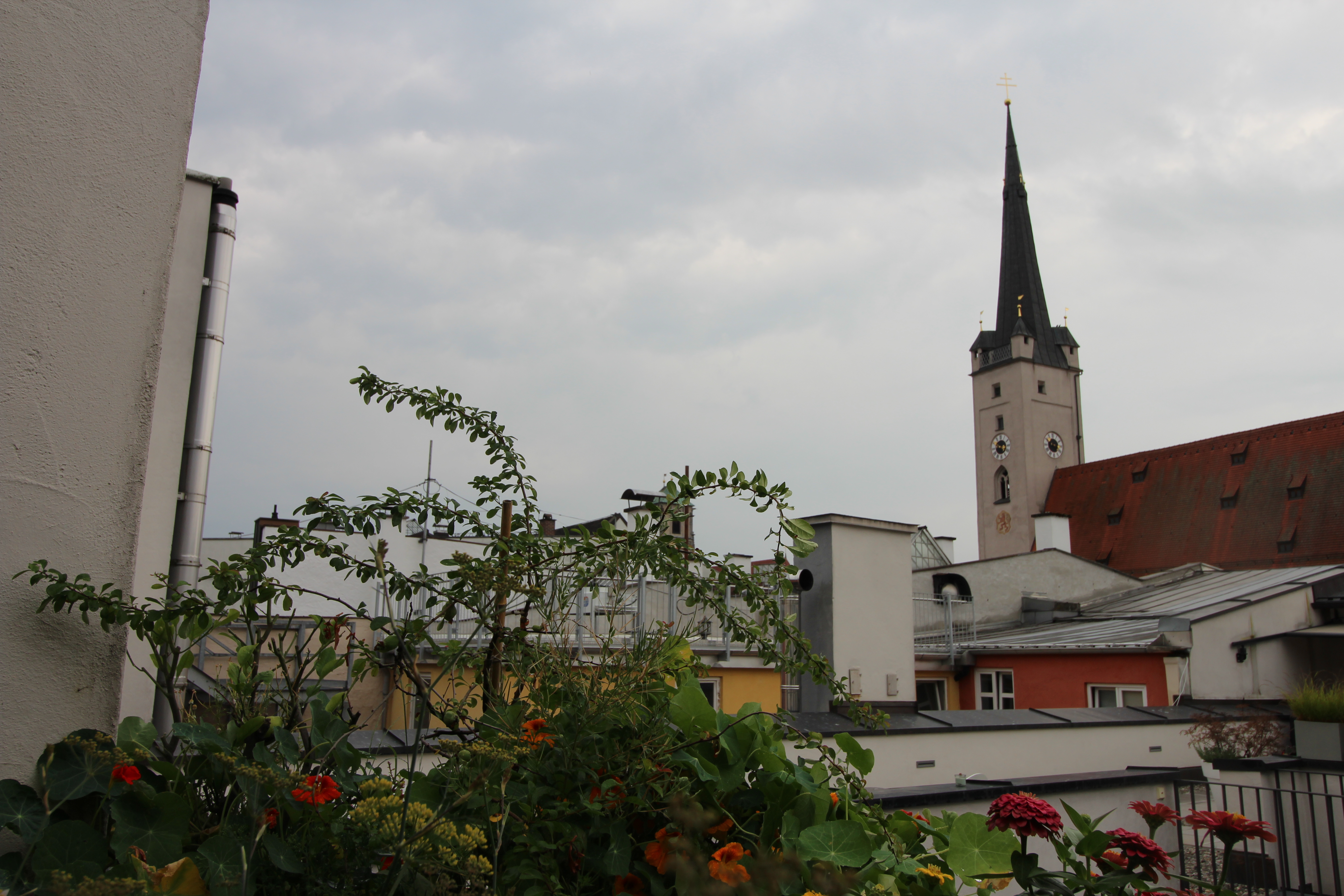
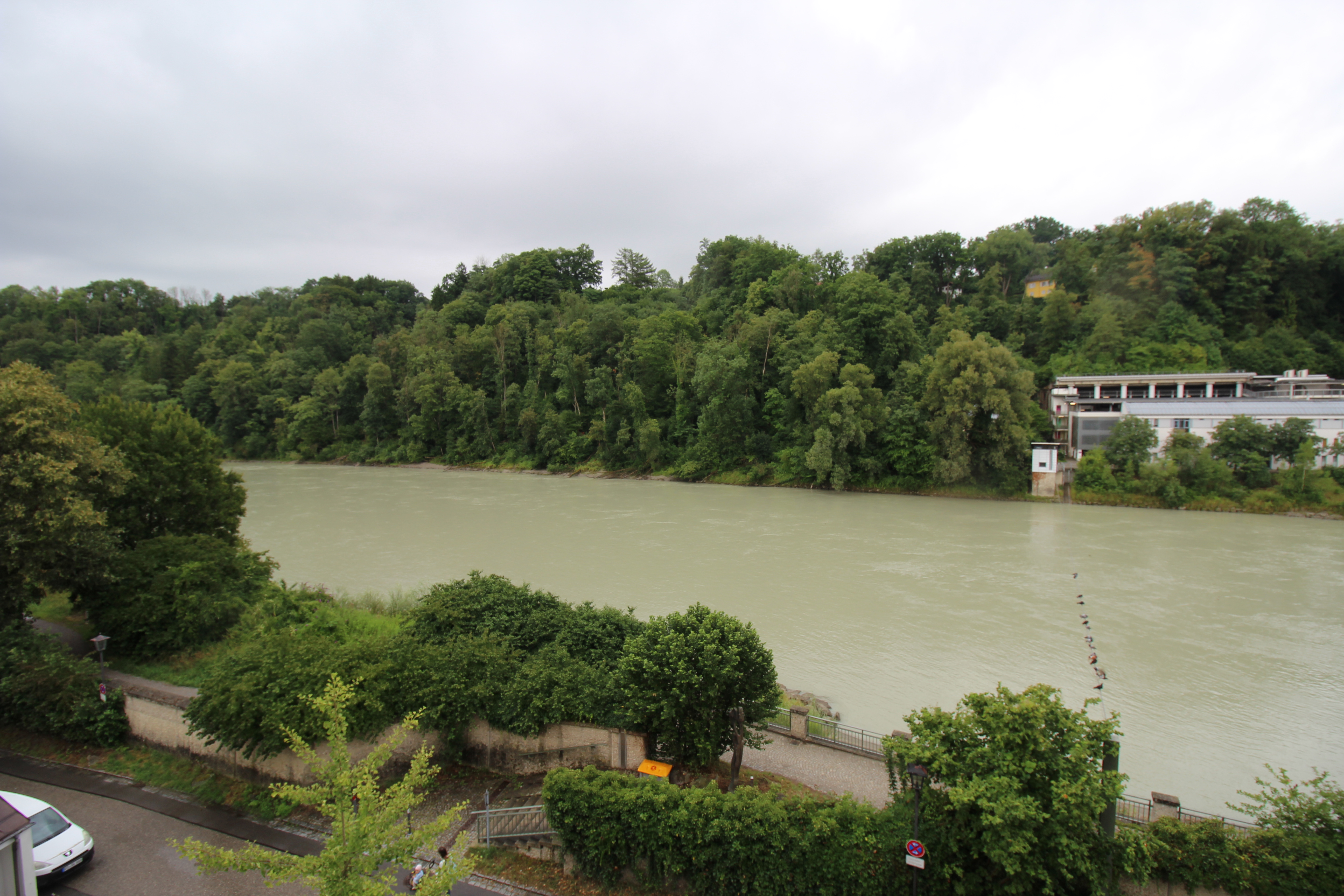
The Motorola Razr Ultra 2026 features three 50-megapixel cameras. Two of them are mounted on the outside and one on the inside. Thanks to the clamshell design, you can prop the phone upright without needing a tripod. This is convenient, and you can also take selfies with the main cameras while viewing the live view on the external screen.
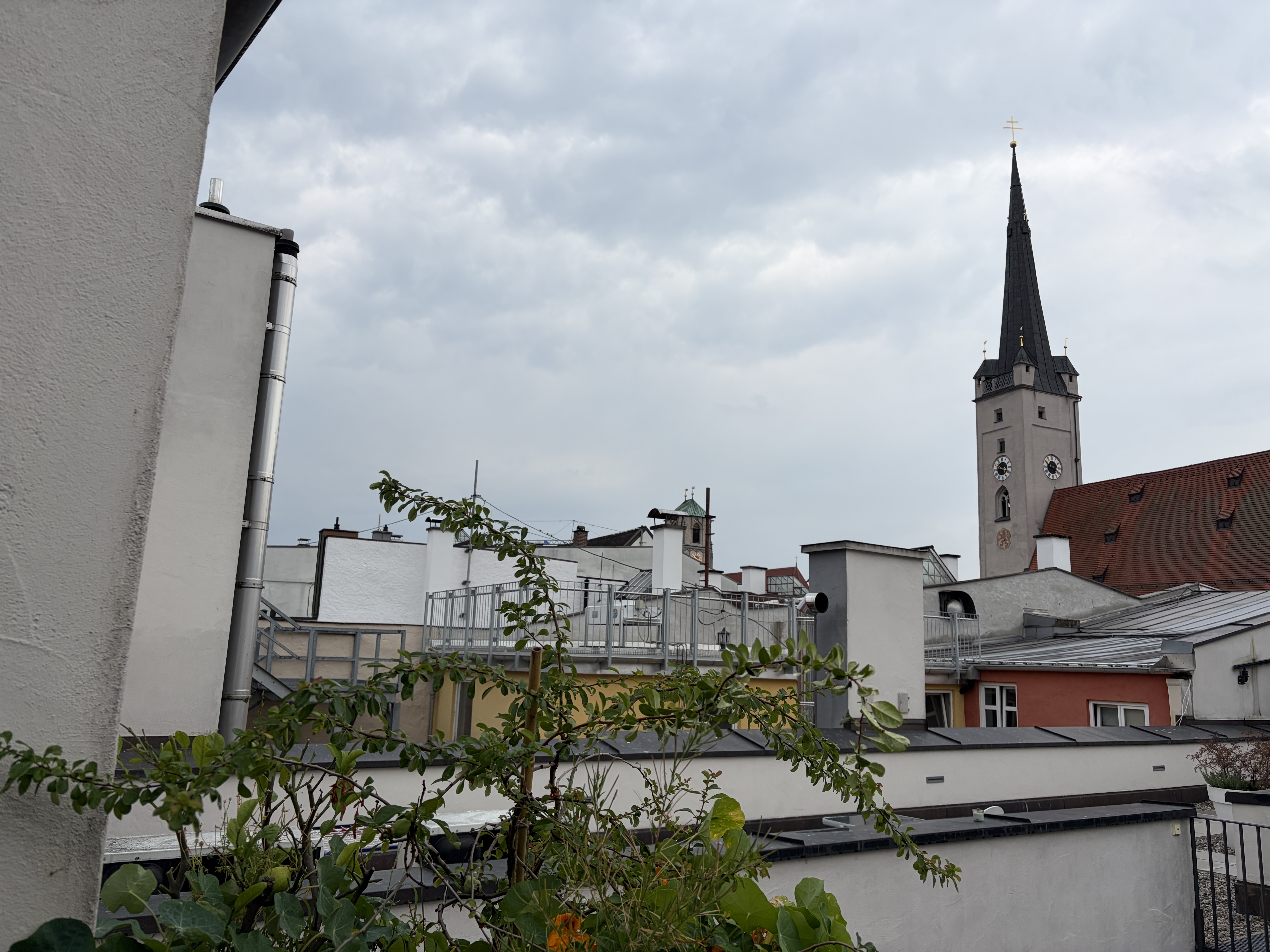
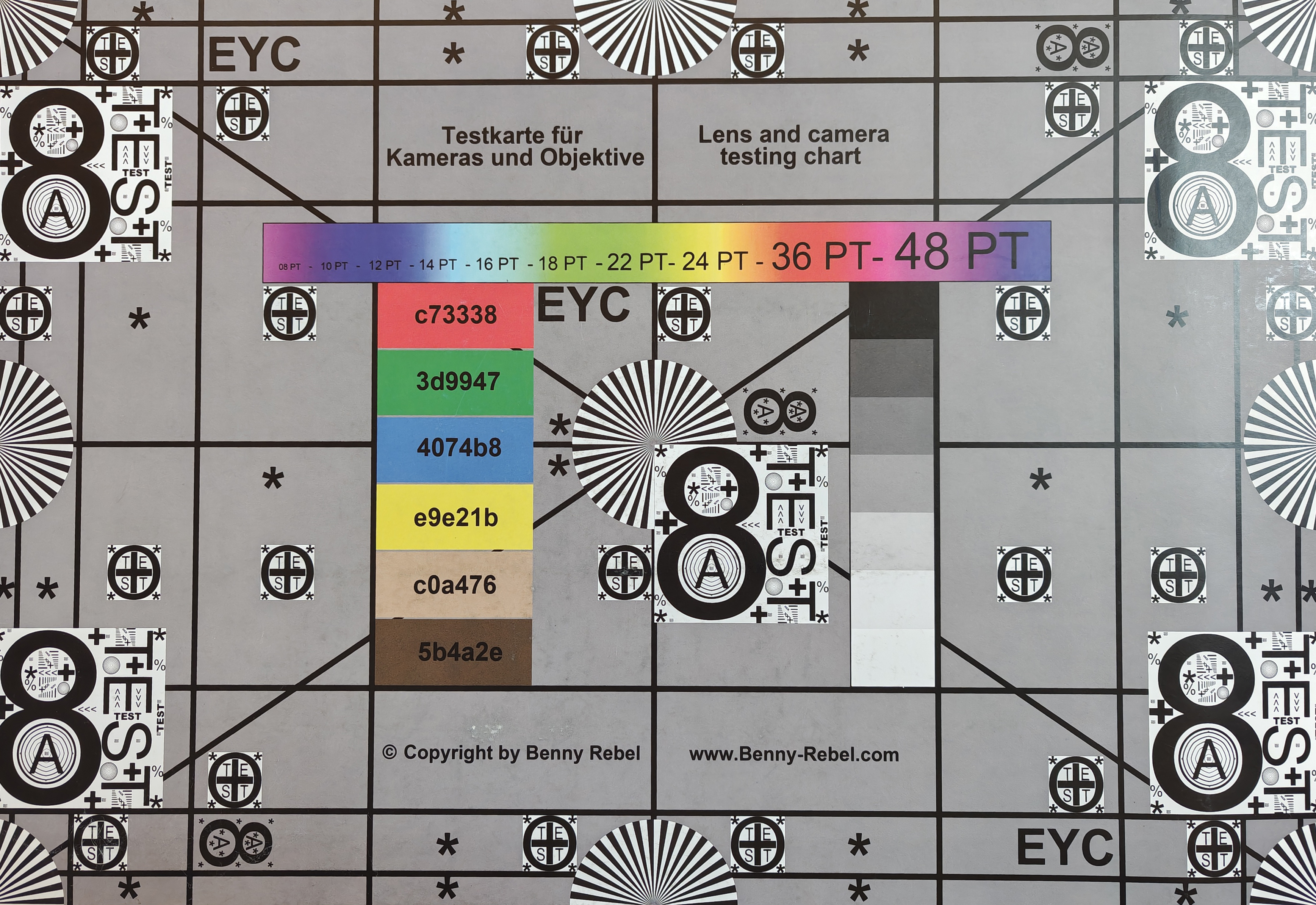
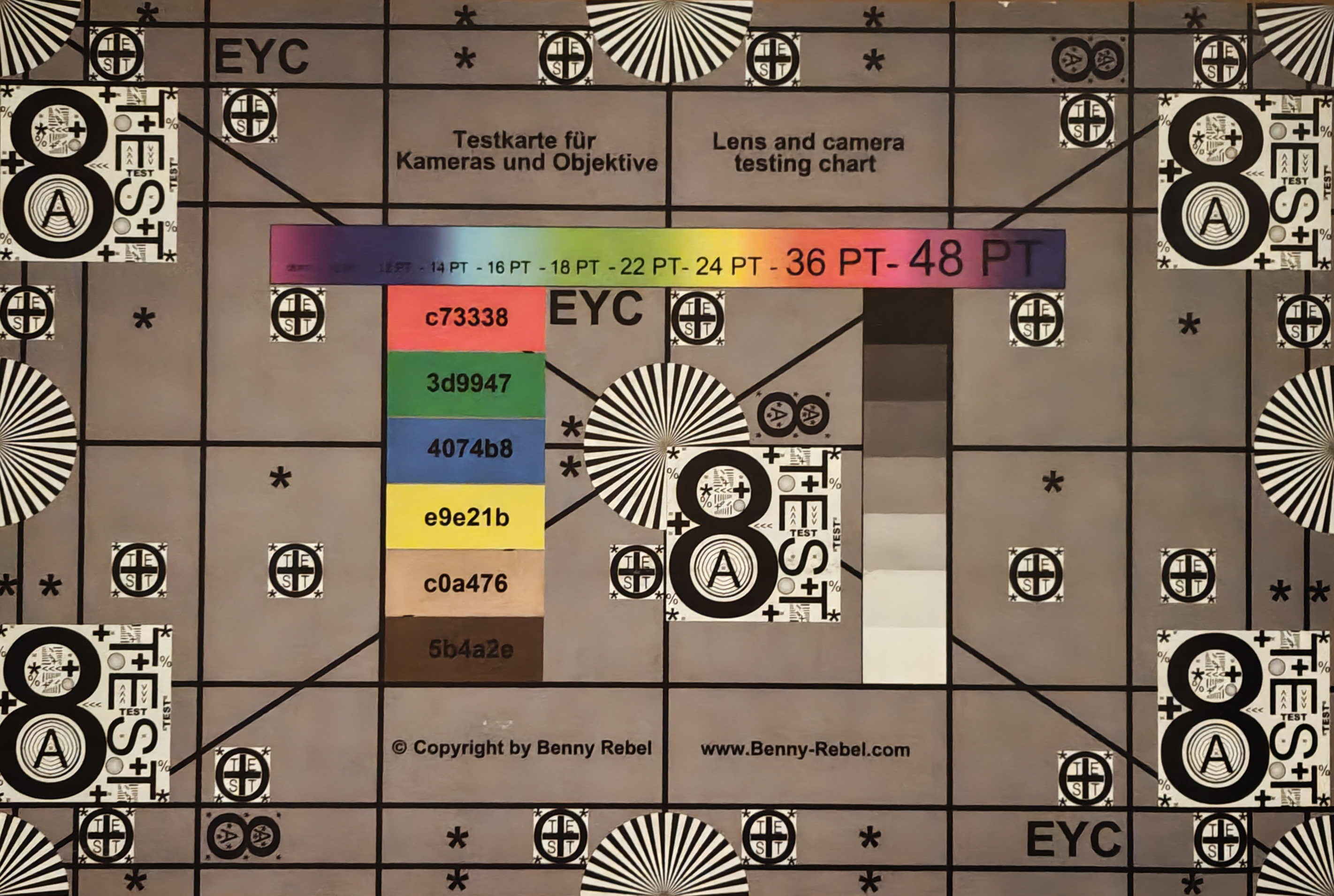
The image quality of the main camera is quite high, with fine details rendered accurately. Videos can be recorded in 8K at 30 fps and in 4K at up to 120 fps, allowing you to capture high-quality slow-motion footage.
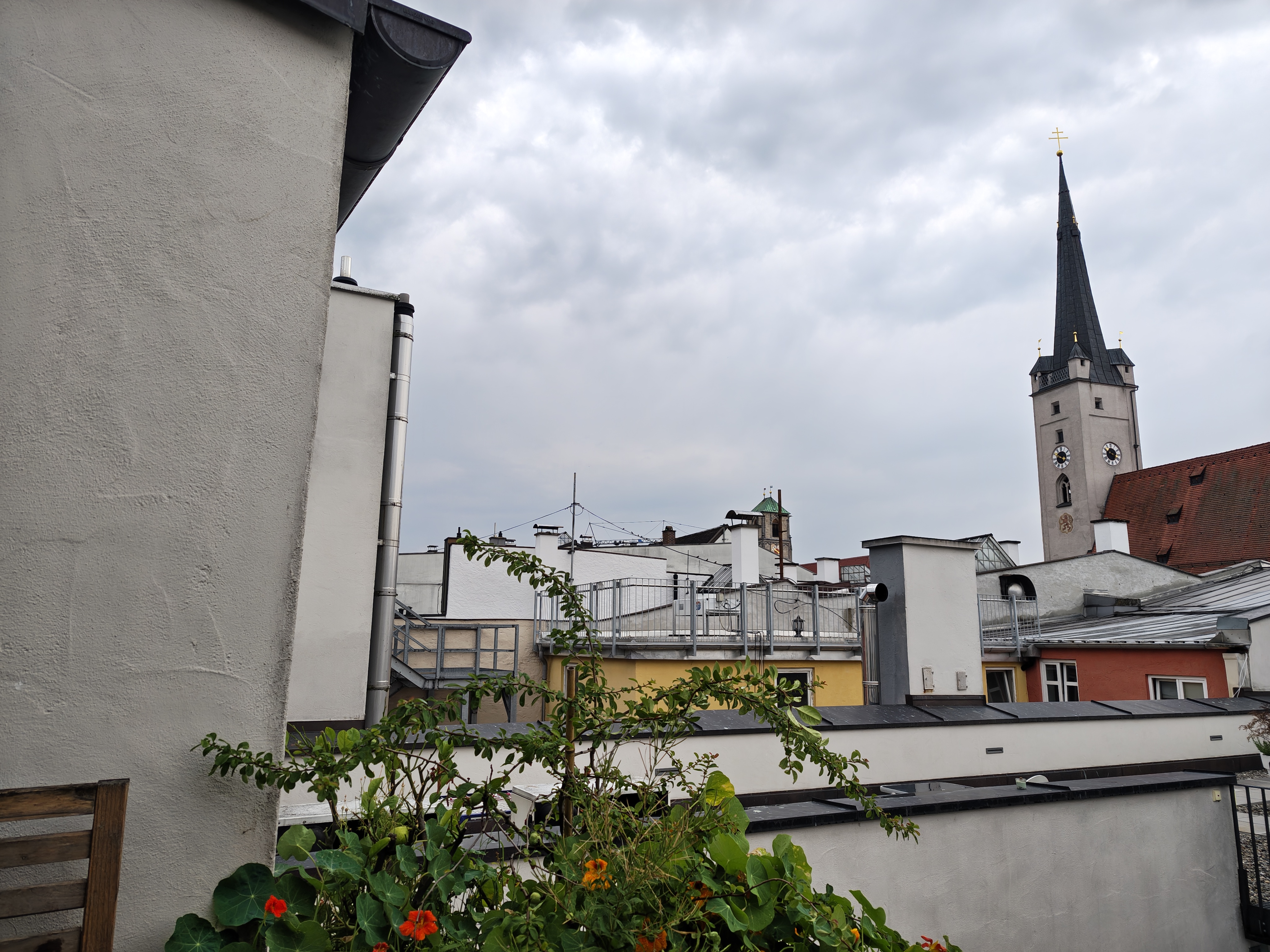
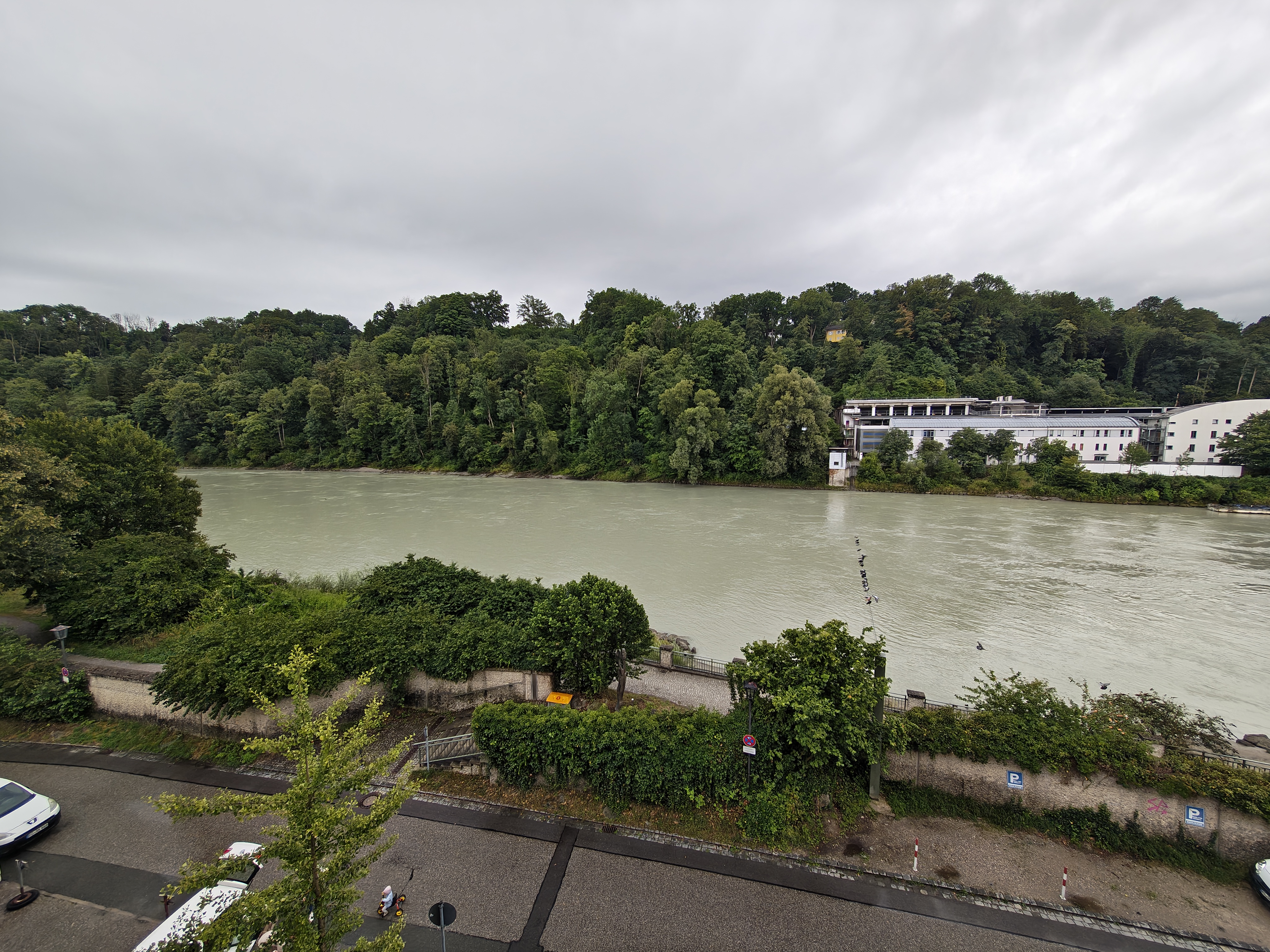
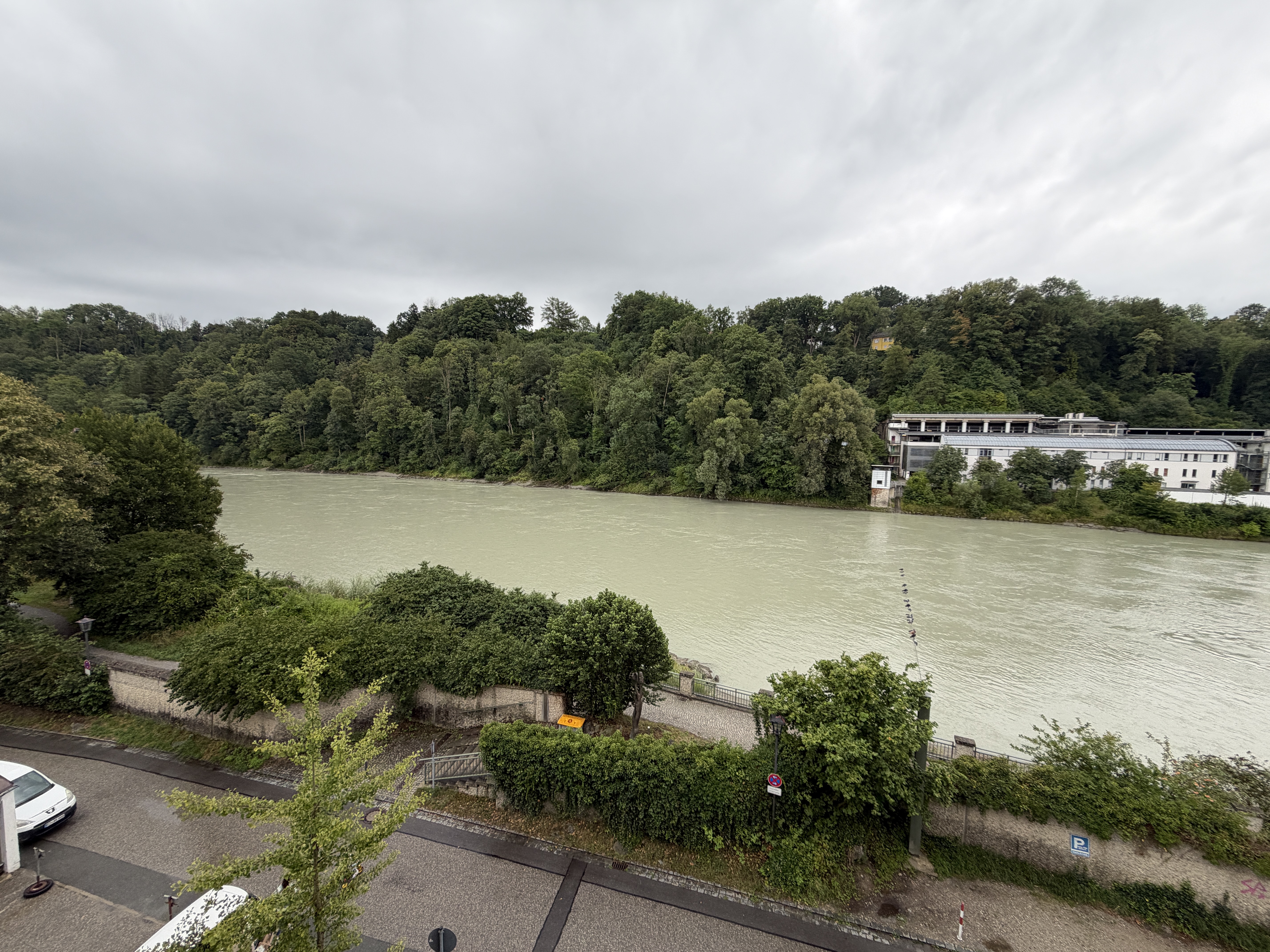
The wide-angle camera takes decent panoramas, but only renders details roughly.
Selfies come out well with both cameras, but if you have the choice, you should use the main camera—it captures even more detailed images.
Image comparison
Choose a scene and navigate within the first image. One click changes the position on touchscreens. One click on the zoomed-in image opens the original in a new window. The first image shows the scaled photograph of the test device.
PlantSurroundingLow LightUltra wide angle












Display – Two bright OLEDs
Both the main screen and the external display use OLED panels, which can become very bright and offer accurate color reproduction. Both displays also provide good rendering of HDR content.
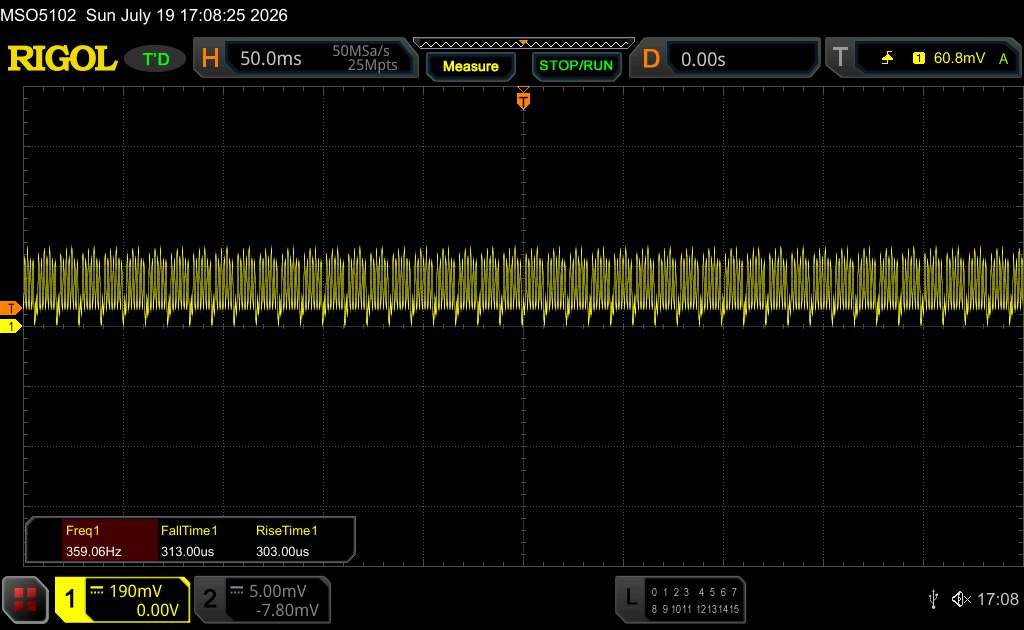
However, you’ll have to put up with PWM flicker; on the main display, this occurs at a lower frequency than on the external display, making it potentially even less suitable for people who are sensitive to it.
| |||||||||||||||||||||||||
Center on Battery: 1436 cd/m²
Contrast: ∞:1 (Black: 0 cd/m²)
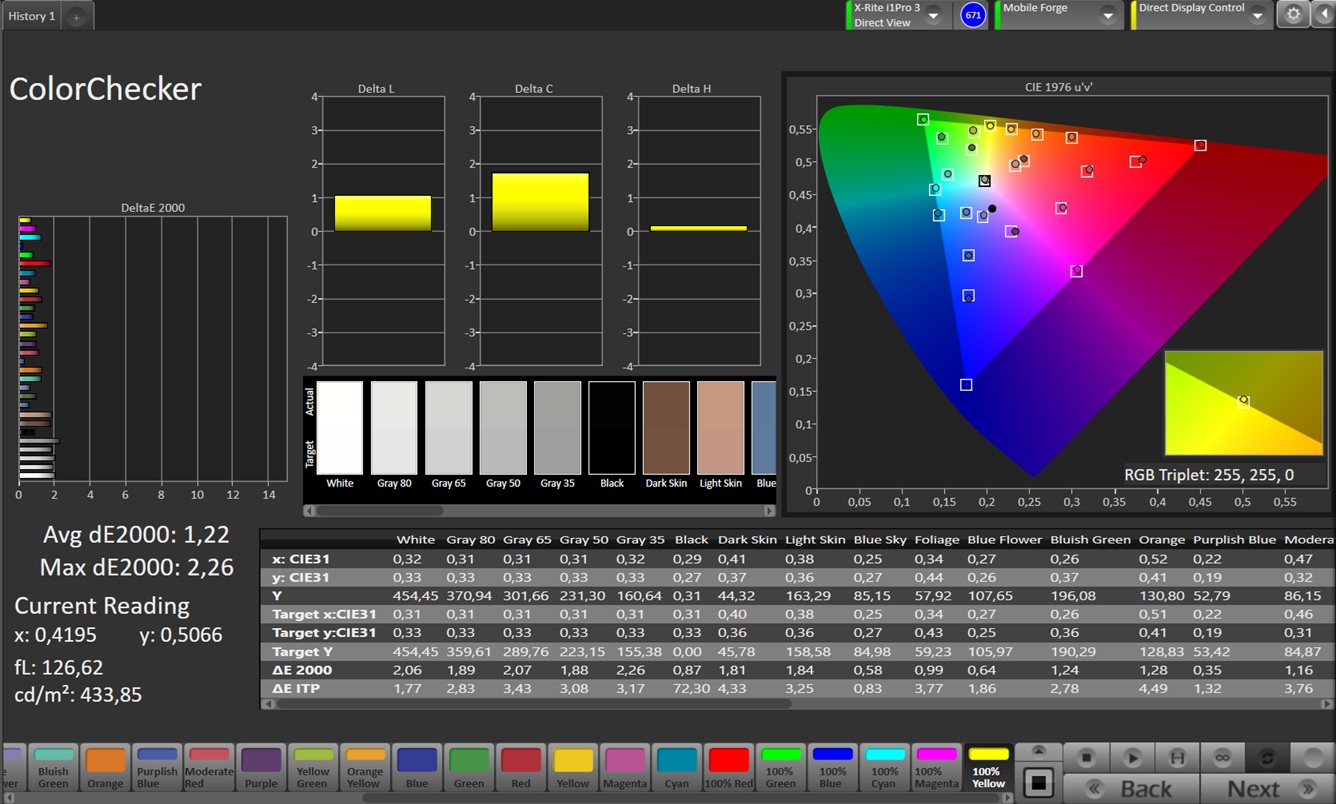
ΔE ColorChecker Calman: 1.22 | ∀{0.5-29.43 Ø4.69}
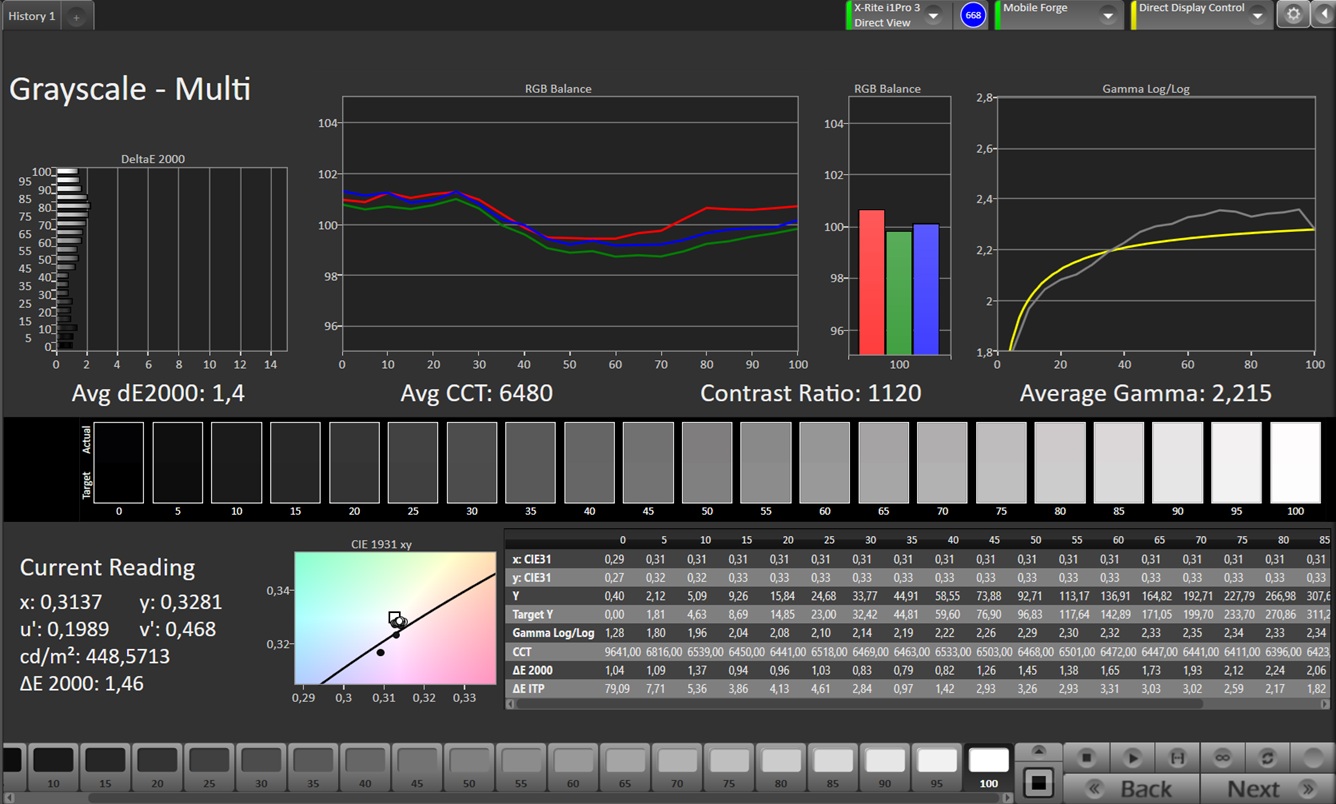
ΔE Greyscale Calman: 1.9 | ∀{0.09-98 Ø4.94}
103.2% sRGB (Calman 2D)
Gamma: 2.148
CCT: 6342 K
| Motorola Razr 70 Ultra (Razr Ultra 2026) AMOLED, 2992x1224, 7" | Motorola Razr 60 Ultra AMOLED, 2992x1224, 7" | Xiaomi Mix Flip 2 AMOLED, 2912x1224, 6.9" | Samsung Galaxy Z Flip7 AMOLED, 2520x1080, 6.9" | Motorola Razr 70 AMOLED, 2640x1080, 6.9" | |
|---|---|---|---|---|---|
| Display | -4% | 6% | |||
| APL18 Peak Brightness (cd/m²) | 2689 | 2635 -2% | 2777 3% | ||
| HDR Peak Brightness (cd/m²) | 2599 | 2431 -6% | 2845 9% | ||
| Response Times | -225% | -70% | -12% | -2951% | |
| Response Time Grey 50% / Grey 80% * (ms) | 0.5 ? | 2.4 ? -380% | 1.4 ? -180% | 0.64 ? -28% | 44 ? -8700% |
| Response Time Black / White * (ms) | 0.8 ? | 2 ? -150% | 1 ? -25% | 1.05 ? -31% | 2.2 ? -175% |
| PWM Frequency (Hz) | 142.7 | 707 | 121 | 240 | 67 |
| PWM Amplitude * (%) | 18 | 44 -144% | 19 -6% | 13.64 24% | 14 22% |
| Screen | 14% | -45% | -29% | 1% | |
| Brightness middle (cd/m²) | 1436 | 1379 -4% | 1077 -25% | 1349 -6% | 1331 -7% |
| Black Level * (cd/m²) | |||||
| Colorchecker dE 2000 * | 1.22 | 1.05 14% | 2.11 -73% | 2.2 -80% | 1.2 2% |
| Colorchecker dE 2000 max. * | 2.26 | 1.79 21% | 3.62 -60% | 3.3 -46% | 2.18 4% |
| Greyscale dE 2000 * | 1.9 | 1.4 26% | 2.3 -21% | 1.6 16% | 1.8 5% |
| Gamma | 2.148 102% | 2.124 104% | 2.155 102% | 2.06 107% | 2.2 100% |
| CCT | 6342 102% | 6362 102% | 6275 104% | 6484 100% | 6248 104% |
| Brightness (cd/m²) | 1393 | 1036 | 1354 | 1318 | |
| Brightness Distribution (%) | 93 | 95 | 98 | 96 | |
| Total Average (Program / Settings) | -106% /
-88% | -58% /
-56% | -15% /
-18% | -981% /
-982% |
* ... smaller is better
| Display / APL18 Peak Brightness | |
| Motorola Razr 70 | |
| Motorola Razr 70 Ultra (Razr Ultra 2026) | |
| Samsung Galaxy Z Flip7 | |
| Display / HDR Peak Brightness | |
| Motorola Razr 70 | |
| Motorola Razr 70 Ultra (Razr Ultra 2026) | |
| Samsung Galaxy Z Flip7 | |
External Display
| |||||||||||||||||||||||||
Center on Battery: 1002 cd/m²
Contrast: ∞:1 (Black: 0 cd/m²)
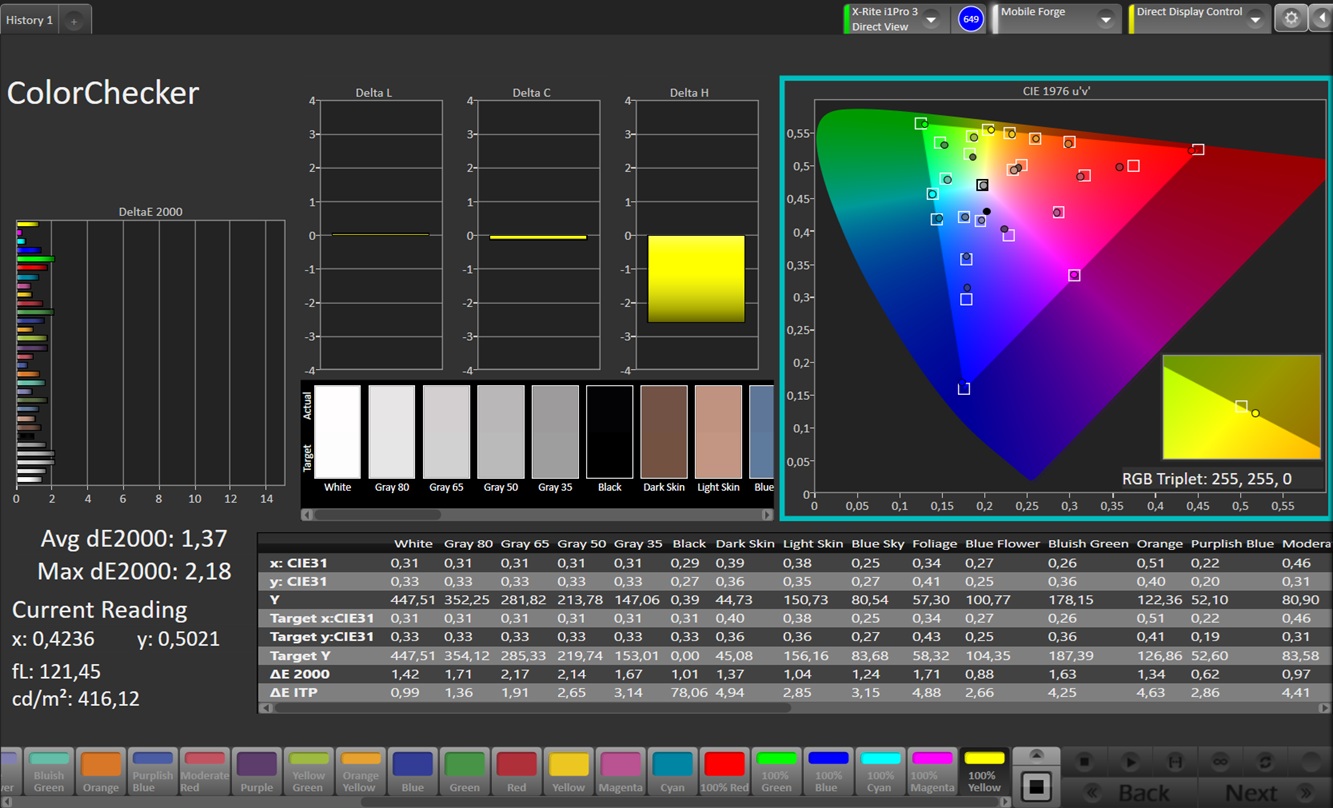
ΔE ColorChecker Calman: 1.37 | ∀{0.5-29.43 Ø4.69}
ΔE Greyscale Calman: 1.4 | ∀{0.09-98 Ø4.94}
89.6% sRGB (Calman 2D)
Gamma: 2.215
CCT: 6480 K
PWM Internal Display
Screen Flickering / PWM (Pulse-Width Modulation)
| Screen flickering / PWM detected | 142.7 Hz Amplitude: 18 % | 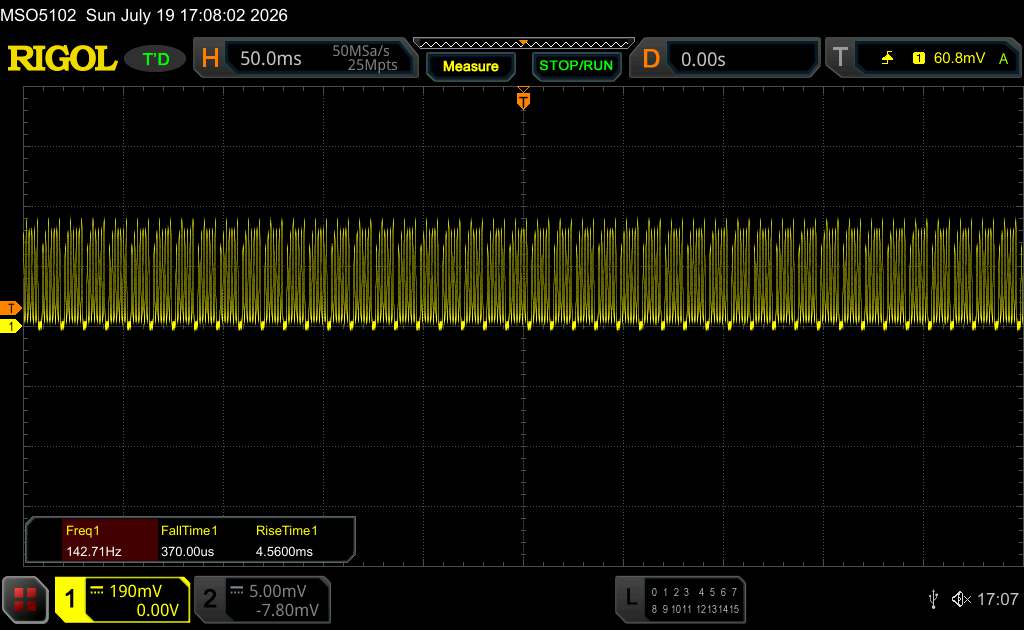 | |
The display backlight flickers at 142.7 Hz (worst case, e.g., utilizing PWM) . The frequency of 142.7 Hz is very low, so the flickering may cause eyestrain and headaches after extended use. In comparison: 52 % of all tested devices do not use PWM to dim the display. If PWM was detected, an average of 7611 (minimum: 5 - maximum: 343500) Hz was measured. | |||
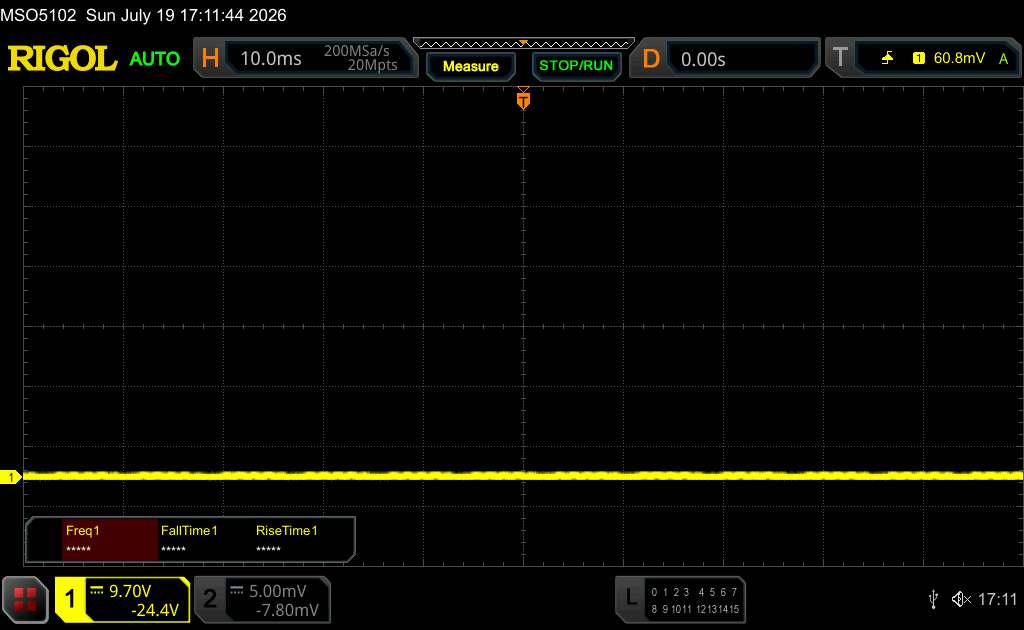
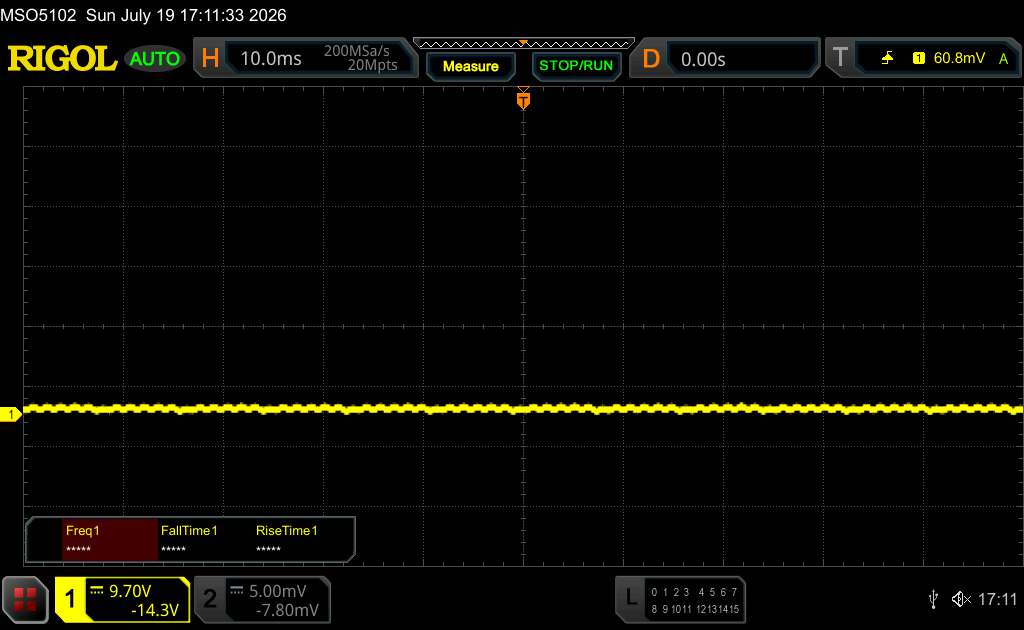
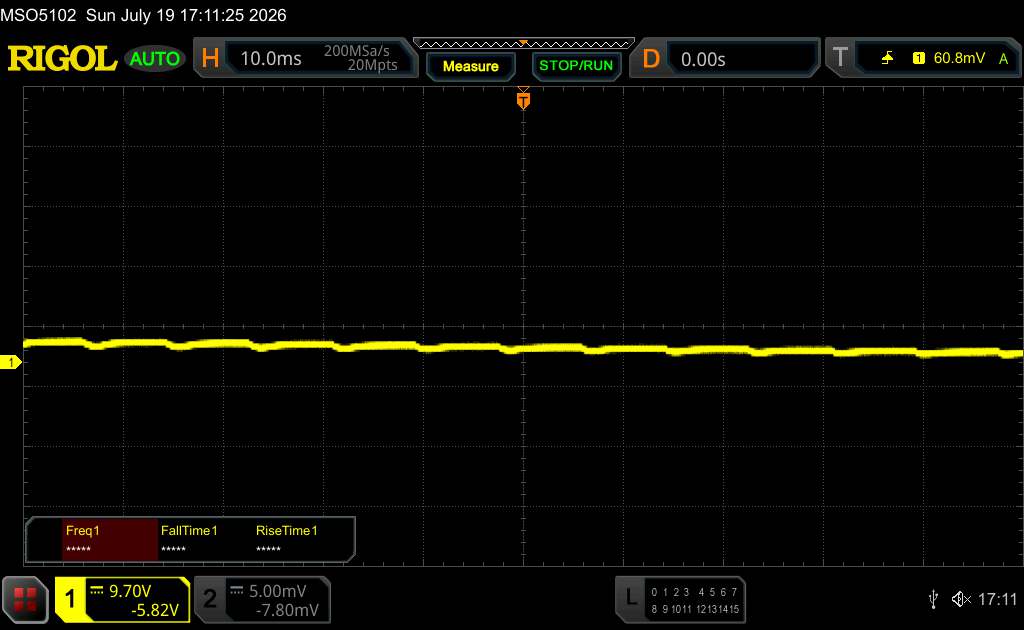
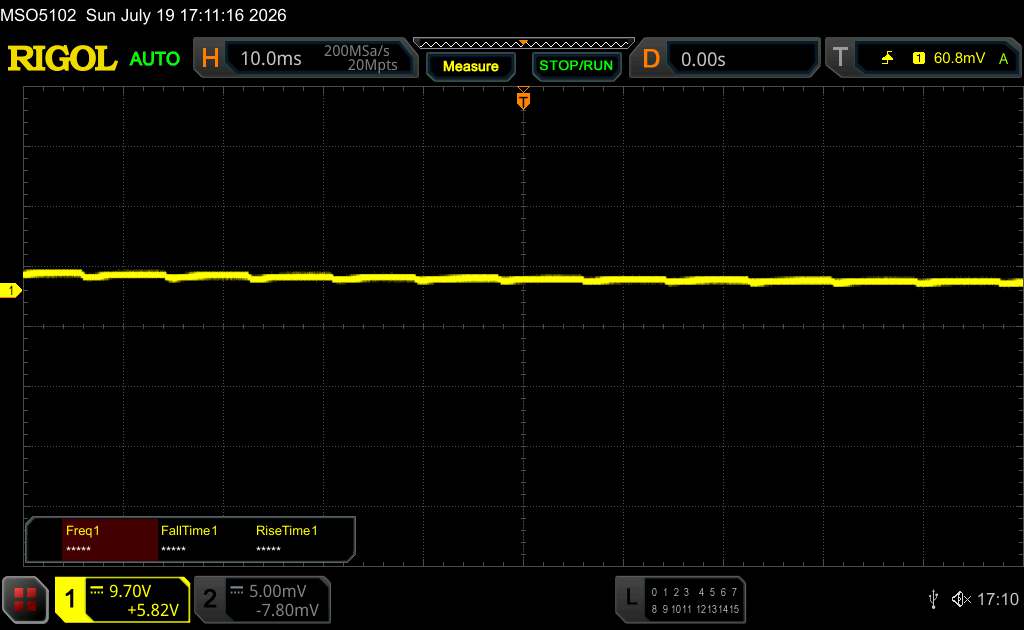
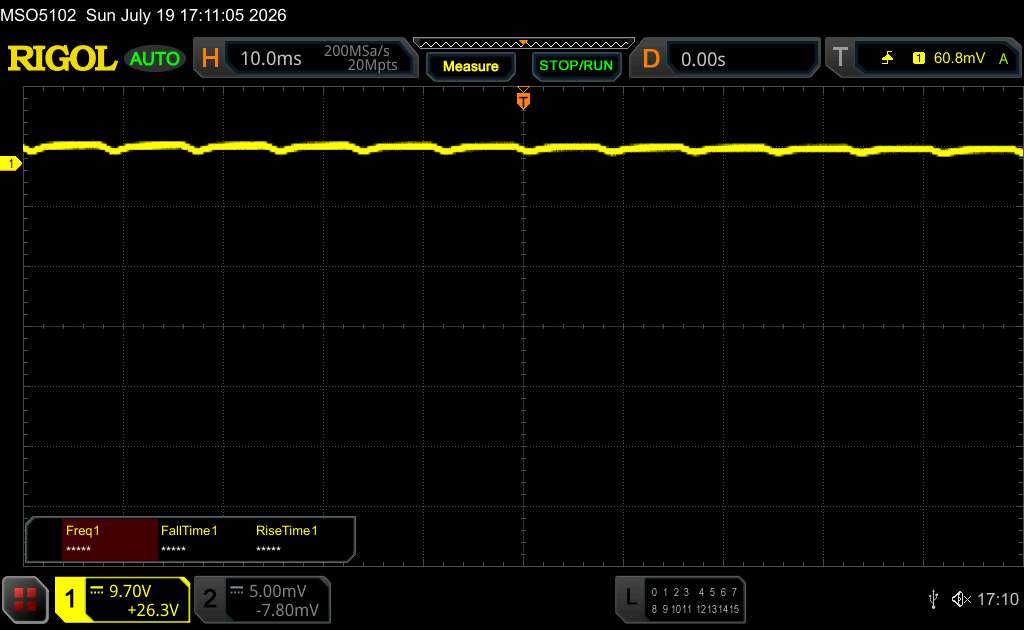
Series of measurements taken at a fixed zoom level and with different brightness settings (Although the amplitude curve at minimum brightness appears flat, this is due to the scaling. The info box shows a magnified version of the amplitude at minimum brightness.)
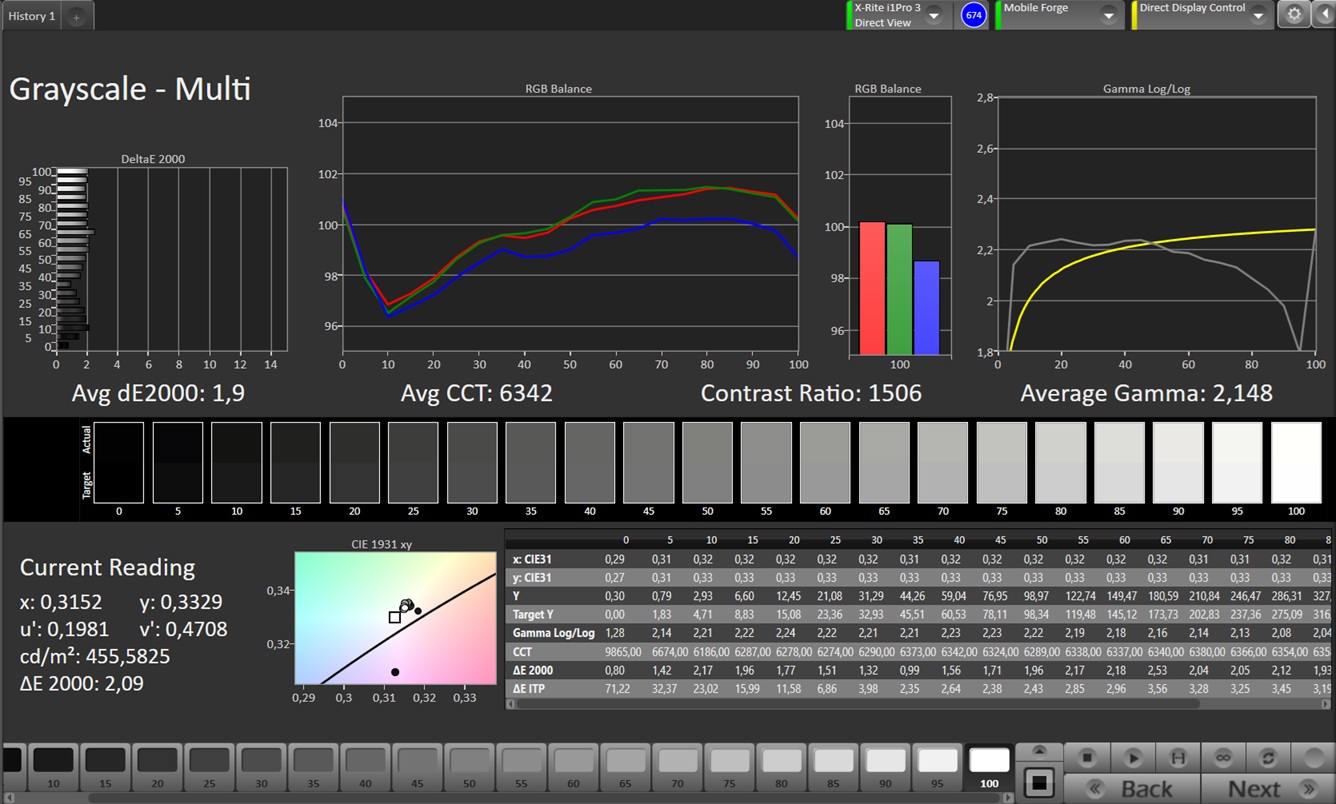
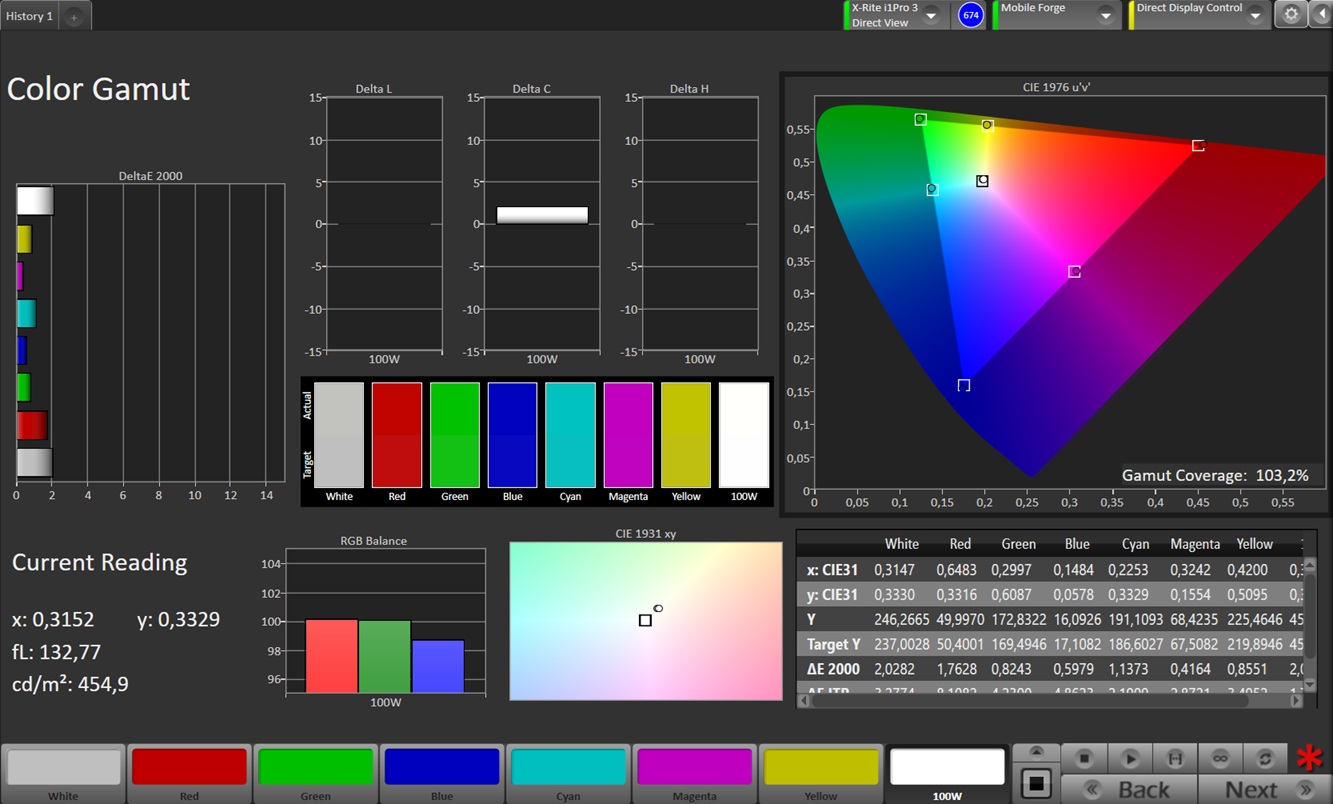
Display Response Times
| ↔ Response Time Black to White | ||
|---|---|---|
| 0.8 ms ... rise ↗ and fall ↘ combined | ↗ 0.4 ms rise | 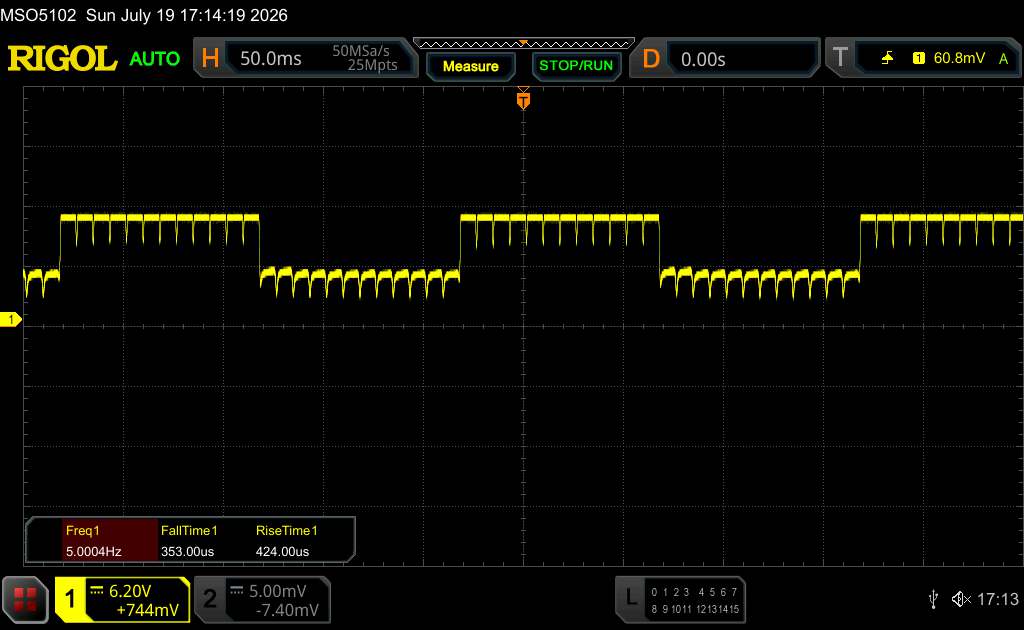 |
| ↘ 0.4 ms fall | ||
| The screen shows very fast response rates in our tests and should be very well suited for fast-paced gaming. In comparison, all tested devices range from 0.1 (minimum) to 240 (maximum) ms. » 3 % of all devices are better. This means that the measured response time is better than the average of all tested devices (19.7 ms). | ||
| ↔ Response Time 50% Grey to 80% Grey | ||
| 0.5 ms ... rise ↗ and fall ↘ combined | ↗ 0.2 ms rise | 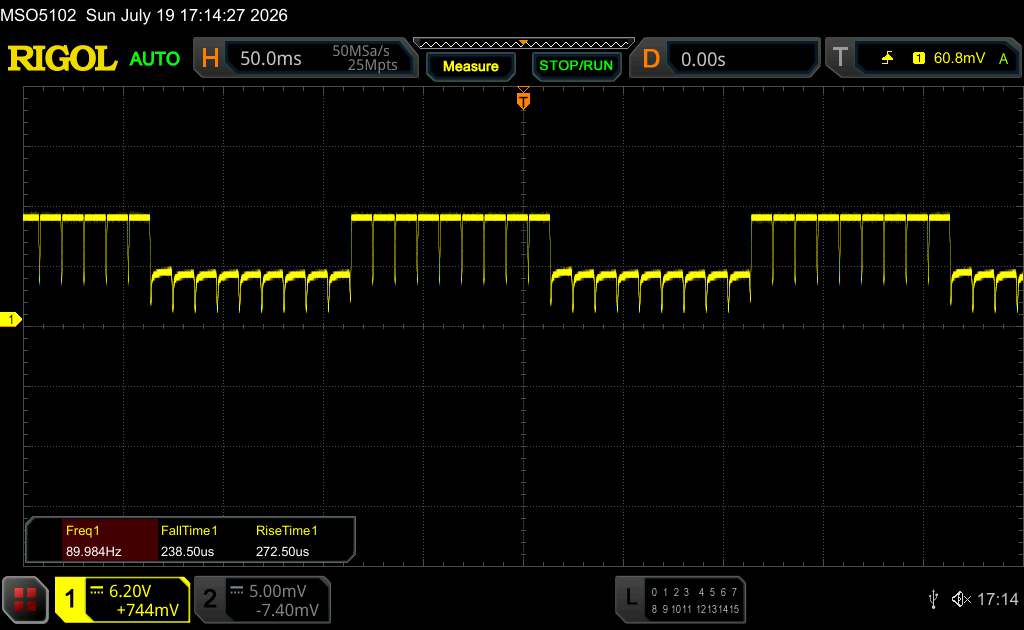 |
| ↘ 0.3 ms fall | ||
| The screen shows very fast response rates in our tests and should be very well suited for fast-paced gaming. In comparison, all tested devices range from 0.13 (minimum) to 636 (maximum) ms. » 1 % of all devices are better. This means that the measured response time is better than the average of all tested devices (30.7 ms). | ||
Performance, Emissions, and Battery Life – Very Fast, but with Some Compromises
The Razr Ultra 2026 (Razr 70 Ultra) is a thoroughly fast phone, even though the Snapdragon 8 Elite is no longer the latest high-end processor. However, it still has enough power even for more resource-intensive apps and demanding games.
The memory isn’t quite as fast as on high-end phones without a flip mechanism, but it still processes data very quickly.
Heat buildup under prolonged load is significantly lower than on its predecessor. Motorola has improved the cooling system, which is also evident in the significantly more stable performance metrics during stress tests.
The speakers produce decent sound, though they lack bass. All major audio codecs are supported, so you can connect speakers or headphones via Bluetooth with good sound quality.
Motorola has added a few more mAh to the battery compared to its predecessor: In our Wi-Fi test, the phone lasted about 50 minutes longer.
Charging options are comprehensive, including fast wired and wireless charging. Other devices can also be powered via cable from the smartphone.
| Motorola Razr 70 Ultra (Razr Ultra 2026) | Motorola Razr 60 Ultra | Xiaomi Mix Flip 2 | Samsung Galaxy Z Flip7 | Motorola Razr 70 | Average 512 GB UFS 4.0 Flash | Average of class Smartphone | |
|---|---|---|---|---|---|---|---|
| AndroBench 3-5 | -1% | 27% | -11% | -34% | 13% | -19% | |
| Sequential Read 256KB (MB/s) | 3611.3 | 3504.7 -3% | 4083.53 13% | 4044.67 12% | 1689.2 -53% | 3708 ? 3% | 2278 ? -37% |
| Sequential Write 256KB (MB/s) | 3423.9 | 3450.9 1% | 3894.12 14% | 2981.82 -13% | 1188.1 -65% | 3129 ? -9% | 1971 ? -42% |
| Random Read 4KB (MB/s) | 315.4 | 308.6 -2% | 403.94 28% | 366.98 16% | 296.7 -6% | 382 ? 21% | 317 ? 1% |
| Random Write 4KB (MB/s) | 351 | 347 -1% | 534.73 52% | 143.67 -59% | 307.6 -12% | 476 ? 36% | 362 ? 3% |
(±) The maximum temperature on the upper side is 44.1 °C / 111 F, compared to the average of 35.4 °C / 96 F, ranging from 21.9 to 247 °C for the class Smartphone.
(±) The bottom heats up to a maximum of 42.5 °C / 109 F, compared to the average of 34.1 °C / 93 F
3DMark Stress Tests
| 3DMark | |
| Wild Life Stress Test Stability | |
| Motorola Razr 70 | |
| Samsung Galaxy Z Flip7 | |
| Wild Life Extreme Stress Test | |
| Motorola Razr 70 | |
| Motorola Razr 70 Ultra (Razr Ultra 2026) | |
| Xiaomi Mix Flip 2 | |
| Samsung Galaxy Z Flip7 | |
| Solar Bay Stress Test Stability | |
| Motorola Razr 70 Ultra (Razr Ultra 2026) | |
| Xiaomi Mix Flip 2 | |
| Motorola Razr 60 Ultra | |
| Samsung Galaxy Z Flip7 | |
| Solar Bay Extreme Stress Test Stability | |
| Samsung Galaxy Z Flip7 | |
| Steel Nomad Light Stress Test Stability | |
| Motorola Razr 70 | |
| Samsung Galaxy Z Flip7 | |
Motorola Razr 70 Ultra (Razr Ultra 2026) audio analysis
(+) | speakers can play relatively loud (83.7 dB)
Bass 100 - 315 Hz
(-) | nearly no bass - on average 25.3% lower than median
(-) | bass is not linear (18.1% delta to prev. frequency)
Mids 400 - 2000 Hz
(±) | higher mids - on average 7.6% higher than median
(±) | linearity of mids is average (10.2% delta to prev. frequency)
Highs 2 - 16 kHz
(±) | higher highs - on average 7.1% higher than median
(±) | linearity of highs is average (7.9% delta to prev. frequency)
Overall 100 - 16.000 Hz
(±) | linearity of overall sound is average (26.6% difference to median)
Compared to same class
» 69% of all tested devices in this class were better, 5% similar, 26% worse
» The best had a delta of 11%, average was 34%, worst was 136%
Compared to all devices tested
» 82% of all tested devices were better, 3% similar, 15% worse
» The best had a delta of 4%, average was 23%, worst was 136%
Xiaomi Mix Flip 2 audio analysis
(+) | speakers can play relatively loud (85.8 dB)
Bass 100 - 315 Hz
(-) | nearly no bass - on average 20% lower than median
(±) | linearity of bass is average (12% delta to prev. frequency)
Mids 400 - 2000 Hz
(±) | higher mids - on average 6.4% higher than median
(+) | mids are linear (6.8% delta to prev. frequency)
Highs 2 - 16 kHz
(+) | balanced highs - only 3.9% away from median
(+) | highs are linear (5.5% delta to prev. frequency)
Overall 100 - 16.000 Hz
(±) | linearity of overall sound is average (19.3% difference to median)
Compared to same class
» 27% of all tested devices in this class were better, 9% similar, 64% worse
» The best had a delta of 11%, average was 34%, worst was 136%
Compared to all devices tested
» 47% of all tested devices were better, 8% similar, 45% worse
» The best had a delta of 4%, average was 23%, worst was 136%
| Off / Standby |   0.1 / 0.2 Watt 0.1 / 0.2 Watt |
| Idle |  0.7 / 1.1 / 1.6 Watt 0.7 / 1.1 / 1.6 Watt |
    
| |
Key:
min: ,
med: ,
max: Metrahit Energy | |
| Motorola Razr 70 Ultra (Razr Ultra 2026) 5000 mAh | Motorola Razr 60 Ultra 4700 mAh | Xiaomi Mix Flip 2 5165 mAh | Samsung Galaxy Z Flip7 4300 mAh | Motorola Razr 70 4800 mAh | Average Qualcomm Snapdragon 8 Elite | Average of class Smartphone | |
|---|---|---|---|---|---|---|---|
| Power Consumption | 15% | 30% | -40% | -23% | |||
| Idle Minimum * (Watt) | 0.7 | 0.6 14% | 0.49 30% | 1.074 ? -53% | 0.901 ? -29% | ||
| Idle Average * (Watt) | 1.1 | 0.9 18% | 0.87 21% | 1.637 ? -49% | 1.483 ? -35% | ||
| Idle Maximum * (Watt) | 1.6 | 1.4 13% | 0.99 38% | 1.868 ? -17% | 1.677 ? -5% | ||
| Load Average * (Watt) | 6.2 | 8.87 ? | 6.82 ? | ||||
| Load Maximum * (Watt) | 11.3 | 12.8 ? | 10.8 ? |
* ... smaller is better
| Motorola Razr 70 Ultra (Razr Ultra 2026) 5000 mAh | Motorola Razr 60 Ultra 4700 mAh | Xiaomi Mix Flip 2 5165 mAh | Samsung Galaxy Z Flip7 4300 mAh | Motorola Razr 70 4800 mAh | |
|---|---|---|---|---|---|
| Battery runtime | -2% | 23% | 17% | -12% | |
| Reader / Idle (h) | 28.8 | 29.8 3% | 26.5 -8% | ||
| WiFi v1.3 (h) | 16.2 | 15.4 -5% | 20 23% | 18.9 17% | 14.3 -12% |
| Load (h) | 5.2 | 5 -4% | 4.3 -17% | ||
| H.264 (h) | 19.5 |
Notebookcheck Overall Rating
The Razr Ultra 2026 (Razr 70 Ultra) has gotten more expensive and is slightly better. However, you still have to accept some compromises in features to pay for the clamshell mechanism.
For those who have the necessary funds, this clamshell foldable is a stylish and very well-built choice.
Motorola Razr 70 Ultra (Razr Ultra 2026)
- 07/28/2026 v8
Florian Schmitt
 Total Sustainability Score:
 Comparison of Possible Alternatives
Image | Model / Review | Price | Weight | Drive | Display |
|---|---|---|---|---|---|
1. 85.4%  | Motorola Razr 70 Ultra (Razr Ultra 2026) Qualcomm Snapdragon 8 Elite ⎘ Qualcomm Adreno 830 ⎘ 16 GB Memory, 512 GB UFS 4.x | Amazon: $1,690.00 List Price: 1399€ | 199 g | 512 GB UFS 4.0 Flash | 6.96" 2992x1224 462 PPI AMOLED |
2. 83.1%  | Motorola Razr 60 Ultra Qualcomm Snapdragon 8 Elite ⎘ Qualcomm Adreno 830 ⎘ 16 GB Memory, 512 GB UFS 4.x | List Price: 1299€ | 199 g | 512 GB UFS 4.0 Flash | 7.00" 2992x1224 462 PPI AMOLED |
3. 85.9%  | Xiaomi Mix Flip 2 Qualcomm Snapdragon 8 Elite ⎘ Qualcomm Adreno 830 ⎘ 12 GB Memory, 512 GB UFS 4.x | Amazon: 1. $1,622.29 Samsung Galaxy Z Fold8 Unloc... 2. $229.50 Xiaomi Redmi Pad 2 Only WiFi... 3. $1,183.14 Google Pixel 10 Pro Fold - U... List Price: 970€ | 199 g | 512 GB UFS 4.1 Flash | 6.86" 2912x1224 460 PPI AMOLED |
4. 86.2%  | Samsung Galaxy Z Flip7 Samsung Exynos 2500 ⎘ Samsung Xclipse 950 ⎘ 12 GB Memory, 256 GB UFS 4.x | List Price: 1199€ | 188 g | 256 GB UFS 4.0 Flash | 6.90" 2520x1080 397 PPI AMOLED |
5. 78%  | Motorola Razr 70 MediaTek Dimensity 7450X ⎘ ARM Mali-G615 MP2 ⎘ 8 GB Memory, 256 GB UFS 3.1 | List Price: 869€ | 188 g | 256 GB UFS 3.1 Flash | 6.90" 2640x1080 413 PPI AMOLED |
Transparency
The selection of devices to be reviewed is made by our editorial team. The test sample was provided to the author as a loan by the manufacturer or retailer for the purpose of this review. The lender had no influence on this review, nor did the manufacturer receive a copy of this review before publication. There was no obligation to publish this review. As an independent media company, Notebookcheck is not subjected to the authority of manufacturers, retailers or publishers.
This is how Notebookcheck is testing
Every year, Notebookcheck independently reviews hundreds of laptops and smartphones using standardized procedures to ensure that all results are comparable. We have continuously developed our test methods for around 20 years and set industry standards in the process. In our test labs, high-quality measuring equipment is utilized by experienced technicians and editors. These tests involve a multi-stage validation process. Our complex rating system is based on hundreds of well-founded measurements and benchmarks, which maintains objectivity. Further information on our test methods can be found here.
 Add as a preferred source on Google


