




GPD Win 5 hits an impressive 93.5% of PS5 FPS in Alan Wake 2 at 1440p, despite handheld form factor
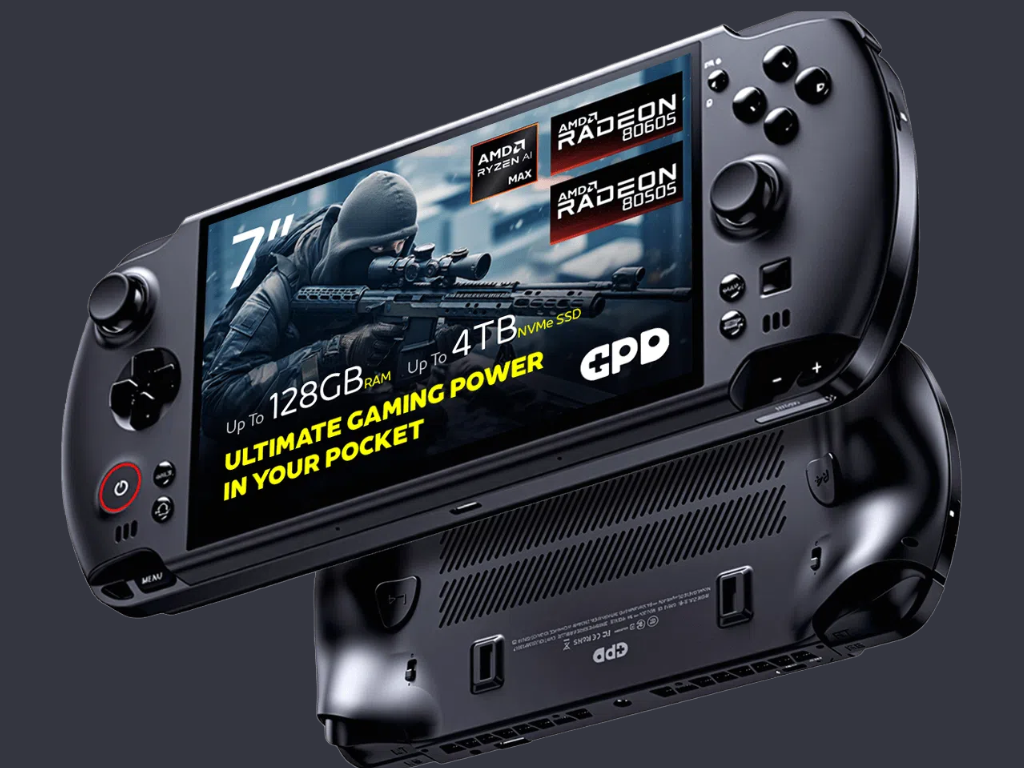
The GPD Win 5 was released on 17 October 2025, and it’s proven to be a compact and powerful machine, matching the performance of the PlayStation 5. The GPD Win 5 boasts AMD’s Ryzen 9 AI Max+ 395 processor of the Strix Halo family.
At a glance, it seems ridiculous to pack such a massive chip into a handheld. The Strix Halo features 16 CPU cores, 40 RDNA 3.5 compute units, and a 256-bit memory interface, delivering 256 GB/s of bandwidth. It’s built on a larger 440 mm² silicon die than the PS5 Pro’s 280 mm² Viola chip.
While Strix Halo was initially designed for laptops and mini PCs, and to run at 140 watts, it still holds up on the GPD Win 5, with power draw ranging from 7W to 85W, with the sweet spot at a solid 50W.
Digital Foundry tested the GPD Win 5 against the PS5 in visually demanding games like Alan Wake 2. Alan Wake 2 was tested on the GPD Win 5 with “Tweaked Low” graphical settings. In a stress test matching PS5’s settings at 1440p, the GPD Win 5 managed to achieve nearly 93.5% of the console’s FPS, i.e., 51.65 FPS versus 55.25 FPS.
When the GPD Win 5 is set to 30W in battery mode, it still achieves 69.6% performance at the exact resolution, at 39 FPS.
At 1080p, the performance is 85.6% of the PS5, or nearly 47.3 FPS, which bumps up to 51.47 FPS in FSR 2 Performance Mode. The PS5, on the other hand, outputs 53 FPS at 1440p in Performance Mode during the same stress test.
Rival PC handheld makers like Ayaneo and OneXPlayer are reportedly also looking to pack a Strix Halo APU into their devices. However, GPD is currently leading the pack as the first handheld to use AMD’s Strix Halo APU.
While the GPD Win 5 is on the pricier end, pushing past the $2,000 barrier ($2,179 for the 32GB LPDDR5X model with a 2TB NVMe SSD) due to the ongoing storage and RAM crisis, it’s still an impressive peek into what future handhelds will be capable of, assuming battery tech keeps up with the silicon.
Source(s)
 Add as a preferred source on Google


