




Sony patent could bring AI censorship tools to all gaming consoles, but introduces risks
The role that generative AI should play in game development has been constantly debated. Sony believes that AI could also allow gamers to easily filter out or replace offensive content. A new patent, discovered by Clawseomegamer, describes a highly customizable form of censorship. However, with the technology not limited to PS5 consoles, critics may argue it’s ripe for abuse.
Called “Automatic Bespoke Edits of Video Content Using AI”, the Sony patent has a December 4th publication date. The sequence would involve one processor identifying scenes that a user wishes to avoid. A second processor would then erase or modify sections of video or audio according to predefined rules. The document cites “video game content” as a potential application.
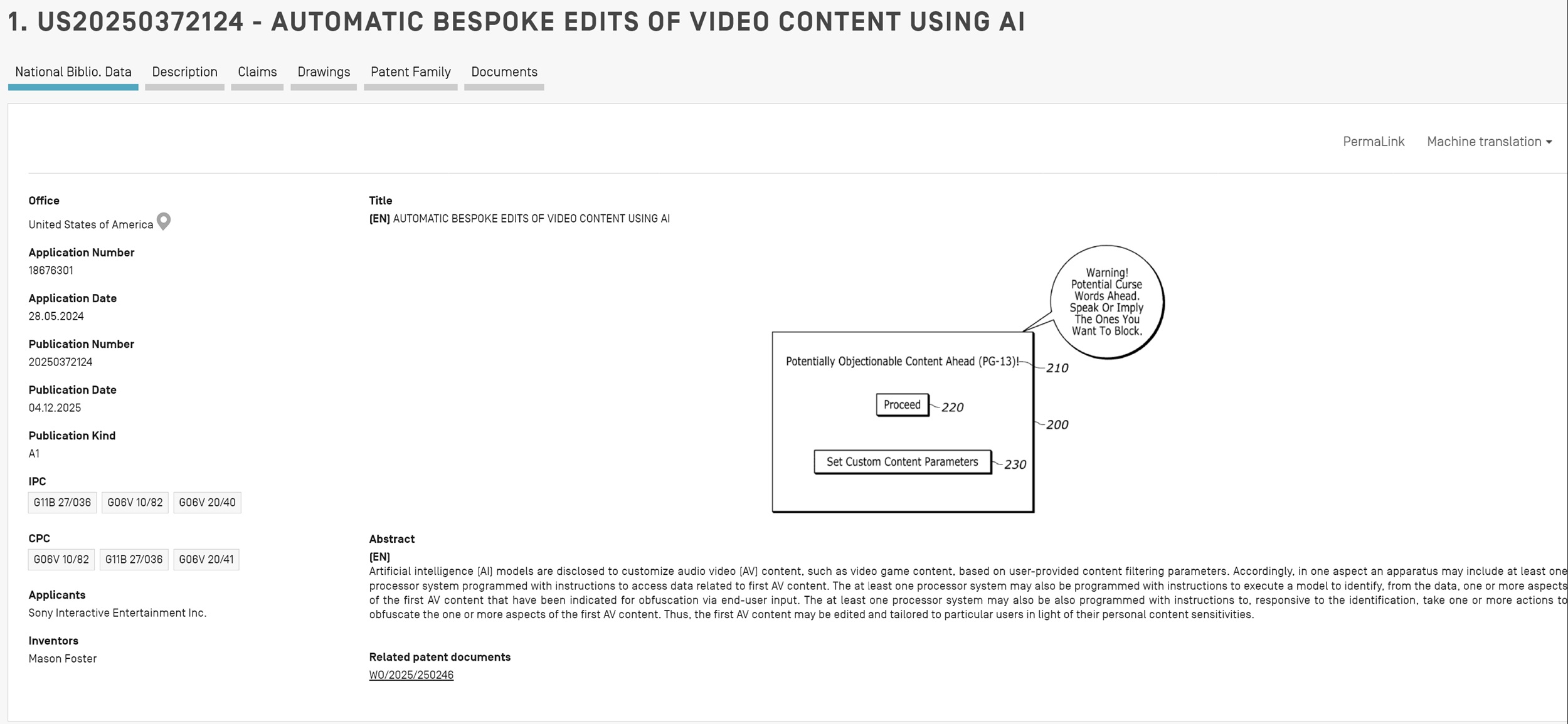
The filing explains how standards for rating games, movies, or music evolve over time. AI tools could allow contemporary audiences to reshape content to meet changing standards. This approach would have obvious benefits to parents. Guardians may have different conceptions of what qualifies as explicit. Nevertheless, not mentioned in the patent, it could also enable censorship based on political beliefs.
Sony's AI censorship could become an industry standard
In the document, readers will find references to Nintendo and Microsoft, which compete with PlayStation consoles. While the technology would focus on “computer ecosystems”, it could apply to all consumer electronics.
The Sony Patent emphasizes that users would have control over what the AI technology blocks. During playback, on-screen prompts could warn viewers about objectionable material ahead. They would then have options, including changing the audio or video or even “insert deepfake replacement content.” A new censored version of the work could be generated.
Of course, with all AI tools, there is the potential for bad actors to exploit their capabilities. Most concerning, deepfakes often make it challenging to detect edited content. It’s also unclear whether machine learning has advanced to the point where parents can rely on it to keep children safe. In any case, as with a recent Sony proposal to enhance haptic feedback, it may be years before gamers see this adaptive censorship on consoles.
Source(s)
 Add as a preferred source on Google


