




Anyone can now search for new planets using NASA’s new tool
NASA’s retired Kepler and currently-operational TESS (Transiting Exoplanet Survey Satellite) have helped in the discovery of more than 3,000 exoplanets. Kepler’s strategy was to deeply observe a small patch of sky in search of exoplanets. TESS, on the other hand, is looking at nearly the entire sky. Data from both missions are analyzed to discover exoplanets.
In 2021, a team of NASA scientists created software that used artificial intelligence (AI) to confirm 370 new exoplanets from Kepler data. The AI tool is called ExoMiner. Now, the team has created an improved model called ExoMiner++. This improved model was trained on both Kepler and TESS data. It can identify exoplanets from TESS data.
When telescopes like TESS observe a star, there are occasions when the star’s light is dimmed. This could be caused by an exoplanet passing through. In such cases, it is called a transit. However, other astronomical events are responsible for dimming starlight. ExoMiner++ is designed to predict which of these dimming events is caused by an exoplanet. On its initial run alone, the algorithm identified 7,000 possible exoplanets.
ExoMiner++ is freely available to the public. Free public access is expected to accelerate the discovery of exoplanets.
A newer version of ExoMiner++ has already been envisioned. Unlike this current version that relies on available signals of possible transits, the newer model will be able to detect the signals from raw data. Scientists hope to use ExoMiner models even in future exoplanet-hunting missions like NASA’s Nancy Grace Roman Space Telescope. The ExoMiner++ algorithm was discussed in a paper published in the Astronomical Journal.
Source(s)
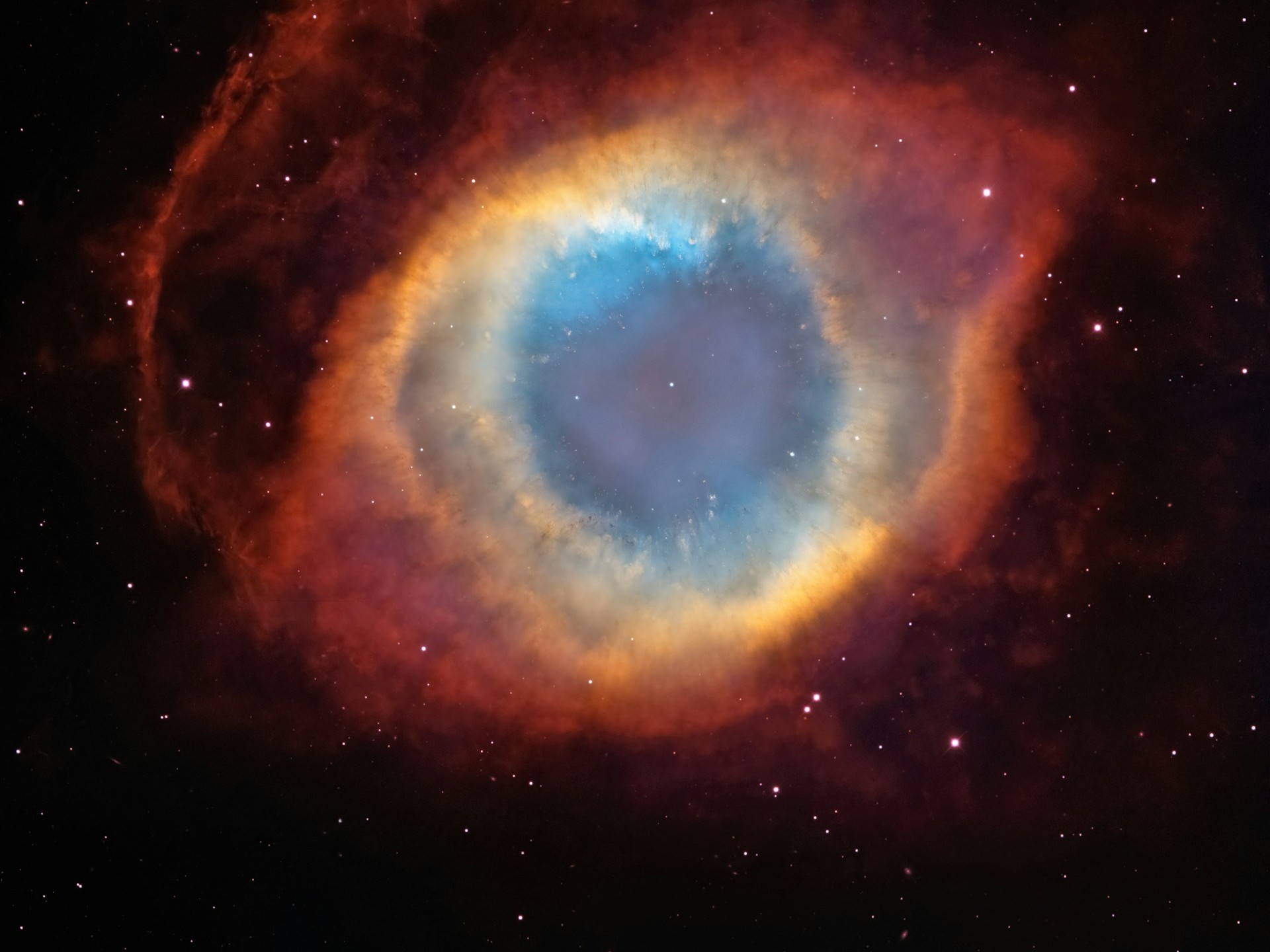
Image source: NASA, ESA, C.R. O'Dell (Vanderbilt University), M. Meixner, and P. McCullough (STScI)
 Add as a preferred source on Google


