




Webb zooms in on the Helix Nebula to see what happens around a dying star

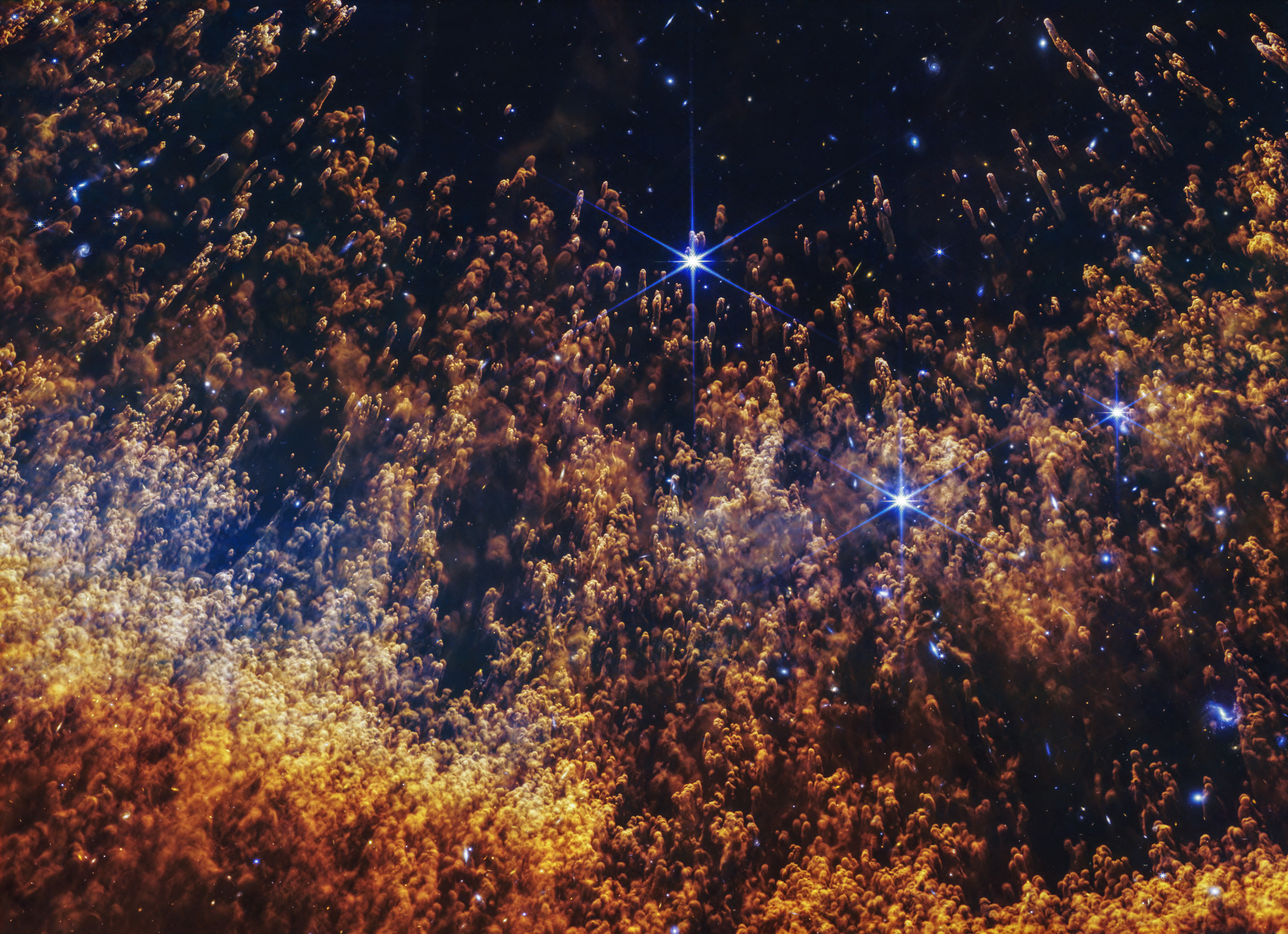
The Helix Nebula is located 650 light-years away in the constellation Aquarius. Being relatively close to Earth, astronomers have peered into this object several times using both ground- and space-based observatories. But compared to images from Hubble and NASA’s retired Spitzer, Webb’s Near-Infrared Camera (NIRCam) image offers more.
The image brings the structure of the gas into focus. The gas appears as pillars that look like comets with extended tails. Winds of fast-moving hot gas collide with slower gas that was shed from the star earlier. This collision results in the remarkable appearance seen in the image.
The dying star itself (called a white dwarf) is out of the frame of the image. It lies at the heart of the nebula. The radiation from the white dwarf, though, is what lights up the surrounding gas. The variations in colors also tell us how hot each gas compartment is. The gas closest to the white dwarf glows blue. This indicates that it is the hottest region. The gas further out cools into the yellow regions seen in the image.
The dust and gas shed off from the white dwarf are ingredients for new stars and planets. Images like this are helping astronomers understand more about the origin of planets.
 Add as a preferred source on Google


