




Thomas Edison as a nanotech pioneer: The inventor likely produced graphene as early as 1879
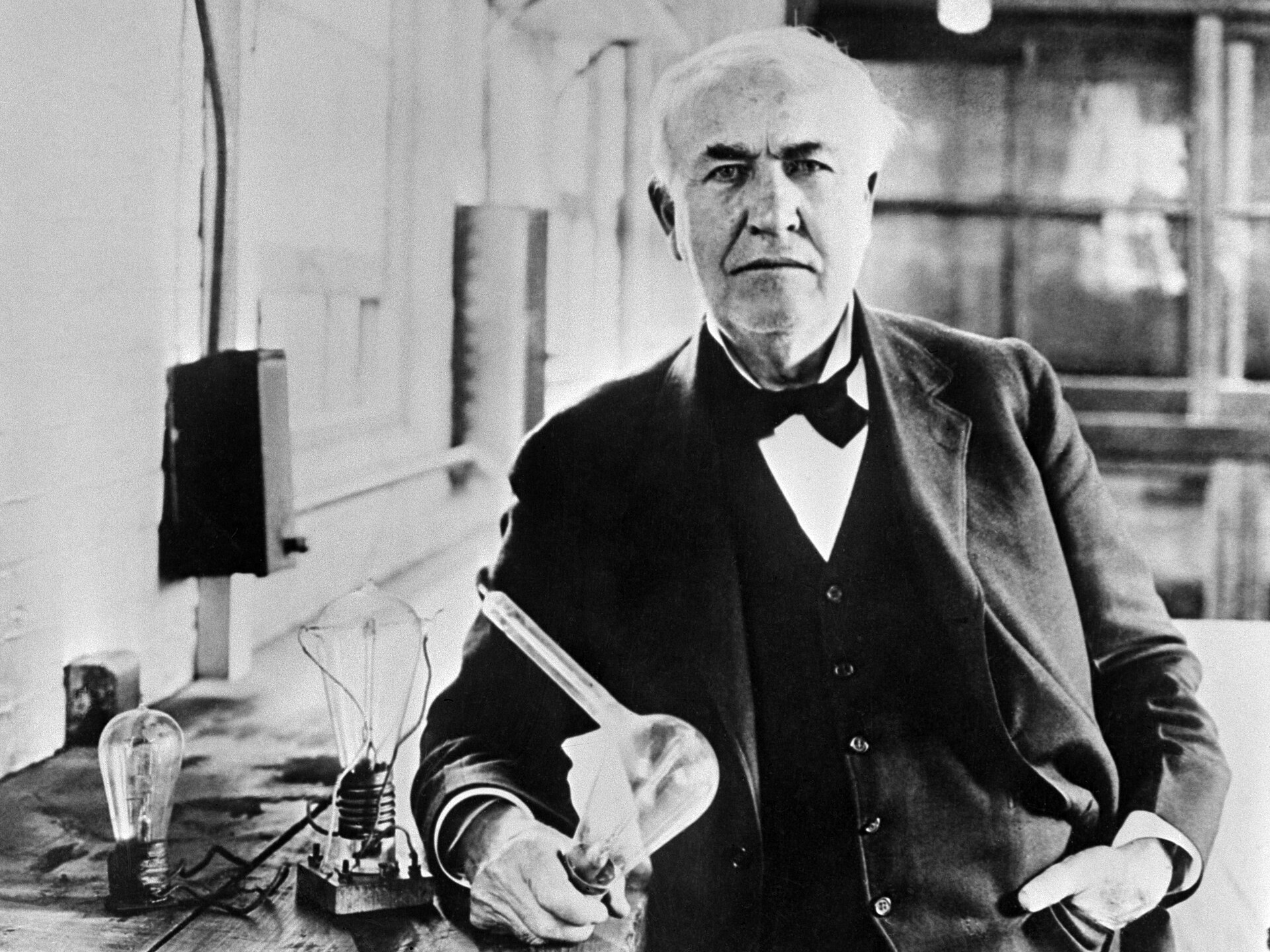
Thomas Edison is known for inventing the light bulb. Although it existed before Edison, the inventor made the light source truly suitable for mass production with a filament made of cotton or bamboo fibers. However, a new investigation suggests that he unknowingly created a material that would cause a sensation over a century later. Researchers at Rice University led by Lucas Eddy and James Tour conducted experiments showing that conditions in Edison's 1879 light bulbs were ideal for graphene formation. Although the team could not non-destructively analyze original light bulbs from that era, experiments with identical replicas yielded clear results: the light bulbs produce graphene.
Graphene consists of a single layer of carbon atoms arranged in a hexagonal lattice. It is considered one of the strongest and most conductive materials in the world. In modern research, it is often produced by complex processes such as chemical vapor deposition or so-called "flash Joule heating." The latter method, in which carbon-containing material is rapidly heated by a strong current surge, bears a striking resemblance to the operating principle of an Edison light bulb.
Edison's lamps used a filament of carbonized bamboo or cotton. When current flows through this resistor, it heats up to incandescence. The current study shows that this process, if it occurs under the right conditions, can convert the amorphous carbon of the filament into turbostratic graphene. In this form, the graphene layers are twisted against each other, which can even favor the electronic properties of the material, since the layers interact less strongly than in ordered graphite.
The researchers used modern spectroscopic methods such as Raman spectroscopy and transmission electron microscopy on the replicas for their analysis. The signatures of the measured samples matched those of graphene and differed significantly from pure graphite. Edison himself could neither identify nor isolate this material at the time due to a lack of technical possibilities, although he noticed the blackening of the glass bulb as a disturbing side effect.
This discovery highlights the value of historical research in the natural sciences. Old experiments and records can provide entirely new insights in the light of newer findings and with modern measurement methods. Edison's work was primarily aimed at generating light, but the physical processes in his lamps anticipated modern nanotechnology without the scientific world of the 19th century being able to suspect it.
Sources
 Add as a preferred source on Google


