




Hubble peers through thick dust to capture hidden young stars
NASA’s Hubble took images of protostars covered in thick dust. These are stars in their formative years. They form in thick dust, making it difficult to see them in visible light. But Hubble is able to detect their near-infrared emissions through holes called outflow cavities. The outflow cavities are carved by jets of gas and dust flowing out from the star
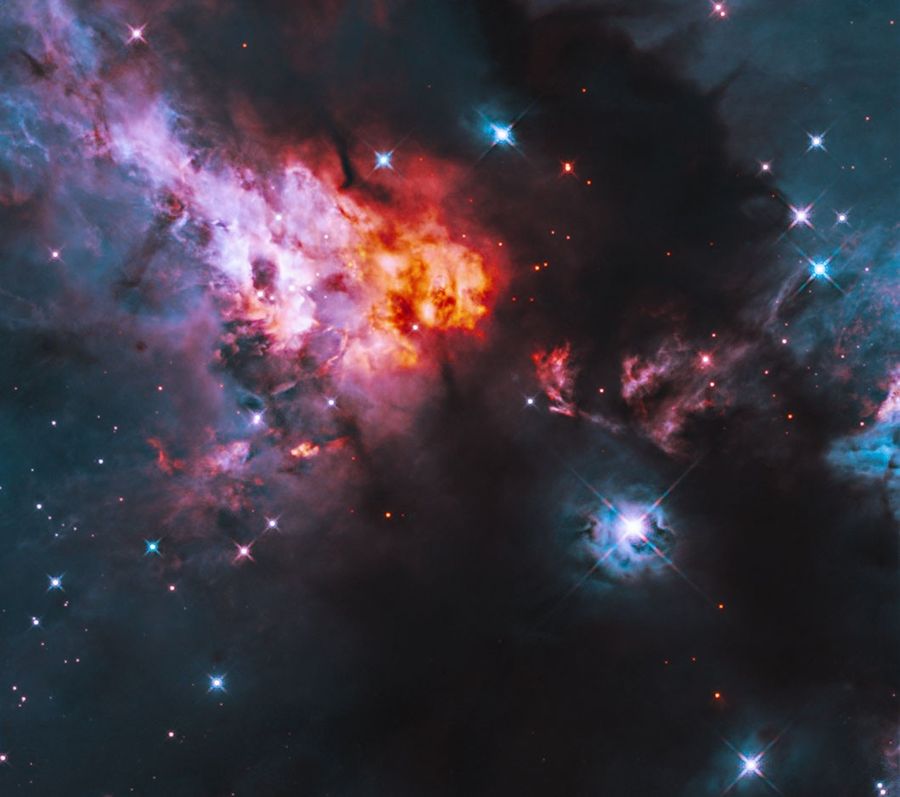
Cepheus A was one of the regions visited by Hubble in this survey. It is a high-mass star-forming region located about 2,400 light-years away in the constellation Cepheus. It hosts several baby stars, but about half of the region’s brightness comes from the light of one large protostar. Pink and white nebulae are visible in the image. The pink area is an HII region. It is formed when ultraviolet radiation from nearby stars ionizes the surrounding hydrogen gas, causing it to glow. Most of the stars are hidden in this image, but their light breaks out from outflow cavities.
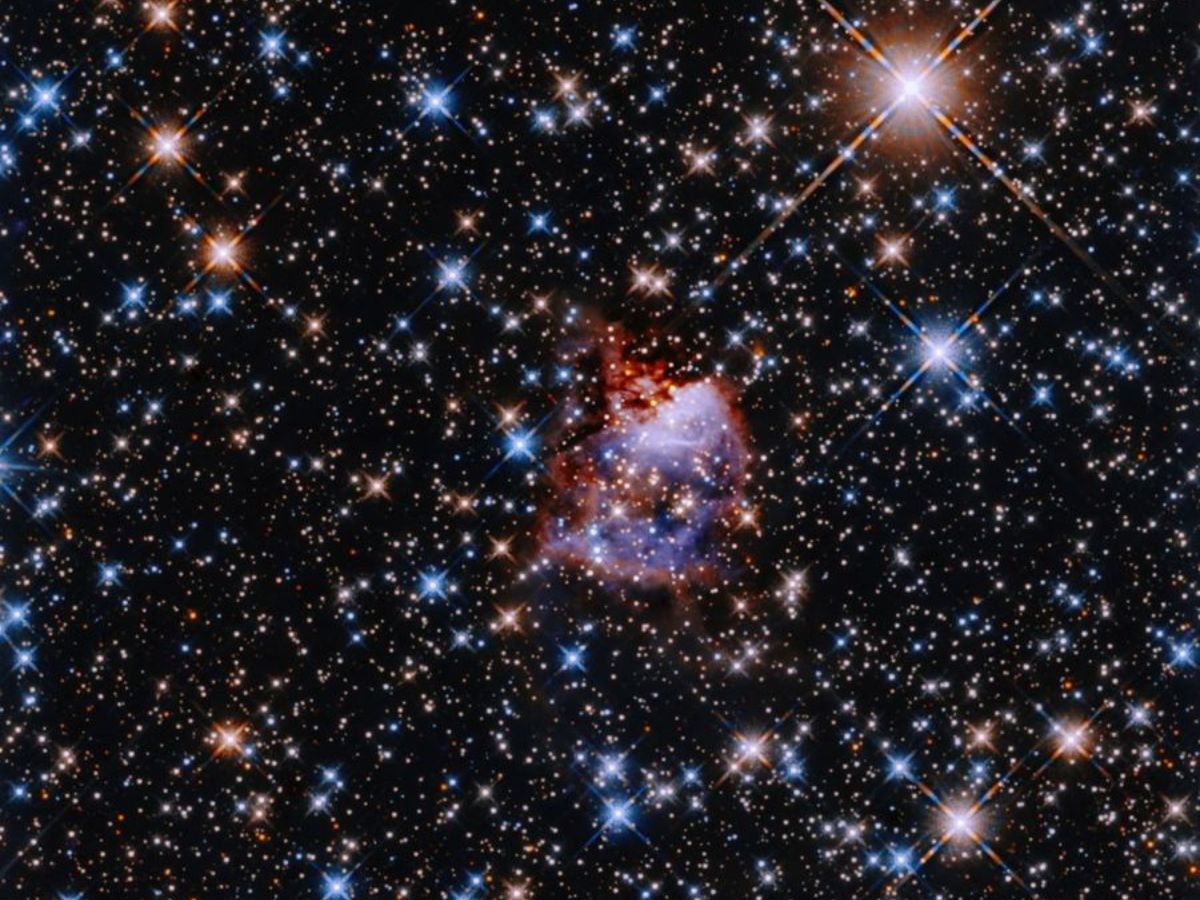
This star-forming region is located within our Milky Way galaxy. It is called G033.91+0.11. The glowing patch in the center of the image is a reflection nebula. It is a region that scatters and reflects light from a hidden star.
This image reveals something different — an emission nebula. The emission nebula sits just right of the center of the image. The emission nebula is formed when light from a protostar ionizes the surrounding gas, causing it to glow. The region depicted in this image is GAL-305.20+00.21.
The final image in this Hubble collection shows the massive protostar IRAS 20126+4104. It is a B-type protostar lying in a high-mass star-forming region located about 5,300 light-years away in the constellation Cygnus.
These Hubble images were taken as part of the SOFIA Massive (SOMA) Star Formation Survey. The survey especially targets massive stars more than eight times the mass of our Sun. Scientists aim to use the survey to find out how these massive stars form.
Buy the beginner-friendly Gskyer Astronomical Refracting telescope for $82.40 on Amazon.
Source(s)
Image source: NASA, ESA, and R. Fedriani (Instituto de Astrofisica de Andalucia); Processing: Gladys Kober (NASA/Catholic University of America)
 Add as a preferred source on Google


