




A pulsar rotating 122 times per second could be present at the heart of the Milky Way
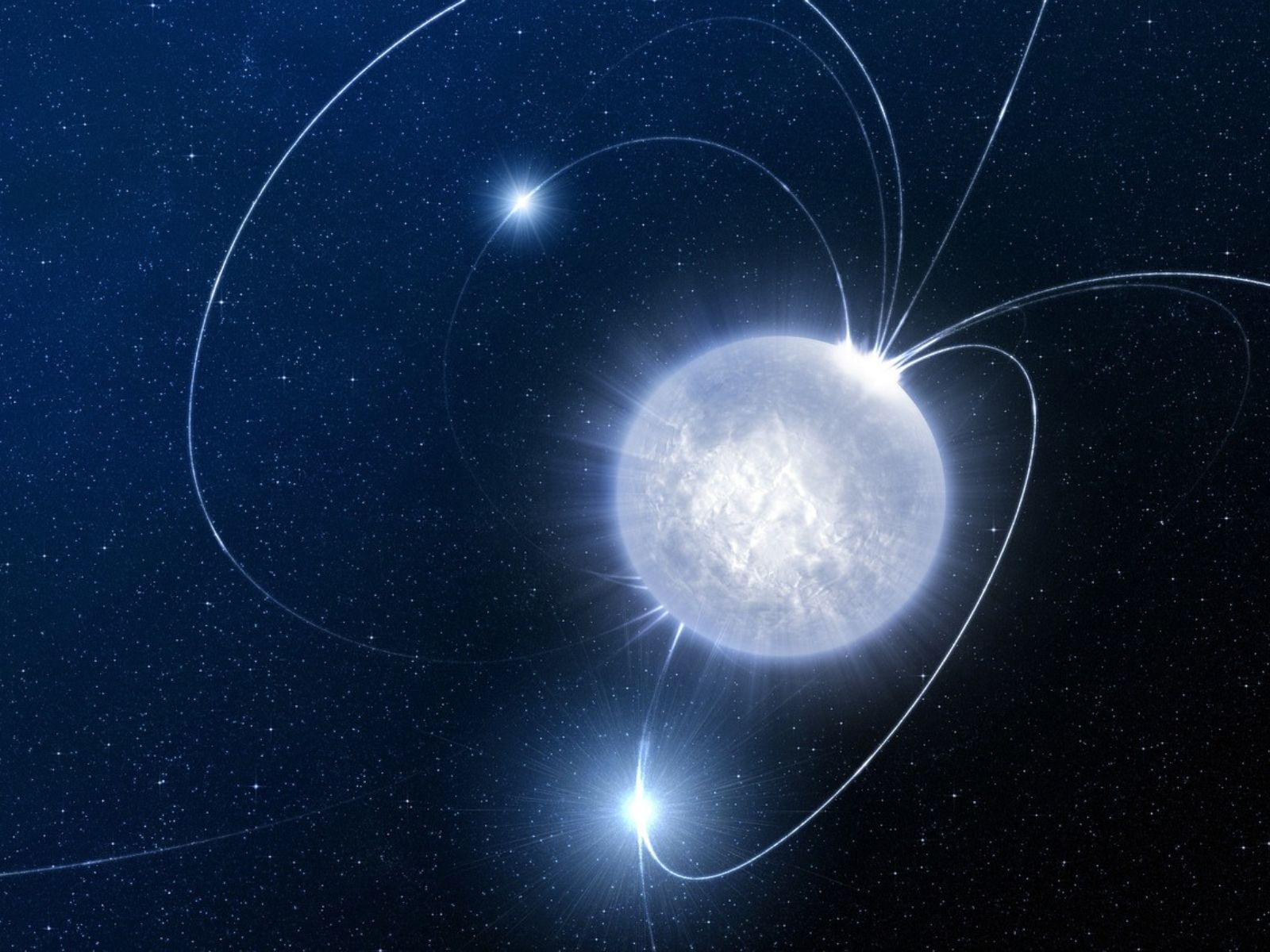
Although scientists have been studying the Milky Way for many years, some parts of our galaxy are still very mysterious. Indeed, in 2022, astronomers managed to obtain the first image of its supermassive black hole named Sagittarius A*. And a pulsar with an extremely powerful magnetic field could be located nearby.
As a reminder, pulsars are neutron stars that spin at breakneck speeds. For example, PSR J1748-2446ad is a pulsar located about 18,000 light-years away which spins 716 times per second, making it the fastest ever discovered. Their mass is equivalent to twice that of the sun, while being concentrated within a diameter of 12 miles (about 19 kilometers). And they are detectable thanks to the beams of electromagnetic radiation coming from their poles.
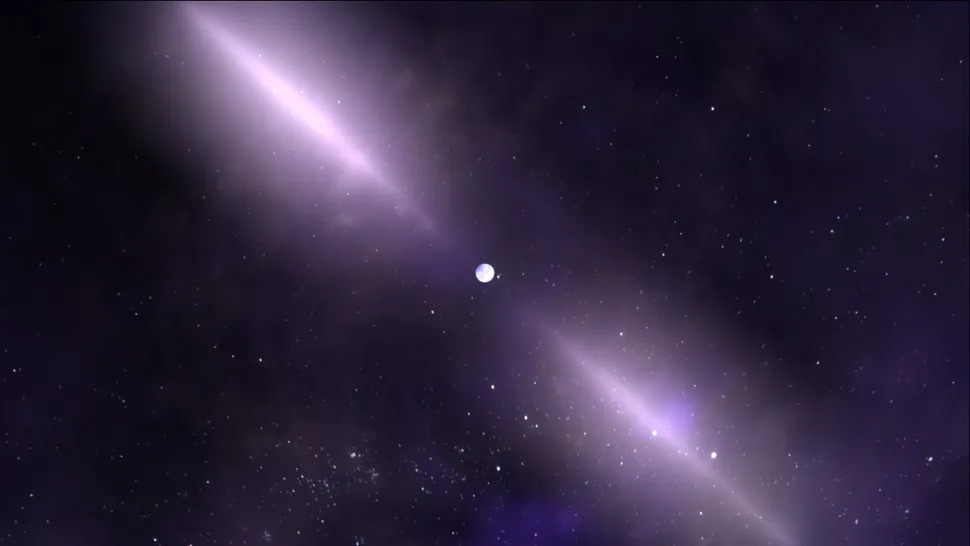
Between 2021 and 2023, researchers of the Breakthrough Listen program have conducted research using the Green Bank Telescope (GBT), and they discovered a pulsar that rotates approximately 122 times per second. But scientists were surprised to discover few pulsars, as Karen Perez explains:
"We should have been sensitive to approximately 10% of millisecond pulsars and 50% of canonical, slow pulsars, assuming the pulsar population in the Galactic Center resembles that of the broader Milky Way. Despite this sensitivity, we detected only a single candidate, dubbed the Breakthrough Listen Pulsar (BLPSR), which remains under active investigation."
However, this discovery must be validated, and for this, new observations must be conducted, particularly with the help of the Very Large Array (ngVLA) and Square Kilometre Array (SKA) telescopes. Thus, if its existence is confirmed, astronomers will be able to better understand our galaxy and those that are present in the universe.
 Add as a preferred source on Google


