




New NASA satellite set to solve long-standing problem
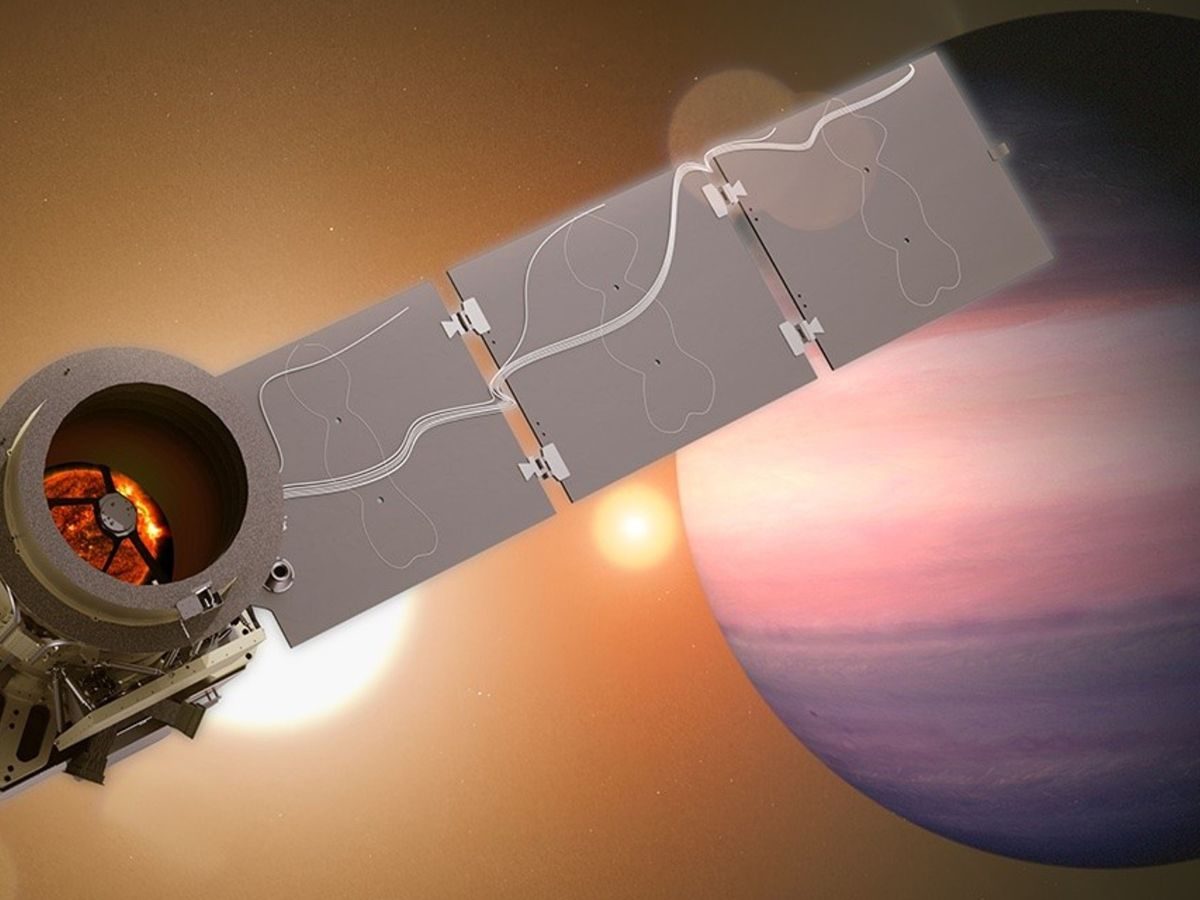
Missions like NASA’s TESS (Transiting Exoplanet Survey Satellite) have discovered over 6,000 exoplanets. Scientists have detected molecules supposedly present in the atmosphere of some of these planets. But did those molecules really come from the planet, or were they signals from the host star? This is what Pandora will answer.
Pandora carries a 17-inch all-aluminum telescope that collects visible and near-infrared light. With this, it will look at each planet and its star 10 times. Each of those observations will last a total of 24 hours.
Each long observation will capture a star’s light before and during a transit. Transit is a period when an exoplanet passes in front of its host star. Pandora’s strategy will ultimately help it determine which signals are coming from the planet alone and which have been influenced by the star.
Pandora is the first mission to carry out an in-depth study of starlight filtered by exoplanet atmospheres. In the mission’s first year, it will study at least 20 exoplanets and their host stars. The data will help scientists interpret observations from past and current missions like NASA’s Kepler and James Webb.
Pandora launched on a SpaceX Falcon 9 rocket. BlackCAT (Black Hole Coded Aperture Telescope) and SPARCS (Star-Planet Activity Research CubeSat) were launched alongside Pandora. BlackCAT will study the transient, high-energy universe while SPARCS will study the activity of low-mass stars.
Buy the NASA Lunar Telescope for Kids for $44.99 for $44.99 on Amazon.
 Add as a preferred source on Google


