




Hubble discovers a new type of celestial object
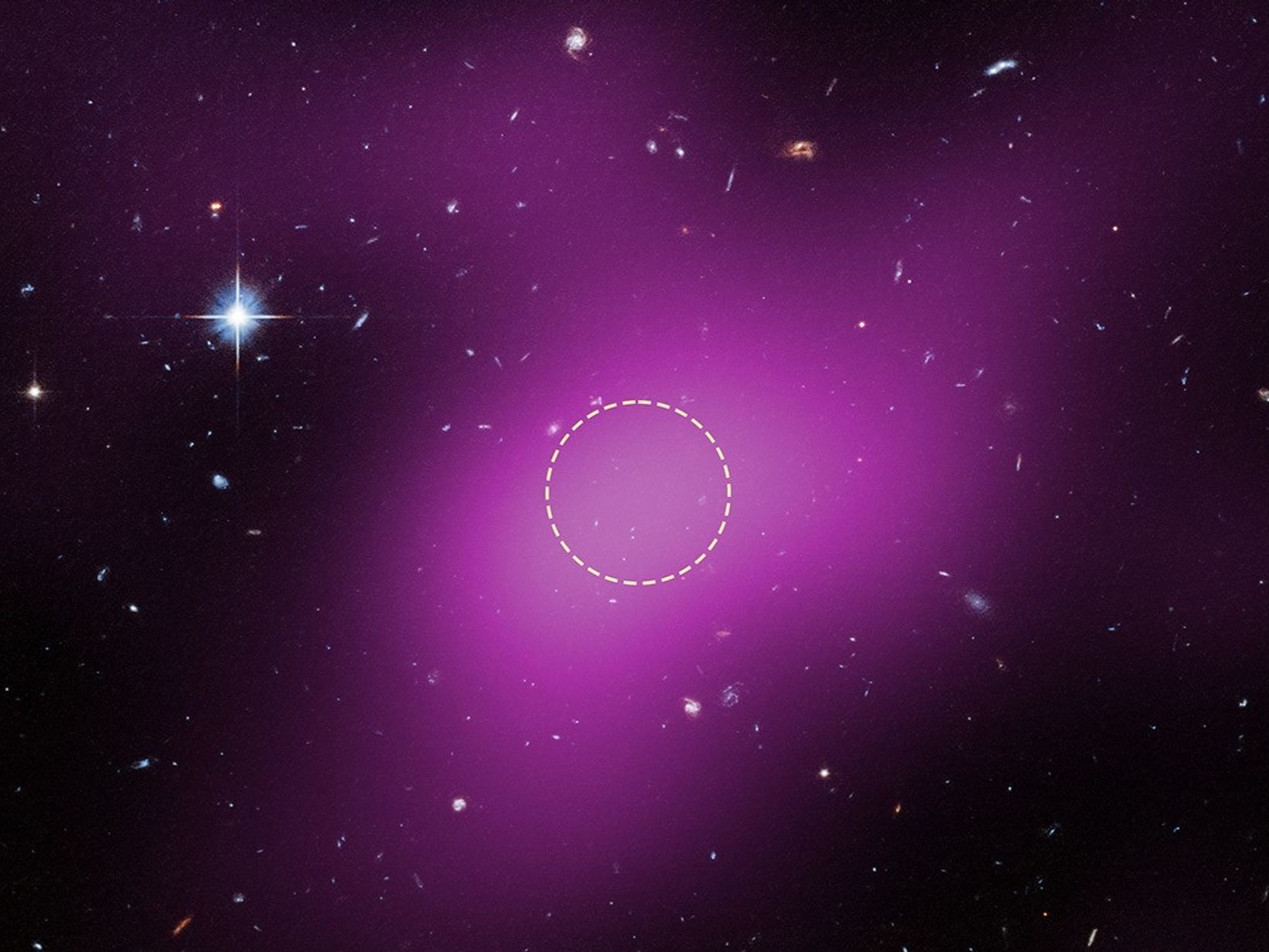
Cloud-9 was first spotted three years ago. It was discovered as part of a radio survey by the Five-hundred-meter Aperture Spherical Telescope (FAST). Astronomers didn’t detect any stars in it. But they felt it was because the instruments were not sensitive enough.
In this recent observation, the ground-based Very Large Array (VLA) detected radio data from Cloud-9. Hubble’s Advanced Camera for Surveys was then used to examine the cloud. It found no stars within the cloud. This came as a surprise to the astronomers.
“Before we used Hubble, you could argue that this is a faint dwarf galaxy that we could not see with ground-based telescopes,” said lead author Gagandeep Anand of Space Telescope Science Institute (STScI). “But with Hubble’s Advanced Camera for Surveys, we’re able to nail down that there’s nothing there.”
Astronomers have had a theory that supports the existence of such a starless, gas-rich, dark-matter cloud, but this is the first time they have ever found one. The cloud is called a Reionization-Limited H I Cloud (RELHIC). It is a fossil leftover from the early universe. It is rich in neutral hydrogen (H I).
This cloud has been termed a “failed galaxy.” That is, a cloud that never accumulated enough mass to collapse and ignite star formation. The discovery of this RELHIC suggests that there could be many others like it in the universe. It also allows astronomers to peer into the early universe, as such objects are considered remnants of early galaxy formation. The results of the study were published in the Astrophysical Journal Letters.
Buy the Gskyer Astronomical Refracting Telescope for $89.99 on Amazon.com.
Source(s)
The Astrophysical Journal Letters via NASA
Image source: NASA, ESA, VLA, Gagandeep Anand (STScI), Alejandro Benitez-Llambay (University of Milano-Bicocca), and Joseph DePasquale (STScI)
 Add as a preferred source on Google


