




Hubble spots asteroid collisions at nearby star for the first time
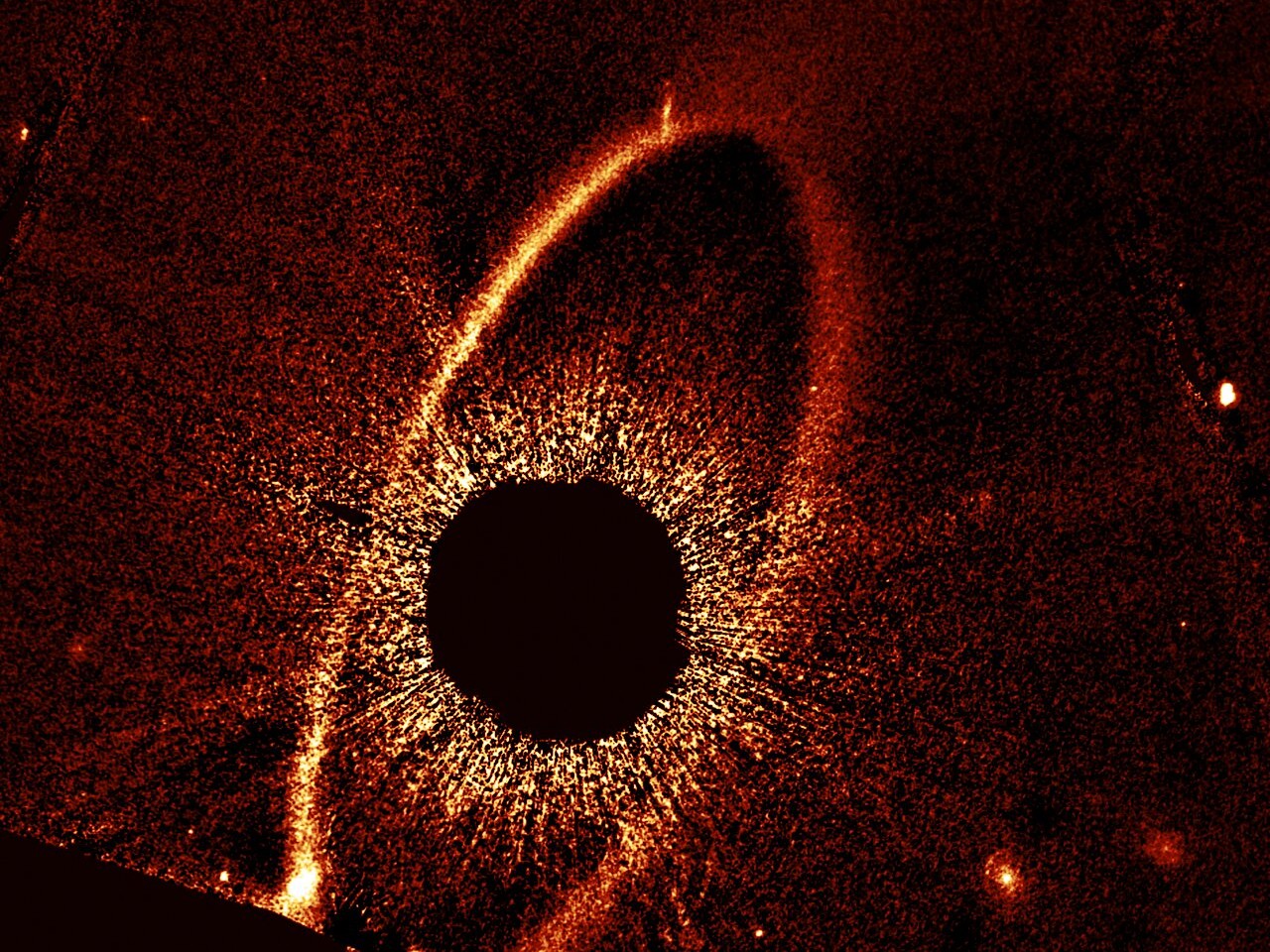
Using the NASA/ESA Hubble Space Telescope, astronomers witnessed a violent collision between two massive objects around a star just 25 light-years away from Earth. From the observations, it appears that the Fomalhaut system is in a dynamic upheaval. A dynamic upheaval is a period when a planetary system is unstable. In this period, there are frequent collisions between asteroids and planetesimals in the system. Our solar system experienced this period within its first few hundred million years after formation.
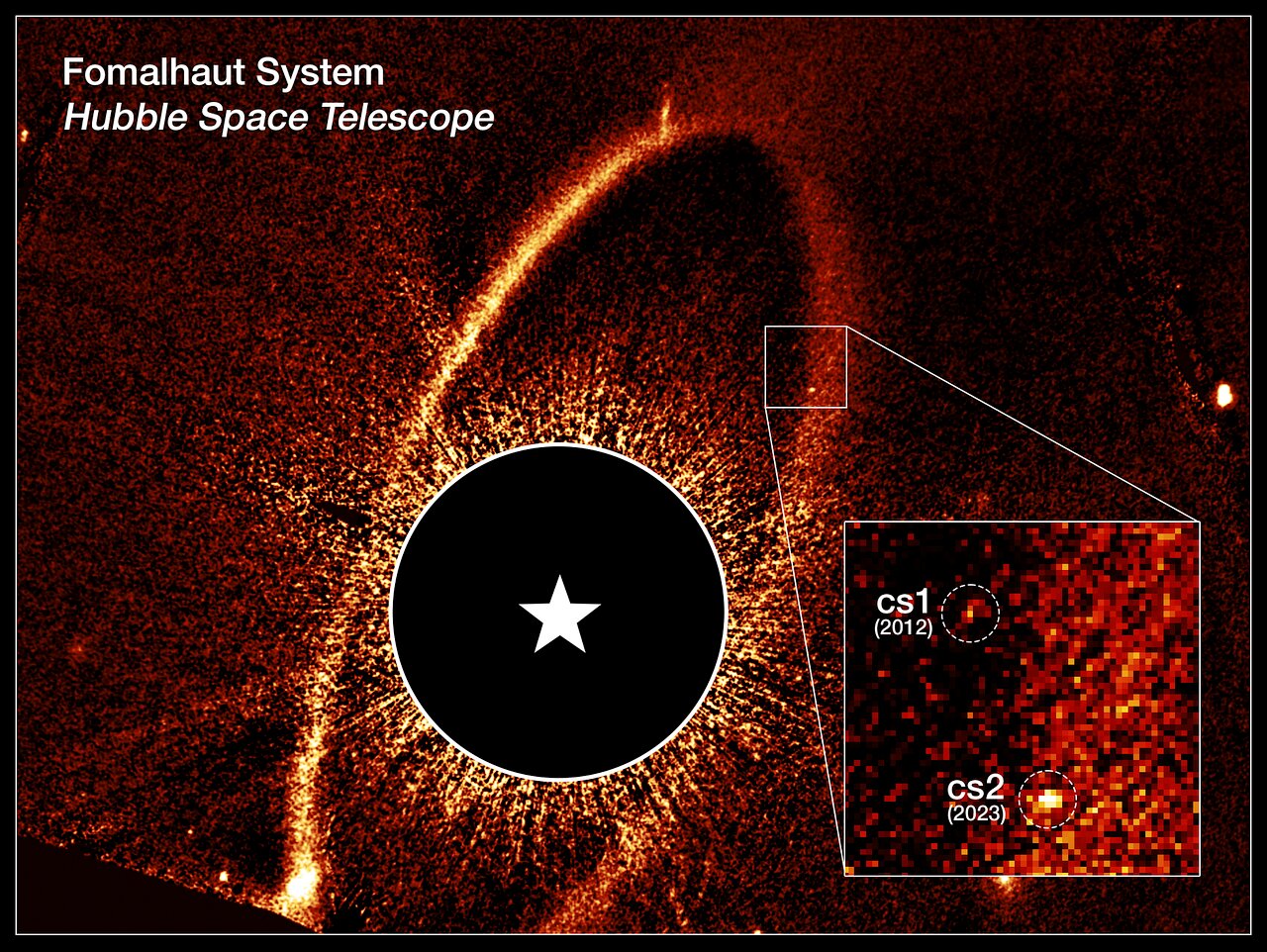
Astronomers were able to come to this conclusion after they found two dust clouds at a similar location around the Fomalhaut star. A 2008 Hubble observation found the first cloud, which scientists initially mistook for a planet. But now, they have come to understand that it is indeed a debris cloud masquerading as a planet. It is now called circumstellar source 1 (cs1). The second cloud was spotted more recently. It is called circumstellar source 2 (cs2).
One fascinating thing about this discovery is the close distance between the cs1 and cs2. It questions the randomness of the collisions. If the collisions were random, the objects should have appeared at unrelated locations.
Another baffling fact about these collisions is the short timeframe between them. Scientists have theorized that such collisions occur once every 100,000 years. However, in this case, two appear to have occurred within just 20 years.
The astronomers will try to unfold the mysteries of the Fomalhaut system. The team will bring in Webb’s Near-Infrared Camera (NIRCam) to observe cs2. Webb’s NIRCam can provide color information. This can reveal the cloud’s dust grains and their composition.
 Add as a preferred source on Google


