




NASA finds something unusual in this chemically primitive galaxy

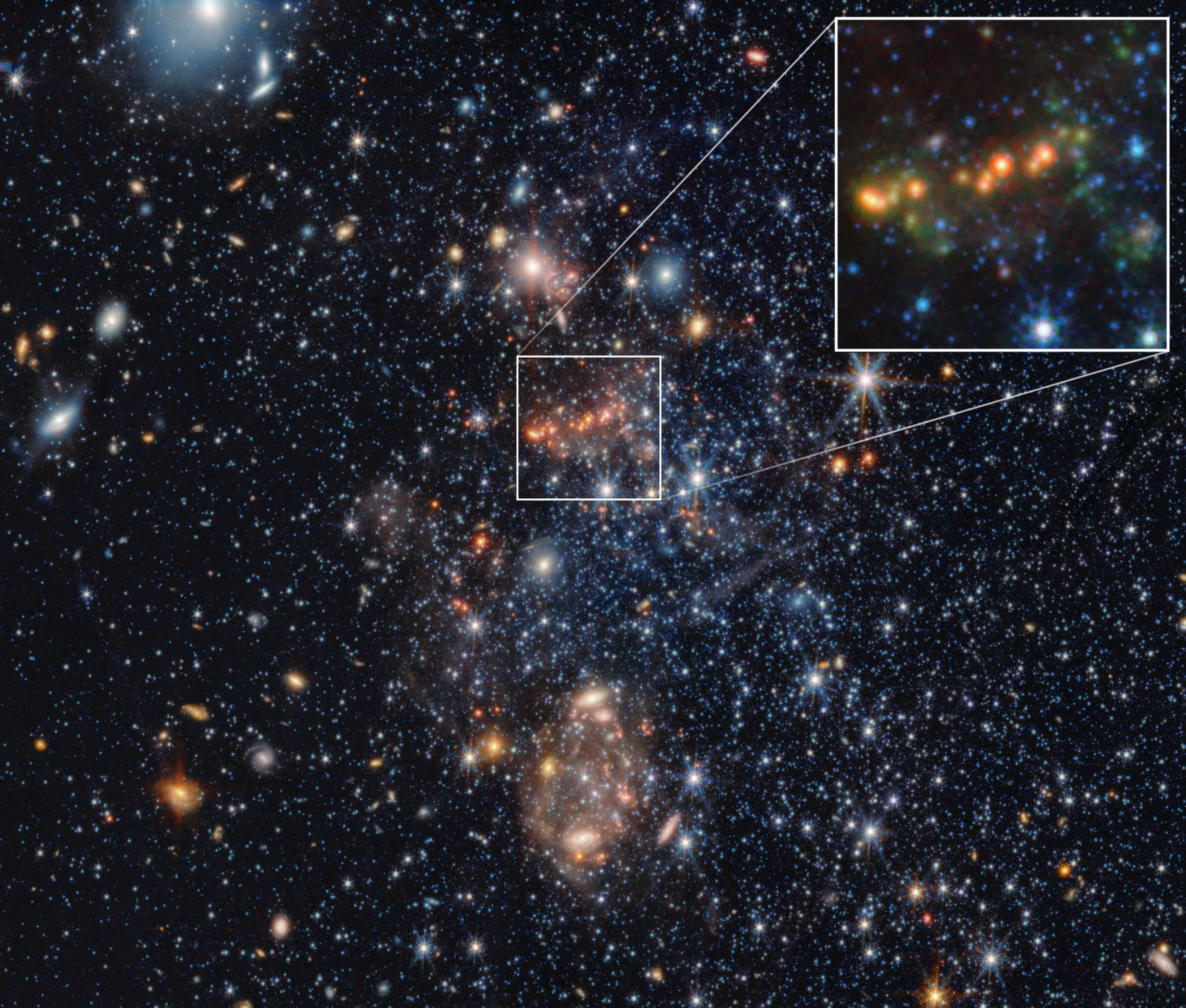
The galaxy in question is Sextans A. Sextans A is a dwarf galaxy located about 4 million light-years away. It has a low metallicity, only three to seven percent of that of our Sun. Metallicity is the astrophysical term for elements heavier than hydrogen and helium. Its low metallicity is similar to that of galaxies that filled the early universe.
The early universe was mostly made of hydrogen and helium. Heavier elements like carbon, oxygen, silicon, and iron formed later and were spread by supernova explosions. This is the current understanding that astronomers have of the universe’s evolution.
But in two recent companion studies aided by NASA’s Webb, astronomers found metallic iron dust and silicon carbide produced by aging stars in Sextans A. One of the studies was published in the Astrophysical Journal. That particular study found a star forging dust grains made almost entirely of iron. This came as a surprise, given that Sextans A is not metal-rich enough.
Silicon carbide (SiC) was also found to be produced by some of the stars. The stars that produced the iron-dust and silicon carbide are called Asymptotic Giant Branch (AGB) stars. They are bloated stars that are in a late stage of their life.
Its companion study, currently under peer review, discovered polycyclic aromatic hydrocarbons (PAHs). PAHs are large, complex, carbon-based molecules. Given Sextans A’s low metallicity, finding PAHs in it was not expected. Webb revealed the PAHs in tiny, dense pockets only a few light-years across. This shows that these molecules can form and survive even in metal-poor conditions.
The two studies provide evidence that the early universe had more diverse ways of producing dust than astronomers imagined.
Source(s)
The Astrophysical Journal via NASA
Image source: NASA, ESA, CSA, Elizabeth Tarantino (STScI), Martha Boyer (STScI), Julia Roman-Duval (STScI), and Alyssa Pagan (STScI)
 Add as a preferred source on Google


