




For the first time, the James Webb Space Telescope has mapped auroras on Uranus in 3D
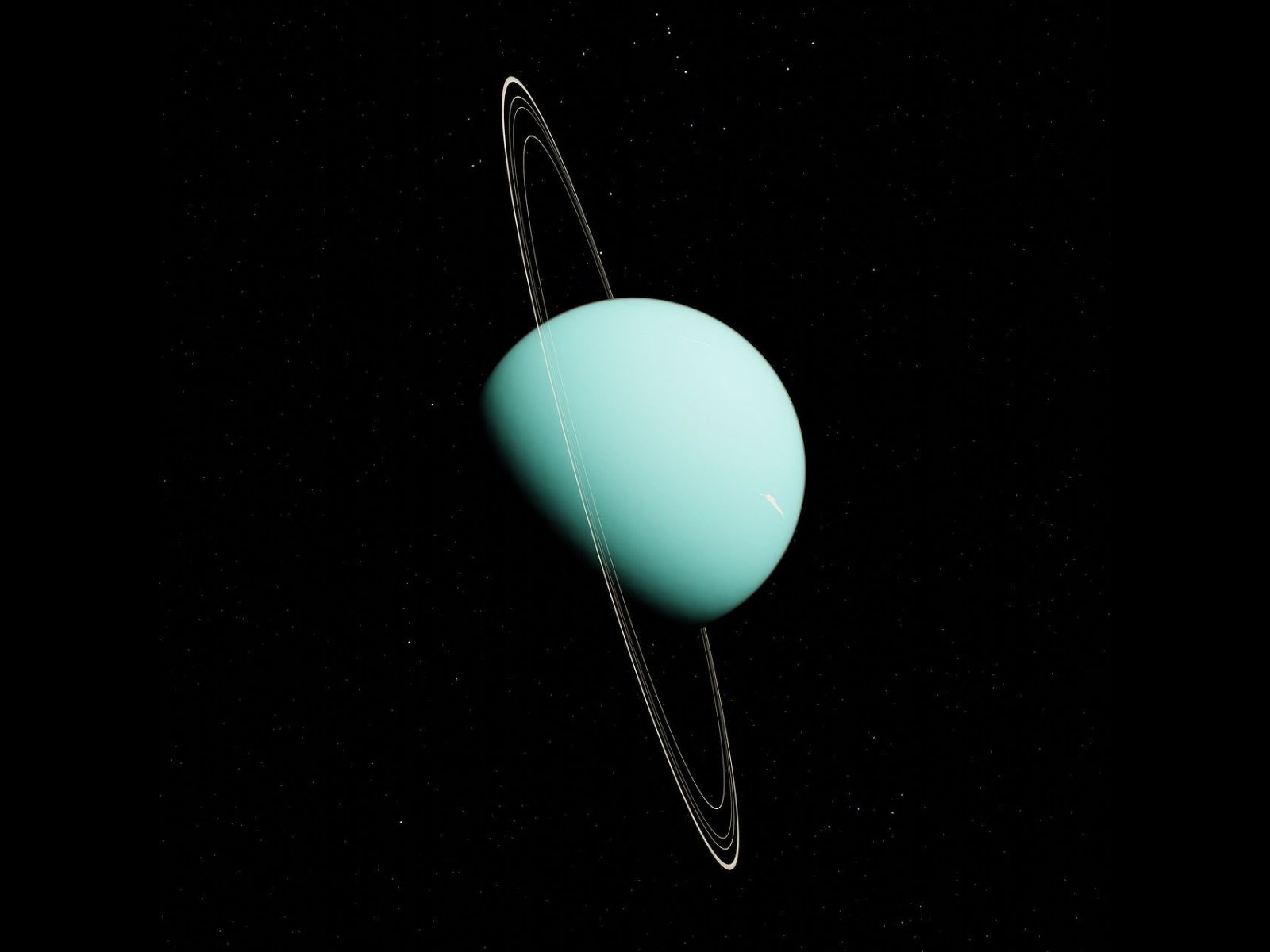
The James Webb Space Telescope is a very important tool for astronomers, thanks to instruments capable of remarkable feats. Recently, it mapped Uranus’s auroras in 3D, allowing scientists to study this phenomenon with greater precision.
Paola Tiranti, a researcher at Northumbria University in the United Kingdom, explains in a press release that Uranus has one of the strangest magnetospheres in the solar system because it is offset from the axis of rotation of the planet.
Thus, with the Near-Infrared Spectrograph (NIRSpec) of the James Webb Space Telescope, astronomers were able to study its rotation, which is a major breakthrough in this field, as Paola Tiranti explains:
"By revealing Uranus's vertical structure in such detail, Webb is helping us understand the energy balance of the ice giants. This is a crucial step towards characterizing giant planets beyond our solar system. This is the first time we've been able to see Uranus's upper atmosphere in three dimensions. With Webb's sensitivity, we can trace how energy moves upward through the planet's atmosphere and even see the influence of its lopsided magnetic field."
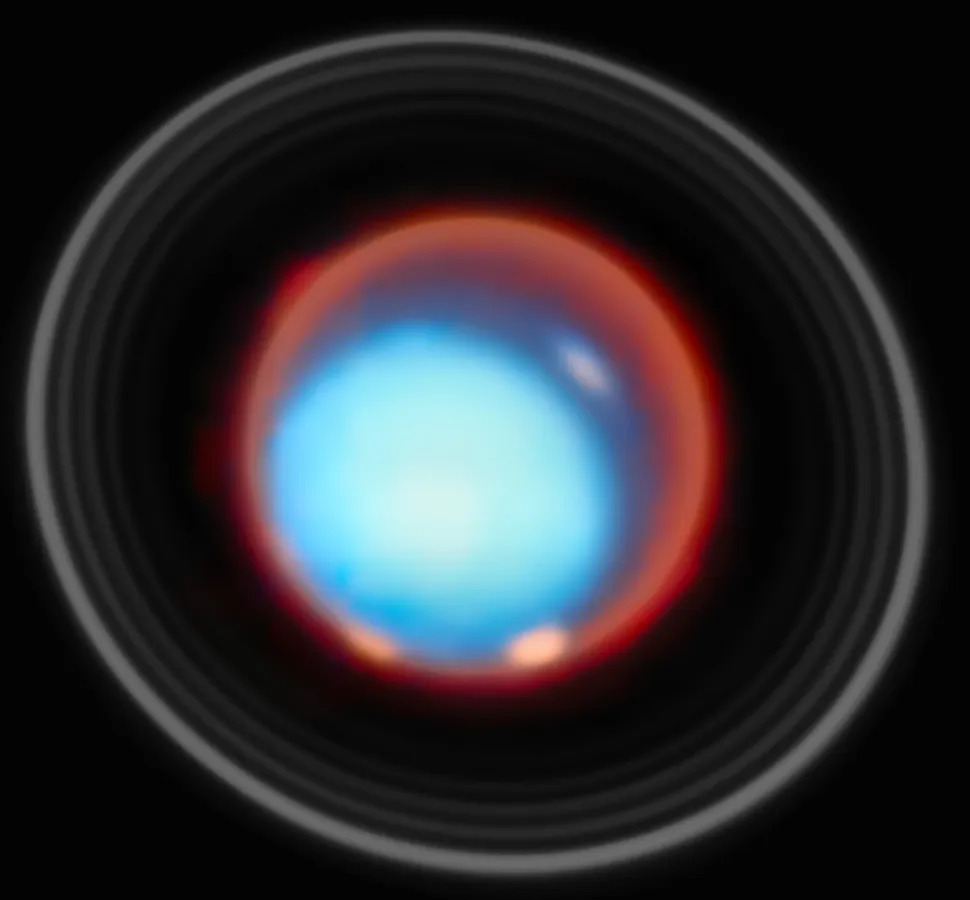
While this image shows auroras near Uranus’s poles, the James Webb Space Telescope has also confirmed a trend that was discovered by Voyager 2. Launched on August 20, 1977, as part of the Voyager program, it flew over Uranus in 1986 and discovered that its upper atmosphere was cooling, which has just been confirmed by JWST:
"The team measured an average temperature of around 426 kelvins (about 150 degrees Celsius), which is lower than values recorded by ground-based telescopes or previous spacecraft."
Therefore, studying this planet could help astronomers better understand ice giants and all the mysteries surrounding them. Not to mention that this telescope could make more discoveries in the near future.
Source(s)
Geophysical Research Letters, ESA
Image source: ESA/Webb, NASA, CSA, STScI, P. Tiranti, H. Melin, M. Zamani (ESA/Webb)
 Add as a preferred source on Google


