




Scientists find a planetary system that simply shouldn't exist
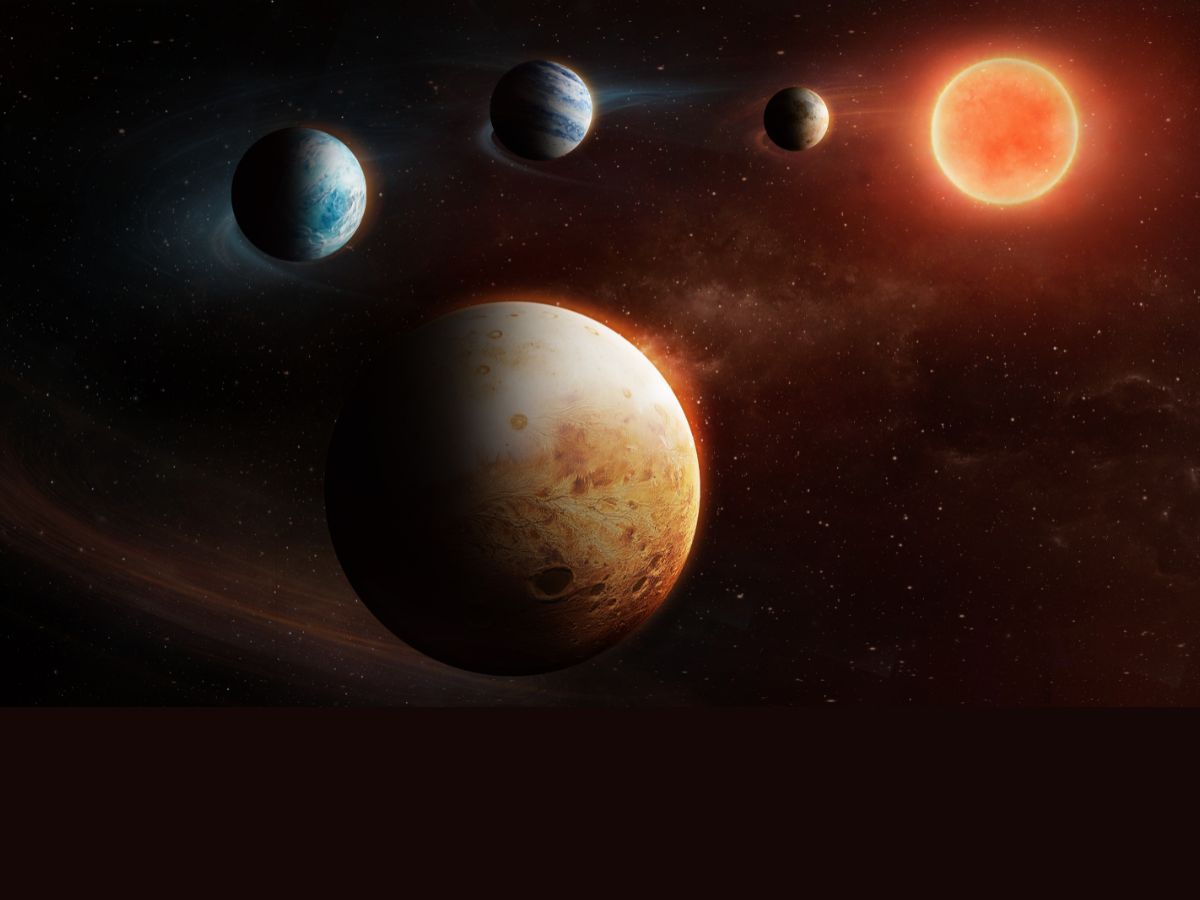
Scientists have previously used our solar system as a basis for postulating planet formation theories. One of those theories includes an order for planetary formation: the rocky planets are closer to the star, while the gaseous planets are farther away. But recent observation of the LHS 1903 system seems to contradict that order.
The team of scientists that made the observation initially discovered three planets around the star LHS 1903 — a red dwarf star in the Milky Way’s thick disk. The first planet was rocky, while the other two were gaseous. Per current understanding, this is normal.
But when the team analyzed data from ESA’s CHaracterising ExOPlanet Satellite (Cheops), they found a fourth planet that appears to be rocky. This is the first time scientists will be discovering a system with this pattern. Based on current understanding, planets closest to a star should be rocky because powerful radiation from the star sweeps away most of the gas around the planet’s rocky core. Farther away from the star, the impact of radiation is less, so gaseous planets can form there.
The scientists tested models to understand LHS 1903’s strange pattern and came to a conclusion, which they published in the journal Science. Their model suggests that the planets may not have formed at the same time. Hence, the fourth planet may have formed at a time when the system had run out of gas.
More research will be needed to confirm the conclusion of the study. But studies like these are helping us to understand more about diverse planetary systems and question existing planet formation theories.
Buy the Celestron SkyMaster 12x60 Binoculars for $109.95 on Amazon.
 Add as a preferred source on Google


