




China achieves historic maritime recovery of Long March-10 rocket booster
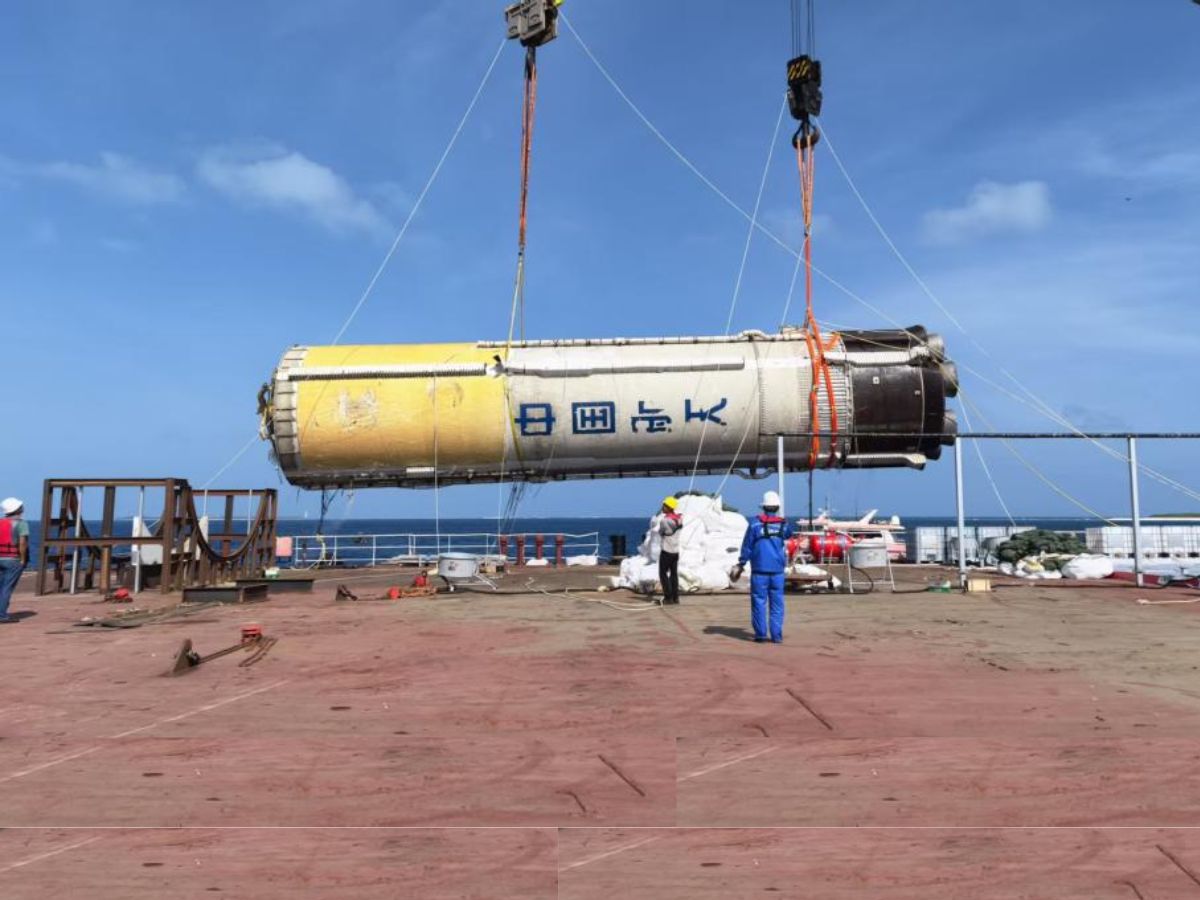
China has successfully executed its first-ever maritime recovery of a launch vehicle component, retrieving the first-stage booster of the Long March-10 from the South China Sea. This historic operation marks a monumental step in the nation's development of reusable rocket technologies, a capability currently operational only in the United States.
The successful Friday retrieval immediately followed a crucial low-altitude verification test conducted earlier in the week. During this test, the booster utilized its engines and grid fins to navigate a controlled return to Earth, splashing down safely in a designated maritime zone.
The space agency also carried out a maximum dynamic pressure escape flight test for the Mengzhou crewed spacecraft system. Both the Long March-10 rocket and the Mengzhou spacecraft are key to the country's objective to launch a manned lunar mission by 2030, while also supporting ongoing operations for near-Earth space stations.
The launch vehicle program is divided into two primary configurations to meet these two mission requirements. The standard Long March-10 model is a heavy-lift rocket standing 92.5 meters (303.5 feet) tall with a liftoff weight of 2,189 metric tons. Engineered with a core booster and side boosters, it is designed to transport payloads of at least 27 tons to an Earth-moon transfer trajectory.
On the other hand, near-Earth operations rely on the derivative Long March-10A. This shorter, 67-meter (220-feet) variant weighs 740 tons and features the fully reusable first-stage booster recently recovered from the sea. Optimized for the Tiangong space station, this model offers a 14-ton carrying capacity, making it more suitable for frequent spaceflight.
Source(s)
 Add as a preferred source on Google


