




James Webb telescope may have spotted the oldest comet ever seen; could be 12 billion years old
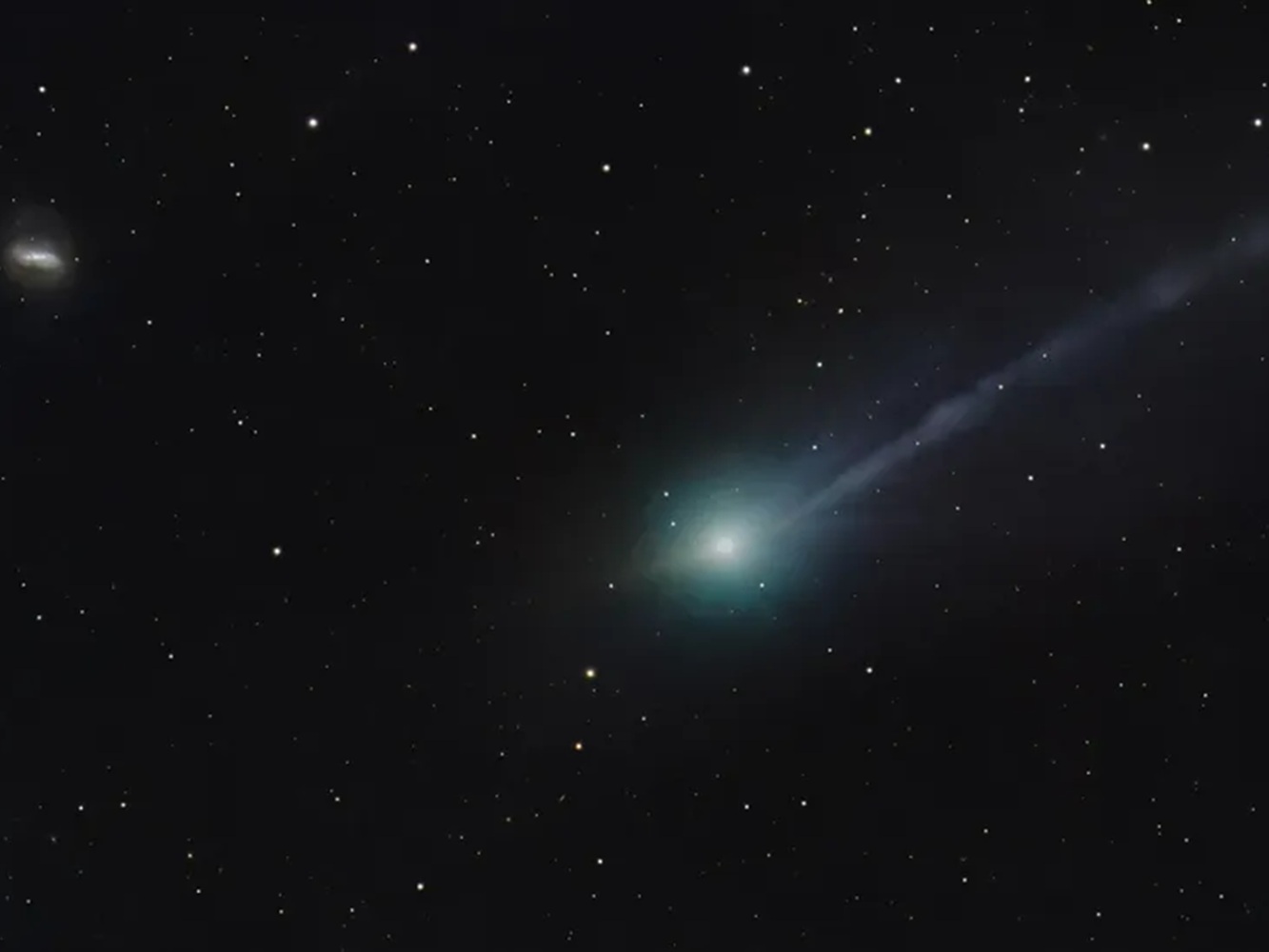
The comet 3I/ATLAS was discovered last year, cruising through space in the solar system, with some people claiming it was a spacecraft controlled by aliens. However, thanks to recent observations by the JWST, there is evidence that the space object has less mysterious origins.
The findings suggest that 3I/ATLAS began life in a cold, faraway part of the Milky Way galaxy. With estimates of 10 to 12 billion years old, the comet more than doubles the ages of both the Earth and the solar system. Comet 3I/ATLAS is also close in age to the Milky Way, at 13.6 billion years, and to the universe itself, at 13.8 billion years.
How the JWST made the discovery
The extra-terrestrial JWST captured the new dataset during a flyby of the comet late in 2025. It studied the composition of the gas that formed on the comet as the sun heated it up, causing the ice on its surface to sublimate.
Previous estimates put the age of 3I/ATLAS between 3 billion and 11 billion years. However, according to research scientist Romain Maggiolo, "They show that 3I/ATLAS isotopic composition is very different from solar system comets and suggest that it likely formed 10-12 billion years ago.”
About the 3I/ATLAS comet
The comet is estimated to be 1,400 ft (440 m) and 3.5 miles (5.6 km) wide. Readings from the Hubble Space Telescope suggest it entered the solar system at about 137,000 mph (221,000 km/h). 3I/ATLAS’s closest approach to the Earth was 168 million miles (270 million km), recorded on December 19, 2025.
Source(s)
 Add as a preferred source on Google


