




NASA drills 3,675 feet under Antarctic ice for samples in search of life on icy worlds
Pluto, Enceladus (Saturn’s moon), and Europa (Jupiter’s moon) are icy worlds believed to harbor liquid water beneath thick layers of ice. Some of these worlds contain key ingredients for life, including carbon, nitrogen, and chemical energy. As a result, scientists are investigating whether they could support microbial life.
To sample water from these worlds, researchers would typically need to drill through kilometers of ice. However, worlds such as Enceladus present an alternative through a process known as cryovolcanism. During cryovolcanic activity, subsurface ocean water erupts into space, allowing scientists to collect samples without drilling. The challenge, however, is that many molecules may be altered during their journey from the ocean to space — a problem researchers Mariam Naseem, Marc Neveu, and their team aim to address.
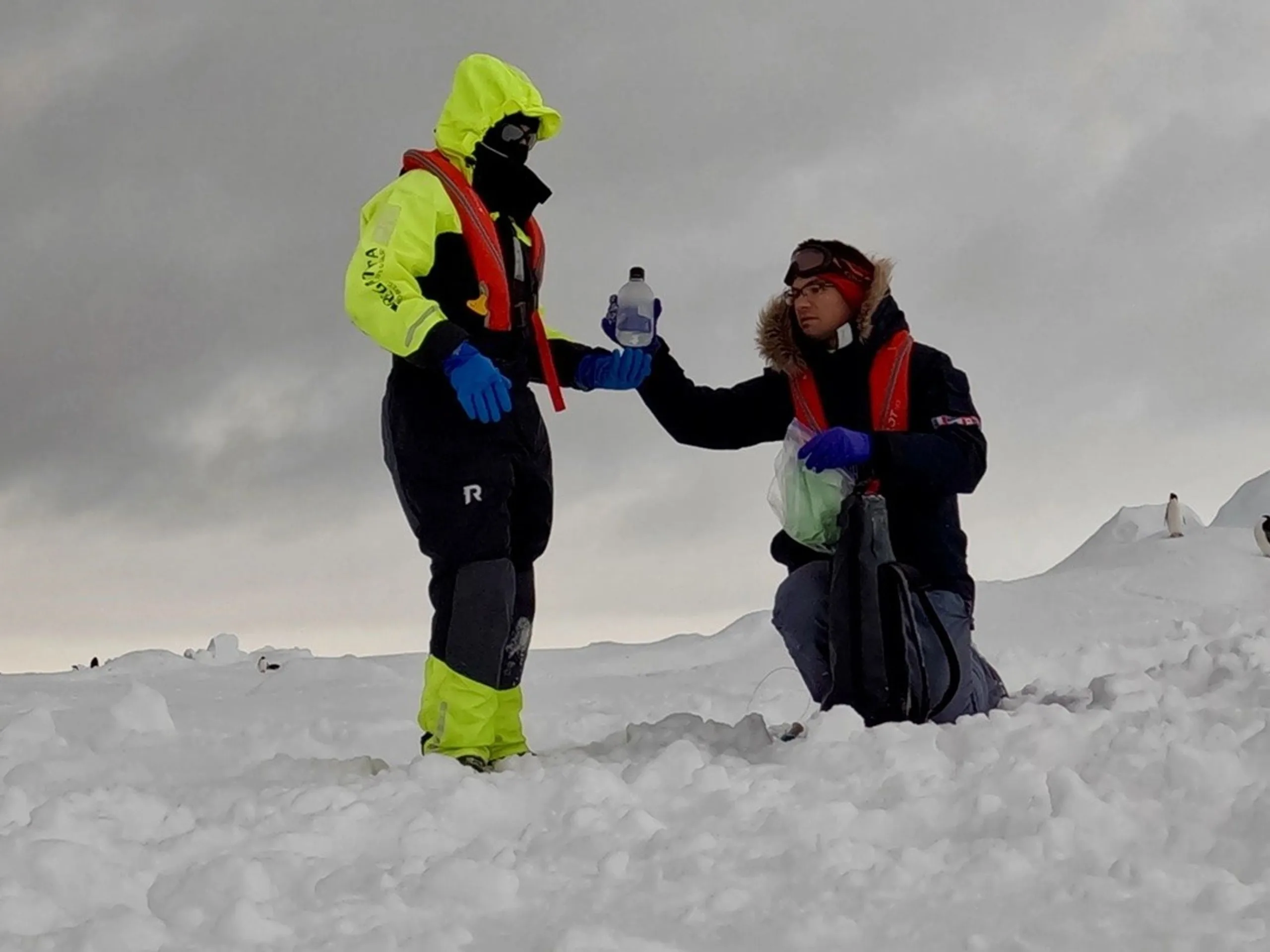
>The researchers collected water samples from Deep Circumpolar Current water 3,675 feet (1,120 meters) below the surface of the Weddell Sea, located east of the Antarctic Peninsula. They selected this site because the water there is isolated from sunlight, similar to conditions on ocean worlds beyond Earth.
The samples will be tested in a simulator that replicates the space environment. This will help researchers determine how cryovolcanism alters ocean material and how those changes could influence the search for life beyond Earth.
Source(s)
Image source: Institut de Ciències del Mar (ICM)/Maria Sanchez Urrea
 Add as a preferred source on Google


