




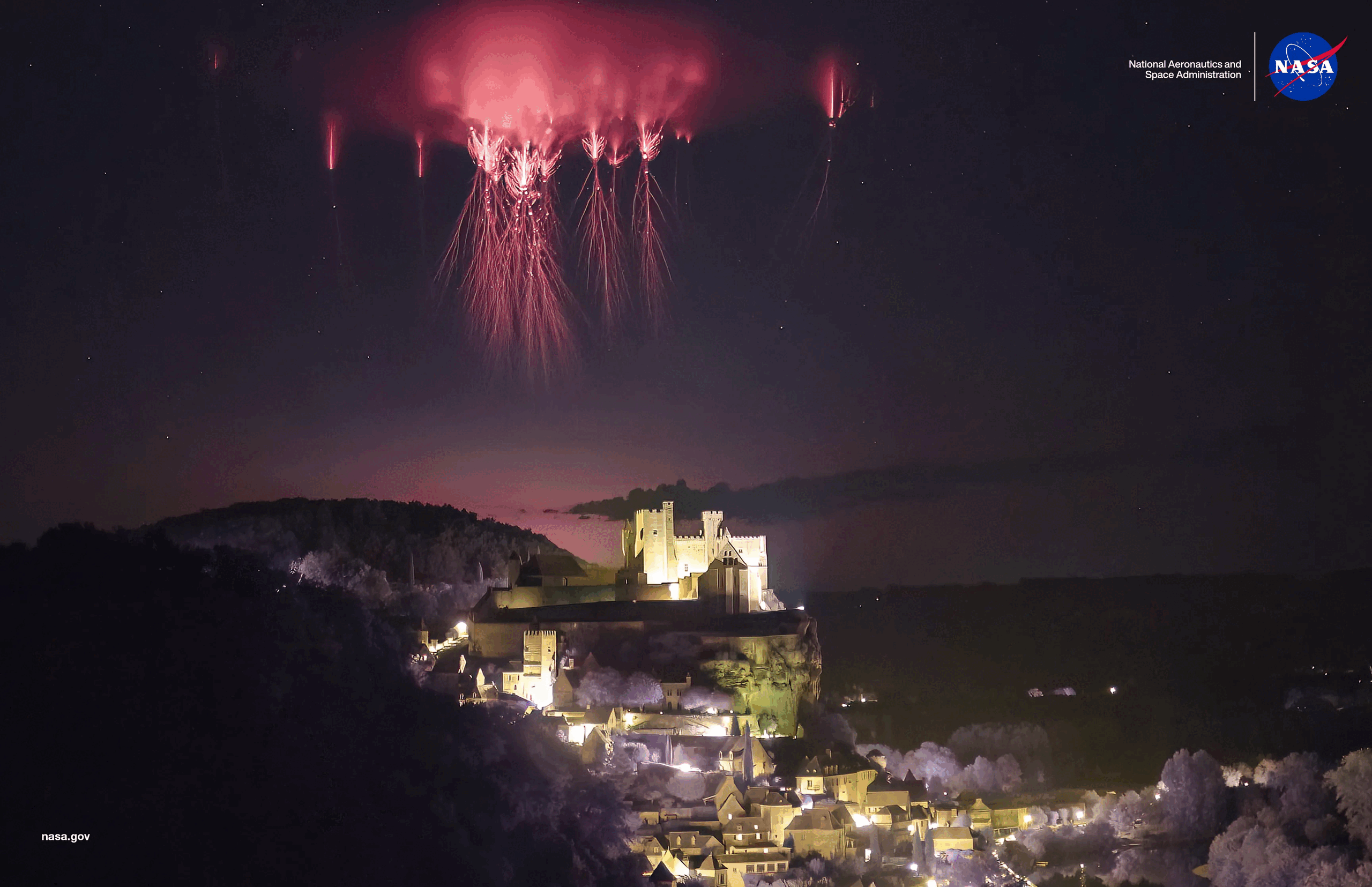
Spectacular sight captured over France is NASA Science Calendar Image of the Month

Sprites fall under a larger category of events called Transient Luminous Events (TLEs). TLEs are brief but powerful light emissions generated by thunderstorms. They occur above thunderstorms and are unlike the lightning we commonly see. Lightning usually occurs across clouds or from clouds to the ground.
Sprites, like the one seen above the Château de Beynac, are the most common TLEs. However, they are not events you come across every day because of how high in the atmosphere they occur and how short-lived they are. They occur at about 50 miles (80 kilometers) above the Earth’s surface and last only a few milliseconds.
Sprites are usually red or reddish-orange in color. Their elusive and unpredictable nature is similar to that of the fairies (called sprites) in European folklore. This is the rationale for their name. Sprites have a distinctive appearance, but slight differences in their appearance differentiate them into three categories: jellyfish, column, and carrot sprites.
The other known TLEs include gigantic jets, blue jets, halos, and ELVEs (Emissions of Light and Very Low Frequency perturbations due to Electromagnetic Pulse Sources). There is still a lot that is unknown about these events. Images like this one provide scientists with more data to work with in the study of TLEs.
Source(s)
NASA and Spritacular
 Add as a preferred source on Google


