




TESS space telescope discovers the most compact quadruple star system ever observed
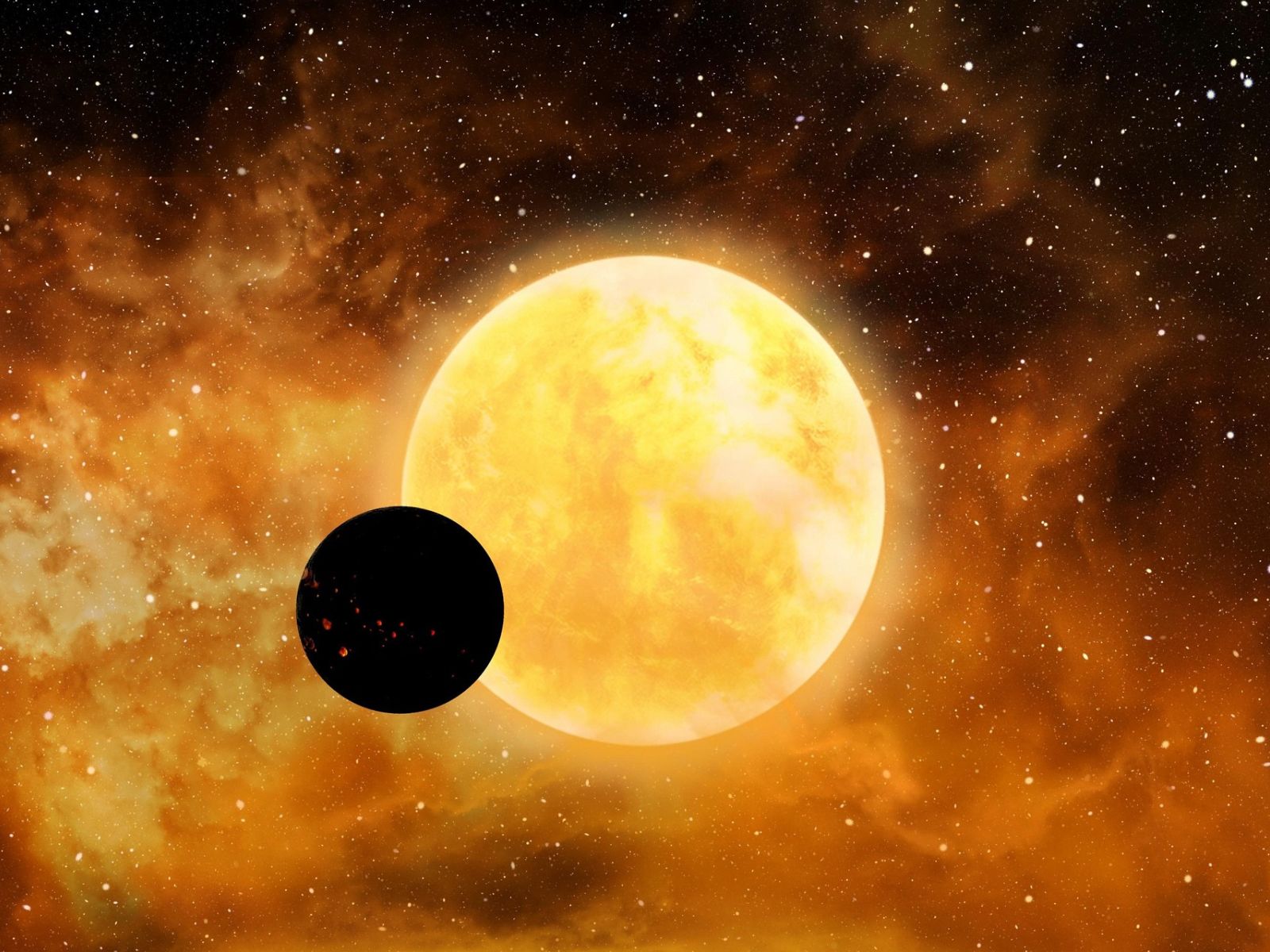
The universe is so vast that astronomers continue to make discoveries every year, particularly with the help of several telescopes, such as the James Webb Space Telescope and the TESS space telescope. Recently, scientists published a study highlighting the most compact quadruple star system ever discovered.
TIC 120362137 is a system composed of three stars that are extremely close and a fourth that is located a little further away. If we represent the size of this system in relation to the solar system, it would not exceed the orbit of Jupiter. In other words, these four stars are within a radius of about 770 million kilometers.
However, its discovery was quite special, because according to initial observations with the TESS space telescope, there was nothing unusual. Indeed, only two stars orbiting in just 3.3 days were spotted. The third was discovered thanks to brightness variations that occur every 25 days. As for the fourth, they determined its presence by observing new eclipses, which was confirmed using the Tillinghast Reflector Echelle Spectrograph (TRES).
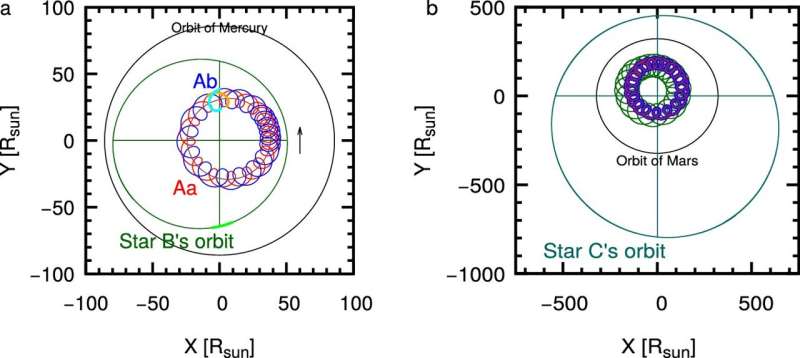
The most massive star in this system is called Aa, and it is more massive and hotter than the Sun. This is also the case for the other two celestial objects located nearby. But the star C has a mass and a temperature similar to those of the Sun, and its orbital period is 1,046 days. Thus, this discovery is a world first and could allow scientists to discover similar systems in the universe.
Source(s)
 Add as a preferred source on Google


