




Ancient Arabia Terra reveals a crater-scarred past on Mars
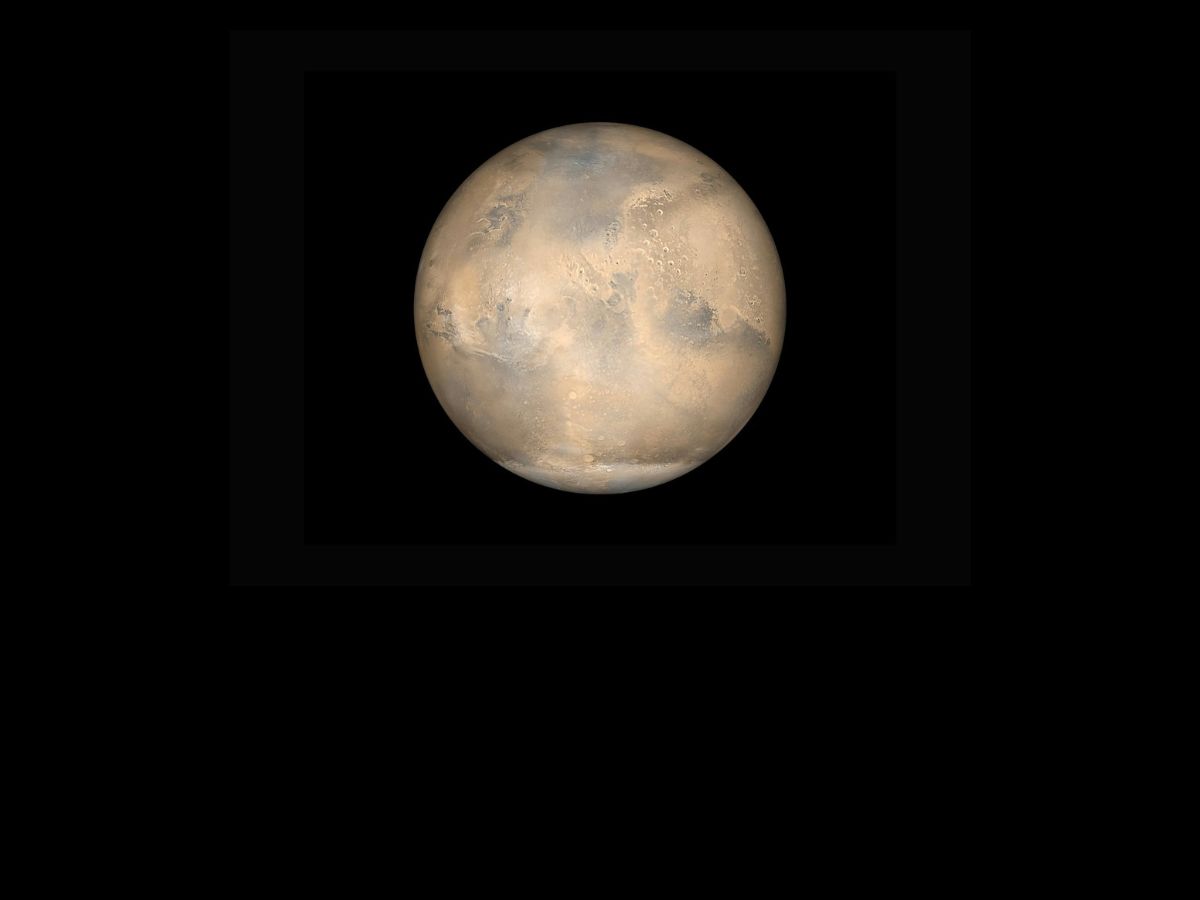
Arabia Terra is a region that lies in the northern part of Mars’ southern highlands. Representing some of the oldest terrain on the planet, its surface is 3.7–4.1 billion years old, formed during the Noachian period. During this period, planets were bombarded by asteroids and comets, and the impact scars still remain on Mars’ surface.
A prominent structure in the image is the Trouvelot Crater, about 130 km wide and extremely old. Pointers to its age were the eroded crater rim, the terraced walls, and the overlapping craters. An even older crater has been observed close to Trouvelot, with its rim almost completely eroded.
Some of the craters’ floors appeared dark in color, which scientists believe was due to mafic minerals common in volcanic rocks. In the Trouvelot Crater, curved dunes known as barchan dunes were observed, suggesting Mars’ consistent wind direction. Light-colored mounds containing minerals, which form when in contact with water, were observed, suggesting possible water activity.
This image was captured by a high-resolution stereo camera on Mars Express, an orbiter launched by the European Space Agency in 2003 to study Mars’ atmosphere and surface. This study shows possible past water activity and, overall, improves the understanding of Mars’ geological history.

Source(s)
 Add as a preferred source on Google


