




Astronomers find 5 potential alien structures harvesting energy from the stars
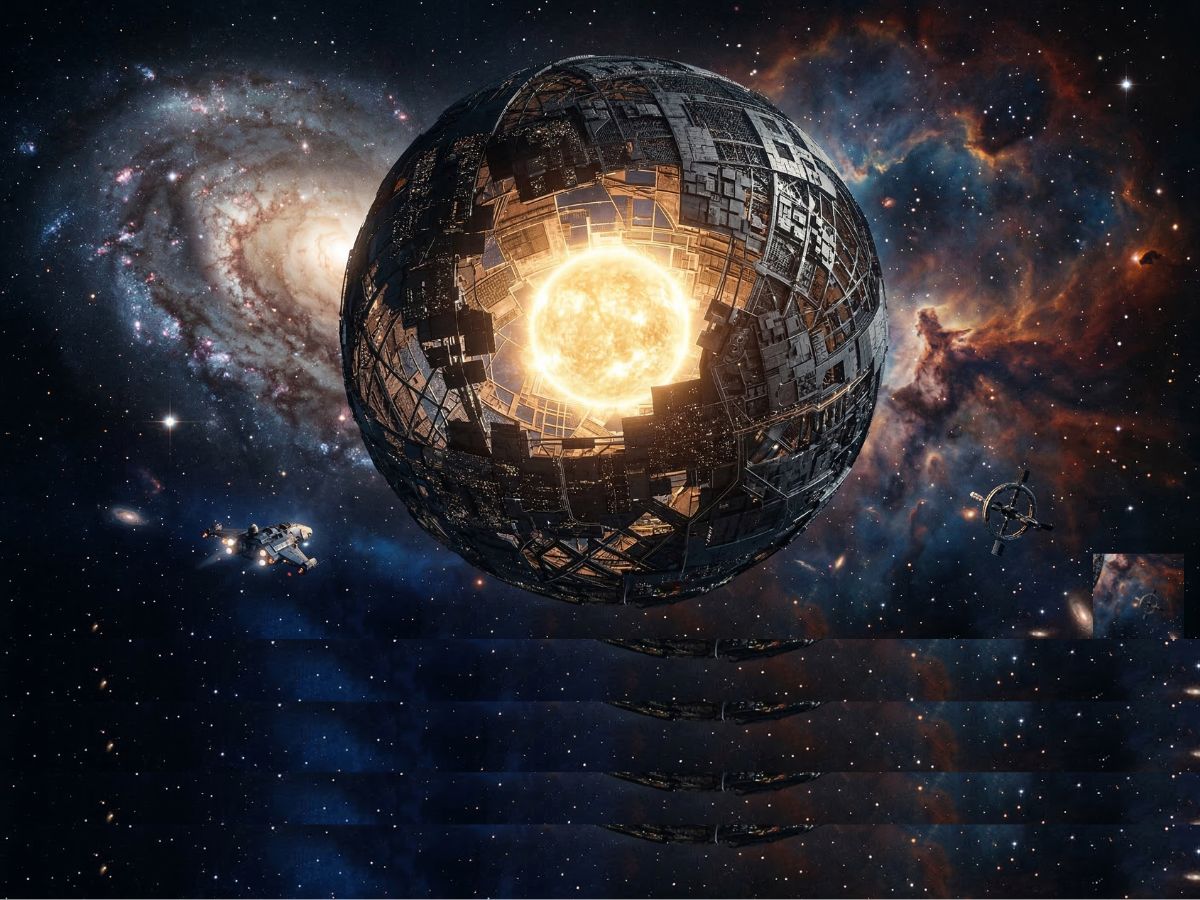
The concept of a Dyson sphere was first proposed by Freeman Dyson in 1960. He proposed a structure around a host star to capture its energy output. However, modern-day scientists propose a Dyson swarm with thousands or millions of solar collectors orbiting the star and harvesting its energy.
A study by Amirnezam Amiri has been carried out to observe what a Dyson swarm would look like to astronomers. The first question answered was which stars are the best candidates for hosting them. The red and white dwarfs were identified as the best stars due to their lifespan, size, and how they burn fuel slowly.
Stars are classified using the Hertzsprung-Russell (H-R) diagram. This chart plots stars based on temperature and luminosity. A Dyson sphere will block out the star’s visible light, absorbing its radiation and re-emitting it as infrared radiation. This would lower the temperature of the radiating surface, changing the star’s position on the chart. It would also be dust-free due to the artificial panels. The swarm structure could cause fluctuations in the star’s brightness, making it unusual to astronomers.
Powerful infrared telescopes such as the James Webb Space Telescope and the Wide-Field Infrared Survey Explorer (WISE) are best for detecting potential Dyson spheres. A 2024 study from Project Hephaistos examined 5 million stars and found 7 possible Dyson sphere candidates, all around red dwarfs. Further studies, however, narrowed the number to 5.
This study provides new tools for detecting technosignatures, enabling the discovery of evidence of advanced extraterrestrial civilizations.
Source(s)
 Add as a preferred source on Google


